North Carolina Now; Episode from 1999-03-29
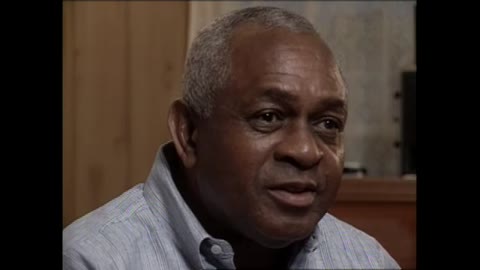
- Transcript
It's Monday, March 29th, tonight drawing the line in a controversial annexation issue in North Carolina now. Good evening, everyone. I'm Rita Matray. Welcome to North Carolina now. On this Monday edition of our program, we'll take you to the campus of East Carolina University and we'll hear from the author of a new book about the post-Civil War era in North Carolina's mountains. But we start first this evening with the political battle being waged in Jones County. In the town of Trenton and annexation issue has led to charges of racism and the resignation of the town's mayor. And it has also brought the tiny Jones County community a lot of publicity. As producer Clay Johnson reports, some see the publicity as a nuisance while others see it as a catalyst for change. These ditches need to be the close. I mean, we have sewage in now. Another day, another battle for Daniel Willis. Today, he's trying to convince State Department of Transportation engineers that drainage ditches in mostly black neighborhoods just outside Trenton's town limits need to be replaced with pipes.
So what are you saying? We don't need no pipes in the Netherlands, Dutch. The engineers say the state can't do it because the project doesn't improve safety or reduce maintenance. Willis has answered to the problem. We're going to sew. If they don't fix it, we're going to sew. In January, Willis made the same threat against Trenton's town council to try to force it to annex the same neighborhoods. And Mr. Willis came into the town meeting and demanded we annex the area right then or he was going to sew us. Willis did sue, claiming racism is the reason the neighborhoods haven't been annexed. The black voice has been kept down. If you don't annex these black voices, then they can speak. If Willis was trying to start a fire, he got the matches from Trenton Mayor Joffrey Luggett. While being interviewed about the annexation, the mayor told a Kingston newspaper reporter he didn't want blacks to take over town government.
Luggett was quoted as saying if three blacks were working together in a store, within a few years they'd be stealing from each other and they'd be out of business. Willis also said of blacks, they're not leaders. A black man would rather work for a white person. It was devastating. Those type remarks, any time you degrade anybody by whatever means it's bad. The town council called an emergency meeting passed a censure resolution against the mayor and asked him to resign. He did. Is the mayor a racist? Yes he is. And everybody on that board is a racist. The mayor didn't speak for the town alone. He spoke for those board members. He's taught me racist for years. Are you? No. Look at my record. Ask the people in the community. Joan says the reason the neighborhoods have not been annexed are financial, not racial. He says the town considered annexation twice before in the 70s and 80s. But annexation would have required the town to pave streets and provide water and sewer.
The town of 300 people couldn't afford five to six hundred thousand dollars to put such systems in. In the years that followed, the state paved many of the roads, the county brought in water and in 1994 the town applied for and received a half million dollar federal grant to provide sewer service to the areas. Why would we do this if we did not have annexation in mind at that time? I mean we had no incentive to put sewer in the areas out of the town of Trondon. The sewer work was completed in February. Now they are eligible to be annexed if the people in the area want to. At the March Town Council meeting, a state NAACP representative presented an annexation petition to the town council and it voted to annex. The town is in the process of voluntary annexation of the area now and proceeding as the law requires. I don't believe anything Charles Jones say nothing. Jones says the petition signatures must be verified and new town boundaries drawn. He says the process will take a year. Jones says the town will benefit from the new revenue new taxpayers will provide.
It'll benefit everybody if it's done correctly. But we can operate on the threats of suits or intimidations such as we have from Mr. Willis. Willis has disrupted several council meetings and has filed at least 30 lawsuits against the town and county. Most have been dismissed. The rest are in legal limbo. Town officials say they've spent $80,000 defending them. You take $80,000 out of a town as small as this. That's a major impact on the town. He made the statement one time that if he could not get his way, he would break the town with suits and he's done a right good job in that. A lot of people around here say the real damage that's been done to this community wasn't caused by Mayor Leggett or by Daniel Willis, but rather by the news media. The story spread by wire across the state and across the nation. A lot of people say the real hurt to this community wasn't done by the reporting of Mayor Leggett's racist remarks, but rather by the reporting of erroneous information. Including one report that said the town of Trenton had a law against blacks owning property inside the city limits.
There was such a law, but it was rescinded 22 years ago when the town drafted new ordinances. And if the news media had looked at the records before, they would see we are not the people they portrayed us as. Willis says the news coverage helped his cause. Without the news media, no. We still be in the muck spent in our wheels. Just days after the annexation vote, Willis was in the news again. He showed up without an appointment at DOT headquarters in Raleigh demanding to see transportation secretary Norris Tolson. When he found out Tolson wasn't there, he went over to Attorney General Mike Easley's office demanding to see him again with no appointment. It was his second time there and Willis was arrested. He says on purpose. So we ask the new folks to put these careers in good and do something about these digits here soon. Very soon. Some say Willis has a problem with everybody, not just the Trenton town council, but many others see him as just a squeaky wheel, doing his best to grease the tracks of progress for Trenton's black neighborhoods.
Willis responded to his arrest by filing a $5 billion lawsuit against the Attorney General and the Wake County Sheriff's Department and the FBI. Trenton Mayor Joffrey Leggett could not be reached for comment on this story. Still ahead on the program, the author of Freedom's Alter. But first, here's John Arnold sitting in for Mitchell Lewis at the North Carolina now news desk. Welcome, John. I'm Arita and good evening. Here's what's making news tonight. Leaders in the House and Senate are telling their budget panels to make additional cuts. Budget teams have been instructed to slash nearly $126 million in spending on top of the cuts already identified by the honey administration. Legislative leaders say the cuts are necessary to fill a budget hole that could amount to more than $500 million. Lawmakers say the budget gap will be affected by the outcome of a court rolling on intangible tax refunds and the latest income tax revenues.
State lawmakers are looking at a plan to drastically increase the cost of community college tuition. The plan could more than double current tuition costs by tack tacking on an additional $700 to the price. However, the plan also seeks to offset the tuition hike with a tax credit. That tax credit would benefit students receiving federal financial aid like Pell Grants. North Carolina currently has the second lowest community college tuition in the country. A study group established by the State Board of Education wants to see limits placed on when a student can drop a course without taking the end of year course exam. The group is expected to recommend a plan stipulating that a student would have to drop a course within the first 10 or 20 days of a class to be exempt from the test. The proposal was intended to close a loophole that has allowed the state accountability measures to be bypassed. A bill introduced in the state senate would require all doctors, hospitals and other healthcare providers to report all new cancer cases.
The bill's sponsor, himself, a survivor of cancer, says tracking the disease is essential for researchers. Currently only 86 percent of all new cases in North Carolina are reported, despite federal rules requiring 95 percent. A government review of 30 states ranked at North Carolina third from the bottom. And now for a look at tomorrow's weather, highs in the mountains will be in the upper 50s to lower 60s. The rest of the state will see highs in the mid 60s to around 70. Look for mostly sunny skies to spread across the entire state. In Business News, a retired NBA star and North Carolina native Michael Jordan has been talking with Charlotte Hornets owner George Chen about buying a half share of the team. NBA Commissioner David Stern has confirmed the talks, but says nothing has been finalized. It is not clear how much Jordan would be willing to pay for half of the team. Chen has reportedly put a $150 million value on the franchise, leaders of the effort to build a new arena. In Charlotte, say their effort would gain public support if Jordan bought into the team.
Farmers in the southeastern part of the state will soon have a new outlet for selling their goods. A $7.5 million farmer's market is scheduled to open in Robinson County this June. The market is being funded by the State Department of Agriculture and will also serve as a retail and conference center. Agriculture officials hope the complex will help farmers, especially tobacco growers, who are trying to diversify their crops. The stock market made history today for the first time ever. The Dow Jones industrial average closed above 10,000. Here's a look at the numbers. Music Music Issues of race and equality forgiveness and redemption are examined in a new book called Freedom's Alter.
Set at the time of reconstruction, Freedom's Alter is the sequel to the critically acclaimed book, High Wassey. Joining me now is North Carolina author, Charles Price. Mr. Price, welcome to the program. Tell our viewers a little bit about this book. It's set in the mountains of North Carolina at the time after the Civil War. It is. The period immediately after the Civil War is particularly the first couple of years after the Civil War really hasn't been looked at much either in fiction or nonfiction and I was kind of drawn to that period because when I wrote High Wassey which had come out a couple of years before, I sort of skirted the ethical and moral issues of slavery. I had created a family, the Madison Curtis, who were the focus of the first book, who were slave owners. And yet I didn't address any of the moral issues that that status suggested.
So I wanted to write another book to take us into that two year period after the end of the Civil War before radical reconstruction was imposed on the South. And take a look at what might have happened had the South been free to pursue its own agenda for reconstruction and at least under the guidelines that were being offered then by President Andrew Johnson. And what would have happened between masters and slaves have been they've been left to their own devices to try to come to a new accommodation. So this was what brought me to that to that particular subject and the setting in the Appalachian Mountains is particularly I think apropos because the there's been a misconception I think in a lot of the literature about the the mountains that the Western North Carolina was primarily unionist, non-slavery subsistence farmers without cut off from the outside world without much political or economic. Interest that was consistent with anything else in the South when in fact there were slave owners like the Madison Curtises.
They tended to be the people who had settled on the bottom land on the better land and they were tended to be the political economic important people in the community. And the characters in this book are based on members of your own family who lived in that area at that time. Exactly. The Madison Curtises family Madison Curtises my great great grandfather and he had three sons who went into the Confederate army in the civil war two of whom died. And he owned according to the census records at one time at least seven slaves. And I learned about him and the circumstances of his life from some genealogical research that was done by some other members of my family. And I took it on and then decided to fictionalize a novel of their lives, a possible life. Having found out that family background of that history was that why it was so important to you to deal with these issues that you talked about the issues revolving around slavery.
I think so it was really it was really a two part motive I suppose years ago the writer Paul West wrote a book called Loves Mansion which was a fictionalized memoir of his parents young lives how they met and fell in love and and became married. And I was intrigued by the idea of doing a fictionalized family memoir. So I undertook to do that with a minimum amount of information really we had to sense this records we knew who how many people were in the family and how many slaves they owned where they lived and what crops they grew and so forth. Beyond that there was very little except the military records of the three sons and so I relied on that and the result was the military side of things was pretty well verified and actual but I had to imagine what might have happened on the home front to the members of the family who stayed back from the war. In addition to these characters that are based on your family members you also have a main character in your book whose black. How difficult was it as a white person relating to a black character?
It was very difficult for me in the beginning to convince myself that I could could attempt this and make it succeed. Simply because I just bear my do you burden of liberal white southern guilt and uncertain to what extent a white person can imagine the life of an African American particularly one in slavery. But a friend of mine when I who to whom I was agonizing about this when they said don't think about it is writing about a white person or a black person think of it as writing about a human being. And I tried to do that and that seemed to be a kind of a breakthrough for me I just tried to imagine what I would feel and think and the emotions that I would have under the circumstances that this black character meets. How difficult was it this is a work of fiction but yet it's set in a historical time that that keeps very true to the facts of that time period. How difficult was it matching fiction to history?
Well it was mainly I sort of knew what the fictional storyline was going to be but it was mainly an effort to acquaint myself with that two-year period that I mentioned before between the end of the Civil War and the imposition of radical reconstruction in 1867. Very little has been done about that either in terms of fiction or nonfiction. I think I uncovered most everything in the way of secondary resources that I could find to acquaint myself with the flow of events and what was happening politically. Also I was lucky enough to find a report a bound report in the Pack Library in Asheville of the committee on Senate Committee on Reconstruction for the year 1867 which recited what was going on in all of the states. It was a report by the head of the Friedman's Bureau which was the federal agency that had been named to take care of the newly freed slave.
And that was invaluable to me because it set forth exactly what was happening in North Carolina at the time. So it was a matter of weaving my storyline into what I knew to be from my research the historical facts of that time. Mr. Price it's a fascinating book I appreciate you taking the time to share it with our viewers. Thank you very much. Thank you sir. Freedom's alter is published by John Blair again the author is Charles F. Price. And moving now from the mountains of North Carolina to the eastern part of our state. Like many campuses of the University of North Carolina system East Carolina University offers a wide variety of course disciplines. And as this school has grown it has become a national leader in several areas. Maria Lundberg takes us to Greenville to visit the campus. Approaching the ECU Library sound sensors inside the tall columns set off musical tones.
It's just one indication that a visit to East Carolina University holds some wonderful surprises. For example this sonic plaza combines elements of sound with architecture including a media glockenspiel and a percussive water wall where 65 jets create patterns of sprays and tones. And while this sound sculpture is certainly unique the atmosphere on campus is what makes this school special. It's a campus in which everyone is very friendly. I like to describe it you can walk across the campus and everybody will greet you look you in the eye. It's more as though we had a campus of two or three thousand students in terms of the way people interact with each other than a campus of eighteen thousand. I think that's a very important ingredient in how we get along so well at East Carolina and how our students prosper. Making students feel part of their university is one of the trademarks of this school. There's so many opportunities here to get involved with school. There's so many good like organizations that you can join and it allows you to be a part of school and get active and meet so many different people.
As the third largest university in the UNC system enrollment is just under eighteen thousand with students from 47 states and 35 countries. ECU offers 97 undergraduate degree tracks and 88 graduate degree programs. The push toward higher levels of excellence resulted in the recent designation as a doctoral institution. A classification which increases state funding as well as giving the school a more prestigious national ranking. But this university still remains committed to undergraduate teaching. I think we do a first-rate job here with undergraduate education. Teaching is our first priority. Our faculty work closely with students and we have a very diverse array of professional programs here that are well accredited, well respected, not only across our state but across the country. East Carolina is well known for its exceptional teacher education program, one which has received national recognition.
We started out as East Carolina teachers training school in 1907 and throughout our history we have been fully dedicated to the preparation of teachers and administrators for public schools. I don't know if they're committing higher calling really for an institution of higher education than to do that. And we have done it well. We produce more teachers than any other university in the state of North Carolina. The last time I inquired we were the 15th largest producer of teachers in the country. So this is a very important part of our mission. And that mission extends not only from the school of education but also throughout all the departments at East Carolina where we are a real family and a real team in terms of our interest in this particular dimension. In addition to the school of education, East Carolina's School of Medicine has gained national stature with its outstanding reputation in the area of rural medicine. Using cutting edge technology, the medical school is also a leader in the field of telemedicine. In fact, technology plays a very important role at East Carolina. Students in other parts of the world take classes at ECU by computer through distance learning. And thanks to the school's fiber optic network that connects every office and residence hall to the internet, East Carolina is ranked as one of the most wired campuses in the country.
Everything is on computer now. In my physics class, all my homework is done over the internet. Sometimes you don't even have to go to class. You just log on and there's your notes for the day. And it's really preparing us for the future. Along with the use of technology, East Carolina also gets high marks when it comes to the arts, offering many programs which are recognized for their high quality. Music, theater and dance courses are taught by nationally known performer teachers. The art school is one of the largest in the southeast and the only one in North Carolina accredited by the National Association of Schools of Art and Design. Through the years, this growing reputation for excellence has made East Carolina a popular choice for students in all disciplines. We continue to attract a very diverse array of students, but in all of our program areas, we're seeing increasing applications from students who are very, very talented academically. And the kinds of students that other universities are competing for. And it's a very happy thing for us when they choose to come to East Carolina.
Our academia is top. I don't think there's not a school in the state that we couldn't hold a candle to. Our graduates, when we graduate students, we have programs that 95, 99% are placed into jobs right after they graduate. And I think that says a lot about the caliber of students that we're turning out. As enrollment and program offerings have grown, the campus has grown physically as well. Join our library recently underwent a $32 million expansion and renovation. The 300,000 square foot structure houses impressive special collections, reference capability, and an extensive preservation area. Nearby, the student recreation center is one of the most popular spots on campus with basketball courts, a weight training center, aerobic studios, track, indoor pool, and rock climbing wall. This state-of-the-art facility reflects a feeling found throughout this campus, one of excitement and adventure as the university moves into the future.
I hope that if we have done anything at East Carolina, we have imbued in them a genuine love of learning. And that they realize that as they leave East Carolina University, their learning isn't finished. I hope that we give them the tools, the set of perspectives that allow them to understand that and indeed allow them to pursue a lifelong learning and a real lifelong love of learning. East Carolina University continues to flourish. It's estimated that enrollment will grow to nearly 25,000 students in the next decade. Well, before we leave you tonight, we here at UNCTV would like to extend our thanks to those of you who made our festival fundraising drive such a huge success this year. Our final total is $2,873,600. Well, past our original goal of $2.5 million. Thank you all for your support. And as you know, the NCAA Championship game is tonight. Go Duke. Good night, everyone.
- Series
- North Carolina Now
- Episode
- Episode from 1999-03-29
- Producing Organization
- PBS North Carolina
- Contributing Organization
- UNC-TV (Research Triangle Park, North Carolina)
- AAPB ID
- cpb-aacip-4193187c3f3
If you have more information about this item than what is given here, or if you have concerns about this record, we want to know! Contact us, indicating the AAPB ID (cpb-aacip-4193187c3f3).
- Description
- Episode Description
- Clay Johnson reports on Daniel Willis's lawsuit against the town of Trenton over racism in repairing the town's infrastructure. Marita Matray interviews author of Freedom's Alter, Charles Price regarding North Carolina's Civil War History. Maria Lundberg reports on the Eastern Carolina University advancements in infrastructure and campus culture.
- Broadcast Date
- 1999-03-29
- Created Date
- 1999-03-29
- Asset type
- Episode
- Genres
- News Report
- Subjects
- News
- Rights
- PBS North Carolina 1999
- Recordings of NC Now were provided by PBC NC in Durham, North Carolina.
- Media type
- Moving Image
- Duration
- 00:25:45.711
- Credits
-
Anchor: Arnold, John
Director: Davis, Scott
Guest: Willis, Daniel
Guest: Jones, Charles
Guest: Eakin, Richard
Host: Matray, Marita
Producer: Scott, Anthony
Producing Organization: PBS North Carolina
Reporter: Lundberg, Maria
- AAPB Contributor Holdings
-
UNC-TV
Identifier: cpb-aacip-5257d31ee3a (Filename)
Format: Betacam: SP
Generation: Master
If you have a copy of this asset and would like us to add it to our catalog, please contact us.
- Citations
- Chicago: “North Carolina Now; Episode from 1999-03-29,” 1999-03-29, UNC-TV, American Archive of Public Broadcasting (GBH and the Library of Congress), Boston, MA and Washington, DC, accessed August 24, 2026, http://americanarchive.org/catalog/cpb-aacip-4193187c3f3.
- MLA: “North Carolina Now; Episode from 1999-03-29.” 1999-03-29. UNC-TV, American Archive of Public Broadcasting (GBH and the Library of Congress), Boston, MA and Washington, DC. Web. August 24, 2026. <http://americanarchive.org/catalog/cpb-aacip-4193187c3f3>.
- APA: North Carolina Now; Episode from 1999-03-29. Boston, MA: UNC-TV, American Archive of Public Broadcasting (GBH and the Library of Congress), Boston, MA and Washington, DC. Retrieved from http://americanarchive.org/catalog/cpb-aacip-4193187c3f3