Oregon Art Beat; #219; Chel White
- Transcript
You All right, so this is this is pretty different for you, right? Yeah. Yeah, I am. Well after I did dirt, you know, Joe Frank who wrote dirt liked it a lot and said I could use another story in a film. So I went through a bunch of tapes of his radio shows
and I found this piece and I don't really know what the title was but I think soulmate was actually the title of another piece. Anyway, I just I really love this piece and partly, you know, part of the attraction for me was that it was so different from dirt and I really wanted to do something that was longer and it just really exploring a different place and, you know, maybe carrying over the idea of obsession but in a totally different way. So, yeah, like most of my work, it was kind of an experiment, you know. My original idea for it would it would all be and I realized now I just was a terrible idea but would all be her telling saying this monologue and then you get these little glimpses of things now and then. Well, I figured out pretty quickly that that really wouldn't work. And so and now there's hardly any shots of the land lady in it but I think that's much better now and you really get this kind of voyeuristic thing of her watching him
for a long time and and yeah, I don't know, it made a very interesting evolution. What's the what's the story basically? The story is it's about this nupi land lady who has a kind of sexual obsession, I'd say about one of her younger male tenants and she's maybe in her 50s and he's probably in his mid 30s and he's kind of a very, you know, lone air sort of states himself most of the time. And well, she snoops into his thing, she finds his box of poignol magazines and and his diary and starts reading his diary and she's got all these great excuses about why she's reading it, you know, she says, oh, I was dusty and I found this and opened it up and and then I I saw your handwriting and I just thought, you know, you had lovely handwriting and so of course I had to read it and then when I
found out it was about me, I just had to keep reading and reading. So I mean, I think there's a lot of, I personally feel there's a lot of kind of dark humor there and some people I think pick up on that but I don't know. But one of the things I like about this story and what we did with it in the film was that it really makes this unexpected transition, it starts out kind of spooky and creepy and stays in that zone for about five or six minutes. And then you sort of get this other side of things that are that's more much more touching and it's sort of these two people who are so alienated in their own ways and objectifying things, you know, in their lives. And it's, yeah, I mean, I just want to do to work with that and explore a different kind of emotional tension than I had worked with before. When you read the story, did you go through those emotions too?
It's kind of sort of sneaker at it and how that sort of, yeah, I absolutely feel and then be touched. Yeah, I absolutely felt those things and that's one of the things, that's a big part of what attracted me to the story was, well I love this. This, the main character had this, she was on the one hand very judgmental and then, but she was also kind of, you had a certain amount of pity for her too because she seemed to be capable of a certain amount of maybe passion or love, but she could never get to that point where she would ever allow herself. I think to express it, but yeah, I think that a lot of the kind of contradictions of that character, I thought that was a great, because there was so much depth to
the character that you don't always see. It certainly has a totally different feel from the other films. Yeah, I mean, how did you, what did you do to change the look? Well, we shot color film, but we did things to it with filtration and stuff. We shot, actually shot a reversal film for it and, yeah, I was going for a certain look with the color that reminded me a little bit of old Technicolor film. Once again, as in dirt, I wanted it to have this little more timeless feel. I didn't want it to necessarily look like modern color film or video, but maybe something that has a sort of antiquated feel to it, like it could have been shot in the 50s or not, it could have been shot yesterday.
What did you do to make that happen? Well, a lot of it was using the reversal film and also the filtration that was used in the laboratory too. What's the reversal film? Well, normally these days you shoot color negative, and that has a real specific look and a sort of more normal look to it. And with this color reversal, we did something called cross processing where you process it like you would negative, and it gives you this kind of eye contrast look and also makes certain colors really, really, you know, bloom. But it's hard to control. It's hard to predict what's going to happen with it. So we had to do a certain number of tests and figure out, well, what's the best way to light this stuff? Because it does tend to go very contrasting and very yellow,
so we had to work with lighting in a way that we were kind of trying to work in a way where we are anticipating it. We were doing this certain thing that, you know, it's kind of a strange process where you're lighting it like you're imagining it'll need to be rather than what it's really looking like. So we would end up lighting things kind of flat, which is not a particular lighting style that I like, but because it gains so much contrast, it ends up looking a lot better than actually when you're shooting it. You've used the word experiment a couple of times. Yeah. So if these are experiments, what's the goal? Well, you know, it goes back to the whole thing with me that each film I'm challenging myself trying to do something new and different. So in that sense, it's an experiment
because, you know, it's stuff that I haven't done before or to some degree. And so you're taking chances and that's important to me as an artist to do that. So are all of the experiments going to end up in a feature length film? Well, I think the experiments are the films. You know, it's the process of discovery as the films being created and all of the films that I've made have gone through an evolution. Some more than others, but certainly all my personal short films go through this pretty extreme actually evolution where where my idea for the film at the beginning ends up being quite different. I mean, that's exciting and I love that. It's almost like improvisational jazz where you're kind of working with something as it's in process and progress.
And sort of steering it, steering it and taking it to a certain place. And a lot of it, most I'd say 90 % intuition. So are you going to make a feature film? Well, do you want to? Yeah, I do want to make a longer feature film. But, you know, having only worked in narrative for a few years now. I'm working towards that. That's something I'd love to do. You want to say hello? Oh, yeah. Do you have ideas for a feature? Yeah, I'm working on a script right now. I'm writing, which is this is the first thing I've ever written. So it's kind of a crash course and it's going very, very slowly. But it's happening. I'm up to 100 pages. So yeah, in a sense, you know, what you mentioned about the experiments. They are leading somewhere, but I think that tends
to be true of any artist. You know, what you do leads somewhere. But, you know, I think that a lot of film directors think of short films as really just a stepping stone towards a feature films. And I think that's a little bit unfortunate because I believe that short films are this wonderful medium, this wonderful format that is probably underappreciated in most of the world. That they're not just something that you create as a calling card to try to get a feature. I mean, people do that. I may do that. But I think it's a great art form. There's a lot of really great personal vision that gets filmmakers. I think part of that is because you really can't make any money doing short films that it kind of weeds out a certain level of commercialism where it really is about the
labor of love. It's a corny idea, but that's what it is and becomes for a lot of short filmmakers. But I do have a real desire to do something longer, though, too. And I feel I'm working towards that. You know, there's always the issue of funding. Tell me about this actress. Was this really the... had you had to direct actors like this before? Well, I've directed actors and actresses and commercials. And that's very different than this kind of narrative work. I mean, for commercials, a lot of it is almost like cartoon acting, where you want something big and lots of expression. And I tend to think of acting. That kind of acting is like wearing a mask
where this kind of acting for dramatic films is much different. It's more about taking the mask off and really seeing the real person. I think it's very important to me that regardless of how surreal things can be in a certain context in a film that the performances and the people are real, they have to be. The characters have to really feel real. And so when I was casting for this film, I talked to a number of... I had a number of very talented Portland actresses come in and I shot some video and we... You know, they did a read of the script. And two or three of them said, well, you know, you should really... And this is kind of a funny thing for what an actor to say. But you should really try to get Vanna O 'Brien because she could do a great job at this. And usually you think of actresses being so cut for a competitive. But
anyway, so I did finally... I was able to get Vanna in and did an audition with her. And I pretty much knew that she was at it. I didn't have to. I went back and looked at the tape, but just from her cold read. For one thing, she had the accent down, the Irish accent, which if you're not careful, it can be kind of a leprechaun thing. But no, she really brought a lot of depth to the character too. I really got this sense of there were different sides to this person that there was really a lot of depth there. It's been interesting, you know, because you've worked so much with images to work on something so intimate. Yeah. Well, I love visual stuff. That's always been, I think, a big
part of my films. But I felt with Soulmate, I just needed to push... I mean, I think there's a lot of visual things in there, but it's, I think, a more restrained. For me, it was just really kind of pushing into the narrative and really kind of getting these performances that I felt like it needed to be successful. Okay. Good. So you want to break for lunch, is that it? If you guys want it. If you just walk over to the dock side. Is that okay with you guys? Everybody's happy. Okay, let's roll it. It's rolling. Okay. Why did you choose the whole piece over all the other ones? Well, Murray Siddland from the symphony, the conductor, he gave us these tapes of pieces that were in a repertoire. And, you know, I had loved that Neptune piece since I was a teenager. I'd like the planets, but especially some of the more ethereal pieces like Neptune and Venus and Saturn.
So it was really easy for me. That was, you know, it was funny. It was the first song on the first tape. And I just said, oh, this is it. You know, I don't need to hear anymore. There were a couple others that I had entertained, you know, an idea of using, but really it was that Neptune piece that... So you had had images in your head already from a long time ago. Well, not exactly. And, you know, once... It's a different deal. Once I knew I was going to make a film with this piece of music, I sat down and really listened to it. And, you know, music is so... There's so many possible interpretations of music. Part of it was I had this idea I wanted to do these... I'd been wanting to do for a while, which is portraits of people underwater, slow motion, just kind of very dreamlike. And so this project seemed like the perfect vehicle for trying that. And yeah, I really liked the music a lot. That was a nice piece to work with. How long did
they have to be underwater for these? Well, as long as people were capable of, you know, some of the kids couldn't stay down that long. But since we were shooting slow motion, if they stayed down for 10 seconds, it turned out being 30 seconds on film. So it worked out okay. Some people were, you know, could have been Pearl divers. They stayed down for a minute or more. But it just depended on the person. Where'd you do it? We shot the film in a swimming pool up in Vancouver, Washington, where they do scuba lessons. They give scuba lessons in this pool. And I think it's about 18 feet at most of the pool, the deep end is 18 feet. Did you have an underwater camera? Yeah, we rented everything underwater lights, underwater camera housing. Yeah, you name it, you know, because it's a real serious deal. You don't want to have, you know, real lights hanging over a pool and then having fun and everybody dies. You know, that's... Yeah, you have to, you know, very, very, very careful about shooting around water, especially
if you're in it. So had you had any thoughts of water, you know, or any of these images before you, you know, you were asked to do this, you know, over the years with this piece? Well, naturally, the title Neptune is sort of, you know, you think either of the planet, which there is a certain cosmic element to the film, or you think of water. So I kind of took both and integrated them into the project. I'm sorry, what was the... Oh, no, I just was wondering about, you know, if you had early images like this. Yeah. No, I felt like when I knew I was doing this project with the symphony, I really went and listened to this piece with fresh years, so that, you know, it's a different deal than
just... when you listen to music just for pleasure, sometimes you might think, oh, this would be cool in a film, or to use in a film, but a lot of times you're just listening to it, and you're not really thinking about, okay, this... Here's some images that would go well here or not. But so when you have a piece of music, like you do this for a music video, you know, sit down and you really, really think about what is going to work, what's the context, and what do you want to say? What's the... is there a story here, or what do you want to do visually? So that's really what it was about for me. What was... did Murray have any input? No, they were... it was great. They really just... they gave us pretty much carte blanche to do what we wanted. I think if, you know, one of us had done something really offensive, it probably would have been a problem, but I think we all had the sense not to do that. Did... were you there for the rehearsal? Yeah,
it was interesting. They rehearsed the morning of the show, which I think was their first rehearsal. I guess it's very, very costly to rehearse an orchestra, so... But that was wonderful. The music that sounded great, it's just nothing like hearing a symphony live, you know, and in the case of my film, there was a women's chorus, too, which was really magical. Did they hit the cues? Close enough, you know, the piece was such that it was fairly forgiving. If I had tried to do something that was just, you know, to the frame and precise, it could have been a disaster. It's just a very hard thing to do, you know, to get that many people to, you know, to hit and try to, you know, conduct the orchestra and hit all the cues at the same time. I think that's a real difficult thing to do. Pretty rare for a filmmaker to have that experience of sitting in the audience. Oh, yeah. Yeah, it was great. It was a
really fun evening. A great idea for a project, too. I was very excited about it when I first heard about it. Why is it that you're a filmmaker? Well, there's probably a lot of reasons why I'm a filmmaker. You know, I started making films when I was 15. And at that time, I did a lot of drawing and painting. And so animation as a kind of an extension of that was seemed like a natural, you know, thing to come from. Part of it was a simple thing of wanting to see drawings move, you know, characters that I'd drawn, you know, see what they look like moving. But I quickly got into live action as well. I think for me filmmaking just combines so many interesting things. You know, you have, it's a time -based art, so you have this element of time and space.
You have a lot of things. You have, you know, performing theater, music, sound design. In the case of animation, you have, you know, graphics, painting, sculpture. So really, it really encompasses a lot. Or can, can't encompass a lot. I think also that filmmaking is pretty much the art form of our time. Not to say that other art forms don't have importance. But to me, it's really, I think, the most significant art form that's out there. But you're not one of those guys who work in a video store and knows every line from every movie. And, you know, one of those movie fan guys, are you? Well, not exactly, although I've watched a lot of films, you know. And I like to, especially if I'm having a problem with something, and I like to see how other people have done a certain thing. I handled something.
But I've never worked in a video store, no. Was there, was there a film that inspired you when you were young? You know, I was fortunate enough to be able to take filmmaking in a public high school. And I was exposed to films that I think did influence me. Although the influence maybe didn't show for a good 10 years. Films like Andalusian Dog by Avunyal Dolly, Cocktoes Blood of a Poet, Myadaren's work, Bruce Conner. Some of the really avant -garde filmmakers. And then some of the animators too, like McLaren and Lim Lai. And to some degree, Fissinger, who did the work that was Oscar Fissinger, he did the early work that influenced Disney to do that movie Fantasia, basically doing a kind of, you know,
music and images together. And that influenced me, I think, at one point to do these song films that I did a lot of in the 80s. You sort of the anti -Quentin Tarantino. Because he's coming up with just a different angle than you. Yeah, I guess so. I mean, you know, I think he's a three -talented filmmaker. Yeah, I guess so. You know, my education is kind of the opposite of the UCLA Film School education. I went to a liberal arts college and studied film and kind of more with fine arts setting, which I think had its pluses and minuses. I sort of missed out on some ways on a lot of the technical background that I feel like I could use now that I'm doing more narrative film. But, though at the same time, I think being exposed to all this experimental work was really a great thing to have. And I don't think I would trade it. Do you think your short
film work or your commercial work will get you a feature film quicker? That's a hard one. I think hopefully they'll both help. Probably the short films, but I really don't know. That's a good question. You're lucky enough to have a foot in each. Yeah. Yeah, though they're both very different than feature film -making. Yeah. Okay. All right. I know. You showed me this poem by... And now we're going to go by the line. And... Here we go. The poem is called Patterns. Remember that poem? What's about this woman who's mourning the loss of her lover or husband in World War Y?
Yeah. And the poem ends like this way. I must pass her here a second. Here we go. Consciousness, all that stuff. Scott was a, you know. I figured I could do it. But before I started writing poetry, I was under the same age as well. I'll find history and got line of science and I thought to myself, well... Yeah, that was the end of the poem. So, I wrote this poem. Oh, man. There's a lot in between. I wasn't, that wasn't it. Nothing to do. I wasn't identifying with anything. I wasn't identifying with... This later, sitting next to us and there were all these students from the University of Bologna. And both June and when I were about the same age, when I asked the same question,
both of us almost signed with them. He said, we don't know. There is not a such thing. No. Take your hand away. Okay, let's go in and start it. Here we go. And then there was a pause because then all of the translators were there. No such thing. And then there were the students. No such thing. Okay. All right. That's history. You're too busy living in your particular moment. Okay. And you can't work in your part. There. You're a player. I mean, it gets to be... Because then, since you can't get out of it, you become like product identified in such a way. But didn't run into some artists there with themselves there. They wouldn't know. I am tourism
and so forth, all basically. And we're taking it out. Going to a place that before that moment was a very, very accommodating space. Because there's so many of the people who land large. And some of them were Italians. And some were not even second generation. And in Europeans, they never think that they are artists. You know, being a poet or an idler. Or being a poet was...
- Series
- Oregon Art Beat
- Episode Number
- #219
- Segment
- Chel White
- Producing Organization
- Oregon Public Broadcasting
- Contributing Organization
- Oregon Public Broadcasting (Portland, Oregon)
- AAPB ID
- cpb-aacip-3b6ee6e7b92
If you have more information about this item than what is given here, or if you have concerns about this record, we want to know! Contact us, indicating the AAPB ID (cpb-aacip-3b6ee6e7b92).
- Description
- Raw Footage Description
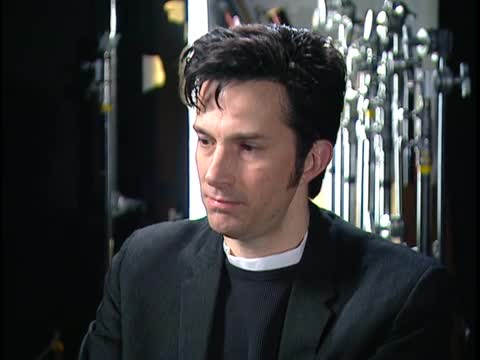
- Interview with director and composer Chel White, tape 2
- Created Date
- 2001-02-16
- Media type
- Moving Image
- Duration
- 00:29:22;16
- Credits
-
-
Copyright Holder:
Oregon Public Broadcasting
Producing Organization: Oregon Public Broadcasting
- AAPB Contributor Holdings
-
Oregon Public Broadcasting (OPB)
Identifier: cpb-aacip-d5a146939f6 (Filename)
Format: Betacam: SP
Generation: Original
Duration: 00:30:00
If you have a copy of this asset and would like us to add it to our catalog, please contact us.
- Citations
- Chicago: “Oregon Art Beat; #219; Chel White,” 2001-02-16, Oregon Public Broadcasting, American Archive of Public Broadcasting (GBH and the Library of Congress), Boston, MA and Washington, DC, accessed October 12, 2026, http://americanarchive.org/catalog/cpb-aacip-3b6ee6e7b92.
- MLA: “Oregon Art Beat; #219; Chel White.” 2001-02-16. Oregon Public Broadcasting, American Archive of Public Broadcasting (GBH and the Library of Congress), Boston, MA and Washington, DC. Web. October 12, 2026. <http://americanarchive.org/catalog/cpb-aacip-3b6ee6e7b92>.
- APA: Oregon Art Beat; #219; Chel White. Boston, MA: Oregon Public Broadcasting, American Archive of Public Broadcasting (GBH and the Library of Congress), Boston, MA and Washington, DC. Retrieved from http://americanarchive.org/catalog/cpb-aacip-3b6ee6e7b92