Connecticut Lawmakers; 207
- Transcript
The following is a sci fi TV original. I'm a Connecticut lawmaker. Another cry every morning be election process. Legislative leaders. They might get on the roll. Or whether. We poured sun Bridgeport betting on a casino. And from the nation's capital the state's congressional delegation on the president's call for higher taxes and. Spending cuts. I'm Bob Douglas welcome to this week's edition of Connecticut lawmakers. As expected Governor Lowell Weicker this week veto the income tax repeal bill passed by a majority Democrats earlier this month. Their proposal would have raise the income tax on wealthier residents to provide relief for the middle class. There may not be enough votes now to override the white veto. Elsewhere supporters of the election reform and a direct
primary system as the best way to elect candidates for office statewide and locally are upbeat about their chances this year following a public hearing this week at the state capitol. I would propose. That harass you urge you to support a system of fairness for everyone. Let's have one system for statewide officers one system for state senators and one system for state reps and that is. If we're going to get elected we ought to be able to win a primary and if we don't represent our constituents then we should not. Be here because of election law. The only reason why we should be here is because we can convince a majority of our constituents that we do good do a good job and to use our assurity laws to prevent people from running against us. Really it's the ultimate of having a go at having incumbents advantage. So I would hope that this session we could see a bill come from this committee that are going the right direction as I see it or go all the way in the right
direction and I would urge you to. Deal with this issue. Expeditiously so that we can have a good debate in our house as we again hope to open up our election laws and we're supporting this bill not only for greater public access but also to make the process more consistent. 48 states currently have direct primaries and there have been concerns raised from various people about the impact of the direct primary on the future of the state's parties. And in those 48 states we still have very strong Republican and Democratic parties and in fact in many of those states a higher voter registration than Connecticut's conventions which are the party's method of endorsing and having some control are still available under this bill for the purpose of creating an endorsed candidate by the party. The real difference is we've taken away the threshold which was required which in many case was a tremendously burdensome and restrictive threshold preventing
valued people or persons with a real desire and talent to Ron who did not have the internal political connections from being involved in the process. I strongly support the direct primaries I think we all know damn well that both parties organize parties in the state of Connecticut do not endorse direct primaries. In fact it probably has a snowball's chance in hell unless the general public gets out there and really lets that lets this all just group up here and both Houses know that they won a direct primary because I get that reaction from people. They're just about fed up to their ears with the archaic system of the convention system. You know damn right well that you can win there and it's it's a boss ism type of approach to government. They know darn right well they have damned little effect on who's going to be the candidate. And you know we don't have any smoke filled rooms anymore because of the all the controls we have and smoking. I preferred it before I think of that. I think that the cigars certainly and
encourage some of the the wisdom that we had in the system before we don't get that anymore it is sort of a purification process in that but. Regardless we all know and I've been through the process I've been through this. The beauty contest I call it the both of our parties do you want one run as a candidate on a statewide office in that sort of thing. It takes a hell of a lot of dollars or a hell of a lot of time. And it seems that you get into the system and it's pretty tough to get a populous type candidate. I think a direct primary is the only way they're going to start getting a populist like kind of dates. Candidates that people will actually have a feel that they're coming from the public. I think we might overcome some of the apathy that exists in all a lot of people say oh hell a primary you're lucky if you get a 10 percent maybe 15 percent at the most as you're aware our current system of nominating candidates to state and district offices offices makes that clearly impossible or nearly impossible I should say for regular
citizens those who are political outsiders to run for office without the support of town committee members good candidates who've The only drawback is that they may be unknown to a certain town committee can easily be shut out by the process. It's time for us to listen to the people. Across the globe democracy is taking root. People are becoming empowered through the political process. Let's empower our citizens by allowing them the direct access to the system. I myself was initially shut out of the process. Some might say they did the right thing. I only had two weeks together a slate of 28 delegates and obtain over 700 signatures only to get my name on the ballot for a delegate primary without a solid organization and a little luck behind me. This never would have been accomplished but the process taught me something that is impossible for an average person to run for office in the state. This should be changed. To be a representative body we need to be comprised of true representatives of our community not just
those who are politically connected in this or that town committee. There will be others here today to testify on how our system compares to other states. But one fact I found interesting that there are only. We are the only state aside from Utah which requires candidates to go through a convention before they can qualify for a primary. We need to change a law to correspond with that attitude on government. No longer should political candidates be chosen in the back room. But the process should be brought into the open. No party however holds the trademark on the tactics employed to deny political aspirants the right to a primary. A catalogue of those blunt objects would feature bipartisan and now indeed even try partisan fingerprints. We're better than that in Connecticut or at least we ought to aspire to be better than mass. And this year provides a unique window of opportunity. Historically the state party chairman have worked very hard against
against the primary bill as certainly senator up for now I can testify to. And this year the Republican Party is for all intents and purposes without any effective state chairman and his star and the Democratic Party has a state chairman who participated in Connecticut's first state Democratic primary. One thing that's changed a lot in the years since I was here is that I don't. See anyone on the committee that's here today who was here one day when I had my brief and tumultuous. Career in the House of Representatives. But let me tell you how it's different. In those days when I was plugging for election law some of my beliefs was not allowed on the elections committee. First of all and if there was to be a public hearing such as this one had to petition for a public hearing to get an election reform bill before the public and which we did from time to time. And of course then it was always
necessary to petition a bill for which there had been a hearing. Out to the floor of the chambers because the elections committee would never pass any election reform bill in those days and the concept of having a speaker of the house appear before the committee in favor of a primary reform bill is just too mazing for my aging mind to comprehend. I understand that theoretically the concept of a drug primaries sounds as if it is democratic making available the possibility of running for public office to anyone who may have an interest in participating in the political process. Although this may be true on an academic basis it's absolutely not so on a pragmatic basis. Nor will it result in candidates who can best serve the interests of the general public. What is wrong with a direct primary is the following. It permits someone with absolutely no political background with the use of substantial media and a great deal of money to attempt to buy a nomination. We saw this happen in the case of Brook Johnson. At least he was required to climb the hurdle of having over 20 percent of the state convention delegates. It permits candidates
to literally run simply for the fun of it. To have one's name on the ballot and do nothing further to promote the candidacy. But I require others to spend money time and effort in order to secure a nomination. It will result in the destruction of the two party system which I believe has proved to be invaluable to the people of the state and country where need only look at the Balkanization of political parties in other countries to come to the firm conclusion that splinter parties and splinter candidates are not in the best interest of the public. I think this is the best chance we've had in a long time. We finally have a governor who will sign a direct primary Bill. Previously there on the other given every indication either directly or indirectly that he would veto any change in the primary Bill. He even had his state chairman one year when it looked like it might get out of the house he had a state chairman on the floor of the house twisting Democrats arms against supporting a change in the primary bill in terms of the committee you see the bill coming out of the committee that the committee seems to have
significant bipartisan support for going to direct primary so I think we will get it out of committee. I really think this is the year that we can make a real change in the United Nations process for several reasons I think the first reason is that the 1902 elections demonstrated so decisively that people both in Connecticut and across the country want to participate. They came out and voted in record numbers they elevated the level of dialogue in the campaigns and really the idea of keeping the 20 percent rule depends on the on the notion that somehow the people if they vote in primary will make poor choices then the party hierarchy. And I just think it's been clear that that's not the case. Secondly I was very happy that Speaker Boehner came to the hearing this morning and supported it. I think that kind of leadership coming from the speaker. And you know some of the interest has been shared by some of this by the Senate leadership as well. I think bodes well for the bill. I think there was a tremendous outpouring at the hearing today of people one after another saying that we need a change. It's time to let the people into the process. Connecticut is only one of two states around the country
Utah being the other where a candidate cannot petition their way on to the ballot. And I think it's really time for change and I think will happen this year on your side of the aisle do you see a majority of Republicans for a direct primary measure. I haven't spoken to every Republican in the state senate but I know there's always been significant support for direct primary. So maybe this is the year this is the year I think yes. Your reaction we're disappointed from the statement from your party chairman Mr. Marcus that he still opposes direct primary. You know he had indicated before that he was going to going to oppose the bill. I think in some ways it's almost an occupational position. You know that if you're the party chairman you want to retain the you know the party's prerogatives. But I really think that you know the feeling among people throughout this state is that it's time to let the people into the process the nomination process ought to reflect the ability of party members for the Democratic and Republican Party to choose it. And I think that you know that you know the time is now and I really think that
we'll do it this year. Any sense yet although it's really within your own Democratic caucus and your feeling about this this is not a partisan issue I think there are people of different views in a democratic and in the Republican caucus. But I really think that the sentiment is growing more and more people have had the experience of going through the the the arcane delegate primary process that has not worked. You know we had several members of the committee say that they wouldn't be here unless they had had an opportunity for a direct primary. And I just think more and more people are saying look let's scrap this ridiculous time consuming obstacle Laden process and let the people the party members decide on their candidates I think will get better candidates as a result. And I think the process should be opened up. Bridgeport is one of the cities earmarked by state lawmakers for a casino if they ever pass a casino Bill Lloyd Wimbush has this report. Bridgeport is being targeted for a casino by two developers one plan has been submitted by
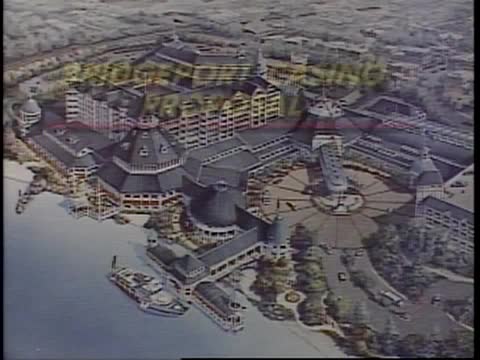
Steve Wynn the owner of the Mirage and Golden Nugget resorts in Las Vegas. When is represented in Connecticut by new city development unlike Hartford there appears to be strong support for a casino in Bridgeport. I think the atmosphere is different for a couple of reasons. One Hire for it has the insurance industry as a base of support and while the industry while the insurance industry is losing jobs there is nothing in Bridgeport that is on the horizon that would give them hope. The proposal sorely will be located at the current site of the Bridgeport highlife front on some of and says the 300 million dollar casino dog track hotel an entertainment complex would create some 12000 jobs and it would turn out to be a major economic boost and tourist attraction for the area they support is has been down. It's like for quite some time now and we feel that that first and
foremost it will attract four million tourists a year to Bridgeport 85 percent of which are projected to be from out of state. Second it will create 6000 direct jobs and 6000 indirect jobs in a city that desperately needs them. And third it will create tax revenues to the city that we feel at this point in time are very important particularly when when the city is technically bankrupt when it comes to casino gambling here in Connecticut it appears to be a Tale of Two Cities. The number of high ranking officials in Hartford and leaders of the great Hartford Chamber of Commerce have come out in opposition to a casino. But here in Bridgeport it's a completely different story because the proposal has been endorsed by the mayor a number of other city officials and leaders of the business community. Reasons are essentially very simple. Bridgeport has a number of very significant problems that need to be addressed. And there's not one answer to the ultimate addressing of those problems. But the kinds of things that we need to put in place in order to make this a better city
and to make it a better business environment a jobs. Tax based growth image enhancement. And we think that the casino can help us deal with those three things very effectively. It's not the answer to the city's problems but we think it has the potential to be a significant catalyst if done right. Bridgeport would receive nearly six million dollars and the governor Weicker is $100000000 agreement with the Mashantucket Pequot Indian tribe to operate video slot machines at the legate casino. But the city is still pushing for its own gambling facility. Bridgeport is one of the most distressed cities in Connecticut. The number of stores have gone out of business in the downtown area. City officials and business leaders are desperately looking for ways to improve the local economy. Members of the great A Hartford Chamber of Commerce say a casino is not a valid long term economic stimulus. Business leaders in Bridgeport disagree. I disagree with that. I think in terms of long range economic stimulus I think the casino can fit in very well with a long range plan as long as it's recognized that it's only a piece of that
plan. And as long as it's recognized that it's not the salvation to the city's problems it can be again if done properly. And important piece of a long term plan. For job growth and tax base growth but it cannot be looked upon as the thing individually that's going to save the city. There is some opposition to a casino here in the Bridgeport area it comes from a number of religious leaders they're concerned about crime more gambling and other social problems. The rationale for that is while everybody acknowledges that we're in a recession and their jobs and tax base are all critical issues. In fact the casino was one that for the city wouldn't be a good news that it did what it promotes in terms of addictive behaviors in people as well as undermining some of the more positive work ethic that you find in productive communities were seen is as real assets as well as just being a loser. The reason that the reason they generate so much revenue is because people lose when they go there.
I think what we say to the people of Bridgeport is we have to see you know gaming what we have to do is make sure that the state and the people of Connecticut are in a position to benefit from that rather than just a few. And that that we have to make sure that we avoid the mistakes that were made in Atlantic City. And we've taken great pains to do that. Bridgeport residents are deeply concerned about the need to create more jobs and to turn the economy around. Most of the people we spoke with are in favor of casino gambling. The possibility of it coming if it passes the governor I believe will get it. Otherwise I don't know but I think we need it. We need jobs we need money in Bridgeport. You know we need revenue coming into Bridgeport and I don't see the revenue coming in the bridge for any other way. It is going to be in Connecticut I hope it's over. Or why is that. I just see the job that will create maybe bring this city back to life alone. Not concerned about an expansion of gambling and problems in my create a vacuum We
all over Connecticut anyway what's the difference. Generally I'm not against the idea of a casino being in Bridgeport but I have to say that we need to look at a more viable way to bring jobs into the community and there's nothing wrong with being a block and working in a hotel restaurant industry but I think that's a lot more promising I think the people here deserve better that had better chance of working at a job that give them better skills and just you know working in a blackjack table. A number of people watching the casino debate believe that if a casino is built in only one city that city will be in Bridgeport in Bridgeport. Lloyd Wimbish for Connecticut lawmakers and now from the nation's capital Connecticut's congressional delegation on President Clinton's program to deal with America's economy. We must do this together. Bill Clinton laid out the new political reality early Wednesday in his first address to Congress.
Spending must be cut. And taxes must be raised. And he tried to comfort to middle income Americans two months earlier he had promised a tax cut. You're not going alone any more you're certainly not going first and you're not going to pay more for less if you have too often in the past. Oh no no lawmaker likes raising taxes. Connecticut Democrats were largely supportive. It could've been worse there's no doubt about it. We had an oil import fee instead of an energy tax it would have been awful. So I have to tell you this is better in that direction for Connecticut for children for children all over the nation it's very very good for Connecticut that's still going to have a recession in any of the text increases are going to be too much. But we all know what the president said if we don't do anything the nation will have a terrible problem down the line. He spreads the cost of this program over the wealthiest Americans primarily who got the biggest breaks in the 1980s. This is a program that deals with national health care costs with educational cost with jobs in diversification I talk to the president yesterday. About defense diversification in some of these other programs. He understands what this country needs.
And President Clinton. Said such aid is essential in making the transition to a peacetime economy. We must provide special assistance to areas and to workers displaced by cuts in the defense budget and by other unavoidable economic dislocation. I think at the core of this package which is important for Connecticut is what's there for working middle class. Families there's a good program for working people. Jobs. We've lost 200000 jobs in the state of Connecticut is talking about creating new jobs. He mentioned defense workers in the aerospace industry tonight which are critical to the state of Connecticut. I mean so the president couldn't understand why he got elected which is to get the economy moving again this was a strong pro-jobs pro-growth speech no nonsense asks a lot of everybody but I think. It recognizes that the people are ready to bite the bullet if they'll get it. Despite handshakes and conservative applause most members of the GOP
emerged on that. Very. Disappointing. Campaign. Tonight we're looking at George Bush in the second term. He didn't campaign on increased taxes campaigning having an energy consumption tax he did not campaign on the ways in which he could further take the pockets of Americans. The bottom line this is going to tax dollars going to feed money back to me in a way that will create jobs and the president didn't take the real challenge which is cutting entitlement spending. That's where the money is hemorrhaging in terms of stimulating the economy and reducing the deficit. This can't just doomed to failure. Some Republicans though aren't writing off Clinton's budget program yet. I'm going to urge my colleagues on the Republican side to keep it open. But I was looking for cuts in spending with the taxes that I heard a lot of taxes I heard a lot of new spending. I don't know where we're going to make the cuts in the budget
to bring this deficit down for me. I'm going to be voting for tax increases I want to see some spending cuts. Connecticut's senior senator urged his compatriots to give the economic recovery plan a chance. If you want to pick this program apart line by line item by item I suppose you could. But I hope that we in Congress regardless of party don't do that. We need to deal with the deficit. We need to get our economy moving. And the best way we can do that is to join together as Americans. Doing what we can to this country to get it moving again. But the devil is in the details much of President Clinton's budget cuts come from defense said to be 88 billion dollars over the next four years. So no one knows how that will impact. Connecticut's already depressed defense industry. In Washington Kathleen Koch for Connecticut lawmakers. At a State Capitol press conference legislative leaders announced they plan to take Connecticut's budget on the road for the next several weeks. This is the first time the state in several years has a parked on a by any old
budget. And let me give credit where credit is due to our chairman of Appropriations who along with a number of members of our caucus indicated in previous campaigns and in previous sessions that it was a long overdue for us to take the budget to the people. Appropriations has just completed some of its planaria plenary hearings with the agencies and we felt that it only appropriate that we go to nontraditional areas across the state of Connecticut where we can conduct public hearings and get input directly from the people. We note of course the great success of President Clinton in taking a message to the public. And while we don't have a bust it's going to go out to these specific towns and communities. We do feel that it's entirely. Important for us to take this message out to the public you will know as well that this is time reserved for the public to speak. Time that's going to take place
after the normal working day and on Saturdays which we will feel will allow a greater number of the members of the public to come out and speak and address concerns that they have as relates to this specific budget. What we perceive is a general mood amongst the general public for no new taxes and control spending that the process that's provided here to capital. Is truly not adequate to receive a broad base. A broad base input from the public while a number of members of the public do attend the Capitol hearings. Largely the budget hearings at the Capitol as you well know during the day are reserved for agency heads and at night for the public but many of those who testify are lobbyists or representatives of various interest groups
who by and large propose more spending and the feeling was by going out. Certainly not all 161 communities but establishing a number of hearings to cover the state on a regional basis that perhaps a more accurate view of what the public thinks of this budget what they think of taxes possible additional taxes what they think of the proposed cuts that are more accurate view. Again the public opinion on the states. Current fiscal issues could be better received. We will be inviting all members of the General Assembly specifically in the in fact in areas where we're going to conduct the these public hearings. And again these are not public hearings where lobbyists are going or special interest groups will be allowed to or their
lobby lobbyists or the special interest groups will be allowed to speak. And we are out to solicit the views of the of the general public. We took a look basically from talking to a number of our Senate colleagues and a number of our freshman senators specifically. We recently completed a campaign on the 29 senatorial district and our senator is from the town of times and that's one of the districts that we're going back to one of the commitments that a number of senators have made and I think in a very Clinton esque manner has been that we're going to reach out to the general public we're going to go out and seek information from them concerning the budget. And that's precisely what Irene and that's this week's edition of Connecticut lawmakers. I'm Bob Douglas. We do thank you for joining us.
- Series
- Connecticut Lawmakers
- Episode Number
- 207
- Contributing Organization
- Connecticut Public Broadcasting Network (Hartford, Connecticut)
- AAPB ID
- cpb-aacip/398-32d7wqnd
If you have more information about this item than what is given here, or if you have concerns about this record, we want to know! Contact us, indicating the AAPB ID (cpb-aacip/398-32d7wqnd).
- Description
- Series Description
- Connecticut Lawmakers is a weekly news show featuring reports about Connecticut state government and politics.
- Created Date
- 1993-02-24
- Genres
- News
- News Report
- Topics
- News
- News
- Politics and Government
- Media type
- Moving Image
- Duration
- 00:29:29
- Credits
-
- AAPB Contributor Holdings
-
Connecticut Public Broadcasting
Identifier: A05776 (Connecticut Public Broadcasting Network)
Format: U-matic
Generation: Dub
Duration: 00:28:45
If you have a copy of this asset and would like us to add it to our catalog, please contact us.
- Citations
- Chicago: “Connecticut Lawmakers; 207,” 1993-02-24, Connecticut Public Broadcasting Network, American Archive of Public Broadcasting (GBH and the Library of Congress), Boston, MA and Washington, DC, accessed September 22, 2026, http://americanarchive.org/catalog/cpb-aacip-398-32d7wqnd.
- MLA: “Connecticut Lawmakers; 207.” 1993-02-24. Connecticut Public Broadcasting Network, American Archive of Public Broadcasting (GBH and the Library of Congress), Boston, MA and Washington, DC. Web. September 22, 2026. <http://americanarchive.org/catalog/cpb-aacip-398-32d7wqnd>.
- APA: Connecticut Lawmakers; 207. Boston, MA: Connecticut Public Broadcasting Network, American Archive of Public Broadcasting (GBH and the Library of Congress), Boston, MA and Washington, DC. Retrieved from http://americanarchive.org/catalog/cpb-aacip-398-32d7wqnd