Connecticut Journal; Interview with a Dairy Farmer
- Transcript
Again. All right you're away. So what's going to happen within the next fall far from. Right now in file now and while we're working on stuff they're going to start shopping so they'll be getting in the beginning of modes we should be feeding the cows with the darn stuff that you know so he always has a good shot down there shot all that far away. Yeah and I guess right something right here. 1 we get a blend of what is what's used for drinking milk and what's
used for what are there other purposes the mill goes for whether it be you know your cheese or butter. Now approximately 44 percent of the milk in Connecticut or New England rather in our order goes for drinking milk. So 44 percent of the class 1 price or the price is attributed to that would go into our blend. And then on your class your other classes whatever percentage is used them that makes up the rest of the blend. So it's not even though even though we might get three dollars extra or 295 for the compact I just want to you know because they they raised in the stores we don't get the whole $3 we only get 40 44 percent of it because 44 percent when one buys one which is drinking. And then we don't get all that either because and they did it for a reason. The wick program the women's inference the children program. They they didn't raise the money for them either so that you know they wouldn't
be hurt by the compact. So but there has been a lot of I don't think there's been a lot of resistance to people in the stores. I talked to a handler and he said he thought there'd be some resistance as soon as it hit the shelves but he said he seen none of the stores you know to the higher price. But when you stop to think about it you know we the price of gasoline goes up all the time the price of fuel oil goes up the price of cars go up and nobody says anything but I don't understand sometimes why it is that if the price of a dairy product or a farm thing goes up people cry bloody murder. It's. I can understand it. Tell me Tell me again about it. It will go stagger way back right. Agger Mark is a co-op. And we we sell milk to people like the Siebert seal test hordes. A lot of the handlers the bottle the milk and we may and we also own Cabot Cabot cheese.
So we do have a big plant that we recently renovated a couple years ago of Middlebury which makes just kava kava cheese and then in the spring feel we have a planned spring feel a co-op does where you see when you have all this milk like say you got to get rid of it so you have to have a plant to Kate take care of the surplus and that's what our plan and our military plan does in our Springfield plan does and in Springfield they make powder. Sometimes that gets exported overseas and we also make butter there make kava butter it is packaged there so but we got to get rid of the surpluses no question about that. What else would help you on one thing another nothing to call his own forces. If we didn't have a co-op working for us they worked in Washington to help to try to get this compact through because they knew if they didn't do something for the dairy farmers they're just not going to survive anymore and they have been going out and really large numbers especially up north and in Connecticut to a pretty much Connecticut we read out a lot of
them but you know you can only get so efficient and you can only lose money for so long. And unfortunately farmers most farmers don't have another thing to do. They don't have another occupation what do you go into. You can sell your land that's true if you have land. But most most farmers don't want to. They don't have to. Well what were they lobbying at this point it was to try to get this compact in New England all the all the five New England states had to agree on it and it had to go through the state the state legislature. The states had to approve it and then the Congress had to approve it. And when we went through there we did have some opposition from the Midwest because they it looks like they say well the north is northeast is getting treated unfavorably you know it's a preferential dreamless site. But we were able to get it through. And with that one in the first of July. And like you say that first check was like it was like a Christmas
present as more than a Christmas present. It then catches up to where we should be. But it just helps so much because I'm not used to having to hold off paying people bills. And I was doing it. And that's not comfortable. And I know a lot of other people work and we're just what we're doing with equipment instead of buying new things we're sort of putting Band-Aids on Van days. And you can only do that for so long an advantage you get then you have to do to replace it you know. So it's not the way we like to farm but we used to farm a lot there. They've taken a lot of the funds been taken out. Fortunately I still love what I'm doing. I want to do something else don't get me wrong. Well I think we moved here in 1903 and before that we were just another part of another section of town. My grandfather and great grandfather before that were you know section down then. So we've been here for a while but of course we didn't. Back when I graduated from high school I think we're Moken 51 cows.
And my dad put all the skills through college and but he sold insurance too. But now we have chickens at the time being you know also of the chickens the chickens I did well in the dairy did it was fine we had some of the sort of blended in and compensated for the other one. But then the chickens gods and I don't like chickens anyway. But the guts of the cows weren't paying for the pain of the cells and chickens were so we got rid of that and when I graduated in 65 from Yukon and we put up the new the new barn and we expanded. And by the time we got through by the time I got through Yukon I think we will get 56 when I say we're moving. No I said I was making 20 50 when I was 21 when I got a high school back in 61 and now and then when I got out of college Milken 56 and now are now revoking. We have to water milk as we can about 165 to some of those of course are dry and you know not milking right now and we have about 175 young son.
Number wise I don't know there are quite a few quite a few have gone out one next door one out just this last year but the ones that have been here for the last 15 years have been pretty stable. But you know this gets to a point where you know you know housing. If you lose your rotted land you lose Slan for your corn crop so you can always buy you can always buy just a lot to have as place to spread manure. You can't just be confined to a few acres we have your originally originally we just had this farmers a hundred acres and then we bought over the hill that was 117 I was going to be the vellum and I haven't seen the payer so we bought that back in 72. You could buy them and then we bought two other parcels one at the end of the road. Another hundred thirty acres which we cleared and that was all pier that used to be three acres up there it's a 65 acre field now but it probably had up there was we used to spread
chicken or stack chicken or there and they said that nitrates got in the well because it was so the NDP said we can't spread. You can't spread chicken or there were lots. That was a source of reducing our imports you know that we used to grow corn it used to be all corn up there so now we just grow alfalfa that doesn't require so much nitrogen put on it makes its own nitrogen. So. But that was $1 back I think the last piece you bought was an 82 and after that we just you just couldn't afford to buy any land you know. We want to talk and I know if we if we were going to keep farming here. We had to have land and we knew is disappearing so we better tag on it so it's not right. Yeah it is tough. I mean I love it maybe it's I don't know it's. I would want to do something else. It would make it a lot more fun if we made some money at it and made some money that some spend in money so that you could maybe hire a few more people and keep the places a little nicer than
you keep it now and not have to work quite so hard. I just love the challenges you know these used to be snow was used to be three stone four stone walls in this field. They're buried. That used to be a field that was not used upon the upon the hill. There's a pond down there that we made right I cleared we made pond we made feels we made ponds. There's a lot of things of personal satisfaction that you can you've done yourself. If you fail you fail. But if you succeed that's it's just a good feeling you know. We even though we have all these scholars we've we've been into embryo transfers back 15 years ago we started that. And recently we haven't had really the kind of animal I want to use to flush our own. Four embryos so I like last year I bought. 28 embryos and put in try to to try to upgrade the. To upgrade my herd this year they're just there's no one to
do anything with. So I just and I didn't put in the air and it does take money to do that but that makes it as a challenge you know any time you can breed. When you breed breed livestock when you can plan a feel and you can see it come clean with no weeds. A lot of times it doesn't happen that way but it's a very satisfying thing. You know when you go to good ol back and you know I had a deer last night around my front door yes first time I ever see one but a little fawn came hopping along and then hopped across and took off and then my field with my. Dry cows and I stood there for a minute and took off. We have turkeys we see every day down there. Where we take to make you what you need more money. Now one. More price for more money for a mill. That's all I could do without you. We try to get as efficient as we can. Everything we do is just and we're just about that point I don't know how we get much more efficient than we already are. We try to buy.
We buy commodities we buy trailer loads of. We feed. We feed waste bread we feed corn meal we had bagels. We feed we feed cotton seed everything in bulk we mix it all together. A lot of times I'll lock into a price in the fall when it's down and you play the futures market a little bit and usually you can make out that way. I mean you can you can save you dollars that way now if you go my machinery shed I got three trailer loads of Brewer's. Feet in there and at the time I bought it it was a hundred thirty two and now the price is one hundred sixty five and that's only a month later and the price is going to go higher. But my feet is already bought for my only good store so much. So I was limited on how much I could buy but we tried. It's just on how you buy. We've tried to buy things together with certain farmers in the area to try to keep our costs for instance of corn seed down. If we can and get a volume with everybody doing things together you
know they get we get a break. So we try that we form a little co-op of our own sort of and we have to do things like that. Anything you can do it. You want to give a description of I and I enjoy the land. You know when I'm over there chopping are the guys over there chop and you know it's a look over here and see the beauty that's all around us. And this creation is. A lot of people don't see it. I see it every day I see the sun come up over there. I see the sun go down over there. And I appreciate it. And I think most of the guys here do too. Now that doesn't pay our bills that's for sure done by by a long shot but it sure gives some satisfaction that those are some of the satisfying things you know. But now we can either I don't know I just felt about the roof. I was just going to say when when we are up. Twenty years ago approximately you know I just wanted to con I wanted something to sort of bring our
attention to milk and then people put in people's minds because I believe in promotion and Anyway recently the roof was leaking so we had to replace in my and I can't I what do I do enjoy melt up a drink milk. Do I put Got Milk which is the current. Thing on TV but the more I thought about it I said you know I want something that's going to give to milk a sort of a good feeling and enjoyment and so that's we put on a we put another column there we laid it all out in the machinery shed and Drew and draw it out on the floor and then we put it up and you'll see it. But I believe and I believe we have one more product if you look at the end of the barn you'll see the cow in the Maple Leaf the guy owed me a favor so we put that just another thing for people. Our farms have to be good so that when people go by they can say golly this is you know it's a clean product and it's. There it's they make some sort of glad to to use dairy products whether it be your cheese your body your ice cream or milk whatever. So we try to do our best and we have a lot of people come in schoolkids come in when people come
in for pumpkins. They roam around the farm they see the cows they see the guinea hens we have three guinea hens just for laughs. Or they see the chicken with their little brood of hens you know little brute chicks and I get a Gray says actually that too because when I was growing up we might have 3000 chickens here but they were all there on a chicken house and I never saw any babies running around with their mother and it says funny you know. And it says fine to see a calf born when a cast born backwards and you may lose it and want to take that first breath. You know those are there's a lot of disappointing still. But those are all satisfying things. And. If.
We. Right. Wrecked one.
Burned wreck one. U.S. ally and. Love in your. Life. I started out in college and I just kind of stayed on it. That's kind of an up to you I can do what I like to do and I like I have enough to do it like the one hand I can do what I like and have a job doing. Some people don't. It's a hobby and it's a job for me. But more like a why do I have been in pain but. What do I do about it. Hi the Divell very jolly good job. I get the nature of. The season. The. Boy. Calves being born. All. Right. Hard.
Part. May be just the long hours. And. Time you see of the Spirit he has once in awhile but you get on me as he gets on my case a look into what. While I gently started one morning I get on. My own. Success. So I. Thought you. Were not here for. Me and I want. That. Right. Yeah I. Know.
OK you know at any time. You know that. Then. There.
Was. Your. Girl. You're here.
Wow. I did with you. I want a black white. Card. You know. You're a. Good. Thing. In Illinois.
No. But it's you know we started 20 years ago 15 years ago. I would say. It's. Now they got sex embryos so you can buy a female embryo you like you know that's the latest thing. You know we try to keep this green house. That must all be made as you see because we told them we were going to replace oil for the water. But. You know the kids coming here are either the kids or myself or whoever is feel you know it was raining out of or snowing out. You take more time with the calves and the cows are very healthy it's been a. While.
- Series
- Connecticut Journal
- Raw Footage
- Interview with a Dairy Farmer
- Contributing Organization
- Connecticut Public Broadcasting Network (Hartford, Connecticut)
- AAPB ID
- cpb-aacip/398-322bvwzq
If you have more information about this item than what is given here, or if you have concerns about this record, we want to know! Contact us, indicating the AAPB ID (cpb-aacip/398-322bvwzq).
- Description
- Raw Footage Description
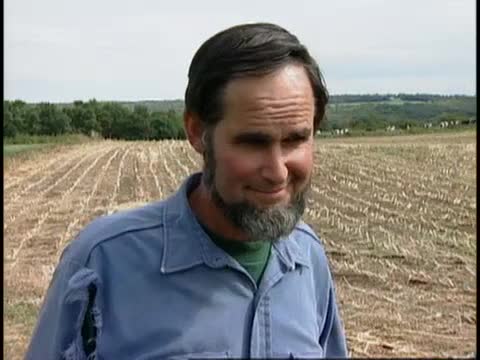
- This footage includes b-roll of a dairy farm as well as an interview with a dairy farmer about the challenges faced by farmers; the price of milk; and his life as a farmer.
- Asset type
- Raw Footage
- Topics
- Agriculture
- Media type
- Moving Image
- Duration
- 00:30:05
- Credits
-
- AAPB Contributor Holdings
-
Connecticut Public Broadcasting
Identifier: A13120 (Connecticut Public Broadcasting Network)
Format: Betacam: SP
Generation: Stock footage
Duration: 00:30:05
If you have a copy of this asset and would like us to add it to our catalog, please contact us.
- Citations
- Chicago: “Connecticut Journal; Interview with a Dairy Farmer,” Connecticut Public Broadcasting Network, American Archive of Public Broadcasting (GBH and the Library of Congress), Boston, MA and Washington, DC, accessed July 11, 2026, http://americanarchive.org/catalog/cpb-aacip-398-322bvwzq.
- MLA: “Connecticut Journal; Interview with a Dairy Farmer.” Connecticut Public Broadcasting Network, American Archive of Public Broadcasting (GBH and the Library of Congress), Boston, MA and Washington, DC. Web. July 11, 2026. <http://americanarchive.org/catalog/cpb-aacip-398-322bvwzq>.
- APA: Connecticut Journal; Interview with a Dairy Farmer. Boston, MA: Connecticut Public Broadcasting Network, American Archive of Public Broadcasting (GBH and the Library of Congress), Boston, MA and Washington, DC. Retrieved from http://americanarchive.org/catalog/cpb-aacip-398-322bvwzq