Maryland State Of Mind; 702
- Transcript
The funding for Maryland state of mind is provided by the 13 institutions of the university system of Maryland. Additional funding provided by the rising which is proud to support the university system of Maryland. All the time. Coming up next on Maryland state of mind travel to the Far East with apologies choir that gets the blood pumping in the hands of plastic. Meet a professor who's never met an explosion he didn't like or students he couldn't teach kids physical dynamics to and score with some of the most amazing birds that were ever had from a block of work. And after we finished our summer craft guess where do all those tons of crab shells go. You'll be surprised. It's all coming up next on Maryland state of mind. Good evening and welcome to Maryland state of mind. I'm your host Scott Simon.
It's always interesting when different cultures come together and share their customs food in history. And so it was this past fall when members of the company College Choir toured in South Korea bringing the magic of music and song to some very appreciative audiences. They learned a great deal about the Korean way of life and the Koreans learned about them creating positive benefits for these cultures you know share and number of communities in our country. Indeed it was a journey about finding harmony in song. To travel the world one could hardly absorb it all in a lifetime. The people the cultures the history like threads in a global fabric they interact yet to many a story in a book or an image on television
to travel the world is to learn and to learn is to understand the multicultural United States. The need for racial and social harmony is important as ever and an opportunity abroad is an opportunity to open one's mind attempting to open minds is Coppin State College visiting the Far East country of South Korea exploring this modern economic powerhouse and bustling with commerce. Korea is full of tradition and history thousands of years old boasting a population of almost 50 million. This Asian peninsula remains largely a homogenous society and off the beaten path for travelers from the states to find common ground and gave one of humankind's greatest gifts the
gift of music. Because it's a thing when 12 date the cup in State College choir gave their all across the country representing their school and the city of Baltimore while sharing their African American culture. We decided to come to my career for two reasons one we do have a relationship with the Korean community in the Baltimore area. Between this time we've had various projects with Korean students we've had some Korean students on campus.
Dr. pastor in Baltimore metropolitan area came to us with the idea of forming a closer relationship with the Korean community. Making the 14 hour flight to Korea was only the first of many new experiences for the cop in choir and helping make this trip possible was Coppens an African-American liaison ravin Chun Chong You know I had been a minister for a long time in Korea and then I came to the United States. I had a chance to visit an African-American church and hear their music. It was quite different than I was used to hearing. And I was deeply moved by the experience. I then started to think that I should introduce this African American style of music to the Korean people in their churches. So I began the planning for this musical tour. The one thing I want to say about this is that well first of all I was very
very excited about coming because I had told the Inquirer a semester before that when you become very proficient in the coral hour you will begin to be to get imitation to do things I had no idea that we would get an invitation to career it within two months of my statement. The adage music is a universal language is very true and the beauty of the music and the phrasing and the expression is what makes music beautiful. Well one of the things that I know is that contemporary audiences are used to television and they're used to going to theater and they're used to being entertained. And in order for us to be successful performers we have to give a bit of all of that. Oh he keeps all dear to
you you got any songs and I'm in the car and so it's and named Prospero and got time to die. And when sung in these type of Negro spirituals one act where the audience because if you don't want to add then the song is dead. It's boring and I tend to get the audience I'm involved covering and rarely the whole type of song All of which in the case keeps people looking. The trip didn't consist entirely of traveling and singing However on a beautiful fall day.
The group sampled some history of this ancient land palace and the P1 otherwise known as The Secret Garden. The last of Soul's palaces to actually house a royal family. The architecture and design brought to mind a different time and a different world located in the back of the palace grounds of the gardens. An enchanting combination of trees ponds and pavilions a welcome respite from the crowded city streets. The Secret Garden was what we had seen in a book a book at school. But then when you actually see it that you kind of wish that it could have been part of it. For many of them this is their first opportunity our country and the Rs
are responsible for that. So I'm given a plug for what the arts can do in people's lives. The cultural experience that our students are getting is fantastic. Now I was I was travelling to the other side of the world has already begun to reap benefits for Koppen the experiences relationships and newfound goodwill will not only last a life time but spread to others as well. And that may be the greatest gift of all. Yeah was was was was was.
If you'd like to see and hear much more of the music and experiences the cop and choir shared in Korea watch our Maryland state of mind special music for this Sunday February 25th at 4:00 p.m.. They seem ready to take wing to the heavens. No one realizes they were born from a block of wood. Later on the Maryland state of mind. OK so when the water in this can OK is heated to steam and then placed in cold water. A fascinating phenomenon occurs the condensing steam creates a rapid vacuum. A professor at the University of Maryland College Park has been doing similarly dramatic demonstrations of the principles of physics for nearly 20 years captivating audiences both young and old. It's all to show that physics is a fascinating aspect of how our world works and the physics is
fun. Through all these teachers the concepts of modern physics can be communicated to young people. This is not your father's physics class. I think I probably get the biggest kick out of just showing experiment to people where they haven't seen thing before and they get surprised by it or haven't some element of danger to them or if they really don't have an element of danger. But people think they do. So that always heightens the interest. Everybody pays a lot of attention so they can see whether or not I'm going to get killed. Four generations of students who have struggled with Newtonian equations energy quanta and other inscrutable concepts the phrase physics is foam may be the ultimate oxymoron. We only do this once.
Dr Richard Berg of the University of Maryland College Park is doing his best to put that notion to rest. Physics excites me because I think it's an interesting area how things work. I think the second thing that's really interesting is telling about it to students. It's a great deal of fun to see them get interested to see them actually learn something. And I actually think that's neat. There are none when I get back there four weekends each school year. Dr. Bird delivers a lecture demonstration in a series called physics is fun. The program grew out of Dr. Bird's primary academic responsibility in 1972 I became the head of the lecture demonstration facility. That's this place. And the idea was to build demonstrations.
Supply other equipment for the use in physics classes by one thousand eighty or so. We had over a thousand experiments in physics one program started in about 1982. Several of the staff members the familiar with our stuff said that we ought to do it for the public and they kept on asking and asking and suggesting and finally said OK let's give it a try. So we did and it went very well. So well it really surprised me. We had a couple hundred people there for the first ones and then the second one we had the lecture hall full each program has two parts and informal hands on phase where volunteers explain the demonstrations and Dr. Burk's more formal presentation. There are several goals that we set up for the program. First of all and most clearly is to supplement the physics experience that students have in their high schools. A second important goal would be to actually
get people interested in physics so that they would say well you know that's pretty neat stuff maybe I should take a physics class and see what it's really like. And then the third goal is to get people kids interested in doing anything just to get them so that they're thinking in terms of going to school and learning. Now that I've seen it I think I want to come back again and go to the next three of them. It seems really fun and it backed up lots of the stuff I'm learning class and I didn't expect that some of these programs in high school and I thought that they were very interesting so they got me interested in science and mainly physics. And so that's what I decided to major in college in a cramped storage room. Dr. Bird shows off like a proud papa. One of the one of the professors went to Moscow State University and saw the skit and asked me what I could make when I thought Sure why not. You were seen with these before.
They're all independent and they all have slightly different frequencies so they have a phase change. It is it goes each one gets a little bit further ahead. It sure will be further behind. And when they do that they go through a whole series of different types of collective oscillations for example Everest every third one is going the same. Right now every other one. So they're out of phase and then it goes back so that every third one and then the isolation begins to look like a rope. And when we go out on one end and finally we all go back to being in phase. Repeats itself.
Dr. Bird has an unusual background for a physics professor but one that serves him well. I was a music major and I was an undergrad at school and really enjoyed music because it has more of an emotional content on its own rather than in physics where the emotional content is in the learning or in the teaching. I particularly enjoy playing it particularly in the early music the baroque music. It's very personal very intense. The performance aspect of music and physics is not dissimilar. Early in his career Dr. Bird combined his two loves by designing a course for non-science majors called the physics of sound. That course developed into a textbook that's used across the country and its impact is beginning to cross generations. I'm taking physics in school right now and I wanted to find out more about ICs we haven't covered this unit
yet that I found out that Dr. Burke is actually my mom's college professor and she was doing was a music major and when she took physics of sound she ended up taking more physics classes because she loved his classroom partisans. She really encouraged me to come tonight and I was glad that I didn't. The demonstrations really helped me to understand what was going on a lot more than I think I would have if he was just lecturing about it. I'm sort of looking into the physics thinking that this is guiding me towards there because I knew I was going to go into science but I wasn't sure what was really intriguing. No this is not your father's physics class and thank goodness for that. It's a solution to acid mine drainage complements of the pharaohs. Later on Marilyn state of mind. Maryland's Eastern Shore is home to a wonderful array of waterfalls snow
geese swans ducks hunters and photographers of long use decoys to lure the birds closer. But back in the 1930s some craftsman began taking the carving to another level creating pieces of beauty. It began with two brothers and has led to a new art form now appreciated around the world a magnificent museum bearing their name resides on the eastern shore and it is with great satisfaction that it recently became a part of Salisbury State University creating a proud affiliation with an institution best known for carving flight and fancy. The story that this museum tells is an important story because it gives us a better understanding of the American experience around the gallery's It's all very State
University's Ward wildfowl museum tells the story of an era that began more than 100 years ago along the Chesapeake Bay. It's a record of how two eastern shore barbers Transformed the American decoys into more than just a tool of deception for hunting to an art form that is practiced and admired around the world. The war brothers played an important role in the development of decorative bird carving. The war brothers were trained as barbers and they were also decoyed makers carving and selling decoys to Hunter's war brothers did one thing different in the 1930s Lenin Steve Ward began experimenting with things such as adding wings painting and carving fine detail into their wooden birds. Their work added a degree of realism that was very different from the featureless replicas produced by other carvers of the time.
By the 1970s their craft had become an American art form studied and imitated by decoys artisans across the United States and around the world. The carvings that we have here in the museum come from many parts of the world and partially because many of them are winners from our competition that we hold every spring in Ocean City Maryland and at that competition we have contestants from Japan from England from Canada from South America from all over. So we have quite a number of quite a variety of carvings here in the museum. The wood museum owns between two and three thousand bird carvings duck decoys are the primary objects on display. But it's the decorative wildfowl art that really soars. We have so many wonderful carvings here in the museum. One in particular the I think it bone feather needle was the carving with bob white quail and a
skull and cactus. It's a wonderful carving barbarity of humanity. But there's one called City pigeons which is a carved tall chimney with five pigeons standing on it that car fall from one block of wood. And it's a wonderful carving. There's so much realism in the carvings nowadays that the fine detail it's being done that you really can hardly tell the real from the from the bird. In this we have a pair of feathers that were from a competition that we had trying to sire and trying to tell which is real. One of these feathers is real the other is carved from wood. It really would. Can you tell which bird it is which rather it is the wooden feather. If you guessed right on this side here this brother here but they need to detail in these these feathers is really unbelievable. The highly detailed craftsmanship of the many bird carvings at the Ward wildfowl
Museum have brought great acclaim to the museum and the eastern shore since it opened its doors to the public eight years ago. And in July of 2000 the museum's fame was further enhanced as it became a center of higher education. But by the museum becoming a part of Salisbury State University. What we see happening here is the development of one of the largest arts centers and stay the university has sculpture gardens. It's good it has an accredited arboretum which again is a museum of plants. It has two exhibition galleries on the campus that explore other areas of art and history and sciences studies and material culture. Now can really take off because now we have a facility that students can come in and work in. These souls bury state elementary education students aren't saying that math is for the birds.
Rather they've come to the museum to set up an exhibit using birds to teach math principles to elementary school students. Our project is called What If I had wings and we thought it would be a great way to use the word museum as part of the community as well as the school and integrate what they're doing in their math classes using proportions figure out what their wingspan would be based on their high with the wildlife pictures and everything decoys that are here. The relationship between the museum is in the actually a math class Dr. Thatcher and Salisbury state is one of which is serving a few needs one the needs of the students too. Developed programs and educational materials that's a different than maybe what they would use in their classroom working in a museum is provides a different type of experience for educating students. This is a first time project for us and we're excited about the potential of it and we've seen some great results as far as the merging of these two great institutions Solsbury State University and the ward wildfowl museum not only preserves the
legacy of the ward brothers and wildfowl carving but it also establishes a unique cultural center for the Eastern Shore. This arrangement is extensive educational programs and the management of cultural institutions. I see a tremendous resource coming out of the university for tourism. I see a great resource for the development of all of these activities even further into the regional community outside of the university and one of the goals of the university is that they provide or play an increasingly greater role in working with the community that so that the University finds itself. The forest needs nitrogen to grow. But can this tiny critter upset the balance of nature. Find out later in our show.
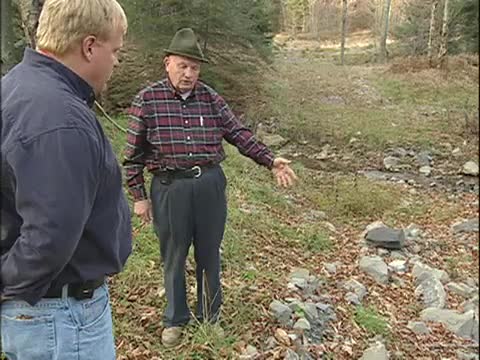
Coal mining is a part of Maryland's colorful history but some of those centuries old mines which have been closed for decades are still contaminating groundwater today making it is sitting in defect in our streams and rivers. Now a novel approach has been developed in stopping this Costa Oh one in which Frostburg State University is playing a key role. Amazingly the solution comes from the days of the Pharaoh in solving a 21st century problem and it's halting a corrosive effect. The coal mines or western Maryland and West Virginia snaked through this gently wrinkled landscape like veins through a living body. In their heyday the black tunnels were alive with men and machines and water always flowing through their minds. Despite man's best attempts to stop it. As the time was advanced the currents surged in darkened like the miners
skin. After a long day underground almost everywhere and in some hall in Washington and there was a coal miner maybe to the water that ran down through those hollows was red and some town was black. If it was red that meant sulphur coming out of the mine if it was black it means that they had a coal washing plant somewhere up there and they washed the coal to put in the cars before they sold it. So the strains were just that terrible. The mine shafts in this old miner's memory still snake beneath the earth the West Virginia and Maryland and their legacy from a century ago is acid mine drainage. A plague that affects our streams today. More than three and a half million gallons of acidic water discharges from Kempton mine each day into Laurel run of Potomac tributary. The pH of this water routinely measures three point five like vinegar. Unable to support any life. To neutralize the
acid and raise ph levels mechanical devices known as dozers were developed to drop powdered limestone into the water. But while dozers do lower the acidity sediment and metallic pollutants remain and the dozers must operate 24 hours a day processing millions of gallons of water. Is there a way to stop the flow in the first place. Maryland's Department of Natural Resources has teamed up with the Frostburg State University and the State Bureau of Mines to find a solution. Paul Patrick of the DNR realized that some of the miles of underground caverns left by the old mines could actually be plugged. This problem of mass mind or an age came to my attention and I looked at that and realized that we should really fix this by putting back an artificial stone in place of coal and a fascinating inspiration came from an
ancient source of knowledge. When you looked at restoration programs in Egypt we are the sum of the masonry has actually performed better in the well there are over the stone itself. Well the NH Masonry just me 8 stone and volcanic ash. But where would one find volcanic ash in western Maryland. Dietrich had the perfect solution. The tons of ash produced by coal burning power plants in the region. Ashes currently placed in landfills could a cement be made from it. Or as scientists call it grown the Fiat which collected from power plant stacks is an exact duplicate of volcanic ash in it gives our grout mechanical properties flowing very well so that it would flow into all of nooks and crannies in a mine.
But the solution raised as many questions as it answered. Where were all the mine shafts located. What streams flowed into them and where could they stop the water from entering or cover certain parts of the mine to stop acid production. They enlisted the help of Frostburg geography department three years ago funding a Geographic Information Systems Laboratory which would map the mine complex and survey the hydro geology of the surrounding region like the groud sanctioned inspiration. The computerised maps depend in large part on history old maps and memories both the Tommy Davis now with the Bureau of Mines was a graduate of Frostburg who spearheaded the project's practical archaeology. If you want to correct the problem in one you have to understand exactly what it's like under there no one is going to be able to go under and look. So we have to understand from
above what it's really like on there interviewing all miners allows us to get a real description of what the conditions were. It looks good on paper but paper doesn't really give you an idea of what people in the underground complex What kind of conditions they had to endure while they were working. The dilapidated headquarters of the Davis coke and Coke company and Thomas provided a wealth of archival information such as ancient maps of the mines which are being incorporated into modern mapping technologies. But Frostburg contributions go well beyond GISS maps. Professor Craig who oversees the project has been gratified to watch the initiative develop in scope Frostburg State has they have benefited from our involvement with the camp the mine project by providing real life problems for the students of the South that our involvement has grown over the time just organizing the data into the
GISS water sampling preparation of posters for presentations to news development of web page material ory. One to represent the information provided by Frostburg allows the scientists and engineers to pinpoint tiny leaks or seepage deep underground at a camp in Manchester where workers were lowered hundreds of feet into the mine. The project lowers a borehole camera down the shaft to find where groundwater is coming in. After incremental progress they spot the lead in the murky video image. The next step will be to drill and inject a cement plug. Or as scientists say a ground curtain to stop the water. It's a small victory in the painstaking process of fixing the countless fissures
allowing water to flood the mine. But it is hopeful that together these scientists and students will solve the problem of an acid mine drainage for good once again allowing the waters to run clear and the wetlands to reclaim their nourishment so that this environmental legacy will become no more than a miner's distant memory. Find out how to turn the baby blues into not just a fee but I'm right you say to change later in our show. We know that Mother Nature operates in a balance and that humans often upset that balance nitrogen for example is a critical element for plants and photosynthesis but excess amounts of nitrogen whether it be from farm fertilizer runoff or other sources can upset the balance especially the ecology of our bay. Now
sometimes the most unlikely of creatures can have far reaching effects. The gypsy moth is a foreign species that's had a damaging effect on our forests for years. But now a scientist from the University of Maryland Center for Environmental Science is studying this critter's impact on the forest nitrogen balance and its effect could be called an excess of riches. A. Tourists might see nothing arrive as they look out over the forested mountains of Shenandoah National Park. But where a visitor might simply see stunning vistas hydrologist Keith Eshel man sees cause for concern in the park's pain Ra'anan White Oak Run water sheds large patches of oaks are dead or dying. And on this fall day with the help of associate Dan Fiscus Eshel man is documenting the extent of the devastation.
Forty and a half centimeters. These trees are victims of the gypsy moth caterpillar. In the worst years this voracious insect has defoliated tens of thousands of acres of trees in this popular Virginia National Park. The gypsy moth has also chopped its way through forests in Maryland and other nearby states since it first spread from New England into the mid-Atlantic in the early 1970s. Forest managers have long been concerned about the gypsy moth impact on forests because defoliation can eventually kill valuable trees and change forest habitats. But as showman has recently made a surprising discovery he is leading a team of researchers from the University of Maryland's Appalachian lab a part of the Center for Environmental Science. And from the University of Virginia.
They have found that gypsy moth activity is also degrading the streams that flow through these defoliated watershed polluting waters and ultimately end up in the Chesapeake Bay. In the years following a insect defoliation by something like the gypsy moth Caterpillar what we found is that the nitrogen concentrations in stream water rise very dramatically over the course of a particular year. The actual amount of nitrogen that is discharged from one of these watersheds may be 50 to as much as a hundred times higher than the amount of nitrogen that would have been discharged in the absence of the disturbance. Well before discovery scientists were concerned about rising levels of nitrogen in the streams and rivers flowing into the Chesapeake Bay most of the nitrogen comes from traditional sources. Fertilizer applied to farmlands or airborne pollutants formed during the
burning of fossil fuels. The increase in nitrogen coming down into the bay has been now shown to be one of the most serious problems that affect the bay overall. What this is done of course is to cause excessive growths of algae in the water column which is reduce the clarity of the water because the submerged aquatic vegetation disappear and depleted the oxygen down in the bottom of the bay all with thunders Arbel effects. But how would moth eaten oak sleek nitrogen into waterways. Going Eshel men hypothesize is that the problem stems from the caterpillar droppings. He thinks that as a caterpillars devour tree leaves and deposit their droppings they dump the equivalent of a huge load of nitrogen rich Manoo are on the forest floor. One idea is that the droppings that occur during these periods of defoliation can actually be considered as fertilizer. That is they're very high in things like nitrogen and carbon.
But because the trees have lost their leaves they're unable to re absorb the nutrients and use them for growth. The way a healthy forest would. So that really represents the second component of this mechanism that the plants presumably are in a question having just been recently defoliated that they're unable to take up this extra nitrogen that's been put forth for in 1990. One of the most severe years for gypsy moth devastation the insects defoliated as much as 2.5 million acres of forest in the basic state watershed. Rain storms or snow falls wash that extra nitrogen into the rivers and streams that ultimately feed the Chesapeake Bay. My estimate using a rate of two pounds of nitrogen per acre per year suggests that roughly 5 million pounds of nitrogen. Might be contributed from disturbed forests in a particular year like 1990
or 91. Moreover the damage farmers continue to leak nitrogen for many years after a defoliation. Now if we think about the phenomenon that these defoliation events are additive then it's conceivable that as much as perhaps 5 to 10 percent of the nitrogen reaching the bay in a particular year could be in fact coming from disturbed forests. That is still much less than the amount of nitrogen thought to enter the bay from sources like agriculture. But nitrogen leakage from farce is worrisome because the gypsy moth continues to spread throughout the US. It was imported from Europe in the 1860s as part of an experiment concocted by an amateur entomologist. The Gypsy Rose got to America by way of a man named Leopold to follow who apparently had an idea of crossing the gypsy moth with native soap worms and breeding a good sow producing insect. He
tried rearing in his own backyard in Medford Massachusetts but somehow or other that colony escaped into the wild and started infestation right there near Boston. Federal and state officials using aerial spraying of pesticides to keep the gypsy moth populations in check. But infestations continue to occur are cyclical and Marilyn may be on the verge of another large outbreak this coming summer it looks as if the populations of gypsy moths have gotten quite high in large areas of the state. Certainly not the worst situation we've ever had. But a lot worse than it's been since the early 1990s. If there's a lesson in all of this perhaps it boils down to the old adage Don't mess with Mother Nature. Remember that the gypsy moth Caterpillar is an exotic pastor So that's one lesson that we've learned that we have to be very careful in introducing exotic pets from other
continents to our shores and to our forests here. As humans findings also remind us that activities that occur anywhere on the land have the potential to dirty downstream waters anything we do to any portion of the watershed has the potential to negatively affect water quality. And we have to remember that they knew since back to how well they hone their skills for the future later on Maryland state of mind. This is what summer is made for. People come from miles around to savor the luscious Maryland blue crab. But if you ever wondered where all those thousands if not millions of pounds of crab shells go after your feast. Disposing of these mountains of crabs shell waste is a real problem. But now scientists from the University of Maryland Biotechnology Institute have teamed up with some entrepreneurs to develop a way to recycle them into valuable products. They found a clever solution
for a messy problem. And now it's shelling out some dough. The Chesapeake Bay and its tributaries helped drive Maryland's economy for the commercial fishing industry a good crabbing year means he lives of more than 100 million pounds. Perhaps more than anything else the Chesapeake Bay blue crab stands as a symbol of life culture and cuisine in Maryland. And if you love them there's nothing quite like steamed crabs crab cakes soups stews and numerous other delicacies. But as you can probably imagine all this crab picking leaves tons of hard shelled waste behind. The byproduct of a crab packing it is called Crab come down here locally and there's been some use of it as far as a fertilizer and aligning agent. But for the most part of it it's difficult to get rid of.
Environmental regulations prohibit dumping crab. John back into the day and jumping these at landfills are hard. As an alternative Waste Solutions. Some private companies compost grab waste into garden mulch. Decreasing but not get eliminated in the cost of disposal. Now comes a new approach from inside this former brewery in Cambridge Maryland and enterprising company is treating crab trash as a treasure. With help from the University of Maryland Biotechnology Institute for you MDI. And the Maryland Department of Economic Development. Cotton works Incorporated is transforming this environmental problems into a business opportunity. In this facility here we receive the waste crab produce from the crab Paddy industry in Dorchester County.
There's thousands of tons of bags that shell Gatorade each year. More in a million pounds of meat picked in Dorchester County. This facility was designed to handle the P K production in Dorchester County and the people the fees that would amount to somewhere in excess of 20 tons of crab shell come in there a day. And now we found a way to utilize the byproduct of that industry. That byproduct of sand is found in an increasing number of consumer products at cosmetic counters thickening agents found in lipstick are based on a number of ingredients including crab shells and in the pharmaceutical industry. They were in glucose Amine a product used to relieve arthritis by regenerating cartilage commercially. Crab shells are even being used as additives to lubricants used in the oil drilling industry. What we're trying to do is we're trying to introduce it into a lot of markets where you with
thickening properties of viscosity properties are important. We're trying to look at applications in the oil industry but other people are looking at polymer as of this type for things like paints and other sorts of applications. The Katyn is a nationally occurring plastic component of the crab shell. And to get to it we need to strip away the minerals and protein we're able to isolate it and the scientific term is how America but the layman's term is plastic. If you look at nature you'll see there's a variety of natural materials in the most abundant is the polymer cellulose and that's a structural polymer and trees cellulose is a material that's used to make paper. Cotton is considered by some to be the second most abundant natural material. It's in the shells of crust ations. It's in the shells of insects. It's in the cell walls of fungi So it's a very abundant material but it has been very little commercial development of cotton and sand. And
so this is a polymer that we're trying to obtain and it has a structure that is very similar to cellulose. The idea of taking this way some putting it into an operation that actually adds value will accomplish two things. First of all the material will not be turning up as a waste it will actually be processed in a way that the waste will be well-managed and it won't be an economic burden in the sense that the material is being converted into a value added product that hopefully someone will be buying so from the standpoint of taking a waste and converting it to a product I think that's an environmental asset where we're using an over abundant resource that the state has in order to produce a product. Understanding how to make useful products out of this abundant material presents challenges at you MBI researchers are working to better understand the chemical properties of cotton. And then developing new materials such as sand for commercial applications. Much of the operation that you'll see a kiting works many of the underlying chemical principles were
worked out in the laboratory here. University of Maryland's biotech Institute has a mission to foster economic development and the transfer of technology from the university into the private sector I think that's becoming an increasingly valuable component in the university system. It's very exciting and has a lot of potential to it. It's interesting to see how something like this can develop. There are no production plants of any great size in the United States. There may be a few little ones here and there. So we have the opportunity. To be the first. Major producer of Caritas and in the United States. We think the Africa years exciting. This is a market that is just beginning to emerge. Our research team at the university. I can't say enough about how much in downpours we've gone in directions that. I don't know that anyone else has ever looked at. From Panama work has come out of this and we're finally getting to the point where we get that kind of product coming out of this factory that took a year and a half of its time in
another year and a half until we were finally getting to the point where it working and we're looking forward to the future. And that future may mean you know wide range of surprising products for healthy industrial and commercial uses all coming from the lowly crab chef. So think about that next time you crack into a Chesapeake Bay blue. If you'd like more information about the story seen on Maryland state of mind visit our Web site at w w w dot impede RGV or call 1 800 4 7 7 8 4 3 7. Nursing is one of our nation's most revered occupations. That shouldn't be too surprising because they're the professionals who tend to us in our most. It has become a fast paced technological arena. Which is why Buoy State
University has created a program. To allow nurses to hone their skills and talents on the cutting edge. It's a growth program for today's nurses and. Something that definitely puts. A feather in their caps. As a veteran nurse with more than 30 years experience she is a trusted and respected health care professional who loves her job and performs well under a great deal of pressure. During her 12 hour shift at the St. Agnes Hospital emergency room in Baltimore she is called upon to make hundreds of decisions coordinate with physicians aid other nurses while seeing to the various needs of her patients. The emergency room here at San Imus is considered a very busy emergency room we see
about 200 patients a day. You have to be able to think on your feet. You have to have a pretty broad range of both nursing knowledge and medical knowledge says you can make an accurate assessment and give the physicians some eye hand in who they need to see first because the nurses are who see the patients before anybody. I mean a career as a registered nurse can begin with a completion of a two year associate's degree or diploma program. Well such training provides a good technical and clinical background. Many health care professionals state more is needed to meet the high demand quality health care requires today. You know nursing is a profession and I think as in any profession you want to expand your skills and continue to adapt to a changing environment. And I think that is the baseline education as is really no longer the final step in becoming a nurse.
And I think that you know that same thing is happening all across some but especially in nursing where the demands are required to be. The education and earning the Bachelor of Science degree it provides a foundation to
go on for graduate study in nursing. Considering the already hectic schedule of the working nurse the BSN in mess and programs that we offer a considerable scheduling flexibility. These students are dealt one. We're able to get their man in the evenings. They can come to class in the afternoons late evening some weekend classes. They're able to continue to meet their obligations as nurses in the community with their families. There are smaller classes so they have a lot of attention. We feel that. All of these will produce a very charged professional nurse and that's what we're looking for we're making sure that we can meet the needs of the students and not just increase our numbers. The program is much different than anything else an experience that requires me to do a lot of thinking about communication about interacting with people and about dealing with my feelings. So for that reason I feel like it's it's going really well.
Actually I've used a lot of the communication skills that I've learned here at my full time job I mean I mean emergency room. And so we I've been really honing my communication skills and getting right information from my clients and giving them a lot of information. Today nurses with advanced skills and advanced degrees are moving to the forefront of health care delivery. Like physicians and other health care specialists nurses must do more and no more than in the past in order to continue to provide quality health care for the sick and injured. Nursing requires critical decision skills partly because of the increase in technical knowledge that they are expected to know in the shortened time frame with which they have exposure to patients. You get that through lots of years and have experience and advanced degrees that can help you cope with your thoughts together. But the reality is that nursing is a technical field as much as it is an art.
Hi Carol. What brings this young lady to the hospital how about her Mr. grade enables you to think more globally. It enhances your critical thinking skills and it enables you to provide better care to the patients not in technical terms of being able to do blood pressures or draw blood or give comfort measures but it enables you to act as the patient advocate and to speak on a professional level to other members of the health professions physicians pharmacists physical therapists respiratory therapist. All of those professions require a bachelor's degree and nursing should be the same. Returning to school after 30 years has not been easy for a bit but in early 2001 she will complete her bachelor's degree and begin her graduate studies to become a nurse practitioner.
It's never too late to go back to school. If you have a desire to do it. I. Received my dream at the age of 46. And it's been very worthwhile for me. I think it's not only as an artist but as a person because I've gone back to pursue a master's degree and I wouldn't tell anybody that if you have the desire you can do it. Time as allies. We hope you found our short tour along the frontiers of knowledge and across the world engaging and beneficial. We'll be back in this ring with another edition of Maryland state of mind. Until then I am your humble host Scott Simon. Tonight. The funding for Maryland state of mind is provided by the 13 institutions
of the university system of Maryland. Additional funding provided by varieties of which is proud to support the university system of Maryland.
- Series
- Maryland State Of Mind
- Episode Number
- 702
- Producing Organization
- Maryland Public Television
- Contributing Organization
- Maryland Public Television (Owings Mills, Maryland)
- AAPB ID
- cpb-aacip/394-773txr6n
If you have more information about this item than what is given here, or if you have concerns about this record, we want to know! Contact us, indicating the AAPB ID (cpb-aacip/394-773txr6n).
- Description
- Episode Description
- This episode of Maryland State of Mind includes segments on the Coppin State College Choir's tour in Korea ("Finding Harmony in Song"), teaching physics at University of Maryland College Park ("Physics is Phun"), bird wood carvings ("Carving Flight and Fancy"), an ancient technique for reducing acid water from old coal mines ("Halting a Corrosive Effect"), the gypsy moth's impact on nitrogen balances in forests ("An Excess of Riches"), crab shell waste ("Shelling Out Some Dough"), and the Bowie State University nursing program.
- Series Description
- Maryland State of Mind is a magazine series showcasing the work of faculty and students at the thirteen schools in the University System of Maryland.
- Broadcast Date
- 2001-01-25
- Asset type
- Episode
- Genres
- Magazine
- Rights
- Copyright 2001 Maryland Public Television
- Media type
- Moving Image
- Duration
- 00:58:36
- Credits
-
-
Associate Producer: Batavick, Frank
Co-Producer: University of Maryland
Editor: Mixter, Bob
Host: Simon, Scott
Narrator: Ames, Betsy
Narrator: Badila, John
Producer: Day, Ken
Producing Organization: Maryland Public Television
Publisher: Maryland Public Television
- AAPB Contributor Holdings
-
Maryland Public Television
Identifier: 29242 (Maryland Public Television)
Format: Digital Betacam
Generation: Master
Duration: 01:00:00?
If you have a copy of this asset and would like us to add it to our catalog, please contact us.
- Citations
- Chicago: “Maryland State Of Mind; 702,” 2001-01-25, Maryland Public Television, American Archive of Public Broadcasting (GBH and the Library of Congress), Boston, MA and Washington, DC, accessed February 8, 2026, http://americanarchive.org/catalog/cpb-aacip-394-773txr6n.
- MLA: “Maryland State Of Mind; 702.” 2001-01-25. Maryland Public Television, American Archive of Public Broadcasting (GBH and the Library of Congress), Boston, MA and Washington, DC. Web. February 8, 2026. <http://americanarchive.org/catalog/cpb-aacip-394-773txr6n>.
- APA: Maryland State Of Mind; 702. Boston, MA: Maryland Public Television, American Archive of Public Broadcasting (GBH and the Library of Congress), Boston, MA and Washington, DC. Retrieved from http://americanarchive.org/catalog/cpb-aacip-394-773txr6n