Global Harbors: A Waterfront Renaissance
- Transcript
It began with a desperate attempt to save one American city failure is not an option. And grew into a phenomenon that spread to Waterfront cities around the world. Oh my God. I. Still remember that Feigel site where you said I've got it. I found it. One golden idea that would change the landscape. How we live how we work. And how we. Work. It was the brainchild of determined community leaders. They were just visionaries who could do things and see things that other people couldn't. With battles at every turn all I got from it was hearty. And. Unexpected. Try. Literally as if somebody turned the lights around. This was a fantastic adventure adventure story.
Martin Mills Paul a journalist turned urban planner will take us on a global journey of discovery revealing how he and a generation of civic leaders and planners would chart a course for waterfront cities in search of a new direction. Support for global harbors comes from. Anti-road prize. It's not just about the short term. For 70 years we've taken a steady long term approach. Rowe Price is pleased to support global Harden's a tribute to vision and the enduring value of taking a long. Additional funding provided by the Urban Land Institute. The Legg Mason charitable foundation. The Maryland heritage areas authority Whiting Turner contracting company and are brothers Eckles and rouse and from the following foundations and
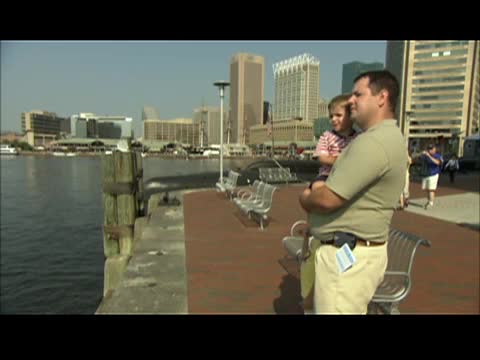
corporations. People love to be around water. There is a sparkling water which is inspirational. There's something about water in the middle of the city that draws people in. Like the ebb and flow of the tide the water lures us harbors in cities around the globe attract millions of people. The Inner Harbor in Baltimore Maryland is one of America's most famous waterfalls. I've met people from Japan China and they come from all over the world here. So there must be a reason.
Baltimore's waterfront success is a unique story of struggle and perseverance. A story that begins half a century ago when the harbor looked nothing like this. You had all of the rotting warehouses the rotting peers their rat infested areas. You got this stench of fish and the water itself was full of debris and was dirty. You didn't walk around the harbour. It was one of the most awful place urban centers in America. The fight to save Baltimore's decaying Harbor and its dramatic transformation from this to this inspired cities from coast to coast. Baltimore show this that it could rise Phoenix like from the ashes of basically urban dilapidation. It became a model for civic planners. Places like Rotterdam in the Netherlands and Sydney Australia wanted to know the secrets of Baltimore's
success. They have very good ideas which to create these places and people were. The perfect thing for me. Baltimore is pretty much the same. If Baltimore can do it we can do it too. Like Baltimore most major cities were built on water. They depended on their hoggers which were critical for transportation and commerce. But by the mid 20th century a sea change was beginning to threaten many port cities. Industry needed deeper harbors and more space for large container ships. Waterfronts worldwide became urban wasteland. The all harbours all over the world were abandoned by the shipping. So the center of the cities began to decline because that was hardly. The rise of trucking. Diverted even more for business and across America residents were moving to the suburbs. These economic forces devastated waterfronts
in New York Boston Pittsburgh and many others cities with dying Harbor's needed help and that helped with come from a most unlikely source a city facing the threat of bankruptcy. Baltimore. It was very sad and very depressing. And the worst part was that the young people who are to be your leaders in the future were leaving in droves. A defining moment came when the popular O'Neil's department store closed its doors right after Christmas in 1954. It was a real shock to the whole business community. So everybody was really in a mood of desperation. Motivated to improve the city. Jeff Miller of the retail merchants association brought Baltimore's business leaders together. They raised two hundred and twenty five thousand dollars. The equivalent of 1.5 million today to pay for a master plan to rescue downtown. It was a huge gamble.
A gamble was taken by men who had vision and who were prepared to gamble because they knew in their heart that they were right. The newly formed greater Baltimore Committee took its plan to the powerful mayor Tommy D'Alessandro Jr.. Together they formed an unprecedented partnership between business and government. Everybody worked in concert with no. Factional differences. Party differences. Everybody should be tied in that coalition between business and government. The folks in Baltimore. Simply understood the need for the business sector and government to work together in partnership. Earlier than many other communities the plan called for the redevelopment of three hundred acres of the central business district until the designers made a strategic decision to start with a small project that would have a big impact. A 22 acre development called Scholls center.
Took up the whole front page of The Evening Sun. This was big. Despite good press people across the city had serious doubts. Barbara Benelli crafted a campaign to change public opinion. We put up a model which shows this gorgeous office building and it's beautiful looking. And ran out of questions. And they would say Oh dear. We'll never live to see it and you'll probably never live to see it either. But voters approved spending 25 million dollars for the project in the years ahead. City leaders with ask for community support more than a dozen times to move the project forward. In 1960 famed architect NEAZ vendor won a competition to design the first structure. Charles had a plan. People come down to look at the building. She was really.
Revitalized. Now people thought wow this is something a borrower can do and will do. And it amazing how the Charles center project just took off after that. Charles center one architectural awards for its modern towers. Plaza's Skywalkers shops and a theater. Along with the skyscrapers the city was building hope for the future. But the journey was about to take an unexpected turn that would change the face of this city and waterfronts around the world. Probably a what do we have and how we make like that over the years. Boy by the success of Charles center Baltimore mayor Theodore McDonald and forged ahead with the original plan to revitalize the entire inner harbor.
That's why they changed my way. Then we looked around there was there was in a harbor the city set up a non-profit organization to focus on the project full time and asked Martin Mills PA to head the Charles Center Harbor management corporation or plan that's where you get one chance to redevelop your own hometown and failure is not an option. We all believe in what we're doing. Most of us were too young and too naive to believe that we'd fail. The design team that began downtown's revitalization returned eager to finish the job. Just the idea of working on a project of these dimensions and this promise was enough to attract me as a young urban designer. I didn't even have a drawing board. I bought a flush door laid it on two horses Carpenter's horses in my living room. The designers came up with a cutting edge idea that would later revolutionize the way many cities use their waterfront. It was an
elaborate plan to turn Baltimore's worthless Harbor into a vibrant place where people could live work and play to improve the quality of life in the city. The idea from the very beginning was to do this redevelopment for the people of Baltimore. Were trying to make the city into a place for people. It was not just economic development. It was truly making a difference. To clear the way for new streets and buildings the city had to acquire 1000 properties and relocate 700 businesses. We all know how difficult it is to even redesign our own kitchens. Imagine doing a building how difficult that is and now you're going to do multiple buildings and parks and streets. Planners had to coordinate with 14 different government agencies. Their first hurdle was a state plan to put an expressway across the mouth of the harbor from here you can see where the expressway was going to go across and the original
plan and this was the classic example of avoiding a thing that from a scale perspective architecturally would have made the harbor into a little pool. In the end the state was persuaded the road was a bad idea. Many other major cities they had built their expressways along the waterfront already cut the city off. From the waterfront and that we had built our So we could stop it. It was their first victory but there were many challenges ahead. Of our project. One can start actual physical work as the buildings rose. So did the skepticism. It's been suggested lately that the rate of building in the downtown inner harbor area is too fast. We feel very strongly that there hasn't been too much building in any area in the inner harbor. The project was just getting started within a few years. Half a dozen companies had committed to relocate at the height increasing the city's tax base.
Any two of those buildings produce more taxes for the city than the whole 300 acres of the Inner Harbor was producing before. With more jobs being relocated to the harbor to live work and play model was beginning to take shape. But would people find it an attractive place to live if someone had told me in 1965 that 10 years later I would be living in a harbor. I think I would have said yeah and maybe next year on the moon. One hundred dilapidated row houses in Otterbein were about to be demolished when the city launched the homesteading experiment selling the properties for a dollar each in a lottery. I think the funniest reaction was my grandmother. When I told her the house cost a dollar. She looked at it. She says it has no windows and you pay 50 cents too much homesteaders like Susan Levitan and Jeffrey Lauren agreed to renovate their houses. They saw themselves as urban pioneers. Here was something you could actually see a difference here. And it was fantastic. You could see something going from utter
disrepair to really beautiful. So it was really thrilling to be part of this renaissance. It was an urban renaissance. But the greatest challenge of this urban renaissance was creating a waterfront playground for Baltimore what could be more wonderful than to provide them a living room around the waterfront that they could come and enjoy. The city rebuilt the bulkhead putting in open spaces with parks and a problem. Hoping it would entice people to come downtown. Cocktail parties people would brag that they had been downtown in 10 years when my husband came home and told me we were moving to Baltimore. I thought oh my god my life is over because at that point in time my view of Baltimore was that it was the arm of the world. Ironically Sandy Hilman became one of Baltimore's biggest advocates. She had the job of improving the city's image during a turbulent
time in history. In 1968 following the assassination of civil rights leader Martin Luther King Jr. riots broke out in Baltimore and other cities across the country. Cities were dealing with issues other than urban redevelopment at that point in time they were dealing with much more crucial human issues. To bring neighborhoods back together. Baltimore held city fairs and ethnic festivals first at Charles center and then the. People came downtown. The key to success was bringing people downtown. And of course once people got down here they were astonished because they hadn't been down for years. The idea was every year to add something that would continue to excite energize and influence public behavior. The planners strategy also called for adding cultural and educational
waterfront attractions like the Maryland Science Center and this historic Navy warship the USS Constellation. Somebody just gave us that this gave us a salute. That it was the constellation for the crowd from the people in the demonstration. Amazingly when all of this was being built nobody was thinking about tourists. Tourism in Baltimore was an oxymoron. The notion that hundreds in fact millions of people would come to something called the Inner Harbor Bar in Baltimore would have been seen as preposterous. What happened next surprised them all. A series of events would forever alter the inner Harbor's impact on Baltimore and the rest of the world. In the summer of 1976 an international fleet. Of tall ships arrived in New York with a U.S. spy sent 10. Baltimore leaders
convince eight Operation Sail captains to visit the inner harbor. Hundreds of thousands showed up. All of a sudden we were inundated with tourists. And. It was a wonderful time. Afterwards rich scratched our heads. Maybe maybe the Inner Harbor could. Attract. Tourists. The. Impact of the Tall Ships really did show us that we had a jewel in many cities around the world. Harbour's once prized as assets had become liabilities. Places like the south side of Rotterdam. It's suffered years of neglect when shipping moved out to sea in Sydney Australia. Tin shacks were all that remained of a once prosperous port. It died in the area around it. I've read that. American cities also had vacant waterfronts harbors in the world face the same problem at the same time and so people started
looking at how to solve it. But Baltimore was about to discover something that would bring those cities and more to its doorstep. Marketing experts called it a critical mass of attractions which could give old Harbor's new life as tourist destinations. To get people to drive. It has to be worth the time and expense of the trouble of getting there. So the notion of Critical Mass says there have to be. Things for them to do. There have to be attractions. The thought was What can we do in the inner harbor that is unique and will attract people. They had a bold idea for an aquarium when there were only a few in the world. But could they convince Baltimore's mayor William Donald Schaefer and their bunch of top fish. So dry we enter the aquarium up in Boston. I got in talk to the shark and all this stuff we got on here. I
got to have an aquarium. The aquarium would play a key role in creating a critical mass of recreational attractions all built to draw people to the waterfront. This is the pride of Baltimore to. A replica of the Clippers ship made famous in the war of 1812. And the romance of the sea. The beauty of art on the water. The fact that these vessels are not stationary is very very intriguing to people. The original ship which was lost at sea was built as a sailing ambasador and a symbol of the city's newfound. We have the pride built right on the shoreline. So it became an attraction. People love to come and watch the ship owners up close by identifying the ship as a work of art. The management team got city money and federal matching funds for public improvements.
I think a central theme was to ask for forgiveness and permission and to push the envelope on the use of public money. But after we done it it was signed off on is considered to be a good idea. Planners also had to put together creative deals to fund a convention center and attract a major hotel chain. Every time I heard I would come up or something became difficult. We were in a new territory. It seems like the right person would come out and solve the problem and move it on. One man had an idea for a traction that would bring international attention to the inner harbor and remake waterfronts worldwide. That man was James Rouse. Whatever you can do or believe you can begin it. But this has genius power and magic and. Rouse was known for developing shopping centers planned communities and projects giving hope to America's poorest neighborhoods. Before
Rouse's death in 1996 he was honored with a Presidential Medal of Freedom. He proved that we could reclaim and recreate our urban frontiers. Rouse who helped plan Baltimore's Renaissance wanted to build a festival marketplace at the heart. He invented the concept with Boston's Faneuil Hall. Jimmy used to say people don't come to shop or eat drink. They come just just for the delight of being there. There was a place where you like to be because everything was fun. Baltimore made a deal with a Rao's company to put two pavilions called Harbor Place on waterfront land being used as a park. We very foolishly and not easily thought that this was a slam dunk. Instead it ignited controversy. It's just the open space just this property that we're concerned about. Community activist Luis Alder still bitterly remembers the
campaign she led to save the hoggers park. It was the wave of commercialism. It was some place that you could always go and get air even on the hottest day of the city. I couldn't believe that they would give something to us this wonderful and take it away. A few blocks away little Italy merchants were also upset what they had planned to do 84 85 percent of it was food oriented. And here we are we put our life into the food business and naturally we were frightened. Opponents gathered 10000 signatures to put a place on the ballot hoping to kill the plan. It was a tough battle. It was very close and people were not at all sure which way it was going to go. Once again the harbor's fate was in voters hands. It would have been a disaster if it had not been developed and when the pope came in of course we won I was thrilled and excited but I was scared.
Nobody was sitting around saying you know this is going to be a huge thing everybody's going to come here. Nobody felt it. But we had in our back pocket. The notion that we could really put all the pieces together. This could work. Hard place open with great fanfare. City leaders sailed into the harbor on a parade of ships all you saw the people everybody having a good time everybody sharing the boat came and people went while they were building. You. Stood in the sea of humanity. And it was this wonderful mix and match of every kind of person imaginable. Oh my God I mean I'm really actually getting weepy thinking about it it was. It was really an extraordinary emotional time.
Is literally as somebody turn away from. All these people. That. Are really very good over. The next day. If you open up in the morning and I said. Well they come back. Into the harbor. Ten o'clock. Would just jam. Them into. A. Successful. Baltimore's transformation became big news. New York Magazine put us on the cover is a place to spend the vacation which was unbelievable in those days for Baltimore to be a place where you would go for a holiday. We became examples for other cities. We started to get calls about. I want to come to Baltimore I want to know the story on how to do it in my in my city. City leaders maximized every opportunity to keep Baltimore in the spotlight. This stunt made national news.
The mayor's dip with the seals at Baltimore's new National Aquarium. When he went down the ladder into that pool. It was a magic moment. No I haven't any idea in the world Joe that would be as big as it was Ray. Shaffer was a mayor with great passion and I think that he was able to express that passion and transcend that negativism that people used to feel about the city into a sense of pride. I had friends out in the county. Who said all work can ever. Be great again. Years later one of the couples there came to the inner harbor one day and I was walking down the promenade and there they are where their glass of champagne and it really showed that people were beginning to come around and really believed in what we believed in.
After decades of hard work. They're dying Harbor was reborn. You look at the skyline. It's beautiful. It's absolutely wonderful. You get a real feel of emotion. The harbor look is by design the planners framed the waterfront with a continuous line of 10 story building. Towers were kept back to give the space and open and welcoming. When you have sky and sea and when you think you feel very comfortable. You could see people all stiff and tense as they walk in there and they'd relax. They are not a good people and opening doors for strangers. It was amazing. One skyscraper the World Trade Center was allowed at the water's edge for dramatic effect. The quality of the architecture. And the design was terribly important. The
management team labored over every design element. When Ross spilled Harper-Collins he calculated distances between outdoor diners and people strolling on the promise he would come down here and said to sit here for hours just watching how people. Would relate what distances men. Comment on. It's about three feet lower than the buildings next to it. The difference in height means there's no eye contact. So you can stare at people and without them looking back at you. And that's what's fun. The 35 foot wide problem and was designed to be a public gateway to the water. One of the things which became very important to us was that they had access to the water's edge that there is nothing which cuts people off from the water. Red Brick was chosen over granite to make the problem a lot warm and inviting. The water.
The harbor. Is an emotional place. Some time just down. To the waterfront. And look at the people. Don't look place look at the big. Part of the harbor. A floor is the water active. Just this carefully choreographed. As the shoreline attractions. I think having a water plan continues to be revolutionary because everywhere I go nobody has it. And I think that's really the genius of the inner heart. In 2005 Fromer is a guy named Baltimore one of the top 10 up and coming travel destinations in the world. Thirty million people came in 2006. Which is only a couple of million less than came to the Magic Kingdom at Disney World last year. It's kind of set the standard for what. A lot of cities are trying to build. In their own
communities. Baltimore is a billion dollar tourism industry by turning the hog into a recreational center. Right. Now. I'm on cable watcher. It's kind of fun to see people sit around. All. They've never seen before. It's a theater that has no walls no anybody can walk into your theater and sit down anytime. You feel like you can just spend all day just. Fine. The inner harbor re-invigorated downtown. According to city figures the Harvard supports nearly one hundred thousand jobs and generates 60 million dollars a year in local tax revenues. But there would be new battles down the road over future develop. And the harbour would not solve all of the city's problems. Just a few
blocks from the waterfront. Little. Is Cheap. And the problems of our. Time. Have nothing to do with brick and mortar. Like many cities Baltimore continues to battle poverty drugs and crime. We got some of. The best in urban America here and some of the worst but the harbor became stable. Kind of a rudder for the community and something people could rally around. By improving the image of a city especially in the minds of the people that city maybe equips them a little bit better to deal with other people. So I mean they understand that this was for them and about them and it is something that we are all proud of. But could the lesson of that inner harbor help other struggling city.
I was so down when we started. And so up when it was finished. That the transformation was very dramatic. That caught the attention of people. All over the world. Halfway around the world and Sydney was. The American model for revitalizing waterfronts was about to face its first test overseas. Developer Tom Heysen had purchased land along the waterfront abandoned by shipping Darling Harbour the poorest who went from being the first trains went from strike. To. Stop until. In 1983 Heysen traveled the world in search of ideas for developing darling.
Disappointed at every turn he remembered an Australian newspaper story about Baltimore's success Heysen made Baltimore his last stop and met Martin Mills. He took me up to the top of the Trade Center. In the middle of the Inner Harbor. I looked down on looked. To my believe. I really can't believe it. Hasan was so excited he woke up his son and said. Still remember that Frankel's well because he said I've got it. I found it. I said what if. He said looking down over Downing he said what do you mean I'm a dummy. Stu was trying to get to the bottom of what the hell he was talking about in Baltimore he said Voldemort. Voldemort was much the same size as Dowling and he thought that that type of development would fit in beautifully here. Heysen persuaded Martindale's Paul and James Rao's to make the trip down
under. He devised a media blitz to help sell the idea of using the American model to rebuild darling harbour a planned more ambitious than anything the government had in mind. All I wanted in there was a pack public housing and a picket fence and that's what we would have had if Tom Eisin hadn't intervened with his imagination and Jim Rash and Co hadn't come from America to give their ideas. It was like taking a trip to the moon in a rocket. They was just at a different level. Premier Neville Wran adopted the project and wanted it ready for Australia's 1988 bicentennial but there was fierce opposition. I said it was a waste of money and I used it to say shamelessly around the state as part of my campaign to win government in 1998 my opposition was a purely calculated political position.
The newspapers referred to it not as Darling Hobba but as snarling. How about because there was so much animosity towards it. If we had to bulldoze it through we bulled did rebuild as a threat. It's me. It every day of the next four years to reshape darling how many of the elements in vision by the Baltimore team became reality. The Hazen's partnered with Rousse to build a festival marketplace called harbourside. SEE. How that was possible. 1988 Australia celebrated its bicentennial and Darling Harbour was unveiled to the World. Crantz it came down unbelievable to it myself. We've achieved it.
But to everyone's great surprise it was Tom Heysen who appeared with the Queen not the Duke of Edinburgh for a fleeting moment or two as the Jaker said. And that photograph that they took around the world. Today Darling Harbour is one of the city's most. Popular destinations Delling harvest Sydney's playground. A place where 26 million people come to have a good time. And nice lives about it. Night and day every night. The Waterfront is filled with activities outdoor cafes and a critical mass of attractions. Some a bit with a distinctly Australian flag.
Just makes it feel. Like this is the best place. In the midst of this bustling city. Darling Harbour is an oasis with tranquil gardens open spaces and promenade. It's like a lung in the centre of a great city. People can. Smile. And. Talk to each other. In every city there are areas that can be developed these people places and that's what this means. It's a piece. It's. Very hard to reconcile this for what it was in Darling Harbour is more than the Masons imagine it triggered the revitalization of Sydney's central business. And Nick
Greiner who opposed the project acknowledges that without Darling Harbour. He would not have bid. For the 2000 Olympic Games. The legacy of darling hubby should be that it's been an essential part of making Sydney one of the greatest global cities in the world. For his work. Tom Heysen received the Order of Australia. The nation's highest honor. That is. Something we treasure for the rest of my life. I just. Wept. Wept. Gratitude at. People who saw so much of what had been done. It was the end of a long journey for Heysen and the Americans who shared his dream. He received this letter from James or else.
When we first met in my office. I remember very well few words of exhortation. Jim. This will be your crowning glory. Well Tom to me was your crowning glory. Done a. Lot. Try. After their success in Sydney. Baltimore planners came to a stunning realisation. By altering their city's fate. They had discovered something valuable for all ports around the globe. This is World Harbord days and the never is a celebration of this waterfront and the life that gives to Rotterdam a quarter of a million people come to this event every.
20 years ago. It was that city. And now it's alive and. It's wonderful to see. It's alive. It's. Made. The. Explosion. If you walk here you feel. That. Rotterdam is another global harbor that experienced a remarkable renaissance. Along the waterfront sits the cop fans on a complex of restaurants shops and high rises known as Little Manhattan on the river. All of this was redeveloped since 1993 on deserted lane like Baltimore's waterfront. It became one of the city's worst areas. In the harbor project in Baltimore. First I was really overwhelmed. It changed the feeling of having water in a city only as a place to work. But is a piece of beauty. So it gave us
a lot of courage. Inspired to use the water to better their city. The Dutch built the Erasmus bridge connecting the city's prosperous North to the cop van Zod on the South Bank One of the Netherlands most famous landmarks. This bridge is a symbol of Rotterdam rebirth that links really the two worlds together. It is a beautiful project. Better City it better the situation of the people in this city to think is more. Massive. Than I could have. The effect is enormous. They did something to. Improve. The image and the lives of the people of the city and so anything we could do to help them was very much something it was worth doing. So many cities wanted advice milles par Rousse and others became consultants interest in the Baltimore model kept growing.
It was at the time probably the single most exciting thing happening certainly in America and people bought into it pretty quickly. The team helped revitalize waterfronts across the U.S. and around the world. In places like Great Britain Barcelona Spain and Osaka Japan. In Honolulu Hawaii. This old cruise terminal was turned into the Aloha Tower marketplace. In the end it must have been 98 to 100 cities on five continents that were influenced by this American model in Baltimore. Not every project was successful festival market places failed in Toledo Ohio. And Flint Michigan. Areas with smaller populations. But waterfront revitalization continues in cities across the country. Pittsburgh's three rivers park Chicago's Navy Pier. The expansion of Jack London Square in Oakland
California. And. Near Washington D.C. National Hawk. It sure need to create a public private partnership organization of some kind. Mills PA still meets with groups like this visiting delegation from Belfast Northern Ireland. Belfast gave hope to its war torn city. With this development along the river logging logging side was so successful expansion is underway with a new project. Titanic. More. For cities like Belfast. Baltimore is still important. It's my first visit I am absolutely amazed at the point of regeneration development. It's fantastic it really is where we'd like to be. In Belfast. But the path to Waterfront success is
different for every city. We point them in the right direction. We couldn't do it for them because it's something that has to be an expression of the culture of that city. You don't cookie cutter. You let them evolve. You have to really enlist all the forces of being a community to do something like this the right way. Finding the right path isn't easy. Increased competition is forcing cities to dream up innovative new concepts. To American cities. Long Beach California and Norfolk Virginia realize the stakes were high. They needed to make their waterfronts unique. Those out there who are fortunate enough to have waterfronts. There is much to be gained by focusing on and building on what they have. Norfolk was in severe decline until nearly three decades of waterfront revitalization transform the city.
It saved the life of the city. Of Najaf. It's almost like having a heart transplant. City leaders say the capitalists. The Norfolk's Renaissance was the waterside festival marketplace. Like Baltimore people can stroll along a brick promenade and will pull their boat into a marina. That's the best way in the world to. Enjoy life. What makes this harbor different is the shipping activity. Norfolk is home to major shift and the world's largest naval base. We talked to folks on a daily basis but look at the diversity of the ships that go by and they just look at it in awe. So we started to realize that well that's something that we really need to figure out how to market how to brand it and how to get more people to. Build this National Maritime Center featuring the USS Wisconsin
battleship and Nada which has interactive science exhibits. More tourists are coming to know. It's one of the fastest growing ports for cruise ships. The city opened this state of the art cruise terminal. Half a million passengers have traveled to North. You can't help but kind of get a bit of a chill when you're looking at just the kind of majesty of the ship. It's definitely a source of pride for all of. Norfolk has made the harbor a part of the city's lifestyle with special events. Its waterfront park. There has to be a commitment and a passion to make your city a better place because it takes a
long time and a lot of. Investment to make a project like this work extremely extremely proud and. Motivated and inspired to keep going. Across the country in Long Beach California. New high rises to signify the future. But what makes this revitalization special is it's celebration of the. It all began with Queensway Bay just 20 miles south of Los Angeles. People go to the harbor now and assume it's always been there. They don't remember how bad it was in the mid-1990s. Long Beach needed a lifeline to survive. Naval Base Closings cost the city's economy three billion dollars and 50000 jobs. I can remember thinking when I was first or if we could just maybe have some banners you know down town
to say welcome to Long Beach or something we can even afford things like that. Long Beach leaders refused to give up. Pinning their hopes on waterfront development. I always refer to Long Beach California as the Baltimore of the West Coast. Stan Eckstein use the lessons he learned from Baltimore to turn a mud flat into Queensway Bay. He introduced a water plan but customized the design to reflect the seaside towns of history with reminders of the old pike amusement park and the rainbow pier. There was a time. When we had charm and romance in the intimacy of the water and it became the inspiration for me for all the workers to see if we can't recreate. This memory. And it's very romantic.
Planners. The stately Queen Mary into the design. This historic ocean. Now a hotel provided inspiration for promenade resembling. The deck. Of a ship. Have creating an environment for people so when they're in that environment they feel certain things and they smell certain things and they sent certain things in every piece of it has to tell part of the story. When you come to a Hobba in a different country you can really see what the people are like you can see what the culture is all about how every view tells the Long Beach Story. The port is part of the landscape. Old oil rigs are picturesque style. The city's aquarium resembles ocean waves and features wildlife. From the Pacific. The people responsible for this revitalization and look out over the
harbor and know their efforts paid off. Yeah I love to go out and watch the people stroll and rather you know just enjoying themselves just the way we would hope they would. We're sitting here on a public dock which didn't exist years ago and you get a cruise our boat from another Harbor to come on over here. And. Have dinner. Or. A place where this has happened. Has become a better city. That's the real message. Baltimore's in a hot half a century after its renaissance began. It's like an abstract painting I guess a lot of. Shapes and curves with a tremendous amount of energy and spirit and that's what symbolizes a city now
and. The harbor is expanding in all directions. With office towers new hotels and luxury condos lining the ship. Everybody has invested the public sector the private sector was invested in the success of the Inner Harbor and that's continue. The city has half a dozen new museums and brings crowds downtown with football and baseball stadium. The restaurants in Little Italy concerned about competition from the harbor. Busier than ever. Those Otterbein houses sold for $1 are worth half a million or more even though their view of the harbor is now gone. In Baltimore and cities across America there's growing debate about
overdevelopment. I could never have been billion this raping and pillaging of every square inch of our land. It's too much it's too much and I think I would urge any community or any city think long and hard before you allow any of your open space or parks to be given up because you will never get them back. Managing growth is one of many challenges waterfronts cities face in the 21st century. In a fast changing world. Communities will need to continually reassess how they use their heart. People get tired of places unless they are constantly being enhanced and improved upon. There is no such thing as a project that's really complete. There are also concerns about global warming. Occasional flooding from storms could become permanent.
I hope that the people who had the vision 30 years ago that the next generation will also have that kind of vision to know that this is something really special worth protecting. Baltimore's Inner Harbor and Charles center have earned 40 national and international awards the American Institute of Architects called it one of the supreme achievements of large scale urban design and development in U.S. history. In the words of Daniel Burnham make no little plans. It's got to be a plan that excites the imagination and stirs the blood and makes people really stand up and take notice. Skimps anyone dreamed it Green said this happened just. Unfolding. Hard. Work. Brains a lot of people. For the men and women who had the vision that reshaped Cobbers worldwide. Seeing the results of their life's work.
Is its own reward. I have a great feeling of satisfaction. What we did was worthwhile. People are still benefiting from. I hope that my grandchildren and their children will walk along the promenade and have fun there and see people who are like them and unlike them. We they things adored and changed the way people live. Their hope. Is that future generations will benefit from urban waterfronts. That's the legacy of global harbour's will improve lives and restore cities. At. Their heart. This was a chance to do something in the field. And a green scheme that would live forever.
People realize now that waterfronts can be tremendously valuable places to cities not just because of what they see in Baltimore but they see all over the world. This is an adventure story. That's what it's been it's been a wonderful adventure. A DVD of global Harbor's a waterfront Renaissance including extras is available for 1995 plus shipping and handling. You can order by calling 1 800 8 7 3 6 1 5. Or purchase on line at global partners. Support for global Harbor's comes from. T Rowe
Price. It's not just about the short term. For 70 years we've taken a steady long term approach T Rowe Price is pleased to support global Harden's attributes to vision and the enduring value of taking a long. Additional funding provided by the Urban Land Institute. The Legg Mason charitable foundation. The Maryland heritage areas authority Whiting Turner contracting company and Strief brothers Eckles and rouse and from the following foundations and corporations.
- Producing Organization
- Maryland Public Television
- Contributing Organization
- Maryland Public Television (Owings Mills, Maryland)
- AAPB ID
- cpb-aacip/394-54kkwvnn
If you have more information about this item than what is given here, or if you have concerns about this record, we want to know! Contact us, indicating the AAPB ID (cpb-aacip/394-54kkwvnn).
- Description
- Description
- GLOBAL HARBORS: A WATERFRONT RENAISSANCE is an historical documentary and a living history. The story is told in first person accounts by the few remaining community leaders who accomplished what was considered nearly impossible half a century ago. One of the central characters is Martin Millspaugh, a former journalist turned urban planner. Now retired, Millspaugh still receives dozens of requests every year to speak to civic leaders, international dignitaries and students at prestigious academic institutions about Baltimore's Inner Harbor revitalization and how it influenced waterfront cities around the world. Global Harbors, a one hour documentary shot in HD in Baltimore, Maryland, Sydney, Australia, Rotterdam in the Netherlands, Long Beach, California and Norfolk, Virginia.
- Asset type
- Program
- Genres
- Documentary
- Media type
- Moving Image
- Credits
-
-
Distributor:
Maryland Public Television
Producing Organization: Maryland Public Television
- AAPB Contributor Holdings
-
Maryland Public Television
Identifier: DB6-1325 - 57128 (Maryland Public Television)
Format: Digital Betacam
Generation: Master
Duration: 00:56:46
If you have a copy of this asset and would like us to add it to our catalog, please contact us.
- Citations
- Chicago: “Global Harbors: A Waterfront Renaissance,” Maryland Public Television, American Archive of Public Broadcasting (GBH and the Library of Congress), Boston, MA and Washington, DC, accessed May 10, 2026, http://americanarchive.org/catalog/cpb-aacip-394-54kkwvnn.
- MLA: “Global Harbors: A Waterfront Renaissance.” Maryland Public Television, American Archive of Public Broadcasting (GBH and the Library of Congress), Boston, MA and Washington, DC. Web. May 10, 2026. <http://americanarchive.org/catalog/cpb-aacip-394-54kkwvnn>.
- APA: Global Harbors: A Waterfront Renaissance. Boston, MA: Maryland Public Television, American Archive of Public Broadcasting (GBH and the Library of Congress), Boston, MA and Washington, DC. Retrieved from http://americanarchive.org/catalog/cpb-aacip-394-54kkwvnn