Maryland In The Great Depression
- Transcript
Oh. So. This program was made possible with funds from the Maryland Humanities Council incorporated through a grant from the National Endowment for the Humanities and by the members of Maryland Public Television. These people with selling apples it was so said you know that you know they were so pitiful and they had the you know they was selling apples and there were no jobs it was it was a terrible time. Many men were out of work a lot a lot of jobs were lost never to come back. Mattered. When you could hear over the people. Not having. Food. It was very shameful to be at one of these food
lines and it hurt. It hurt very badly he don't forget that. Great Depression has been described by one author as leaving an invisible scar. Everything you used you had to be very careful. Because once it was gone you might not be able to replace it. Every family who lived through that remembers it every family in Maryland has story is of its In Durance. The Great Depression my FNO stayed in touch but in some ways Maryland's depression experience was unique I think because of our proximity do they finance capital for one thing. Marilyn was a handy laboratory for New Deal social experiments. And yet on the other hand conservative Maryland politicians opposed federal assistance so
successfully that in the end Maryland actually received less help than almost any other state. And through it all Marylanders got by mostly by helping one another. During this hour. We relive the Great Depression in Maryland. Through the reflections of those who've studied it. And through the memories of those who were there. I guess the most vivid memory I have of the depression is the hopelessness and the feeling of despair that so many people have and their anxieties and the financial worries were too are not of their making. And you couldn't afford another bucket I have in those days to get a bourbon. That's depression. In more ways than one. That's the most vivid thing. Hunger. We got used to one time I think we were all sick. It was about five or six of us and she got really desperate and called the doctor and he came and he said Well I
think the only thing wrong with these children. Is their lack of meat. He said they've got to get some protein here somehow. The following Sunday the doctor chauffeur drove up in a car with a big beef. For a family and I never forgot that. I never forgot the way it smelled when it was cooking. It was just great and I never forgot the way it tasted. But both with a prayer for all that. I mean I'm sure if. We want a car. To the standard of living that we ever had. But my parents said you you have to make up what you can afford to wait for somebody else to do it for you. Maryland's economy in the 1920s was fairly diversified. It was on the Eastern Shore devoted to
farming of course truck farming mainly into fisheries in Baltimore there were lively steel. Ship building chemical and clothing and canning industries. Western Maryland was mostly farming but in far western Maryland in Allegheny County in the famous Georges Creek Valley. There was an enormous deposit of soft coal. We have a very diverse and dusty manufacturing base a lot of smaller industries a lot of large companies. We had a mortgage board of industries. This area had six to eight glass factories a blossoming glass industry. After I graduated I went down the street to the cutting factory without my parent's knowledge and applied for a job. And I did get a job cutting glass and I did it all summer. I work 40 hours a week for 10 cents an hour.
But by the end of the summer I had enough to pay my entrance fee to the college which was $35. There's one dark spot in the Maryland economy and that's the farmer with 20 or 25 percent of the Maryland population lived on the farm. And have been in decline since 1921. Nobody much noticed the farmer was suffering. Farmers didn't really share in the prosperity of the 20s. And by the time the 30s came with the stock market crash farmers were hit quite hard to back only 1929 sold for something like 19 cents a pound. In 1932 I think the price was something like. Ten cents a pound. I work for $15 a month on a farm in plan and doing everything with horses you see and I never did get $15 but I got something to eat. So you now only do the 1920s was characterized by optimism and duty but the more we know about the 1920s. The more we
realize there was a falseness in fact that. I had a friend a very conservative tell me buys 100 shares of the stuff in a firm make an airplane propeller one. With one blade. I said what it is that is it would save money the SES gets crazy when the stock market crashed in October 1929 stocks fell to a mere 40 percent of the earlier President Herbert Hoover refused to consider the downturn serious he called it not a recession. But a mere depression in the stock market crashed. My mother went downtown to get money out of the bank. I remember going downtown and we ran from bank the bank the bank and fortunately they were on the corners left like got employment started. The fact he finally at work felt that the offices of the factories are working the people that you know which one
I mean they do and they fought and they fought it. The people a lot of the people in the offices and factories they would they would split the work instead of two men getting laid off. Well we're working here for a week apiece so everybody get a little bit but not be actually unemployed. Many business leaders refused to acknowledge the seriousness of the situation. But many American institutions did indeed stand on the brink of ruin. Panicky depositors made a run on the Baltimore trust. Three national banks and 15 state banks went on unemployment throughout the state climbed reaching nearly 20 percent involved more. Soon just four in 10 Maryland plants just full production and employment. The whole mechanism of trade commerce almost stopped dead in its tracks. The Big Bang bomber all went down the river. People jumped out of the 10 12 stories the stock market when we see them.
If you didn't have money there was no place to get it. There was no Social Security then there was no welfare then there was no unemployment then there was just no money around the people of Maryland Ostroff more than they were angry. When the depression came. There was a sense of bewilderment. Many a time I would see my mother trying to count money and crying hoping she would have enough for the win. It was terrifying because she was a year old trial. It was just you know which way to turn the political situation in Baltimore and in Maryland as a whole was largely influenced by strong southern states rights philosophy of the Democratic Party. It was a philosophy that embraced the notion of voluntourism. It was a philosophy that reinforced the notion of self-help. It was a philosophy that suggested we should look to ourselves for the solutions to our problems. The embodiment of this philosophy was Maryland's Democratic governor Albert C.
Richie Rich. He put the road through here. And he got a lot of votes because he was the only governor ever done anything for this community. Certainly he was the most popular governor we had ever had. We had never had a governor who had been re-elected before he was re-elected for four terms. I got up on the floor. As governor of Maryland. To come back General that in spite of the pressure on. Our future will be even more glorious. And. We do not let anyone make you could not make man your camp. Any part. Of the population. Thing as well a lift by the bootstraps was what people needed but didn't get.
They were driven to action. I guess the most radical thing that happened in in America. Very largely happened in Maryland was that he was the was the March on Washington of the Bonus Army in July. I think 30 to. 50 or 20000 people mostly from the good Midwest people who couldn't find the time when to demand from the White House and demand from the Congress that something be done. There were a few radicals among them a few people talking fascist ideas and talking communist ideas but they were mostly just people who didn't have a job. Government was frightened president who brings out the troops under General MacArthur and where artillery and tanks. The tent city that was burned down. Into Ritchie was a law unto and Governor Ritchie called out the state police and alerted the National Guard to make sure that these bombs didn't stay here in Maryland and drawn Marylander sauces. Chased them back to West Virginia Pennsylvania wherever and wherever they came from
all of this is not the triumph of radicalism. It's good for the pull and this radicalism. It was it was a country mostly waiting waiting for something that lay ahead and could be better that for all the country that would be Franklin Roosevelt and his running mate John gong Orinda on soon after. Governor Ritchie decided to close on the banks in Maryland. Elena Ritchie was very careful to want a big deposit just to get their money out before the banks were closed you know railroad the Consolidated Gas and Electric of Baltimore. ALEX BROWN The Sun paper and some others they got their money out and they continued to pay their dividends and continued to reinvest when the market was at the very bottom. The governor really believed that as a business prospered the economy prospered. Ordinary people didn't get that money
out of the banks to pay the mortgage. But the big investors got their money out of the banks to reinvest. Well I do remember the bank closing the farmer's bank Chris feeling people all white and black some money there. My mother was a widow and I had to wear yours to go to school and she took the loan out of a thousand dollars in Union trust. But. The next month. The bank was closed and she was unable to get her money. It not only was able to get it in small amounts over several years. If you owed money to a bank on your home for example the bank insisted that you pay regularly your payments on your mortgage but if you had a savings account or a checking account. At that bank. They wouldn't let you draw it out. So you couldn't get your own money in many cases
to pay for the debt you owe owed to that to that bank it was it was a horror story. It would have got it bad. But I'd tell you what I had did when the clothes I had I had some little money in more than one bank and that I would wear I had this money in a knot about how I would order and got that money and I cared though I wore it and Washington knew President Roosevelt was hard at work at what came to be known as the first 100 days. A flurry of legislation to provide relief promote recovery and establish reforms designed to prevent another depression. He was kind of a charisma guy that could convince you that what he was saying was true. Just instill confidence in people if they felt that things were going to get better that a few might in banishing fear.
We have provided the machinery to restore our financial system and it is up to you to support and make it work. It is your problem my friend you are problem no less. But it is mine. We cannot thank you. Not everyone found Roosevelt inspiring in Maryland yet his critics the most eloquent was a state's best known writer H.L. Mencken. Asafa clay make him believe that the New Deal was a repudiation of the traditional American work ethic. Plan the economy. Most Americans would welcome any planned economy that showed the slightest sign of working. But how is the one we now here I've got to work as long as no two of its proponents agree as to where it is heading or what it can accomplish or what it is. Mencken bludgeon the New Deal in a variety of forms for a long period of time he talked about them in the Baltimore evening sun and American mercury and a number of other American magazines.
Not one of the new deal's greater objectives has been attained. The rich continue rich and many millions of the poor remain on the dole. The New Deal had political opponents as well. Some of them within Roosevelt's own party. Mayor Howard Jackson the Democratic mayor in a Democratic city had the unusual distinction throughout the decade of being an anti New Deal mayor and a city that was overwhelmingly in support of FDR and the New Deal from 1932 to 1930. And the people of Maryland received about $8 per person per capita from the federal government for relief. Actually this was one of the smallest amounts of any state received. If Maryland had been willing to match the $8 with two dollars of state appropriation then the total would have risen to about $16 per capita while the politicians resisted federal relief measures. The people of our state continue to suffer.
It was a time when people were standing in lines for food. It was a time when Also there were cases recorded cases of malnutrition in the state. The percentage of unemployment in Baltimore was probably over 25 percent at that time and the people receiving on relief was almost probably 20 percent of the population. Some people would go knocking on doors and ask for work. Can I clean out your basement. Can I replace a broken window or anything of that kind. To get some money. Jobs were just weren't anywhere so they looked for work. Maryland officials were forced to face an appalling task. How to provide relief for thousands of unemployed and homeless man women and child. It was a battle for survival. People were lost their pride and dignity.
And it was very shameful that they had one of these food lines and it heard it hurt very badly he don't forget that we were in Baltimore one morning you had a loaded cabbie kill the market for her program to be so the window numbered freight to get there and so on and cross through and to get to work or not to exaggerate numbers at least 500 people all day and lied straight as far as U.S. government building to Praed Street picking up and the garbage they could get and the roads here. I don't care we do screw you. You know the way
the three primary agencies that were responsible for relief in Baltimore where the family well first it's associated Jewish charities and the Baltimore Catholic Charities. And those agencies did a heroic job in the early part of the Great Depression. One of the things that come to mind are a lot of newspaper articles that appeared at that point in time which is the American Red Cross and the national government bringing car loads of loads into the city of Cumberland County Children's clothes because the kids didn't have anything to wear to school that time we had a very active Red Cross and this is Lucille Gross was the director there and she had all her friends who were my mother and my aunt and her sisters and from the church work they were designated like once a week they would go to do bandages they would go to do surprise the Red Cross of course did all sorts of first date in
training and we took that and advanced and different courses. There was no public assistance as the reason. When they lay eggs for the poor there were collections for the poor. Of whom there were a number but people scratched a little harder for themselves. People didn't want to go on relief that was a disgrace but with this they had to and. The relief agencies the private agencies languages. They couldn't handle it. The relief percipient had to look elsewhere for assistance. They turned to neighbors they turned to bakers. They turned to grocery stores any place they could find for direct handouts. My father owned a grocery store but that doesn't mean we were rich because. We had to eat what was left over that what they didn't sell and everything with one broke
they would pay you later on if you had sickness in the family my father would help you some way or other. Fortunately for most people they worked together. If you knew a family that was destitute who didn't have food to put on the table we'd all get together expensive food and people were helping each other and I think that's how we survive. Baltimore is one of the few cities that did not create a Department of Public Welfare and some 1935 Barry Greenstein was known as Mr really he was. An official of the associated Jewish charities and he was also in a very difficult position throughout most of his time when he was appointed to the Maryland Emergency Relief Administration his state counterparts the Federal Emergency Relief administrator thank you did a remarkable job in making public welfare more professional and able agency and also was
significant in demonstrating. That public relief was a matter of public responsibility. Not an issue of charity. On more than poor the ranks of the unemployed were swelled by jobless people who poured into the state from around the country. And 234. And 19 percent of the people of Baltimore wanted jobs and there was no jobs. Thirty percent of the Allegheny and Garrett County were were having blown up to 46 percent of the people in Somerset County and on the eastern shore. Goodbye John. The big industrial cities of the North had enjoyed what was considered a rather long period of relative prosperity. So
much so that they became magnets of drawing and Lloyd from all parts of the country. As she traveled through there crowded with black workers from the south heading towards the great steel mills and auto industry of the north. Coming to bomb us making almost twice as much for the more that's normal where you know 10 hours if they have a sense. It was a death threat. We had sort of come down there to get some jabs come from the con to bake cakes and when I couldn't get the right. Sort of a mate who was quite open hadn't. Went to question the president came and going to work and maybe it's a five
day a week two days a week sometimes if we put the same date and your situation you had in money in the bank you say you had to use that to sell to the people that was my case it was both white and black rich or poor. That was something. I looked around saw fellow lawyers driving cabs. And of course there were the bread lines. There was you have cellars. It was depressing and made me however feel that you have to strive even more so than ever before. I said matter of fact when I first came here before took the bar I worked in her shoe store. I already had a college degree. I had a law degree. I didn't take anything I could get I worked at the hustlers department
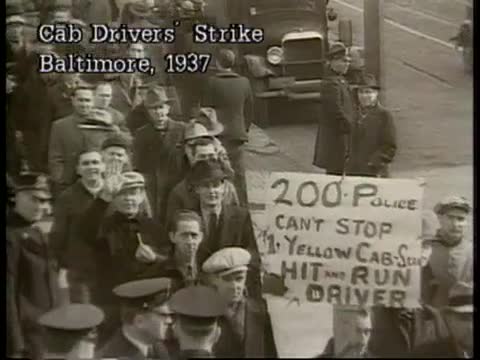
store in those days the boss didn't even bother talking about the economics of. The availability of a large number of the Willing hands who stood out of the gate all he had to do was to. Say look out the window. There's a big long line ready to take your job. Are you willing know that we cut your way dues from 55 or 60 cents an hour back to 45. Well the contrast at the depths of the depression the contrast between how the wealthy live bando Hoovervilles which have become the homes of those who made them rich through the exploitation of their labor. To us this was on the front it was a crime against everything that we had been taught to believe. America stood for. It should stand for
equal justice. That doesn't mean that everyone has to fair exactly the same but the disparity between those who owned and exploited labor. And those who were the workers who were exploited. It was unacceptable to us both a man and planner that people should organize and have you in the negotiate days and weighed in and the public opinion in the was in the favor that I was that scared. Was wasn't thinking straight. I've seen the report of all the conditions because you're correct the. Water would come to the ground and pretty sure that slipped. The root user rights in one. So I volunteered to help them and then the injunction.
I was a veteran bloody strike me the wrong way. Where did the strikers battle with those who were trying to break people who would go through the picket lines but there were gangsters here from New York and they would kill. They had they would know they had killed at least two strikers and their bodies in the water the day after they were thrown. Well the injunction was denied and there being a strike was successful. They won what they wanted. The rules of the free market economy were very apparent to us in childhood that there had to be some restraints on accumulated financial and political power that we had to democratize the economy and not just a political structure. Having the right to cast a vote once every four years was terribly important.
But having the right to a living wage every day that you punch a time card. Is certainly equally urgent and important. Legislation helped Labor continue to address these important concerns in part by encouraging workers to organize union membership. One thing done. In addition New Deal programs tackled unemployment for jobless men the picture was getting brighter. The New Deal CCC Civilian Conservation Corps aim to employ a quarter of a million young men in forestry and flood prevention. The task requires training feeding and clothing twice as many men as there were in the United States Army. Is one of the greatest things to happen in this country for young kids off the streets off the highways and gaming up to learn different trains different kinds of work. They built many a many farmers program planted
trees took care of erosion Soros did all kinds of projects so beneficial that I. Remember I worked all week on my hands and knees transplant and you know you go you think you get. To buy my sister a coat. That's why it was only of my family was all over there in western Maryland in those parks. Every store that big fort Frederick every store that has a lay a stone fort in America that was built there in the French and Indian Wars and the taboo state park all those beautiful trees did all kinds of parties all over the United States. They got 30000 more. They got a cozy place to sleep. They kept five dollars a month and sent $25 a month back home. Like the Civilian Conservation Corps Works Progress Administration was mainly for unemployed men.
However the WPA did have a few programs for women. They taught me how to do. How decaying and how to preserve how to do all sorts of things as we always have is so when how to go. Married women continued to enter the workforce in larger numbers throughout the 1930s in Baltimore and nationally. But at the same time that was happening there was a great deal of animosity toward the working woman. I never lost a day of work during the Depression but my wife had to quit her job when we got married. She worked for the Gas Electric Company and they would not employ married women. So within a month we got married she had to put little Marcel. African-American women for example had been always disproportionately located in domestic jobs. Even by 1940 85 percent of all wage earning African-American women in Baltimore were domestics thing.
To day. With for domestic work. And the people who work in services they call who spent the week they get turned out of the week. Dr Bates said one day I really like the way you do the patients. I like the way you answer the telephone lines. How would you like to have a desk and be our receptionist in reaction was just terrible. When they came in. And saw that I was covered and they didn't want they didn't even want to send a message through that death by me. Mrs. Doug's experience typifies the problems not only of women. But of African-Americans. The Great Depression really started early for black Americans I would say by the
new twenties it was beginning to develop as unemployment in a hard time and the need for relief became apparent. But. In the 30s when everybody else was beginning to catch up with the problems the Black said. I think they finally. Kind of had adjusted to the bittersweet reality of it at that time we didn't think in terms of being poor. Children. Should be really had. Everything we needed. And needed knew about how others were suffering. I learned about that through reading about it and you reading about the line that they had. There was some positive things and one that helped everyone
bridge the gap between having not having. Had at least three colleges in the state. That focused on black education. You also heard in Baltimore for instance an Academic High School Douglas High School only Norm was the blog's who lived here and he was called up. That's almost up to the board more color. Later on he was named with the group for the Baltimore Urban League was very significant in the 30s just as we end up Lacy P was and it promoted a variety of urban issues that needed to be explored. They also did things like develop the north with center which was a birth control clinic director was black the nurses were black doctors were black. And then you have the black churches some of them involved in civil rights activities like Sharpe street.
Being a border state as they call Maryland is it makes you neither Northern or Southern. So on the one hand you have a low birth segregation and a significant amount of racial tension. Municipal swimming pools were closed to black people. The parks were closed to block the. No blacks were doing that in a private library. Where you could try own things in the store. If you try to own a hat it was yours. On the other hand there are forces there attempting to smooth it out. But I remember as a little boy. Being out there picketing on Pennsylvania Avenue Kerry. Saying Don't worry you can work. At that. Black people could only be janitors and porters No no clerks nobody at the card register who was black. And that was it a kind of CPR activity that went on all the time.
Discrimination segregation and violence were all part of the African-American experience during the 30s. Despite these obstacles the Depression years saw the beginnings of change. Thurgood Marshall a young lawyer with the help of the end used the courts to force the University of Maryland Law School to admit its first black student. Donald Gaines Mari. Marshall went on to become the first African-American United States Supreme Court justice on the eastern shore where poverty seemed to be greatest for everybody. Blacks were often the scapegoats as a result. There were at least three or four and then chains from 1930 to about 1930 for I remember the mention in print of. A man's name when George heard that they were going to have a mansion that night. And. The black people were told and some of them were told of their home. And my father told me to go in the weather and. I heard all the
commotion and banging that there were within two four. From the jail. And I started down to a friend of mine. And I got scared then and went back home. After the events and the next morning when the undertaker pick up I went with him and the. Man on the ground. So you might be sure and I would take one the pic. Saying that. And then after seeing what happened. But in my mind doing that Clarence Mitchell Jr. who later became the lobbyist for the national and double ECP was that we porter for the AFR with the timing he reported the case and followed it for months. You also had a significant civil rights response to this. Lilly may kill
Jackson lead in WCP during these times and she organize pickets and and a variety of groups. To lobby the state to get a bill. Of course no anti-lynching bill. Happened but there was no national anti-lynching bill as well. After a while lynchings stopped in Maryland and I would say before the Depression was over the lynching era had stopped. However the mystery of surviving it seems to me. The question didn't nor the economic level or lag because they were they were or were so far as luring. Their. Hope. Of living.
I don't think it's changing at all. There's always been that hope that tomorrow will be better in the day. While individuals and families struggle to survive the hard times the Maryland political scene was shifting. Governor Ritchie was replaced by Governor Harry nice. Unlike Ritchie Republican ones was not opposed to federal assistance. Still on a local level opposition to the New Deal persist. Local governments were responsible for the move to St. Paul but the local governments felt threatened by the federal power was taking over where they had been. Local governments tended to be tied to the big song and the bankers and the builders and the manufacturers in their own town.
Local Administrators took the money that was designed to help the consumer. And instead mostly use the money to help the producer. They can exactly take the tripling of the agricultural adjustment. It was designed mainly to help tenant farmers buy their land. Instead. Local administrative loans were good for the money for long hard fact the large functions use the money to evict the tenants and turn that cropland into timber land the question of the tenants found their way to the county seat on a vault in one swell the ranks of. So many of the New Deal recovery measures were were perverted. They follow the money and at the top. Where it wasn't needed. Instead of the bottom where it was so desperately need. Deal Agency special interest in a Southern Maryland village called me
in the 1930s. The Farm Security Administration made oh it's about two hundred seventy thousand photographs of life in the United States and they focused mostly on rural areas. The photographs that are made in ridge are photographs that are made primarily. To make you think benevolently of government intervention and a government that comes in and says. Here let's help you plan your life here let's help you run this farm. The government. System of giving people. Different things. That. Was the new. Horses. I understand it came from Baltimore streets so it was a problem to get them to pull a plow and a way to recruit. We got them to go and we grew good crops from that.
One of my favorite pictures is a picture of a small boy. Framed in the doorway of his home. His name is Bobby Gant. Paying it so you can imagine what OS look like and then on the inside we have to and I remember to be and I can't. Pretty well everybody slept in that one room. It was. At least nine of us and my mother she was so busy doing things for other people out there are going to civically seen what she could do to make things better for other people. Hard times. Brought out a certain resiliency. And a certain degree of cooperation in the community. And it's something that so many people feel that they lack now. The Roosevelt administration was interested in another area of Maryland just as well
during the later years of the Depression. A whole new town was built a few miles outside Washington DC called Green. Now really exemplifies the breadth of vision and the daring really of the whole duty of ministration. It was strictly speaking a public housing project built down in Prince George's County between 1935 and 1938 as part of a broad national program of unemployment relief and public housing. But Greenbelt was just different from any other public housing projects he built. Reason is that it was the brainchild of a Rexford Tugwell one of Roosevelt's more brilliant advisors. I'd say one of the major benefits of living in Greenbelt for children and adults was that everything was contained. Greenbelt had everything right in the middle right in the heart of town. With the housing out around Baghdad one of the reasons that Green Dot was built was
to promote the concept of having a community surrounded by a belt a green belt of trees and open spaces. In your early days there were basically three main criteria for living in Greenbelt and need for housing income to exceed $2000 and you were interesting act in the community you could qualify for the federal government build a green build as a demonstration project. They wanted people to come visit and so they always wanted to work its best. And you weren't supposed to put a washout on Sunday and if the government had roles you might grow up about it but you followed up another role as you had that trap. My dad worked very hard with the hand here and. Didn't have any high culture in those days we had a little one room library. And we had the newspaper that I worked on. And we had dances once a month in the centers.
My brother and I would go bicycling many times and we did a lot of roller skating with little wagons up outside a grocery store and the ladies would come out with a bag of groceries. Why you were in line in the first row of cabs. Because usually they give you 10 cents. Which would get in the movie. There were consumers that taught the women how it came about was a city the likes of which will never be seen again. Tugwell and Roosevelt the New Dealers all hope that green belt would be a great demonstration that would show public housing people as well as private developers how to build communities rather than just housing projects or housing developments. Unfortunately lots of the New Deal critics said it was wrong to build low income housing out in the suburbs so the net result is that the Green Belt project is one of those roads that opened up in the 1930s that the nation chose not to follow.
The green belt approach to community planning proved durable. Six decades later the town continues to thrive. Some of the families who live there now moved in during the late 1930s as a painful decade of depression moron. They like the rest of Maryland found ways to chase the blues with simple pleasures. That attainment of course meant that we had radio and motion pictures to try to ease the strain turn on the radio and you could be entertained with a big band sound. And music from all over the United States. If you didn't have a radio. Maybe you could come up with a stick and a homemade bomb. In every corner of the state. Marylanders played bass. But after we were pretty certain goal we usually played baseball year after doing well we were at a very big cup of people but every three ended was a neighborhood and the neighborhood out of.
The leagues may have been minor. But baseball was major in Maryland. Around the state. Several professional teams played among the best of them was the Baltimore League giants of the old Negro. Segregated out of the majors. Players like Lloyd Campanella began in Baltimore. What was to become a Hall of Fame career. Old bugle field with its rickety wooden benches would fill up on a regular basis with blacks and whites all eager to watch the stars of the Negro League. While across town on 21 thing Greenmount the Orioles of the internationally played ball. Baltimore is an interesting place for developing a significant jazz. Musicians. Chick Webb would be an outstanding leader the one who introduces Ella Fitzgerald to the United States. Popular Culture Billie Holiday
and Cab Calloway from Baltimore lived here for many many years. The royal Feodor on Pennsylvania Avenue was a great show place for talent. The country's finest black entertainers played there. Elsewhere in town Paul Whiteman Sammy Kaye cited many more. Meet the big band sound famous you know your concert will be for 25 cents and it was maybe even cheaper than that. Except for Saturday when it was kids day at the movies and we had a movie house on Preston Street called The Park Theater. That we used to call the ranch because we always had a western show on Saturdays. Baltimore was fortunate in having some of the very best designed the best the funniest. Movie houses. I remember the Century Theater and above the century theater something I'll never forget was the bit lengthier theatre then the life of it was a somewhat romantic setting in that they had a kind of a flat ceiling but they had a light that blank blue
background and they have white clouds as thing over that blue background and everybody that was the place to take your girl will go there and try going to work going to the movies and give you a warm night and I had a cup and saucer again of course you know you had a place in your store and not only got through holes that go into the room. You could go to talk faster. There was a vote today on the weekend the other day and got it down with the heart. But you could get on the boat you got to talk faster and. It was like. A new. Car. Unfortunately you know like the war times the merry go round and things like that to do as well as a decent
beach so you could swim if you want to but we went to the amusement park mostly. Marylanders were fortunate in having an abundance of inexpensive entertainment to help them through the tough times because the tough times persisted the programs designed to bring about economic recovery were not working. In 1939 there was yet another downturn in the economy. But of course in Europe at that point things were happening that would have a far deeper effect on the lives of Americans than all the relief and recovery measures of the deal. The depression in Maryland ended quite simply with the Second World War. New Deal spending in Maryland was at the very most. Forty dollars per person per year. Suddenly then by 900 defense spending was $400. Per person per. The war half it was 10 times what they
need to do. With the war effort. Unemployment ended wages so suddenly the depression was a was a bad dream. It was a bad dream that left traces. Some are monuments. Those are. Memories of hunger and fear of discarded cabbages of jobs lost never to return. What we felt during the Depression continues to affect us to influence American political choices and and the rhetoric we hear that the institutions that we maintain and probably in some way because of our fears of another depression helps to decide votes. Marylanders who are African-American voted prior to the 30s were primarily for the Republican Party when Franklin Roosevelt
comes about. And at least verbalize. That he wants to help African Americans. Get more he doesn't really produce but he at least says that this is something that he wants blacks begin to switch their party and become do that oppression in particular the New Deal also provided new opportunities for people to look at their communities. To engage in new kinds of activities. And to vote in unprecedented numbers. It mobilized people politically it energized them. The Roosevelt administration's reform supports remained in place. The free market system which subject to certain controls became a model for the rest of the world. The period of my life where the depression. Was not all negative. We know how to accept things. Mine isn't always your biggest item in life.
You can't look back and be bitter about things you just gotta be determined to make things better for yourself. The depression established bases from which your better world came. One thing the Great Depression brought community it brought cooperation and charity and social unity far beyond anything that existed in the 1920s are all that would exist after one thousand forty five people assumed a responsibility for each other. We want. To go.
There. This program was made possible with funds from the Maryland Humanities Council incorporated
through a grant from the National Endowment for the Humanities and by the members of Maryland Public Television.
- Program
- Maryland In The Great Depression
- Producing Organization
- Maryland Public Television
- Contributing Organization
- Maryland Public Television (Owings Mills, Maryland)
- AAPB ID
- cpb-aacip/394-2908kwzm
If you have more information about this item than what is given here, or if you have concerns about this record, we want to know! Contact us, indicating the AAPB ID (cpb-aacip/394-2908kwzm).
- Description
- Program Description
- return to marylin phillips A look at Maryland in the Great Depression.
- Created Date
- 1993-06-17
- Asset type
- Program
- Topics
- History
- Media type
- Moving Image
- Duration
- 00:57:02
- Credits
-
-
Copyright Holder:
MARYLAND PUBLIC TELEVISON
Producing Organization: Maryland Public Television
- AAPB Contributor Holdings
-
Maryland Public Television
Identifier: 43572 (MPT)
Format: Betacam
Generation: Dub
Duration: 00:23:03
If you have a copy of this asset and would like us to add it to our catalog, please contact us.
- Citations
- Chicago: “Maryland In The Great Depression,” 1993-06-17, Maryland Public Television, American Archive of Public Broadcasting (GBH and the Library of Congress), Boston, MA and Washington, DC, accessed July 25, 2026, http://americanarchive.org/catalog/cpb-aacip-394-2908kwzm.
- MLA: “Maryland In The Great Depression.” 1993-06-17. Maryland Public Television, American Archive of Public Broadcasting (GBH and the Library of Congress), Boston, MA and Washington, DC. Web. July 25, 2026. <http://americanarchive.org/catalog/cpb-aacip-394-2908kwzm>.
- APA: Maryland In The Great Depression. Boston, MA: Maryland Public Television, American Archive of Public Broadcasting (GBH and the Library of Congress), Boston, MA and Washington, DC. Retrieved from http://americanarchive.org/catalog/cpb-aacip-394-2908kwzm