The Runoff Dilemma
- Transcript
This program is made by NPT to serve all of our diverse communities and is made possible by the generous support of our members. Thank you. The runoff dilemma is made possible in part by a grant from the Keith Campbell foundation supporting management of living resources and habitats reduction of pollution and citizen engagement in the Chesapeake Bay. The Campbell foundation investment in action. A lone sea nettle swims out from the underwater shadows of Chesapeake Bay. Cooler weather that's moved in better visibility for divers. Even here in waters known for murkiness. But these divers aren't looking for nettles for them it's all about life on the bottom.
Steve Allen of the oyster recovery project is inspecting a five year old artificial reef for hopeful signs of life especially for oysters. Instead he sees what most people only hear about in news stories and research reports. The muddy lifeless bottom of Chesapeake Bay. This is a dead zone. A part of the bay with little or no oxygen needed to keep marine life like crabs and oysters alive. A widespread problem throughout the Chesapeake. There are sections of the bay where life still thrives. Nearby is another reef that recently was teeming with life. But there aren't any oysters here. A troubling sign the Chesapeake for overall health continues to fail and the symptom of another baffling problem one invisible to the
naked eye. Bruce Michael and his team are anchored under the steel spans of the Chesapeake Bay Bridge. They're collecting water looking for an MP That's science shorthand for nitrogen and phosphorus. We're out here today monitoring the water quality of the bay. We're looking for nitrogen phosphorus sediment concentrations nitrogen and phosphorus. You can't see. So we're collecting samples send it back to a laboratory where they will assess it and give us that information. Nitrogen and phosphorus are they key pollutants. That are causing our problems with Mo dissolved oxygen with algal bloom and pour more water clarity. Nitrogen and phosphorus are the food for plants and algae is a plant. So it needs nitrogen and phosphorus excess nitrogen and phosphorus causes algae to
grow and bloom into law arj the large masses. What happens is once this blooms it dies it settles to the bottom and through decomposition it uses up oxygen where we see algal blooms. We also see the low dissolved oxygen. That creates dead zones in the bay scientists are so concerned about. Dead zones like this one on the South River that suffocated fish for days. Most dead zones are in the bays main stem and their frequency is growing despite six billion dollars spent on restoration efforts since 1984. That's when the first day agreement said this year 2010. As the target for cleaning up the Chesapeake. So why has big cleanup failed. The simple answer is pollution more pollution of all types and from many sources the base pollution has been a problem for a long time and in some ways some
parts of it are better than less toxic metals coming out of things as less sort of really awful things you think of as sort of classic environmental problems but the bigger problem which is fertilizer. Animal waste human sewage coming down feeding these algae blooms that make dead zones. That is maybe not getting worse but it's certainly not any better now than it's been for years. The question is why we have been struggling to deal with this pollution for 20 years and have seen very little progress we've basically been holding even the government and industry say they are doing various things and there is no way to check and make sure that people are actually doing the work they promised to do. And I suspect that if we did have that kind of accountability and people were asked and required to do what they say they're going to do to deliver on their promises we would be a lot further along on
reducing pollution. Pollution from waste water treatment plants and leaky septic systems forms. Car exhaust and power plants. That waste lawn and garden fertilizer and polluted storm water carrying it all into streams and rivers. 17 million people in the watershed do a lot of polluting but the most difficult pollution to control is non-point source pollution. It's especially damaging to the Chesapeake Bay because it's so difficult to pinpoint its source. Basically there's no pipe with human sewage systems there's a pipe you can spend some money and put controls on that where the runoff comes out of a sewage system. You can control it there. There's so many places it's a you can't just put one screen up for one treatment pond up. It's happening everywhere. Now after 25 years of failure Washington has decided to oversee the cleanup of Chesapeake Bay. In 2009 President Barack Obama issued an executive order that EPA right tough new regulations
and strictly enforce the Clean Water Act. Federal plans to clean up the Chesapeake are nothing new no less than five past presidents have tried to kick start a restoration. We will begin the necessary effort to clean up a productive recreational area and a special national resource. The Chesapeake Bay. But with little success. EPA is decision to write new rules governing farm pollution throughout the watershed is controversial from New York to Virginia farmers agribusiness and the farm lobby are vocal opponents. Agriculture is moving in the right direction and that's well-documented. Urban and suburban sources of pollution are getting worse going backwards. More pollution every year. Yet agriculture seems to be the focus of many people in many organizations and that that just creates unhappiness among the agricultural community.
And we've seen that in agricultural areas we are making great strides towards meeting our big reduction goals. But in the urban and suburban areas they're going in the wrong direction they're negative 91 percent for weaning their nitrogen and phosphorus or reduction goals. A lot of people will look at the data and say agriculture is the largest source but if you look at the EPA zone data sources other than agriculture are the leading contributors to bay pollution. Here in Annapolis Maryland a bank of powerful computers quietly crunches numbers to build a mathematical model of Chesapeake Bay pollution. Programmers continually update the sophisticated environmental simulation by inputting sampling data gathered from around the watershed. The goal is to find out what pollution is where how much of it there is and where it comes from. The Bay model as it's called ranks agricultural pollution at the top of the list. The best information now indicates that about 40 percent of the nitrogen loads and a similar
amount for phosphorous are two major pieces of nutrient pollution coming from agricultural lands and that's for about 77000 farmers across the state watershed. It's about six million acres of actively farmed land out there as well. Is that perfect is it exactly 40 percent no but we have a I think of confidence not just because we're focused on the farmland but we've got good information on how much comes from our wastewater treatment plants from sewage plants. How much do we think comes from our towns our cities or local neighborhoods how much we think comes from the air pollution. So looking at each of those different pieces we use monitoring dated about almost 200 sites throughout the Chesapeake Bay watershed to continue to verify the model itself and then when we have places where there is a tremendous amount of Ag. Land in a particular area they were were pretty certain that that model is correct and we use that information and then go back and continue to test it. Well we've heard the number that 40 percent comes from agriculture in the entire Bay watershed and keep in mind that's a many state region. But when you look at that 40 percent you also have
to look at the flipside 60 percent of it's coming from other sources. One of the drawbacks we found with the model is it doesn't include cover crops it doesn't include grass waterways buffers trees that are planted by farmers any any of these good practices. If the government hasn't paid for it now the modeling argument to some IT degree is a red herring. The real issue again is what's in the water and what's in the water is too much nitrogen and phosphorus is being measured data from the model shows which states in the watershed are responsible for the majority of the baize nitrogen and phosphorus pollution. Pollution from Maryland sources shows agriculture with the highest single percentage followed by pollution from development in wastewater treatment plants. I mean there's no doubt that you know the lane youth culture is a major land use in the bay and it's a land use that loses nutrients. So there's no doubt that I recall there's a major player at this point. We don't need to be
arguing about whether or not agriculture is a major major source of nutrients to the bay I mean that's well established. So I think we're beyond that at this point it's about where we go from here. The peace plan is to put the Chesapeake Bay in each tributary in its watershed on what it's calling a pollution diet. As a weight loss plan for people counts calories. The biggest pollution diet will count nitrogen and phosphorus through continued sampling of waterways. An official figure called the total maximum daily load or T.M. DL will set the goal of nutrient reduction in the bay by tailoring it to small sections of each watershed. EPA will build into your milestones to give states time to meet the new TMD elves and scientists will monitor nutrient reduction progress. The goal is to have pollution control measures in place watershed wide by 20 25. EPA plans to put muscle behind the new regulations. Officials say failure by states
to meet the new lower pollution standards could trigger federal sanctions. EPA will release the first set of nutrient reduction requirements at the end of this year. Some farmers will then have to adjust their use of nutrients depending on many variables including what crops they grow what kind of fertilizer they use. The geography of their land and where in the watershed their farm is located. Those changes will come and some farmers nutrient management plans. That's an annual document farmers in the watershed have to prepare to show what they're growing and how much nitrogen and phosphorus they need to grow it. That means some growers may have to use much less manmade fertilizers or spread less animal manure. A common form of inexpensive fertilizer for crops. That's a problem for livestock farmers who have to do something with all the manure their animals generate. And there's a lot of it. It comes from animal operations like dairy beef cattle chicken and hog farms.
There are nearly 24000 of them in the watershed with more than 220 million head of livestock generating Thirty nine million tons of manure each year. Manure is rich in nutrients. A potent pollutant when it runs off farm fields in the streams and rivers. So manure generating farms are already regulated by federal and state rules. Farms call k foes or concentrated animal feeding operations. In order to grow crops or animals you're going to have a lot of nitrogen and phosphorous around. And if that farm is poorly managed and the nutrients are not stored properly or they're applied to the field in excess of the mounts that farm can be very environmentally damaging putting those nutrients into the waterways which causes the algal growth that's plaguing Chesapeake Bay. So it's really a question of how good a
housekeeper if you will the farmer is. And you know we've seen very good clean farms and we've seen some pretty dirty farms where care is not taken no matter what its form or how it's used to grow crops. Nitrogen and phosphorus make their way into the bay over time even from long distances by running off and rainwater into streams creeks and rivers or by leeching into underground water sources. It's these non-point sources of pollution that EPA plans to closely monitor and adjust as the new T.M. deal goes take effect. That means continued sampling watershed wide looking in areas known for heavy nitrogen and phosphorus pollution. Places where regulators are hoping for less pollution and a new day in Chesapeake Bay restoration. Installing best management practices or B.M. peas is one way farmers are reducing nutrients in the bay. Farmers like Luke brew Baker and mount joy Pennsylvania
who some say runs the farm of the future. Were trying to do about everything that's possible to do with best management practices that we then do to prevent any runoff. We don't want any runoff we want their warders we want their nutrients to stay right on the land here. Baker and his two sons run this dairy and poultry farm a regulated case. Today he's giving a farm tour to a government delegation something that happens a lot here. We have stream bank financing. We have waterways we have a buffer is beside the road between some of our fields that that water don't run out of fields we have grass buffers as you see right here. We do. About probably 90 first five percent no telling on our own ground. So that means that we're hardly ever tilling the soil. Booh Baker also uses cover crops that use up leftover nutrients in the soil
and he covered his barnyard instead of exposing it to the elements. But what makes blue Baker farm still cutting edge is this. His manure management system it captures his cows liquefied manure digests it to produce methane and then burns the methane to run this turbine to produce electricity. Enough electricity to power the farm and still sell some back to the grid. But I will say that there are smaller farms and. And what shall we call an in-between farms that aren't that aren't big Cato farms. That are not under this scrutiny that Kaypro and large family operations are. So I would say yes there are but there are problems out there right there on the right. Right. I think farmers will. Probably not do. Yanks dancey best management practices that they should do
without guidance. I don't like that word regulated. Some won't do it. Absolutely will not do it unless they're regulated and other farmers if they understand why they should do it will do it so I think we have two kinds of farmers out there. Farmers and Morrisons coal Pennsylvania have a big problem and they know it. In this 39 mile long valley 25000 cows generate 200 tons of manure each day that's more waste than the state capital of Harrisburg produces. The problem is that farmers are run out of environmentally viable ways to dispose of all the manure. To make matters worse the valley's limestone geology allows water to quickly soak through the soil and into groundwater. That gives nitrogen and phosphorus from a
newer spread on fields. A quick and direct path to streams rivers the Chesapeake Bay and the valleys drinking water now heavily contaminated with nitrates. It really isn't anywhere. Yes Randy still says borough manager of Martinsburg a Morrisons Cove town of about 20 200. He's part of a grassroots effort to fix the valleys nutrient pollution problem questions. You know for me is a big part of our culture and it's why the area was sad it was because of the fertile soils. And. We're predominantly very forms with. Hosting couse with a large concentration of animals we have. A large concentration of menorahs So it's a. Byproduct and we. Felt there was an opportunity and we can do something positive with it and.
We're the first project of its kind. Really in the United States. We feel that we're going to have. Partners Mark Martin's birth. Part of her going to be placed on a map. Still says having a site meeting with Julie Nelson she's the executive director of the code area regional digester a manure processing facility that's planned for this field. Morrison's Cove residents are hoping the digester will solve their problems with excess manure. Their business will be taking him in a way that's now placed on the fields. We're going to take that extra manure and put it into the regional digester. And there is going to be a process. Yes a creative solution to a problem that we have here with. Groundwater pollution and some strain water pollution. We did a comprehensive study a few years ago to try to find out where the nitrates come
from and course we felt strongly that it was due to the agriculture and. That held true. We actually weighed the isotope of nitrogen and we can tell whether some mineral or animal. And we found that there is a lot of animal influence of nitrogen into the groundwater. We have farmers that. Have. Really more mature than they can possibly use and they've contacted our project. So very little digester and they're prepared to sell their mentor to the project. The farmers are getting geared up for it they're getting excited they're getting paid for their manure. And with no prices where they are right now. They're getting all anxious. Other than I think getting a check for them and or they're also going to save money and haul him in or to the fields and the manpower to spread the Minotaur and the machine costs the capital costs and then the work
will be the first digester of this type in the United States that actually takes cow manure and makes my thing gas which is then burned in generators to make going to make about three kilowatt or three megawatts of electricity and then all the solids will be put into large dryers that the salt that we put on a bell and heated to 400 degrees and all the liquid then will be dried down to about probably 98 percent solids. Then we have a purchaser now that wants them to buy the solids in Burnham and cogeneration plants the digester will treat 100 80 went tonnes of manure a day and create valuable by products like compost and bedding for livestock. Plan say it will remove nearly 100 percent of nutrients from a Knorr and the digester includes a state of the art wastewater system. Besides helping
to clean Morse and coves drinking water removing so much manure from farm fields will have an added environmental impact. 130 miles away we feel there is going to be a huge benefit to Chesapeake Bay because we're going to be taking out probably two million pounds of of nitrogen. Right here out of the Chesapeake Bay watershed which is what we're in right here. And we're out we're a large contributor here we have a large area and you know we think we're going to make a definite impact. So today we're going to go out and we're going to monitor and control in general because it's raining and has been raining for a little bit. It's a perfect time to go out and monitor construction sites and farm runoff. My kill frick is the River Keeper for the lower Cisco Hana.
He spends a lot of his time on the road looking for evidence of water pollution. KRYDER farms of the leave the largest concentrated animal feeding operation in Lancaster County Pennsylvania. Lancaster County Pennsylvania is the break biggest agricultural production area in Pennsylvania and also the biggest source of agricultural pollution to the Sussex land river and Chesapeake Bay. Believe scrounger farms is polluting underground springs in the are you when it spreads manure from its dairy and chicken operations. We can have operations using our fields for waste disposal. That material just goes down into the ground water or runs off into the streams and ends up in this us going a river in the Chesapeake Bay. They're farming on top of limestone limestone is very porous and things like nitrates which dissolve in water like that. They're going to go down seep through with the water and get right into the groundwater. What
we found here and the first time I came out I was just amazed that there were no streams here. So I tracked the topography and the topography leads down to the town of late it's specifically down to a little spring head call that it's run. Its very head. And when I took samples there I found that the nitrates were over 50 sometimes 70 percent higher than the human health standards so you're talking about 15 to 17 parts per million of nitrates in our streams we only were hoping to get down to two with three or four. Today Rick is back lit it springs to the water again. We've got fifty five hundred farms about just in Lancaster County and of those less than 100 are factory farms which means less than a hundred are actually regulated. The agriculture is exempt under the Clean Water Act so there's virtually nothing we can do to get at this pollution that's coming from 5000 small
farms. We need to help these farmers improve their practices and at the same time we need to improve regulations. I absolutely understand that farmers and the ag industry feel like they are unfairly targeted. And I also hear that municipal authorities say the same thing about the sewage treatment plant persuasion. Is what we need. We need precision in the application of the fertilizers. It can't be a waste disposal option. It has to be a very specific and precise application of the needed fertilizers. The call for more precise application of nitrogen and phosphorous could have a big impact in southeastern Pennsylvania not far from the Hannah river and the Chesapeake Bay. This is some of the richest farmland in the world and much of it is farmed by Old Order Amish growers using hundred year old technologies. Farm land erosion here is a real problem and so is manure management.
A report published by Penn fut. the Harrisburg based conservation group said that livestock manure generated annually in the October arrow contains three point four million pounds of nitrogen and it says that number is rising. The report also says 17 percent of farmers were not in compliance with their nutrient management plans. The report blames much of the pollution coming from the watershed on the state of Pennsylvania for not inspecting area livestock farms often enough. Amish farmers also get much of the blame for sediment and nutrient pollution coming out of Lancaster and Chester counties. Yet most Amish farmers are reluctant to change their ways. That's because their religion and culture prohibits the use of technologies mainstream society takes for granted things like electricity telephones and driving motorized vehicles. Amish culture also sometimes discourages participation in government programs. Programs like conservation cost sharing.
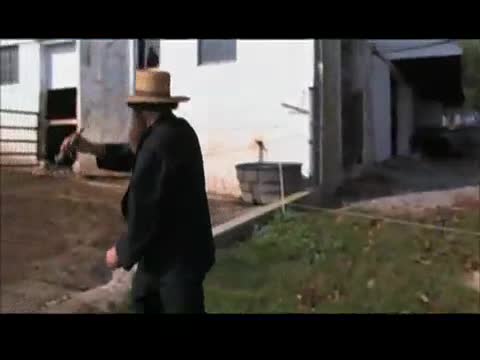
But some Amish farmers in the October or Watershed are beginning to take a more active interest in farm land conservation practices. Pat facade now is with the October a watershed Association. He's working with Amish growers to help them adapt farming and conservation techniques that reduce nutrient pollution in the Chesapeake Bay. Today he's visiting the dairy operation of Jeff Stolz Foose. Like most Amish still's foods doesn't allow his face to be photographed. He runs a certified organic dairy farm. Unusual among Amish farmers he greases his herd on 90 acres and rotates them using single strand electric fencing instead of collecting liquid and solid manure from his barn and spreading it all on feels like conventional dairy farms. Stills who says cows leave most of their manure in the field where it composts naturally right here is what I was talking about.
That one has been worked up pretty good yet and you can see it in their swarm and they're So you know until the cows come around the next time and for weeks 30 days you know. NORRIS You know. Digested compost when I was starved for months 30. Years ago Syria three years ago. A lot of the fields are run on uphill and downhill Guerreros. I cause a lot of erosion so. I got salt conservation and struck a farm. Just sorted out Manor asana. I guess the more you did a more you want to keep us all where it belongs. Stills Foods has adopted a variety of best management practices like pastures that prevent erosion fencing and underground watering system to keep cattle from polluting streams installation of a concrete slab and curb
to keep nutrient Laden manure in the barnyard rain spouts in gutters on outbuildings and erosion control along stream banks all designed to keep nutrients out of the water. 74 percent of our watershed is agricultural and out of that 70 percent of our Old Order Amish. So they say they have a great impact on the water quality based on their agricultural practices and over the last 20 years or so we've done a lot of individual outreach to the Amish community to implement pest management practices to improve water quality for Sun and was working with an Amish liaison to help foster understanding between farmers in the watershed Association. I think as time goes on we're coming much more aware of anything. And you need grass water ways you'll need to be careful. There's all kinds of practice in that the conventional farmer can do to minimize erosion
which means which means cover crops during winter and. Tend to think that. That the whole county will change during the whole watershed would change to you know tailored to grazing. Probably won't happen but it is a steady it's a steady increase in that direction. The evolution and improvement of nutrient reduction techniques happens even on modern farms using the latest know how and technologies. Here at Dick Edwards farm in Caroline County on Maryland's Eastern Shore the latest challenge to control nutrient runoff comes in the form of a retrofit. JACK KEANE of the USGS Natural Resource Conservation Service is here to help Edwards formulate a plan to stop nutrients from escaping this field. Oakland view farm is family run. One of the few dairy operations left on the
eastern shore. Dick Edwards has some of the most modern milking equipment available and his manure management system is first rate. But a series of pipes or drain tile installed in the 1950s to drain water from the farms from the field is doing something Edwards father never intended. Sal a small child when the. Main part. Of the field in this area here was put in a little later maybe 10 years later. Well what we're discovering is there. Even though we've created a conduit and a system that drains the land to farm it we've also created a conduit for the collection of nutrients as a park in late to this war runoff from the surface. And here's the plex in point four years ago this would have all been looked at as a tremendous success of installing these tiles to make it land more formidable.
And I see a lot of land across this county we've got about 200000 acres of cropland Caroline County. This is one of the best drainage jobs there we've got in the county. But as nutrient pollution has become synonymous with the decline of the Chesapeake more and more attention has been paid to the many ways nutrients make their way into the bay. The problem here is that the water coming from the field runs straight into this pipe which channels the runoff to a ditch across the road. There are thousands of miles of ditches on Maryland's Eastern Shore. The result of major infrastructure projects in the 1950s designed to improve farmland and to grow more food for postwar Americans. Like streams and underground water tables ditches also moved nutrient runoff from one place to another. In this case nutrients from liquid manure regularly sprayed on the field has unknowingly been escaping the farm and heading toward the Chesapeake Bay. That word very straight to the top of the river and if you mouse go to the public
dime satiation which is what you are beneficiary to all of this county and it's not that far really going to Taco River which is a tributary to the chop tank river. So what was a real big time success 50 years ago today had become an issue that we have to deal with. Where different kind of practice is here on a farm now with help from the NRC Yes. This year Dick Edwards will construct a one acre wetland surrounding the pipe outlet on this farm. Dick is getting ready to work with. A grant to create a weapon here in the corner of this farm and have this water dispersed through the wetland addicted to has described and where more of the nutrients be it will be absorbed before this water ever leaves the farm. As a district conservationist for the NRC Yes Jack King is on the front lines in the ongoing regulatory struggle between government and agriculture. He knows
the new T.M. deal requirements will be a big adjustment for some farmers. The total maximum daily load regulations that will be coming in place next year EPA is determined what they are for the Chesapeake Bay watershed because we're not making a progress we should improve in that water quality that's going to impact particularly animal farms where they've had a lot of manure over the years to work with the fields already have a high level of nutrients in those soils. And we're going to see the requirements. For nutrient application will be lowered on some of those fields and some won't be able to receive any fertilizer whatsoever rather the nutrients from manure or commercial fertilizers. They won't even be able to use those acres. It becomes an issue on big farms like the average dairy farm because they have to have a place to put that manure it is created every day and we're working with Mr.
Edwards here to. Find the areas in his farm where we can apply manure throughout the year and at a level that's safe as far as runoff is concerned. Today the farmer is not a farmer if he hadn't had a mindset about drainage in environment and working with the community in his forming practices. A lot of farmers probably would like the best management practices that are coming down the pike. But. The more you know about it the more you figure out how it's a benefit not a hindrance. It's a process of learning what's coming. I think on the flip side a lot of these. New regulations are done. With. One of the models. And I'm not sure all these models are quite as
correct as they can be it's an evolving method of process and we were working with that. But on the other hand. Our city folks that. Put fertilizer on there all along and then let the runoff go down the city drain then and ends up in the bay. We have to work with that too because right now we feel like we're at the end of the bullet. John Swain is on the road and he's running late getting a truck load of seed to Cambridge airport. He's got to beat the deadline for planting cover crops on his farm fields. So he meets cost sharing requirements under Maryland's winter cover crop program. Today Swain is coordinating efforts with fellow Eastern Shore plantar and hike Yes
it's dangerous. So he's going through now but he did leave with three last days were here again and it's been an unusually wet your growing seasons. Too wet to drive tractors into soggy fields to plant cover crops. A best management practice that's critical to keeping nutrients out of the bay just to beat the weather and the planning deadline. Swain and hikers will plant this winter's cover crops from the air. I think the science is pretty well shown to dollar for dollar which is. One of your better. Good spelling. She's cool engineering. You can you can do more with less money doing this than just about anything else way cheaper than so much cheaper than upgrading the cost of a great machine a sewage plane yelping like you look at it in a big picture of reducing nutrients in the bay. Last year Maryland farmers covered two hundred thirty eight thousand acres at a cost to the state of ten point seven million dollars. Crops like rye
barley oats and the one that someone is planning today rapeseed all plants that use of leftover nutrients in the soil. Reason a male Department of Agriculture one can cover crop as it pulls the nitrogen and the excess nitrogen out of the soil so it doesn't run off into the Chesapeake Bay. It's a relatively new thing probably in the last 10 years I would say depending on the day on the year there is there is more this year because the later year and the wet field conditions last year there it wasn't as much because it was a drier year in an earlier season. But then something that really works. The bell object is to get the cover crop and they always do that as with an airplane. The program targets areas at risk for nutrient pollution. The goal is to grow plants that act as a physical barrier to nitrogen and phosphorus soaking them up and stopping them from seeping into streams or groundwater. Cover crops are especially important where swing and hike is farm and tell of a county
where many farm fields are close to the water's edge. But watershed wide the 2010 tributary strategy goal of 2.3 million acres covered has fallen far short in 2009 only three hundred ninety eight thousand acres were covered. This was field was planned in canola about two weeks ago and here some of it is right here already germinated seed with the airplane beginning to come up. As new T.M. deal limits throughout the watershed are put into effect. Regulators hope more farmers may see an advantage in using cover crops to offset required nutrient reductions in their nutrient management plans. The cover crop is going to is going to prevent sow erosion. It's going to absorb nutrients that are left over from from this year so leaving crop and it's going to provide organic matter next spring when the cover crop decays and breaks down and be able provide us a seed
bed to plant next year's corn crop. Cordova Maryland a sleepy Eastern Shore crossroads and a destination for farmers from across the region Delmarva grain farmers who come here to sell their harvest hoping for a good price. Yeah yeah yeah. I actually does. Ship Nagel of Nagel's farm services taking delivery of corn and soybeans. It's harvest time. The busy time of year buying and selling grain is big business on the shore and so is growing it. Raymond Harrison Jr. has just brought in a truckload of corn slave. Holders of six in order. We don't know very well. That like many other farmers on the shore Harrison grows crops like corn and soybeans third eventually are fed chickens raised all
over the Delmarva Peninsula. It's a consistent market he and other growers depend on for regular income. There's a lot of money involved in a very tricky part is getting the profit out of it. In the grain business here because the poultry business here and so the pole grandness three uses the corn and the beans primarily for APOEL Griffin Harrison worries that the new T.M. deals could hurt markets. He and other farmers need to stay in business. The poker industry and grain industry here in Georgia very incline. They're dependent on us growing grain for their chickens we're dependent on them produce the chickens to buy our grain to use their grain. So it's a very in line and that's the problem some of these rules and regs are designed in Annapolis or Washington or other places they're not really realistic with the real world that I live in.
You know what. It's nice to say don't put the power you know we're out in the rain. Well we don't pass a law against the right. If Kathy Phillips had her way the answer might be yes especially if it stumped former runoff pollution on the lower shore. So I just kind of use this is my little poster child of. We have a manure show that is filled with equipment and we have manure being stored right outside of the shed instead of the manure being in the shed and the equipment in another shed that you know is supposed to be for storing equipment. Each room with the Phillips is the CO's keeper an affiliate of the Waterkeeper Alliance. Like her counterpart Mike kill Frick in Pennsylvania. She's constantly on the lookout for sources of water pollution. Yes it's. I knew it I knew it. And like many environmentalists Phillips hot button issue is farm runoff
especially from poultry farms. Good news. The side braces are a little bit different that's occurred. Blair ran a burger grows chickens it is operation near the Delaware line. He's also this year's president of Delmarva poultry industry incorporated a Delaware based trade group that represents the fourteen hundred poultry growers on Delmarva. I'm not a farmer but I think fertilizers 600 hours a time it was 13 hours a ton. And I just told you polled for an error 17 hours a ton. You do the economics. Rana Berger believes most farmers follow the rules when it comes to applying chicken manure as fertilizer. But a lot depends on a growers individual needs farmers know when they're planning next year they know what happened last year they got their soul samples their soul samples dictate to their new age nutrient management plan where to put when or where not to but when your run
of burgers just shipped his latest grown out flock and his chicken houses are empty. The chicken manure in this house has been piled in long rows so it will compost for later use as fertilizer. I don't polish out in the field because I have a minnow or shit that takes it when it cannot be applied. But because of my new tour manager plan and because I'm a hey operator I can put it on more than one time I can actually put it in the spring. I can put in the summer for fall. If you're a farmer you have coarse soybeans you don't put manure and the corn is as high you can't. You know you've made your one application that's it. Random burger is a big believer in the power of best management practices to block the flow of nutrients from farms to waterways. He's installed several on his own operation from grass buffers to green zones to trees. He remembers a recent EPA inspection on his farm that proved they work when EPA came to visit.
Dorna live all the movement of chickens we had a five to six inch range. It looked like this area. This water drain just like there through that. And it was this time of year it was back it was it was March middle of March. She went to that ditch right there that did that that fill Chur area right there. Nine nothing here went to that ditch. None of this warder that came through this filter heard area went to that bitch. She tried to follow manure and it quit to prove that if we have some type of buffer around poultry production areas that it will stop anything going to ditches so this is what you would call no discharge because it
does not go to that ditch because again a five inch rain run a burger is one of about 4500 poultry growers on the Delmarva Peninsula. The industry's grown from small family operations in the one thousand twenty to a system of freelance business partnerships between private growers and giant corporations. Today big chicken on Maryland's Eastern Shore is bigger than ever in 2009 Del Marva was the eighth largest producer in the U.S. 3.4 billion pounds of chicken worth an estimated two billion dollars. The big four processors on Delmarva are Tyson's produce mountain air and Allen's all of the company's declined requests for on camera interviews for this program. They're blamed by critics for problems ranging from heavy runoff pollution from chicken manure to contracts that exploit growers. But the bulk of concern is aimed primarily at the nearly 3 million tons of Delmarva manure generated each year and where it ends up. It's an excellent plant
fertilizer and many farmers buy it and pilot in fields for spring planning regulations control to some extent how where and how much chicken manure is used to fertilize farm fields. But activists like Kathy Phillips say that's not enough. I think in a nut shell certainly here on the Eastern Shore of Maryland is too much of it too fast and unregulated. And this is no longer the family farm. It's an industry and it needs to be regulated just like any other industry and agricultural community has not been used to regulation. It's pretty much you know you have your land you grow your animals you grow your crops. You know that's the that's the way of life for a farmer here on this stretch of Route 90. Phillip stops to take a look at the Hudson farm. It's in the news lately over a lawsuit Phillips organization filed under the Clean Water Act against the farms owners
and the company that produce chickens for produce farms. Well we have a poultry growing operation I discovered from aerial surveillance and going over top of this facility discovered a very large area of manure. In fact what Phillips couldn't know when she flew over the farm last year was that the pile was actually compost and sludge a byproduct of wastewater treatment. Farmers sometimes use for fertilizer as an environmental watchdog Phillips's ability to gather evidence of polluted runoff is limited. She doesn't have access to private property like farms where many violations might occur but government does so she says she pushes the envelope to kick start action. All we're looking at is the water. I don't care if it's a car manufacturing plant or a chicken manufacturing plant. If the water is crying out to me and telling me help I am choking
and algae I can't worry there's no oxygen down here for me anymore the. Bacteria levels are so high in my water the nitrogen is so high the phosphorus is so high that I'm dying. Well that's my job then to help that water get healthy again and whatever it's going to take. So all we can do is locate a hot spot. And bring it to the attention of the federal and state governments and basically demand of them that they do their job and do regular inspections of these sites if they're issuing permits to these facilities then those permits by law are supposed to be monitored and regularly inspected. And if that's not happening then what's the purpose of the Permit me analogy is always made. You know we have speed limits. Laws and you're right there on 95 you'll find that most people a lot of people aren't
being the speed limit. There aren't enough police available to enforce those laws. Similarly in the environmental arena we can't force people to do everything we do our best and we put a lot of emphasis on enforcement is one of the highest priorities of this agency. But people are going to have to understand what the issue is and we really need people to cooperate and work with us or we're not going to save the bay. It's it's as simple as that. So enforcement is important but it really isn't the savior of the bed. My own philosophy is that. Industries that pollute are not in the business of controlling pollution they're in the business of making money and being productive in society and they should never be expected to self
regulate or a volunteer to control their own pollution that's not their job that's not their role that's not their mindset. They produce food for the country and they sell it hopefully at a profit so they stay in business. It's the government's job to protect the rest of the people of the environment the Chesapeake Bay. Natural resources but completely regulating a farm operation the same way on every parcel of land in every area of the state. Regardless of the natural resources the issues on those farms doesn't make sense. The TMD all requirements are set such that if farmers are meticulously implementing nutrient management and soil conservation practices they have the right buffers on their streams of right with the prevent nutrient runoff and they are operating that form according to best management practices. They will
be in good shape as far as meeting their team the requirements. Back aboard the canvasback Steve Allen an underwater cinematographer NICK KELLY onus are ready to dive again. This time they're anchored over another artificial reef that's recently shown a hopeful sign. On the bottom they find what they're looking for diversity of life and a hard sandy bottom. There's no silt here to smother oysters. In fact there are signs of life everywhere. Even the all important oyster a signal the progress in Chesapeake Bay cleanup can be made.
I like the idea of a clean bias in your day to day life changing behavior you're going to make whether through higher prices or yarn it's not going to work out your transportation to get to work and payment are you willing to make. The rolloff dilemma is made possible in part by a grant from the Keith Campbell
foundation supporting management of living resources and habitats reduction of pollution and citizen engagement in the Chesapeake Bay. The Campbell foundation investment in action. This program was made by NPT to serve all of our diverse communities and was made possible by the generous support of our members. Thank you.
- Program
- The Runoff Dilemma
- Producing Organization
- Maryland Public Television
- Contributing Organization
- Maryland Public Television (Owings Mills, Maryland)
- AAPB ID
- cpb-aacip-394-14nk9bs5
If you have more information about this item than what is given here, or if you have concerns about this record, we want to know! Contact us, indicating the AAPB ID (cpb-aacip-394-14nk9bs5).
- Description
- Description
- CC, 4x 3 LTBX, Stereo - Tracks 1&2, Mono - Track 3, Silent - Track 4
- Created Date
- 2010
- Asset type
- Program
- Genres
- Documentary
- Subjects
- Chesapeake Bay Week
- Media type
- Moving Image
- Duration
- 00:56:14
- Credits
-
-
Producing Organization:
Maryland Public Television
- AAPB Contributor Holdings
-
Maryland Public Television
Identifier: cpb-aacip-07e6c682027 (Filename)
Format: Digital Betacam
Generation: Master
Duration: 00:55:35
If you have a copy of this asset and would like us to add it to our catalog, please contact us.
- Citations
- Chicago: “The Runoff Dilemma,” 2010, Maryland Public Television, American Archive of Public Broadcasting (GBH and the Library of Congress), Boston, MA and Washington, DC, accessed April 15, 2026, http://americanarchive.org/catalog/cpb-aacip-394-14nk9bs5.
- MLA: “The Runoff Dilemma.” 2010. Maryland Public Television, American Archive of Public Broadcasting (GBH and the Library of Congress), Boston, MA and Washington, DC. Web. April 15, 2026. <http://americanarchive.org/catalog/cpb-aacip-394-14nk9bs5>.
- APA: The Runoff Dilemma. Boston, MA: Maryland Public Television, American Archive of Public Broadcasting (GBH and the Library of Congress), Boston, MA and Washington, DC. Retrieved from http://americanarchive.org/catalog/cpb-aacip-394-14nk9bs5