MPT Showcase; MPT Showcase Fillers Tape #1B
- Transcript
And. To. The best of the productions. It's not an ordinary night court that's in session in the Gummi County these days. The average age of a prosecutor or defense attorney is 16 and the jury is made up of high school students. But these kids are not actors. They're involved in a real life court program for teens. With the help of McGovern County State's Attorney Robert Dean teenage offenders can now be sentenced by a jury of their peers. What we're doing is we are upping the ante we are in increasing the consequences that these kids who have misbehaved who have quit again committed a Usually it's a property crime like theft or vandalism. We have held them to a much higher degree of accountability with this teen court program. This program is for children between the ages of 12 to 17 who are first time offenders. After admitting their guilt and with the consent of their parents. They could be eligible to go before this court as seen in this reenactment of a teen court trial. High school students perform the different
roles of the court room. Not only are they required to honor confidentiality but they're responsible to be objective in every case. Another requirement is for them to commit at least one day a month of their time for four to six months. And although some of the cases may be time consuming these kids say it's a great experience because this program could open doors for them in the future because when I grow up I'm thinking about. So I got this opportunity for myself studies teachers and so she said. So I said give it a try and you know it's a good experience. But the teens are the only ones volunteering their time here. Judge Joanne Wells also takes part in the hearings although judges are the only adults involved in the court proceedings. She says it's been a real group effort. We get people from the Montgomery County school system as well as the police department partan Department of Juvenile Services and I was a judicial representative as a judge in juvenile court. And it's really turned out better than we ever envisioned it would.
Every trial is played out from beginning to end. Each attorney gives opening statements and then has the opportunity to question the respondent. Can you tell us why you shoplifted again. Oh because. It's meet your eyes. Clues. As to. What have you learned from this incident. And I'll never hear again. Even the closing arguments from these teenage attorneys can be compelling. Yes as the prosecution said her parents have punished her and they're suspected for of but this is the law. But your responsibility is to come up with a fair and just disposition which means taking into the consideration the punishments that she has already undergone. Then the jury is instructed to go back and make a decision. You know we all sit back in there and everybody has their own opinion about what they think we should do each to talk it out and try to get everybody to say something and try to reach a decision.
We can see where Jerry Mathers handles this in the bone structure of this position as a. Service to his actors and what hasn't. I mean. Lars Silverstein who played the respondent says she's noticed that people who are own age are a lot tougher in their sentencing than adults. I've definitely noticed that. I know that there are some there are some cases that we do here that if they just went to the juvenile juvenile department they would just be put away they wouldn't get any punishment at all. And here here they do. Organizers say they're not only impressed with these kids but with the entire community support of the program. I'm very proud of the community effort that has has gone into this and will are all segments of the community in this so this is is one of the I think success stories of the criminal justice system. I really do. But the real goal here is for all the kids to learn a valuable lesson about the law especially the offenders. Without this program they wouldn't have that second chance to learn from their mistakes without the high cost of a criminal record. In Rockville I'm Mary
Mendoza. Inside Maryland. I. Am. The best of the productions. Every African-American male is a criminal or has been to jail or does Drs. Jewish people just were just rich Well I mean if they just had no money its no holds barred to want to see what everyone else has to say I want to be like really controversy and find out yes this is just one of the many point discussions piece of tape they just have had about racial stereotypes and race relations in America. These high school students from Maryland Washington DC and Virginia are participants in Operation Understanding D.C. a program designed to build bridges between
African-Americans and Jewish-Americans. We need you to come and get a lot of money. The deadline is this Friday with Gary Kailash is the founder of the UDC and the energetic driving force behind the three year old program who want to build to a generation of young people who will fight to eradicate racism anti-Semitism and all forms of discrimination. We share blacks and Jews a rich history in the last. Century starting in 1900. When blacks do form the two most disliked people in the history of the world but all coming culminated really in the 50s the 60s the civil rights movement. Every year on Reverend Martin Luther King Jr's birthday a new class begins and the students basically become one. They attend a number of workshops. So one thing that I'm going to do is listen to other people and what other people have to say and taking their perspectives in mine and then coming back with my opinion or my thoughts. They also learn about each other's culture like the Jewish tradition of Passover
and what it's like to worship in a black church. Just that. The belief that we all are praying to the same God. We all said the same kind of life we all have red blood in our veins. And that was just powerful. There's a huge emphasis on the program on history. And I think that that was a very very strong thing to learn about from both groups on the trip. The trip Daryn is talking about is a 25 day journey that students take the first stop in New York City including Harlem and Ellis Island. We went there and. Really so we took a picture of the wall of people who immigrated from throughout asylum. Actually the one that's on the wall there I think is actually my family I'm not sure if the others my family is my the name of my grandfather and his brother. And that was that was pretty moving experience.
What is the most memorable place you visited. We went to a plantation in Charleston and then after experiencing like what it was like to be life every day life on the plantation for a slave would be like. Like when we were in Selma. Alabama we crossed the Edmund Pettus Bridge where Bloody Sunday took place and. We walk in with. An African-American like a leader. And our tears would just run together. And that just. Basically showed me that that things like the civil rights movement is all of our history. Students traveled throughout the south. Then they return to Washington D.C. to train to become messengers and fight discrimination. I can make the effort to make sure that my circle isn't just a group of Jewish kids. I can create my own circle of friends doing things that really make a difference. Educating people who otherwise wouldn't be educated by dispelling stereotypes that build up and get hardened over the years. This program is actively breaking those down.
Just listen to current and some people are very well off and then you have African-American people that are very well off but a lot of us are just middle income people you know trying to make it day to day. Far away it is very very wrong to say that all African-American males are criminals and I have two people sitting right by me here at the opposite ends of the spectrum because these are the most brilliant people I've ever talked to. These young people will be speaking at schools and libraries churches anywhere they can spread their message of good will and they invite any and everyone to join their cause. In Washington DC and their peers inside Maryland. And. To. The best of MPD productions Paul Kildea loved living in downtown Baltimore except for one thing. First he didn't know his neighbors.
I get to know my neighbors once or twice a year when it snows so deep that I have to get out there and help people shovel out and they help me. And then it's like Oh my name's Sam Smith My name's John Jones and then by July I've forgotten what their names were and so he and his family gave up the convenience of Downtown life and moved into what's called a co housing development on the outskirts of Liberty town. Before he was even close to moving its furniture and already knew his neighbors very well. That's because they all helped each other design. They all work together to run it. The entire neighborhood is designed to promote social activity. For one there is a common house where people pick up their mail or have neighborhood meetings. And three times a week there's a group meal and it's very much like a big giant family Thanksgiving dinner. It's a blast and it just goes on. Each family has their own home and their own mortgage. They say they moved here because they're
tired of isolation. Society today is too antisocial and I think the more money you have the farther away your neighbors are. And I don't think that that's a natural way to live I think we need to have neighbors around this. One of the biggest differences between a co-housing neighborhood and your standard run of the mill development is cars. The residents here at Liberty town village have designed their neighborhood so that the parking lots are separate from the housing area. Most developments are developed really for cars that drive up to your driveway you don't have to get out to open the garage door anymore your garage door opens up automatically you drive your car in there you're going to house it. That may be the end of. You being seen on the street for the rest of the day. One of the biggest reasons people say they move into co-housing is for their kids. We were going to have a child because we didn't feel there was a great place to raise a child. But Amy deploying vil and her husband changed their minds when they discovered co-housing. They say the entire neighborhood helps support each other as parents.
I really believe in the old village or tribal idea that the ends of the uncles and the cousins and everybody helps out with the raising of the children. But that can also lead to conflicts after all people have different styles of parenting. Residents say that's when it's crucial for neighbors to sit down and talk. You know we have to talk about these real intimate kinds of things early on and hear how everybody feels about whether or not I can discipline your child whether or not your dog has to be on a leash. You know housing residents do a lot of talking but they don't do a lot of voting. Instead they use consensus or come to a decision everyone can live with. What ends up is you don't have people who lost. The people who didn't agree with the decision they get made don't exist in consensus everybody ends up agreeing with whatever decision was made. The residents also say they feel much safer living in co-housing they have a built in security network each other. They say it's also ideal for people who need extra help in everyday life.
People like ANS of although he was diagnosed with Multiple Sclerosis I might be having a day in which I can't get out and so I need to ask somebody if you're going to the grocery store were you buying me the following things. And then I have 34 other households I can ask to do that. But even though the residents like being together there are also times they want to be apart. Privacy is a crucial part of co-housing. Some neighborhoods have rules and curtains are pulled. Don't disturb. Most have designed their houses so that it's in space the common area the living rooms and bedrooms take the back. The backs of the houses now are very private and if you choose to be alone you go in the back side of your house. Now what are some of the biggest misconceptions about about people that live in co-housing. We're hippies. You know this is a commune. It will never work you can't get people to live together back close the residents are quick to point out that the housing isn't perfect for everyone. But it's an ideal life for them they say for the most part they live in a normal neighborhood. Except you don't. Get the friendly neighborhood. Here.
They come with a character. And. The best of the productions the Native Americans occupied what is now called Marilyn Long before the colonies were ever settled. Part of our past and our present today Native Americans represent about one half of one percent of Maryland's total population. Sometimes our people lose a sense of identity as to who they are. And as you well know with this loss of identity comes a loss of self esteem and then that begins a great Omarion of problems for people. Milton hunt runs the Baltimore American Indian Center a nonprofit group trying to alleviate some of the problems faced by his people including unemployment lack of education alcoholism and drug abuse.
We're constantly seeking funding from the state level to combat these problems. We feel that it's true. Patient service isn't just getting the message out about subs abuse and many problems we can help curb this over time. What did these groups offer job training health care services and other basic social and economic assistance community activities are in large part how the group helps increase a sense of culture and heritage. The mainstream is letting people know that we're here that we're strong the world we're very much involved in our culture. And then the next thing is to dispel with the stereotypes exist for people. This is what we're trying to overcome. And it can be done or it can be brought out through these types of gatherings as well cultural events are held throughout the year and not only give Marylanders an opportunity to get a snapshot into Native American culture but also give American Indian youth the opportunity to get in touch with their own heritage which is something some elder say wouldn't happen otherwise. I'm proud because people had to go.
I don't know and it's good to have your traditions in your culture because you get to be more than what you are you can express it. We have been a vocal group of people in the past was going to march down a parade or something. But you know I think sometimes it may be to our disadvantage because we need to get the message out about the problems we have. Never let society rule who you are as a person but you let your culture stay who you are as a person. Scott Helman reporting inside Maryland. And. Showed. The best of MTV Productions. Since the beginning of the century skilled craftspeople have stitched together men's clothing for Joseph a bank. The company conscience shows about 300000
jackets and pairs of pants in Baltimore each year. Recently committed to keeping its production here for four more years. I think it's great that was a no. No with me. That's a lot of money. So. When you took. Over that's way for all of us that. We are. What happens in this building used to be no big deal. Thousands of Marylanders used to earn their living in the apparel trade at dozens of different companies. One of the last to close was London fog which decided that it simply couldn't afford to make rain coats at American wages. It's a it's a change in. The economic environment worldwide. Timothy Findley is bank CEO and made the decision to sign a new union contract. We like the way that the flexibility we get from this labor force unlike flexibility we get in. Terms of being able to. Change product in the store. Well in that kind of thing. As far as the quality. Surnow. We have tailors that are over here came over from Italy.
You know 40 years ago. And they're as good. As anybody in the industry. Finley admits that long term the plant faces steep God's eye closing down the company could save about one million dollars a year. And not all shareholders are happy with Finley's choice. But the company is fast adding new stores under his leadership. Up from thirty six in 1991 to nearly 90 and the catalog operation is expanding as well. Stores. We're not really sure what the maximum number is. The 150 is a 200 I don't know. Clearly see another clearly C-130 are out of. Order. And that's what we're going to try to do. And. The best of the production.
It's a special day for these 113 Franklin Square elementary students. As they lined up one by one and in the process. Not only are they taking a gloomy. Field trip. But this outing is part of a master plan. They'll be playing on the road. We're trying. To make certain that we make money exciting to boys and girls and we're talking about educational games and childish years we thought this summer we thought about maybe our unit or Marilyn revealed to boys and girls. So once the buses are loaded they leave the tough streets and head toward the open spaces of the eastern shore with the Chesapeake Bay gang begins. Although the game was launched by Governor Glendening its creator Carolyn Watson had a specific goal in mind. I wanted to design a game that would cause them to interact with their environment and to pay attention to what they were seeing outside of the window so they could better understand the connection between the land and water and to see things like agricultural fields and osprey nests and wetlands and to start thinking about the connection that they have to the Chesapeake Bay.
And since the Baltimore public school curriculum for these third fourth and fifth graders is to learn different aspects of the state. School officials thought the Chesapeake Bay and its resources would be a great starting point. Now we're right proceed across the Bay Bridge. That's open not. Break a hole through the roof. Make sure you have us think it's spreading. And we have rules. And once that's done the fun begins trying to find the big game signs and different treasures on the way to the beach. Good luck. And each child has her own favorite part of the game. My favorite is when we see people boarding. And. People and we saw some size about crabs and best of face that I like about the book because I love grapes. It was fun. For a while to poisonous tourists it was.
Kind of like a cup with dishes. How many can get everything in the book. And I think you should. Consider. That one of the most exciting moments was crossing the finish line in the ocean city. And afterwards getting a special lunch at the Ritz Crab House. But the event was almost a washout. Even one for the help of the Chesapeake Bay Trust we worked with Franklin Square. They sent us a grant proposal to fund this trip and we funded them a thousand dollars to come down and pay for the buses and make this trip possible. This trip is not just important from an educational standpoint but a personal one as well. Since organizers say more than 95 percent of these students have never been here on the eastern shore. It's not their. Lot. The only way to get out.
Of it. Many parents who volunteered on the trip say it was a learning experience for everyone. I think it was a great opportunity because I'm like you have an amazing time she said and I've been here myself so this is my first time and I continue sand sure come one summer. But then I said I want to I want to hear I didn't know too much about it but from learning and being in the school and the volunteer and I learned a whole life. And organizers believe by seeing the environment firsthand it gives these children a real appreciation for the world around them. In Ocean City I'm there and then those inside.
- Series
- MPT Showcase
- Episode
- MPT Showcase Fillers Tape #1B
- Producing Organization
- Maryland Public Television
- Contributing Organization
- Maryland Public Television (Owings Mills, Maryland)
- AAPB ID
- cpb-aacip/394-11kh1bsv
If you have more information about this item than what is given here, or if you have concerns about this record, we want to know! Contact us, indicating the AAPB ID (cpb-aacip/394-11kh1bsv).
- Description
- Episode Description
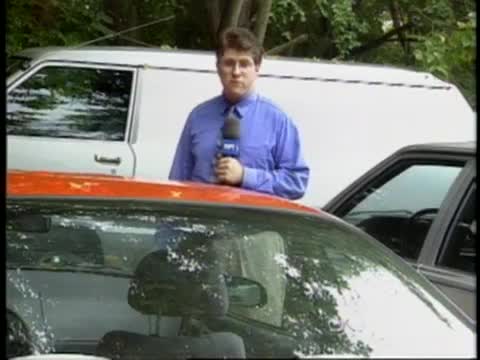
- The first segment of this episode, "Teen Justice", focuses on the "Teen Court Program" of Montgomery County, where teens serve as prosecutors, defendants, and jury in the judgement of their fellow teens. The second segment, "Building Bridges of Unity", focuses on "Operation Understanding DC", a program that striving build bridges between African Americans and Jewish Americans. The third segment, "Communes of the '90s", focuses on co-housing life and a co-housing development near Liberty Village. The fourth segment, "Native Americans Inside MD", focuses on Maryland's American Indians, the Baltimore American Indian Center, and problems facing Maryland's American Indians. The fifth segment, "Maryland Clothes", focuses on changes and developments associated with the Joseph A. Bank corporation. The sixth segment, "MD Bay Game", focuses on educating Baltimore students via the Maryland Bay Game.
- Series Description
- MPT Showcase highlights a variety of Maryland Public Television (MPT) segments from different MPT productions.
- Date
- 1998-04-28
- Asset type
- Episode
- Rights
- No copyright statement in content
- Media type
- Moving Image
- Duration
- 00:23:27
- Credits
-
-
Interviewee: Dean, Robert
Interviewee: Wills, Joanne
Interviewee: Kalish, Karen
Interviewee: Dorsey, Christian
Interviewee: Kilduff, Paul
Interviewee: Hunt, Milton
Interviewee: Kolstan, Keith
Interviewee: Finley, Timothy
Interviewee: Brown, Peggy
Interviewee: Minges, David
Producing Organization: Maryland Public Television
Reporter: Salkin, Jeff
Reporter: Mendoza, Mary
Reporter: Hileman, Scott
Reporter: Bickford, Pieter
Reporter: Gibbs, Annetts
- AAPB Contributor Holdings
-
Maryland Public Television
Identifier: 19391 (Maryland Public Television)
Format: Betacam
Generation: Dub
Duration: 00:30:00?
If you have a copy of this asset and would like us to add it to our catalog, please contact us.
- Citations
- Chicago: “MPT Showcase; MPT Showcase Fillers Tape #1B,” 1998-04-28, Maryland Public Television, American Archive of Public Broadcasting (GBH and the Library of Congress), Boston, MA and Washington, DC, accessed April 2, 2026, http://americanarchive.org/catalog/cpb-aacip-394-11kh1bsv.
- MLA: “MPT Showcase; MPT Showcase Fillers Tape #1B.” 1998-04-28. Maryland Public Television, American Archive of Public Broadcasting (GBH and the Library of Congress), Boston, MA and Washington, DC. Web. April 2, 2026. <http://americanarchive.org/catalog/cpb-aacip-394-11kh1bsv>.
- APA: MPT Showcase; MPT Showcase Fillers Tape #1B. Boston, MA: Maryland Public Television, American Archive of Public Broadcasting (GBH and the Library of Congress), Boston, MA and Washington, DC. Retrieved from http://americanarchive.org/catalog/cpb-aacip-394-11kh1bsv