Iowa Press; 1307; John Chrystal
- Transcript
But I will press 13 I said and they taped is not going to my seven thousand eighty five. A. Major funding for this program was provided by friends of Iowa Public Television. After an avalanche of analysis of the summit between President Reagan and Soviet leader Governor. Questions remain about the direction nucular arms control will now take the president while measured is hopeful. I can't claim that we had a meeting of the minds on such fundamentals as ideology or national purpose. But we understand each other better and that's a key to peace.
An encouraging sign to many who see communication as a key to detente and eventual disarmament. This week we'll examine future U.S.-Soviet relations and what role Iowa can play in the peace process with a prominent Iowa banker peace activist and expert on Russia John Crystal. This is the Sunday December 1st edition of Iowa Prouse. Here is Dean board. Good evening. Within Iowa there is a large diverse network of peace groups and many of those advocates believe that Iowa is an ideal state to promote peace because there relatively few industries in the state catering to the military and its principal industry agriculture is dependent upon international trade which many Then consider a crucial link to Goodwill and understanding. Our guest this week I have a banker John Crystal has long been an activist in agriculture trade and business as well as peace in political circles. He'll be questioned by David yaps and a political
reporter for The Des Moines Register and by John the Coralie a columnist for the Burlington Hawkeye and other Harris newspapers. John. Mr. Wagner's past week in fact on the eve of Thanksgiving travel go back travel mate and thanks to an attack on Iran. The vegan administration for its continued death so should have Star Wars Strategic Defense Initiative and your considerable acquaintance with Mr the bike you have how do you read this is this just political posturing on his part do you think he seriously. He had the address to the Soviet leadership seriously fear our continued development of weapons. No I think it's I think it's a serious fear because it multiplies somehow the expenditures for arms. They not only will have to continue the conventional and the and the nuclear warhead missiles but now add to it this this.
System suppose that prevention and if it is only largely successful which most scientists seem to agree is the prognosis then it is an enormous modification of expenditure and the which the Soviets can ill afford. The Soviets don't see that as a state as a stabilizing weapon. No I think they see it as a very nice stabilizing weapon for two reasons one that it doesn't work entirely or is not proposed to work entirely and and second that they have some idea which I don't understand as to how it could be often save as opposed to the facts which are on the how much of that though is Mr. Gorbachev's wish to upgrade the Soviet economy. And then if he is pushed further into an arms race he can't do that. I think he is also committed to upgrading the Soviet economy if possible he'd like to have sort of a moratorium here with me. Yes yes if he had just asked to spend the money or in fact even continue
what he's spending now then he can't put capital into the economy and he needs to do that because. They are still rebuilding from World War 2 15 percent of the people still live their kitchens and they needed education all kinds of capital goods but sort of we are one of the reports from getting in the way he said at one point is that he said well you know why don't you believe me when I tell you that we don't play and Star Wars has been a thin sheet threat to you that is strictly defense even about you have said why should we trust you any more than you trust guys and your many visits to soviet union your study of the Russian to say. How do you read this tryst. Do they have a legitimate reason not to trust not just outside you should get rooted in history it's a part of their culture to be isolated within themselves. I tell people I didn't take part in a reformation of the Renaissance. They've been attacked by
everybody and they haven't done very well in their wars with other people even the victories were the same. About his defeats. So that they are naturally suspicious and secretive. And the rest of the world. It wasn't very friendly to them following the revolution and a bizarre kind of non-religious and private property government they set up it was frightening to the rest of the world. And I said I can just imagine my grandfather who worked and saved money and and got to be mildly well to do the thinking here were these people that took everything that people had and get away from myself. Yeah I think that they are fearful and and on the defense psychologically why why do we need to do to try to penetrate that secrecy in a given situation. I think that that this this kind of communication right here.
And computers make it harder for them to be secretive. And as they get more educated it's harder to be secretive but in addition to that I think the one kind of success in the summit was that they did agree to resume the exchanges of students and scientists and and and I assume trade so that I think. And the greater the communication between the two countries the less both countries will be suspicious of each other. Mr. Kristol don't before we worry about the Soviets border paranoia don't we really have to deal with our own Pearl Harbor complex at the same time. I mean Americans have this great fear of a surprise attack. We were shaped by our past before we're going to get meaningful arms control in the world do you think the United States has to deal with that too. Of course I think. That I don't know of all countries but I think certainly the United States thinks of itself as a morally correct when in fact we don't really understand all the reasons that we
do things. Some of them are. In our best interest without necessarily being in the best interests of others historically. So yeah we need to we need to understand that there was a song in My Fair Lady Why can't a woman be just like a man. If you change that and say why can't the rest of the world be just like Americans. There are going to be. And and they don't want to be so we have that problem. Plus our own economic problem. You've visited with. General Secretary Gorbachev a number of times. I know that many of the American government think you know him probably about as well as any American. What kind of person is he. What kind of human being is he what kind of guy is he. We exaggerate his charisma he's really kind of an ordinary person obviously intelligent inquisitive inquiring interested not
aggressively combative but but with a strong belief in communism. He does not seek a fight but he just exudes self-confidence and self-confidence in his peers. They just come from a more educated managerial class then their predecessors and so I think they have a greater opportunity to reorganize going back to Max question a moment. Given the kind of person that he is of the post-war generation we've heard that you know that he doesn't have this same border paranoia that perhaps some of his predecessors have. On the other hand there are people who say that makes him even more of a hard liner because he doesn't want to look like he's soft on him. On America what's your thoughts about about him as opposed to World War 2 generation Soviet leader. I think the danger to his predecessors and I knew I have known over the years a considerable number of people in the Politburo is that
when all else failed they bluffed and they used a kind of bravado he doesn't feel that necessity. And so I think that when he says things more you better pay attention more than believing that there is some kind of bluff. You say well I will fully emphasize his charisma that much was made during the past summit of the way that the Soviets put their best foot forward public relations wise you know comment on that. What do you think he seemed to have quite a lot of charisma. Both he and his wife in these seem to be making the most of it now. Do you think that that is going to be the image of the new regime. Yes I've told them over the years that one of their difficulties with Americans was the oh so you give him some advice that was the secretiveness and that you didn't know if the people had a family or how many children they have and for instance I went to a parade when Andropov was dying
and everybody craned and look to see if he would walk out from the Kremlin and he didn't. So then there were rumors that he'd been killed and he was dead and when in fact he wasn't he was very sick. I told him that had they said two days before the guy's sick and he won't be at the parade then nobody wonders if he was killed. What are their fault. You mention it was a man who better than to believe what he said he's not laughing. How do you explain that. Jesse Jackson brought up the question of Jewish immigration. Jewish human rights yeah he just baldly on on any national television he said there's no Jewish problem. State and Soviet Union now you know the edge and I know it as a course by beggarly that the Jewish family it's trying to get out of the Arab camp. How can you say that I mean what's going on in their mind if they believe it for the same reason that I had to ask a southerner in 1925 if there was a race problem in the United States probably the majority would have
said there wasn't. You have people. Who are 70 80 years old today and don't remember any race problems because they don't want to hear what he said all those darkies are happy. I mean that and you know that's right. Same sort of you know over the years you have have advised him on agriculture and you've you've been invited over there specifically to give them advice on agriculture. How do you wish SAS to change or to progress Soviet agriculture over the last 20 to 25 years and what do you see ahead for Soviet agriculture. The progress has been pretty good. They have cut the agricultural population nearly in half. They're producing. More goods a slightly better quality with substantially fewer workers so. So that's good. They have a good check an industry a good hog industry a lousy cattle industry and a better grain industry. They're now at a sort
of a dividing point. They have a good enough agricultural production that they need to make it a sophisticated system with an infrastructure and that cost so much money for a good road system refrigerated transportation quality control better management. They have enough machinery and you could argue about that about the engineering but it's ok. They're now at the point where they have to put in things for which there is not an instant return like fertilizer and you put it on. You get a return road. You don't do that unless you also have the processing plant and and lots of other things. One of the things that is apparently helping Chinese agriculture move ahead at least down here is the introduction of some private initiative in agriculture the pace of climate change. It's encouraged to make a little money on the side salad to go put my kid in the Chinese leadership seems to be sufficiently confident in itself to
allow that to loosen up a little can you see the Soviet leadership having that kind of confidence. No I cannot and I'm not sure that your term confidence is is the correct one. They do have a large what they call backyard farming private pot farming and it produces in dollar value rouble value. A good proportion of the total agricultural production but they're not so poor as the Chinese. And I think even the Chinese did it because they absolutely had to have a shot in the arm. The Soviets consider themselves as. As kind of the elder statesman of communism. And and that they can bring it off through structural and management change and that they won't have to refile the church. What is your relationship know that you play Mr Gorbachev are you going to have him here or are you planning to invite him to Iowa. Are you going to visit him very soon what are the immediate plans.
I was invited about harvest time in 1986. You never know whether those invitations still hold or not but I suspect so. If he comes to the United States I have been trying to contact him. People around him by telephone within the last week to make sure that he would come to Iowa I hope. But I suppose President Reagan and their own public relations will decide where they go. But certainly I'd like to have him made Mr. Crystal I want to go back to the the Soviet agriculture for a moment. Given their shortcomings if you mention their lousy cattle industry what do you see as the opportunities in the future for American agricultural exports so that you know they get better or worse. So what we're you know it's one of the marketing opportunities here for a while. Yes. We. We would still be selling more grain and it hadn't been for the export and we we proved with them what we were not necessarily like oh the embargo I have a reliable
source. But I don't think that given a big improvement in agriculture because of their climate and because of their limited growing season that they are going to be able to produce grain and especially so I means in the amount necessary for a really large livestock industry for I really love various diet like we have and in America so I think what we're going to do is sell a slightly smaller percentage of a very much bigger market of grain. So I think our exports will go up. I think our ability to sell technology is very large and will last a long time. What about additional agricultural products you mentioned technology. What other exports do you see as being able to to get into that country and secondly why aren't there more you know any any westerner traveling in that country. You know you come away amazed at how people want to you know they want to buy your pants and you're watching they line up for a warm Pepsi Cola. You know what other things do you see this country and this state is being able to sell. And why aren't we doing more of it.
It's very difficult to do business with him. And little bit or maybe more than a little bit on the is the fault of the United States but you normally on their part. You have to go through so many committees and there are so many ways that they can refuse and it's just hard to do business with them. Well you know this is a two way street. When I was over there talking to you with you I thought and I asked this very same question him why should my wishes. Do you buy that. He said no one of the reason we're not buying any of you are you not buying anything. Last he said which I sell tractors in the United States how many I will find ways of buying high tractors and so can we expect them to be buying a lot more with my ass unless we also strike datapoint examine what do they have to save us. Unfortunate fact is that I don't think they have a lot of products to sell that we would be as happy with as as the American manufacturer but for instance in case of the tractor they only let them be I think in Milwaukee and the present the
company may not leave New York. So it's a two way street who makes it tough for the other guy when I say I don't want to fly over just for a second John. I'm going to get into an away group culture I was going to go before we do I just ask a couple more things about who I will beat you for the game. I will ask the courts you why did one of the remarkable things I think people viewers of this sub tell of the UFC was title by Lucy extra good name have the Russians. Who spoke not only fluid but idiomatic English and one of the things it that struck me was how few Americans could have done the same thing and that is it your I we doing all we should do and specifically I want colleges and universities and schools doing what we should do and I think that will colleges are going to pretty good job of teaching Russian Yes. And it did take quite where we're meeting the demand that the increased demand that there's going to be if we are to lead to improved relations.
I just can't answer that question I don't know I don't want to ruin it all you should know that you know we're going to all do. David I want to turn the conversation to Iowa agriculture. What is it that we need in Iowa now in order to get the Iowa economy back on the road you become quite thorough in talking on the subject not just like you knew what you see as the future of Iowa in being able to get agriculture ruling here being able to diversify the economy if necessary. What is that you see ahead here. There is a big loss in the Farm Credit system because of the falling prices of farmland. You cannot pay debts off without income. We need greater income. I believe higher prices. You know agriculture that would cut the losses of Farm Credit System substantially and stop the fall of farmland. I think we have to have higher prices for agricultural products. We can't have.
A reduction in acreage so great that it does what pic did was practically devastate those little towns. So I think we've got to have some kind of an export subsidy that short term and long term we have to realize that technology will continue to shrink the agricultural population to some degree if that happens then many of those little towns and and travel and this state needs something more imaginative and creative than has been done thus far to create jobs to keep people who are no longer in agribusiness in their state. Well you mention the farm credit system the PCa in the Federal Land Bank No just in the past 24 hours a story is it evolved that there were even more serious difficulty than was originally thought. What do you see as the federal government going to have to step in and bail out that system and do you see any ethical.
Dilemma with that. I don't know about an ethical dilemma. I do know that if it's out of the astounding that the farm credit system would know that and that a financial business wouldn't keep its going to books is expected of their customers. It's unbelievable. But any case there it is. I don't have really have a problem with the ethics I think that if something isn't done to stop the collapse of agricultural industry then that sickness is going to infect the rest of the economy and I think it is not a question of when but when and it will be more expensive. The longer they delay I don't think any question whatever we do about a bailout can there be any. Long range improvement in the agricultural economy without basic changes in the national economy and the Question of the deficit and the overvalued dollar dead. The UN deduced at the outset has been both a peace
activist and agricultural expert did the two tied together in a sand sheet is there any is there any chance for agricultures overall health to improve because obviously spending 300 billion yeah on weapons I don't know that I have that I think arms is the sole reason. For the deficit. We took under Lyndon Johnson some social programs that we didn't know whether we wanted we didn't know how much they were going to cost but. But yes I think that the arms race is the place where the money has to come from. And I don't think that we can have in a capital intensive industries any turn around. Until we stop having deficits which in our case are largely fueled by that arms race what we. What we need. In this moment I'll tell you that. We need compassion on the part of everybody for watching going on a short term solution and then a long term solution like what kind of short term solutions like farm program
which puts profit into agriculture that 50 percent save the farm credit system and and second to allow the debts that have been accrued in agriculture to be paid but the farm bill that has recently emerged from the Senate anyway. The critics of that say it doesn't put profit back and that's correct. It's it's like having a temperature of one hundred four and only taking medicine to keep it from going to 106 but not lowering it to 98. Well assuming that some kind of farm bill like that does emerge and the president does sign it. Yeah. Two questions that are still very much up in the air but what you know then what's the immediate prognosis. Well. I do think there will be another farm bill passed. I think this is all a kind of a mating dance until the farm economy gets worse and then Congress will buy stronger medicine. Well at least some Democrats leading Democrats as well as Republicans Bruce Babbitt the governor of Arizona one have been have been saying that we've got to
have a means test on various title months including farm support civil rights and that yeah the big. Corporate climate doesn't need this safety net. The small family finally made it. Is there any possibility of getting that kind of distinction that you do a lot. It should but you know them and that's a kind of a bogeyman. The corporate farmers. Are really those people who are producing nuts and fruits and vegetables high per acre of crops. I don't know any of the states that allow corporations or don't allow corporations any big invasion of Agriculture by investment corporations. I think there is a mean test going on right now not a means test. And I just. Big farmers are going broke in the same percentage as middle sized farmers and the small farmer by and large has in the last year kind of got himself a job offer farm and his wife
too. Let's look at the long term solution for a moment you mentioned a moment ago. You know. What why why can't we as a society make some long term changes in agriculture to reflect some more of the market realities people are eating red meat as much as they are. That's right. And yet here we are growing a lot of a lot of cattle and I with the poultry industry has turkeys particular lot of that's moved out. What sort of changes do you see that can be made in the long term future of Iowa agriculture. Well I think I think we're hung up on that term family farm and we see that as some size farm. What we ought to be looking at is the size of a farm which changes that supports a family with a relatively small amount of off farm labor and lets him live decently send their kids to college and retire. That's what I think of the family farm and we were looking at it backwards. You have been given several labels today one we haven't mentioned yet is it Mr.
Democrat. Yeah I will. And then I want to ask you if you're running for governor senator you think you've already answered that several times but What prospects do you see for the Democratic Party as being the political instrument to the way you did to some of these problems and come up with some solutions. We sell itself to the people. I'm kind of disappointed in the Democratic Party at least nationally and maybe in a state because. They ought to be different from the Republicans and the Republican Party has not been very. Beneficial to the general public. We're in a terrible economic situation and they're in power and Democrats ought to be different than Republican let's say benefits. You see I think they ought to not forget that they are the party of compassion and and aid and the party that anticipates tomorrow. So instead of waiting for yesterday well all the talk right now is we've got to cut taxes and cut.
Yeah I said again we ought to be investing in this state if we're going to have jobs and and we're going to keep the population of this state here and we're going to be able to support that infrastructure. Then we have to support. We want to support investment in a state we ought to be supporting higher education and we ought to be supporting research and development and we ought to do things to make our life better instead of cutting back investing more of I money and escape That's correct. Are you saying then the Democratic party lacks the kind of leadership that you'd like to see if you're really you're not leading the right direction. No I think that the Democratic Party has got kind of got to find itself there. They're confused because because the economy has fallen away from them and they have not got themselves. Put back together. To what extent can we see John Crystal trying to turn them a bit. Speaker just said CANDIDATE No no I no I didn't say that.
I'm not going to have to be a speaker to really help in the direction the state takes. With that I have to say thank you John crystal for being our guest this week and I will press next week Governor Terry Branstad will be here with us for our panelist today John McCormack and David. Stay tuned for more good help with take one. Good night. Major funding for Iowa was provided by Rand so by one
public television. The.
- Series
- Iowa Press
- Episode Number
- 1307
- Episode
- John Chrystal
- Producing Organization
- Iowa Public Television
- Contributing Organization
- Iowa PBS (Johnston, Iowa)
- AAPB ID
- cpb-aacip-37-78tb32jh
If you have more information about this item than what is given here, or if you have concerns about this record, we want to know! Contact us, indicating the AAPB ID (cpb-aacip-37-78tb32jh).
- Description
- Series Description
- "Iowa Press is a news talk show, featuring an in-depth news report on one topic each episode, followed by a conversation between experts on the issue."
- Description
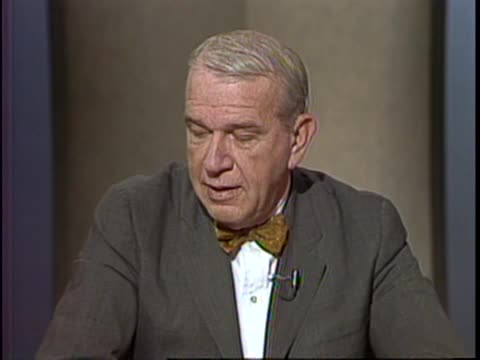
- John Chrystal (1926-2000) was a farmer, banker, Democratic party leader, advisor and citizen ambassador to the Soviet Union. Internal breaks-no; Donor-yes; Captions-no; UCA-30.
- Created Date
- 1985-11-27
- Asset type
- Episode
- Genres
- Talk Show
- News Report
- News
- Subjects
- Politics
- Rights
- Inquiries may be submitted to archives@iowapbs.org.
- Media type
- Moving Image
- Duration
- 00:29:41
- Credits
-
-
Producing Organization: Iowa Public Television
- AAPB Contributor Holdings
-
Iowa Public Television
Identifier: cpb-aacip-dbb4c1e49ae (Filename)
Format: U-matic
Generation: Master
Duration: 00:28:50
If you have a copy of this asset and would like us to add it to our catalog, please contact us.
- Citations
- Chicago: “Iowa Press; 1307; John Chrystal,” 1985-11-27, Iowa PBS, American Archive of Public Broadcasting (GBH and the Library of Congress), Boston, MA and Washington, DC, accessed January 27, 2026, http://americanarchive.org/catalog/cpb-aacip-37-78tb32jh.
- MLA: “Iowa Press; 1307; John Chrystal.” 1985-11-27. Iowa PBS, American Archive of Public Broadcasting (GBH and the Library of Congress), Boston, MA and Washington, DC. Web. January 27, 2026. <http://americanarchive.org/catalog/cpb-aacip-37-78tb32jh>.
- APA: Iowa Press; 1307; John Chrystal. Boston, MA: Iowa PBS, American Archive of Public Broadcasting (GBH and the Library of Congress), Boston, MA and Washington, DC. Retrieved from http://americanarchive.org/catalog/cpb-aacip-37-78tb32jh