Debate 1984, US Congress; Harkin-Jepsen Debate
- Transcript
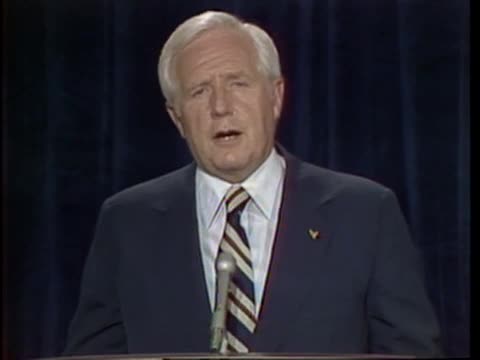
This is a special report from Iowa where public toilet major funding for this program was provided by friends of Iowa Public Television. Campaign 84. The Harkin Jepson debate sponsored by the Iowa newspaper association. The debate was recorded this afternoon in Des Moines. The moderator is Walter Stevens. Welcome I am Stephen's editor the messenger and your moderator for this afternoon's program. The Iowa newspaper association is pleased to offer this forum for a discussion of the issues between the candidates for the U.S. Senate. Of the two major political
parties we've been at the forefront in holding such debates going back nearly 30 years. I'm sure all of you know our participants. U.S. Senator Roger Jepson Republican from Davenport and Congressman Tom Harkin Democrat from coming. At this time I'd like to announce our ground rules. The candidates will ask questions of each other. We flipped a coin to determine who will go first. And Mr. Jepson will have the first question a candidate will have one minute to ask a question. The second candidate will have two minutes to respond and the first candidate will then have one minute for rebuttal. Later the candidates will be questioned by our panel of Iowa journalists. We ask that there be no applause from the audience in response to answers from the candidates. No signs will be people will be permitted in the audience.
Ladies and Gentlemen this is a political show is about to begin. We would appreciate your cooperation by giving these two candidates your undivided attention for the next hour. And now for the first question we call upon Mr. Jepson. Thank you Congressman. The May 1983 Evans Novak Political Report and commenting about your being a candidate for the Senate Senate from Iowa say that I would Democrats are very nervous about you being so liberal. In our first debate I suggested that I was asked questions carefully check your voting record your liberal activists efforts and your false front techniques. Today we will explore your statements and votes with regard to domestic content cargo preference the balanced budget amendment and your choice for secretary of agriculture. First of all the secretary of agriculture in August Jim Hightower of Texas joined us Chesley Iowa for a campaign rally at that time you're quoted as saying that your choice for secretary of
agriculture was your good friend Jim Hightower. In our last debate you called for Secretary black to resign. Will you now please tell Iowans how your candidate Hightower would better serve as secretary of agriculture. Thank you I first want to thank the Newspaper Association for arranging this debate. Roger let me just say that I think that just about anybody that has any knowledge at all about agriculture would be better for our family farmers than Secretary of law and that certainly is true of Jim Hightower the present secretary of agriculture for the state of Texas. Now I'd love to replace Secretary block right now with Jim Hightower. I think at least then we'd have a secretary of agriculture with some guts and with some backbone who wouldn't just be a lapdog for the president who wouldn't just say whatever David Stockman wanted him to say but he would really go out and fight for those policies that our farmers need. Now tell you this you throughout this whole thing about liberal liberal liberal. You've been saying that a lot in this campaign Roger. This is
not a campaign between labels is a campaign between two individuals. Our records and our vision of the future. And I hope in this debate we explore a little bit more in-depth exactly what you mean by liberal. Now only only in 1984 could someone who voted for the biggest budget deficits in history like you go around parading himself as a conservative truly 1984 has finally arrived. All rebuttal one minute Congressman. We were curious about your recommendation Mr. Hightower for secretary of agriculture. So we did some research and knowledge some of the things that we found out about your candidate for secretary of agriculture. First he said and I quote hot dogs the all-American food are a major threat because they contain sodium nitrite and or sodium nitrate. Mr. Hightower was present at the Texas Consumer Association that's an arm of Carol Tucker Foreman's Consumer Federation of America.
Mr. Hightower service key adviser for a vegetarians book. And according the south AGT Texas Agnew's Hightower attacks a land grant institution and agriculture scientists He also attacks the 4H and the Future Farmers of America programs as unnecessary and worthless. The Texas Monthly Report of that populism was a way that Hightower could talk about distribution of income without sighing like a socialist. He was chairman the Democrat agriculture platform committee which forgot to pledge no more grain embargoes. Congressman I know that I speak for most Taiwanese when I say I hope that you never have an opportunity to push your scan a date for secretary of agriculture. Next question by Mr. Harkin. Roger as I travel around Iowa I hear I was talking a lot about the issues but there is one issue that's ever most in everyone's mind and that is the issue of an impending nuclear war. And that's why I think the most important issue of our time is whether we'll sit down at the table with the Soviets and negotiate a mutual and verifiable freeze
on nuclear weapons. I am proud to say that when the freeze resolution came up in the House of Representatives every member of the I would delegation Republican and Democrat voted in favor of a mutual and verifiable nuclear freeze. But when it came up in the Senate you voted against it. So my question is this Roger. Why are you opposed to a mutual verifiable freeze. And secondly since you are what is your plan to prevent the Russians from developing quicker and more accurate first strike weapons. Tom first of all you don't hold a monopoly on the concerns about nuclear war. All I want is all Americans including myself despise the thought of a nuclear holocaust and the destruction that could bring. So I think you should quit misleading I what we all want to say for world you don't have a monopoly on that. The trouble is you think there's only one way to a safer world that's to a nuclear freeze and not everyone agrees with
you. For example in the Carter Mondale administration you had a national security advisor named Brzezinski. Let me quote what Mr. Brzezinski who was a recognized world authority on arms control said quote We never had a major party before advocating a hoax as a foreign policy. I think the nuclear freeze is a hoax. It's not achievable. It's not verifiable yet we're committed to it because of an activist wing of the party. BRZEZINSKI continued by warning that this activist wing to which you belong was moving the party toward naive the scape ism. Yes Congressman you have made much of your support for the idea of a mutual mutual verifiable nucular phrase except you have never really come to grips with the reality of the fact that the Soviets have refused on site on site investigation.
That's the only way you can verify just exactly what's going on by way of a nuclear freeze. Compliance. Now last summer the Soviets also said they want to begin negotiating on banning weapons in space without any preconditions. We said we'll do it. And like all other negotiations that have gone on before when we came in and were ready to go the table the Soviets added additional things additional requirements. And they went on and on and they backed out as they have in everything else a nuclear freeze. Everyone wants to have nuclear control of arms. But you have no monopoly on wanting to prevent a holocaust. Again I will note that too you really didn't respond to the question in terms of how you would prevent the Soviets from developing their first strike capability with these new weapon systems. I suppose you may prefer the start to a program that the president has initiated but even under the Start program the Soviets would be allowed to develop a first strike capability just as we would. And that's why I think the nuclear freeze is an idea whose time has come and
something that we must sit down at the table and negotiate with the Soviet Union because even if they even if we do have the start they can still develop those first strike weapons. One of the most important elements of that is the missile. And again I would note this is not a partisan issue. When the X missile came on the floor of the house this year every member of the I would delegation voted against the X missile when it got in the Senate. Roger you cast the deciding vote to go ahead and build more M-x missiles. That is the clear choice for Iowa voters this fall because the X missile is now on hold. There will be another vote next spring on whether we will build the next missile. If I am there all vote against it. If he's there he'll vote for it. Thank you Mr. Jepson example of deficit spending has become a habit. It's commonplace in fact. The federal budget budget has run a deficit and 24 of the last 25 years 20 times under a Democratic controlled Congress and three times under divided control of Democrats and Republicans. Deficit
spending has become in institutionalized and that indicates that we need basic institutional reform and that's just exactly what the objective of the balanced budget tax limitation amendment was it was passed by the Senate. It was defeated in the house and you voted against it. Thirty two states have approved this amendment including Iowa and August 7 I would groups including the Farm Bureau the I Will league of savings institutions I was so shaken of business and industry I would realtors home builders bankers and I would taxpayer Association all asked Iowa members to sign a discharge petition to force the balanced budget amendment to the House floor for action and you refused. Last week you told I would bankers in Washington at the balanced budget amendment was a gimmick. Would you please explain. And I'll say it again it's a gimmick. It's pure smoke and mirrors during an election year. If the president of United States wants a balanced budget why doesn't he send us one of the constitutional frame of government that we have the president proposes Congress disposes. Present rate has been there for years. If he wants a balanced budget Roger all he has to
do is send us one that's all. And yet he has sent us four budgets with the largest deficit in the history of this country. I might just point and pass point out in passing that this year the budget that President Reagan sent down to us this year when it came up for a vote in the floor of the house. You know how many votes the Reagan budget got on the floor of the house. Roger one of the 435 members Ronald Reagan's budget got one vote. Jack Kemp from New York. Even members of your own party couldn't even vote for those budget deficits and Ronald Reagan's bill the balanced budget amendment even if passed by Congress would probably take several years for the states to ratify through their legislatures. The need to get our budget deficits down is now. That's when we got to get the deficit down. That's why two years ago I voted for a budget freeze and a page to go budget just freeze everything including defense spending social spending freeze everything and then go on to pay as you go budget year after year. That's immediate That will do something right
now to get the deficit down. That's something that right now will begin to bring the interest rates down. But I will point out one other thing Roger I did vote for a balanced budget constitutional amendment one that I think is appropriate in our constitutional form of government because it would provide that the president has to send down a balanced budget and we have to enact one. But under the balanced budget proposal that you want the president is off scot free. He doesn't have to do anything under my amendment. I want the president to also be involved in proposing a Kasich a balanced budget to the Congress. Congressman everyone in Congress knows the amendment you voted for which was the Alexander amendment was just a political stunt to permit you and 76 other Democrats to go home and campaign on the trail and say a vote for a balanced budget amendment. It it just said that by a vote of a simple majority you could declare and national emergency and then go ahead and spend all you want that's what we've been doing for many years. You know the vote was
77 for it and they were all Democrats you were one and three hundred forty six against it. Today the national tax limitation Committee released a poll taken of professional money managers who control two hundred fifty billion dollars in capital pension investment funds. The poll shows that over 90 percent of them believe that of both houses of Congress passed the real but balanced budget amendment. Both the long and short term interest rates would fall. As chairman of Joint Economic Committee I can attest that many economists agree that the signal that would be sent if you passed both houses a balanced budget amendment that would drive down interest rates within six months. Now Congressman you fail again to reflect the trust of Iowans who want both a balanced budget and lower interest rates. You refused to work or vote for either one. Next question. Mr. Harkin. Roger since 1981 we've had some pretty tough times in the farm fed cattle are 250 a hundred weight less now than they were at the beginning of 1981. Market hogs are exactly the same. Corn is down 15 cents a bushel beans are off to 33 a bushel from what they were in
1901. But for farmers there interest payments are up 47 percent. Their cost of seed is up 26 percent. Fertilizer is up 8 percent. Equipment up 28 percent. I will farm debt has increased 71 percent since January of 1981. Thousands of farmers have been driven off the farm. Rural banks are going under. Yet in a television interview on April the 1st of this year you said and I quote I think this is going to be one of the best years and it's long overdue. One of the best years farmers have had. My question Roger is what's going on out there that's going to make this the best year farmers have ever had. Congressman for those who seemed to have short memories and you conveniently have seem to have one I would point out that this administration was given and handed a economic agricultural time bomb that was ticking by the Carter Mondale Harken administration. It included a
21 percent interest rates and they were going up it included 13 and a half percent inflation rates and they were going up. It also included a grain embargo. Now we have spent three years trying to keep this bomb from exploding. We have spent in dollars more money than has been spent in any recent years to help and assist farmers on all levels in all situations. We spend a lot of money on the pick program just last year to relieve the stress of the full markets and bins and boxcars and the high schools are banned in the one room schools and so on they're all full of grain. We had to get rid of that to get the market back in the balance. Now Congressman this administration. Has worked to do everything they can to assist to bring farmers out of what has been a legacy of their past. And it's not a harbinger of the future what's happening today. The structure and the
restructure that was announced this week by the president to assist farmers is just but another step in assisting and helping not only farmers but agribusiness people across the board this is a rural community problem that we're experiencing. And I would suggest that the drought that we had last year and the opportunity to help them that you sort of stood in the way of when you held your dairy import bill Sankoh sank so that no one could put drought relief legislation on it last fall. Senator Grassley and I had to do that this spring. So I would suggest Congressman that you re-examine the record re-examine your thinking and get the facts straight. We are concerned about farming and we are working our way out of it. Roger I suppose the next 20 years you'll be blaming the Carter embargo for every deal on agriculture. I just point out that the first embargo on agriculture was by Richard Nixon 1073 on soybeans and the next one was by President Ford in 1975. And then
Carter was just following their lead I guess. But you can just keep blaming him for the next 20 years. But when it's time to stop assessing blame and start working on solutions to solve the problem. Now you've come up with a plan here in the closing weeks of the campaign. The fact is back in back in 1998 when you were campaigning for the Senate then you accused then-Senator Dick Clark of coming up with election year plans and he should have done something before that that was in response in fact to a question asked by Bob case. But now you've done the same thing. You want to go back in time go back in time 1981. We had a farm bill we proposed it would've been much better than the one in the family farm liquidation act that you pushed through and last year we passed h r 11 90 90 passed in the house went to the Senate. And you haven't even gotten it out of the Ag Committee yet. Congressman Cargill preference laws require that a certain percentage of gross tonnage of commodities be shipped in privately owned U.S. commercial vessels. Recent proposals to
expand cargo preference laws would eventually cost Iowa farmers a dollar and thirty two cents per bushel more to ship corn in a dollar forty two cents per bushel more to ship a bushel of soybeans. Congressman during our last debate you led I was to believe that you oppose cargo preference. Now the puzzle here is that on the twenty ninth of May of this year you were praised by the seafarers Union for your support of cargo preference. The president the seafarers introduce you by stating that and I quote a guy that gave us a key vote on cargo preference. Now something's very strange here. Either you misled Iowans by contending that you oppose cargo preference or Tom Harkin was misleading the seafarers Union by saying that he supports cargo preference. We need to know the truth. Why do Iowans think that you oppose cargo preference while the seafarers think that you support it. Well I Roger thing I can't so I can't speak for the seafarers maybe you can. All I know is that in my 10 years in Congress the issue of cargo preferences come up on the floor of the house one time and the record is clear. I voted against it period. That's all there is to
be said about it. Whatever the seafarers are talking about probably has to do with a dairy bill that came up in the house. In my AG Committee one time Tom Hagedorn from Minnesota wanted to put on a cargo preference amendment onto it. This was a feeding bill to get our surplus dairy products to poor people overseas in a hurry. If he'd put the cargo preference bit amendment on that on my bill on that dairy bill to give the surplus food products away overseas it would have gone from the Ag Committee to the Merchant Marine and Fisheries committee and they held up the river for there forever and we wouldn't have gotten our dairy surpluses to the starving people abroad. I opposed that not because of cargo preference but because the bill would have gone to another committee and held up a NEC committee probably forever. Congressman cargo preferences like its cousin domestic content. It's a death wish for profit trade for agriculture. But what puzzles me the most is what you had to say about the farm girl in your speech that day to the seafarers International Union and referring to the Farm Bureau you
said and I quote. Every time something comes up with importance to your industry there they are fighting against the maritime industry and then you went on to say well I am running for Senate this year against a man named Roger Jefferson who's been opposed to everything you believe in. He listens to only one side the Farm Bureau side. Congressman you criticized the Farm Bureau for opposing maritime interests of things like cargo preference and you've criticized me for listening to the Farm Bureau. May I suggest Mr. Congressman and I listen to the Farm Bureau. I'm listening to at least one hundred fifty thousand more farm families than you're hearing when you're listening to the International Union the seafarers Union. Next question if you are Roger 1981 we all recognize the need for tax reform and for tax reductions. We both work for different tax cut plans. The one I voted for would have targeted the benefits towards middle income people. The 81 tax bill in the Senate gave most of the relief to the rich and the powerful. But there was an amendment
called the Bradley Amendment on July 23rd 1981 which would have shifted the benefits to the tax cuts of the tax cuts to those making less than $50000 a year. It would have been the same package is what President Reagan supported the same amount of money but it would have shifted it down to those making less than 50000 for example under the Bradley Amendment. Families making twenty thousand dollars a year would have gotten an additional $160 tax break families making 30000 would have gotten a hundred $70 tax break but families making $200000 a year would have only gotten a $14000 break instead of a $20000 break. My question you had a clear chance to vote in favor of middle income people on that tax bill and you didn't. Why not. Congressman my answer to your question here will be very brief because it's very easy. I voted for that 1981 Tax Reform Act included every duction in fact crackly elimination of the federal state taxes that
existed for farm families and for farm businesses small business around the country. You voted against it. I voted for a 25 percent income tax cut across the board that's 25 percent 10 10 and 5 approx me over a three year period. You voted against it. A Congressman you voted against all of the reform acts including everything that was in it that was good for Iowans especially the estate tax rate and the state tax relief and the 25 percent income tax across the board which benefited every man and woman in this country. So what do you say to that. Raji didn't answer the question the Bradley MNM would have shifted the tax cuts to those let making less than $50000 a year and you voted against it. I'm not talking about the final vote on the bill. I'm talking about that one specific amendment which you opposed but I think that's in keeping with all of your votes on taxation since you've been in office. Because in 1979 you voted against the windfall profits tax on the oil companies. You voted to give the oil
companies two hundred twenty seven billion dollars in tax breaks. Again I would point out every member of the Iowa delegation Republican and Democrat including Senator Grassley voted for the windfall profits tax. But you voted against it. Just think what our deficits would be today if we hadn't put the windfall profits tax on oil companies. Two hundred twenty seven billion dollars. And now I notice that Getty Texaco shell the Richfield Amoco Tenneco Chevron 14 oil companies have contributed to your political campaign. Next question by Mr. James Harshman over 100 trade and farm groups opposed domestic content legislation this trade embargo legislation will lose markets for farm products and cause over 10000 people to lose jobs in the eye will plants of John Deere and Caterpillar alone. During the debate of this protectionist legislation a proposal was presented that would bar the implementation of domestic content if it led to retaliation against farm exports. It was the only real farm protection that was offered in farm
organizations lobbied hard for its passage. You voted against it. In fact you were the only member of the Iowa delegation to vote against the farm or protection amendment and for the final passage of the bill. Congressman the coat's amendment to which I refer many economic life or death to both farm and labor in this state. Why did you vote against it and what is your relationship with the Detroit union bosses who pushed through this this bill in Congress. Domestic content I would just point out that Roger you're in favor of domestic content for hogs. Canadians are important hogs in this country like mad taken away taking away our profits from our family farmers. And you want to do something you want to stop hogs from coming in this country so that's domestic content for hog producers. The fact is when our farmers as well as our laborers are being hurt by unfair trade practices by any foreign country I believe we have to stand up for our people first. On domestic content I'll point out again as I've pointed out in the past Brazil has had a domestic content law since the 1950s
but when Nixon put on the grain bar they soybean a bargain 1073 the Japanese went to Brazil to get their soybeans. Even though they've got a domestic content law. So I would just note in passing that last year Japan imported more soybean meal from Brazil than they did for the United States. First time in history. I think we need something like domestic content to put the pressure on the Japanese to make them know that they are going to run roughshod over us. Roger the Japanese are no longer a post-World War to power. They are one of the most important and the largest economic powers on the face of the earth. They are going to take advantage of us if they can. And all of the talking and things that you do to them is going to come to nothing and to stand on your hind feet and really stick up for our American workers here in this country. As I've said before you put a thing in the Congressional Record a speech you gave which sound like it was written by the Japanese ambassador to the United States. I say this and I say it again and I will keep saying it all through this campaign. If you put
American people to work building Japanese cars in this country those workers are going to eat meat. You have those cars built in Japan. They're going to eat fish. And I'd rather sell them some meat. Congressman you're not very consistent in why you say you vote for domestic content you so you told the seafarers union you're doing it to provide jobs and of course the jobs would be lost in Iowa the jobs began in Detroit domestic content legislation would start a trade war and raise the cost of automobiles in this country as much as a thousand dollars that's just for starters. It is anti-consumer. It is anti-business. It is anti farm it is anti job it is anti Iowa protectionist legislation. The farm bureau the soybean Association the corn growers the Chamber of Commerce Caterpillar John Deere League of Women Voters National Association of Manufacturers the Automobile Dealers Association the National Council of Farmer Kuapa soybean processors the Turkey Federation and over 98 other farm and business organizations opposed the mastic content.
Congressman you're swimming upstream. You failed again to reflect the trust of Iowans who want a stable and profitable farm markets and more job opportunities. You voted for domestic content legislation and you were the only member of the Iowa delegation to vote for every part of it. Final question from a candidate Mr. Harkin. Roger you of all people been going around I was saying that I talk one way and vote another way. I find that rather strange you should be saying things like that. Let's look at the record. In 1988 in the old newspaper you promised that if elected you would never vote to increase the national debt. And yet you did four times to a record total of one point four trillion dollars. In July of 1998 when you were campaigning for office you said to an American Legion convention that there didn't have to be any increases in defense spending and that was quoted in The Des Moines newspaper. And yet since you've been on the Armed Services Committee you've been like a kid in toy land throwing money at the Pentagon and in the Senate you sponsored a bill to prohibit the sale of AWACS aircraft to Saudi Arabia.
You made stirring speeches against it. And then 48 hours before the vote you shifted your position and voted in favor of it after you were taken down to the White House and talked to by the president based on this record of inconsistency and contradictions. How do Iowa voters know that what your positions are today will be your position six years from now. Congressman I am pleased that you brought up the wax. It's been a greatly distorted issue from the outset. Yeah a wax issue became a secondary issue as time went on for the has time for the vote drew near it became a political issue. It has been package of the wax issue. I was against and opposed to and it was wrong then it was wrong today. Unfortunately it was part of a package that was made and committed to by the Carter Mondale administration. And as we drew near to the final vote of that it became rather obvious that you and your ultra liberal counterpart counterparts and even Mr. Mondale who was part and parcel of putting that package
together and making the commitment by the United States of America for it came out and started to harpoon to ridicule to criticize President Reagan for his stand on the AWACS which he was making because this country had made that commitment out of the Carter Mondale ministration. It became very obvious that they were trying to bring this president to his knees early in his career to show that he would not be able to lead successfully in the years to come of his presidency. At that time when it became obvious that the political aspects of the AWACS vote came in over shadowed all other important items of this I decided that I would support this president. I would make sure that as a responsible party member and we had the responsibility of governing then with a majority in the Senate and the president I would make sure that we did have in fact a support for the president that would make it possible for him to continue to govern with effect and it would be better for not only us domestically but for the rest of the world
if that was so. So I encouraged my colleagues to vote and support for the AWACS. I would point out that Senator Grassley and I discussed this. We both supported Bill Cohen who is Jewish who was going to also vote against it reflected and then looked inward and he supported it as did ads are risky for Nebraska. Well what I hear you saying Roger is that you had strong convictions against it you said that in fact it's been in print that you said you had religious convictions against it and now I hear you saying is it because the leader of your party because your party wanted you to go one way that's the way you went because you wanted to make sure that President Reagan had his way. Well it seems to me that one of the fundamental elements of leadership is having the courage of your convictions sticking up for what you believe in regardless of how tough the pressure gets in Washington. And I know how tough that pressure can get after Carter. But on the bright grain embargo I threaten to run against some of you may remember in the Iowa caucuses I
was held in the White House too. I had my arm twisted doo and I still went out and campaigned against the grain embargo. And I told him I said I could support you for president but I can't support you on the grain embargo seems to me that that is a fundamental essence of leadership. They have the courage of your convictions. And when you stand one way you don't let the president it don't even let your own political party bend your will. We are midway through the debate. We have reached the point where the candidates will be questioned by our panel of seasoned political reporters Bob case of the Waterloo courier Ken Sullivan of the Cedar Rapids visit and Harrison skip Weber of the Iowa newspaper association. Here's our time frame. Thirty seconds to ask a question. 90 seconds for a candidate to respond. The moderator will direct the same question to the second candidate who also will have 90 seconds to respond. If in the judgment of the moderator he believes the response by the second
candidate requires a rebuttal. He will allow 60 seconds to the first candidate only on rebuttal. We'll go to Bob case for our first question. Yes Mr. Jepson while campaigning for you in Waterloo. Senator Goldwater said your opponent feels more kindly towards Russia than he does towards the United States. And he's absolutely opposed to the entire defense of this country. You agree with your colleague Senator Goldwater. Well the record speaks for itself on that Bob. My opponent Congressman Harkin has one of the worst records in the support of defense in this country of any congressman or any put a person in there in the entire Congress. He has continually voted against all all appropriations for defense. He has continued to be a critic and I would point out that very few very few critics ever write a play they can kill him but they very seldom write one.
The fact is that the defense of this country on the defense level when this administration came into office thanks to the liberal voting over the years that just denigrated all of our defense capability our defense was in shambles. And it needed to be rebuilt. The level of defense that we must attain and maintain in this nation is a level that will keep the peace and that will prevent war and bloodshed. And that will enable us to go to negotiate in table and negotiate for the control of the reduction and the elimination of both nucular and conventional arms. Now we don't sit at a table as a 85 pound weakling and sit there with a 350 pound giant with a club in his hand and negotiate and expect to accomplish anything. The history and the records are clear of our adversaries they have managed to take over 27 countries since 1941. They continue to as long as human nature is what it is we want peace and we want freedom with peace.
That's important freedom with peace and I think that's what Barry Goldwater was saying and some of the other rhetoric we've seen from some of the necke PAC groups and moral majority groups and other independent groups in Iowa will be the kind of rhetoric that you will see between now and Election Day. Bob not only did he say that up your way in Sioux City Barry Goldwater said and I quote Tom Harkin represents the greatest danger to America's freedom in our history. And Jeanette me. Tom Harkin from cumming Iowa I mean more than Ethel and Julius Rosenberg me. I represent the greatest danger and that's that kind of inflated kind of rhetoric that really trivializes I think a Senate campaign. And Roger what I hear you just say is that that our defenses were down we needed to spend more but in 1978 before the American Legion and I were you said we didn't need to spend more. You said that and then you went to Congress I went to the Senate and begin to spend to throw money at it. We all know that the biggest waste and abuse in Washington is in the Defense Department $7000 for coffeemakers thousand dollars for allen wrenches
$400 for a claw hammer. You've been on the Armed Services Committee six years and you haven't done a thing about cutting out that waste and abuse. I suppose in 1078 the people of Iowa thought you would be conservative in your approach to defense spending. But what they found is you're one of the biggest liberal spenders when it comes to providing money and funds for the Pentagon. You wish to remodel. Yes. Congressman talk is cheap. I have served as a member of the Armed Services Committee I am chairman of the manpower and personnel subcommittee and as chairman of that subcommittee I have worked and started to work in 1978 as a ranking member of that committee when we had thousands tens of thousands of our men and women leaving the service of our country we had him standing in and lines for food stamps. There was a lot to be desired by way of medical care. And I have done all that I can as chairman of that to turn that about.
I would point out that in all the programs we've had to increase and improve the medical care for our men and women in the service and their dependents you have voted against it. I would point out that any time that we have had any type of increase with the exception of one time that was my fav bill which provided for target benefits. You have voted against everything that has come up that has benefited the health and welfare of the men and women are uniform. I make no apology for trying to raise the morale and trying to bring our all voluntary force to a sharp and a solid and healthy force. The next question by Mr. Sullivan. Mr. Harkin you oppose the balanced budget amendment. SENATOR SIMPSON supports it. You criticize the Republican administration for the deficit and deficit spending. From your own party we get information that there seems to be only two areas where it's even possible for Congress to cut to stay within the revenues next year for example. Do you think if you could be specific in this is it possible to balance the budget on the backs of defense
spending alone or discretionary spending in discretionary spending as you well know doesn't contain enough money to to even match the projected deficit so how do you how do you rationalize that how do you come up with the necessary money to eliminate the entire thing out of the out of defense. And if I couldn't Senator Jepson answers this what are your alternatives. Be specific please how do we get the necessary money. Or what honestly answer your question because of the mess that's been made because of the Kemp-Roth bill because of these huge increases in military spending. I don't think there's any way that we could have a balanced budget like right next year simply because we still have people out of work the farm economy is in a shambles. It's going to take a little bit of time but I think the proper path to it is not to enact this blue smoke and mirrors a constitutional amendment which would take several years to be enacted anyway. The best thing to do is to take action right now.
Again I think a budget freeze which I have voted for in the past and still support a budget freeze on everything including military spending and all domestic spending. Then a page to go budget. Then I'd like to look at some tax reform we need. We need some tax reform in this country. There are too many people in this country making too much money getting off with not paying their fair share of taxes. We have tax loss farming. One of the elements that I want to put in the next year's farm bill do away with some of the tax loss farming that would bring in some revenue. We can I believe hold the fence down to just the rate of inflation domestic spending can be cut. I disagree with Mondale's plan. He wants to spend 30 billion dollars more in domestic spending. I disagree with that. I think that the 900 billion dollars in unspecified spending under the Mondale plan is unnecessary although I would vote for the increase spending in education. I also believe that by implementing some of the provisions of the Grace Commission Report we could save somewhere between 5 and 10
billion dollars next year. Yes I would advise a congressman that much of the race commission report or some of it has already been instigated it was given all the apartment heads they were ordered to do everything they could do immediately put in place some of the recommendations they have well over 17 billion dollars estimated that they have already saved by putting the recommendations in place they'll continue to work on that. If we're going to get a handle on balancing the budget the first thing we've got to do is get a handle on those who are responsible for balancing the budget isn't in the budget that's been out of control all these years it's been the people that make the budget that have been out of control. And this this continuation of spending more than you take in as I indicated earlier has become institutionalized. And you know you can't get a balanced budget overnight by passing a constitution convention but you can send the signal that that's what must be done. Every other agency every other level of government unit of government in this country must balance the budget. They cannot spend more than they take in. We and I feel that way
too. We don't think we should spend more than we take in. We have a constitution and I will says we can't do that so we operate within the budget. So a balanced budget amendment whereas it's not a panacea is going to solve it overnight. I would certainly be a signal that would be sent not only through this country but around the world that we're serious about getting about the business. Establishing that discipline that's necessary to balance a budget in the halls of Congress they're the ones who are responsible for it. They have been like Jack but it's been like putting Jack in charge of the blood bank all these years to expect Congress to balance the budget. We need this institutional reform we ought to pass and now you voted against it. You have talked against it you fought it all the way and refused to follow through in Iowa groups when they asked you to get on the petition to force it out and get it voted lately. So again I would point out Roger one mistake. I did vote for a constitutional amendment to balance a budget that would provide both branches president and Congress both submit a balanced budget. You keep voting for one that we just have Congress do it. But the president still in our constitutional system of government
is the one that proposes it's Congress that disposes. And I don't want to let this president or any president off the hook in the future. But can you ask about specifics. I didn't hear any specifics from you Roger just a lot a lot of talk about a constitution meant to balance the budget. I've said we need tax reform meaningful tax reform. I'll go farther. We need a modified flat tax in the form of the Gephardt Bradley tax proposal. We need to in not only just instigate as Roger said but to put in place more of the recommendations of the Grace Commission for example and terms of cutting down for example a number of automobiles that the government buys and has. The other thing that I would do would be to make sure that we have a budget freeze and that includes defense spending. And you won't hear my opponent say that because he's not in favor of it. Next question. Mr. Weber Mr. Jepson financial pressure is building on many hospitals particularly rural hospitals. Among other things because of the new rules on Medicare they've added to their problems. My question is what
you foresee in the next few years regarding the state's health care delivery system. Well what I foresee is that there's going to be an awful lot of work working together between both the state local governments and the federal government to provide and make available the quality health care that the people in this country are entitled to. Accessibility is a key word both in education and health care. And we must make health care accessible at the same time we must approach and attack and solve the problems of the rising hospital cost and medical care. Now the fact and I will that we have major hospitals and the larger cities and we have hospitals that we want to keep their point I would point out that in the smaller communities and in those two areas we have different level of services but we have a need to coordinate both with the local hospitals and the neighboring hospitals and the staffs of both the regional health care agencies to make sure that all of the
people who are in need of medical care receive adequate quality medical care when they need it. We've got to keep it and make it accessible. Or both. Both of us have supported the prospective payment to a program that is now being instituted among the hospitals and I went around the country in some places working in many places not in some needed changes will have to be made in that prospective payment program. Many of our small rural hospitals are being hurt for the menses the wage base differential that they have to pay is more onerous are small hospitals in terms of figuring out how much of an increase they'll get next year for the products they buy. It's harder on the small hospitals than it is on the larger hospitals because of the way the formula was set up. Many of those need to be changed. I'm not yet to the point of saying I want to scuttle the prospective payment system but we do need to make some needed changes in it. But looking ahead what we really need to hold down the escalation of healthcare cost this country is we need a
good comprehensive national health care cost containment program that would apply both to the to the hospitals and also to the doctors of this country to something that has to be worked out with the agreement of all sectors it can't be something that's rammed down somebody's throat. But I think we all recognize I talk to doctors I talk to hospitals both who understand that something has to be done. And I believe there's enough goodwill out there to work something out with a comprehensive cost containment program. Secondly we need some new ways of providing health care. Visiting Nurses program in home health care more HMO health maintenance organizations throughout this country with those new devices. And I think keep the cost down in the future. You could have everybody. Well if in addition this is one area where possibly the congressman and I would agree on one of the very few. And that is that we certainly do need to make sure that health care is accessible and
it all it also is important that we approach this problem by not pointing fingers and trying to fix blame as to who is the the cause or the reason for the problems that we're having. Whenever people sit down and work things out together and I ones I might add take the lead in that across this country in many areas they have in the hospital cost containment care as well as education many others so that in this serious problem it is the most serious one we have facing this nation right now and that is the runaway costs that we have with Medicare and Medicaid a program that is put into effect just not too many years ago that was proposed and expected to cost 7 billion by 1990 has cost seventy seven billion and one thousand nine hundred two is going way out of sight. So we need to work on it. We need to provide a quality level of health care to everybody in this country. The next question by Mr. case Mr. Harkin you charge that your opponent would require over Iowans to pass a welfare means test before receiving
Social Security benefits. You have some kind of documentation to support that charge you made in a recent press release. Yes I do. The the there was a proposal. There was a resolution offered in the Senate. That would have said that in fact it was said that there would be no means test for any kind of Medicare payments. It was an absolute prohibition was a sense of the Senate resolution saying that the Senate would go on record as being opposed to any means test for Medicare a clear cut vote. And why are things like that important because it sends a signal it sends a signal to so security it sends a signal to the president. It sends a signal most importantly to the elderly of this country that we aren't even going to Brooke. Any thought about enacting a means to care for Medicare
and yet when that resolution was proposed there was a vote to table it. My opponent voted to table that motion and thus kill that resolution. And that's why I'm saying that those who voted to table it were those who probably sometime in the future would be in the vanguard of voting for a means test. And I can tell you that Medicare not to be a means test. It is a right earned by the people of this country. And it's a right that ought not to be dependent on how poor they are or whether they have to come groveling on their hands and knees and begging for Medicare. Bob I respond to that question and as a congressman knows this is part of is a false front activities the I can be more specific than he was with regard to the resolution resolution first of all has no carries no impact of law or weight. The resolution that he refers to was the candy Monahan resolution. It was proposed and the end of September 1982 about the time that the campaign for
the 1008 two elections get in full swing. Democrats have been run around the country saying to President Reagan What's your secret plan for taking away people so security among other things. And that resolution was a pure political straw man that was run up in the Senate. That's not the first time it happened the Senate won't be the last as they do in the house all the time. And it was done for strictly political reasons. The resolution would have gone and said Put the Senate on record as a resolution backing up the political charges that were made by the Democrats at that time that President Reagan was going to take and have a means test that the administration was going to have a means test. That was a rumor in the political one that was being spread about. The fact is to pass that resolution would have. Lent some credence to that political room which the Democrats would really like to have had happen. The fact is the administration has said there was no means test and of course there wasn't. No one is ever advocate a means test for a program so security so Security
recipients pay for the so secure retirement they pay for their Medicare and they pay for their disability. All of them. I might add you missed all the votes to correct and reinforce and strengthen all those things including one this week. Great rebuttal. Well again I'd point out Roger you sign and vote on a lot of resolutions in the Senate sense of Senate resolutions on a whole host of different things and I always find it very odd that every time you find yourself in an uncomfortable position on a boat that you've taken you always blame it on politics. It's some kind of political maneuvering. Roger a lot of times most of the times in the Senate as well as in the house people offer resolutions offered bills in good faith. I've read the debate on that in the Senate in the record and it was offered in good faith but Moynihan and others wanted to do was to put the Senate on firm record as saying that in no way would we entertain any kind of means test for Medicare to send a strong signal to the elderly. Because you remember an 82
elderly we're worried about where they're going to get money for their heat. There are vicious attacks being made on the social security system at the time energy credits food stamps for the elderly. We want to say to them Don't worry you're not going to have the means testing Medicare and you fail to vote for. It. The next question by Mr. Sullivan we're going to cut the time to 30 seconds each for each candidate Mr. Jepson. This could be answered very briefly Mr. Harkin raised it earlier when he loaded two Nick back. Have you given any consideration to disavow any association or any link with such organizations as in the Mid-America political action political conservative action committee or whatever or its companion Committee the committee to re-elect a responsible senator that have made some very harsh charges against your opponent. Recalling that Congressman Evans did something similar in 1982.
The answer that is no I have not. If there and they do not set my agenda My opponent does not set my agenda. We set our campaign agenda. I have no connection whatsoever with any of these organizations. This is a free country. I have suggested I made a public record and I repeat it now. If there are organizations that are making false statements about my opponent I will make statements with regard to that. We are going to document my opponent's record. That's what we're doing that's why islands have been changing lately. Mr. Orcutt Well again I think we see this kind of rhetoric coming out. There's all of these things come out there's this Hawkeye review newspaper in Iowa City this coming out really a scandalous kind of newspaper full of half truths innuendoes and outright lies. I point out they they said they said I was in Congress one time and voted for example on Title 9. I wasn't even in Congress that year before I was even elected to Congress. So just just outright falsehoods. And yet these people are your friends Roger and they're your supporters. And you ought to disavow them
because they are not representing the best in American tradition. Our program is rapidly coming to a close. It is time now for the closing statements from each of the candidates. Those will be two minute statements. The order appearance has been determined by the flip of the coin. Mr. Harkin will present the first statement. Again I want to thank the Iowa newspaper association for sponsoring this debate these debates play a very crucial role in our political process. I hope they've been informative to you and to the people of Iowa. A little more than six weeks the people of Iowa will be asked to choose to be asked to choose a president and a vice president to represent them for four years in Washington. But they'll also be asked to choose a senator to represent them for six years that senator will make very important decisions in the next six years important decisions on peace and war on fairness and on equity. And whether or not we're going to have a real economic recovery here in Iowa or whether the recovery will only take place in Texas and
California and a few other states that Senator will be asked to decide. Most importantly the 1905 farm bill whether we're going to have a future of agriculture based upon family sized farms or a future of agriculture based upon corporate conglomerate farming. Some say that this race in Iowa is the most important in the country. I believe that's true because of the differences between Senator Jepson and myself on the really important issues in this race. And I believe those differences are quite wide. One of the central components I believe in this race is leadership. And one of the central complements of leadership I believe is good judgment good judgment having the courage of your convictions and staying in tune with the people of Iowa on those issues that are most important. And I know that my opponent's going to go around calling me liberal liberal liberal and saying I'm out of step. But is he who is out of step on the important issues of the nuclear freeze when all Democrats Republicans in the House supported on the M-x missile when all Democrats and
Republicans voted against the missile on sending arms to the Contras in Central America. Every Democrat Republican in Iowa voted against it in the House of Representatives on nerve gas. We all voted against nerve gas. Roger Jepson voted in favor of it. Those are crucial issues. The windfall profits tax when we all voted for the windfall profits tax but he voted against. Those are the crucial issues of the past. And that gives an indication of the next six years closing statement by Mr. Jepson. Thank you and I thank the Iowa newspaper association for sponsoring this early in this campaign. Ayers I want to compare my record and the record of Congressman Harkin the comparison shows that the choice is clear. In 1978 I once placed me in the United States Senate and they placed their trust in me to represent in Washington D.C. and I did not take that trust lightly. Among other things I pushed and voted for a 25 percent tax cut. I urged President Reagan to lift the Carter Mondale grain embargo I initiated meetings with the Soviets to
enter into some long term grain agreements. I was successful in securing the soil till center at Iowa State University. I support and sponsored legislation for the family including a provision which became law that allowed a tax credit for those who adopt hard to place and handicapped youngsters. Now Congressman Harkin from I was 50 Street has worked for those things which he is obviously committed. And I do not fault him for that. However I just do not think that the Harken record is an Iowa record. As the Harken record is examined it seems to me that he has ignored the interest of nearly every segment of Iowa's agriculture and business community. The Harken record is forand I was best interests and her values. Congressman Harkin ignored the best interest of Iowa's pork producers when he supported the consumer activist and their quest to ban nitrites import. He would not listen to the cattleman or the pork producers during the debate on the dairy bill. He voted for domestic content legislation which would produce a trade embargo. He voted against a state tax reduction for family
farms and family businesses and he opposed a balanced budget amendment. And he has criticized he was criticized by some corn growers for ignoring them while he criticized me for listening to the Farm Bureau with his one hundred and fifty thousand family members. Yes the choice is clear this year. What the Iowans will be deciding when they go to the polls in November 6th will be who do we trust to vote Iowa in the United States Senate. We want to thank Senator Jepson and Congressman Harkin for participating in this unique debate. This debate is proof that we live in a free society from Colonial Times to the present a free premises been recognized and officially acknowledged in the First Amendment as a key protester of the rights of American citizens. If freedom is a growing thing it can be no less today and tomorrow than it meant to those who wrote the First Amendment. The First Amendment distinguishes us
from other societies and it works every time the First Amendment works. It makes us stronger. Thank you all for attending this debate. We are going Jepson debate was sponsored by the Iowa newspaper association and was a production of all Iowa Public Television. Major funding for this program was provided by friends of Iowa public.
- Series
- Debate 1984, US Congress
- Episode
- Harkin-Jepsen Debate
- Producing Organization
- Iowa Public Television
- Contributing Organization
- Iowa PBS (Johnston, Iowa)
- AAPB ID
- cpb-aacip-37-311ns6jk
If you have more information about this item than what is given here, or if you have concerns about this record, we want to know! Contact us, indicating the AAPB ID (cpb-aacip-37-311ns6jk).
- Description
- Description
- Tom Harkin-Roger Jepsen Debate, sponsored by the Iowa Newspaper Association, Hotel Fort Des Moines, Rec. Engr. JS, Rwt, VCR 8, UCA-60
- Created Date
- 1984-09-22
- Asset type
- Episode
- Topics
- Politics and Government
- Rights
- Inquiries may be submitted to archives@iowapbs.org.
- Media type
- Moving Image
- Duration
- 01:00:43
- Credits
-
-
Producing Organization:
Iowa Public Television
- AAPB Contributor Holdings
-
Iowa Public Television
Identifier: cpb-aacip-0a8bce8b74b (Filename)
Format: U-matic
Generation: Master
Duration: 01:00:02
If you have a copy of this asset and would like us to add it to our catalog, please contact us.
- Citations
- Chicago: “Debate 1984, US Congress; Harkin-Jepsen Debate,” 1984-09-22, Iowa PBS, American Archive of Public Broadcasting (GBH and the Library of Congress), Boston, MA and Washington, DC, accessed June 11, 2026, http://americanarchive.org/catalog/cpb-aacip-37-311ns6jk.
- MLA: “Debate 1984, US Congress; Harkin-Jepsen Debate.” 1984-09-22. Iowa PBS, American Archive of Public Broadcasting (GBH and the Library of Congress), Boston, MA and Washington, DC. Web. June 11, 2026. <http://americanarchive.org/catalog/cpb-aacip-37-311ns6jk>.
- APA: Debate 1984, US Congress; Harkin-Jepsen Debate. Boston, MA: Iowa PBS, American Archive of Public Broadcasting (GBH and the Library of Congress), Boston, MA and Washington, DC. Retrieved from http://americanarchive.org/catalog/cpb-aacip-37-311ns6jk