IPBN Presents Mary Jane Odell; Mjo 2; Anthony Armstrong Jones
- Transcript
I'll be and present. A conversation with. Anthony Armstrong Jones. Here is your whole song. So. Just imagine if you will how it would be. To spend your entire life having people. Look down on you literally. Imagine how it would be to spend your entire life having to reach up. To find an ordinary door knob. Imagine how it would be to spend your entire life being. Only slightly over two feet tall. So that's the subject of the film we're going to watch. Born to be small by Tony Armstrong Jones but you're going to see now. And I think that. Once. You. Sit through this film and watch it with an open mind you will have an entirely new perspective on something that you may have regarded as a as a you know a carnival freak situation. It's a beautiful film called Born to be small. And let's watch it. Let's.
Look at it again. We'll start assuming that the film was released. I. Think you know. That's that is one of those strange subjects that. The average person would ever want. Is a season people you know little bits of people that. Remember the sequence with the twins and I thought that not only very interesting that two beautiful people to have seen a lot since months had you know the writers room. You know.
Tony this is one of those kinds of subjects that I suppose or people at some time or another have thought about or at least in passing but they deliberate. The decision to make a film about something like little people is rather unusual to me. And I would I'm curious as to how you happened to select this as a particular subject for a film. I didn't really stick to it in fact. I made it with something called Derek Hart who is a. I've worked with before on other documentaries and I turned it down three times because. It's a subject that. Is easier to write about. And fun hard to photograph. I was in New York at the time and I went and saw. A film that I really hated which was made by doubting about said he ate cold freaks which you know which held him up to more or less ridicule.
Yes and this is what frightens me about what I was trying to do was to make for more understanding. In a way that. Showing a minority group you can use that minority group either because you see it so it's always easier to. Discriminate against people who have a different colored skin or all of visibly different. Like if they are small or whatever. And so. I hope one day what we did was going to make people understand that each person who in the film is small. Like one person did says that we're individuals. They happen to have that one thing in common of being small. They have problems. They've got over those problems and doing quite ordinary jobs. I think that it's the sort of subject that people tend to put on to them that people don't want to or
know about certain things like mental health. I hope at the end of that film or that people realise the difficulties but realise that everyone is an individual who has certain problems we all do. But you mustn't bunch people into groups. Always dangerous. Yes I think that the last person in the film who. It was very small and she was 29 inches high. Modest by sweetness. We filmed her first at the dance and then did the interview later but was very important for me was to. When editing it to establish her and her character as a human being as a person. Then as she enjoyed the party. It was acceptable to use it. I'm always on a kind of Hal line doing this sort of documentaries of what is acceptable taste wise and what isn't and
it everywhere you accused in a time of using bad taste and you know this pretty and I'm not without one atoll that. And the people involved. Were happy about it which was the most important thing from my point of view. Gosh yes. Because you must never take photographs whole or make a film at the expense of somebody if you can inform and impart emotions. That's the most important things that the public can understand. Are you surprised in 71 when this film did win the Emmy. No this fund didn't win me this one. That was it was Burnett would say it was yes it won an award in Chicago. Without having been shown in this country at all and I do have to say this because I tried to get a channel on one of the big networks and they wouldn't use it because they said the subject was too serious. Well that I think is a bit. Odd.
Yeah but I think rather characteristic of the American television commercial television networks in some ways. Before we go any further into this and I do want to get in and dig around it quite a bit in the minutes we have. What brings you here first of all. Well this time. I've got an exhibit here in in a store of photographs that I've taken over 25 years. Still photographs yes 25 years of it. And that's not going into a letter. And. It was first of all in L.A. in a store then and I had yes to be had. They were 72000 people who came to see it which is nice you know says yes but in a store because I think that photographs shouldn't be. Treated with reverence they should be just. You should never pay to go and see a photograph or photographic exhibition. It's not one of the fine arts it's one of the applied odds and it's a bay on photographic
exhibition it's not to impress other photographers it's just for people with shopping bags to wander around to. If they want to they can look to the right hand side and see the escapee side of life and if they want to look the best inside they can see the realities of life so it's a mixture of things. Well at any rate welcome here and the display will be at younkers store here in Des Moines and I'm sure many people want to see it. You are primarily I guess regarded for a long time as a still photographer and somewhere along the line you made up your mind to at least go into and try your hand at a motion picture. Is this a radical departure from still photography. As a DM Yes I make it a try and it's very difficult and I don't consider myself a filmmaker to what I mean. I'm a still photographer. Who occasionally makes with a crew. Or. A documentary and usually it with a. Kind of social comment.
If people sink because you take photographs you can easily get into directing a film. This isn't true because I've been brought up all my life to try and capture that frozen moment where as I'm making a film you're building up to it so that it runs and I think that with. With the films that I've done that it's a sort of justifiable criticism that. Kind of episodic and they are a fairly obviously taken by a stills photographer. Less than I do because they don't flow enough really. Plus with it seems to be with the still pictures you when you snap the picture you are in effect editing and you have a continuous editing process coupled with an extreme gradient called Sound and what you do with the film and it seems to me that the challenge would be rather. And also things like cutaways you know I mean like here we've got going three cameras so
that you can cut away when you want. And you've got control of immediate control. The other thing I mean I find it very difficult is that. I work alone always doing stills. I need to be alert and I need to. Be a comedian to watch for that moment. And making a film. I have to have a minimum crew of nine people. I sometimes have to use lights which I hate using. And it makes it a much bigger. So. Immovable machine I mean like women move in here to do to do this. You've got to have your generator outside. We've got how many people there are maybe 15 people so. It's so that I can it's very foreign to me I never feel at home like I did for the home right now but I and I feel at home doing a documentary because it's too big. Organization.
Sometimes I've wondered being aware that many of your things deal with social situations mental illness things like the film that people saw tonight as as being a member of the British royal family. Do you ever. Have any. I don't mean pressure but I mean askance perhaps looks at the subjects that you choose maybe not from the immediate family but people who expect a certain something out of you and not so much social commentary. There are two ways of answering that one is that. And I'm not a member of him. Just have to marry. Yes well you know. So. For the 10 years I was a professional photographer before I got married I just continued my career taking photographs and I think that. The older you get the more concerned you
possibly get about other people. I think that you have a right as a as a human being to criticize certain. Systems within your own country. I think it would be arrogant if I came over to America as a foreigner to find fault with your social problems. I think that would be interfering and not my job to do but if I find. Whether it's cruel to children or whatever. These things exist. I mean let's not pretend we're living in this marvelous civilized western society. The pictures in the exhibit of the cruelty old and as that entree to the poverty that. Some of them are taking two or three miles of the center of London. And. Again I think it's very bad too. I didn't do it in any kind of way to set out to be a do gooder. I'm working
closely with the right time second rate to a writer. I mean writing is one of the Fine Arts stogies by the applied odds and a photographer should back the writer up to be able to illustrate and to inform. The viewer or the reader of the magazine. And move them in motion kind of way to either. Sometimes happen is all sort of some kind of other maybe sometimes sadness. But never again as I said before at the expense of those involved. I mean like with mental health pictures that I've done. In the exhibit it's very difficult because ideally I would like in the exhibit to have the original written piece by the writer so that you'd see it in its entirety so that if you take a written piece away these are just photographs of. And so I'm not so sure that I agree with you entirely on that Tony because I've I've I've looked at and will show some of these pretty soon if we can. And in Europe
in the book called Assignment some of your stories which I think are remarkably artistic and extremely articulate without any copy. And let's let the viewers be the judge I think you're being too modest I'm not sure what I think I mustn't give Riah as you see and I think that again it's to do it for the explanation. When I had the show in London. There was a lady who was working at a restaurant within the same building. And she didn't get a mix of the tall but she it was any way she could get behind the bar to serve the food and drinks. And at the end of two week she came up and said Thank you. And I said What for. And she said no. I've seen your exhibit. I kissed my son good night I don't anything about photographs. That made the whole thing worthwhile and testing. I know it sounds a little bit soppy in a way but it hit quite hard. Let's go back to we take so much for granted we take you know one of us here.
We we can walk into that into this room this morning. We. We take so much for granted. We worry about the petty things of life. And when you think of. The people who are less fortunate than us that just can't get around you think long stay patients in hospitals. Just we forget about too often. Let's go back to. Born to be small. At any time. When you were making that film did you feel awkward or ill at ease or on able to express yourself with candor and with forthrightness with these people. I think it's a very relevant question and I think that it's a. It's something that. Has to be judged by the critics or the viewers. Why don't I just sense of the of your awkwardness at all. To me it was very sensitively
stated. Yes. There were moments when again I would take certain amount of film. But. Having worked with heart again and not before. And having total trust in him and he takes the more time editing with an editor. Because I think that you can read it because it comes editing by committee which would be a bad thing that you may take certain amount of footage which you know at the time. You mustn't use you don't want to use you may have to take it. I think the other thing that a camera does you see when you when you are filming it. It does set you apart. You're looking through a viewfinder. And. So it minimises a situation. Again what I meant by that is going back to the thing I said just now of the last very small
person. If I if I had done it to shock Shanghai Dancing before I disturbed her character which I in fact did and if it had been edited in that way then it would have been unpleasant. But as it was it fell into a just a natural yesterday feeling good afterwards and this I think actually has me up to the I hate the word taste but I mean the what's the word discretion really of. And myself and Derek an editor of insight has to be the thing that interested me about the reactions of these people that seem to be the tranquillity with which they view themselves. I suppose that. Having lived with this. Situation. All our lives they. I have grown to be remarkably philosophical about it. There didn't seem to be any rancor or bitterness really. It seemed to me that most of them were standing back and looking at themselves from the virus. Does that seem to be an accurate
evaluation to you. Yes but I think you you're slightly doing the thing that is too easy to do which is grouping them together as like a reading certain I was going on this is an order. This is a thing that everyone does that a group of individuals like. You can't say I love the talons and I love the hundred talents that I may have met 100 people who may be Italian or love there's a movie because yes whatever or whatever maybe but I think it's that it's that again it was down to as a minority group. Like as I said the people must always be treated as just individuals who may happen to have something in common which makes them visibly different. Which doesn't make them the same and there was the. Lady who was who did work in the set right who said exactly this in the film who was a bit taller than the rest of them. Yes yes and she didn't suffer from the main disease which is
called a condor place yet which is the lack of growth of the long buttons. That medically is known as as dwarfism. But if you use the word dwarf. In ordinary life I think it's rather derogatory word. But 7 Snow White and the seven. When I say that I would guess that is a horrible thing I think and this is why in the film. I didn't use anybody from the circus atoll or really in the theater performing much there was one sequence and yes. The reason Wright was named in the SEC is because nobody in the circus. I mean there was nobody working in the sex in England who is small with them. Did any did anyone refuse to be filmed. No. They all know I think it slightly helped that most of them had seen other films or other still photographs and see my
photographs. In this country a complete young but in England working for The Sunday Times they've they've seen social problem features that I've done and I think they would. I hope they would trust my judgement as to what I'm going to put out. So the Navy did refuse. The the sequence. This is rather sensitive and I hope I'm not to be exhibiting bad taste photon quote. But I heard the remark made in the in the one sequence where. The couple was having their child baptized. Yes that it must have been. Extremely difficult for a person like like the woman to carry a child. With the. The additional handicap of the weight and the size when she already was was very small. Was there any. Did you discuss this at all yet did it ever come out.
Well I mean they both suffered from the con the place and the likelihood that somebody is going to have that disease is about 1 in 10000. Now if somebody matter is somebody else who has got the same disease. They may have another small child but if that it's it if they didn't and if that child is normal. Then he goes back into the same category as the rest of us that the likelihood is 1 in 10000 again and this is what was said by Bill Shakespear the doctor who was small who had it. Marvelous in the US and they had one normal child and one one child something like a conversion. And now the normal one is not likely to have children this is going to be a game to small. There was a nice remark that the
elder one made. Which we didn't film we missed it. Unfortunate was a beautiful thing. And the child was five crew members and he said is God small like daddy or knowledge like money. Beautiful. That some incest you know that sums quite a lot up from a child of five. Physically the act of a little person like that carrying a child through to maturity. Must be extremely difficult. Because I normally woman sometimes will gain an enormous amount of weight and have trouble just getting physically and then if that thought occurred to me that to carry the child is a small sum yes must be a. Terrible terrible job. Yes medically I don't know the answer to that really. When we filmed that couple that already had the child and. There were
no complications and it was it was fine. Didn't do what. What do you. What do you consider makes a film or a photograph. Success Tony would you say that that particular movie or that film. In your. Point of View was successful. Did it say what you know your. Compatriots up to say. If it's helped from more understanding then that is more important to me than making something that is beautiful or pretty or all get visual acclaim. If people. As a lot of the people who write who are in the film write to me and said thank you for making for more understanding. Then that's worthwhile of course about things you. Anything you make. You hate everything you've done because you know every shot is wrong you went it didn't work out quite as he wanted. But. I think the visual we wanted I root. For them. Yes.
I think that the visual content. Of the documentaries that I've done does come to that second trip to the already a continent. And again the total. Means of communication which is a combination of the two. So what you're trying to say to ordinary people. For that particular piece of understanding it's not to impress photographically. Sort of Elvira Madigan type film to mind if I smoke. No not at all. Although it says quite clearly on this packet that smoking is dangerous to your health so I didn't advise anyone else to do it but anyway so you're forgetting it. Well what do you consider when when you are when you make a film.
Do you set out to find a subject on which to make that film or do you see something and you say hey I think I'll make a film about that. Is it a combination of that. It's a combination of the two again all as the first films. The first one on the problems of the age the second one on lend us in depends on animals and then the one you're just seen around. The last time I was on a on a selection of people that we found there were self-admitted totally happy all the time which is one thing I find difficult to understand it when you find we have moments of happiness but to be in a state of complete happiness it is that stranger. The subjects that I work out with Derek will hard to meet me talk him over. They either get accepted or rejected by the network. And I don't make that many. You know I mean I've only done five and in the meantime I always
go back to stills. It is just I'm well hunting around for the particular subject right now to do. I've got one in in the county that hasn't come out yet because of next year. And it's a matter of hours through the night discussing and rejecting. And like I said I mean I turned this one down. Because I didn't see how to do it without doing it at that expense and speed and expense it is a tremendously expensive thing to do. I trust that your company has a rather ready purse for this sort of thing. But that's not my company I'm always commissioned today so that the governor at the moment and I'm the company the member is a commercial company like you have here and. The Explain the main expenses that. I worked with any hydration have to. So that terrifying me I mean we're working to a ratio of one to one.
Whatever it is I'm working to ratio a lot higher than that because we've got a chuckle when when Tony mentions ratio he means the number of feet or whatever you use and the earth goes through the film that you see that you send truck away. Right because I mean people always say about stills I mean how many how many photographs did you take to get that one. No that's totally irrelevant. It's like if you give a monkey a typewriter How often does he write a good play. Yeah you know I do think it matters and. But if you do take a lot of film it's not the cost of the film but it's the organization behind it the filing of it the transcripts and the whole bit that adds up to money. It looks so simple on the screen we believe it's a very complicated thing. Let's see if we can let's take a look at. That some of your stills Tony and I would be very happy if you would explain the significance. Or why you think they're
important. Here's one that I think is terribly interesting when an elderly lady. Understand this is just one that does have some particular significance to you. Well the beautiful I don't think that any of the pictures are important in themselves as pictures I think. That they're again to make people think. That lady I had a very small amount of money she was in an old people's home. She had bad arthritis and she was just getting a bit of warmth from the radiator. I was again in the exhibit. I've tried to hang the pictures so that if you wanna skate this new didn't want to face that you can look to the right and see romantic escapism if you look to the left to see the realities of life. Fantastic. I miss a lot of black and white because it's stronger for me to work in black and white for social problems. See here the next one this is really old age and lead in this thing as an old age yes. This wasn't an essay I
did about the same time as a film I did and you're going backwards like a lot of people read magazines. All right let's turn now to this one here as I understand it that this particular cell phone signal. Yes I think that again with the problems of mental health. What I've tried to do is to make people realize that. To discuss the problems of mental health something like 42 percent of the hospital patients in our country suffer from some mental disorder and one time of their life. And yet people don't want to know about it people think that it is different from breaking your leg or. Having something wrong with the rest of your body. They like to shut it out of their mind so there are still a lot of homes that are outside the cities.
And people are left outside the community what I would like to see happen is that people were integrated into general hospitals that again I'm trying to get the relationship of the nurse to the patient it's not the patient itself. But it is this tremendous work that's done a lot by West Indians who are with long state patients and their mothers. Now this one is this the one that this is a thing you know the anxiety of a doctor over a patient. I don't think that works very well either. Let's go on to something else here. This was a feature I did on on children and stress which was really cruelty. Parents being incapable of coping of being cruel to the children.
Again you people tend to think this doesn't happen in a so-called affluent society and it certainly does very little Want to others if you take the couple that make. It. I don't know if you can see this was. Just life. In a caravan with a mother who couldn't cope and had too many children. I think just maybe if we can come into that one. Again expresses the Leninist in the sadness Bernanke out for child and. It's want to run this the whole time. Stay away or to get a picture. Of the photo. These see some and this is some children who was suffering from a disease called spinal bifida.
You invented it we'll should mention. Yes I did one that was it was for one person it was a motorized platform. So being in a wheelchair at one of the worst things was that a little not a bad thing. One is can I talk about it for a second the wheelchair was awful and I was going to have. Let's get back we're going to street going to escapist but that's OK let's let's get back here we go. That if you're in a wheelchair. Wheelchair manufacturers have been have been going to put in the Salton for years into the whole problem it's a bit of plumbing it's chromium plated it looks nasty. If you're an INS leader in it you have to look up to people who are standing only as kind of problems that. I think that. So when I tried to do it it wasn't an answer to everything and also. I don't talk about it too much because it's not in production again the moment we did it on a non
profit making basis and I think that any medical applied should be made that other people making money out of it. It's a refreshingly different point of view especially in the United States. That may be so bold. Well there's a long long way to go on that. Shall we then move on to we've just got I think if I can just change the subject onto a totally different thing for a minute we already have. West we first rule in this government it was the first government that has got a minister of the disabled. And. This is exciting because the same many ways that the disabled need to be integrated into the community. And I've just been asked to chair a committee for the integration of the disabled into society which is enormously important through work and pleasure for those able to get new seats like the film you're seeing. Not to treat disabled as a group of people and say
we will allow them in all next Thursday we can say it that way. I mean everyone has been individual and if you're disabled you must be. Allowed To go where you want when you want. But not have a. And I ting of a boss that is labeled this boss has been given by such and such a chalice it's you know to say that all this is improper and I'm just wondering if that's possible. Tony do achieve that kind of. Enlightenment. Posture. In any society people. Always tend to view someone who is different or have some flexion or something of that nature as being freaky in some way even in the one. Thing I certain extent. No I don't agree with that I think that. Again thank goodness young people of today. Are far more aware than ever before of the problems of the less fortunate I mean when you when you see young kids of 21
during that occasion going to help and the disabled is modest This is much better than to have been before and I'm fed up with people always knocking on people and saying stupid things about them. The younger generation often most thoughtful far more well. From a concerned about the general. This is universal. Do you find it everywhere you go I think. So yes you know because I think that criticism of the other people is fairly universal throughout the Western world like what are children coming to like God go like hell in a handbasket. Yes but I think again quite often you know the mass media. Do. Tend to take it one of two unfortunate individuals who've got involved in one scene or another and and build those cases up so that the older people who who think that the majority of young people behave in that particular way of us a small minority is absolutely not true.
You know our Times says a scapegoat slipped right by. The Tony Armstrong Jones showing is that younkers stubbornness. Thank you so much for coming like that on your film. So I talk too much. With that.
- Episode Number
- Mjo 2
- Episode
- Anthony Armstrong Jones
- Producing Organization
- Iowa Public Television
- Contributing Organization
- Iowa PBS (Johnston, Iowa)
- AAPB ID
- cpb-aacip-37-2259zz5w
If you have more information about this item than what is given here, or if you have concerns about this record, we want to know! Contact us, indicating the AAPB ID (cpb-aacip-37-2259zz5w).
- Description
- Description
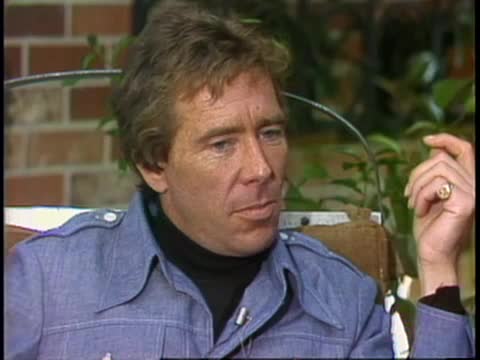
- It was an interview done by Mary Jane Odell at a house on the southside of Des Moines. He was in Des Moines on a Photo shoot. He was working as a Photographer. He was married to Princess Margret at the time. Description from Don Hixenbaugh - memory. Dubbed 3-21-87, Rec Enc RW, VCR 5, Ancillary Note: Conversation with Armstrong-Jones about film Born to Be Small (not on tape), 60 minutes, UCA-60
- Asset type
- Episode
- Topics
- Fine Arts
- Rights
- Inquiries may be submitted to archives@iowapbs.org.
- Media type
- Moving Image
- Duration
- 00:37:44
- Credits
-
-
Interviewer: Mary Jane Odell
Producing Organization: Iowa Public Television
- AAPB Contributor Holdings
-
Iowa Public Television
Identifier: cpb-aacip-475473d8d1e (Filename)
Format: U-matic
Generation: Dub
Duration: 01:00:00
If you have a copy of this asset and would like us to add it to our catalog, please contact us.
- Citations
- Chicago: “IPBN Presents Mary Jane Odell; Mjo 2; Anthony Armstrong Jones,” Iowa PBS, American Archive of Public Broadcasting (GBH and the Library of Congress), Boston, MA and Washington, DC, accessed April 1, 2026, http://americanarchive.org/catalog/cpb-aacip-37-2259zz5w.
- MLA: “IPBN Presents Mary Jane Odell; Mjo 2; Anthony Armstrong Jones.” Iowa PBS, American Archive of Public Broadcasting (GBH and the Library of Congress), Boston, MA and Washington, DC. Web. April 1, 2026. <http://americanarchive.org/catalog/cpb-aacip-37-2259zz5w>.
- APA: IPBN Presents Mary Jane Odell; Mjo 2; Anthony Armstrong Jones. Boston, MA: Iowa PBS, American Archive of Public Broadcasting (GBH and the Library of Congress), Boston, MA and Washington, DC. Retrieved from http://americanarchive.org/catalog/cpb-aacip-37-2259zz5w