Black Horizons; 3122; Workout
- Transcript
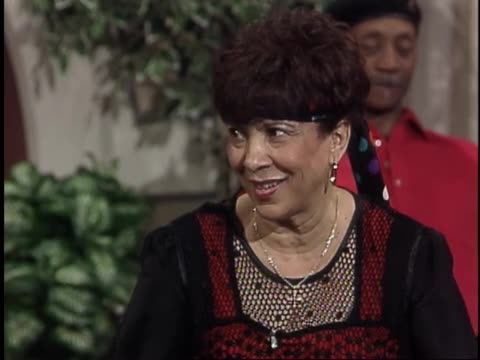
If you have an event that you would like to see, publicize, send all the details to us and on the horizon, care of WQED -4802 -5th Avenue Pittsburgh PA -15213. As you ladies well know, physical fitness isn't just a men's issue. There are lots of ways you can feel healthier and here to give us a guided tour, is Exercise Diva Ms. Lou Cyrus. Hi, how are you? Hi, how are you? First time I've had a real Diva on the first day. Well, it has been a long time since I was here with you. Tell me a little bit about your life because I think people need to know that you were one of the first mavens of Exercise. Should I say how long we'll go back in the 1950s here in Pittsburgh? Yeah, the early 50s. Early 50s? I started a program called Love Your Body with Lou Cyrus and it's a program that I developed implemented music with dance and I was the first person to do that. So you've been putting music together with dance and exercise for
a number of years now? Since 1950. Since 1950. Up high before the night and I was really young when I was a child. Just a child story of some prodigy as it were. Now, throughout your life and doing exercise, you've had some ups and downs including one terrible accident where the ceiling fell in on you while you were laying in bed, right? Yes. In 1991, I was in Atlanta, Georgia, producing my shows and stuff down there and just traveling every place or how I had a program there too for 15 minutes and then I came back to Pittsburgh and I went up to New York to do some things there and I came back home and I was invited to go back but that Thursday night my bedroom's ceiling came in on my head. They set me back for eight years. Now, what did the doctors tell you that you wouldn't walk and that sort of stuff? I would never exercise again with dance and I thought, well, I might as well be dead because I've danced all my life and if I can't dance, I can't live in that kind of way. So, what did you do? Well, I went into a
depression, very serious depression because I had a serious head and neck injury and my arm. Well, my whole total body was just in a mess but it was very hard for me going into the depression because after Dr. Shamansky told me that I couldn't exercise anymore then it just gave up. But you didn't give up? I gave up for a little while and you started back in. In fact, you started exercising in bed, right? Yes. Well, I had spoke after the accident I called Nancy Wilson on the telephone. Saying your Nancy Wilson? Yes. No, personal friend of yours. Well, her husband, a lot of great, a lot of great. And she wanted me to do a fitness and bed for her or some exercises that would be really good for her because she would be exhausted when she came home. And I was talking to her about my accident and I was just getting through it at that time. But when I hung up from talking to her, I got worse. An idea.
Oh, I thought an idea. No, I got worse and I had to go back to the hospital again. And I was in there for about 47 days because I couldn't get my head together. When you hit on your head, it's a terrible thing. And I stayed dizzy all the time and my equilibrium was off. And that's when I really gave up. But then my daughter brought some CDs of, can I say this? I don't know what you're going to say. A couple of name droppers. I was Nancy Wilson and Paddle Bell with Paddle Bell screaming and getting into the spirit of things. It just touched my soul very deeply. And I started listening to Paddle Bell and Nancy Wilson, these two different people all together. But I seem to have gotten a hold of ghosts and something with Paddle Bell. And I made up my mind of watching Paddle Bell on television, talking about her mother and her sisters died and everything like that. I thought, my God, I really don't have any problems. I'm going to help myself. So I went to the doctor and he said, no, you can't exercise. And I
said, okay, then I'm in home and I thought about this. And I said, well, I'm going to do fitness and bit. And I started doing fitness and bit. And then 12 weeks, I was on my feet. Got your equilibrium back and you were ready to go? Yes. Okay. Now you've created, just like in our first segment, you've created a program that has a spiritual element also, right? Yes. And can you tell me quickly in 30 seconds or less about that? Yes, I developed a program. It's called the Gospel Rock Dance Therapy that I developed because I was just one step away from a nursing home myself. And I developed this program for the aging who are afflicted with arthritis of the knees and joints and everything. And this really helped me to get up on my feet with my head. All right. Now you brought some people that can demonstrate this with you and it was this gentleman over here. This is my salsa king, that's Bob Jones. Okay. We do salsa together. All right. And this is Beverly Bence. Hello. She's one of my students and that's Carol Brown. All right. I know all of
you. And they're going to demonstrate with us. You're going to show me some things. Yes. Okay. So you brought some music. We're going to play that. And you just show me what we're supposed to do. Yes, I brought some gospel music. Okay. What we're going to do, we're going to start off with the hands first of some deep breathing therapy. Okay. Because deep breathing therapy is really the first thing that you should do because deep breathing cleanses the soul, relaxes the body and the mind and lifts the spirit. It does all of that? Yes, it does. Okay. And it heals your body at the same time. Breathing deeply. Yes. Okay. So what do we do? We're waiting for the music. Oh, how the music's got to play. Okay. Before we can breathe deeply. Oh, we have turn. That's why it's just. Yeah. Okay. Okay. We're going to sit at the end of the chair. I have to sit on the end because I'm sure. Okay. Now the blood pools in the feet from sitting all the time. And this is for the people who are on the knees. No way she's on the knees. Where is that? I don't wear shoes in my class. Oh, good. All right. Okay. What we're going to do now. We're going to get the blood circulating from the feet up to the heart and to the brain.
You just lift your feet. And for those of you out there who are sitting in the new tears, spread your legs now. Lift up on your toes and rock back. Now breathe. Inhale. Raise your arms up. Now if you have arthritis out there, you probably can't raise your arms up this high. But just raise them up as far as you can. Now pull in that breath through your throat. Hold it. And blow it out. I see it. Is that part of the resonant? It'll be slept in the bathroom. Because you weren't paying attention. Okay. I'm going to do every word. Now lift those legs out. Oh, okay. One, two, three, let's tap a little bit. Put a little bit of rhythm into it. You want to make it fun. Take the elbows and touch. Walk out with your feet now. Now this is something that all the folks can do.
Now this is a lot of fun. Because if you're sitting there by yourself and you're lonely and stuff, just put on some spiritual and dance in the tears. And then move your knees like this. Come on Chris. And this is like you're back in shape. Oh yeah. You knew it. Okay. I didn't want you that. I had to get on my back first. We don't have time to do everything. Okay. Now take your hands like this. Do them slow. Squeeze. You're going to like sit and be here. Yes. Do them down here we have. Squeeze. Sit breathe. Stretch. And be here. And then push out with your palms. One, two, three, four. Now knock. One, two, three, four. Do this Chris. Easy. Like this. If you have arthritis in those fingers, that similates the blood and the juices into the vertebrae and stuff. Now. Sat, sat, lift the shoulders. Does that feel good? Now you're working on your stomach. Here, somewhere else.
Okay. Now we're going to stand up. Stand up. And we're going to get behind the chair. Behind the chair. Now you're not facing each other like this. Like this. Now we're going to dance. Sat, sat. Bend the knees slightly. Push them better when you are Chris. So, we're going to do my hands. Bend them slightly now. If you have a problem with your knees, you have to bend your knees. Like this. Bend your knees. See? Do them slow. All right. Now when you do this as you bend your knees, this is stretching the big muscle behind your thighs. The muscles in the back of your thighs is your hamstring muscle. So you want to stretch it. Okay, out to the side. That's a good job. Sat to sat. Now you want to make exercise fun. Okay. Like if it's not fun, you're not going to do it. Well, I'm having fun.
That's good. Watch your knees, though. Bend the knees and chest. Bend the knees and chest. Bend the knees. Bend the knees. Bend the knees. Yes. And the spiritual. It's a spiritual. It's a spiritual. Okay. It's a spiritual program that lifts your spirit and makes you feel good. All right. And you want to lift your arms up. When you're working out, keep doing what you're doing. And we appreciate you being here and bringing your company flow share. Help us out, okay? Thank you. You're going to keep working out there too. And if you want to find out more about an exercise regiment that works for you, you can call Lou Cyrus at 412 -461 -0405. That number again, 412 -461 -0405. Well, that wraps up another edition of Black Horizons. You can still catch me on KTK -A radio, 1020 on the AM dial, Saturday, the nights at 7. And Sunday afternoons at 4 if the buckles aren't playing. Or catch me on WQED's Nightly Magazine on Q. Monday's through Friday's at 7 .30 right here on this very station. I'm Chris Moore.
Set this is donated by Macondo, South Creek Street, Oakland. I want to be here now. Wait, wait a minute. Now, over the decades,
pickles and her headboppers have remained a constant, even as other zookinis have moved on, like this original flying zookini. When critics talk about actors, they often mention their range, the ability to stretch their skills beyond the obvious. When it comes to Michael Keaton stretching has never been a problem. Michael Keaton was born Michael Douglas in Coriopolis, Pennsylvania in 1951. He attended Montour High School, and like many kids from Pittsburgh, dreamed of a job at his local public television station. As part of WQED's esteemed production crew, Mr. Keaton helped to move scenery, decorate sets, and fill in on an occasional episode of Mr. Rogers' neighborhood. After such auspicious beginnings, Hollywood was the next logical step. His big break came in
1982's night shift, with co -star Henry Winkler. Stardom came with 1983's Mr. Mom, a comedy about a young man who has to deal with domestic role reversal once he loses his job. Many films followed, but the one that changed the public's perception of Michael Keaton as the boy next door was 1988's, many films followed, but the one that changed the public's perception of Michael Keaton as the boy next door was 1988's Beetlejuice. After Beetlejuice, director Tim Burton and Michael collaborated again on what may be the definitive Batman. After Beetlejuice, director Tim Burton and Michael collaborated again on what may be the definitive Batman.
This 1989, this 1989 version of the Caped Crusader was a long way from the Campy 60's TV series. Keaton's Batman was a dark moody figure with a lot of issues, and a really cool car. Mr. Keaton's characters have continued to change, from his dramatic work in my life, to character roles in Kenneth Branagh's much ado about nothing and Quentin Tarantino's Jackie Brown, it's been a long journey from Mr. Rogers' Neighborhood. Mr. Keaton's characters have continued to change, from his dramatic work in my life, to character roles in Kenneth Branagh's much ado about nothing and Quentin Tarantino's Jackie Brown, it's been a long journey from Mr. Rogers' Neighborhood. Tonight, we'd like to honor Michael Keaton for his talent and hard work and let him know he's made his old hometown very proud.
When critics talk about actors, they often mention their range, the ability to stretch their skills beyond the obvious. When it comes to Michael Keaton, stretching has never been a problem. Michael Keaton was born Michael Douglas in Coriopolis, Pennsylvania in 1951. He attended Montour High School, and like many kids from Pittsburgh, dreamed of a job in his local public television station. As part of WQED's esteemed production crew, Mr. Keaton helped to move scenery, decorate sets, and fill in on an occasional episode of Mr. Rogers' Neighborhood. After such auspicious beginnings, Hollywood was the next logical step. His big break came in 1982's night shift with co -star Henry Winkler. Startham came
with 1983's Mr. Mom, a comedy about a young man who has to deal with domestic role reversal once he loses his job. Many films followed, but the one that changed the public's perception of Michael Keaton as the boy next door was 1988's Beetlejuice. After Beetlejuice, director Tim Burton and Michael collaborated again on what may be the definitive Batman. This 1989 version of the Caped Crusader was a long way from the Capi 60's TV series. Keaton's Batman was a dark, moody figure with a lot of issues, and a really cool car. Mr. Keaton's characters have continued to change, from his dramatic work in my life, to character roles in Kenneth Branagh's much ado about nothing and Quentin Tarantino's Jackie Brown. It's been a long journey from Mr. Rogers.
I'm going to do this last paragraph once more. Mr. Keaton's characters have continued to change. From his dramatic work in my life, to character roles in Kenneth Branagh's much ado about nothing and Quentin Tarantino's Jackie Brown, it's been a long journey from Mr. Rogers' neighborhood. Tonight we'd like to honor Michael Keaton for his talent and hard work and let him know he's made his old hometown very proud.
- Series
- Black Horizons
- Episode Number
- 3122
- Episode
- Workout
- Producing Organization
- WQED (Television station : Pittsburgh, Pa.)
- Contributing Organization
- WQED (Pittsburgh, Pennsylvania)
- AAPB ID
- cpb-aacip-3096d3223a3
If you have more information about this item than what is given here, or if you have concerns about this record, we want to know! Contact us, indicating the AAPB ID (cpb-aacip-3096d3223a3).
- Description
- Episode Description
- This episode includes a discussion of the benefits of exercise in alleviating the diseases and illnesses that disproportionaly impact African Amerian men with Dr. Bruce Block of UPMC Shadyside Family Health Center, and Fitness Director Leroy Dillard of the Centers for Healthy Hearts and Souls Fitness. A demonstration of exercises is presented. This episode includes the "On the Horizon" segment listing community events. This recording ends abruptly and without all portions of the episode.
- Series Description
- WQED’s Black Horizons was launched in 1968 and was designed to address the concerns of African American audiences. More than just a forum for the community, the series served as a training ground for Black talent in front of and behind the camera. Through the decades, the program featured various hosts and producers until Emmy winning journalist Chris Moore took over the program in the 1980s. He was later joined by Emmy winning producer Minette Seate before the program evolved into WQED’s Horizons in the 2000s.
- Broadcast Date
- 2000-04-29
- Broadcast Date
- 2000-04-30
- Created Date
- 2000-04-26
- Asset type
- Segment
- Topics
- Public Affairs
- Media type
- Moving Image
- Duration
- 00:20:06;06
- Credits
-
-
Producing Organization: WQED (Television station : Pittsburgh, Pa.)
- AAPB Contributor Holdings
-
WQED-TV
Identifier: cpb-aacip-16fdb072087 (Filename)
Format: Betacam: SP
Duration: 00:11:24
If you have a copy of this asset and would like us to add it to our catalog, please contact us.
- Citations
- Chicago: “Black Horizons; 3122; Workout,” 2000-04-29, WQED, American Archive of Public Broadcasting (GBH and the Library of Congress), Boston, MA and Washington, DC, accessed April 1, 2026, http://americanarchive.org/catalog/cpb-aacip-3096d3223a3.
- MLA: “Black Horizons; 3122; Workout.” 2000-04-29. WQED, American Archive of Public Broadcasting (GBH and the Library of Congress), Boston, MA and Washington, DC. Web. April 1, 2026. <http://americanarchive.org/catalog/cpb-aacip-3096d3223a3>.
- APA: Black Horizons; 3122; Workout. Boston, MA: WQED, American Archive of Public Broadcasting (GBH and the Library of Congress), Boston, MA and Washington, DC. Retrieved from http://americanarchive.org/catalog/cpb-aacip-3096d3223a3