Tryout TV; Selling America
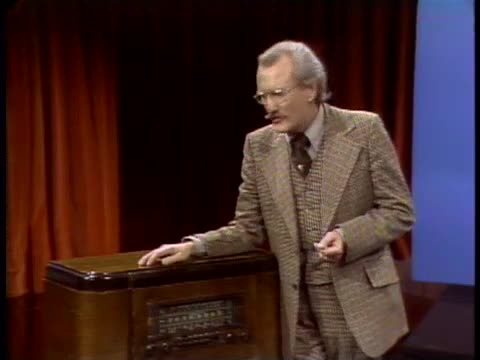
- Transcript
Sun worshippers everywhere, get Swedish tanning secret. [boy speaks] Dad, Dad. [man speaks] Shhhh Tommy. [boy speaks] I only have one cavity! [man speaks] Hey we did it! [song plays] It's the real thing. [more lyrics indecipherable] And with Arrid you don't have to. It really helps stop wetness. [song plays] ...clean....and always the shampoo that glorifies your hair, so Halo everybody... Remember old, worn out Halo shampoo? Well we fixed it. Don't change the channel. This is still WHA-TV and we haven't gone commercial. This program is about advertising. The montage of TV commercials you just saw represent the ultimate in product advertising. They cost thousands of dollars to produce, tens of thousands more to broadcast, involves scores of people and hundreds of work hours. No Hollywood production was ever made with more elaborate care. They also represent the very latest
chapter in the development of a 25 billion dollar industry and the winnowing and sifting of nearly a hundred years of experience for the most successful techniques to make you the consumer buy Buy. Buy. Now tonight we're going to take a look at some of the history that made American advertising what it is today. Into headache...this message will last 60 seconds. Seventy two heartbeats. If you had taken Bufferin at its start Bufferin could already be getting into your... [another man speaks over] WHA-TV Tryout TV report, "Selling America" with Don Arthur. [ad plays] the fast one. It's worth it. [commentator] Advertising is as American as apple pie and possibly more traditional. The roots of these so characteristically American Science and Art are to be found in the final years of the last century in the opening years of this one. It was a time of growth and
great change in the economy. A way was needed to sell the new and abundant products of American industry to make the American citizen into the American consumer. The future captains and barons of American industry discovered two things that were to influence the shape of advertising. The first was that advertising actually works and that sales increased in direct proportion to advertisers budgets. The second was that advertising was more than a way of selling products. Well done, often repeated, ads flowed into the life blood of society. Catchwords and slogans were repeated in everyday conversations. Ad songs were sung along with the old favorites. Trademarks were more well known than national politicians. Copywriters who could come up with unforgettable trademarks or turn on a catchy slogan we're worth many
times their weight in sales. Many of the trademarks are still with us today and not a few of the slogans are permanently etched in our collective consciousness. "Ivory soap! 99 and 44 one hundred percent pure." There's a reason for [indecipherable]. "If it isn't Pillsbury's, it isn't the best." "Quaker Oats, the smile that won't come off." "Good Morning! Have you used Pears soap?" "Kodak. You press the button. We do the rest." "Gold medal flour, eventually why not now?" "Do you know you need a biscuit?" "Know
your own stomach. Shreaded wheat." These slogans turned little known products into a famous national brands. But the real heroes of the day were the rhymers. The ad jingles where the soap operas of the time. The most popular jingles compose the saga of four cereals, Sunny Jim. Jim was anything but Sunny before he started for cereal. [Ad plays] "Jim Dumps was a most unfriendly man who lived his life on the Hermit plan. In his gloomy way he'd gone through life and made the most of woe and strife. Til Force one day was served to him. Since then they've called him Sunny Jim." To the complete joy of Force cereal, problems seemed to run in Jim's family. [ad plays] Jim Dumps' half sister, pale and slight, had very little appetite. She said such dainty looking food will please the most capricious mood. So crisp,
so light. It takes my whim. It takes but all quoth Sunny Jim. [ad ends] Sunny Jim became a national hero virtually overnight. His name was synonymous with sweetness and light. Jim appeared in cartoons, popular plays, and a musical comedy. And he also not incidentally sold a great deal of Force cereal. Second only to Jim and Faye were the citizens of Spotless town – a town with a vaguely Dutch appearance kept immaculately clean by Sapolio soap. The nation was inundated with posters and ads of spotless town doggerel. [ad plays] This is the mayor of Spotless town, the brightest man for miles around. The shining light of wisdom can reflect from such a polished man and so he says to high and low the brightest use Sapolio. [ad ends] The public instead of resenting the ubiquitous Sapolio ads
clamored for more and bought the soap to show that they meant it. [Ad plays] This is the maid of fair renown who scrubs the floors of Spotless town. To find a speck when she is through would take a pair of specs or two. And her employment isn't slow for she employs Sapolio. [Ad ends] Sunny Jim, Spotless town, and countless other verse ads did their job. They sold the products by the carload and by doing so, helped to reshape the American way of life. But the easygoing years of the turn of the century passed by and the soft sell of charming coffee and gentle beguiling were no longer sufficient to sell America. So the ad men, never forgetting what they have learned about their trade, went looking for a new pitch. An early indication of what the new pitch was to be was Woodbury soap's switch from its
standard ad to an entirely new presentation with a suggestive copy lead, "A skin you love to touch." Sex had entered into the advertising world. Another indication of the direction advertising was about to take was Odorono's precedent breaking 1919 ad. Hundreds wrote letters in futile protest. [music plays. Ad starts] Within the curve of a woman's arm. A frank discussion of a subject too often avoided. [music swells] A woman's arm. Poets have summoned its grace. Artists have... fortunately it isn't always. [music swells more. Ad ends] It wasn't only that the free or anything goes spirit or the 20s permitted ads that had formerly been taboo. Woodbury and Odorono were
examples of a new emphasis in advertising. The appeal to the gamut of human emotions to sell products. All of the emotions, or of all of them, sexual desire and fear proved to be the best sellers. Fears especially proliferated. The fear of being lonely, of being unloved. [music plays] Of being ugly. Or being unattractive to the opposite sex. The fear of failure. Of illness. [music continues] The fear of smelling bad. Of being different. Doing the wrong thing. It seemed that every product offered protection against some special dread. Even the wrong bathroom tissue threatened catastrophe.
The world was overrun with hidden dangers. [music continues] The product that profited the most from the general paranoia was Listerine. The company made millions with its discovery of halitosis and such memorable lines as, "Even your best friend won't tell you." "Often a bridesmaid, never a bride." "If you want the truth, go to a child." But perhaps the Listerine ad that best captured the spirit of the time was the one featuring a guy you wouldn't want to meet named Marvin. [Ad plays] Money, charm, ability. In all New York there was no abler man in his field. Yet people called him the Prince of pariahs. Men thought him a great fellow, for a little while. Women grew romantic about him, until they knew. People welcomed him at first, then dropped him as though he were an outcast. Poor Marvin. [Ad ends]
The appeal to the emotions wasn't limited to scare tactics. The positive identification of products with sexuality, adventure, success, and romance, so common now, was also introduced. It was the automobile ad that became the tour de force of this type of appeal. The traditional auto ad played up mechanical efficiency and price with such appeals were losing their power to persuade the jaded American public. Automobiles needed personality. They were to be sold as status symbols, sex symbols, and whatever other symbols that could convince the public to buy. Edward S. Jordan, advertising man an entrepreneur, was one of the first and perhaps the most successful to comprehend the full potential of the new way of selling cars. Jordan went further than creating a dramatic personality for a car. He created the car to fit the image he wanted to sell. And in doing so shape the course that automobile
advertising would take for the next 50 years. The car, the Jordan Playboy, made Jordan and his partners multimillionaires within five years. And at a time when competition in the field was cutthroat. His secret of success, copy like this: [Ad plays] Somewhere west of Laramie there's a Bronco busting steel roping girl who knows what I'm talking about. She can tell what his sassy pony – that's a cross between greased lightning and the place where it hits – can do with eleven hundred pounds of steel in action when he's going high, wide, and handsome. The truth is the Playboy was built for her. Built for the lass whose face is brown with the sun when the day is done of revel and romp and race. She loves the cross of the wild and the tame. There's a savor of links about that car – of laughter and lilt and light. A hint of old loves and saddle and court. It's a brawny
thing yet a graceful thing for the sweep of the avenue. Step into the Playboy when the hour grows dull with things gone dead and stale and start for the land of real living with the spirit of the lass who rides lean and rangy into the red horizon of a Wyoming twilight. [Ad ends] So by the close of the Twenties all the elements of the advertising vision, the seductive copy, and the rabbit punch to the eagle that are found in the 1970 variety commercials were already standard. The vision was complete. Now all that was necessary was to give it sound and action. The sound came almost by accident with the popularization of the radio in the 30s. The advertising world was slow to realize the potential of the new media. But once they understood that it could bring the ad pitch into the very living room with the consumer, the radio became an unrivaled
advertising medium. The same tried and true formulas for selling America were adapted to the pitch and timbre of the human voice. [Ad jingle plays] Shaving cream supreme, leaves your face so smooth and clean. [Ad jingle plays] Pop.Twelve full ounces that's a lot. Twice as much for a nickel too. Pepsicola is the drink for you. [whistle] [whistle] [New ad. Woman speaks] Rinse so white and rinse so bright. [Man sings] L-A-V-A L-A-V-A [Man speaks] This is Sandy Becker saying, "keep cooking with Crisco." It's all vegetable. It's digestible.
[Man sings] N-A-B-I-S-C-O. Nabisco is the name to know. For breakfast you can't beat, try Nabisco shredded wheat. [New ad] Each week the Prudential Insurance company of America, the company with the strength of Gibraltar, brings you one of its family of six great Hollywood stars. [New Ad] And for America's everyday coffee drinking enjoyment, Maxwell House, always good to the last drop. [Ad ends] Some brands like Maxwell House and Prudential remained enthusiastic over their old slogans and just gave them song. As advertising did with every medium it exploited, it made maximum use of the uniqueness of the medium. In this case the human
voice. [Ad plays] Strikes. [audience laughs] I smoke Lucky Strikes. to that Do you wanna know something else honey chil' [indiscipherable] Radio advertising wasn't only slogans and singing commercials, advertising also transcribed its vision of the American dream. They were still the same people who had brought the public Sonny Jim and the Prince of pariahs.
[Ad plays] Does your husband or boyfriend like to dance but is he lacking in energy? Well listen, before you go get him to eat a few extra slices of bread. A couple of sandwiches will supply energy for quite a few dances. Now, you may not believe it but dancing takes more energy than carpentry work. So, feed him well. [New ad begins] [mumble] was brought to you by Jergens lotion, the lotion for soft, smooth, romantic hands. As one godlet to another, Mrs Beatrix Clark of Seattle writes [Woman speaks] You don't have to try to hide your hands at the bridge table during gardening season. I used to. But now I use Jergens lotion regularly and my hands are beautifully smooth. [New ad] Five minutes before Jim Ranburn's lunch hour in the office. [another man speaks] It's twelve o'clock Tom, how about lunch? [Second man speaks] Sorry old man, take a look at that stuff on my desk. I doubt if I'll be able to eat at all today. [Ad narrator] On the street. [Man speaks] Oh Mary, how are you? [Woman speaks] Fine Jim. Uh, you'll excuse me if I run along. I have a luncheon date. [Ad narrator] In a restaurant. [Man speaks] Hi Bill, mind if I join you? [Second man] Sorry Jim I'm
expecting a friend. See you again sometime. [Ad narrator] Why do people avoid Jim Ranburn? He's young and friendly yet you always see him eating a lonely, solitary lunch. He always seems to be alone. Why? Because too often he fails to make a good impression. Because he doesn't realize that every daily contact one person has with another may be a critical moment in both their lives. Critical because each person forms an impression of the other and nothing can spoil the impression you make more certainly than B.O. [Ad ends] Poor Jim. Radio was selling America like it had never been sold before. Millions were spent on radio advertising. But the amount was insignificant in comparison with the sales radio attracted. And then [Ad plays] Twenty two times in this minute, every beat can be a painful throb if you have a headache.
This pain remedy is Bufferin. [Another ad plays] But Band-Aid plastic strips will. No pressure. Yet look, they stick instantly. Stick tighter. Stay stuck, even in boiling water. Listen [music plays] Kids? [indecipherable] Trix? How 'bout jets. Here from the flavor tree. Winston tastes good like a cigarette should. [jingle ends] [New ad jingle] Brylcreem, Brylcreem, Brylcreem you there, but watch out. The gals will all persue ya'. They love to get their fingers in your hair. [Ad ends] Ad men had gained wisdom from their experience with radio and were anything but reluctant to invade the world of television. The opportunity of
bringing both the sound and image into the intimate surroundings of the consumer was irresistible. The techniques and technology of commercial making developed rapidly along with the television advertising budget. TV commercials became mini dramas, in which ad men packed everything they had discovered in the previous half century. [Ad plays. Woman speaks.] I want a word with all you tigers. Oh, you men know which ones you are. Grrr. I like you. But I don't like lions. You know, men with wild dry manes. They use something with alcohol in it. On their hair! And then there are the bears. Well you know that type. They always have a slick, greasy look. And where there's grease, there's usually dandruff. I always give this guy the brush. Yeah, I like
tigers. Men who use Top Brass hairdressing. It's non-greasy. Any girl can handle that. And Top Brass has a special kind of a medication in it that fights dandruff fast. So remember that tiger. Get Top Brass. And sick 'em. [Music plays. Man speaks] Now wait. Don't tell me. Was it Hong Kong? Beirut? Cairo perhaps? [Woman speaks] Guess again, Commander Whitehead. [Man speaks] London. It was London. [Woman speaks] I'll give you a hint. You were having a tonic. And you were warning the waiter to make jolly well sure he mixed it with Schwepps. [Man speaks] But that might have been anywhere. Schweppes quinine water is famous all over the world. [Woman speaks] In those days, you used to say it was impossible to mix a tonic without Schweppes. [Man speaks] Still is. No other mixer has Schweppes bittersweet flavor and rare effervescence.
[Woman speaks] Effervescence? You used to call those little bubbles Schweppe-evescence. [Man speaks] Schweppe-evescence, of couse! Those remarkable little bubbles that last the whole drink through. Did you know, that Schweppes quinine water is now bottled here in the States from the imported elixer. Oh but do tell me. Where did we meet? Was it Paris? [ad ends] [Music. Ad jingle] First time in your life, feel really clean. Yeah that Zest, glow from head to toe. Zest. [Man speaks.] A totally new kind of bath and beauty bar with glorious new cleaning action. And new positive deodorant action. All in one wonderful bar. [Jingle plays] For the first time in your life, feel really clean. [Man speaks] Clean two ways. One, Zest frees your skin from that unseen sticky film always left by soaps. Your skin feels cleaner, fresher. Two, Zest gives lasting deodorant protection. Keeps you feeling fresh and aglow all over, all day.
And here is another wonderful thing. Zest leaves no unsightly bathtub ring. [Jingle plays] Zest is more than soap, Real to you Zest. Get that Zest glow. From heat to toe. Z-E-S-T. Zest [Jingle ends] In those halcyon days before cost made one and two minute ad spots a thing of the past, some commercials managed to capture in living color, the essence of... well just watch. [Music plays, man laughs] If it's happened once, it's happened a thousand [cuts off] Take a look at advertising history. The magazine ads and radio
spots and the television commercials were all to one purpose – to sell America. As the products they sold became more sophisticated, the techniques of advertising them also grew in sophistication. But if radio and TV in turn added an electronic dimension to advertising, and if the dimension of the permissible expanded, the nitty gritty of advertising has remained constant. The magazine ads and TV commercials of the 70s are woven into the same fabric as the spotless town jingles and the story of unhappy Marvin. They create while selling America a similar world. Is it our world? Which side of the looking glass is advertising on? Is it a mirror reflection of reality? Or is it the reflector. Think. It's happened.
- Series
- Tryout TV
- Episode
- Selling America
- Contributing Organization
- PBS Wisconsin (Madison, Wisconsin)
- AAPB ID
- cpb-aacip/29-612ngnmb
If you have more information about this item than what is given here, or if you have concerns about this record, we want to know! Contact us, indicating the AAPB ID (cpb-aacip/29-612ngnmb).
- Description
- Series Description
- "Tryout TV is a series that provides broadcast time to individual works produced through the facilities of the University of Wisconsin Extension Telecommunications Center, WHA-TV Madison. "
- Created Date
- 1975-03-18
- Asset type
- Episode
- Topics
- Social Issues
- Rights
- Content provided from the media collection of Wisconsin Public Broadcasting, a service of the Board of Regents of the University of Wisconsin System and the Wisconsin Educational Communications Board. All rights reserved by the particular owner of content provided. For more information, please contact 1-800-422-9707
- Media type
- Moving Image
- Duration
- 00:27:42
- Credits
-
- AAPB Contributor Holdings
-
Wisconsin Public Television (WHA-TV)
Identifier: WPT1.43.T10 MA (Wisconsin Public Television)
Format: U-matic
Generation: Master
Duration: 00:30:00?
If you have a copy of this asset and would like us to add it to our catalog, please contact us.
- Citations
- Chicago: “Tryout TV; Selling America,” 1975-03-18, PBS Wisconsin, American Archive of Public Broadcasting (GBH and the Library of Congress), Boston, MA and Washington, DC, accessed April 4, 2026, http://americanarchive.org/catalog/cpb-aacip-29-612ngnmb.
- MLA: “Tryout TV; Selling America.” 1975-03-18. PBS Wisconsin, American Archive of Public Broadcasting (GBH and the Library of Congress), Boston, MA and Washington, DC. Web. April 4, 2026. <http://americanarchive.org/catalog/cpb-aacip-29-612ngnmb>.
- APA: Tryout TV; Selling America. Boston, MA: PBS Wisconsin, American Archive of Public Broadcasting (GBH and the Library of Congress), Boston, MA and Washington, DC. Retrieved from http://americanarchive.org/catalog/cpb-aacip-29-612ngnmb