Here & Now; 726
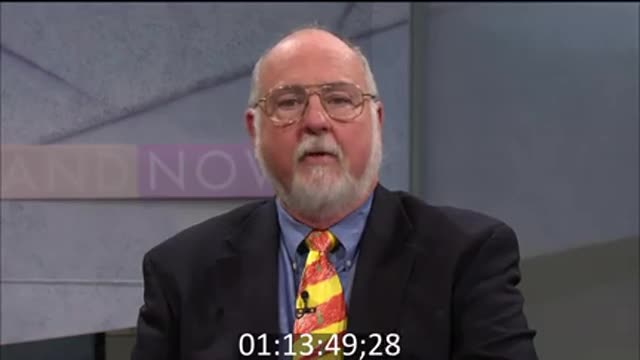
- Transcript
Presentation of here and now is made possible in part by the Animal Dental Center of Milwaukee in Doshkosh, a veterinary specialist working with pet owners and family veterinarians throughout Wisconsin, providing care for oral disease and dental problems of small companion animals. Coming in tonight for Frederica Freiberg. Tonight on here and now pulling over the problem of drunk driving in the nation's number one binge drinking state. We'll
check in with the state tavern league and with Wisconsin's chapter of mothers against drunk driving. Later we'll ask some of you how the economy affected your holiday spending and see what your agenda list includes for the coming congressional session. But first, while the loss of thousands of jobs at the General Motors plant in Jeansville is one of the biggest state news stories of 2008, here's another angle we don't want to overlook. About a month ago Reilander population nearly 8,000 county seat of Ohnida County gained a dubious distinction. It has no four dealer. Even though the Ford Motor Company is considered to be the least troubled of the big three US car makers, Ford is shrinking its dealer network. The closing of the Reilander dealership but 25 people out of work and left local Ford owners facing road trips for repairs. The only things moving at what used to be Rick Carch Ford and Reilander are
three large American flags. Andy Woll was one of about 35 workers who lost their jobs at Carch when the dealership closed December 5th. Now employed at an independent body shop, Woll had worked at the Ford dealership through several different owners for 17 years. My manager had an enemy a letter and grouped us all together in the 30 days before right on the 5th and told us we had 30 days and they were going to close the building. It pays to get it right. The right car, the right price, and right now Rick Carch Ford is a Reilander. This ad posted on YouTube is one of the few remnants of a car dealership which had existed in Reilander for decades. The dealership was owned by the Bergstrom Auto Group out of Nena. Carch had taken over his manager last September. He had spent us a mere fortune because he bought, spent $8,000 having a sign made for
the front of the building and then not even 60 days later. It wasn't even 60 days. Close to right down. Rick Carch and the Bergstrom Auto Group declined to comment on the reasons for the closing. Woll says it wasn't for lack of effort to be a part of the community. The first manager they had in here spent crazy and they were basically told me want to be involved in this we want to be involved in that so he was spending their money like it was going to style YMCA United Way. They had some program for kids with bikes, they give them helmets and they'd set up little tests over there and they were in everything. A spokeswoman for Ford's dealer relations division in Michigan said the company felt the area could be served by existing dealers in Monacoa, Antigo, and Eagle River. All are at least half an hour drive away. Henry Ford's philosophy was having a Ford dealer in every small town in America and now we've gotten away
from that philosophy. Time abroad of it operates what is now the closest Ford dealer to Rhinelander. Lakeland Motors and Eagle River has been in his family since 1945. Mrs. a truck that my father sold my grandfather. Abroad of it just tributes Carch's closing to high overhead from a too large building built 10 years ago. When you have a lot of overhead you need to sell so many cars per month and if you're not reaching that break even point something has to go Dave Marston operates another nearby Ford dealership in Monacoa. Prior to that he was a regional sales manager for Ford. Marston says he was aware of the Rhinelander dealership was having problems but didn't think the end would come so quickly. I find that very difficult to understand myself. I mean Rhinelander is a it's a town that has a good industry. It should be the type of people who would be driving Ford products. Marston says the problem may have been the
dealer's location alone on the highway on the opposite side of Rhinelander from the strip were all the other new car dealerships are located. Well both nearby dealers say the decision to close was made by the owner not by Ford both say it's no secret Ford wanted some dealerships to close. They want to decrease their dealer cop. But Marston says the closures have mainly come in small towns where the long time owner didn't have someone in the family to take over the business. If an outsider comes in buys that land and building in today's real estate market has to borrow money has to make payments and only sells five or six vehicles a month. He's not going to be able to be profitable. There used to be a dealership in Landel Lakes and Iron River Michigan in Crystal Falls Michigan and in Bezmer Michigan in Wittenburg Wisconsin and Spooner Wisconsin those thores are all gone. Both of which and Marston have hired some of
carchist technicians and are hoping to pick up some new customers from Rhinelander both are doubtful how much new business will come their way. Hopefully the dealers around it can you know go into the market try to service it but some people are just not going to drive that 25 or 30 miles for service when they can get another making probably go down the street. That's the fact of life. Ford loses by that dealership closing there's no doubt about that. We want to talk more now about the plight of car dealers in 2009 with one of the nation's top experts in the car industry and automobile history. Welcome to Matt Joseph. Let's start with that closing statement. Ford loses by not having a dealership in Rhinelander. Does it really lose? I think in better times we should have a dealership in Rhinelander not enough to accumulate the capital to start one but yes the trouble is that you have to deal with the finances you have now and
these companies are badly pressed. Now on the long range agenda for Ford GM and Chrysler they have too many dealers and they know that about 20,000 dealers in this country 20 years ago there were about 25,000 so you've got a 5% decrease in 20 years. Small dealers for whatever reasons known only to the car companies I suppose are not in great repute with car companies. Sometimes people own they're pretty independent and don't step in line the way they're supposed to. There can be a lot of reasons for it but basically the car companies would like to consolidate into mega dealerships. Probably Ford has a plan somewhere for some huge dealership to service that whole area. That reduces their costs, gives them predictability. It's sort of the master plan for all of them and in fact they get that master plan by looking at Honda and Toyota who have large dealerships servicing large areas are profitable because they're large. And up there it should be noted there's a Honda dealership and a Toyota dealership
in Rhinelander but nowhere else. Yeah and that's that's the model that Ford GM and Chrysler are working off of. How did the auto industry wind up with dealers in every town in America? Was it just because Henry Ford wanted it? No it's a fascinating story. Originally the way automobile production was financed it takes a tremendous amount of money to produce an automobile in advance you have to pay suppliers you have to pay labor and so forth. Okay the Detroit banks were the first financing agency probably because Detroit was kind of a wild open town had great open banking and it was very with Henry Ford had two companies that failed before he got one that succeeded. The one we celebrated the hundredth anniversary of is actually the third Ford Motor Company. Eventually the size of the auto industry outstripped the ability of Detroit banks to finance and then you started getting money from Wall Street flowing in but not really enough and so a system evolved where the car dealer bought the car with cash on delivery and later on before it was even delivered he got
that money from a local bank so you had every main street in America funneling money back into Detroit to produce cars and that's how the system got to what it was with so many small town dealerships each one of them banking locally funneling the money back to Detroit. Later on you didn't need that system the velocity of money the mobility of money was such that Wall Street could do it international money could do it. Let's look at it from a servicing stand point though if I if I were in Rhinelander and I was choosing between Ford and Chevy for example and I get my Chevy fixed in town have to drive 30 miles to get a Ford fixed I'd probably buy a Chevy and that might or might not be a rational decision certainly the Chevy dealership sales used for and certainly they service them do they have the fine point expertise the software the training to do it not completely but pretty much they can probably service a Ford pretty well so it's it's not quite it's not a leading reason not to buy a
car. When I was up there the the dealers this was when the Congress was in Washington was deciding are we going to pass the the bailout for the car companies or not and they were both you know sitting there watching the the internet to see if the the package was going through and they had emails from the National Autodilers Association you know call your congressman and tell them to to support this and so on. The will the bailout measure that was passed in Washington help a small town dealer or is that a totally I think you're so far down the line of priorities at that point I don't see that happening I was getting email from an ADA and all kind of NASCAR what are they going to do all kinds of email all kinds of pressure as a journalist to support the bailout I think that the bailout money the dealers have asked for a piece of the best very vocally for it I think the bailout money in many ways should have
gone to dealers too in fact what did it no it didn't I don't think it will one might argue the bailout money problem be sure to gone to consumers as coupons if you take the thirty four billion dollars they were asking for and figure two thousand dollars a coupon you're looking at fifteen thousand or more fifteen million or more coupons for people to go spend on domestic cars whether that would have tipped sales or not I don't know but to me putting money in at the bottom of the system and having it work up is probably a better idea than putting it into the financing arm and having it worked out but the bottom line is smaller dealers are going to be closing and seven hundred this year a thousand next year it's part of the company plan aren't there's a funny thing about crisis when crisis occurs everyone changes their hat and marches out and tries to do whatever it was them trying to do for the last decade and I think this is a perfect example of it the car companies will feel terrible about it
but it's been on their agenda to reduce the number of dealerships to something like their Japanese competitors and by now creating competitors too and I think they're going to go roaring out with a plan that involves doing just what they've always wanted to do that Joseph thank you very much this was the week of course when those billion dollar bailout checks from the federal government were delivered to the big three car makers congress will have some tough sledding ahead in the new year with economic issues and beyond we ask some of you what your priorities for congress were in the coming session here's what you said I'm well I would definitely like to see them continue to figure out ways to spur the economy whether that's you know with the housing issues or jobs but continuing to to be keep focused on the economy and keep people moving forward job is one of the biggest priority and and somehow for the people who are losing their home because of job or some other reasons well the economic situation and pulling the troops out of the wars that we're in try to
get our back on track economically those are the big issues I think with everybody fixing the projected budget deficit will be job one next week when the new session of the state legislature convenes but there will be one policy issue unrelated to filling the budget hole that will very likely get attention in the coming months it's an issue that's dramatically changed the lives of many Wisconsinites and it could make an impact on your household at many second it's the problem of people driving drunk in a few minutes we'll talk to on a pointy on governor Doyle's drunk driving task force a panel that will make recommendations to the legislature in April but first we joined by the state executive director of mothers against drunk driving carry canard this is an issue that has been discussed forever in Wisconsin and the the
temptation is to say nothing has changed over the years but has Wisconsin's attitude towards drunk driving changed some in the time you've been with mad I think we've seen a change over the many years but we have not witnessed a change like we have within the past year society has really taken this issue on and said enough is enough we are tired of losing our loved ones and we just don't want to tolerate that any longer was it a case of simply one accident more tragic than the others or what each crashes tragic and each life lost or injured is is tragic I think it is a repeated hammering of seeing in the news and experiencing from our neighbors that this is very real and it is not going
away that's combined with the the cultural aspect that we see in Wisconsin people are just tired of saying you know what it's just our culture and we have to accept it no they're saying now this is a public safety concern and we want our roads safe you said a moment ago before we started the interview that Wisconsin has some of the weakest drunk driving laws in the country why that's a very good question if we had the answer to that we would have changed that years ago you know it starts right away with the first offense Wisconsin is the only state in the nation that does not consider that first drunk driving offense a crime and yet Wisconsin sees more O.W.I. homicides committed by people with no prior O.W.I. conviction so right away from the beginning we are sending the wrong message that we're going to tolerate these behaviors and
that is the first thing we need to change one thing that has been going on in the past year is the Milwaukee Journal Sentinel has said a what can only be described as a crusade on this subject how has that changed the debate it has been a wonderful tool to educate the public and I think that a lot of people weren't really aware of what was going on in Wisconsin and how Wisconsin consistently ranks worst in the nation with binge drinking underage drinking over consumption and alcohol-related fatalities but since the Milwaukee Journal Sentinel has done such a good job of bringing highlights and awareness to this issue people now understand that this is a very real severe problem that needs to be taken care of we talk about laws when we're talking about the school aid formula for example as whether you change just one thing or you blow up the whole thing and start over again what are you looking
at your organization are you looking for one specific change or a total rewrite what you know drunk driving is a multifaceted problem and there is not going to be one simple solution so we need to look at a comprehensive plan that is going to change behaviors it's going to actually modify those behaviors now and in the future and one of the ways that we need to do that is through admission interlock devices people continue to drive drunk because they can because we let them it's as simple as that in criminalization a first offense you know we need to look at realistically what do we see happening in Wisconsin do we see criminalizing the first offense happening possibly not so is there some other way we can get that message and that's not to say that we're not going to still fight to criminalize that first offense we will
however in the meantime let's also look at other options and imposing some kind of sanction on that first offense will also succeed at getting that message across that can be accomplished through ignition interlock devices on all offender vehicles beginning with that first offense so that would be it the other question I got to ask you is obviously this year or this coming session of the legislature the Democrats control both houses is that better for this does it make a difference can you tell you know really the issue of drunk driving is nonpartisan and it has to be that way everyone needs to get on board with this doesn't matter what your party line is because the the sad fact is at some point in your life everyone will be impacted by drunk driving at some point in their life Carrie Connard mothers against driving thank you for joining us thank you
I mean we've definitely spent less this year than we have in the past just trying to keep more in savings instead of thinking that we don't need quite as much questions I'm not spending as much and on how it is spending and I'm just taking the belt on a lot of things watching my pennies lot more than I used to yes in a way I do yes that we're not going to go anywhere except visit a child out in Montana I think it's hurting everybody's in every way yes it's certainly is you know we just hope that next year will be better that's all we can hope for we neglected to mention that our last guest Carrie Connard is co-chair of the governor's task force on drunk driving we'll continue our discussion about
changing drunk driving laws in Wisconsin now with another member of that task force he's also the executive director of the tavern League of Wisconsin Pete Maddellis Pete Maddellin joins us from Oh Claire good evening Mr. Maddellin I'm going to start out with one of the points that Carrie Connard made which which was that the adoption of some sort of requirement for ignition interlock devices for a first offense conviction be be required in Wisconsin what's your position on that is that something you can go along with well I think interlocks are kind of a solution waiting for a problem I think interlocks are a value in certain certain circumstances we have judicial discussion right now on second offense of OWI judges can certainly put interlocks and cars but to mandate them for all be for all offenders we think is rather kind of overdoing it I don't think the 120 pound woman that has two
glasses of wine in a two hour period and the registers of point away is a person that needs to have a ignition interlocks the repeed offender definitely these guys just don't get it and they should have interlocks and we have no problem with that but to treat everyone like they are high BAC and repeed offenders is wrong we don't treat speeders the same if you're 10 miles over the speed limit you get treated differently than the guy that goes 50 miles over the speed limit and we think that the same rationale should be put into place in regards to interlocks except he brought the example of the 125 pound woman I mean I'll speak speak on behalf of my wife I think that if she had two drinks in her she probably would be dangerous behind the wheel well the fact of the matter is the people that are out causing fatal accidents are 1.7 1.9 elasticity sky or on the average it's not the point away person that is
outkilling people they are not the problem and I think the public would agree with that that you should be able to go out and have dinner and have a couple glasses of wine with your husband or wife and be able to get your car and drive home without having to be threatened with the interlocks being put on your vehicle except that we've we've you know we've had I think we've had that discussion a long time ago and we've said point eight is the legal limit period yes madmothers did a great job of getting legislation passed it took about 15 years to get it done but I we have got to see evidence where that has saved anyways one reason why I I suspect you would agree that we're having this discussion right now is the the crusade is the word I've used the Milwaukee Journal Sentinel has had on the subject what's been your reaction to seeing stories about drunken driving fatalities day after day week after week for a year obviously these are tragic stories no doubt about it and our hearts go
out and simply go out to those families that are of the victims more can be done you know we've always supported tougher drunk driving laws on repeat offenders we've always supported tougher drunk driving laws and high BAC people but that is where the legislation has to be targeted if you want to get results you want a reduction in these types of crashes that's what you have to target you don't go after the responsible drinker the social drinker they are not causing the problem and that's where a lot of the legislation has to be targeted as far as what has been come across I think the journal Sentinel and their stories has has raised an awareness no doubt about it one of the points Kerry Conard made I believe though was that there are a number of fatalities that do involve first-time offenders I mean the analogy that I used is if you if you view a car with a drunken driver is a deadly weapon isn't that like telling somebody you know if you're using a firearm to commit
a to try and kill somebody your first bullet is free will bust you for the second bullet but we're not giving anybody a free bullet here our drunk driving laws are very tough on first offenders I'll say that we are tougher than a lot of states it's not even a felony for first offense no it's not no it's not but a lot of states that it is a criminal offense they could plea bargain down to world many times it's not even a drunk driving charge a plea bargain down to a traffic misdemeanor whatever the case may be when you get busted in Wisconsin you lose your license for a year you face heavy fines many people lose your jobs because the loss of license there are there are ramifications and and this idea that just because we don't have first-time criminal offense that Wisconsin is soft on drunk driving is completely wrong we have to get the message out that we are tough on first-time drunk drivers it is very very expensive it's very very costly and if you are going to get
on the wheel drunk you better know that ramifications for that as for a short answer on this last one here we're going into a session of the legislature this is going to be on the calendar in some way shape or form is it a foreground conclusion that there will be a change in drunk driving laws and if so what do you think that change is most likely to be I think there will be some changes I think that there will be tougher penalties for pedophenders I think there may be tougher penalties for high VAC people I don't think that there is a public stomach or a legislative stomach for roadblocks I think there will be some type of ignition interlock legislation proposed and probably passed I don't think that it should include all first-time offenders I we don't think that the point-a-weight person should be treated the same as a guy this 0.25 no doubt about that and with that we'll we'll close our discussion Pete Madeline thank you for joining us thanks for having me and that is our program for
tonight Frederica Freiberg will return next week for everyone at here and now I'm Art Hackett have a great weekend presentation of here and now is made possible in part by the animal dental center of Milwaukee and Josh Cush a veterinary specialist working with pet owners and family veterinarians throughout Wisconsin providing care for oral disease and dental problems of small companion animals
- Series
- Here & Now
- Episode
- 726
- Contributing Organization
- PBS Wisconsin (Madison, Wisconsin)
- AAPB ID
- cpb-aacip/29-08v9s7j7
If you have more information about this item than what is given here, or if you have concerns about this record, we want to know! Contact us, indicating the AAPB ID (cpb-aacip/29-08v9s7j7).
- Description
- Episode Description
- Here and Now, tough times for car dealers, Art Hackett's report on the closing of the Ford car dealership in Rhinelander, tough times for car dealers, Automobile scholar Matt Joseph discusses the challenges that Wisconsin auto dealers face during these tough economic times, OWI (operating while intoxicated) reform, This is Mothers Against Drunk Drivers / Wisconsin Executive Director Kari Kinnard. At the close of a traditionally road-dangerous season, and in anticipation of the newly elected legislature, Ms. Kinnard will be sharing her ideas for OWI law reforms in the state. OWI (operating while intoxicated) reform, Madland is on the Governor's Drunk Driving Task Force scheduled to release recommendations late winter about OWI reform.
- Created Date
- 2009-01-02
- Rights
- Content provided from the media collection of Wisconsin Public Broadcasting, a service of the Board of Regents of the University of Wisconsin System and the Wisconsin Educational Communications Board. All rights reserved by the particular owner of content provided. For more information, please contact 1-800-422-9707
- Media type
- Moving Image
- Duration
- 00:28:21
- Credits
-
- AAPB Contributor Holdings
-
Wisconsin Public Television (WHA-TV)
Identifier: WPT1.3.2009.726 MB (Wisconsin Public Television)
Format: HDCAM
Generation: Master
Duration: 00:27:46
If you have a copy of this asset and would like us to add it to our catalog, please contact us.
- Citations
- Chicago: “Here & Now; 726,” 2009-01-02, PBS Wisconsin, American Archive of Public Broadcasting (GBH and the Library of Congress), Boston, MA and Washington, DC, accessed February 1, 2026, http://americanarchive.org/catalog/cpb-aacip-29-08v9s7j7.
- MLA: “Here & Now; 726.” 2009-01-02. PBS Wisconsin, American Archive of Public Broadcasting (GBH and the Library of Congress), Boston, MA and Washington, DC. Web. February 1, 2026. <http://americanarchive.org/catalog/cpb-aacip-29-08v9s7j7>.
- APA: Here & Now; 726. Boston, MA: PBS Wisconsin, American Archive of Public Broadcasting (GBH and the Library of Congress), Boston, MA and Washington, DC. Retrieved from http://americanarchive.org/catalog/cpb-aacip-29-08v9s7j7