Oregon Art Beat; #219; Chel White
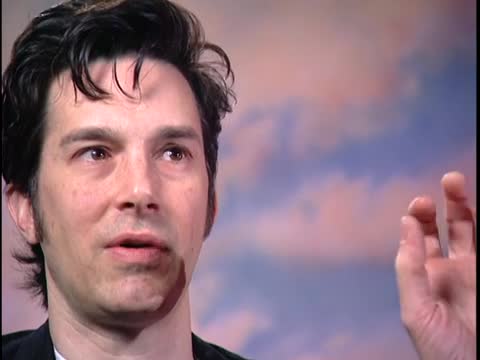
- Transcript
I don't know about Jesus, but I've got his eyes on him, just around the last year. Yeah. He is having fun. He's really okay. I don't even care what he's doing. I don't care what he's doing. I don't care what he's doing. I don't even care what he's doing. I don't even care what he's doing. I don't even care what he's doing. I don't care what he's doing. I don't care what he's doing. I don't care what he's doing. I don't care what he's doing. I don't even know what he's doing. I don't even know what he's doing. I don't even know what he's doing. They would always have squeaky, squeaky chairs. I worked at a radio network one time. It was so cheap. All the chairs were really old. And so I made a stick out of it. Put a mic down there. Listen. Yeah. It's my chair. Oh, that's cool. Well, I want you to throw that. Okay. Yeah. Hold that. And say the first thing that comes into your mind. Like, why is the countdown on there? Well, you got to have a countdown. And I just love this funky old countdown, you know.
I mean, a lot of what I was trying to do with this film was give it kind of an antiquated feel. Like, you know, you weren't sure if it was made in the 20s or whether it was contemporary. You know. Also, you know, I was really into the Twilight Zone as a kid. And I think there's a little bit of that in this piece. Although, actually, that was one of the things that attracted me to this Joe Frank story and his voice. His monologue was that it had this kind of rod -sirling quality to it. And, yeah, that voice loved the Twilight Zone. And in fact, I found out after I went to, I went to Annie out college, you know, Ohio. And I found out after I got there that rod -sirling had been a student there and it taught there in the 60s. But what is this about? Well, I call dirt my obsessive ecological parable. That's really what, you know, in a nutshell, that's what it is to me. It's a surreal black
comedy on one level. But I think on a deeper level, it's very much about, well, it is kind of a fairy tale for the 21st century in a way too because it's very much about ecology and self -sufficiency to me. That's what I get from the story. For a long time, I felt like I wanted to make a film about dirt and it just was a sort of, I don't know, a very subconscious level thing. You know, dirt is a great, it has a lot of potential for great metaphors. And then when I came across this story by Joe Frank from one of his radio shows, it just seemed like this was perfect. So I got in touch with him and he was very, very generous and let me use the story for this short film. And he ended up liking it quite a bit, which was really nice. Did you shoot that in here? It was all shot in this room except for the time lapse,
botanical time lapse. That was shot in my cinematographer's basement with grow lights. So yeah. Over how long appeared a time? Probably about two months or so. We did a lot of testing and tried to figure out which species of plants would grow fast enough. As it turns out, the ones that he describes in the monologue are the exact ones that we ended up using like radishes and celery because it grows sprouts quickly. What do you think when you see it? I mean, you see this a million times. Yeah, just about a million times. Yeah. And so, you know, what are you seeing differently from what maybe we see? Usually when I see something, I see all the mistakes, but I try to get beyond that. You know, in the first couple of months after you finish a film, that tends to be all that you see. And then it's interesting to sit down with somebody and look at it or
be in an audience when it's being screened. And it's a little bit, if you put yourself as the filmmaker, put yourself in the right mind so you can kind of pretend you're looking at it for the first time, it's very difficult to do. But it's always fun when, like, this was shown at Sundance, which was a fun place to go and see films and to show a film, too. And I love that a lot of people found it funny because I think it is a very humorous piece. And I'm always sort of surprised when people don't find it funny. It's intriguing. I kind of like it, but it's, you know, I always thought that was the main thing about this story is it's a black comedy. And then, you know, there's other things to it that go beyond that. They take it seriously? Some people do. Some people, it seems like they take it very seriously. And then I guess to them it's quite disturbing, which is kind of an interesting interpretation. I like that
people can interpret something in a different way. That's great. Yeah, it's always nice when a piece works more than one ways. Absolutely. And I think it's a great thing to do to intentionally put a certain amount of ambiguity in something so that the audience has to work a little bit and use their imaginations. That's important. I think that Hollywood doesn't do that enough. So many people always say that there are differences between an artist and someone who's not an artist is that the artist is making the piece for himself and not the audience. I don't really believe that, but where's that land for you? Yeah, there's a lot of purist that say that. For me, it's for myself and for the audience both. It's a 50 -50 deal. I think, you know, I probably come first because I want to do, you know, short films are something that I do completely, but I'd love
for the medium. And so when I'm exploring a piece, it's something that I really want to explore. And with each new film, I find it's very important to challenge myself to do something that I haven't done before. And try something new. That's an important thing for me to do. How long do they have to be in the dirt? Well, we shot the live action for Dirt over two days. So it was, you know, not very long, but yeah, he really got into it. This is a friend of mine who's a dancer named Evan Napp, who is the main character in Dirt. And I just loved his sort of deadpan expression. It seemed to go very well with Joe Frank's monologue voice over. Where did you get all the plants? Actually, my art director, Malia Jensen,
brought most of them from her parents' garden. So most of them were live plants. Some of them were fake, but three -quarters of them were real, the real deal. And so what we did here was we had this platform about two and a half feet off the ground. Just the whole room was almost the whole room was this platform. You kind of see in this one shot here. And then we had all these holes where the bigger plants would come out through the holes. And then we had a hole for the main character to be sort of crouched in. And then we put like about six inches of dirt just all over the whole thing and sort of dressed it out with some of this more symbolic plants. So it really was a pretty involved setup for that one ending shot in the film. Okay. Let's change up the shot and go on to... Not yet. There we go. Did you think you
were making a swinging essay? No, that wasn't the words I was thinking when I made the film. I expected to see Twiggy. I think that's a wrap for a second. And I got some issues here. Sorry. That's going to head over here. You want me to look at your hand? Yeah. Down here, down here, over here. Take this light. I don't know if there's that light over there. I think it's that light over there. I'm going to take my glasses off. All right. So this is not a swinging essay? I think that was something that was maybe lost in the translation from the Berlin Film Festival. I don't know. But yeah,
I thought it was. I love the fact that it wasn't something I was thinking about. But the whole physiognomy thing was kind of a cool idea that I didn't have in mind. But once again, it's always fun when somebody interprets something in a certain way that you didn't even intend. But it's still good, valid. What did you intend? Well, really with this film, initially I fell in love with the, I was just playing around. You know, the thing that everybody pretty much who's been around a photocopy machine has done, which is put one's face, hands, various body parts on top of a copy machine and make images. And I was doing that and film love with just the qualities of the images. And that and never having seen it done in a film got me very excited about the whole idea of doing it as a short film. So yeah, it was the technique that brought me into the project. But
beyond that, I mean, I hope that it was more than that. I mean, really what I wanted to do was take it into this whole kind of sublime zone of creating something that had a sort of reminiscent of data, early 20th century data movement or surrealism, Francis Bacon paintings. The kind of distortions and grotesque images that were possible with this technique. And so what I did as I got together about a dozen people, a few of them were dancers, a few of them were animators. And it was very interesting. I did do a whole lot of coaching. I did some and some people just really got in and got comfortable with the copy machine right away. Others were a little more standoff, which took a little longer. But I found the dancers did really well and the animators because the dancers knew how to move and had great control their bodies. So they could do these kind of choreographed things. And of course, animators know
about animation and what it takes to do an animated, short animated sequence. So it was also very interesting to see how different people's personalities kind of came out in the way they interacted with the copy machine also. Are you in there? I'm in there, but I'm not going to say where. This is like an Alfred Hitchcock at the Xerox machine. I think that's kind of one of the fun things about it too is that it does distort and sort of abstract to a certain degree and then people are less recognizable and more specter -like, I think, too. How many copies did you end up making? I think I had a probably, when everything was done maybe four or five feet high pile of copies. And of that about a third of it was used for the films where there were a fair amount of outtakes. It must have broken the key of Kinkos. Well, I had to, somebody very generously let me use their machine
for an extended period of time. Yeah, Jim Blaschfield did that. So, what are you thinking when you look at this again today? Well, this film, Photocopy Chacha, is still a film that I like it. I like it. I like looking at it again. It's not a film that I've personally gotten sick of even though I've seen it a million times. I think partly because there's so much going on in different levels visually. Yeah, to me, this film represents kind of the last film I did in an over of maybe 10, 12 -year period where I was not doing narrative filmmaking but more making what I think of as song films, which are more about the relationship of the music or sound and image where they're very
much like equal partners. And all these films I did in the 80s and then up to the early 90s. I did my own soundtrack so it was very much an integral part of the project was the track. Which came first? Well, in most cases it was, well, I guess it depended. In the case of Photocopy Chacha, it was, the images came first, but then I just had all these different scenes. In the soundtrack, I created the soundtrack before I went into the editing so that I had a sort of structure to nail these scenes onto. And it really was kind of just, I mean, it was really very much like collage in this kind of filmmaking. And so I feel like this particular film was the culmination of this work that I was doing and making these kinds of films that were working in a non -narrative
place just about the interaction of the music and the imagery. What do you think you changed? Well, you know, I just decided I wanted to try my hand at storytelling. And this was maybe about six years ago, six or seven years ago. I just felt like I had really explored the whole, the other kind of filmmaking that I was doing, the collage and the sound and music and image films that I did for a good 10 years. What kinds of stories were you drawn to at first? Short ones. I was drawn to short stories at first because, you know, I wanted to try making very short films. You know, trying my hand at narrative filmmaking, I wanted to start with pretty short stuff. I think a lot of young filmmakers make the mistake of just jumping into a feature or thinking that
that's what they want to do. And maybe for some people that works, I just never thought that that would be the right thing for me to do. So I did about five years ago, I did this cottonmouth Texas trilogy, which was actually music videos for a spoken word artist in Texas. But they were a great opportunity to do narratives because they were little stories. And so that was really my first stab at doing storytelling. Okay, let's cut and let's just look at those. Okay, just change it. Here you go. Okay. Take the rolling. And everybody, here we go. Okay, that's it. All right, so these were your first tries at narrative? Yeah, this was an opportunity for me to try some narrative work and not spend my own money.
That again, shall we? We hadn't gotten very far. I did turn it off. Okay, you know, that's probably Thomas. Yeah, yeah. Okay, so you were saying this was. Yeah, well, these, so these cottonmouth Texas music videos were an opportunity for me to try my hand at doing a narrative, some narrative work, but not spend my own money, which was kind of attractive at the time. You said they're music videos. Yeah, well, you know, they're promotional videos for the spoken word artist named Jeffrey Lyles from Dallas, Texas. And so, you know, the term music video in this case is pretty, I don't know if it completely applies. It's just that they're, they're promotional videos for him. They, I don't remember if they aired on MTV, but that was the intention with them. But what I liked about them is that they didn't, they didn't at all seem like music videos. They felt like short films.
What's the difference? Well, I mean, I think, you know, music videos were at one time a lot of my interesting that I, then they seem to be these days, whereas now it's really kind of, it's almost like they have a set, you know, shots and, and the same choreography from one video to the next. And, yeah, so the difference is I think the music videos have become much more just about seeing the star and their hair looking great and great choreography. You know, it seems like it's kind of gotten away from, from really the art of that you would see in music videos in the 80s and early 90s. I mean, there's exceptions, of course, but it seems like they've become much more kind of, you know, there's a certain recipe that they seem to be following for most big videos. And you were not following a recipe here? No, not at all. I mean, this was about taking the great thing about these is they, you know, sometimes
music can be a story, but not, not usually. And so they were, they were very much narratives to begin with, and so I, you know, my job then was to illustrate them in a way that wasn't, you know, that was hopefully imaginative. So what's the process, is the process different for you than, you know, working with someone else's ideas and then having to illustrate what's the... Well, when you get, yeah, I mean, there's, there's all kinds of, I mean, you know, when I'm doing a short film that's just completely, you know, for myself and I'm doing what I, what I want to do with it, that's kind of one end and the other end is commercial work where, you know, hopefully there's some degree of that that I'm not just executing. I mean, it rarely happens that I, that I am because I don't want to do those kinds of projects, you know, the best kind of commercial projects are ones where they have a,
you know, a little bit of an idea of where they want to go, what direction, and then you flesh it out and do bring a lot to the table for those kinds of projects. The less interesting commercial projects are ones where they've got everything boarded out and you're, you know, I mean, there's still room for you to be creative, but it's not quite as interesting. And where did, where did these fall in that? These were very much, these were all, these cotton -out videos were almost like making a short film because they're really, in this case, wasn't a record company that I had to please. And that's unusual for music videos. There was an executive producer who I worked with and he was fairly hands -on and then there was the artist, Jeffrey Lyles. And he was, you know, he's very open to how I interpreted his music and his stories. Do you separate in your own head, or how do you separate, or how can you separate
your commercial work from your short films? Yeah, I tend to separate the commercials from the short films. You know, commercials are something that I do to make a living and I make no apologies about that. I think that the medium can be an art form. I try to make it, I try to do that with the commercials. Sometimes I think I'm successful, sometimes not as much. But I think as an art form, commercials, most of what you see on television is not, not an art form, probably, in my opinion. But yeah, there's a pretty, you know, there's a pretty, in my mind, there's a pretty distinct separation, you know, between what I would refer to as commission work commercials. And that that I just do because, you know, it's for the love of the medium and that's what the short films are about. That's really my art form, the short films. But, you know, I do really enjoy commercials. It's wonderful to have these
kinds of budgets you can never dream of having for short films, you know. And that's cool. We did a project once for beer commercial where we lit up downtown Portland and it just these, you know, massive lights. And that was really fun, you know, to have that kind of access to that stuff. What do you take, or do you take anything from that? Well, I think the, the film, the short films and, you know, the art projects and the commercial projects feed each other. I think what happens is I'll explore something in a film and then that may come over into a commercial in some way. And then on the other hand, I've funded some of the short films for money I've made from commercials. So that, you know, there's a kind of a cross thing going on there. But recently more and more of
my commercials are animation and more and more of my short films are live actions. So there's a little more of a separation there. But, you know, it's okay. It's animation has been a niche for me to work in for commercials and I enjoy it quite a bit. On these, are they saying what this guy wants to say or are they saying what you want to say? Well, I think it's ultimately both. You know, these are my, this is my visual interpretation of his stories and his music. And, you know, that's what, that's what music videos are. And, you know, a lot of times you have a lot of kind of ego stuff going on with the performers and then it gets, you know, then you have to figure out, well, what, you know, where is that, where's that line? Where, where am I doing what I really want to do as a filmmaker? And, and where am I just really doing what they,
they want me to do because they think this is what is, is best for their marketing purposes. How do you deal with that? Well, I think I just approach a lot of that stuff on intuitive level. I think, I haven't had to deal with it a whole lot with music videos because I haven't done a lot of them. And, the music videos I've done have been for, usually like, they're the first time, you know, videos with a budget for a particular artist. Or, I did one for the Melvins a few years ago that was really fun to do because we, first of all, they were very open to, to really exploring some, some different kinds of imagery. And, and so we did, actually that was my very first underwater shoot, was with this Dan, the Melvins. Why did you choose black and white? Oh, there's a, there's a period there two, three years ago where I, I just was working on black and white. I kind of have a
problem with color. I don't like color the way it looks normally. I like it when it's been messed with and where you have like a lot of control over. I just don't like the way color looks normally in film or video, especially video. So if there's ways that, I think I just wanted to explore this kind of tonal thing of black and white is about. And, I'm back kind of in a color, you know, frame of mind these days where I'm interested in, in that again. But it's finding different ways to approach color though, you know, really aren't directing it, really being careful about what colors, you know, are used. You know, coming up with a palette, essentially, that you try to follow. Okay. Yeah. Okay. What are you going to do next? I'm going to do, uh, solve my next or do you want to do it? Yeah. Why not? Okay. And then we'll do, yeah. Okay. Good.
We have two more. We have two more. Okay. You
- Series
- Oregon Art Beat
- Episode Number
- #219
- Segment
- Chel White
- Producing Organization
- Oregon Public Broadcasting
- Contributing Organization
- Oregon Public Broadcasting (Portland, Oregon)
- AAPB ID
- cpb-aacip-26eaed5ab1c
If you have more information about this item than what is given here, or if you have concerns about this record, we want to know! Contact us, indicating the AAPB ID (cpb-aacip-26eaed5ab1c).
- Description
- Raw Footage Description
- Interview with director and composer Chel White, tape 1
- Created Date
- 2001-02-16
- Media type
- Moving Image
- Duration
- 00:26:43;15
- Credits
-
-
Copyright Holder:
Oregon Public Broadcasting
Producing Organization: Oregon Public Broadcasting
- AAPB Contributor Holdings
-
Oregon Public Broadcasting (OPB)
Identifier: cpb-aacip-b26593a905d (Filename)
Format: Betacam: SP
Generation: Original
Duration: 00:30:00
If you have a copy of this asset and would like us to add it to our catalog, please contact us.
- Citations
- Chicago: “Oregon Art Beat; #219; Chel White,” 2001-02-16, Oregon Public Broadcasting, American Archive of Public Broadcasting (GBH and the Library of Congress), Boston, MA and Washington, DC, accessed October 13, 2026, http://americanarchive.org/catalog/cpb-aacip-26eaed5ab1c.
- MLA: “Oregon Art Beat; #219; Chel White.” 2001-02-16. Oregon Public Broadcasting, American Archive of Public Broadcasting (GBH and the Library of Congress), Boston, MA and Washington, DC. Web. October 13, 2026. <http://americanarchive.org/catalog/cpb-aacip-26eaed5ab1c>.
- APA: Oregon Art Beat; #219; Chel White. Boston, MA: Oregon Public Broadcasting, American Archive of Public Broadcasting (GBH and the Library of Congress), Boston, MA and Washington, DC. Retrieved from http://americanarchive.org/catalog/cpb-aacip-26eaed5ab1c