Woods & Waters; Bud Fackelman
- Transcript
Ier. Oh do you. Oh oh oh oh oh You light up. Oh God I love you. Will you.
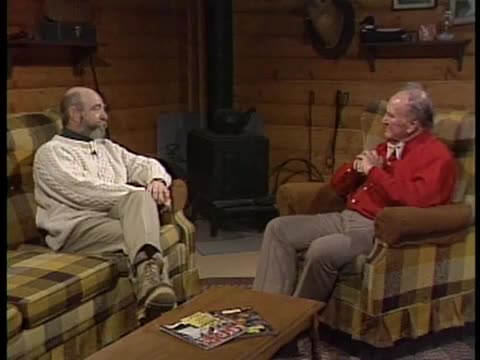
Eh ok with you on the long run. Waters with your host but Levitt. Well you can call us a renewal of the fireside chat. My program guess is Doctor Bud FAQ on how did a veterinarian ever end up in the state of Maine the sporting goods business. Well but it was kind of a long story It reaches back 40 years or so when my father used to bring me here fishing and hunting. Learn to love the Maine woods and. Never really stray too far from the idea of someday returning and making a lifestyle out of it. Despite the travels that we had throughout the world. And then. Returned to this country to teach first at University of Pennsylvania and then later at
Tufts University. And when retirement became a possibility there. While we lived out the dream and moved to Maine bought us boarding camp and. That's what brought us to a little lifer. The fact the little life for that was my following question. When your father to get here did you go to the little life or games back in those days. No in fact we spent most of our time in the greater Moosehead area and. Around Rockwood and Greenville Jackman in that sort of chain on the west side of the lake. We came to know the bay side just by camping and some of the hunting activities but most of our time was spent on the Westside of Moosehead so I knew that area a lot better than I knew the area of little life for so many boats of the years you know. At heart yes in practice it was difficult for him to be so he was very much
involved in the defense industry. And New York and had precious little time especially when I was growing up in the 40's. To spend taking long vacations into the woods. But you'd be surprised just how much woods and wild life there is in that part of New York and eastern Long Island and so forth and. We enjoyed deer hunting out there pheasant. Certainly duck hunting and goose hunting. So we spent a lot of time in the outdoors to get what was your dad a fisherman or an all purpose individual namely a fisherman really and in fact mainly salt water fishermen for that matter. Due to his own youth on Long Island. That was the orientation. And that's where we spent most of our time. However we both got into fly fishing in a heavy duty way when I was probably about 8 or 9 years old and I've
never given up since then. Neither is he for them. Did he encourage you at that young age to be a participant in the outdoors. Very much so without Dad courage meant. And Mom's tolerance. Why I don't think I would have developed the kind of interests that I have today. And when I first went to Cornell to study. Why I was in wildlife management in fisheries biology because of. My background at home and his urging. Really. What moved you to become a veterinarian in. Association with other veterinarians and veterinarian students at Cornell. I had always had a lot of animals loved animals. I had never given. Serious consideration to veterinary medicine
as a career. Until I got to Cornell and explored the possibilities there. I had a very. Interesting and foresighted adviser in Gus Swanson the head of the conservation department at Cornell at the time. And he looked into his crystal ball and mine and wondered if I wouldn't make a better contribution in a medical field. And at that time. Pursuing. The more bureaucratic and governmental roles that I might play in. Wildlife Conservation or fisheries there was not at that time the big opportunity for veterinarians in wildlife management such as there is today. And I think on balance he was he was probably right. What did that experience teach you.
The experience as a veterinarian working around animals. It. Taught me a lot about animal ownership and the responsibility that we all have to the animals that we own. That is often given. Short shrift. Among people that either own animals already. Or are about to purchase them. It's a heavy responsibility and extends over many years usually. And. It was something that I tried to stress as a practitioner whether among small animal owners or large animal owners where most of my life was spent. That that purchase that initial flare of interest. Needs to be kept alive over a long long period of time will not result in a. In a good relationship. Did you do much work around horses almost
exclusively especially. Toward the latter part of my academic career. I was dealing only with horses and only with orthopedics. The horse. Was an animal that interested me greatly right from the beginning of my veterinary career. And at that time in the 60s. Why an awful lot of fracture cases for orthopedic injuries in general Bode the death knell for for a horse. And I was interested in finding out why and what might be done to help that situation. I don't know. Would you have the television facilities a little life a bit I have an idea zero. But at the Breeders Cup recently. Yes. When the sadness of that great hall was. Having to be put down. What a moving moving thing that was indeed.
Yeah. It's. Not to be said that there are no fractures or no injuries that. That do and should result in humane destruction. There still are quite a few of them out there. And. A lot of us that are involved in orthopedic research. Are in fact involved in trying to prevent that kind of fracture from from taking place. In all probability a certain weakness of bone is in fact. Built up in that animal during its training period. And we need to be able to recognize that earlier and deal with it before the catastrophic fracture takes place not unlike same situation and human beings be they athletes or elderly people. Where certain things may be used as a predictive index to to warn of such a problem occurring before not that far yet.
I could talk about horses all day long and I feel very little about them and I've been nothing but a loser to him all my life. But one other question I've been reading across about that room when it was a tragedy at the Breeders Cup but the fragile. Fragile mist I guess is the wood of a horse's leg. Great Grace was like that a young horse was its unbelievable great weight that it carries and so forth on those small though small bone structure I guess you'd say. Yeah. However as an engineering material it's strong enough to take all the strain that a racehorse for instance for a jumper. Puts upon it. It turns out that it's not so much and engineering problem as it is a biological problem. Whereby as I say there are certain processes taking place in that bone every modeling type process especially in a young horse. That is
impossible to fully evaluate. On a routine X-ray for instance. And we do need to get a little bit deeper into our analyses of that bone in order to be able to prevent that kind of an injury. Thank you. Well I'm out of my field. I've got to bring you back to something. A. Little life. Why did the faculty. Select little life. Well that will blame for that will put on the doorstep of Yankee Magazine and oh really. Indeed it was in their house for sale. Section. And written up there. And it was just a Mel Allen story not. Yes in fact. And it was rascal he watches as I knew you would be the go ahead. Wrote about it in a very forthright and matter of fact way in fact the title of the article was little life words not for everyone.
And we went in and visited the the owners after an abortive attempt because of flying conditions and not being able to make it in. A month later we finally did make it in. It was March and. Sort of spring conditions as far as the snow was concerned. Snow shoed into the place and did some snowshoeing around Pegues area and back to camp. And came to love it. And we. Did quite a bit of soul searching in terms of that radical a switch in careers. I had a lot of discussions with the administration at Tufts University who treated me very well and made it possible for us to do it and for me to still. Keep a foot in both clinical and teaching arenas. While while I'm in the woods. But that's what attracted us to little life heard and we felt that. If we did wait out. The usual retirement plan and coming of
age coming over time and age. That it might be too late and we wouldn't take that kind of responsibility. So we made the move and had a lot of good friends support us in doing so. How does it feel to cut 26 Calderwood. You're tired when it's over and very very glad that it's over. The pile that we begin with seems insurmountable and yet. As you work your way through it you have plenty of time for thought and and a bit of meditation if you will. If you can do it over the change. But you're very very glad when it's over. Jeff expect to find the number of duties attended to running a sporting camp that you found. No no I I must say that. The thing that we were looking for more than any other. Basic philosophic change was the rich variety that's offered by this
job. You may be baking bread one moment and be under a tractor the next only to be followed by a repair of a generator and a leaking faucet and so the day goes. Much much more variety than is offered by the usual professional career. But no I had no idea of the myriad chores that it would involve. How has Mrs. fact and women accepted this. Not only accepted it she encouraged it and has thrived on it. Though many of her friends. Put that question in perhaps a little bit more definitive. A number of questions. We could talk a lot about life in that country. Certainly not an undiscovered part of your feeling about the movie season. Where are we going whether it should be expanded or whatever what are your
thoughts on movies you live right in the middle of the movie colony so to speak. Indeed we do and they frequent our camp and they're around the ponds all the time and certain of them. Have even been given names by the guests and so forth. It is my understanding and according to my own amateurish observations. That the population can stand more hunting pressure. Than it is getting now just what that number is I'm not sure of. But. Significantly more than than it's getting now and still maintain the numbers of moves that that we have and the health of the herd. However I am concerned by the present situation. And therefore am more concerned with an expansion of the present situation based mainly on. Aesthetics. The moose is an
animal that. Is not very difficult to spot roadside due to its size. And due to its behavior. It does not have the tendency to flee as rapidly as some other species like. White tailed deer. Hence the tendency is to step out of the pick up. To kill the animal rather near to roadside and then to gut it and. To take the carcass and to be tagged. All of which. Is fine from the perspective of. Nature or any other perspective if we accept the fact that we are going to hunt moose. But. I feel that. Our hunting fraternity. And I number myself a member of that. Has enough of a black eye in the face whatever you'd like to
call it. Already. From an aesthetic standpoint. And to intentionally. Call for more criticism by continuing with this kind of activity. In full view. Of people that may not view. The situation as as you or I do. It is only to compound the problem that exists right now. And. Potentially lead to total elimination. Of. The moose hunt. For starters. So. Unless some kind of. Legislation or. Agreement whatever it would take. Could be reached whereby this sort of activity was not necessarily carried out right at roadside. I think it would be a mistake to expand that.
But in fact I'm reading into this thinking of something like a quarter. Like 250 to 500 feet. Roadside is just offensive to people. Indeed it is and I think that it is the death of an animal and then it's its dismemberment and that is probably the most distasteful thing to any non hunter. At least any of the non hunting people with whom we come in contact at the camp. And yes I think such record are not unlike that which we establish around dwellings for safety's sake. Would be entirely appropriate. And one could weave into the fabric of such legislation. A statement to the effect that in fact it does serve to increase the safety of the moose hunt. These roads are now heavily traveled not just by hunters but by many other people.
And have high caliber rifles going off in that. Degree of proximity to a major artery of travel. Is not in the best interest of hunter safety. Well I know your clientele combination of people joy of wild trout photographer's nature seeking people cross-country skiing snowshoeing and that kind of endeavor. Do these people sometimes complain of coming across. Things like that were due to bloated has been gutted out or moved has been gutted out. Oh yes I mean it's occurring enough of an extent that. During the one week season and several of our guests came upon got piled right next to the road and if they don't come upon the Ravens make sure that. The materialist spread around and the Ravens and the coyotes and
profusion back in there. It would be very difficult for it to escape notice. When left in that. Location. The question that you knew I was going to ask. Where are we going with respect to clear cutting. Well. On balance I believe we've gone too far already and we appear to be continuing on that on that road. I know the economics. Of the paper industry and the logging industry in general that have led us to. Desire a need to clear cut. I am saddened that. We were not foresighted enough. To see the kind of. Community Forest community that we were about to create by
allowing clear cutting to go on to the extent that it has gone. And. I have not seen. Given the most recent published study. There are sufficient breaks being put upon. That practice. Too. Significantly impact on the kind of communities that we've we've created. Aesthetically it is probably the worst thing that the forest industry has done so far. And that is not just my own opinion but it is the opinion of many of our guests and that's probably the question that we answer most frequently is why does this have to be done. Which is why I ask it. Yeah and there are cogent reasons. One in terms of the spruce bug worm damage that the state suffered some years ago. There are some very
good reasons for a limit needing large stand of partially and completely damaged trees. That's not very difficult to explain away. But the real reason for most of the clear cutting is just economics. We embarked upon the practice. We then used modern technology and equipment or equipped ourselves to be able to go into the woods and clear cut. And now we're using that as the explanation for why we continue to do this. In other words we've. Embarked on this we've equipped ourselves. We spent a lot of money on that equipment and now we need to amortize the equipment that one. Knows no end because we'll buy more equipment. And the argument will continue on and on and on despite the fact that we may think that conceptually we made a mistake way back when we embarked on it. We are going to continue and will justify our activities purely
economic basis. That's been a mistake. In many industries and we can call up different commodities and not just pick on paper and forest products. But take the oil situation that we're in now and the dependency that we have upon it. The unwillingness that we have to wean ourselves from it. To any degree. And we have another good example of embarking on a program. And then allowing the program to dictate to us how we're going to conduct our lives. Well what is the answer. I mean industry has great amounts of money invested in this equipment. How do the balance the books were going down the years for a resource should they have their left out the sporting industry the sporting Gamp industry in their planning.
Well. Yes and No. There are commercial leases on paper company land in. Fact by the very definition of that word. It is on someone else's land that someone else in the state of Maine is a paper company usually. So the. Tolerance if you will of the sporting community is implicit in this willingness to lease land to that activity. However with the waning resources. In our area and especially in areas that are in any way close to mills that are established. Close to the road systems that have cost a great deal of money to develop. The buffer zones that used to be. Understood tacitly understood around sporting camps are being violated more and more the camps themselves are being encroached upon by the.
Lumbering harvesting activities. While this is all completely within the rules and regulations of anyone's lease. And it is certainly within the rules and regulations laid down by our Land Use Regulation Commission and the. I you know respect those rules a great deal. I think that their. They are respected by the paper companies as well. However. The. Maintenance of that and Byron mentor that community that we talked about before. In such a way that the people that are coming to the Maine woods to enjoy the wildness of the Maine woods. Are no longer able to do so. The islands of relatively untouched. Timber. That used to stand around the camps and around the ponds and streams are disappearing.
And they're not there in many areas and they will be gone for a long long period of time. Multiple use which is a buzzword in the industry in both industries these days. Has to be that certain areas of land are used exclusively for one operation. And another area exclusively for another. So that within a large tract. We have multiple use but we cannot mold the police use every square inch or even every acre or every hundred acres probably. And I feel that there has been insufficient feedback. From the sporting camp industry let's take the blame ourselves. To the paper companies to say that this is a crying need we need to be able to do this. In order to be able to remain viable as a business as a recreation. To what extent the companies will
be able to or be willing to respond to that with the establishment of such corridors away cities call them what you will is open for question but certainly their performance in the past has shown a degree of willingness to accommodate the sporting community. But we have about one minute. How much conversation develops or evolves from your guess was with respect to slash. That's probably number two after clear cutting as far as their objections go. That they can't understand why there has to be such a mess. Our own land owner in our area. Champion International has recently embarked on a very energetic campaign to clean up the roadsides. And to funnel the material into the chipped and biomass industry. This has already received some very
positive commentary from our guest that had seen it just a year ago and are seeing it now. So I do believe it. It needs attention. And it's receiving it at least around us. It would be nice to see it receive in in the great wise that it's so nice to have you here you're a great guest I enjoyed talking with. My pleasure sir. It's good to get to know you better. DR But vacuum one has been I guess the little life on campus one man's view on the out of doors. Thank you very much and good night everyone. Load o rā it. Oh good God oh oh oh oh. Oh Oh whoa whoa whoa whoa who the
who the oh the logo. This programme was made possible by the support of viewers like you. Thank you.
- Series
- Woods & Waters
- Episode
- Bud Fackelman
- Contributing Organization
- Maine Public Broadcasting Network (Lewiston, Maine)
- AAPB ID
- cpb-aacip/245-483j9spq
If you have more information about this item than what is given here, or if you have concerns about this record, we want to know! Contact us, indicating the AAPB ID (cpb-aacip/245-483j9spq).
- Description
- Credits
-
- AAPB Contributor Holdings
-
Maine Public Broadcasting
Identifier: Accession #: 1541.0400 (NHF)
Format: U-matic
Generation: Original
Duration: 00:59:00
If you have a copy of this asset and would like us to add it to our catalog, please contact us.
- Citations
- Chicago: “Woods & Waters; Bud Fackelman,” 1990-06-17, Maine Public Broadcasting Network, American Archive of Public Broadcasting (GBH and the Library of Congress), Boston, MA and Washington, DC, accessed August 14, 2026, http://americanarchive.org/catalog/cpb-aacip-245-483j9spq.
- MLA: “Woods & Waters; Bud Fackelman.” 1990-06-17. Maine Public Broadcasting Network, American Archive of Public Broadcasting (GBH and the Library of Congress), Boston, MA and Washington, DC. Web. August 14, 2026. <http://americanarchive.org/catalog/cpb-aacip-245-483j9spq>.
- APA: Woods & Waters; Bud Fackelman. Boston, MA: Maine Public Broadcasting Network, American Archive of Public Broadcasting (GBH and the Library of Congress), Boston, MA and Washington, DC. Retrieved from http://americanarchive.org/catalog/cpb-aacip-245-483j9spq