The Wilder Davidson Story: The End of an Era; Part 1; Life in the Company Towns
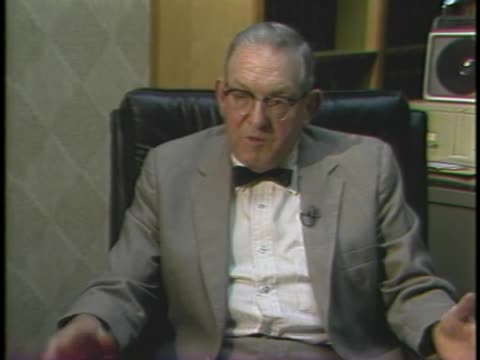
- Transcript
You The following program has been made possible in part by a grant from the Tennessee Humanities Council, a not -for -profit corporation whose principal funding is provided by the National Endowment for the Humanities, by contributions from businesses and individuals in the upper Cumberland region of Tennessee, and by
WCTETV. When I got the Wilder, I thought I was in the city. Davidson used to be a pretty place, a nice place, and Wilder was too, and Highland was down there, but it just all disappeared, the people just all gone out and left. I never dreamed that it would be like that always, that I'd live out there all my life. I loved to live there, didn't you? I sure did, back then. It was a good place to live. There was a lot of people in there, too. For six months, it was just like a war going on in Wilder. You could hear shooting day and night, dynamite. Mining companies was king of the hill, buddy. You stooped and you bowed. They owned the mines, they owned the house, they owned the store, they owned
everything. Now Wilder's best coals have been dug out in this country, they say. I know it's got a bad name, they've never been no better people in the world. It's hard to talk about it. People who grew up in Wilder, Tennessee can never go home again. Nothing remains but trees, brush, a burned slag bank, a few rotting cross ties, and some crumbling concrete foundations. Between 1903 and the 1930s, the five communities of Wilder, Davidson, Crawford, Twinton and Highland thrived as a coal mining complex that was the major economic center of the Upper Cumberland region. According
to former residents, as many as 2 ,000 persons lived in Wilder alone. Before the railroad came in the 1890s, much of the Upper Cumberland region was an isolated area in which a hardy, independent people survived largely on subsistence farming and logging. With the railroad, however, it was possible to tap the rich coal reserves in this mountainous area. Some deep mining continued in the Wilder -Davidson complex through the 1950s, but a nationally prominent mine strike in 1932 -33 and the Depression of the 1930s brought to an end the boom era of the 1920s. The Wilder -Davidson story, The End of an Era, is a community -based oral history project that tries, through the voices of those who lived there, to preserve the heritage of the region and chronicle the early 20th century industrialization
of an isolated rural area of the Upper South. Part one, Life in the Company Towns, looks at family life, social life, community relations, social institutions and attitudes toward company officials during the period 1903 -1930 before the catastrophic mine strike. Like so many others, Maj. Alexander fondly remembers growing up and living in the mining communities. It was the most wonderful place in the world. We just loved it and you know, I never dreamed that it would be like that always and that I'd live out there all my life. We loved it, everybody that lived there. It was a typical mining town, I guess. Everything was hills and what we call hollers. The houses were mostly on the hillsides except at the area we call Black Bottom. And the houses were smoke and dingy looking on the outside. I don't like to think of it that way because
some of the happiest homes I've ever been in were in the homes that people lived there. No, there was no comparison between any other town in the mining town in those days. The press and the people themselves remember and told more of the sensational things. But back before the strike, the schools were good and he was talking about Mr. W. A. Beatty who was the principal. He believed in children presenting plays and we had lots of plays and of course we liked that and it was just entirely different. You talk to people today and it was just, pardon the word, hell on earth for them but it wasn't to me until the strike came. We had some good times back then and you had anything to sell. That's only place you
could sell it because most of the men over there had a job and that's where most people had to go. They call it peddling. They had vegetables or fruits or anything to sell or they'd always take it to the wilder. When I come up, times I was talking about, you didn't have no choice. There wasn't no roads to get out there. I say that I was 21 -year -old before I know you'd get into further than wilder but now that's the stretching of this fraction. you was almost tired. We was almost tired of that country. We had no money. I was well satisfied. I didn't have no desire to, you know, I guess I never thought of it and I was well satisfied but the company just about owned you.
That's just about the size of it. And you know, I've seen the time that you couldn't get out of that hauler. That's what we call it. The roads wasn't nothing. It wasn't paved right here. Well, the roads wasn't nothing but mud. I've seen the time when we'd carry a car from the top of the mountain to the highway once and couldn't get back that way. went around through Leviston, back that way. And if they rested the man over there, they didn't bring it. wouldn't bring him to jail. They couldn't get over here. They turned him loose. I've seen the times of many fellas that went to jail if they could have got him to Jamf Town but they couldn't get over here. We had the Saturday fights when the coal miners would go by the corn whiskey and stuff and they'd have a fight. But no one molested women. Women were respected a great deal in that community. My ideals, I grew up, my ideals came from Zane Gray and Oliver Kerwood and those people because I read books. Everyone I could get a hold of. But my mother was always
scared at night. And dad worked nights. And before I went to bed, she'd say, Bill, you looking to close it? Yes, Mom. Bill, did you look under the bed? Yes, Mom. Did you put a chair under the door? Yes, Mom. I never knew what she was scared of because I never was scared. And people slept with their doors unlocked and stuff like that. Now, I remember when we first went there and I was just a kid, there was some man that lived right down across the road from us, got killed. I don't remember how. think somebody shot him or something. But there wasn't much of anything like that. seemed like people just wanted to work, you know, and live peaceably. Wilder back then was the largest community in Ventures County. So all the politicians that ran for office would do their campaigning all over the county early in the last two or three weeks. They'd just come to Wilder and
stay until the election was over because Wilder could make or break you back then. If you carried Wilder good, you won the elections. Looking at this map, it bring it all back to you? Oh, yeah. Yeah, it helps bring it back. I loved to live there, didn't you? I sure did back then. That's a good place to live. There was a lot of people in there, too. And some good people? I remember one time there was 500 men on the payroll at Wilder. They ran two shifts. Oh, yeah. Yeah. I remember the wash house. Can you remember that? Oh, yeah. I remember when they built the new one. I remember when they built this creep on. there by the bath house, there by the powerhouse. The people who lived in the five mining communities treasure vivid memories of an active social life. It was a big family, like families, we had our arguments
between ourselves, but no one else would come in and start anything with us. But we had some... We had some civic -minded ladies. Mrs. Jenkins was one that took interest in the welfare of the community and the children. She was instrumental in church going, and then the schools they got the Jenkinses with. And W .D. Boyers, a major stockholder in the finished coal and coal company, his wife was very civic -minded, and they furnished those kids with tennis rackets and tennis balls and let us play on their tennis courts and help parties for us. And the son, Sam Bowyer, Jr., he started the scout troop that we had up there. We had a good boy scout troop there,
troop 77. course, the strike ended all this when the strike came along. One year, I don't remember what year, we went on a hike and Sam says he wanted to collect the most flowers and names them and went on a trip to Nashville to the Boy Scout camp. And I won that. And I got paid by the company for a trip down to Camp Boxle, which was on the Big Harbor River out of Nashville then. And when we come out of the camp, they sponsored a trip to the House of Representatives in the Senate. We got to go watch them in that clause and we got to visit with Governor Henry Horton, who was the governor then, and we got to see two free movies. And Edgar Robson in Little Caesar was one of the movies, first Tolkien movie I ever saw. We went to Cookville to the Boy Scout
Jamboree three years in a row while we were a scout troop. And the third year, we went down to Cookville. We won every event that they had going down there. Was there social activities around Wilder, dances or what? Just a bunch of us boys were on together and if we went to Davis and they'd rock us back to Wilder, they'd throw rocks at us and run us off. We'd done them the same way when they'd come to Wilder. We'd put the rocks to them, run them back to Davis and so that was our pastimes. We'd have box uppers, know, pie -suppers and things. We'd have them in the church house. We'd have beauty contests. We would, you know, a boy would have paid nearly any price that he could have got for a girl's pie, you know, in a line. I remember that we'd run into Edith one And she was always just about gone. And we'd run into some more girls coming there from different places and, you know, they was going to, and
us boys seen it, didn't we? We'd just been around Edith. And we won the beauty contest for Edith, not two. And things like that. then they'd have barbecues, know. And we had an active church, an active Sunday school, and our teachers were never dedicated and they would have parties for us in their homes. We called them socials. Did you ever go to any beacher? Yeah. And we had to be home by a time. And that was the era when dancing in those days was considered sin. So we had to slip and dance. it started, I think, with a game they called Old Betty Liner, which must have come over with the pilgrims. The Mayflower? The Mayflower, yes. Where they'd clap their hands and would sing. And the parents didn't mind them dancing
to that. Well, once they got, we got them to accept that, well, I wasn't one of the group, never could square them. But once they got them, the parents, to accept that form of dancing, they got some of the boys to play guitar and a few three guitars. And there was one boy who played the mandolin real good. And they really raised the dust in the floor. Well, my dad found out about that. he didn't like it very much. But it was all young. We were young and didn't do anything that was wrong. I mean, really bad. We played baseball, basketball and ran and got out and camped and hunted and fished and did a lot of things like people do nowadays for a pleasure of different, wilder, had about a half a dozen baseball teams and different parts of the community would play each other. And then Wilder and Davidson always had a big rivalry going on between themselves,
which sometimes involved fights and fisticuffs and what have you. Everybody in the community could swim just about because they learned to swim early, know, usually down in Glover Hollow. And they'd go to what they called Wilder Pond, which was a mining pond that they got water out of for the temple. And then they also had a pond at Hightown that they piped water from and we would go there and swim and fish too. They had lots of small fish like perch and bass and those. We used to make chocolate candy, a lot of Woodrow Wilson. He used to teach school in Wilder and also at Clark Range and he was a professor of history down at Tennessee Tech. Woodrow and I used to be good candy makers and we would see who could make the best chocolate candy every once in a while. Wilder had real good basketball teams. We would have to go off to hunt competition because they could
take on anybody around, you know, in a small town and do a good job. Well, I played basketball, tennis and baseball and we called it Tin Tally. We had the bases just like playing baseball or softball or something, but we always played Tin Tally. They had the Masonic Order. They had a lodge and then it seems like the Eastern Star. That's about the only civic organizations I remember right now. Of course you had church functions, you know, that people went to. If the old school has that long building there when we first went there, my dad and his father and the other good people, I don't mean they were the only ones, but the other good people kept Sunday school. We always had Sunday school. No, not much church because there wasn't always the preacher there,
but preachers would come when they found out they could get some money while they'd come and then the company would take so much pay out of the miner's pay, you know, to give to the preacher. They always made pretty good too when they built the new church house then. The Baptists organized a church, and then the Methodists then organized a church there too. Well, the Baptists would meet there one Sunday. Everybody, Methodists and Baptists, both would go. Next Sunday the Methodists would have their church in the same building, but we one of us would meet one Sunday and one the next. But law, there wasn't any friction, whatever. Everybody just worked together. There wasn't no church in Davison. Only service they had at Davison was in the schoolhouse. Well, they'd have a preacher to come in and they called it a pound in back
then. He'd stay a week or two and they'd say, well, give a pound of beans or a can of blackberries. Wilder had a community church house that everyone went to. So there wasn't many different denominations. We would have preachers that would be there, you know, to hold a revival once in a while, and that was about it, and had lots of brush -arbor meetings in the summertime. I'd just go out in the woods and cut you some poles and put them up and cut some brush off of the poles you cut out and throw over the top of them and build some old rough banches and little pool pit up here for the preacher to stand behind and that is it. Not many people I'd say two or three hundred at most would be regular attendants at church. Maybe a hundred at Sunday school. We had the best schools, they was in Fentress County, and the best teachers. We had Professor W .A. Beatty.
I can remember the morning he came to Wilder. I can remember it. We was up in the upstairs rooms and we looked down at the default, Mr. Beatty, you and he was one of the, I think, the best teacher that's ever been in that part of the country, in this part of country. I know when I was in high school, I'd go up to his house of an eye, maybe say there at twelve and one o 'clock in morning, helping me with algebra. How many teachers do that today? He'd tell me to come up. The men would give so much a month out of their pay for schools. Now, maybe it was three dollars. I don't remember how much, but I know every man had to pay some. I mean, they didn't make them. you know, gladly gave whatever was required because they wanted their kids to have an education.
they took something each month out of their pay for the doctor bill. If there was a funeral, it took so much out for the funeral. And if a man got sick and couldn't work, they'd take so much out of every person's pay to make some money up for him till he could get well. And they were very generous -hearted people, good people. When I went to elementary school, we had the large school above the storehouse there that burned down sometime after the strike around 32 or 3. The building was a huge building, wilder. had about 2 ,000 people in, roughly, and I guess it was probably the largest school building in the county at the time. This was a company office where they kept records of the amount of money that the men earned in the mines, and they issued a slip against
it, or if you had any money left at the first of the month or the middle of month, they would pay you off in cash. The next was a company store, and this is where all the community gathered to buy their, most of them to buy their goods and stuff, and it was kind of a social center, too, for the men. The third one was a post office, and everybody went to the post office because that's where they got their mail in general delivery at the post office. They'd the mail and you'd go in and ask for it by your name, and we had a post mistress by the name Miss Viny. That post office was where the young women liked to go there and ask for mail, knowing they wouldn't want to get any, but they would meet at the post office and they'd take off at recess from school and go down to the post office. We went to the store nearly every day, put on our best dress, and went to the store every day. And, of course, we had to have enough food to fix lunch for the dinner bucket, you see,
and we had to keep cake all the time. We made cakes, cakes, cakes all the time. The main company store was at Wilder, and then at Highland, they had a store there that was run by different people over the years. They were just general stores. You could get any kind of general merchandise. They sold a little bit of everything, you know, the feeds for mules and horses and cows and hogs, that kind of farm food for farm animals, and then just the general run of groceries. The church was the biggest social center, and this company store was the other social center in the community, because the men would congregate there and stand around that store all day and talk to each other and drink coax and stuff like that, and on the
weekends, Saturdays, they'd be in there. And the company store, they sold their goods a little higher than the neighboring owned stores, which there was a bunch of them around outside the town of Wilder. They had three down in Glover's Hall or four down there, different merchants that was selling down there. But the company store was where all the men would meet and talk about it and get in their fights and stuff like that and buy their whiskey down behind the store, and they were some very fine people that worked in there. You might say they were slaves to that mind. They took all advantage of them. The poor housing, and they paid them in that script, and they had to go down there to the commissary. When they had the script, that's only place they could trade it was down at
that commissary, and they just took advantage of them and a lot of things like that, that the company could have been adjusted and given them a fire showing on a lot of those things. And the housing, of course, the housing conditions in this section of the country, they was up to power on, considering what most other people had up there. Well, you see, the company went over there and they built so many houses, and I don't remember as they moved in, but they were the best houses in the Tennis County. When we first moved there, and I was just a small child, the company at Christmas time had a bag of candy and fruit and stuff for every child in the town, and they bought a piece of clothing material, dress material for every lady to make her a dress. And I thought that was about the nicest thing I'd ever heard of. W .D. Boyer was a general manager of Ventress Coal and Coke
Company in the 1920s. Bill Bilbury shares with many other people good memories of the Boyer family. The Boyers were interested in the young people, Mrs. Boyer especially, and the young people in the wild. They lived in Nashville, and they came up the wilder for summer. They had what they called a cottage there, and they usually brought a bunch of guests with them. Young people from down there, and they'd ride horses and stuff around there. Not all company management was regarded as highly as the Boyers. Mine and company was king of the hill, buddy. You stooped and you bowed. It was that simple. I mean, you lived in their houses, you used their doctor, and if they got in for you, well, there's always somebody hanging around with a superintendent. As a matter of fact, some of own relation. And he had a couple of tufts, you know, and they
got bad enough that they'd beat the far out of somebody and maybe run them out of town or something. I'm glad they're all gone. Do you think growing up in a mining town and the environment that you had had more of an influence on your life than if you had grown up on a farm or something, some other type of environment? Well, wherever one grows up, they have certain environmental factors that impress them one way or another. And of course, your educational background is all part of it, and you just look at things differently. It's the worst old blues I ever
had. Now there's a few officers here in town who'd never let a lawbreaker slip. They wore their guns when the scatting began till the hide were off their hips. It's the worst old blues I ever had. I got the blues, I sort of got them back. I got the blues, the worst blues I ever had. It must be the blues of the Davidson and Wilder scab. I'd rather be a yellow dog scabbing a union man's backyard than to tow the gun for L .L .C. than to be a national guard. It's the worst old blues I ever had. I got the blues, I sort of got them back. I got the blues, the worst blues I ever had. It must be the blues of the Davidson and Wilder scab. Thank
you.
- Episode Number
- Part 1
- Episode
- Life in the Company Towns
- Producing Organization
- WCTE
- Contributing Organization
- WCTE (Cookeville, Tennessee)
- AAPB ID
- cpb-aacip-23-7312jv7f
If you have more information about this item than what is given here, or if you have concerns about this record, we want to know! Contact us, indicating the AAPB ID (cpb-aacip-23-7312jv7f).
- Description
- Series Description
- A four-part documentary about life and labor in the coal-mining towns of Wilder and Davidson, Tennessee.
- Created Date
- 1987-06-17
- Asset type
- Episode
- Genres
- Documentary
- Topics
- Social Issues
- History
- Employment
- Media type
- Moving Image
- Duration
- 00:29:11
- Credits
-
-
Producing Organization:
WCTE
- AAPB Contributor Holdings
-
WCTE
Identifier: cpb-aacip-1f539ddd3db (Filename)
Format: U-matic
Generation: Master
Duration: 00:28:46
-
WCTE
Identifier: cpb-aacip-6f7729de2a5 (Filename)
Format: U-matic
Generation: Master
Duration: 00:28:46
If you have a copy of this asset and would like us to add it to our catalog, please contact us.
- Citations
- Chicago: “The Wilder Davidson Story: The End of an Era; Part 1; Life in the Company Towns,” 1987-06-17, WCTE, American Archive of Public Broadcasting (GBH and the Library of Congress), Boston, MA and Washington, DC, accessed October 10, 2026, http://americanarchive.org/catalog/cpb-aacip-23-7312jv7f.
- MLA: “The Wilder Davidson Story: The End of an Era; Part 1; Life in the Company Towns.” 1987-06-17. WCTE, American Archive of Public Broadcasting (GBH and the Library of Congress), Boston, MA and Washington, DC. Web. October 10, 2026. <http://americanarchive.org/catalog/cpb-aacip-23-7312jv7f>.
- APA: The Wilder Davidson Story: The End of an Era; Part 1; Life in the Company Towns. Boston, MA: WCTE, American Archive of Public Broadcasting (GBH and the Library of Congress), Boston, MA and Washington, DC. Retrieved from http://americanarchive.org/catalog/cpb-aacip-23-7312jv7f