Dialog; Telecommunications: Unravelling the Industry
- Transcript
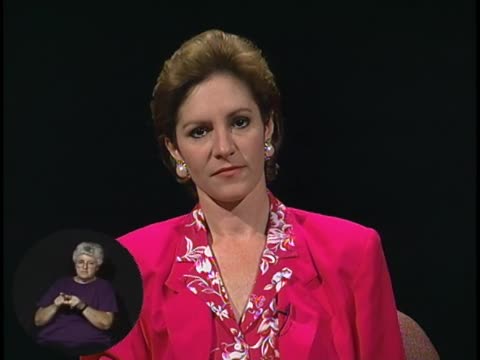
You It's been nearly two years since Congress overwhelmingly passed the Telecommunications Act of 1996 after months of negotiations and political wrangling. Since then, the industry has undergone some dramatic changes. I'm Lynn Waters inviting you to join me when representatives from the Telecommunications industry and the state's consumer advocate discuss those changes and how it's affected the consumer. It's a controversial issue among the providers and an important issue for consumers on
Dialogue Friday at 8 It's been nearly two years since Congress overwhelmingly passed the Telecommunications Act of 1996 after months of negotiations and political wrangling. Since then, the industry has undergone some dramatic changes. I'm Lynn Waters inviting you to join me when representatives from the Telecommunications industry and the state's consumer advocate discuss those changes and how they've affected the consumers. It's a controversial issue among providers and an important one for consumers Dialogue tonight at 8
Dialogue is brought to you by Hawaiian Electric Company, People with a Powerful Good evening and welcome to a Dialogue on Telecommunications. I'm Lynn Waters and if you're like me, the array of choices out there for the consumer who's interested in communicating effectively
and economically can be flat bum fuzzling. Yes, that's really a word. I made it up. But we do have a group of guests in the studio tonight who can tell you how to unravel everything and tell you everything that you could possibly want to know about Telecommunications, how to sort out what you need, what the public interest in this whole topic is, and hopefully answer as many of your questions as we can get to in the next hour. I'd like to introduce first George Irian. He is the Hawaii Director of Consumer Communications Services for AT &T. He has spent nearly 20 years in the Telecommunications industry, mostly with AT &T. His current responsibilities include marketing and promoting the company's services and overseeing public relations and strategic planning. Welcome, George. Rob Volcker is regional vice president and general manager of GST Telecom Hawaii and oversees the company's operations in the Pacific Rim, including Guam in Japan. He's responsible for GST Hawaii Online, which is the state's largest internet provider, Hawaiian Island Fibernet, which is the state's largest fiber optic network, and the rest of GST's extensive Telecommunications
network in the islands. Welcome, Rob. Charles Tato, who goes by Chuck, is the state of Hawaii's consumer advocate. He's also the consumer advocate. He's executive director. As such, he is responsible for making sure these guys do what they say they'll do. He has regulatory oversight in many areas, including telephone utility rate increases, service reliability investigations, and the development of a modern communications infrastructure. And prior to this position, he was an attorney and private practice. Welcome to all of you on dialogue. And I do want to say at this point that we had also invited GTE Hawaiian tells director of public affairs, Dan Smith. He was supposed to join us this evening. However, his flight from Los Angeles has been delayed longer than he had anticipated. We can let you know if he does arrive in time, or if a representative does arrive in time for the second half of the show, we will scoot them in here. But some things technology can even not handle. So we're sorry that they're not able to be here. Before we start unraveling this very bewildering world of telecommunications, we'd like to mention also that Sprint Hawaii and oceanic
communications also were invited to join us this evening. And we of course want to remind our viewers that we are live here on Hawaii Public Television for the next hour. We're also being simulcast on Hawaii Public Radio KIFO 1380 AM. Our sign language interpreter is Loretta McDonald and our phone volunteers who are waiting to test the communication system here in the studio are with the Ask 2000 program and the friends of Hawaii Public Television. We thank them for being here. So if you have a question or comment on tonight's topic, once again, it's telecommunications. The number to call is 973 -1000. And of course, our neighbor Island viewers, you can call us collect at 973 -1000. Gentlemen, I know you all have a lot to talk about, but let's start by talking about the deregulation with the 1996 Telecommunications Act. What does that mean for both of your companies and of course for the public? I'll start with you George with AT &T. We'll go alphabetically tonight, so we'll start with AT &T. Well deregulation is an ongoing process. In fact, it really started much earlier than that back in the 1980s when
the bell system was broken up and there was a deregulation of the long distance business. So as an AT &T person, I've had an experience with this for quite a while now. 1996, I think, is kind of a watershed event in the terms that it has really brought the communications industry and all of the facets of how it's going to move into the 21st century, made it possible to start going down that path. So what it's done is created kind of a whole new world out there in terms of competition, especially, which is very good for when you want to bring innovation and technologies to the marketplace. Rob, would you agree with that? Yeah, Lynn, I would second what George says there. It truly is created. It's open a whole new series of market. It's stimulated a lot of investment here in the state of Hawaii. I know GST, we've invested close to $50 million over the last two years building our own network. And I think what the real beneficiary of all this is going to be is going to be the consumer. They're going to have more choices, more choices in their local
service as well as their long distance service. Wireless providers, you're seeing that out there. You're going to see lower prices. Ideally, that competition is going to translate into lower prices for the consumer. And most importantly, you know, more choice. They'll be able to be able to select and do business with people that they want to do business with based on the merits and the service that's being provided. And the technology is going to continue to improve and just get better and better. Chuck, we're used to shopping for different food brands and different gas brands, but now we can shop for different phone brands basically is what we're looking at, right? That's right. And that raises one of the consumer difficulties. People have to have enough information that is understandable for them to be able to make a wise choice. And that is not always easy to get. First of all, if you look at the array of services that are available, the only services that are really even partially competitive are inter -Island long distance and inter -state long distance and international long distance. That can be very important to businesses. It
can be very important to some residential users, but others who say, you know, I'm tired of paying when I'm paying now for my basic phone service. Don't have an option yet. That brings me back to your original question. What are the potential benefits for consumers under the Telecom Active 96? And there are a number of potential benefits, but we haven't seen those arrive yet. And that's one of the large concerns that I in my office have is to ensure that competition can occur, to encourage it and to foster it. And if it doesn't occur to continue proper regulations, so that company like Hawaiian Telephone is not able to raise rates that are going to hurt customers. When you talk about potential benefits, I'm sure that people who are watching out there want to know, does that mean I'm going to have a lower phone bill? Is that a potential benefit? Possibly, but there are so many variables. And let me just say that if you looked at your Inter -Island long distance phone bill, you'd see that it's gone down because
these folks and other providers have come into the market lowered their rates. They have lower rates than Hawaiian Telephone through their competitive activities. And Hawaiian Telephone has lowered its rates. In fact, rates have gone down about 60 -70%. That's a great boon if you use Inter -Island long distance. But the other shoe is about to drop. And that is what we've seen in the news media in the last few months. And we will see it for the next year or so. Where Hawaiian Telephone wants to raise basic phone service by between 40 and 100 percent depending on which island you live on. So it's like a balloon. If you push or squeeze in one area, it's bound to pop up in another area. And part of the job of the regulators, the Public Utilities Commission in our office, is to ensure that one group of customers doesn't get all the benefits and another group gets all the detriment of competition. One reminder of viewers that we are live, we are talking about telecommunications and what all of this deregulation and increased competition means to you. If you have a question or comment for
any of our guests, the number to call is 973 -1000. Rob and George, what reaction to what Chuck just said? Are we going to see lower phone rates? Just general response, I think, from both of you. Yeah. I think Chuck made a couple of very good points. One is a lot of things are going to be different in the marketplace. Not only affecting just rates because customers make a lot of choices and one of the things we truly believe in, it's going to improve the quality of service for people. You may end up paying the same, but you may be getting a lot more for what you're paying. You may have integrated services now for bundled together for your basic service and benefits in that way. So there's a lot of complexities to it other than just the cost side of it. Also, I think it was also important to realize that the more competitors that do get into the market and it creates jobs for Hawaii, creates alternatives for people, is really better for the whole state of the economy
and the benefits from the consumer then will come out in ways that we haven't even fully realized yet. Lynn, I'd like to say that I think one of probably the most interesting things about competition is we're finally going to see what the true cost of local telephone service really is. For many years, there has been open questions and cross subsidy between the long distance business and the local service business. Just as an example, look at the long distance business. Who would have expected that you'd be able to make a long distance call for under 10 cents a minute virtually anywhere in the country now? It's truly amazing. Prices have come down. You've seen innovation in terms of the packages and the services that are being offered by the providers. I think you're going to see the same thing with local phone service. I'm certain you're going to see incentives to place most of it, if not all of your business with a single provider. I think that's probably one of the first things that people will see that the people that provide your local phone service are also going to want to provide your long distance service in your internet service and your wireless telephone.
I think that's probably going to be one of the first areas that you'll start to see this bundling and this package effect and I think it's going to grow from there. We were talking before the show. It's not just telephone calls. It's buying things over your computer. It's the wireless communications as you talked and so 10, 20 years down the road, we could conceivably get everything that we could possibly want in terms of communication through one company. Is that possible? Well, if you look back 20 years ago, there wasn't much more to the communications industry than a black rotary dial telephone. And they thought they were really opening the market when you had a choice of two or three different colors. So I mean, those of us in the business feel like we've come a long ways, but it's really just the tip of the iceberg now. What with the technology that's available and truly doing away with what they call a natural monopoly and opening it up to competitions, just going to bring so much innovation and really new ways of doing business. And as Rob was alluding to the bundling of services, a provider wanting to be a total provider for a whole array of your communication needs
is a very different environment than we're in today where you have a telephone as an instrument, a computer as an instrument, a TV as an instrument. Five years from now, there's going to be something that pulls all of that together. That's right. I have to ask a purely selfish question here. When you talk about improved service, does that mean those of us who live on the windward side and wet areas when it really, really rains hard or not going to hear crackling on our telephone lines? Well, if you do, you'll probably hopefully, anyway, have an alternative now, if you have that experience. I think you raise a really good practical point, which comes right back to this whole, the regulatory structure and the level of competition. If you're using what we call a reseller for your service, let's say it's Chuck Tato's phone company and you pick it up and you get that crackly over the phone or you can't hear the other party or whatever. Obviously, you're concerned about the service quality and you're going to call up Chuck Tato's phone company. Say, I can't hear anything. Well, it turns out that all I do is repackage GTE services and it's their
line that's causing the crackling. Where does that leave you? Where does that leave me and what is GTE going to do about it? So you start fine. You find out that there are different ways for these folks to come in and compete. GST in particular is doing something called Facilities Base. They're building their own system and AT &T may build their own system. They may do this resale, but because we have this monopoly unit and we're trying to transition to something more competitive, what we're finding is the competitors that have to rely at least in part in a great part usually on GTE Hawaiian tell. And when they do that, then they become saddled with the same problems that Hawaiian tell has. If Hawaiian tell has poor service, unfortunately, a lot of the competitive providers are going to end up providing poor service, and that's not a net gain. So you've made your own infrastructure. Are you making your own infrastructure? You are repackaging the existing infrastructure or are you not sure yet? Well, Chuck is in talking, I believe talking in the context of local service. Local service. And
we are not doing that yet. And it's a good point he makes in the sense that we have very high standards of quality that AT &T delivers two customers. And you're not going to jump into the local business just to get into the business if you're saddled with vendors that don't provide you the level of quality that you have to integrate into the total package. And that's one of the dilemmas and part of the delays of getting there. There's a complex provisioning process, interfaces between different companies, multiple companies in terms of bringing a service literally to the consumer. And quality is a very high priority for us. And so you look at a geographic area in multiple ways. In 1997, AT &T's already invested a billion dollars in local services in different parts of the country. Some areas you are, in fact, we're building out a facility. Other areas you're using new technologies, and in a lot of places you do hybrids of things.
The key is to be able to still provide the level and quality of service to a customer, or you're going to end up losing to the competition anyway. So there's alternative ways of getting into the market. Interesting step. We want to remind our viewers that we are live. If you have a question or a comment on telecommunications, you can call us at 973 -1000. Installation of wireless communications, we haven't really talked about that other than just in passing on the roofs of buildings. Is TST started off originally in the islands as a microwave provider, a microwave network provider. That was our first network prior to us installing our undersea fiber optic cable. And I can tell you that microwave wireless telephones are safe. And they're safe, provided they're properly engineered, and they are. There's safety standards that have to be adhered to. And we have always adhered to those standards as
well as everybody else that's in the business, that's engineering and properly. So we don't have any concerns at all about the safety issue for wireless communications. In fact, what I think you're going to see is George was alluding to is that the natural monopoly that used to be for local telephone service was the two wires that connected your house to the local telephone switching station is rapidly going to be, we believe, superseded by a wireless technology that's going to allow what we call wireless local loop, which will enable people to, for example, people on the windward side to be able to have a small antenna on the roof of their house and get their local telephone service without having any wires from anybody. And that's going to be a tremendous enhancement to the service. And with digital communications now they've got the new digital phones out. You don't hear any static on them or anything like that. It's going to open up a whole raft of options for people that want to go out there and provide local telephone service. I'm going to ask another basic, probably stupid question. But if you have all these
people with all these antennas doing their own wireless communication, are we going to eventually crowd the highways so much that we all hear each other? Or, I mean, is it technically possible to have everybody potentially on a wireless system? Well, the way the technology seems to be going yeah, it's possible. They're not there yet. But with the new phones that are out there, they're using different kinds of what they call this multiplexing techniques, which allow several simultaneous users to share the same frequency. They're getting actually very good at supporting lots of users simultaneously and keeps getting better. Costs come down. And the market forces will dictate that. If it isn't working, people won't buy those kinds of services. So it puts the burden on the provider of the companies to really come up with and use the latest technologies to do that. And it is just around the corner. It's very doable. One of our viewers know that we have had a call from Dan Smith who is our GTE Hawaii and tell representative who unfortunately
through no doing of his own was delayed on the mainland today. He is the director of public affairs for GTE Hawaii and tell. And his very nice wife here played the opening of the show via telling the phone through him. So if anybody has a question for GTE Hawaii and tell, we do have an open phone line to them on the mainland. So we'll see what we can do about getting something answered there. One more question about wireless communication before we leave this topic. Has there been any more research on whether excessive use of a cell phone causes brain cancer from EM waves or any other physical problems? Any further information on that? I don't know. I wouldn't know the answer to that. Okay. I only read what's in the papers also but I'm sure it's one of those things that people have researched thoroughly and the industry surely has got the green light to go forward with that technology. Okay. Collar says I just joined AT &T for local calls. How
would the service differ from GTEs? Other than saving money or in terms of... Well that's one way. You can probably stop there. I assume that the college is probably talking about long distance services then because unfortunately we aren't able to offer the local service yet. I'm assuming then that the differentiation that the customer has is really three areas that we focus on as a company. Our prices are very competitive with all of the carriers. Depending on when and where the customer calls gets back to what check was talking about in the complexity of the business, when and where people call kind of determines what the total bill ends up being, we have pricing plans that if you're an international caller, if you're a domestic caller, to fit people's calling habits that truly are very competitive in fact oftentimes very inexpensive. The other portion of it that is a way of differentiating ourselves that we take probably our highest priority in is really quality of service and having
a local company here or a local office here that can support customers needs. We think it's very important that when a customer does need to get in touch with us, we're available and we can resolve whatever issues they are. And the third is of course the quality of the network. We want to provide good service at a very competitive and or better price and also be able to service our customers here in Hawaii when they have issues. That's what we offer. This caller wants to know why does local television rates, why do local television rates keep increasing and long distance rates keep being lowered? You alluded to this earlier. Local television or local? I'm sorry, local telephone. Oh, okay. Local telephone rate. Well, I'd be happy to talk about cable, but no, we'll stick to one subject here. No, it's it's interesting because George had mentioned earlier about the the history of deregulation, the beginnings in the in the early 80s and so on. A lot of consumer advocates feel that the reason that interstate long distance calls went down is
because the costs were shifted from the long distance business to the local business. And when that occurs, that means the local rate payer pays more on their local rates. What we've seen generally occur is in inter -Island long distance, we've seen those rates go down as I mentioned before, but the phone company has requested rate increases in the past. They just received basically what's about a 12 % rate hike. And that has occurred as a matter of they're adding more and more infrastructure. Millions of dollars worth of plant being added new switches that allow lots of new services and so on. And what happens sometimes, sometimes when you add that equipment, the revenues start flowing in and you don't need to ask for a rate hike. In other times though, you put a lot of equipment in, it costs a lot of money and the revenues, although increasing don't make up enough to pay for that equipment. And that is basically why rates have gone up recently in Hawaii for basic service. But on the other
hand, it's arguable whether the reduction in rates for inter -state long distance have really been actual savings or somewhat slight of hand depending on which pocket you're paying out of, maybe I'll get a rise out of Georgia on that. I know my bill calling the big islands gone down half from what it was two years ago. Certainly on the inner island. Definitely gone down. Okay. Once again, we're alive here. We're talking about telecommunications. The number to call with a question or comment is 973 -1000. Rob, maybe you can take this one for us. This caller says, my friend makes a handsome living by recording telephone conversations. When will the transmission wires be made secure? Not directed at you in particular, but you have put a substantial infrastructure in here. Yeah, I thought it was against a lot of record, those telephone conversations. I don't know if they're talking about wireless conversations. It could very well be the cellular. I mean, it was, I think, several years ago, or at least in the early days of cellular and
up till recently, I know there was a problem where people using a standard UHF tuner could jiggle it in such a way that they could pick up cellular conversations. And maybe that's what the caller is referring to. I know with the digital, with the new digital technology that's out there, it's pretty hard to pick those those up off the air. You have to be somewhat along the lines of a CIA agent or something along those lines have that kind of equipment to be able to to really crack into those kinds of wireless conversations. I would generally say that that the telephone, the telecommunications infrastructure is fairly secure with regards to your conversations going over it, whether you're wireless or a wireline, but you always have to take caution. I mean, you shouldn't be putting information out on a wireless phone, for example, even a cordless telephone that you're not sure who's going to be able to pick it up. Like your credit card number, your credit card number, any personal information that you don't want to be out, you want to kind of safeguard that information. George, anything more to add to that on the security issue?
I know in it has been an issue around on the wireless side and that has greatly improved over in the really just the last few years, but the communications is really something that we use for a lot of different reasons and there's things that you wouldn't want to put over the internet or even out. Probably we have a bigger problem with secure communications with people in an airport verbally giving their credit card number out loud into a pay phone while they're in an airport. So there's security break right there. It's one of those things that keeps getting better, especially on the wireless side because of the technology. We're just improving constantly and that is going to probably be more so the wave of the future and the market will demand that those things get improved upon. And you say it's more difficult to pick up a digital signal than it is, the regular cell phone signal that we're used to here today. Very much so. Yeah, it's much much more difficult than the analog signal would be. Okay,
this caller wants to know why does the telephone company charge extra for touch tone service as opposed to regular ringing or dialing when touch tone is cheaper to provide? It's a good and a fair question and I think that that is something that will probably go away in the next rate case. That extra charge will not be on your bill. You won't see it identified on your bill, but it'll still be in there. The reason that it is identified now is historical because when touch tone first came out, it did cost more to provide. You had to have different electronic switches to do that. And it's really just a historical factor. And now that about 85 % or more of Hoi's folks are able to get their touch tone, it's no longer necessary to single that out. It's just a matter of time before that gets removed from the, erased from the bill. Okay, a question for our GTE representative who unfortunately is not with us. He's on the mainland, but I understand we do have a live phone line with him. If we can get the answer to this, we will give it to you during the show. But the question
is how long before rumors of a cable company by GTE become fact? That's for our GTE. Okay, we'll talk maybe you can take a few months. GTE media or media ventures has purchased Oahu wireless cable. And so in the first quarter of next year, we've heard that. I'm sorry. We've heard that they'll be rolling out a service on Oahu that will, according to people I've talked with, be ubiquitous in the sense that we'll hit everybody. And perhaps that'll give some competition to Oahu and I could cable them. Okay, I understand Mr. Smith is on an open line with us. Is that correct? I am here. I hope that you can hear me. Aloha. Dan, yes, we can hear you terrifically. Thank you. We're glad you can join us if not in person at least by telephone. Did you hear the last question and the response from Mr. Tottle?
Yes, I did. And Chuck is correct. We are targeting the first quarter. We purchased Oahu wireless cable GTE did, and right now we're in the process of upgrading it to a digital wireless system, which will be a high quality and a wide variety of programming. And we are looking at the first quarter right now to begin an aggressive marketing effort for that. Okay, have you been able to listen to most of the show thus far? I heard some of it. My wife was patching me true, listening to it over the television, and then I got the call that we thought that we'd be able to get me on the air. So I missed a good bit of it, but I've heard some so far. Do you have any response from to the discussion that we've had so far? We've been talking about deregulation and how it affects both each of the companies represented here, and of course the consumer as well, and I'd like to give you a chance to respond to that. Well, I would like to respond to that. We're at a point in time where we're abandoning 60 years of regulatory
policy, and not so much abandoning, but evolving. Technology has reached the point where you don't have to have an exclusive franchise for a phone company to make economic sense. That's why exclusive franchises were granted to begin with to keep residential services affordable as possible, a notion known as universal service. The universal service policy set up a system of price supports, where services such as business services or an inter -Island toll and some of the vertical services like call waiting and caller ID are priced well above their cost, and part of that extra cost is used as a price support for the residential local service. And residential local service still today is priced below its actual cost of providing it. At what the PUC recently concluded were
some hearings that would determine how do you introduce competition, get rid of the price supports for those non -basic services, and still keep local residential service affordable. That's a very important public policy issue. I did hear or I thought I heard some comments about the state of the network in Hawaii. I think it is important to realize that Hawaii is a national leader in telecommunications capabilities, and that's basically due to the network modernization program that we've been doing for the last few years. Today, 96 % of our customer lines are served by digital switching, and that's the state of the art. That is one of the highest rates in the nation that puts Hawaii among the top 10 states. And the other thing is not only do we have an
advanced network that will be 100 % digital in less than a year, and only a few states have reached that milestone. It's not only do we have an advanced network in the state, but also 95 % of the households in Hawaii have phone service. And again, that is one of the highest rates in the state. The question that we're dealing with in the introduction of competition is how do you keep high penetration of phone services and keep a modernized network? Dan, I'm going to ask you to stay on the line. Hopefully for the next half hour, if you can, if you're not about to fall asleep up in the lay there. I'll be glad to stay. I appreciate the opportunity. Great. Thank you very much. I'm just going to throw some questions out. This caller wants to know what can consumer protection do to stop slamming or tricking people into changing services? That's a good question. Slamming is unlawful, and it's against federal rules, and it's against the federal law and state law. Now, when it occurs, the basic thing that
regulators need to do is to shift directly into heavy penalties for whoever does the slamming. Penalties that make it unprofitable to slam, because, frankly, I think slamming has occurred and continues to occur. Not so much in Hawaii, but on the mainland, because it's still profitable. They are not ringing enough penalties out of the slamming company. That's the major thing. And the, unfortunately, the consumer is really just a whipsaw in that situation. There's nothing they can do to prevent it. They have to, it has to be a regulator that can actually look at the records and see what's happened. Any other comment from our consumer? I think an ethical long -distance company, which I know that AT &T and GST certainly are, we take steps to ensure that any requests that we get to change service are, in fact, valid that the subscriber that's calling in is authorized to make the change and that the change is carried out in accordance with their wishes. We certainly don't want
anyone as a customer that hasn't requested our service. Yeah. At the federal level, ATT has been very active in working with the federal government in really setting the standards for how customers should be switched. And what are the protective milestones in terms of handling that? Because it's not good for the industry. And like Rob was saying, any legitimate ethical company isn't going to do that to a customer and expect to have a loyal, valued customer for a long duration. And you just don't do that to customers. So the industry is, I think, very sensitive to that. And it's a problem. Yeah, I think we're lucky we haven't seen it in Hawaii. I wonder if I could go back to a comment that Dan had made. Okay, we're going to have to take a break. Can we come to it after the break? Absolutely. That's okay. Dan, don't go away. We're going to take a one -minute break here. And this is a good time for those of you who are watching to interrupt our television service. Take a break and call us if you have a question or comment for our panelists, Tuk -Tuttle, Rob Vocord, George Irion, and Dan, by phone from LA. And we'll be back in just a minute.
What if the past was lost forever? What if we never knew bicycle mechanics could fly? Or that a dreamer could also be king? At PBS, history has never passed hence. It's alive in the stories we tell every day. Tales of courage, heroics, inspiration, helping you find your place in history. If PBS doesn't do, who will? When Hawaii's convention center was rising on the banks of the Alawaii Canal, there were those who complained about traffic jams and the construction noise, and others who worried that this monument to progress might become a white elephant. Well, now that the keys to the place have been turned over to the governor, how will it fare?
Will they be coming by the droves and multitudes to this temple of tourism? That's what the show's about when my colleague Dan Boylan and his guests meet for dialogue, Friday at 8. What makes a great journey? Is it the land you choose to see or the company you choose to keep? The world's a big place, you wouldn't want to see it with just anyone. That's why PBS roams the globe with travelers who share your passion for wandering. Great guides, great roots, and a greater appreciation. If PBS doesn't do it, who will? Welcome back to Dialogue. I'm Lynn Waters and our gracious phone volunteers have been testing our phone system tonight by recording your questions and comments for us. They are with the Ask 2000 program and the Friends of Hawaii Public Television, and we sincerely thank them for giving up their Friday evening to be here on Dialogue. We have been talking about and trying to unravel the wondrous world of telecommunications. Our guests here in the studio, Rob Volker, George Erian, at Consumer Advocate,
Chuck Tato, and by phone, Dan Smith, with GTE Hawaiian Tell. If you have a question or comment for them, the numbers 973 -1000, neighbor island viewers, remember you can call us, collect. Chuck, you had a comment you wanted to make about Dan's original response that we heard a few moments ago. That's right. I'm so glad he found K -H -E -T's L -A studio so that he could connect with us. But Dan raised an interesting point, and it goes right back to one of the first questions. Which was basically, what are the benefits in competition for consumers? Dan's, I should say, the GTE's company line across the nation is that there have been price supports or subsidies, as you heard him say, from business to residential, or inner island to residential, or to high -cost areas and so on. In fact, now that we have to deal with the cost issue, we're finding that that's actually not the case. And
especially in inner island now, where the rates have gone down so much, and the revenues have gone down quite a bit for Hawaiian telephone. I'd like to make just an analogy, because to try to keep this simple. GTE's approach, and unfortunately AT &T's approach, at least in the state of Hawaii, can be explained in this example. Let's assume the four of us decide we want to split an apple. We go buy an apple for a dollar, we split it in fours, we eat it, and then, how should we pay for that? Should we each pay a quarter, or should one of us pay a dollar, and the rest, the other three, go without any payment at all. Be free riders on it. Now, let's move from a simple apple for a dollar to tens of millions of dollars worth to telecommunications equipment, where in the first analogy we had, eat the apple, share the cost. You've got services, inner island service, vertical services, these are the fancy interstate services, local service, that all
use these very expensive networks. Well, should everybody pay for that cost of the network, or should just one party pay. And GTE's approach is with the biggest component of telecommunications cost, is to have basic service, pay for it. That means residential service, and basic business service. Pay for that. Instead of sharing that cost with all the other services that actually use it, and it's a very common sense approach, that if you share and benefit from it, then why aren't you paying for it? And that's the crux, I point to the air, because I think Dan's up in heaven or something, but that's the crux of GTE's whole argument, is they want a free ride. And unfortunately, AT &T and some other long -distance carriers, like that, because what it does is it shifts costs to residential consumers who are basically just using their basic service. And that notion
has been rejected in several state commissions. It's been rejected by Hawaii law, it's been rejected by federal law, and hopefully the commission will find the precedent is there to reject that thought. It is just basically unfair. Okay, I'm going to let Dan respond. Dan, we've got a lot of calls here, so if you can keep your remarks brief, so we can get to some more questions. I will make it brief. There are some states that have chosen the approach of spreading the costs of the local loop, the local loop basically being the wire that runs from the central office switch to a customer's home. That's the local loop, and those are the costs that Chuck says should be spread out over numerous services. And that's the way that we've done it for the past 60 years or so. What's the Telecommunications Act of 1996 explicitly said was, you can no longer share the costs each service should be competitive and pay for itself in its own right, and therefore the competition for each individual service over
time will drive that price down and the quality up. But the Telecommunications Act explicitly says that the price supports that you get from inter -Island and from the vertical services has to be removed. And that's what our proposal is, and it is in line with the Telecom Act and also supported by a decision by the 8th Circuit Court of Appeals. Any response, gentlemen? One comment before we move on. He's wrong. Don't think we can leave it quiet. I might make a quick comment that means that we were lumped in with a whom I tell telephone in that regard. I think AT &T believes that there is an approach because really both are right, and I think there's a way of getting to it. We believe that the unbundled elements should be cost -justified and realized what they are. And once that's done appropriately, and you kind of get away from the smoke and mirrors of subsidies and some of those things, our belief is that maybe those costs are low enough
that in fact all the consumers can benefit from that. It's to take the example that Chuck had in terms of the Apple. It's a good example, but if the Apple in fact doesn't really cost a dollar and only cost 50 cents, maybe there's a way of doing it. The point is that if the Apple really just cost 50 cents and not a dollar, then companies would be going after the residential market. And competitors are not targeting the residential market because the residential rate receives price supports, you can't offer service at what we charge for it and make money unless those costs are allocated elsewhere. That's the basic point, and the competitor's business behavior approves it. They're going after the business market, which pays the subsidies, pays a higher price, and can be targeted, and they're ignoring the residential markets because of economic reasons. Okay, we're going to move on here because we've got several calls actually about back to the practical and the mundane. When will those darn phone lines and cable TV lines be placed underground? On the leeward side, phone lines and TV lines on the ocean side of the road,
blah, blah, blah. Why aren't the existing cables from telephone poles placed underground? Many are sagging and for beautiful Hawaii, it seems so inappropriate. We have this debate in the electric industry also, and the reason is cost. It costs for an electric power line to go underground, which is more expensive than putting a cable or a telephone line underground. It costs about three to five times more to do it that way. So if you do that, it's a choice. It could be done, but the cost will go up. In other words, and then the prices for the pay. Meaning it passed on to the consumer, and that's regardless of whether it's hotel doing it or AT &T or GST. If it costs more, it's going to ultimately get passed on to the customer. Okay, several questions about slamming. Could somebody please explain slamming? We talked about this earlier. Slamming is a problem in Hawaii. I work for Excel and MCI does it to us all the time. Does GTE have any protection for their
customers against slamming? Chuck, would you be the best person to give us the real quick answer? And then Dan, I'll let you respond to the specific question. Sure. Again, we don't hear much about slamming, and maybe it's because there's not slamming in the inter -Island business. Maybe she's, or he or she is referring to the interstate. But basically slamming is when a long -distance provider takes your phone service onto themselves without you're okay. And in fact, in Hawaii, it has to be done by a written authorization. And the reason to do that, the incentive is, if you get 5 ,000 or 20 ,000 people, and you just grab them onto your system and conduct the slamming, and then tell Hawaii and tell, for instance, oh, we've got all these new names. You're going to make money for a while. People may not care to switch over. People may not realize it for months, and people may not do anything about it. And so that's why
companies may be tempted to do such a thing. Dan, any protection for GTE customers against that? A couple of things. One of the most important things right off the bat is that customers every month should check their bill and double -check who their carrier is. And just in general, it's a good idea to always check your bill and read it carefully. But if a customer feels that they have been slammed, that their long -distance carrier was changed without authorization, we do encourage them to call into the residential service office or the business office. And we will work with that customer and make sure that the customer is not harmed. And we'll take it back either to the offending carrier or even higher if necessary. Lynn, there's actually an even easier way than calling GTE to check who your long -distance carrier, and that's styling 1 -700 -555 -4141. And 4141 -1212. I think it's 4141. And you'll get a recording at least for whoever your interstate long -distance carrier is.
That will generally give you a recording that'll say thank you for using GST or thank you for using AT &T. Whomever your carrier or pre -subscribe to. Okay. What's to prevent other phone companies from doing barnstorming, getting together to, I can't read this word, something phone rates. I'm sorry, I can't read the word. Well, that begs the question. If all of you are together, you're competing, but yet you talk about one company having monopoly, can several companies have a monopoly? Do you folks communicate with each other? Do you share information? I could do Opily or a monopsony, I guess. No. No, I mean, we collaborate professionally. I mean, there has to be a certain amount of communication between the companies for interconnection, you know, making sure that our networks work seamlessly together. We collaborate on a technical level,
on a sales and marketing level, absolutely not. We all have our separate directions, we all have our separate focuses, and we all have different cost structures. That's one reason you have regulators. If that were to occur, you want to have an impartial public agency taking a look at it to say, wait, we've got these folks, the prices have been the same within my new amounts for years, what's happening, what happened to the technical, you know, the cost reductions, because of new technology and so on. And I think people in Hawaii are acutely sensitive to this, we have two of too many companies, we've got two oil refineries, we've got two shipping or rather ocean carriers, we've got two inner island carriers and so on, inner island air carriers and so on. And I think that people are very sensitive to the fact that those in those industries, there's not much competitive benefit. You don't see prices going down here for gasoline when they're going down in the mainland
and so on. And I'm not suggesting it should be the same. But I think that consumers and regulators would be very sensitive to that type of thing. I agree with that. And also another thing that will work against any collusion to harm consumers is the sheer number of telecommunications companies, excuse me, in Hawaii, today approximately 120 different companies are authorized by the PUC to provide different kinds of service. There are at least four companies authorized to provide local service that have the necessary interconnection agreements with GT, Hawaii and Tell. Just the sheer number of vested business interests will ensure that that kind of collusion doesn't take place. But I believe that was Chuck and he's exactly right that they're even in a competitive market. There continues to be a role for regulators to ensure that the consumer is protected and that competition doesn't just benefit the competitors. This caller says first comment for AT &T. Thank you AT &T for your help in preventing an unauthorized person from getting a
calling card using this caller's number. And follow up just AT &T or any of the companies for that matter have a system to prevent this from happening. What can the consumer do to prevent it or even find out about it happening? Using calling card fraud for example. We have several mechanisms in place to to prevent calling fraud. Anyone that's been abused by calling fraud it's not usually just somebody making a few phone calls. Literally thousands of dollars can be run up and quickly. And it's a nightmare for the consumer when something like that happens. We do a lot of network monitoring to literally monitor changes, dramatic changes in behavior of calling patterns from a calling card number for example. So that all of a sudden if someone's card who has a traditional usage pattern is all of a sudden making thousands of dollars of calls to South America that's usually an alert to us that we could stop a card in literally in real time from being abused. So there's several mechanisms in place to not only protect the consumer but
it also protects the company from the problems of those kinds of abuses. Rob GST have something? Absolutely we do much the same thing that George mentioned. We're constantly monitoring the usage on our cards. If we see an abnormal pattern occurring we generally want to talk to the subscriber to find out just what's going on. Maybe they're on a trip. Maybe it's something harmless or maybe someone has gotten ahold of their card. Okay Dan what about you? It's similar to the electronic monitoring of the phone usage, the patterns. It's typical in the industry now. We've watched in particular for certain countries that tend to be the destination for phone fraud and we do work proactively with our customers when we notice unusual activity is to ensure that it is legitimate. Consumers do also have a role if you're using your phone card in an airport try and make sure that no one can see you dialing the number.
That's one of the prime ways that the con artist gets your number is at airports or other busy payphones and the other thing that the consumer can do as I mentioned earlier is watch your bill. So in addition to the things that we're doing proactively on our side if the consumer keeps an eye out then we can cut down on this dramatically. Okay this caller from Maui says long distance USA slammed me three weeks ago for your information and this caller wants to know do you have to pay a bill that is a slam change? Once again a slam change is when a long distance company arbitrarily transfers you without your permission to their service. So what happens if that does occur what recourse do you have to not pay a bill from that company? I think the consumer would be why is not to pay it and to object to it and to then and I don't have a phone number at my fingertip but and then get in touch with the federal communications commission and they do have a specific number you can dial
to record slamming complaints and that's what I would do I wouldn't pay the bill and I would just and I would notify that carrier and then I would as dandard mentioned I would talk to my original carrier and say look what happened to me because they have you know quite a bit of muscle deflects the original carrier and let them carry some of that burden too right I would encourage that customer to call I don't know how it's listed in the phone book it may be action line or the consumer affairs office or customer relations but certainly we have an office that deals with this and works with the customers to make sure that they don't have any long -term harm okay next quite this is an interesting question are incoming overseas calls to the U .S. monitored by NSA which I assume is the national security agency everybody know the answer to that well I only work in a little state agency I don't about the big government and what it does you don't monitor incoming international calls okay Dan a question for you since GTE moved
support staff to the mainland it has adversely impacted immediate service here and this is from a broadcast industry engineer do you have any response to that if I do we have consolidated some of our staff functions to the mainland but it's important to remember that we still have approximately 3000 employees in Hawaii it is a major regional headquarters for us some of those staff consolidations occurred as part of GTE's long -term effort to get in shape for competition shifting from being an exclusive provider to a competitive provider some of those initial forays did have some problems we recognize that but it is all part of a long -term effort to become more efficient and better able to serve the customer with the quality of service and our service levels are improving I think the
many of the things that we've been through painful as they were over the last few years are starting those to pay off and the the results show that but if a customer has a comment we'd be very glad to hear it that's one of the ways that we ensure that we're doing things the way customers like to be treated okay this caller wants to know what is the point of running fiber optic to the curve when houses are all coaxial will this affect computer compatibility of our lives you can answer that well basically what you do is you run fiber optics typically the arrangement now is you run fiber optics it would note in the neighborhood and then you use coax cable mainly because the electronics are a lot less expensive that are used on coax rather than the optical electronics that strictly work using light pulses so what you want to try to do is is try to get the best of both worlds where you can use the high capacity the fiber optic to serve many
many homes in the neighborhood but ultimately I do believe that we're going to see fiber to the home and I think we're going to see a whole myriad of services come over it okay quickly because we only have a couple of minutes left for GTE and GST are you worried about competition from the new LMDS wireless broadband technology that is coming next year 30 seconds Rob I hope we can use it frankly we we have a wireless license here in Hawaii and we're looking to expand a net verb build a network based on that technology we're real excited about the possibilities we think it's going to open up the market typically one of the things that you've seen is we're a facility based provider we're building our own network and people that are last to come into the market oftentimes have the advantage of using the latest technology and that's what we've trying to do as we build our network down you worried about the LMDS wireless broadband technology I think there's plenty of room in the market and that's one of the bright spots for Hawaii I read the story in USA
today which was a little bit negative about Hawaii and I wish people could see telecommunications is one of the bright spots and as competitors come into the market they expand the capabilities that's what we're interested in is expanding the market not trying to limit it it bodes well for all of Hawaii a competition makes us better it certainly has made us better and I say let's get on with it George how about you any response to that to the LMDS we've looked at LMDS also it's just going to be one of the new technologies to be able to help be integrated into your array of services that you're going to be providing so it's just another piece of the puzzle okay Chuck any other thoughts to add to that okay well believe it or not it's almost time to disconnect down I want to thank you for making the effort to call us and we're really sorry that you couldn't be here in person but we do appreciate you staying at what is it about 12 30 over there or 12 o 'clock it's pushing midnight but I wouldn't admit it for the world well you can go to sleep now Dan go to sleep
we appreciate you being here and of course to our other guests it is time to disconnect from telephones to cell phones we've hopefully unraveled and hopefully connected a lot of lines this evening and of course hopefully communicated effectively and economically the array of choices offered to you the consumer and of course should you choose to communicate with dialogue by email our address is dialogue at chet .pbs .org once again thanks to the telecommunication industries George Irian Dan Smith Rob Volker and consumer advocate Chuck Toddle and of course Mahalo to the Ask 2000 program and the Friends of Hawaii Public Television for their time and to our KIF listeners and of course to you for watching next week my colleague Dan Boylin and his guests will give us the latest rundown in the convention center until then I'm Lynn Waters wishing you a very good weekend from dialogue good night you dialogue is
brought to you by hawaiian electric company people with a powerful commitment
- Series
- Dialog
- Producing Organization
- KHET
- Contributing Organization
- PBS Hawaii (Honolulu, Hawaii)
- 'Ulu'ulu: The Henry Ku'ualoha Guigni Moving Image Archive of Hawai'i (Kapolei, Hawaii)
- AAPB ID
- cpb-aacip-225-87pnw5w9
If you have more information about this item than what is given here, or if you have concerns about this record, we want to know! Contact us, indicating the AAPB ID (cpb-aacip-225-87pnw5w9).
- Description
- Episode Description
- Moderator: Lynne Waters. Panelists: George Irion, AT&T's Director of Consumer Communications Services; Dan Smith, GTE Hawaiian Tel Director of Public Affairs; Charles Totto, Executive Director, Division of Consumer Advocacy; Robert Volker, GST Regional Vice-President & General Manager.
- Copyright Date
- 1997
- Asset type
- Episode
- Media type
- Moving Image
- Duration
- 01:02:41:03
- Credits
-
-
Producing Organization: KHET
- AAPB Contributor Holdings
-
PBS Hawaii (KHET)
Identifier: cpb-aacip-636415e368b (Filename)
Format: Betacam: SP
Generation: Master
Duration: 00:59:12
-
'Ulu'ulu: The Henry Ku'ualoha Guigni Moving Image Archive of Hawai'i
Identifier: cpb-aacip-ebab1a354dc (Filename)
Format: Betacam: SP
If you have a copy of this asset and would like us to add it to our catalog, please contact us.
- Citations
- Chicago: “Dialog; Telecommunications: Unravelling the Industry,” 1997, PBS Hawaii, 'Ulu'ulu: The Henry Ku'ualoha Guigni Moving Image Archive of Hawai'i, American Archive of Public Broadcasting (GBH and the Library of Congress), Boston, MA and Washington, DC, accessed March 17, 2026, http://americanarchive.org/catalog/cpb-aacip-225-87pnw5w9.
- MLA: “Dialog; Telecommunications: Unravelling the Industry.” 1997. PBS Hawaii, 'Ulu'ulu: The Henry Ku'ualoha Guigni Moving Image Archive of Hawai'i, American Archive of Public Broadcasting (GBH and the Library of Congress), Boston, MA and Washington, DC. Web. March 17, 2026. <http://americanarchive.org/catalog/cpb-aacip-225-87pnw5w9>.
- APA: Dialog; Telecommunications: Unravelling the Industry. Boston, MA: PBS Hawaii, 'Ulu'ulu: The Henry Ku'ualoha Guigni Moving Image Archive of Hawai'i, American Archive of Public Broadcasting (GBH and the Library of Congress), Boston, MA and Washington, DC. Retrieved from http://americanarchive.org/catalog/cpb-aacip-225-87pnw5w9