Dialog; Where the Water Flows
- Transcript
How does one decide where the water flows and how many gallons will go there? It's an issue that concerns many Oahu residents, especially those who live on the leeward and windward side of the island. Both sides are clamoring for more and they want more water. I'm Lynn Waters inviting you to join me for a dialogue on the distribution of this precious resource and to find out more about where the water flows. Friday night at 8, here on Hawaii Public Television. How does one decide where the water flows and how many gallons will go where? It's an issue that concerns many Oahu residents, especially those who live on the leeward and windward sides of the island. Both sides are clamoring for and want more water. I'm Lynn Waters inviting you to join me for a dialogue on the distribution of this
precious resource and to find out more about where the water flows. Tonight at 8, here on Hawaii Public Television. I'm Lynn Waters inviting you to join me for a dialogue on the distribution of this precious
resource and to find out more about where the water flows and to find out more about where the water flows and to find out more about where the water flows and to find out more about where the water flows and to find out more about where the water flows and to find out more about where the water flows and to find out more about where the water flows and to find out more about where the water flows and to find out more about where the water flows and to find out more about where the water flows and to find out more about where the water flows and to find out more about where the water flows and to find out more about where the water flows and to find out more about where the water flows. Dialogue is brought to you by Hawaiian Electric Company, People with a Powerful Commitment. Good evening and welcome to Dialogue. I'm Lynn Waters. For those of you
who might be wondering what all the fuss has been about on the leeward and windward sides of Oahu lately, well the answer is water and there's a lot of concern about how this precious resource is being distributed. In the draft last month, the State Water Commission proposed that the windward and leeward sides of Oahu continue to share the 27 million gallons of groundwater that flow through the Waiholy ditch system. And while both sides praise the State Commission on water resource management for recognizing the importance of protecting windward streams and Hawaiian cultural practices, each side still wanted more water. And here to talk about the Commission's proposed decision and to discuss why each side is vying for more than their proposed share of the water, we'd like to welcome our guest this evening. William Petty Jr. is a trustee for the Mark A. Robinson Trusts and also a leeward Oahu landowner. He is chairman of LEARF, the Land Use Research Foundation, and he is a former chairman of both the Hawaii State Water Commission and the Department of Land and Natural Resources. John Rapun is a part -time tarot farmer. He has been a full -time windward
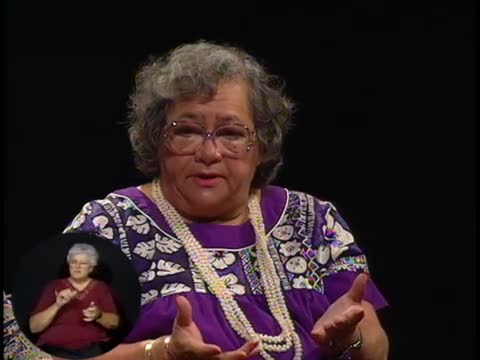
tarot farmer for at least 10 years along with his brothers Paul and Charlie, and has been involved with the Waiholy water issues for many more years beyond that. John divides his time between farming and community work for a nonprofit organization. Kenau Boyd -Kamali -E is a former State Representative and the first female minority leader to serve in the House of Representatives. She was also President Reagan's appointee to chair the nation's Native Hawaiian Study Commission. While a trustee at large at the Office of Hawaiian Affairs, she chaired the Land and Sovereignty Committee, which dealt with the Waiholy ditch water issue, and an environmental advocate of environmental issues in the public interest. Paul Atchitov is the managing attorney for the mid -Pacific Office of Earth Justice Legal Defense Fund. He represents the windward farmers and their community, and also the Native Hawaiian groups who are involved in the Waiholy water issue. And we'll look to you to clarify a little bit later some of the many parties involved in this issue. It is a complex one. And we also want to mention that we did invite the Department of Land and Natural Resources Chairman Mike Wilson
to be with us this evening. He declined along with his deputy Ray Lui. We also asked if a representative from the water commission could be here and no dice. But we're happy that the four of you are. And we'd like to welcome all of you to dialogue. Thank you for being here and to remind our viewers that we are live here on Hawaii Public Television. We're also being Simon Caston, Hawaii Public Radio, KIFO 1380 AM, and our interpreter for the hearing impaired this evening is Loretta McDonald. Our very important phone volunteers who are waiting to take your calls are members of the professional secretaries International Oahu Chapter. We thank them for giving up their Friday evening. So they're ready to hear from you. If you have a question or a comment on the water issue for our guests, please call us at 973 -1000. Neighbor Island viewers, remember you can call us, collect at the same number 973 -1000. I'd like to start off by just going around the table and getting your response to the original draft report, which said that leeward landowners would get 10 .24 million gallons per day and
winward landowners 16 .76 million per day. Is this enough? Bill Pady? Well, before I get into that, let me say that I was chairman of the water commission for six years. And we had some tough cases, but I don't think at any time we ever envisioned getting into the bar was something like this. This is one of the most significant cases in history of the state. And the water commission people were really put to the test to hear the hearings on and get all the evidence. We went on for almost a year and a half on this and a half a year before and after that. It was just volumes of evidence about how many witnesses we have. 150, it was just tremendous input on the thing. And so my hats off to them for the decision because just coming up was a monumental task. However, having said that, I can't say that I'm totally in accord with the decision. I think from our standpoint, representing you might say the leeward side and the farming interest was
the uncertainty of the whole decision with respect to whether or not farming and diversity of agriculture can go ahead on the leeward side. I say that because, first of all, they said, well, we asked for 3 ,500 gallons per acre per day, which is what our farmers said they needed in order to adequately assure that they could keep their crops going and maintain their schedules. The water commission came back and said, well, we looked you over but we think that because you're just starting and because we don't have all the evidence together what you need and we're not quite sure. I think you could do get by with 2 ,500 gallons per acre per day. I mean, they might have said 3 ,000 but no, they cut down a whole thousand to begin with. So they made it to the decided that they were going to pull us down on that. Then they went on to say, well, we are going to allocate to 9 .1 million gallons, just for agriculture, to 10 .2 overall for the leeward side. So they said, we'll allocate you on the basis of your acreage that comes
out to about 9 .1 million gallons a day. But they said, however, we know they're ditch losses. You know, there's a 25 mile one holy ditch system and there's leakage, there's evaporation, water just gets away. The water supply allows for 10 percent, for example, in all their calculations. So that's about 2 million gallons if you take roughly the amount of ditch flow at 25 to 30 million gallons. And so they didn't allow for that. They said, you eat the ditch losses. So in effect, what we're looking at, it's not 9 million gallons, we're looking something close to the 7 million gallons. So already, we're down, we take us down from 35 to 25 hundred. And they move out and say, you eat the ditch loss. So already we begin to scramble a little bit on the situation. Then they go on to say, well, however, we're going to provide an agriculture reserve for you. Don't worry, we're going to provide an agriculture reserve with 3 .2 million gallons. We're going to put that up there. So at such time, as you feel, you can justify that you need more water. You come
back and knock on the door and we'll allocate you presuming more money. I'm more of a cost of money, but more water. But the part of it is they say, well, if you do that, you have to justify why you need it. And my good friend Paul here and John and Charlie and the rest of them in the winter say, you know, very well. Be not going to sit still and say, okay, whatever you think you want, ability to go ahead and take. They're going to put us through the hurdles. So we've got a process, a jump some hurdles, probably get attorneys. And it'll in the long run, it'll cost. All right. Then they say, can I assume that you didn't agree with the draft report? I just want me a one more, one more minute, one more minute. And then they say, we're going to have some committees. And they're going to be technical committees and they're going to take a look at how you operate. And how the thing evaluates and how you pay for this monitoring of it. So there's another cost. So our farm is going to take you saying, wow. How are we going to manage to keep a water cost where they are?
In addition to that, they had this public cost doctrine, but through winter, I'm sure that'll be a subject of discussion, which is a major, major concern on a part of everybody as far as the decision is concerned. So yes, you're right. Then we are disturbed by it. We're disturbed by the incinity or particularly disturbed by this concept of public trust doctrine. And also we're disturbed about the impact on the white holy ditch itself, whether it can keep going with the amount of water that's been allocated. John and Paul, you're on the opposite sides of the table tonight. And I presume on the opposite sides of the fence on this matter, your comments. Well, Bill talks about squirming and it's nice to see some squirming, finally. You know, when this water was taken 80 years ago, there were no environmental impact statements at the time. And no one was looking at the importance of the stream. And I think what's significant about this decision, which we're all not comfortable with. But I think what's most significant about this decision is it's the
first time that anyone has looked at stream restoration. And it's about time. This water has flowed in the white holy ditch. 99 % of it was water that flowed to winter streams before it was taken. And finally, we're talking about whether it's a good idea to dewater streams, whether it's a good idea to take water away from that freshwater saltwater mixing zone, the estuary. And finally, we're starting to look at some balances here. We've got leeward farming as one potential land use. And in this case is more like a land banking for eventual urban uses, the short -term leases that are out there, and the clauses that allow for pulling those leases back or evidence at that. On the other side, you've got kind of a bay fishery that has never been given the respect that ought to have been given, and is very important to all of us. So, Bill has brought up things like the public trust doctrine. Even if there were
nobody on the other side of the island, on the winter side of the island, it's about time somebody looked out for those environmental interests. And that's why we're being represented by earth justice. We're talking about water, specifically the allocation of water between the leeward and windward sides. If you have a question or comment for our panel, please call us. We're live here at public television, the numbers 973 -1000. Paul, what would you add to what John just said? Well, I'd like to point out a couple of things taking off from what Bill said earlier. I thought it was telling that one of the first things that Bill said was that he was representing, I think the words that you used, Bill, were the farming interests on the leeward side. I don't look at it that way, and I, you know, with all due respect Bill, you're not a farmer. You are trustee for the Robinson estate, which is a landowner, and it's in business to make money for its beneficiaries. And most of the parties to this proceeding that are seeking to use water from the White Holy
Ditch, they're not farmers, they're landowners. We're talking about Bishop of State, we're talking about the Campbell of State, Robinson of State. We're talking about developers of golf courses. So when we talk about farmers, you know, the farmers on the leeward side are really pawns in a game that's being played by landowners, owners of thousands of acres on the leeward side that are trying to get the water from the ditch for short term agricultural use. And by short term, I mean it could be five years, it could be ten years, it could be fifteen years, but we're not talking about agriculture for decades. We're talking about agriculture for a few years, and I think most people take for granted that, whether it's ten years or twelve years or fifteen years, those landowners are going to try to
maximize the value of those lands by developing them, and they'd like to have that supply of White Holy Ditch water flowing there for that development. So when we talk about farmers, John's a farmer, John's brothers are farmers, other clients of ours are farmers on the leeward side, and they depend on the water from the streams for their farms. They have no other source of water for their farms. On the leeward side, we have farmers who have been put on the land under short term leases by the landowners as a use for this water to keep it there, and if the landowners have another use for their land such as development, these leases expressly provide that they can kick these farmers off tomorrow. And the farmers have to support this effort, they can't even oppose it. So I really take issue with the idea that this is an attempt to get water for farmers on the leeward side, and that there's some folks on the windward side who just want water for streams,
whatever that means. It just isn't the case. Let me give Bill a chance to respond and then move on to keynote. Paul, I thought we were going to talk about the draft decision. All I heard you say was that you're concerned about the fact that we've got farmers on the land that I'm not a farmer. Our land's out there in Kunia, the Robinson land, for example, about 2 ,000 acres. We got leases over 15 years. 15 years ago, I think George Yarrow issue was still governor, and you can't predict the future. The lands are now zone prime mag lands, the ever development plan just passed. Those lands are there, and I think it's going to be very, very difficult for a landowner to come in, given the development maps they have, and say, hey, I want to develop something. Our farmers have put thousands and actually millions of dollars in some cases into the infrastructure, committing long term for these things. They're doing a job that taking product out of the
land, moving it into the marketplace, and keeping the California product from coming in and taking it over. They're doing a job. And I'd like to like to hear what you have to say about the draft decision itself, and not what the landowners are doing, and not doing, and leave it alone. Before we get to that, let me just remind our viewers that we are live. The numbers 9731 ,000, if I was worried about being able to fill up an hour, I'm not worried anymore. But I would like to ask Kenau Kamali, what was the role of the Office of Hawaiian Affairs in this issue? Well, as the chair of the Land and Sovereign Committee, our purview at that time was to oversee the water issues, not only on Oahu, but throughout the state. And we interacted with all of the agencies as far as the legislatures concerned, and the commission, and the which should have been an authority. But we intervened, and because we wanted a reservation of 11 .1MGD for the future, we looked to
the settling of the land claims and the seated lands on the one -word side that should be developed into the Louise and the Tower. We're also looking at the non -seated lands on the one -word side in the future, like the return of Kahana Valley. There was much legislation. Many pieces that were introduced into the House and the Senate regarding Kahana Valley. And I think it's the future of Hawaii that we at Oahu needs to be concerned with. It is not the leeward versus the one -word. That's not the case. What we were all so very concerned with was an interesting flow, so that our traditional and customary rights could come back. I mean, the White Holy Stream was dried out for over
70 years, and to see that water come back, and the heat if I come back and the O 'opi was very exciting for me personally to see that water returned. It should never go dry again in the White Holy Stream. It's just one stream on the one -word side that we must look at for the future. The future of Hawaii relies in the customary and traditional rights of Hawaiians which then moves on to all the people of Hawaii. And I think this is something that we forget in these arguments of which mine is yours. And the public trust doctrine to me is very important because the state they are the trustees of this very large public trust. And if we're going to start looking at private trust as to what they do in their fiduciary responsibilities, then let me suggest that we start looking at the fiduciary responsibility of the trustees which is the governor and the state of Hawaii as it
pertains to all the people of Hawai 'i. And in my opinion, they're sitting on an edge of a breach of trust as it relates to the water and the land for the state of Hawaii. We are getting a lot of calls on this issue. I'd like to ask each of the guests if you could keep your comments brief and we'll try to get to as many questions as we can. Once again, the number to call is 973 -1000. This caller wants to know why doesn't the city and county use the 70 million gallons of sewage from San Island treatment plant, treat it, and use it for the farmers? Is that a realistic proposal? Can anybody address that for us? I'll take a step, Matt. I'll jump in. Okay. The water at San Island right now is probably not suitable for irrigation, as we sit here today. It would need to be further treated. However, it's a very good question that the viewer asks because in most places that have
water problems on the mainland or in other countries, they are far ahead of Hawai 'i in their reuse of effluent. And in California, for example, it would be unheard of to be dumping 70 million gallons a day or any amount of water into the ocean after treating it and then draining water from streams so that you can use it a few miles away for irrigation. Reclaimed water from sewage treatment plants is routinely used in many places on the mainland for irrigation for the very uses that Hawai 'i -ditch water is being used for. And there is a lot of opposition to that coming from the Leeward landowners. And in my view, it's very clear that the opposition is not based on science. It's not based on economics. It is based on the fact that they would prefer to have Hawai 'i -ditch water so that that water will continue to flow to their lands for when they want to develop it. They're not interested in using reclaimed
water because they don't feel they can use that for development. Well, I don't think there's any question. We're going to run out of water, according to Water Commission in the year 2020, 4 to 19 million gallons of sustainable yield of the whole Pearl Harbor aquifer. They're looking to have another half a million people here by that period of time and you have to use reclaimed water. And we've never had any time so we're not ready to use it. Our persistence comes in from the fact that Honolulu Leeward, they're going to do the treatment. It was down there in the flats. Everybody knows where that is down there in the Waipahu area. And they're talking about maybe treating 12 million gallons before too long. You have to take that water and move it up Mauka to three miles up to where at least where we are. By the time you get a pump that moves it up there, you probably can't afford it because of the cost of power. Secondly, you get it up there and the Department of Health comes in and says, wait a minute, you can't put that kind
of treated stuff on our right on top of a rocker for our Ramasal ancestry. It's right at the right of Fort. If you will, the Waipahu, Waipahu, Waipahu, Waipahu, Waipahu aquifer. And if they say, okay, okay, we will use it. We have to use it and we tend to use it, but we have to be assured that it's permissible and the cost reasonable. This caller wants to know why not decolonization? I think a real simple answer to that is that that seems to be fairly expensive to do at this point. But other part of the answer to that question is why not look at all of the alternatives. I think an essential issue here is that we do have these stewardship responsibilities that Gennaro mentioned. We have public trust responsibilities. We can't run away from those. We can't divide up and be different parties. We live in an island. We have the responsibility and the water code code very clearly states that we should be looking at the alternative sources that are available.
And as this decision gets made, the requirement of water code is to restore streams were practicable. And today in 1997, we should have more than ditch tunnels to work with. We have effluent reuse. It's going to be a combination of a lot of different sources. But I do think that there is, we are moving forward for decolonization. I think a couple of days development is required now to put that kind of system in. And that's the future. But you know, it's more than just a water issue. As we talk about this, it's a people issue. And here's a chance for all of us, the leaders of this state, to come together and decide what the future of Hawaii is going to be. Are we going to follow the same plans that have gotten us in this mess to begin with? Or are we going to sit down and really, and I think that's been the problem. The planning for the state
of Hawaii has just gone dormant. And it's time that we begin to plan correctly for the future and part of the planning. Of course, it's water. But it's also land and what you do with it and how it affects the people of this state. And those are the things that we need to consider as we move forward. This color along those very same lines wants to know, does the leeward side really need the water as planned? Since no one is moving into all those new houses on the Evo plane. I think they're just not going to take any chances. Their attitude is that they can get the water and hold onto it. Someday, they're going to be glad they have it. If not tomorrow, if not in five years, then in ten or fifteen years. I'd like to raise one point. While we're talking about alternative water sources, one of the important sources of alternative irrigation water that has often been overlooked is there's a tremendous amount of groundwater in the Pearl Harbor aquifer that was used for decades to irrigate the sugar plantations that are no longer there.
Since a Wahoo sugar went out of production, that water has just been unused. It's in the Pearl Harbor aquifer, Campbell Estate, and Wahoo's irrigation company continue to have permits to use that water for agriculture. Campbell Estate alone, I believe, has 32 million gallons a day of permits for that groundwater and they're not using it. Instead, they're taking water from windward streams to irrigate over their own lands, but they won't use the groundwater under their lands. Why not? They're not using it for anything else. They have no use for it over the next ten or fifteen years, which is the term of the lease that the agricultural lease is on their lands. They're basically playing dog in the manger with that water that they've been allocated and they're saying, well, we don't want to use that for irrigation. We don't want to. They say it's too expensive, but that's not what the evidence shows. It's asked Bill Payne answer that question. Again, it's a question of, you want to use
good, potable water that should be used for domestic purposes, and you know it's going to be used to pump to for agricultural uses. The aquifer is now being stressed already because of the salt intrusion. The camp rock is being degraded by reason the fact there's no overall irrigation there. The water water supply is the one that controls it, and they just don't arbitrarily say we're going to take this water, and according to water commission, and move it up and pump it marker. You just increase the cost. You can tell the farmer, okay, you can have the water, but now instead of thirty -five cents from water that's coming over, when twenty million gallons is already going over the weed side, we want to go ahead and pump some. It just doesn't make common sense to use it. You're telling a farmer he's going to have to pay more for his source when he could use available water that has been used to productively farm these lands for
perit years. I think a bigger problem if you really want to support farming, get rid of the middle people. You have lands being leased, and sub leased, and sub leased, and sub leased. By the time that land gets to the farmer, and I support those farmers being on that land, I want to see farming happen on the leeward side. By the time it gets to those farmers, they're paying way too much for their leases. If they were leasing directly from these estates, they could afford to pay a lot more for water, and still be paying less than they're paying right now. I think that's a big problem. The commitment that needs to be made to agriculture has a lot to do with putting in the infrastructure for the long term that will supply these alternative sources to that land. I think that the biggest states are afraid to commit that infrastructure. They're waiting. You've had a lot of different hats on. You have this fiduciary responsibility as Robinson State, but just came off of having the public trust responsibilities of being ahead of the Water Commission and
DLNR. How do you see a win -win situation out there? Do you think that we can do all of these things? What if you were to be ahead of the Water Commission again? How would you handle that public trust responsibility? At one last thought here, you were complaining about how the water has been divvied up in this decision, but when an interim stream flow was set under your rain in the state, we got about 2 million gallons. We got what was left, and there was no consideration for what a stream needs, and yet that was in the code. Don't you think that we are now making progress towards taking care of the essential environmental needs upon which other economies like fisheries and so on are independent? It's just triggered a thought when Donna mentioned the code. No, the water code, I was in the legislature when we worked on the present water code.
And here again, government has a way of slipping and sliding through these very important issues. They commissioned Fred Trotter to chair the commission to go around and get comments and come up with amendments to this water code because it was silent and it was causing this disruption. They worked extremely hard over two years going throughout the state. They came up with what they thought was the correct wording for the water code. And because of the hierarchy in this suggestion that number one, the state is not following the state constitution as it relates to water and the Native Hawaiians. They said that the Native Hawaiians, plus Hawaiian homes, were number one on the top of that hierarchy column. What happened to that report? What, right? In the garbage can. Now we have the commission, and nobody
is looking at these things that have already been done and studied. But there's another thing I need to clarify here, and we talk about the leeward side. Let me just make a point that this water that comes from in the ditch does not go all across the leeward coast. It ends in Kunea. So we have farmers in Nanakuli, we have farmers in Wainai, we have farmers in other areas that do not have a part of this water. And so we must be very careful as to what happens with the subsidies, which I see coming because of the governor's remarks about he wants all the water to go to the leeward side, that that subsidy stops where it stops at Kunea. It doesn't even come across to the windward side. So there's a lot to be discussed as to what the cost is and where the water flows. Can I
get back to John for a second? Yeah, John, you know, originally when we set that on the water come and set it up while our sugar was still going full blast, and they had to pull all the water up. Once they stopped, we had a whole new ballgame. And I would have sat down with you and said, John, between you and me and Charlie and some of the rest, what can we do? I'd have conceded six million gallons to your diss like that. I felt the water should go to the leeward side as part of the stream restoration and I support it. But at the same time, I don't think there was any justification for six, any more than ten. Some water had to go over there. The point is that right now with the reserves, with the buffer, with the waters coming from Kohana, the 20 million gallons going over there, and probably continue that for a long time. We've got ten coming down to our side and taking the dish losses as well. And I think it has to be a balance in there so the farmers have some assurance that when they need some water, they go back and have a chance. That's all I'm trying to say. We're going to have to take a quick break, I'm sorry. We will be back in just
a moment. This is probably a good time for you to call us if you have a question or comment, although I promise I'm going to get to more questions in the second half because I've only asked three and I'm going to get a scolding from the producer. So we'll be right back with Bill Pady, John Rapun, keynote old boy Kamali and Paul Atchitoff. Music Commemorating 25 years of broadcasting excellence. Join us this week as we present another treasure from the archives of Hawaii Public Television. You know what? We want this fair pay and safety. And be recognized from here on forward as the Elon Long Showman's Association. All staying favor, say aye. Aye. Celebrate 25 in retrospect, Saturday night at 7. Coming in September. Let us be
your guide. To the world around you. Where masterpieces are revealed. And the past comes alive. The performance comes to your house only on PBS. Welcome back to the second half of dialogue. I'm Lynn Waters. And we want to thank our gracious phone volunteers. They are waiting your call. And they are from the professional secretaries International Oahu Chapter. Thank you folks for volunteering to be on dialogue. If you have a question or comment on water, the number to call is 973 -1000. Neighbor Island residents. Remember, you can call us collect. And I've asked her guests to keep their answers very brief for the second half. Question number one. The streams on the windward side are all mossy and junk because there's not enough water flowing. What long -term effects will this have if any? Who can answer that for us? Well, I just got two seconds. 20 million gallons over there. If they're mossy and junk
is not there because there's not enough water going over there. I want to tell you that. You take a look over there. It looks like a huge cascade going down the stream in a kind of a day. Oh, wonderful. You know, the impact of draining the streams for all those decades was very clear. The streams were practically dead. You know, the native stream life was gone. And in the last couple of years since there has been more water put back in the stream. Beyond question, the streams are starting to come back. Stream life that has not been seen in those streams for decades is coming back. And the productivity to Kaniyoi Bay, which is fed by the nutrients that come through those streams, is coming back. So as long as there is a lot of water going through those streams, the streams will come back. But what we're concerned about is that there's going to be continual pressure to take the water out. This collar wants to know what percentage of water in the Waioholi ditch is lost to evaporation. Is it enough to make a difference? I believe you touched on this earlier.
Briefly, we look at ditch losses. We, the Waioholi, the Waioholi irrigation, says that roughly speaking, they take about 2 million gallons a day of loss. Evaporation, leakage. Some of the siphons have little spots on them, they try to pass them up. But that's kind of a given in any transmission system, about 10%. I took a tour of the Waioholi ditch system. And I can say that those little spouts that they'll refer to are more like geysers. And in fact, there's a million gallons a day that leaks out of the ditch system from just from the siphons. If you go out and you look at these, they're these big basically pipes made out of redwood staves that carries the water down the gulch and up the other side. The water in some places just pours out of these siphons onto the ground, a million gallons a day. And the people who operate the ditch and the people that benefit from the ditch haven't put nearly the effort into fixing that those siphons
that they would if it was really hurting them. But the water has cost them so little that they just let it pour on the ground. Well, I think if you came out now and took a look at it, we've gotten on that case and they've done a real job. You take a look, I think, at the same place you'll see a lot less water. There are old and they do leak, but the amount of water that you saw, perhaps when you were there, is nothing like it is now. This is a good question. This caller says, I don't live in Leeward or Windward or Wahoo. What effect will this have on me? Well, if you use the, if you fish in Kanioye Bay, if you eat fish that's caught in Kanioye Bay or you would like to, it has an impact on you. So, if you want to be able to use the streams, look at the streams, walk in the streams, catch fish in the streams. It has an impact on you. These are public resources. They are not just resources for a few people that live in Waahole. It has a real impact on everybody because we're not thinking for the
future. When the water comes back to the Windward side and we begin to cultivate tarot, tarot isn't the only crop that you can cultivate on the Windward side. But we have no export here in Hawaii. And to me, if we really put our minds together, tarot can become a tremendous export for the state of Hawaii. Now, some people may think that's crazy. It's not. I mean, the shortage of tarot for just the consumption of our people here. You know, let's get real in the sense of what can we do here that will have no competition anywhere else in the world that can give us that kind of exporting capabilities from the state of Hawaii. I'm off with tarot, but I think the 13 acres of it, most of it is in Leaf Tower over there and there's plenty of water. And if people want to get into it, they're certainly not because there isn't enough water. I would think they ought to go for it if that's the situation. This caller wants to know what role, if any, does the board of water supply
play in this controversy? It starts to get back to the previous question as well. What's in this for everybody else in the island? And, you know, it's easy to assume that the board of water supply is looking out for all of our water interests. But the board of water supply is looking out by mandate for the municipal needs of City and County of Honolulu. And this is why we need a water commission. There's been talk about doing away with a water commission or a land use commission. Well, this is why you need something broader than the board of water supply. Board of water supply is one of many straws in the cup. They're not looking out for necessarily by charter for the environmental interests. They're not looking out for the agricultural interests. And, you know, this is a broad issue. This is going to affect, you know, this is going to bring on more discussion about what the carrying capacity of this island is. How big should our population get? What kind of agriculture do we want? What if that agriculture
displaces neighbor island agriculture? So, as far as how it affects everyone, we all have to look at this as one planning unit island by island and how those islands interact. But the board of water supply said we're concerned about the recharge on the aquifers. And they had the full flow from Wahoo Sugar. They had about 15 million gallons of air recharging aquifer. Now it's down to about five or six. That means that aquifer is going to go down. They're going to reduce the sustainable yield. And they're already talking about having to bring more water all the way around from the from my side of the island, the North Shore, into the into the leeward side. It's going to cost more money for it. You know, right? My concern about what Bill just said about the aquifer, you know, being reduced. And they're arguing that the water should go back to leeward side so that aquifer should, you know, be up at higher levels. My concern is that having been planted in and cane and so on, that I think the reason they want that water to
replenish the aquifer is to take away some of the bad things that are already in the water that is leaked through from the sugar cane in all of these areas. You know, I heard the water supply at one of the testimonies say this and bang, that went off the screen. But it's a concern of me of mine of what is in that Pearl Harbor aquifer. And when you talk about the commission, it doesn't have enough authority because we talked about a water authority. Right now, the commission does what? All they can say this needs to, we need to manage this water. And it's a crisis management that we have with the water commission that can't go on. Let's talk about golf courses. Lots of questions about is this the best way to use a limited resource? If there is a predicted drought next year, where will we draw the line to keep golf courses green? Question for build, do you believe we should reduce golf courses on the leeward side to give way
for realistic, diversified agriculture on the windward side? The golf courses are quite adjacent to some of our lands, build their own well. Now they're using potable aquifer water to irrigate the golf course. I think golf courses should be irrigated with reclaimed water. I agree with Bill 100 % on that. And unfortunately, today we have at least two golf courses that are being irrigated with water from windward streams. And we have Bishop Estate that wants to have gentry develop its lands in Waiava and use Waiholy ditch water for two more golf courses. So why aren't they using reclaimed water? Again, I talked about how other places use reclaimed water golf courses. There are literally about 200 golf courses in California alone that use
reclaimed water. Why don't they do that here? I think we're all going to get to it sooner later. This caller agrees with John Rapun. Why should we give water to the other side when farmers need water for themselves? Eva Beach and Y &I already have their own reserves of water. Comment for you. This caller says I feel that the damage done to the limestone on the leeward side at the west lot deep draft harbor is affecting the water from the windward side. Please address this issue. Does that make sense to anybody? I'm not sure it ties together. I see where they have concerns about it, but I think it's a cap rock area that they're concerned with there and that by itself is diminishing by reason the fact there's no recharge to it. It is a serious question. I think we have some real concern there and that is whether the cases one that Oho was in, whether we're going to allow the development of that area there with a blasting of that harbor. The blasting could very well crack that cap rock. Very well do that. Then we'll be
in real trouble. Another interesting question. Why did the government allow snails to be cultivated so close to the tarot patches in Honolay, Kawaii? With floods, they're now unable to grow tarot in the area. I think that's a really unfortunate situation. The snails were a crop in and of themselves for some cultures, but it's an example of just not being careful enough. And so we've ended up with apple snails spreading all over the state. It's a major problem for tarot. I'm interested in knowing what volume and temperatures of water might have, what kind of effect they might have on apple snails. But I think what it brings up an issue that what's really important is for our state to look at the smaller economies that exist. Honolay is beautiful. I mean any tourist who has been to Kawaii has been to Honolay, but what keeps Honolay thriving is it's tarot. And I think the smaller community
by community or ahupwa, ahupwa, community -based economic development units are really important. And they may be as important if not more important than the larger corporate interests. And so it calls into question, what kind of agriculture are we looking for? On the leeward side we're looking at agribusiness. On the windward side and in the valleys around our state, we're looking at smaller communities. And so I question that I would throw a bill is, are we developing our agriculture community out there with long -term tendency where farmers can live on their land? And you're going to end up with a community that is dedicated to being good stewards on that land. Or is it a form of agriculture that's passing through because there's a cost associated with that. The board of water supply, their chemists in their labs will complain about the sources of the chemicals that they're dealing with in an aquifer as coming from sugar, pineapple, and the military. So there are a lot of hidden costs involved with agribusiness. And I'm concerned,
and you must be too, because not only do you have a fiduciary responsibility with Robinson estate, you have a responsibility to the long -term quality of that land that you've got to be concerned about. John, we do. You've got a lot of small farmers, particularly over in the middle of the Lonnie sign across the way, Kelly Gold, that depend on that in order to supplement their lifestyle. And they take good care of their places. I see them down in Wailu where they're going. They work at them hard. They bring the youngsters out after school and they work at them. I don't say that they're there forever, but it's part of their being able to make a goal of it. With respect to ourselves, we have farmers there to put thousands and literally in one case almost a million dollars in the infrastructure in terms of pumps and irrigation systems. The cool is that all the rest of it takes the goal.
You can't move that kind of infrastructure without putting a long -term investment in it. And it's going to be there for the long pull. Some of its people live there, some don't. But I submit that you've got an economic force there of 150 people that are working. This product going out of the air in the market, competing with California. You can't. You can say, well, he won't really be there in 20 years. I don't know, but right now he's there trying to make a living. He's providing jobs and we're moving product to the market. I would submit to you. That's a good economic source of keeping this economy afloat such as it is today and away. If you're if as a farmer, your concern isn't first and foremost the quality of the soil you're working with. It's a dangerous situation to me. It's a situation where stewardship is not what's out front. Making money off of those crops is what's out front, making a good turnover. And I believe that there are agribusinesses out there that can make a profit, they can survive. But the stewardship
of that soil is what's really critical. If it's a real commitment to agriculture, it will be a commitment to what goes underground. And if that farmer has to live with the results of his stewardship, he's going to take care of that soil. And the only way to do that is to give him a long, long term release. Larry Jeff says, I can't operate and make a profit if I don't take care of the land. He puts lots of amendments in it trying to bring the pH up, doing all kinds of improvements and be sure the floods don't do the damage they did this last year and the other farm in the same way. If you don't stewardship and take care of Malama, you're I know if you will, you're not going to make it in the long run. And I think they're really sincerely believers. I have to tell you that. I'm going to jump in with another question. Has anybody explored North Shore or why Lewis sources for water? Is there a source of water from another part of the island? Well, because I live there, let me say, yes, there is. They have some tantrum water there that undeveloped. As I understand the water, water supply is actively looking at trying to increase the development of those, those, those wells out there and move it
around. Some kind of point, I suppose, into the one -eye system or somehow get it over the leaves inside. Yes, there is. Yes, there's water. Yes, they plan to use it. How does the panel feel about the water commission being elected rather than appointed? Preserve me. I beg your pardon? I can't think of anything worse than elected. We think we've got problems. Because you imagine having somebody run for elected, I would say no way. Thank you very much. Well, I think that the water commissioners should have the expertise to understand the issues. And I think that the commissioners that we're fortunate to have commissioners right now who have put in the time to understand these issues. As to whether they should be elected or not, I personally don't have a strong opinion on that, but I do think in view of situations that arise when you have them appointed by a governor who feels free to try to pressure them into changing their
decision by publicly announcing his displeasure in the middle of appending proceeding. You begin to wonder whether elected commissioners might not be a better idea. I really think that the commissioners should, it should not be a commission in a sense that they should have more authority. You know, this is a beginning of a process that's going to be hit as head on on Maui. When that trigger goes out, the same problem is already there. I want to have a valley and those farmers and power farmers are struggling right now because the water on Maui is being diverted to Lahaina. You know, so it's a beginning to do something now. Don't wait until it's a crisis. John, elected or appointed water commission? I'm fine with the way the commission is right now. I don't appreciate, you know, the governor was elected governor. He was not appointed as a commissioner and I don't appreciate a governor who has the appointment of at least two of the commissioners in this case trying to step in and be a third
commissioner. I think that he should have some faith in the people that he appointed. They have been there for hundreds of days and thousands of hours and they were there listening to all of the testimony as opposed to the governor or the attorney general. So, you know, I think that it's better to let the commission go do its work. I think the governor made a big mistake by thinking that he is above the law and that's exactly how I read it and his saying all the water should go to the leeward side. That's a no -no. I don't know. He said he is all the water should go to the leeward side. The governor, Kai Tato, is an individual who tells you like it is and he expresses his feeling and sometimes he gets a hot water for it. You know, look at, not everybody thinks he's a remarks on the fall off on what he should have done. But a bid that is to make, I think, his trust may have come from his
attorney general who said that they're buying off on this public trust doctrine. It was absolutely uncalled for and it was not justified in any way. The governor was making those comments long before the attorney general got involved in this. This is really an important thing to be talking about. Who and what the state is because there are a lot of conflicts built into this. It's important for all of us to understand that we are the state and we are the counties that we live in and that there are many facets. And you have involved, in this case, a division of aquatic resources that has certain responsibilities within DLNR. There are many different responsibilities within the state. So to have the state be thought of as one thing is a big mistake. And to that end, there's a major problem in that the state DLNR is a co -applicant with leeward parties. What state is representing our interests? What state is representing the land and natural resource interests in this? And
that's a problem and the governor has been aware of that problem from early on. I think it would be even more important for the governor to weigh in on the side of keeping the state neutral and letting the different elements within the state. Do their respective jobs. That's what's important. The office of Hawaiian Affairs needs to continue to uphold their rights as far as Native Hawaiians are concerned and be the ones to be looking over what the state is doing. And they need to continue this as far as the water is concerned. What benefits Hawaiians in these areas also benefits the entire state of Hawaii. We're talking about the responsibility of the state. This caller wants to know why hasn't Mike Wilson attended tonight's dialogue. He's of course chairman of the board of land and natural resources. As I said at the top of the show, we did invite him along with his deputy and they both declined. This caller wants to know what part does Bill Pady play in all this? Is this the position of the state? Mr. Pady is a former chairman of the board of land and natural resources, but he is here as a private citizen tonight, correct? I'm obviously
because I'm a trustee of the rather than trust and we have Lance and Kunir and DiPoli depended on water from my holy. I'm involved in trying to see that there's enough water to keep our agricultural efforts going on a viable basis. That's the right come from. But I have some other views overall that are quite over time. This caller comments that taro farmers should have first right to the water period. This caller wants to know who are the earth justices clients? Our clients are the Waiholi Waikani Community Association, the Haki Pugohana, the Kahulu neighborhood board, and Kahlui Hawaii. This caller wants to know what is in our water. I guess the water that we're drinking, should we be purchasing bottled water? If so, who can we call to get these answers? It's a good question. Our environmental protection agent is good at water, if anybody could have. I go to DC or LA or whatever, and I can highly drink the water. I drink the water out of Waiholi Stream, then
water from the aquifer under Mililani, you can tell you that. Because I don't think the stream water is carcinogenic, and I think that water in Mililani probably is. Any reaction to that statement? Well, I think there's a super fun site in Kunia because of what's in the groundwater. So there's no question that contamination from pesticides and herbicides that have been used on pineapple are in the groundwater in the Pearl Harbor aquifer and elsewhere. That's not my opinion. I mean, the super fun site is there. And it's not just in Kunia, there are other well sites around Oahu who maps are available from the Department of Health that shows you exactly what is in the water. And it's an alphabet soup of chemicals, pesticides, and herbicides. And in some cases, the Board of Water Supply has had to close wells and is filtering them
to get those chemicals out because the level of pesticides is so high that it is dangerous to health, to not filter it. I don't know if any of you remember Bill Dorety, but he has been the one person in all the 30 years that I've been involved in government that has been pursuing what is in our water. And he's finally, before he passed on, really got some results from the Department of Health. A couple of comments before we close, wherever the water flows, people should share it because water is life. This caller says we should move agriculture to the neighbor islands. And this caller says why farm the leeward side? It's naturally a desert. We have about 30 seconds left. We'd like to give us a quick, capitalizing comment on those issues. Well, I would just like to point out for that, on that last comment, that there's real concern. There's grounds for real concern about the impact of this subsidized farming in Kunia on neighbor island farmers. These farmers in Kunia are getting water from the Waiholy ditch at a rate that is much, much cheaper than what neighbor island
farmers and other farmers on Oahu pay for their water. And the neighbor island farmers have to ship their product to the Honolulu market. And of course, the Kunia farmers can just put it in a truck. So they have a great deal. And I think that the impact on neighbor island farmers of subsidizing thousands of acres of diversified agriculture in Kunia is going to be very substantial and it's not going to be good. Back to the cost of water is really off the ditch is one thing. They take it, they chlorinate it, they pump it, they have to move it up in the fields. It isn't as easy as they talk about it. Gentlemen and lady, believe me, I wish we could go on for another hour, but we are out of time. It has been a very quick hour. We've covered a lot of ground or in this case water. Our hope is that the issues governing this very precious resource will soon be resolved. I know the four parties here will continue to watch it very closely. Next week, my colleague, Dan Boyle, and we'll be here for a dialogue on workers' compensation. Our thanks again to our guests, Kina
Uboi Kamalee, Paul Atchitav, John Rapun, and Bill Pady for joining us tonight. I'm hallowed to the professional secretaries international from the Wahoo chapter for answering our phones and of course to you for watching. Till next Friday, I'm Lynn Waters wishing you a good weekend from dialogue. The dialogue is brought to you by Hawaiian Electric Company. People with a
powerful commitment. Thank you. Thank you.
- Series
- Dialog
- Episode
- Where the Water Flows
- Producing Organization
- KHET
- Contributing Organization
- PBS Hawaii (Honolulu, Hawaii)
- 'Ulu'ulu: The Henry Ku'ualoha Guigni Moving Image Archive of Hawai'i (Kapolei, Hawaii)
- AAPB ID
- cpb-aacip-225-77sn09rc
If you have more information about this item than what is given here, or if you have concerns about this record, we want to know! Contact us, indicating the AAPB ID (cpb-aacip-225-77sn09rc).
- Description
- Episode Description
- Moderator: Lynne Waters. Guests: William W. Paty, Jr., Mark A. Robinson Trustee; Kina'u Boyd Kamali'i, Ho'omalu Makua Loa Chairperson; John Reppun, Windward Oahu taro farmer; Paul H. Achitoff, Esq., Earthjustice legal defense attorney
- Created Date
- 1997
- Asset type
- Episode
- Media type
- Moving Image
- Duration
- 01:03:55;25
- Credits
-
-
Producing Organization: KHET
- AAPB Contributor Holdings
-
PBS Hawaii (KHET)
Identifier: cpb-aacip-84d8679d3ff (Filename)
Format: Betacam: SP
Generation: Master
Duration: 00:59:12
-
'Ulu'ulu: The Henry Ku'ualoha Guigni Moving Image Archive of Hawai'i
Identifier: cpb-aacip-b4147ed6ab0 (Filename)
Format: Betacam: SP
If you have a copy of this asset and would like us to add it to our catalog, please contact us.
- Citations
- Chicago: “Dialog; Where the Water Flows,” 1997, PBS Hawaii, 'Ulu'ulu: The Henry Ku'ualoha Guigni Moving Image Archive of Hawai'i, American Archive of Public Broadcasting (GBH and the Library of Congress), Boston, MA and Washington, DC, accessed March 12, 2026, http://americanarchive.org/catalog/cpb-aacip-225-77sn09rc.
- MLA: “Dialog; Where the Water Flows.” 1997. PBS Hawaii, 'Ulu'ulu: The Henry Ku'ualoha Guigni Moving Image Archive of Hawai'i, American Archive of Public Broadcasting (GBH and the Library of Congress), Boston, MA and Washington, DC. Web. March 12, 2026. <http://americanarchive.org/catalog/cpb-aacip-225-77sn09rc>.
- APA: Dialog; Where the Water Flows. Boston, MA: PBS Hawaii, 'Ulu'ulu: The Henry Ku'ualoha Guigni Moving Image Archive of Hawai'i, American Archive of Public Broadcasting (GBH and the Library of Congress), Boston, MA and Washington, DC. Retrieved from http://americanarchive.org/catalog/cpb-aacip-225-77sn09rc