Dialog; New Year: Old Economy: Hawaii's Economic Outlook 5
- Transcript
You You Dialogue is brought to you by Hawaiian electric company people with a powerful commitment
You Welcome to dialogue my name is Dan Boylan the year 1998 is two months old but if it is the year of Hawaii's economic recovery We've yet to see a sign of it Instead we hear we've heard of layoffs at Liberty House the Bank of Hawaii food land in the city and county of Honolulu Governor Ben Kaya Tano mandates
across the board state budget cuts and the and the personal bankruptcy rate rises Meantime the governor's private public effort to stimulate the economy the recommendations of his economic revitalization task force appear in trouble at the legislature Is there no end in sight to this is there anything that can be done to alleviate the state's economic rose We've gathered a few people who deal with that last question every day of their lives Stephanie Sophos is one of the 26 members of Governor Kaya Tano's economic revitalization task force She has made her living in the real estate business for more than 20 years Currently she heads S .L. Sophos and company limited a real estate consulting firm that specializes in feasibility, market and operational studies Miss Sophos is a proud graduate of St Andrew's Priory and the University of Hawaii Tim Moore knows the problems of doing business in a flat economy for the past 12 years He has been a partner in old Lahaina Luau and Aloha mixed plate restaurant a name that makes you
hungry He also chairs the governor's small business task force on regulatory relief is a director of the Maui Chamber of Commerce And co -chairs the Hawaii Congress on small business Tim is a graduate of Bentley College in Massachusetts Barry Tanaguchi is also a member of Governor Kaya Tano's economic revitalization task force Mr. Tanaguchi is president and chief executive officer of the KTA superstores and K Tanaguchi limited on the big island of Hawaii where he lives And he is a certified public accountant he attended Hilo high school and the University of Hawaii at Hilo and graduated from the University of Hawaii at Manoa Representative Bob Herkes represents the fourth district on the big island which includes Ka 'u and Kona He is the state house of representatives majority leader and chairman of the economic development and business concerns committee He also serves on the judiciary, agriculture and consumer protection and commerce committees And he is the past
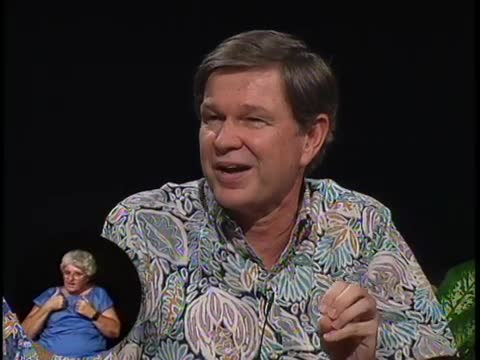
president of the Hawaii Hotel Association he is a graduate of Cornell University Galen Fox is serving his first term in the state house of representatives where he is one of the four Republicans on the tax writing finance committee Mr. Fox, I can say Fox, spent 16 years as a U .S. Foreign Service Officer, six as an executive assistant for economic development to mayor Frank Fosse and five with the Department of Business, Economic Development and Tourism He holds degrees from the University of Redlands in Princeton We have a great deal of knowledge of Hawaii's economy and business climate on dialogue tonight We urge you to tap it by calling 973 -1000 with your questions or comments Neighbor Island residents may call us collect 973 -1000 Wait until you answer your calls, our members of PLCO Hawaii, a project of the Hawaii Health Research Institute Our sign language interpreter this evening is Loretta McDonnell Tim
Moore, you're a businessman who has been doing relatively well, you tell me But you also must have some ideas on how Hawaii's business could do a lot better and how we could stimulate this economy How about a couple of them? Business has been pretty good, you know, Maui is somewhat of an economic oasis right now And we've been fortunate to experience part of that But as you mentioned in the introduction, I've spent the last year on the Small Business Task Force on regulatory relief And we've listened to a lot of small business owners talking to us about some of the concerns of regulations, the enforcement policies, the implementation and creation of regulations And it's a war zone out there, it's a difficult environment to operate in And this year it was taken a look at and through the foresight of Representative Herkys actually who created the task force last year We spent a year looking at it and we've made a
recommendation, a legislative recommendation which we've called the Small Hawaii Regulatory Flexibility Act Currently it's passed both houses on the Senate and the House and we're looking forward to it passing This piece of legislation alone is going to put in hands of small business people really the option of turning this regulatory environment around It includes their participation in developing regulations, it allows for a petition process for review of regulations and creates advisory boards So that when regulations are created they can be created in a flexible manner that will fit the needs of micro businesses, small businesses and everything else in between Bob or Tim, does it suggest specific regulations that should be dropped or simply amused by which it's done? The proposed act doesn't address specific rules and regulations if they try to get into that they'd have to spend 10 years Just at one commission because they would fill this room, the rules and regulations, the government business
in the state of Hawaii What it does is it sets up advisory committees, advisory councils and every state and county agency to review all rules and regulations to see what their impact on businesses See if they can be simplified and then Tim said they're in the ground floor of any new rules and regulations to see what future impact they're going to have So they can be addressed right away We have a regulatory minefield in this state, it's almost a gridlock and it seems to me that the most important thing we can do to help businesses is massive deregulation of business I think that the task force to the great job coming up with this act which when it's implemented starts getting rules and regulations to where they hopefully make some sense And in all likelihood it's going to pass Yes, it actually has passed both the House and the Senate, a little bit of a difference in the Senate but not much of a difference They'll go on the conference And it will pass and it worked out in conference, the problems are not great What's happened to the revitalization task force recommendations? Where are they now? Barry, did
you give us an update? Well the data truth, I haven't been following real closely on every one of them I know that a lot of people agree with a lot of the issues on the task force report The biggest issue is of course taxation and that's where we have the greatest problem areas But I think in terms of the other recommendations, they're moving along their different ideas as to how I kind of look at the task force report as being not the absolute but what we want to achieve at the end And if everybody keeps in mind what was the desired result of each recommendation? Whether we go right or left or in down the middle, as long as we get to the end and get a relief for the people of Hawaii Reduce government, reduce inefficiencies and things like that, I think we've accomplished something It may not come out exactly how the task force had recommended but if we do accomplish something at the end I think we'll be successful Barry Tanaguchi, I've worked on committees and I know that usually each single person has one piece of the agenda They feel very strongly about what did Barry
Tanaguchi feel strongest about during all those deliberations? About everything quite frankly, I think all the issues that came up were important To some people they thought it wasn't as important as other issues but we and the task force felt that every issue 7 major areas brought up were equally important and we couldn't and we shouldn't prioritize them Because if we start to prioritize them then they'll just focus on these particular issues and forget the rest But we felt that we needed a comprehensive change, a bold change, a major change so that we will accomplish something A lot of these ideas are not new then but they've been presented in different forums And they can one at a time, pick the part one at a time, I think this is the first time where one package came out Where we put all of these together and say let's do something, let's get all of them passed But that package is being picked apart, how do you feel about being in politics and dealing with and having folks coming at your plan?
Well personally for me it's been a very sobering experience to say the least I was so surprised at all the personal attacks because I came from a voluntary position that we were looking to do a good thing This is your pain back your community, so on a personal level I was rather surprised Professional you asked very what the most important issues were, for me it was taxes and it was education Because education is the key to our future and our kids are suffering right now And number two was taxation because we're overburdened And how we get to that point, there just has to be some relief for the residents of Hawaii and for the business Not just the business to cut and to grow the hotel industry and not just business to cut taxes for small business or medium sized business But for the relief for the individuals because right now I think we're the number three in the nation of highest taxes And it's
good, I mean it's good if we were growing and everybody's making so much money we wouldn't care But that's not the issue anymore But I know that Republicans are not happy with this tax package and if you folks changed your tune at all with the governor's seeming compromises Or coming down on the excise tax, I think he's gone from what 535, 5 .35 to what? 4 .75 4 .75, are you folks in the mood to compromise or are the Republicans still out to crash the excise tax? We're trying very hard to work for compromise solution then We believe very strongly in most of what the economic revitalization task force is recommending I'd say 90 to 95 % of the recommendations were absolutely behind Now we just believe with the theory of the economic revitalization task force that we ought to cut taxes to energize the economy And we question the practical thing that they put on the table Because on the one hand, while
they're reducing the income tax, they're raising the excise tax So we say just take away that raise in the excise tax just get the reduction in the income tax and use that reduction to fuel the economy That's what the theory is that if you reduce taxes, the economy gets going So let's put it in practice, let's not balance off a reduction with an increase Let's just have a reduction Can I comment on that? I think that we have to be a little bit careful on that Because if we're talking about personal income tax reductions, which is great, 3 .0 percentage points The revenue impact loss on that is so tremendous that we can, we as a state afford to do that Now, I understand that a 1 % reduction in personal income tax rates would be equivalent to about $100 million in revenue So if we're talking three percentage points, we're talking at least $300 million plus reduction in revenue That's about 10 % of the general fund budget Now, the general fund budget also includes certain things that we cannot reduce, like for
example that service We cannot reduce that service, I believe it's the $400 million range The Department of Education budget is like over $700 million a year Correct me if I'm wrong representatives University budget is like $300 million, so just in these three areas alone, you're talking about $1 .4 billion So if you want to cut $300 million from the balance of that, which is about $1 .7, it's a tremendous amount of money I know in this state we cannot go into deficit spending We can't do that We have to look at that impact of those reductions There is Absolutely right, we have to balance the budget We would not recommend a $300 million reduction in income tax That simply doesn't make any sense with the economy the way it is now What we propose is about $180 million reduction And we show exactly how to pay for that $180 million You basically do it through attrition You don't, when people leave the government for whatever reason they retire, they move onto the private sector They just get tired of working for the government Whatever
reason, you just don't fill that position There are 4 ,000 people who leave government during the course of a normal year We say don't replace 3 ,000 of the 4 ,000 And we've set aside all the teachers You talked about compromise moving together This is a change we've made in our package It's now smaller, it's only $180 million reduction We've set the teachers aside When a teacher leaves, you replace the teacher But in the rest of government, 50 % of government is personnel It's either directly personnel costs or paying for the benefits So the only way you're going to get the size of government down Is to reduce the personnel working for government And we don't want to fire anybody We don't think anybody should be fired in this economy If there's any possible way to avoid it And since all these people are leaving every year Let's just not replace the one that goes Where will the pain be? The pain will be born by the people who are left behind in government They'll have to work harder, but what we think we can do it See Dan, I think in order to do that
We have got to streamline government particularly on the regulatory process The House representatives had a summer meeting Both Republicans and Democrats And we agreed on the entire package And one of the issues that we agreed on was to free I mean, to freeze all the non -assessional jobs I mean, you've got to replace prison guards And as Representative said, you've got to keep the teachers going And so on and so forth But let me give you an example with the explosives The piratechnic people They're regulated by the Department of Transportation, Department of Health, and Department of Labor And Department of Labor says, well, our budgets have shrunk so much That we no longer are able to issue the permits So what's that mean? That means all the piratechnic people are out of work That means the construction industry comes to a halt because you can't do any explosives And then so the bill comes through, well, here's $40 ,000 in order to put this back into the budget So we can continue to regulate them My suggestion is, look, we license
physicians We don't look over the shoulder when they're doing heart surgery If you've got a qualified piratechnic explosives guy, give him a license and leave him alone Let him go do his work In order to reduce government, you've got to streamline all these regulations And that's one of the things that Tim's group is doing That's one of the things that the ERKF addresses And I think it's the most important thing that we can do overall Tim, Tim, someone calls us as small businesses in the why Is fearful of retribution or retaliation if they speak up? Is that true? You know, I'm afraid to say it is true And I think that I'm sorry to say that the test for us experienced it firsthand I mean, you asked, were there a bunch of recommendations that we put on the table to take away from regulatory environment And that was our goal When we met a year and a half ago, we expected at the end of the year to produce a list of regulations As
we went into them, we realized that regulations have a lot of fans Businesses are fan of regulations, department agencies are fans of regulations Businesses are fans of regulation? Sure No question about it Every year, four or five, six, seven new industries come into the legislature asking to be regulated This year we have a bill following the legislative law of these recommendations To deregulate and get rid of the ten boards and commissions Let's take ground transportation One of the most highly regulated industries in the state of Hawaii It impacts everything we touch So let's deregulate The legislative author has said over and over deregulate it He says we don't want to regulate it Department of Transportation says we don't want to regulate Well, it's in this bill and the firestorm that erupted You can't do this to us So the question before, not only the legislature, but before the community is
Here's something that would benefit every consumer Is it worth the fight to take on big business and big labor to deregulate something like ground transportation Is it worth all the blood that's going to be lit? I don't know Now, it's easy to get rid of the board of barbers Forget the bad haircut, don't go back Opticians is another one, she says there's no reason to regulate opticians We're already hearing from them Business loves to be regulated I have a real hard time with it Or the micro breweries There's a law that you can't, micro breweries are not allowed to go over 5 ,000 gallons of production a year Why? We just changed the ten Why? Let the market seek its own level Why do you have to have regulations for that? You know, why they did that? Because there's somebody who's lobbying that would create too much competition For the guys who have been in the past Let the market seek itself You know that we even set the rate for tow trucks We had a bill coming for us today to increase the rate for tow trucks Why are we doing that? I mean, are
we in a negotiation with the tow truck operators? Why doesn't this go to public utilities commission if it needs to be done at all? And I said to this gentleman, I said why don't we just deregulate it? Well, this shock came over its face They regulate this I wanted to finish on that point of retaliation because I think it goes a lot to what Representative Herky said that Everything that's wrong with this state isn't necessarily associated to our tax problems There's an attitudinal problem in this state That goes from starting a business to maintaining a business to operating a business To improving in the safety and health of our employees Everywhere we turn, we find an aggressive attitude to us To change this attitude is free The changes attitude takes leadership Including business? I know you've just said that but if I sound like I don't believe it because I just have heard so many Businessmen say too much regulation or one of the first things at the No, I'm sorry, I asked him
Included being a business Sometimes that's what Stephanie said It's a method of competition Regulation keeps the other in check I'm surprised at that Too because I can't continually hear from people and this shocks me since I've been on the task force I've had people say to me well you know it's good to have business It's good to start business we want you to have business but if you make a profit we have a Problem with that if you break even we don't have a problem with that But profit is a bad word to a lot of people in the state of Hawaii What's wrong with making profit you take the risk you're working hard And then at the end of your taxes you have 10 ,000, 50 ,000 bucks which you pay you pay tax on that profit But everywhere I go I get people who say well you're making profit on the backs of the poor person Or you're making back that you're making profit on the backs of the little man Well that's what business is about
it's not to you're not killing people But what you want to do is you want to take risk you want to work hard and you want to have some rewards afterwards And real heroes of economic recovery are going to be the small business people who create jobs Very kind of good you who is paying for all the revitalization and task force ads And the Honolulu newspapers and TV spots I don't know all the companies but in one of the ads they list all the members of the coalition That have contributed money One of the things that we felt in the task force was that a lot of people don't understand Or we don't have enough information out there to explain like for example you know the 400 million dollars in debt service and things like that And the effort was really try to get more information out there so people could see what we were trying to accomplish I don't know how the program is going whether it's succeeding or not but that's why the coalition of businesses got together Very well we're on this I heard that on the
GET increase was not part of the original recommendations to the task force by the tax advisors How did it get thrown in at the last minute and who did this? Basically what happened on the GET was that the recommendation from the task force taxation working group was that there be no adjustment to the GET And personal income taxes had to come down When we started to look at it one of the criteria that we looked at the different recommendations was it should be a bold recommendation Something that is workable but bold And we've heard about how businesses hesitate coming to Hawaii because of the high taxation especially in personal income taxes As well as corporate income taxes so the task was tried to accomplish many things with their package By reducing personal income taxes by 3 to 4 percentage points on the marginal rate we're hoping to stimulate more people coming into Hawaii But we needed to offset some of the
loss in revenue as we talked about earlier you know we couldn't take a 400 or 500 million dollar cutting tax So the offsetting would be the GET the other thing about the GET is that part of it is exported out Where tourists would end up paying approximately 25 % of the GET increase Now one of the things in the personal income tax area we talked about the lower income people they hardly pay any tax anyway And this is why we came up with income tax credits It's refundable income tax credits so that the poor people or the lower income people wouldn't be hurt by the increase in GET There I just want to ask this question and I guess I'll ask it of Tim Tim when you came to Hawaii from Massachusetts to start the old Lahaina Luau and Aloha mixed plate restaurant Did you check out the marginal tax rates before you came? No I didn't Why did you come to Hawaii to do that? I mean you don't understand the import I mean the question is good I mean we came here for a certain lifestyle For a certain way of life for a certain
environment However the tax base goes along to job creation to me that's the bottom line of this thing is we need to stimulate job creation So maybe now that I'm here about it I'm interested in it but it certainly wasn't a deterrent to me and it doesn't remain to be a deterrent to me I want to give you some examples where deregulation has improved the business climate Some years ago it used to take a year and a half to two years to certify and license a new insurance company And we are a market the size of San Jose California So why spend all of that time and money trying to access a very small market So we said a few are licensed to do business at any four accredited national association of insurance commissioners states Just come do business here just fill out the form 35 new companies came in to do business after we passed that We took on other insurance we
took the take all companies claws out That was a deterrent to companies coming in and doing business here so we deregulated that And now you see all of the competition for other insurance We passed that two to five telephone competition There's 130 new companies ready to do battle with GT Hawaiian tell and competition once we get all the legal things out of the way So we changed the regulation we improved the business climate and that brought people into our business circle deregulation Someone points out to me correctly that I said Republicans objected to the general excise tax increase The chairman of the Democratic Party objected to the increase in a large number of democratic legislators also object to the tax Well you're making a correction I represent Poulin Kauu not Poulin Kauu and I don't want the Kauu people mad at me That's a good point to remember where Bob is from I just wanted to make a point on the excise tax and there's a lot of talk about it You know pushing it off
on our visitors that come here and one is we've got to be really careful about that It's the only wheel that's spinning right now and let's take very careful we've talked about increasing the TAT on them And increasing the general excise tax In addition when people come to visit here they come with a certain amount of money in their pocket Whether that money is actually spent on purchasing an item that will benefit the business that does it Or whether it goes to sales tax they still came with a thousand dollars in their pocket So to trade this money off and bring it on into general excise tax is doing so really at the expense of some businesses You know they need to be real careful in the retail industry and looking how they assume it's a pass through I'm sorry Tim you know the taxation committee of the American of the Hoi Bar Association has come out against an increase in the general excise tax And one of the reasons they gave for doing so was they looked at what happened in Japan last spring When Japan raised its consumption tax and the economy went down 11 % in the quarter after it was raised And they said you know looking from the example of Japan we don't want to
start messing around with any kind of increase in the excise tax Because we're afraid of what that's going to do to visitors from Japan or what it's going to do to visitors from anywhere else Who are tax sensitive like the Japanese are? Some viewers ask a very general question and since you're in this business a bit evaluating these things Stephanie Do you foresee a wise job economy improving or getting worse in the next few years? Oh god they call me Dr. Doom as it is Getting worse It's getting worse And you think it will continue to in the next few years I think for the next two years and then there's going to be three year period of stabilization down at that level and then slowly growing up Very I kind of agree with Stephanie hopefully it's less than two years so hopefully this year probably will be done again But we need to do something to great jobs Gaelin, I think a dramatic reduction in the size of government and the reduction of taxes can turn our economy around in one year It's happened
several places on the mainland. I think it happened here too I just agree You know these are some states that have cut taxes in the 1990s Move in here Cameron. New York He brought some show in Philadelphia Michigan, New Jersey, Arizona, Massachusetts These are all multi -year tax reductions The New York one is just phenomenally big I'm checking it with Ray Comic -Con to make sure that this figure is really true It's a 12 % average drop over the last three years in taxes They're average over 78 % rate So these are major multi -year taxes involved 15 years of tax reductions between these five states You'll see by the way at the bottom the Hawaii proposed tax reduction under the latest tax force Tax force proposal Now this is what happened on average in the next year after the taxes were cut Those are revenue increases and
what you're looking at is in billions or millions of dollars But you'll see that in every case 15 out of 15 cases The tax reduction was followed by an increase in revenue or a state surplus The year after So this is what's happening across the mainland in the United States in the 1990s Reduce taxes, see revenue go up And that's the basic principle that the economic revitalization task force is behind They're looking for reduction in taxes that'll cause an increase in economic activity Let's not lose faith The faith is established on the mainland We've got a way to do it in Hawaii too Put money in the pockets of the people of Hawaii and let them step in it You know, they get a little carried away The politicians when you have to deal with They have to believe in quick fixes I apologize and gave Bob Herkies How could it, or I'm sorry I have a comment You know, going back to the taxes There's a lot of
ideas floating around But just in a real nutshell One of the problems Hawaii has is that we're a one -horse town Tourism represents basically our lifeblood And three out of five jobs are directly or indirectly used and for it And I would like to see, you know, however we get this tax situation done I would like to see that we increase the TAT to put that directed funding into force I would also like to see that the counties maybe get an exemption on their general excise taxes And that's about 40 million bucks And that's about the same amount of money that they would be taking away from the TAT Once the counties have an exemption Then it's a wash, the counties can go forward with us on the TAT And then one of the things I'd like to see is the ending of pyramiding Because I did a study on small businesses and I found out that the pyramiding comes to about 16 %
of additional bottom line costs And if you got rid of that because that 4 % multiplies 4 % multiplies 4 % And even if not all the pyramiding was taken away Maybe somebody still taxes another guy and what have you Even if 50 % of it was cut That's 8 % off of the bottom line for business And that gives you that profit, that movement, that excess money To start to stimulate, to buy more computers, to hire more people We need to do everything comes back to the point We need to cut somewhere to stimulate somewhere else Allow me to interrupt, we need to take a 60 second break here But we'll be back with more dialogue on Hawaii's economic outlook With representatives Bob Herkies and Galen Fox Tim Moore, Barry Taniguchi, and Stephanie Sophos There's been a revolution in healthcare And it's changing the way doctors treat us when we are sick I'm waiting for a position
We have to do more and more with less plastic We've cut things to the bone as HMO providers cut costs and been trying to be bug and basement medicine Can we be sure we'll get the care we need? Physicians are constantly defending their patients from having less and less done for them Watch the high price of health next time on Frontline Tonight at 9 on Hawaii Public Television If these polar bears look happy I want you to know that I'm at least partly responsible She's very gentle the way she takes the cookie here Look at that I used to hate zoos But then I took a trip and met some animals and made me think again It's a very strange experience I'm Alan Olga, join me next time The Scientific American Frontier explores the new zoos Wednesday night at 8 To our dialogue on Hawaii's economic outlook My name is Dan Boylan Our phone answer is this evening our members of PLCO Hawaii A cancer screening group for prostate, lung, colorectal,
and ovarian cancer They are answering calls made in 973 -1000 And we thank them for volunteering their time tonight So if you have a question or comment for our guest, Galen Fox, Bob Herkes, Tim Moore, Stephanie Sofos, or Brian Tanaguchi Please call Barry, I'm sorry, I knew it would happen one night I'm sorry, Barry Tanaguchi, Brian is a legislator as you know And they're not related, right? Please call 973 -1000 Neighbor Island residents make call us collect, Bob Herkes How could any of the representatives do anything for a while specifically When Home Depot hasn't been allowed to start up business here locally? Well, it's an interesting thing Where we blame the big box retailers for all of the woes of small business But if you look at the history of Hawaii, let's take what longs came in How many small drug stores did they put out of the business?
Barry Tanaguchi's company has probably replaced a whole lot of small retail grocery stores So I think we've seen a progression from the small mom and pop stores Many of which still thrive to the big box retailers And who benefits by the big box retailers the consumer does So it's a balancing act that you've got to do here It's the fact of life doing business in the state of Hawaii You got a competition's good, you got a loan compete Several people have asked why don't we trash the general exercise tax And have a regular sales tax Would we better be better off with the sales tax then more? I think people would pass out when they realize what it equated to I think that it would be a real deterrent for it And we talk about pass -through to visitors A visitor is new with our four percent sales Exercise tax turned into a sales tax You know, we've been in a dangerous position Yeah, I've got some conversations with Loco Lapo and Desenna He indicated to me that...
Right, and he indicated to me... I'm not a real expert in taxes, but he... Oh, he is there Oh, yeah Lowly indicated that out of $100, you know $40 will represent the sales product type transaction $60 is a service type So basically if you take out services from it and just do a sales tax on tangible goods You pretty much your rate is going to look at about like 10 % Sales tax rate would be about 10 % rather than the four Yeah Could anyone on the panel explain why small businesses were underrepresented in the state revitalization committee? You consider yourself a small business person, right? Yeah, micro -business How many people in your office? Just you, that's a small business Barry, you're fairly big Well, I consider we're medium sized How many employees does KTA have? We have about 400 full -time employees Plus we have another 300 part -time employees Well, why were the small guys underrepresented? I don't know, you know, that's a good question I think what happened was that the representation of the task force They wanted people from different islands also Not only from Hulu
If you look at the composition of the task force There was just one from Kauai, one from Maui and one from the Big Island The rest were from Oahu On the Big Island When they asked me quite frankly if I would serve I made a scene comment, I think she'd get some small business people in there And I don't know what happened I don't know how they were chosen Wasn't it on dialogue, Dan? That the Governor Kaitano said If he had to do it over again he'd put Sam Sloan on the task force Sam Sloan is Mr. Small Business He's head of Small Business Hawaii And I think omitting Sam Sloan was a major omission You don't, you want to try to get Sam on your side Some way or another Jim, have you heard a great deal of complaint about this from other small business people? Sure, sure I have But, you know, I don't think it really mattered that much Because I think when you look at the recommendations that come out of the task force They're very similar to the 20 recommendations that come out of the Hawaii Congress On Small Business in 1995 We're not looking, you know, inventing the wheel over again I think that I take it as a compliment that small
business certainly served economic advice Long before it was fashionable to do so We've been giving it for the last 10 years We've been giving the same advice that economic realization task force came up with on their own Let's not forget that we established the Small Business Task Force A year before the ERTF came into play And so we established this group just to deal with small business problems And they asked to change their name to the Small Business Task Force on regulatory relief Because they felt that that's where they could have the biggest impact But they've been in business for a year and a half Does it make sense to continue to allow the legislature to make decisions about our future When they have or many have pretended for years that the recession didn't exist Do you think the legislature has been sitting down there not paying any attention, Bob? Pretending it didn't exist Well, it's a funny group, you gotta admit that But they are citizens just like those of us sitting around this table That's what we are, I work for a private company And we
come in hoping we can do some good And we face these enormous problems on a day -to -day basis And it's a tough job, I wanna tell you Any thoughts on this, Gailan? Well, I think that we haven't bitten the bullet at the legislature I don't think that we've made the hard... Hard now? Yeah, we haven't made this session there yet Well, we're in the middle of a session And I think what we wanna do is to reduce the burden that government is on the private sector on business people And, you know, that's what the economic revitalization task force was talking about And that's, you know, basically what we wanna do I do have one more chart here Well, focus in here now We can't let Gailan go all the stars here What we've got here is where government was in relation to the total economy In the year before, Governor Katana became Lieutenant Governor More importantly, and Governor Arioshis last year It was 14 .2 % of the total economy, that's the state government
Governor Waihei took it up to rather a large size And the next thing is his final year, it's 17 .9 % Now, Earl Anzai has said we really ought to be getting that economy back down to 14 % If we took it down to 16%, if we took it down just that little bit We'd have more than enough money to pay for a major tax cut So, that's what we gotta do I feel like it's 1968, and we're talking about ending the war in Vietnam And nobody can quite figure out how to do it We gotta cut down government Nobody can quite figure out how to do it We have a plan, but we'll welcome anybody else's ideas We have to reduce the burden of government on the people of Waihei One of the problems is that the people in this state have an insatiable appetite for government services And we've gotta put them on the diet Anybody got any ideas for some government services to get rid of? Regulations Well, you know, I welcome everything that Tim and Bob have been talking about reducing regulations One of the really neat task force recommendations was to
put the government on performance -based budgeting You know, what you do is you go in there and you say, now, department, what are you really about? Is your job to accomplish some specific objectives over the course of the next year? If you started thinking that way, your objectives might be, well, we've got a public out there that we've got to serve, how can we serve them better? You know, and what 10 things can we do on a priority basis to serve the public better? I think, you know, we really need to turn state government around and make it so that it serves the consumers who are the people that elect us You know, elect Governor Coyotano and elect the legislature How do you, how do each of you think cutting taxes will stimulate the economy in Hawaii when economic growth comes from external forces? That is the military, tourism and other outside businesses Barry, you got a response to that? I think we have to make the climate in Hawaii more business -friendly And quite frankly, I think we have to have industries come to Hawaii, new industries One of the industries that I think we want to get after is the high
tech communication industries Because we're in the center of the Pacific, you know, we can service the Pacific grim But unfortunately, if the cost of living here and the cost of doing business here is too high You know, companies I think won't want to come here We talked about the personal income tax in Washington, I believe State of Washington income tax is nil, they don't have a personal income tax So why would a guy in a high tech industry in the state of Washington, for example, want to relocate a company over here Even if we have a time advantage on that So it comes back to this reduction of government, less regulation, making a more business -friendly Try to attract new industries and really when Duck Byer said it best, I think on the task force he said Our job is to create jobs and how do we create jobs? You have to bring in your industry Someone wants to know, why did the economic task force change the structure, tax structure, I guess When a Y is considered to have a progressive structure in the nation Can I answer that? Well, you're not on the task force, but we'll let you get out of here We don't have a progressive tax structure We have a structure that flattens out
at $20 ,000 for a single At $20 ,000 you start paying 10 % income tax And that's almost poverty level I mean, it's twice poverty level which qualifies you for certain assistance So once you start making money really in the economy, you hit the top level So we do not have a progressive system The Republicans have recommended that we simply adopt the federal tax system And just do a one -third of the federal system That would get you a good progressive system And it would get it to you automatically It really helps people at the bottom end of the scale Our tax system has not been really looked at really seriously since 1965 And I think everyone here would agree that things have changed in 33 years And we really need to take a good hard look at that A trickle down my eye, someone comments Why is New York swimming in tourists with $6 million in taxpayers' money And this council wants to
go from 30 million to 60 million This is a political payoff Tourist jobs pay, chump wages and prove education And make us a top finance center there saying You know what? I saw that task force report My first response was this was not very creative It was a task force report that basically, no, I'm not stepping down I'm not going to be ready anybody But I mean, it was one of my first response thoughts was Why isn't there a discussion of other ideas, economic ideas, instead of simply tourism over again. Well, I think, if I may, Stephanie, I think we have to do something quick and quite frankly tourism in the military are the two biggest industries in Hawaii. Now, if we don't do something quick and to get a quick fix on that, at least that portion of the economy, it's going to get worse. So now, I don't know where that's $6 million in New York. I gotta believe they spend a lot of money in tourism promotion, but New York also have things that we don't have. They have the UN. They have New York City. They have other kind of Niagara Falls. And they have a lot of things
that we don't have, you know, and we need to really compete with other resort areas of the world that are vying for the same customer. I'm a hotel man, and I don't think hotel jobs are all that bad. I think there's some pretty good ones and the employees that I used to have with the corner surf and within their island resorts, I think live pretty well. Now where I have a problem on the increase in the TAT, let's remember that the TAT is coming out of the revenue stream of the hotels. So it's not like it's a gift from the taxpayers, it's really coming out of the revenue stream of the hotels. If you didn't have the TAT to be more money in their pockets to pay higher wages than a few other things. Now, and I was part of the hotel association that fought the TAT for years. And I think that the industry got sucked in on it quite frankly when it went to 6%. To go to 7%, I think it's a mistake because I don't think you can trust past, present, or future legislators to keep that money in dedicated funding for the industry. It could be gone in four years.
You know, we just, you can't trust us quite frankly. And so I'd like to see more tourism promotion, but I think it's got to come from co -op funding. And not from an increase in the TAT. The HVB used to be funded 95 % by the industry. TAT comes in, and now it's down to about 5%. As I remember, Gail, is that about right, the industry contribution? Because they feel that the TAT is their contribution. So what you're seeing with the co -op funding, Outrigger Hotels is getting together with airlines, Maui, and Kauai are getting together with Pleasant Hawaiian holidays. They're working on this co -op funding, and that is one thing. Legislature can't take away its co -op funding. I would say leave the TAT where it is, and let them go after co -op funding. I always thought I could trust you. Tim Moore, regulations, you wonder why business wants to be regulated because they want to keep other businesses from coming in. Is the comment, is that right? They want to keep other
competition at bay. Not so from not coming in, but I try to think of an example for me without using contractors because it's a very good reason for contractors to be licensed, but it's almost that sort of thing. Then this person also brings up PUC licenses for state motor carriers. How come the legislature doesn't issue more PUC licenses? PUC, issues of licenses we don't. But they don't issue many, right? They regulate them and then let the marketplace decide. Why is ground transportation regulated in industry? It shouldn't be, in my view. But everything in Hawaii has been that way. Historically, Hawaii was always heavily regulated because back in the 50s, 60s, and 70s, there was so much growth that people here, the local people panic. They said, it's getting so much, the carpet beggars are coming in. We're going to be wiped out. We're going to be displaced. We've got to control the growth in the, during the Vietnam War, from 68 to 72. You saw more
condominiums built in Waikiki than you ever saw in the history of the state. The regulations came in to just kind of clamp down and keep us from going nuts because we would have had, they were afraid that would have 5 million people living on this island and by the year 1990. So now we're in a situation where, okay, we've clamped down to the point that we're now killing ourselves and we've got to, we've got to let go and let people do their thing. But you have to remember, we're 20, 25 years into this program and it's real hard to get everybody to get back into realizing that we have to move forward. People don't like change. John Kennedy said change is good. It's the best thing that happens for us. But a lot of people here don't want change because they're afraid of change, they're going to be displaced. So I think Stephanie is right, but we also have a very strong protectionist attitude. That's correct. Balancing the state budget. Why not cut 50%, 5 % across the board on all state employees salaries instead of retiring and laying off employees? This would say
$50 million according to the figures I heard tonight. Why don't we, why don't we do that? That's not fair to state workers, that's not fair to them. State workers are not highly paid, but why not cut the property taxes to lower rants people then could start businesses and hire people? You got the wrong group, that's a county issue. Hawaii is basically a democratic state who is overstaffed with politician. I would like to see more Republicans elected. Gay, that's not very much. Why can't we have a, don't think this is a little public. I love these political, personal agendas that keep coming forward. Why is Hawaii's economy so similar to Japan's economy? Shouldn't Hawaii be in a boom similar to the mainland? Is there, yes. I can answer that. Back in 1986 to 1988, and I've done some studies on this, whether it was, it appears to be a conscious decision that we shifted
from a US Polynesian economy to an Asian economy. You have to remember back then in the late middle 80s that the US economy was languishing, and so there had been, we have a cultural familiarity. There was the previous governor Arioshi had been going back and forth and opening doors, and everybody was wanting to embrace this hot economy. They figured the seven sisters of Asia would be keeping us flowing versus one US economy. So there was a concerted shift to go to Asia, and we were doing fabulous, and we still did well until 1985. We weren't growing great, but we were still doing okay. And then when the economy and Asia shifted down, so did we. And we were, 1995. And so we are sitting there, we are tied to Asia, good, bad, and different. We are tied to them. And the only way that we can move forward to the US economy is that we have to diversify in our tourism
markets. Did I see that Westbound tourist arrivals went up the last couple of months, Eastbound though are going down, from Japan. But that's in direct correlation with the Asian economies versus the US economy. Well, I think that the US coming back is beginning to be felt in Hawaii. And a lot of what they're talking about with that $60 million tourism marketing fund is an ability to market much more heavily on the mainland. What's happened since, you know, we last addressed the mainland in real force is that our competition has gotten much stronger. Las Vegas, Mexico, the Caribbean, the cruise ships are all putting Hawaii. You know, we're a little bit old. We're a little bit around the block a few times. And right here, we've got some real work to do in terms of creating new attractions. But the studies we've seen show that direct tourism promotion does bring more people in. He comes from Waikiki, all right? So
he likes to see, and I don't blame him, he likes to see Hawaii as a single destination. We are not a single destination. We are a multi -destination for five. In my view, we should, there's six different markets that we ought to be, six different marketing programs we should be concentrating on. There is a generic Hawaii market. There is a convention meeting in incentive business. And then each county is in itself its own destination. You can arrive at the park, Kawaii Maui, Hawaii, Oahu. And they've all got their own strength and weaknesses. And I think that we need to recognize these different markets, six different markets, and then split our funding so that we can accommodate those six different markets. I think we're going to set Tim that Maui is doing quite well, and has not felt a recession at all. I think Maui's done a good job in predicting what it wanted to be when it grew up. And I think that some of the other islands have had a little difficulty with that. Very, I think I interrupted you or someone over here. I just wanted to say, I have no problem with Bob basically
promoting the islands differently. I think that's a really good idea. I think that's one of the things that makes Hawaii more attractive is that we have all these choices. One of the reasons why Maui is doing so well is that Marilyn Lingle saw in 1990 what was happening. She stabilized her government. She went to Gap Accounting so that you could have the performance and issues raised. And there was also a real growth of retail. And there is tremendous growth of retail. And as a lot of the jobs cut with the plantation, they were able to be absorbed with the retail jobs. Now there weren't, but jobs were jobs, and they were able to sustain their growth. We don't have that. I'm counting to all the things I don't understand in the second. I heard on Channel 2 news today and want to know what panel feels about budget cuts, education budget cuts, and layoff of 300 teachers from public schools. I'd love
to address that. It's a time of year, just before we doing our budgets in the legislature, that the variety of special interests that say, let me see, if I can put some pressure on the legislature, they're not going to get the voters to call them, so they're not going to cut the budget. So let me see, work in education. Let's go after A plus, because that goes right to the heart of the taxpayer. Let's say that we're going to cut three or 400 teachers, because boy, that's going to get them all riled up, and they're going to call legislature. And then we're not going to have to address the huge overhead costs of the Department of Education's gut. And they're going to give us our money back, because the taxpayers and the voters are going to be mad. And so we'll use these 300 teachers as the pawns to make sure that we don't reduce our overhead. I think we've got an answer there. Barry, why doesn't the economic revitalization task force tackle the unions where in the city and county and state employees have a job for life and efficiency is not like the private sector? Was there any attempt to talk about unionization
and state? No, I think we didn't address it directly to try to cut government through a reduction in union, but I think there was enough expressed on the task force that the union people are concerned. I believe the public unions are concerned. They know that we're not in the best shape. They know that if they don't help forge a better scenario, that we're all going to be in trouble. So I think it's going to be a work together situation. I don't think you can just go and cut. Tim, I hope that that's true, because I haven't necessarily seen it combed down to the legislative for yet. And one example is workers' comp this year, and the simple language of, and if correct me if I'm wrong, but Gary Rodriguez says it's the position of the task force is that I'm not presumptive cause, but I'm just cause. That's cause. And as we all know, we're not silly here. Just cause is a very difficult position to prove. And I'm curious if that was a
position of the task force, because I heard him say the hearing that it was, and if it is, I'm very surprised because that alone, those attitudes, really hurt our economy. Tim Moore, you get the last word tonight, and it's for small business and workmen and changing workmen's comp. We are out of time. All right, thanks to Stephanie Sophos, Barry Tanaguchi, Colin Bryan, if you like. Gaelin Fox, Tim Moore and Bob Herkies for lending us their expertise this evening. And our thanks to the members of PLCO Hawaii for answering our phones. And also, many thanks to those of you who have been sending us your question and comments for dialogue by email. And that address, again, is dialogue at kgt .pbs .org. Next week, dialogue will address the question to ensure or not to ensure Hawaii's new auto insurance law. Among our guests will be Hawaii Insurance Commissioner Regorality, Senator David E. Gay, Insurance Attorney Bert Sakuta, and from Geico, Tim Dayton. It should be an informative and
possibly money saving program. Until then, for all of us at Hawaii Public Television, I'm Dan Boylan, thank you for watching Dialogue. Aloha. Thank you very much for joining us today. Thank you. Thank you. Thank you. Thank you. Thank you. Thank you. Thank you. Thank you. Thank
you. Thank you. DIALOG is brought to you by Hawaiian Electric Company, People With a Powerful Commitment. Hello, my name is Dan Boilin, major island businesses announced new layoffs and consolidations. State tax revenues continue to decline. Governor Coyotano has mandated
further cuts in the state budget and has called for some consolidations of state departments. What was us? What was us? Hawaii's economy continues to call in sick. We'll discuss its feeble condition, Friday night at eight, on dialogue, here on Hawaii Public Television. Hello, my name is Dan Boilin, major island businesses announced new layoffs and consolidate the state tax revenues continue to decline. Governor Coyotano has
mandated further cuts in the state budget and has called for some consolidations of state departments. What was us? What was us? Hawaii's economy continues to call in sick. We'll discuss its feeble condition, tonight at eight, on dialogue, right here on Hawaii Public Television.
- Series
- Dialog
- Producing Organization
- KHET
- Contributing Organization
- PBS Hawaii (Honolulu, Hawaii)
- 'Ulu'ulu: The Henry Ku'ualoha Guigni Moving Image Archive of Hawai'i (Kapolei, Hawaii)
- AAPB ID
- cpb-aacip-225-773txj3h
If you have more information about this item than what is given here, or if you have concerns about this record, we want to know! Contact us, indicating the AAPB ID (cpb-aacip-225-773txj3h).
- Description
- Episode Description
- Moderator: Dan Boylan, Guests: REP. GALEN FOX, Member, Economic Develoopment & Business Concerns, REP. ROBERT HERKES, Chair, Economic Development & Business Concerns, TIM MOORE, Chair, Small Business Regulatory Relief Bill Task Force, STEPHANIE SOFOS, President, Sofos & Co., Ltd., BARRY TANIGUCHI, President & CEO, KTA Super Stores
- Created Date
- 1998-02-27
- Asset type
- Episode
- Topics
- Public Affairs
- Rights
- Copyright, 1998
- Media type
- Moving Image
- Duration
- 01:02:56;03
- Credits
-
-
Director: Ed Robello
Producing Organization: KHET
- AAPB Contributor Holdings
-
PBS Hawaii (KHET)
Identifier: cpb-aacip-5a8a6874924 (Filename)
Format: Betacam: SP
Generation: Master
Duration: 00:59:23
-
'Ulu'ulu: The Henry Ku'ualoha Guigni Moving Image Archive of Hawai'i
Identifier: cpb-aacip-854397a52a6 (Filename)
Format: Betacam: SP
If you have a copy of this asset and would like us to add it to our catalog, please contact us.
- Citations
- Chicago: “Dialog; New Year: Old Economy: Hawaii's Economic Outlook 5,” 1998-02-27, PBS Hawaii, 'Ulu'ulu: The Henry Ku'ualoha Guigni Moving Image Archive of Hawai'i, American Archive of Public Broadcasting (GBH and the Library of Congress), Boston, MA and Washington, DC, accessed March 13, 2026, http://americanarchive.org/catalog/cpb-aacip-225-773txj3h.
- MLA: “Dialog; New Year: Old Economy: Hawaii's Economic Outlook 5.” 1998-02-27. PBS Hawaii, 'Ulu'ulu: The Henry Ku'ualoha Guigni Moving Image Archive of Hawai'i, American Archive of Public Broadcasting (GBH and the Library of Congress), Boston, MA and Washington, DC. Web. March 13, 2026. <http://americanarchive.org/catalog/cpb-aacip-225-773txj3h>.
- APA: Dialog; New Year: Old Economy: Hawaii's Economic Outlook 5. Boston, MA: PBS Hawaii, 'Ulu'ulu: The Henry Ku'ualoha Guigni Moving Image Archive of Hawai'i, American Archive of Public Broadcasting (GBH and the Library of Congress), Boston, MA and Washington, DC. Retrieved from http://americanarchive.org/catalog/cpb-aacip-225-773txj3h