Dialog; Minority's Perspective: The 1998 Legislature
- Transcript
That's it, that we do. One minute to VTR 5. Gotcha. VTR 5. VTR 5. That's got Babylon 5. VTR 5. That's got something to drink. I hate, I'll be so happy when we stop talking about it, because it's so hard to say, the economic revitalization task force is. Dialogue is brought to you by
Hawaiian Electric Company, people with a powerful commitment. And the legislature at Jorn last spring, lawmakers were still discussing ways to deal with the state's budget of monetary problems, since then a lot has happened, like the economic revitalization task forces recommendations being proposed to lawmakers this session.
Among the recommendations, tax proposals which would increase the general exercise tax from 4 to 5 .35%. A hike in the transient accommodations tax or hotel room tax to most of us from 6 to 7%. And a cut in corporate and personal income taxes. The task force also recommended giving the University of Hawaii more autonomy, having the governor appoint the state school board, and abolishing the state land use commission. All of which have been endorsed by Governor Kaitano, Senator President Mizoguchi, and House Speaker Joe Suki. In the meantime, the state council on revenues has forecast no improvement or growth for the state's troubled economy. And Governor Kaitano has asked his department heads to cut another 10 % from their budgets. When the second session of the legislature convened this week, both Senate President Mizoguchi and House
Speaker Joe Suki agreed that because of the state's lagging economy, this would be a tough and challenging session for all. Last week, Senate and House majority leaders were here for a dialogue on what to expect of the session. Good evening, I'm Dan Boylan, and joining me in the studio tonight are leaders of the Republican Minority. They're here to give us their perspective on the 1998 legislative session. Barbara Maramoto has represented the 17th House District in the State House of Representatives since 1978. She was recently reelected House Minority Leader. Representative Maramoto is a graduate of the University of Hawaii and Sociology major. Whitney Anderson is the Senate's Republican Minority Leader, and he's also a member of the Senate Ways and Means Committee. Senator Anderson was appointed to the Senate when Senator Mary George retired. Senator Anderson and his wife run a janitorial supply and a flower business. He too attended the
University of Hawaii. Sam Slom is the Senate Minority 4 leader, and he also serves on a host of Senate committees as all Republicans do. Senator Slom is a lawyer by education, a small business advocate, a small business owner, and a consulting economist. Quentin Kavanaugh -Nakola is the Republican House Minority Leader and his first term as such, this session. And this is his second term as a state legislator. He is a graduate of the William S. Richardson School of Law and the University of Southern California. All those, these lawmakers, bring their opinions and their concerns to our discussion. There can be no dialogue without your participation. So if you have a question for our guests, or would like to express an opinion, our telephone lines are open, and the number to call is 973 -1000. Neighbor -I, then
residents, of course, may call us, call us, collect. I'll get that out. 973 -1000. Our phone answers this evening are the friends of Rebecca Troyer, and our sign language interpreter is Loretta McDonnell. Representative Kavanaugh -Nakola, in your speech to the House on Opening Day, when referring to the governor's task force recommendations, you said, and I quote, this minority cannot, must not, and will not support a 34 % increase in Hawaii's general excise tax. You got a lot of applause for that. Why, can you not support it because it's a good political move, not to support it? You know, a lot of the governor actually came out with that response. This was politically motivated, quite the contrary. We were, I'm motivated, our caucus is motivated by the people of Hawaii. You know, the governor has this wonderful plan. He has a plan where he's going to reduce income taxes, take it, you know, give us some money back in one pocket, and then grab into the other one and pull out
34%. The problem is 21 % of our populists pays no income tax. They'll receive no benefit from the reduction in income tax, and yet we're going to pull out 34 % increase in general excise. My concern is that the wheels of government are very large, and they're churning, and this task force has got this great idea to turn all the wheels around, but innocent families, innocent people are going to get caught up in those wheels and get ground up. And that's our concern is for our families here in the arenas. Senator Sloan, you've got a badge on there if I'm not mistaken. It says, it says tax hike thumbs down. This is a replay of the thumbs up campaign of a couple of years ago. It's the same cast of characters. You've got the biggest subsidized businesses. You've got the biggest labor unions. You've got the biggest political leaders. So for say that this is a political response, Representative Cavanaugh's speech I think was brilliant, and I think that the people responded because you introduced us as a minority, but actually Dan, we represent the majority, the majority of what people think. They are smarter
than the politicians and the economists would say, well, we can shift this around and do this, but the end result is we're going to tax you more, and if you have more pain, it'll be okay. The bankers have proposed this. Don't get any pain because they cut their own franchise tax rates and corporate income tax rates, and they're trying to shift it on to the rest of us. It's not going to fly. The people will not be fooled. It doesn't matter that they're going to spend a million dollars on ad campaigns. It will be defeated. Whitney Anderson, is this a responsible position, though? I mean, if state government requires a certain amount of money, and if we don't raise that size tax, then we're going to cut very severely into government, aren't we? In education and support for people who need help? Well, if you say, I'm going to give you back a dollar, and before we even have a chance to put it into the economy, and you're going to tax me again, how do you know if I can stimulate the economy? It's not a fair way. It's one of the most regressive taxes that we have as far as the gross income.
Most of us in business that have a small business, we may have to, the people will pay to the big businesses, but we eat the 4%. And now you're going to charge me another 1 .35. You're not only hurting the consumer, you're hurting the business people. The meat chime in also, you know, with regard to that irresponsible, or we need to find the money somewhere else, we have a plan. The Republicans in the House and the Senate also have introduced legislation that would otherwise provide a piggyback on the federal plan. This would be your tax form, your next state of Hawaii individual tax form. You simply enter in your total amount for your federal taxes, divide by 3, and that's what you end up with. We should note that we also include pensions, the exclusion for pensions, exclusion for social security benefits, the other taxes and credits. All in all, total, we would save an average family of $4 ,000, and we'd do it by a plan of attrition. That's reasonable, it's responsible, it's a way that we don't have to hurt government
and allow ourselves to downsize. So there is another alternative, and it makes sense. Barbara Marmotto, I wrote an article about Senator Cavanaugh Nicole's plan of attrition in Earl Anzai, the budget director of the state confronted me and he said, you bought all that stuff, that attrition plan, that's nonsense. These guys don't know what they're writing, what they're arguing here. You can't cut that many people from the state payroll in one year and do it painlessly, they're not all going to retire. You got teachers to deal with university professors, can't move people around. You guys are demagoguing this, is that true? Well, no, we looked at the statistics indefinitely, and we had about $4 ,000 people a year retiring. We had a big jump when we gave away an incentive plan to retire, but nevertheless, I think these people would have retired in another year or two anyway. But we don't want to see anybody fired, we have sort of a time -honored warm body policy here. So we're hoping that we could cut
government through attrition by cutting non -core functions and by privatizing many functions and being a little bit more efficient. I think, finally, the task force and the Democrats have come around to the field knowledge that they really should listen to some of our ideas and we have been advocating these for many, many years. Then I hate to jump in again, but you started with that. No, feel free. I meant to provoke you. You got us going now. Everybody, when we talk about reducing government, they say, well, we're going to have to cut the teachers and they scare the public. And that's been the governors and the Democrats and our leaderships, their plan from day one. Every time we want to reduce government, well, we're going to have to reduce those necessary services like teachers. That's not true. Our numbers, we can account for 2 ,500 people who leave government without touching the University of Hawaii, without touching the judiciary and without touching DOE. That's 2 ,500. So maybe that doesn't bring up to the entire $180 million, but we
still, with the 2 ,500 jobs that we could lose by attrition out of non -essential areas. That's about 125 million, I recall. Is that correct? Somewhere in that number? You know, we're talking in broad numbers. 125 million dollars. We have a whole slew of other places we can reduce costs in government. We've got 21 ideas here or more. 18, 19, various suggestions to bring up another 40, 50, 60 million dollars in reductions. It's possible. We're given examples. It's not our kuleana to, it's not our responsibility. It's not our, we don't have the capacity to pass laws. We can give ideas and suggestions. And hopefully, the majority, the leadership will take those suggestions for the benefit of our people. Well, someone calls and says, well, let me stop a minute. Because at the beginning of your speech, Quentin, the other day, you said, we do go along with some of the recommendations of the task force. Let's start. Let's see what we agree on here. What part of the task force do you think we're good ideas? Well, we're not
allowing for stress claims. We thought that was a very good idea. And legislation will be introduced and probably support it. It's already by both sides. Right this morning. There were roughly, there were roughly 60 recommendations. And most of us have said from the very outset from October that we can support 57, 58 out of the 60. Now that's not a bad batting average. That's not bad. Leaving the TAT increase and the transfer of funds from the counties and the GET. You get things like the elimination of the duplication of the state land use commission. You get the autonomy of the University of Hawaii. You have decentralization of school boards down to the county level. You have mandated or managed coordinated care. You've got different kinds of things that many of us have argued about for a number of years. So they're good recommendations. But the arrogance of this group is that you take it or leave it the whole thing. The whole thing. So you have to question their motives. Why is it that they are pushing so hard to increase the taxes on the retired,
the poor, small businesses in the middle class by 34 % or more? That's what you have to ask. That's why it's a little sad that we don't have our majority colleagues with us this evening so that we could ask them directly. One of the most telling examples is on Molokai. You have one road, one major road on Molokai. And yet you have two bayshards, a county and a state bayshard. Tools, equipment, the road graders, whatever they need, two workforces. I mean a state and a county. A state and a county to maintain that road. Why do we need that duplication? Senator Anderson, someone asked what state programs do the Republicans want to cut to reduce the size of the government? Are there complete state programs that the minority wants to cut? You know, I said on opening day that we have a position called the budget analyst. We've never funded it. To come up and say, like the governor did today, that we were going to cut the Department of Information. And we have no idea what
kind of repercussions that may have down the road. I think it could be very, very irresponsible. That's one of the reasons when they said the other day in ways and means. All of the retirement funds, we have no control over. Yet when we told them if you've given early out to teachers, that's going to cost the state in the long run. They wouldn't listen. They cut everybody, then they have to hire them all back now. So now you have them not only on retirement, but they're also getting a salary. So I'm not sure exactly where we should be cutting. I think we should have that analyst. We should make sure that we know what programs. When we ask them not to put in programs, they constantly say it's needed. We can start a program for four people. Then you have a director, a secretary, and whatever. So a while you have 2 ,000 people. So before you cut it, you have to look at, now you have a constituency of 2 ,000 people. Where do you cut? And how do you cut? What programs are really beneficial? It'll take time. And I said it took
us 40 years to get where we are because of all the misuse and misplanning. So I really can't give you an answer this evening and be factual. Can anybody help this viewer? Sure. Sure. I've said before that we can cut the Department of Business and Economic Development. It doesn't help business. It's not spurred economic development. The Department of Labor, which is basically the Department of Compulsory Labor Unions, has a lot of programs and spends a great deal of money that doesn't help either workers or employers. There's a lot of areas that we can look at, but I think we're going at it the wrong way. Kapokahi. Let's look at it in terms of how a single mom looks at a problem or a family or a small business. And that is they have a certain amount of resources and they have to prioritize. And they've done this along with the counties over the last two years. Only the state government has not done it. We talk all the time about education, education, second to none. Education, we want the best and all that. If that's true, then let's make education our number one priority. And we give it everything that it takes. We use all the resources and all the creativity and everything else. And then we
go right down the line. What's next is an importance. You can't talk about funding everything because it doesn't work that way in real life. And everyone else except the state government knows it. You got any programs, Barbara? You know, I think you're missing the point when you're looking at what can we cut? I didn't miss the point. We have been following the wrong policies. We haven't been helping our small businesses. We haven't been creating jobs. We haven't been nurturing really what we have to take care of our economy. So I think the Republican plan is a real economic recovery plan. I don't believe the governor's task force plan really is. When you give $400 million back in income tax cuts, well then naturally you have to raise the excise tax. So, you know, you cannot tax and spend our way out of this situation. We have to change directions. Let me just add on that. You know, why can't we simply take
the income tax instead of going from 10 to 7. Go 10 to 9 or go 10 to 8 and a half without having the increased excise tax. Why do this thing? And all the people in the middle, the people who are in a different position, they don't get this benefit but they get hit by the general excise tax small business elderly, people on pensions, so forth and so on. They're going to get hurt. They're caught in the crossfire. There was an article tonight that I didn't have time to read before I got in the car. In the star of bulletin, however, that speaks to that point. It said that the task force plan would help the wealthiest but hurt the middle income people. That was our analysis. Well, this was an independent analysis. We have a flat tax rate. Okay, right now we, as soon as you hit $21 ,000, you're paying the top tax rate of 10%. This state has a flat tax rate. And we really should have a progressive tax system instead of regressive one. So we really should lower it for those poor schmucks out there, the working class or shrinking middle class that really needs a cut in their taxes. Our tax simplification plan offers the bulk
of the savings, tax savings to our middle class families, family of $40 ,000 in below. The governor's task force plan gives most of the savings to the wealthy and the affluent. If you take a look at a family that's making over $200 ,000 under our plan, they saved $262 ,262 under the governor's plan somewhere over $7 ,000. Who is trying to help? Well, wait, let's look at another aspect of the two. In the last two weeks, the governor has made two speeches in which he said the deficit is rising. Times are getting tough. The revenue estimates are falling. We may have to slim down and cut the tax cuts that we were talking about. He didn't say anything about slimming down the tax increases, the tax cuts. And so those people that are bought into this package and said, okay, it's the only thing out there, which it's not. We'll buy the whole thing because it will lower the income tax and maybe it'll just raise it, it'll be a watch. That's not true. And we're going to wind up paying more taxes, having less benefit. And the main thing is, it was supposed to
jump start or kick start the economy. It's not going to do that. Any investor outside that takes a look at this state, looks at its attitude, looks at its business climate, look at the Wall Street Journal, the big page A2 last Friday. We are the only state out of 50 that's falling behind. The only country, the only nation, the only geographic area. Why? I'm a consulting economist. You mentioned at the beginning, must be true. It's not an economic problem. It is a political problem. One of attitude. But Barbara just said, I missed the point. I'm sorry. I was going to say everybody's talking about closing the department of land use. Exactly. The question is about that. Should the state land use commission be eliminated? Then what about conservation zone land? Start with the state. That's one of my problems. In 1978, the Constitutional Convention people said we have to pass Lisa. Till today, 20 years later, we've never done it. And we worked on it when I was in the house. We tried. I'd said, on opening day, we have to pass Lisa. We have to designate. I'm going to explain for Lisa. Lisa is a designate of
designating all of our land. Now, rather than turning it over to the county before you designate that land, we have an obligation by the Constitution to designate egg lands, to designate marginal egg lands, to make sure that the conservation lands are in there and others. So that if you're a rancher, why should you be paying if we turn it over to the counties we'll say? Why should you pay the same amount on marginal land for grazing as somebody who has a hotel down the road? They should be able to look at it and say, you're grazing, you're cattle, you should be paying a lesser tax. So before we do anything, we should designate those lands and then maybe look at getting rid of the department. But you can't do it until we do our job. Someone has something for you, Senator Anderson. Senator Anderson recommends gambling. Once Hawaii gains sovereignty, wouldn't it be restricted? Gambling has been proven to be a burden on the poor anyway. Do you approve of gambling? I said on opening day, it took us many years. I ran in 1978 on initiative referendum
and recall. We finally found in 1995 when I got appointed to the Senate that in 1939 there was a referendum use and it's an advisory referendum. And I said, that's what we should use for gambling. We put it on the bill. Nobody would even do an advisory. If you are going to put gambling to bed forever, then give the people a chance to vote. And that's what our Republicans are supposed to do. We are supposed to allow the people a chance to let us know if they want a lottery, shipboard gambling, if they want horse racing, whatever. But you put a referendum on there so that they have input. And they let us know. So you want to refer it to the people. Can you hear Sam Sloan? Where can I get an anti -tax button? Call me. Call me at home. I'm in the book or call me at the State Capitol. Is the panel, are the Republicans in favor of fireworks reform? Are they willing to ban it? Sure. Well, we need to certainly be working on the aerials. And I live up in Pacific Heights and this last year was incredible with what was going off. We
certainly need to reduce the amount of the dangerous aerials and other fireworks that are ongoing. I would agree. It's illegal to put them off, but still you get legal to bring them in, import them, and store them. And they give you a license for them. So I think we've got to change the law there. Are we talking about just the aerials or the whole thing? The aerials. Yeah, I'm not for banning fireworks. And in fact, we change the law to give the counties the power to do this. And we have illegal aerial fireworks. The problem is like so many other laws. We have laws all over the books. We pass more laws, but we don't enforce them. We have to get down to the enforcement and hold people responsible and accountable. However, as someone's asking you, you mentioned earlier about cutting 4 ,000 jobs a year. Won't those 4 ,000 retirees you mentioned increase the burden for the state, medical, law, taxes, etc. How will this impact the economy? Well, you know, actually, they're paid through the employee retirement system, which is a separate fund altogether. It does increase the cost and there is a growing cost, especially to the health fund.
We'll have to deal with that problem with some legislation. Then they retire anyways. 4 ,000 people retire every year. What we're saying is don't rehire new people. Look from within government, find various departments that aren't on the top of the priority and start shifting them over to our priority departments. The state of California has done this and reduced their workforce. Government employee workforce by 33 ,000 employees. It can't be done. I'm a sole proprietor, someone asked. It wants to know if the Republicans support the medical premium deduction. I don't know what that is. I think he's probably talking about the medical savings accounts, the MSAs, which allows you to put money in just like an IRA in order to pay for a medical account. I support it. We support it. It comes up on this side. We've done it. In the past. It gives more choices. Not a panacea, but it's a choice. How does the Republican minority stand on towards furloughing state workers in order to balance the budget? Well, we did it. It's a one time thing. We did it this year. That's about all you could do. You've got to really find other long
-term sources to deal with our budget to balance it. I voted against it. We both voted against it. We both voted against it. Voted against it? The furloughing. Because we roll leg. That's not the solution. I mean, you're either going to say, like we did earlier, government is too big and you're going to cut. But I don't think it's fair to the employees that you say we have a problem. So we're going to shift the burden that we're supposed to do this responsibility. But we're going to shift it to you. So we're going to take away some of your money. Well, not all the problem with this is that it's a business. It's a business sense direction. But the underlying problem is that we need to work on this Senator Anderson just mentioned doing away with the overseas. Well, it doesn't solve anything. No, it's not solved at all. It's a phony number that's put in the budget to make it look good for one year. But what do you do next year? And ultimately, you have to pay. Exactly. What low calapa has pointed out and what nobody has talked about yet this evening is the most important point of all. If you look at the last four years in this state, the last four years of our current governor, we have seen that the ratio of state government expenditures to grow state income in this state has continued to
increase substantially. We're now paying about nearly 18%. 18 % and that's compares with 14 % over the previous 10 to 12 years. So while everybody's talking about cutting, everybody's talking about reducing. We're not doing it. You said at the outset of this show that a lot of things have happened since the close of last year's legislature. That's not true. See, you're wrong again. You missed another point. All we do is talk, we have past forces, we have blue ribbon committees, but we don't do anything. We bring all these experts in from California, from Michigan, from New Zealand, everywhere else. We listen to them, we thank them, and then we go about doing what we've done for 40 years as Senator Anderson pointed out. For Quentin or Whitney, if legalized, it's more gambling. If legalized gambling is a solution to economics, why do the Attorney General's US Attorney and police chiefs believe crime increases? Don't you believe them? I believe whom? The police. Are you for gambling? No, we're not for gambling. I don't think it's our answer to our economic
problems. Actually, I look at it as simply putting more oil into an engine that needs an overhaul. You don't just keep putting more oil into a bad engine. You go in there and overhaul the engine. So I don't see it as a panacea or it's going to solve our problems. You know, get us over this hurdle. It might gambling might give us a little blip, a spike, an opportunity to get through the next election, but it's not going to save our state. We are a retired family in Hawaii. What will the GET, the General Exercise Tax, increase mean to us? It will increase their pain. They will have to pay more for food, for medical services, for rent, if they don't own the house, and they won't get any benefits of an income tax cut. So definitely bad. It will mean less discretionary income, less disposable income. And I would remind the caller that it was the Democrats that, on two separate occasions, have already said, let's tax pensions, and they may be back to try it again this year. Chances for an industrial hemp issue to get into the 1998 legislature. We have this call,
every show. What are the chances with me? I don't know. And it didn't pass, and I'm sure it's going to come up again this year. It's something that everybody should look at. If we have closed all of the sugar plantations in Hamakua, and it's not, from my understanding and reading, it's not something that you can smoke. You'd get a very bad headache. It would be ill. But if it's going to put people back to work, and you can make material out of it, et cetera, it's something to look at. It's been another place. May I comment on that since I introduced the bill? Sure. I introduced the bill on that. And the reason I did is because, again, it is an economic choice. It's an option. It's something different, but I think what a lot of people don't understand, don't realize, the founders of this country were using hemp paper, hemp clothing. It was good enough for Tom Jefferson. I think it's good enough for at least us to look at
it, look at it in the glare of publicity. Not like the task force did with all their decisions behind closed doors when they locked out the public and locked out the media. Why is pain acceptable in the... This is a rhetorical question, I believe. Why is pain acceptable in the private sector due to downsizing, but not acceptable in the government sector? Exactly. That's exactly the point. Okay. See, nobody's talking about the 30 ,000 private sector jobs that have been lost in this state over the last four years. Okay. Collars want the panel's views first on term limits. You for term limits, Whitney? No, not really. I think when I ran in 92 for another office, they didn't want me, they didn't elect me. But I think that I have as much knowledge as anybody, and it's beneficial. So if the people are tired of you or you're not doing your job, I think they'll terminate you. Are you for term limits? I'm for term limits. If I think that there's not enough other people out there that have good ideas and something to
contribute, I've got four, eight, 12 years to give to government. Let me do it and move on. If I don't move up with my ideas because I've proven that I have a capacity to lead, then maybe I should be forced to move out of government. Four again. I'll vote for it. And I've been in for 20 years. I've served 10 terms. But had there been term limits, I might have bought out for a term, maybe come back in this capacity or another? So you're for term limits? I will vote for it. I campaign for it. I'm absolutely for term limits. So we're three to one. Now, they want to know how you feel about consolidation, proposed consolidation of schools. I'm for it, consolidation of schools. I think that we could do a good job, small schools, if that's what you mean, that's what I like. Well, there's a little difference here. There's certain areas where there are bedroom communities and are now grown to be elderly communities. And so there's kids not in those areas. So maybe there's an instance where some schools could be closed and moved because there's no students there. On the other hand, the Republican, our plan calls for smaller schools, teacher -driven schools. Of no more than 300 elementary or 600 in a high school. And the
reason for that? To give the teachers a chance to be involved with all the students. But if every program has four and a director and assistant director, just think what you can do with these schools. What is the error? No, but Kapai Elementary on Kauai did this. And they did it at the same cost. And no additional cost. They took their school, which was too large, divided into eight separate smaller schools. And now the teachers are more than just math and science teachers, their advisors, mentors. We're going to come back and find out what these two think about consolidation of schools. But we've reached a halfway point in our program. We're going to very quickly. So we'll call for a short recess. But we will be back with more of the minority's perspective on the 1998 legislature in a little over 60 seconds. Stay with us. You think CEOs are in charge? And don't you feel the heat? Sure. Sure I feel the heat. Find out who's really calling the shots.
I'm Guy Buttonheads. And that's what I enjoy. And who's paying the price? You're hired as a champ. When they're through with you, they let you go. The real question is, what's going to happen to the American middle? Next. I don't know how to respond to that. This isn't a lot. This is going to blow up on our faces as the winners celebrate. If you're going to split up very own. Out of the rest of us keep up. Our future depends on coming together to share the games. I don't see it as surrendering power. I see it as creating power. And working together to prepare our children. You need, you suppose, because they're going to be productive, dedicated, and capable of people. It's in your interest. Watch surviving the bottom line. Saturday night at 8. Welcome back to the second half of Dialog. I'm Dan Boilin. And answering our phones tonight at 973 -1000 are the wonderful friends of
Rebecca Troyer. And we are grateful for their help tonight. We're discussing the 1998 legislative session with Republican leaders, Senators Anderson and Sloan. And representatives Kavanaugh and Marimoto. Before we left, we were talking to someone to ask about how everyone felt about consolidating small schools into larger schools. And we got two opinions. Now we need two more. Barbara, where are you? I'm for small schools. I really think they could be effective without costing much more money. We use the example of a school which divided up into eight different schools with different philosophies. They're a really teacher driven schools. And they painted the little buildings, different colors, but it's still in one complex. We think this is an ideal model. I think it's education is well served by this model. National studies have proven that smaller schools work. I'm very strongly for small schools. John Taylor Gatto, the educator author of Domingdon of America, put that as number one of the ten reforms. And in our area in the eighths, the Sanitorial District, Ylupi Valley School is a prime
example. There have been attempts to close that school, even though it works perfectly. The teachers, the parents, the students, everybody gets involved in the community. And it's exactly what you want. It's exactly what we're saying, the kind of educational reform. Bigger is not better. Bigger creates more problems. If you have a situation, though, where, as Representative Kavanaugh said, where you have changing demographics, then that's the time that you look at it. Representative Kavanaugh, the question is here again. Are you planning on running for Lieutenant Governor? You know, I mentioned, I believe, on our last show. It's a month and two months ago. It's off the table. It's interesting to note that the advertiser and other media didn't cover my announcement for Congress that I announced in January 8th that we'll be running for the first congressional district. And I made it perfectly clear that for the next four months, I have a job and a responsibility to the office I was elected to and the people of Hawaii to be the minority leader and to address our state issues. So I'm not campaigning, and I won't campaign until May. But once I finish, when the
gavel goes on on closing day, Neil, watch out. The Republican Party comment everywhere in the country is known for taking care of business at the expense of the people. Oh, wait, excuse me, can we respond to that? Wait, you're not going to just slip that by, are you? People have a right to drive. Yeah, yeah, he tried to slip that right by. You know, I remember the last... You think I could slip any news on you, Sam? The last state of the state speech, the governor, why, hey, made. He said, one of the best things about Hawaii is, quote, that compassion, not profit, is our bottom line. Well, you see, if you don't look at things in a business like fashion, if you don't have a bottom line, you get the deficits that we have. You get the $1 .2 million Wahini softball stadiums where nobody can see out. You get all of the waste and all of the corruption, everything else. So business is everybody's business, and small business women and men are Democrats. They're Republicans, they're non -partisans as well. We better start looking more business. Let me see if I can get this one past you. I comment, I was a Democrat for many years after
listening to Sam slow my think I'll vote as a Republican. All right, there you go. I'd like to follow up with what Senator Sloan said. If it wasn't for business, we wouldn't have employment. People wouldn't have jobs. I think that the business people of our state, and I'm locally born raised, and I worry about the jobs that people have, like everybody else. But if it wasn't for us worrying about the bottom line, there would be no jobs. And without profit, you can't grow and hire more people. So, you know, where we respond to every need that the public has, because we really care about the public. So I just wanted to say that, Sam. You're absolutely correct. I'm glad you're here. Well, what does the panel think about turning the alloy harbor over to a private developer? Well, I think last year we passed legislation to have a community -based private company. But there was a group formed to look into this matter. And I think now the alloy group
is looking to become an advisory body to help the DLNR manage the harbor in expeditious and efficient manner. I don't think they would be happy if a big company came in and took it over and raised the fees 300%. You know, that's a trick of having privatization used to the private sector. You need to craft your contract, your agreement with the private sector so that you have the safeguards. And so that government can still continue to oversee and do what we should be doing, governing, not doing all the online work service of the various industries and products that we have. So, several questions. And what types of services do the Republicans think could be more effectively run by private sector instead of the government, this privatizing business? What things could be privatized? Yeah, you know, the amazing thing is, when the debate over privatization last year in the Supreme Court decision emerged, people got the erroneous impression that we were talking only about landfill. And as Mayor Lingle of Maui has pointed out, when we're talking privatization, it's already
going on. It's a fact. And you're talking about towing vehicles. You're talking about maintenance. You're talking about educational services. You're talking about health and human services. You're talking about a wide gamut of different kinds of services. Building bridges, building schools. Exactly. Someone has to make a comment with regard to Gary Rodriguez. I saw him on the evening news the other night talking about he's against the privatization, unless we can prove, unless the companies are willing to open up all their books and show everything and prove that they'll never steal money and there's never any corruption in company. Mr. Rodriguez, what about government? What about the waste? What about the stealing? What about the fraud in government? Are we proving that we have completely an honest government before we, or otherwise we won't hire civil servants? No. Senator Anderson? I was going to say, there's many things that we can privatize. Prison trash, anything. But you've got to include labor people wanting to know what's going to happen to my 20 years. You have to do a study to make sure it's safe for the hobbers, that they're not just going to raise
fees and not increase any services. Who's getting it? How can we enforce it? It's not necessarily the low bidder. When we went to the national conference of state legislators, when the prisons were going to be first privatized, they told us it's not an easy fix, because as people let will bid and they'll bid low. And then they won't hire additional guards, because that's going to cost them more, so they'll just give them more hours. They'll cut back on food for the prisoners. There's many things that they do wrong. So you need enforcement, and you'd have to know what you're doing when you privatize. But isn't it neat that the governor is now picking up the Republican plan of 10 years now to privatize the prisons? And he's saying that this is what we have to do. What we're really looking at is the most efficient and most competitive delivery of services. And if an existing government agency can change and do a better job, then all for it, then we do that. But if it's a private organization that can do it better, then that's what we should look at. We should have the option. And Senator is not just the bottom line. We're also looking, as
we all agree, at the best quality of service. Absolutely. That's part of the analysis. Would the Republican support an increase in the GET, if food and medical services were exempted? Well, that's something I think we would look at. We certainly have been introducing getting rid of the GET on food and medical services since time immemorial. How can small local contractors compete for the governor's construction budget? First of all, be a contributor to the governor's campaign. It seems that if you look who gets the contracts, there's a litany of the same numbers. And that's true for, unfortunately, architects, engineers, and consultants. Don't laugh. You know it's the truth, right? If I wanted to call, would the increase in the prison population, are you in support of capital punishment for felonies and increased fines for misdemeanors? You know, for very heinous crimes, I would be in favor of capital punishment. Not for felonies. Not just for felonies, obviously not. That's crazy. But I think there are certain mass murders or torture murders. I see
that it's not appropriate that we... I can see the rationale in debating capital punishment. I feel we are undertaxed in Hawaii as compared with other states. We should raise taxes, says one viewer. Can I have his name then? You can pay my share. On the overall taxes, exercise taxes is high and property taxes are low. You need to look at the whole structure. What about that? I mean, it's one thing to gripe about taxes, but we don't pay much in the way of property taxes. Wrong, wrong, wrong. Talk to a little collab about that. Look at the source of the information. But here's the big difference. What's the average price of a piece of property in Hawaii? It's three to five times higher than on the mainland. So if you're just looking at the rates, you find aha. The rates are higher on the mainland for property taxes than they are in Hawaii. But if you look at the effective rate that you're paying, it's in many cases it's equal. But you're right. Let's take a look at the total tax burden. Where do we rank? We always rank number two, number three. Total tax burden. But the
property taxes are low. Senator, if property expenses are high. Okay, we could argue this one. We won't. Yeah, I will say that part of the problem is we don't want to bite the bullet. The counties are always trying to say the ones we're going to raise are the ones that don't live here. So, or will raise the hotel. The hotel had a room tax before we even voted for a room tax. The counties had them paying a dollar per room, I believe it was. In other fees that they added on property tax. They will tax them. They'll tax other resort locations. Those people who don't really live here anymore. Because they don't vote. Let's also remember. If we went across the board, like I say, with designating the land and everything, making sure that everybody got a fair deal, I wouldn't mind that. But let's also remember that what are property taxes used for on the mainland? To support education. They're locally based taxes. They
have local control and local education. So, if we were to talk about that decentralization, then maybe we could look at that as well. Then this is not the time to be dealing with this across the board changes. Radical changes in the whole structure and try new philosophies. It's time to stimulate our economy. If we were to raise property taxes, potentially many of our families here would be forced to leave our islands. They're holding on by their shoe strings. They can barely get by. I don't think that's what this person is. So, theoretically, that's wonderful and great. But this is not the time to do it. When you stimulate the economy, simply reducing income tax. Why don't we start downsizing in the legislature? It's the best part, time job, anyway. So, should we have a single house legislature? You're in a camera legislature? Well, maybe that would be a good idea. I was open to it in the last Constitution of Convention. And I think we could do with a lot less legislature. Actually, we're a very small part of the entire government. A minuscule amount, but a lot of hot air. I'm a public school teacher and a member of HSTA who voted for Ben Coyotano. But never again, why should I vote for
a Republican? Convince, she doesn't want, she or he doesn't want to vote for Ben Coyotano, but still wants a reason to vote for a Republican. You want more take -home pay. You want more choice in your life. You want your children to have a better education. You want your children to have a future here. And you look at the Republican record we have been consistent. Absolutely consistent. And what we've said and what we've done and what we've campaigned on in all of these years. That's the answer for me. Well, concerning the governor's construction projects, after this finished tool will assume the responsibility for maintenance, maintaining the improvements. Where's the money going to come from? Isn't that one of the problems with this construction budget? The billion dollar boom doggle? Yes, I believe that is part of our strategy. Every one of our state buildings are sadly in need of repair. The first time that you cut a budget, that's the first thing to get cut is maintenance. They will always do repair and maintenance. It's cut first before anything else. Consequently, we're in budget. You didn't mention that I too as a graduate of the University of Hawaii. And the infamous business administration
building up on campus that had the five towers, and they couldn't clean it and maintain it so they literally dynamited it and blew it out of there. We have a terrible record on maintenance. And so when you talk about costs of something, construction may be good to stimulate jobs, at least on a short term for individuals. But if you can't take care of that, if you can't operate it and maintain it, then you've done a great disservice to the people. Two, Republicans, have any of you taken campaign contributions from any gambling company and will you take money from them in the future? I don't think I've been offered any. I don't believe it. I don't think I have a gambling company, no. For a representative, Kavanaugh Nicole, auto insurance, can the Republican Party introduce a bill to reduce rate on monthly basis? Consumers pay monthly. I'm not sure where the question is leading, but basically we have supported. I've supported going back to almost a pure towards system. I think our no -fault system and the reform that we passed was a step in the right direction. The no -fault system has proven to fail. It's been proven to not work. For 20 some odd years, we've been trying to tinker
with it. I think last year we did make some substantial changes. We need to see how that's going to take part. Do you think that auto insurance reform is going to wash ultimately, Barbara? Do you think it was... Do you think it... Time will tell. We really don't have a set caucus agenda on this. I don't think we have discussed it at all. But I think a lot of people have been fooled. Act 251 in the 1997 session, which promised all these rate reductions. People are just now getting their rate renewals. And they are shocked to learn that the basic insurance, the only way that they can, in fact, save money, is so far removed from what the basic insurance was in 1996. It's a stripped -down version. So if you wanted to have the same kinds of coverage it would cost you a lot more. The good thing is, though, that at least you have choices. And you can decide and pick and choose what you want and what you don't need. Senator Sloan, let me see if you'll let this one. Won't you please run for governor and give us some choice? No, because I'm not a politician. I want to return to business full -time. In the proposed GET
increase, has there been any consideration of omitting food, housing, and medical bills, because other states allow for those items to not be included? Has there been any consideration in the task force recommendation or in... What's really said is the governor is coming up with these tax credits. And he's saying, well, we'll give it back in tax credits at the end of the year to these poor families for food and medical. That's how we're going to make up for the poor. And that's how we answer the Republicans' response that this is going to hurt people in our islands, the people who are most needy. Problem is, how many of these people actually file for tax credits? I mean, the actual effective rate of people going in at the end of the year and saying, hey, I deserve a $97 tax credit. Many of these people don't go through that problem. Well, let's look at the record, too. The majority party gave some tax credits years ago to quiet the Republicans' demand for exempting food and drugs. And then what do they do? They took away most of the credits. So that's the problem with the credit. The other thing is, you have to pay the money first out of pocket and then hope that you're going to get it back 12, 15 months
later. Question. This question is appropriate. I guess at this point in the anniversary just up, what plans are being made to make illegal abortion in this state? Have the Republicans taking a stand on the abortion issue? No, Stan. No, Stan. You accept the laws it is. You're happy with it? I'm pro -choice. Yes. Pro -choice? I will consider myself a libertarian on the issue of abortion. I don't think government should be involved in that decision. It's really a personal decision. And so I wouldn't be for government funding at the same time. You know, again, I think there is a choice aspect to it. I'm opposed to abortions. I've certainly opposed to partial birth abortions. But again, I think it is something that the government should not be involved in. And I think that we're seeing a swing of public opinion. I mean, here we had the woman who was row and row be weighed. It said she made a mistake and she apologized to the women of this nation. I'm still pro -choice for different reasons and most. Does the Republican tax plan intend to tax retirement income such as pensions? You say
yes. No. No, we don't tax pensions. Right here. Line number three. Oh, I misunderstood your answer. Income exclusions. Add the pensions and you take out pensions. Social security. No, we explicitly exempted pensions and social security benefits from our tax. Actually, we have a tax simplification plan. We simply use the federal model divided by three. And we also use all our exclusions like we do not tax pension income. And we use all the deductions that we presently have, the tax credits on the state level. We just pay that one -third of our federal liability minus these exemptions. So each family would save about a thousand dollars. This is really will help the economy. This is what we want to do. Get more money into people's pockets. Now, I have to ask you an embarrassing question because this still drives me nuts, too. Well, Gene Ward has had years of experience. How can a one -term legislature quintenquant, Kavanaugh and Nicola lead the party? That doesn't bother me. But comment on the recent
overturn of the leadership of the House Republican Party. Two of you guys are going to run. You only have 12 people in the house. Two of you are going to run for Congress. You're going to run against each other. You're both going to have to give up your seats to do that. You're going to go and you may not win them both the Republicans. Why are you guys doing this? It's kamikaze. It's nuts. You know, I took a long hard look at that. And what I did is I asked myself the question, if we need to get rid of Neil Abercrombie, if he's mediocre, and we need better representation than what he has, I had to ask the question, who has the best chance of taking Neil out? I have a very good chance at winning an election against Neil Abercrombie. Gene Ward has none. Period. And your polls tell you this. Yes. And look at the bright side. Senator Anderson and I are not running against each other. We'll still hold up. How can the minority leaders advocate for not closing underutilized public schools while directly cutting the cost of government? How can you guys do that? Again, we're talking about there's a difference between underutilized and small schools.
And that was the point that we're trying to make. You certainly have to look at everything and everything should be on the table. But we're saying that our philosophy suggests that a smaller school and one that is community and parent and teacher driven is much better than a big colossus. Are there any senator? How can you have a governor that says that he's going to stimulate the economy by building schools and then turning around and saying he's going to close schools? If, in fact, he's not for the small school concept, then we're not utilizing what we have. There's areas that, if they're not being utilized as we had said earlier, there's a chance that you could use them for senior centers. You could use them for an educational type thing for young people who are married that would like to further education. There's many things that we could use the facilities for if we sit down and talk. Rather than just say we're going to close them, they're not good anymore, they're not repairing them anyway. That's what we want to look at. That's right, and that's what the SCBM councils that these schools are coming up with. And
that's the whole idea behind the multi -track system that the schools are looking at is the so -called year -round schools, better use of existing facilities. Then you don't have to build more and maintain more and all of that. In light of the tax discussions, are there any proposals for tax -incentive services to come to Hawaii or for persons in Hawaii to start new businesses? If we lower income taxes, they definitely, I think, will come. And a lot of the streamlining measures, shortening the permitting processes, I think will definitely help business. The change in attitude and governance is what we need. As far as doing incentives to bring special industries here, I have a problem. Especially if they're going to compete with our local industries. The people who have been paying the tax burden, carrying the weight for all these years. And now we're going to bring in a new competitor and give them a tax break in various incentives. No, let's level the playing field, lower the burden, regulations and taxes and all our businesses here in the islands. And believe me, we will blossom. None of us, I don't think, support the idea that what the governor did with the
special treatment for continental airlines. We have existing businesses here. But the governor always says that there's nothing else on the table. You know, that we're criticizing and we're winers. There's nothing else on the table. I would remind the governor, remind the listeners that we've got the small business congress recommendations. We have the legislative small business caucus white paper recommendations. We have the Republican Party, the House recommendations. We've had the small business coalition, small business caucus, small business Hawaii. And if I be, there are a number of proposals that are all aimed at providing incentives for existing local businesses. And if you improve the business climate here, you will attract new businesses. On opening day, we did say that we would love to attract new businesses and give them some incentives. But if you're going to try to attract a business that is already located here. And you feel that we need a little more competition. Then you give our people the same playing field. You give them the same exemption so that they can grow. And they'll be able to hire people also. Are there any tax proposed tax incentives for
technology -based businesses? I think that's what this means. I think there's some in the hopper right now. Well, I'm sure there are. We'd like to see taxes cut on rents, also commercial rents. And I, for one, would like to see a cut on residential rents. I think this kind of tax -based will definitely help the economy. But I think, given a benevolent business climate here, our people are up to the challenge. They could do very well. But we're losing a lot of our best people, our young people, to a brain drain. And our best friends to Las Vegas. We've had examples of leading -edge, high -tech services and goods produced right here. Because we have some of the most creative, hard -working, skilled, experienced people. The varifones, companies like that. And what have we done? We've exported them because they can't afford the taxes. They can't afford the regulations. They can't afford the attitude. That's what we have to change. Representative Marimoto is absolutely right. I'm tired of the rhetoric and in -fighting people don't care anymore. The legislature's business is
usual. Why bother voting? Nothing changes. Let's color this. It could be a self -fulfilling prophecy. If you don't get involved, if you don't take a stand, if you don't make a commitment, that will happen. But we are for change. We're the change agents. Please. Things are changing. Things are changing. Look at the inroads. In the house, we've had four to seven to 12 Republicans. The governors turned around 180 degrees last year. It was a tax - and spend policy to save our economy. A billion -dollar boondoggle borrow money. This year, at least, they have the right philosophy. Reduce the costs on the private sector. Reduce taxes. Put it back into the economy. The problem is that the task force recommendations don't affectuate that policy. Let me get a quick up or down vote on this. Are you willing to support the medical use of marijuana? Yes or no? Sam? Yes. I'll look at it. Sure. I'm not sure. I have to really look at the bill and listen to the discussion. Believe it or not, that's our last vote tonight. We are out of time. Many thanks to our legislative guest, Senator Sloan Anderson,
and Representatives Marimodo, and Kavanaugh Nakoa went very fast tonight and I appreciate your coming. We wish you a good and enjoyable and productive session. And many thanks also to the friends of Rebecca Troyer for answering our phones tonight. A reminder that if you would like to send in your questions or comments to dialogue for any of our future shows or any comment on our past shows, our email address is dialogue at kgt .pbs .org. Next week, my colleague Lynn Waters should be recovered, and she will join me to share next week's dialogue with Governor Ben Coyotano, who will undoubtedly have something to say about what these people said tonight. So if you have a question for the governor or would like to express an opinion on his state of the state address, which will be delivered next week, or have other concerns, please join us. That's a wrap for tonight. I'm Dan Boilin, thanking you for watching Hawaii Public Television. Aloha. Thank you.
The dialogue is brought to you by Hawaiian Electric Company, people with a powerful commitment. Thank you.
Thank you.
- Series
- Dialog
- Producing Organization
- KHET
- Contributing Organization
- PBS Hawaii (Honolulu, Hawaii)
- 'Ulu'ulu: The Henry Ku'ualoha Guigni Moving Image Archive of Hawai'i (Kapolei, Hawaii)
- AAPB ID
- cpb-aacip-225-75r7szhb
If you have more information about this item than what is given here, or if you have concerns about this record, we want to know! Contact us, indicating the AAPB ID (cpb-aacip-225-75r7szhb).
- Description
- Episode Description
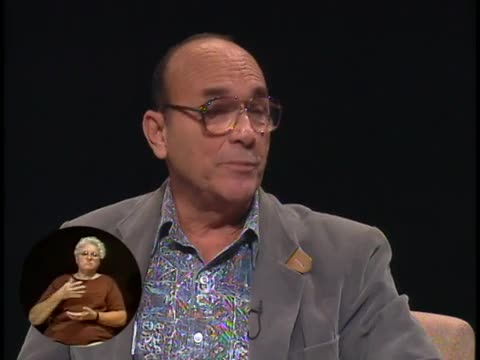
- Moderator: Dan Boylan. Panelists: Sen. Whitney Anderson, Senate Minority Leader; Rep. Quentin Kawananakoa, House Minority Leader; Rep. Barbara Marumoto, House Minority Leader; Sen. Sam Slom, Senate Minority Leader.
- Created Date
- 1998
- Asset type
- Episode
- Media type
- Moving Image
- Duration
- 01:00:52;14
- Credits
-
-
Producing Organization: KHET
- AAPB Contributor Holdings
-
PBS Hawaii (KHET)
Identifier: cpb-aacip-daf110dc4d0 (Filename)
Format: Betacam: SP
Generation: Master
Duration: 00:58:20
-
'Ulu'ulu: The Henry Ku'ualoha Guigni Moving Image Archive of Hawai'i
Identifier: cpb-aacip-523542c05c2 (Filename)
Format: Betacam: SP
If you have a copy of this asset and would like us to add it to our catalog, please contact us.
- Citations
- Chicago: “Dialog; Minority's Perspective: The 1998 Legislature,” 1998, PBS Hawaii, 'Ulu'ulu: The Henry Ku'ualoha Guigni Moving Image Archive of Hawai'i, American Archive of Public Broadcasting (GBH and the Library of Congress), Boston, MA and Washington, DC, accessed March 15, 2026, http://americanarchive.org/catalog/cpb-aacip-225-75r7szhb.
- MLA: “Dialog; Minority's Perspective: The 1998 Legislature.” 1998. PBS Hawaii, 'Ulu'ulu: The Henry Ku'ualoha Guigni Moving Image Archive of Hawai'i, American Archive of Public Broadcasting (GBH and the Library of Congress), Boston, MA and Washington, DC. Web. March 15, 2026. <http://americanarchive.org/catalog/cpb-aacip-225-75r7szhb>.
- APA: Dialog; Minority's Perspective: The 1998 Legislature. Boston, MA: PBS Hawaii, 'Ulu'ulu: The Henry Ku'ualoha Guigni Moving Image Archive of Hawai'i, American Archive of Public Broadcasting (GBH and the Library of Congress), Boston, MA and Washington, DC. Retrieved from http://americanarchive.org/catalog/cpb-aacip-225-75r7szhb