Dialog; Public vs. Private Schools
- Transcript
I'm sorry, sorry I sorry
Good evening and welcome to dialogue. Private school tuition next year, it's say, Puna Hull can run you as much as $7 ,800. Do you get your money's worth? Are our public schools so weak that families should hock the family farm to send junior to the mid -Pacific Institute say? What do your kids miss by not attending public school? We're going to address these and other questions tonight. My name is Dan Boylan and my son is a freshman at the private ealony school. My daughter is a second grader at the Public Palisades Elementary School just so you know my conflicts of interest. Our guests are Lester Sincade of both the Mid Pacific Institute and the Hawaii Association of Independent Schools. Mr. Sincade is a graduate of public schools in Oregon and holds a master's in educational administration. Before assuming his post at Mid Pacific, Mr. Sincade served almost two decades as administrative director of the state court system. Joy Denman is a history teacher at the Public Roosevelt High School. She has also taught at Puna Hull's summer school and she and her husband sent both their children to
Puna Hull. Jonathan McRoberts is a vice president at Merrill Lynch and the father of three children. He recently took his 10 -year -old son out of private school and put him in Manila's Noilani Elementary School. Mr. McRoberts is active in the school community -based management of Stevenson Intermediate School. A graduate, in fact, I think an honors graduate of Pearl City High School, David E. Gay chairs the Education Committee of the House of Representatives. In concert with Senator Mike McCartney, Representative E. Gay ushered a series of governance reforms through the legislature this session. I'm sure that those of you watching have a number of thoughts and questions about public versus private schools. You can get them to us by dialing 955 -7878. Neighbor Island residents may call collect 955 -7878. Answering your calls will be members of the Kahala Book Club. If you ask nicely, they will also suggest some summer reading for you. Our sign language interpreter tonight, as she is almost every Friday night, is Loretta McDonald and she is celebrating a birthday. And we wish you
happy birthday, Loretta. So, panel, our first question is, how do you go about making that initial decision to send a child to private or public school? What things are considered? And I throw it to you, Mr. McRoberts. Well, first of all, a correction by my boy who's in fourth grade in Noilani never went to private school. Oh, I'm sorry. He's always been in the public school. The decision of where to send your child is a very personal decision, obviously. Why I am concerned is here in Hawaii, there's such a higher proportion of children going to private schools and public schools and on the mainland. The mainland is about 11%. Here, it's close to 18 % in high school. It gets up to 23%. In my mind, there's something going on here that's not right and that's going to hurt society. My decision to send my child to public school had not only to do with his education, but the future of Hawaii and what I think is important to make this a good place to live in the future. So, you're saying that you acted out of altruism? No, I'm very selfish. I want to live in Hawaii and I want Hawaii to be a nice place to
live. And unless I do something about it, it's not going to be a nice place to live. It's going to be a class society in which a privileged few have all the benefits and a vast majority of people don't live a very good life. I think that Hawaii Pono, in Hawaii Pono, the Lawrence Fuchs are...no, after a decade, I guess, after Hawaii Pono came out, Lawrence Fuchs came back to Hawaii, looked at the public and private school system and said much the same thing. Joy, what went into your decision? Well, first of all, I don't think I should be defined as having children who went to Punoho that does not define me. And I would say that many of my students would probably be surprised to think that they might not be at the forefront of making and shaping a great and vigorous state. I have some very exceptional students at Roosevelt. Now, fully 75 % of our students are going on to college. Now, this is not necessarily four -year college. We have about 40 % of our students going to four -year college. But our students do go on to go to two -year colleges and then perhaps on to a
four -year school. And of my students today, I'd say many of them will be going into leadership positions here in the state, both in terms of the scholarly life, the agricultural life, the economic life, they're outstanding people and they'll be outstanding leaders. I have full confidence in them. What does the Hawaii Association of Independent Schools argue about, and it has to deal with this issue when dotted? Well, I'm not sure it's an argument. I think we need to remember that pluralism in the school system has been part of our history from the beginning of time. Private schools were in existence a full two centuries before public schools came about. And to place the argument on the table that there is something detrimental to society for by sending a student to private school, I think is wrong. Private schools offer a marketplace
commodity that is focused. Most of your private schools are mission oriented and people simply make choices based on what they want. It meant Pacific, if you wanted art school, we have it. We're the only international baccalaureate school in the state. If you want that type of European program, you go to mid -Pacific. So I think the argument is focused in the wrong place, that it's good or bad. John, do you want to respond to them? Yes, I'd like to because I think what I said has been a little misunderstood. I think that it's a perfect, it's a personal choice and there's good reasons to go to a particular private school. They're the asset schools, a great school for kids who have particular needs. Something might be available at mid -Pac that you want very much for your child. What bothers me is that here in Hawaii, many people are sending their kids to private schools because they think they can't get a good, just a basic, good education in the public school. I don't think unless we get enough people to stay in the public schools, enough people in leadership positions, enough people who are willing to spend some time,
the public schools are not going to be brought up to a quality where it's not just a decision, well, if I've got money, I've got to put them in a private school. I have no other choice because that's what I've been told ever since I got here. Oh, you can send your kids to elementary school, but as soon as they get old enough, you've got to send them to private school, you have no choice. Well, I think I'd like to make clear that the Hawaii Association in no way wishes to participate in that argument, and we never have. We see ourselves as partners in the educational process, and there are all kinds of examples in this community of educational partnerships. It's Kamehameha Schools is an example of an educational partnership with public schools. And many private school administrators are sitting on the school -based management boards. Mid -Pack certainly wants a good public school system because we don't start until the seventh grade. And I just didn't want to say that both Senator McCartney and myself met with less
and a whole bunch of private schools just to talk about what they do and what things are different. And I do agree that it is a partnership. My wife and I have two kids, and my oldest is three and a half and we'll be four and we'll be looking at that decision. It's a real tough one. All you're trying to do is what's in the best interest of your child. And we have arguments and ongoing debate about what is it going to be public or private. It's kind of a mood debate until it actually gets time to sign on the dotted line. And where will she be going to school on that certain? I'm the public school advocate. She's the private school advocate. It's a real tough decision. Marriages have come apart over this question. Well, it's clearly our marriage is safe and it won't come apart based on public. But as a leader who is as Jonathan points out it was involved in this business of trying to improve the public schools, what about
this? I mean, a lot of people argue my school is fine. I find myself saying about my, you know, my public school is fine. But the other ones, the system is bad. It's like politicians. It is interesting when you ask people how your school is that they'll grade it a whole lot higher than the public in general grades the entire system. So it's clear that the majority, large majority of parents who have their children in public schools are very satisfied with the education and the value that they get. There is this public perception and it's in the media and everywhere else that we're not doing such a great job. You know, I go to conferences and meet with leaders, legislative leaders throughout the country. And, you know, Hawaii is the envy of the country. You know, there are public school systems in other states that are being declared unconstitutional. And state after state is looking at how we finance public schools and looking at it. In reality of the country because we don't, because we have the centralized funding, right? That's so there's an equality of funding for every student. But envy of the country in terms of our
performance on SATs, our amount of money we spend on schools. True. I mean, there are many different measures that you can look at a public school system. I would argue that if you look at the best to the worst in the public school and the range of it, we get more equality than most. I would also argue that we would take the top 10 % of any school and they would compare very favorably with graduates in a private school. Would you buy that? Yes, absolutely. I, you know, taught at Punahoe. I think it was five summers. And those students were no different than the students that I had at Roosevelt High School. And what is different, of course, than maybe we could focus on this is what is available to the teachers. That's quite different at Punahoe from Roosevelt. Just a small matter of I could leave off my exams on a little place and it would be picked up. And magically transformed
into a Xerox and stable little package which I could then pass out the next day. Whereas we teachers have to get to school very early in the morning and stand in line and then the machine breaks. There's no one to fix it and what am I going to do? And it's a very different proposition plus our class loads are about almost twice as large in the public school. And this does make a difference. Yeah, we have a very high, we have a large number of large high schools, for example, public high schools. Why is that? Well, you know, I think it was just a design of the past. You know, I do believe that our system was really designed 50 years ago. And we've basically been implementing same program, you know, very small elementary schools. The intermediate schools get larger and the high schools get very, very large. You know, Mike and I was looking at a whole bunch of statistics. And, you know, they're very little correlation between purple expenditure and excellence. There's almost no correlation between percent of the budget spent on education versus excellence or school performance. Very high
correlation, size of school and academic performance. It's not. But I'm not speaking of size of school. I'm talking about the number of students a teacher has. True. How many exams you're grading at night? How many term papers you're able to process? A hundred versus 175 is a very, very big difference. And it's like the difference between having a weekend and not having a weekend, having a Christmas vacation. I timed how many hours I put into grading papers over a Christmas vacation once. It was 78 hours. And the public has this perception of teachers as being out there doing the fan dangle at every holiday. And this just isn't the case. This is the time when we really, really get to work. My school day really begins after three o 'clock. I want to know what the fan dangle is. Yes. But, Les, does mid -Pacific Institute have, for example, a limit on class size? Is it significantly smaller than the public school? I think you'll find that in almost every private school. There is a limit. We never put more than 25
kids in a classroom. Our overall pupil teacher ratio is below 20. Our overall professional ratio is down to 15 professional servicing students. And I think you'll find that true in most private schools. What's the state of, what's the... Well, I must point out, first of all, that we are restricted or confined or whatever the word might be. It's Friday evening, I'm tired. So are the people watching. Yes. Okay. There are federal mandates which determine many of our programs that if we do not comply with those federal programs, we are going to have penalties to pay. We have programs which take off the top of our teaching load to access things like, well, teen pregnancy. And all sorts of special programs for children with particular handicaps. Now, while these may be funded, to some extent there are other programs that come out of our teaching loads so that it's not unusual for a teacher to have 32, perhaps 36 or even more students per class.
I haven't been fortunate this year to have about 150 and 155 students and this is a very good year. How can that be, David? I mean, if we can talk about school community -based management, we can talk about greater autonomy for the schools and putting more responsibility on principals and community. How can you do it if you got 36 kids in your class? Times five. I mean, I do agree that teaching load is a problem. I mean, you know, there's a lot of different things that you can and cannot do, but reducing class size costs a lot of money. You're not only in the ongoing operating costs, but it's the facility costs. You know, it is a tremendous burden. If I had a magic wand and we had $100 or $200 million, the first thing I'd love to do is reduce class size. But I guess the question is, is the public willing to spend the money for it? Is the public less willing to spend the money for precisely the reasons that Jonathan pointed out earlier? I mean, I've got a kid near Lani. Why do I care what's happening up at Pearl City High School? And you
should. Because if you don't, things are going to get worse. It's basically a dog chasing its tail to hypersituation where you have the people who really have political power don't have their kids in public school. They have them in private school. Now, you can talk about altruism and how even though I have my child in private school, I'm going to, I'm concerned about public school. But there's a difference between the concern you're going to show if your child's there and the concern you're going to show if your child is in a private school. And I think we have to get convinced in people who are taking their kids out of public school to leave them in and stay involved, get involved in the school, in the community -based management situation as I have, and work toward smaller class sizes, work toward more teachers less bureaucrats. Yes. You've got to get yourself involved if that's going to happen. David, couldn't you take some of the people out of that big, huge DOE bureaucracy? The last time I did a count, it was something like one bureaucrat,
mid -management person for every 14 classroom teachers. I don't know if that's still the ratio, but that's rather, it's probably worse. I don't know what the exact ratios are, but I build that we just passed. We'll essentially do that. 40 % of the bureaucrats will be coming out of state and district offices and we'll be moving to resources controlled and managed by schools and school complex. They better come into the classroom and not be just one other functionary. Sure. I'm clear that the important thing is that those are decisions to be made by the schools. And schools will decide where best to place those resources. I go back to the same question, don't you think that we are hurt by the number of us who send our kids to private school? And that's don't feel the urgency that Jonathan does to deal with this. I think that that is a reality. When you look at the public school system on the main end, it
primarily public schools are generated by property taxes. I mean, the number one reason why many systems are declared unconstitutional is because of the discrepancy in funding. That schools and affluent communities get funded very well and schools and not so affluent communities don't get funded. And that's the basic problem. You know, we need to look at doing things differently. I would agree in a perfect world. Everybody would, or 90 % of the public would have their children in public schools. But you know, a real challenge for us is to make them see the excellence in the public school system and want to choose to do that. David, someone calls and just wants to let your wife and you know that you should, as a public servant, you should send your children to public schools to set an example for the public. Now, Joy, somebody as you might guess, call in and probably would like to ask me the same question. Why did you choose to send your children to Poon -O -No and not where you're teaching? I would be happy to answer that. Two things, first of all.
We live out in Cahaloo. And when, I guess when the children started Poon -O -No, my husband was telling the Navy. And it was just kind of like, it was a convenient thing. He retired from the Navy. We moved to Cahaloo. I was teaching at Roosevelt. It made sense to continue to Poon -O -No, but one other thing. And this is really a past history. But in defense of chip and chip, I'll be going to Poon -O -No. There was only one elementary school out our way then. We were truly country then, those were long ago days. And the reputation of that elementary school was not very good. And we are staunch believers in public school systems, but we were not being altruistic. We said, we're not going to make our children fight the battle. We'll carry the banner. And we'll see how they do themselves. And we were so fortunate living in the country, they've grown up as country kids. But with the Poon -O -No education, they can walk both sides of the street. And it really shows in their skills as adults today. I don't know that may be a combination
of a rule in them for life. No, I don't know. Jonathan, someone called once and says that they want to help. Are you doing anything to start any kind of organization to try to help this cause? Well, there's three people in the school. There is an organization on the Windward side called the Coalition of Concerned Parents. And they worked through the legislature, putting pressure on legislatures. I ran a program that took place at Stevenson, where I got four principals. Principal Stevenson, the principal, Kwana Nakoa, principal Roosevelt and McKimley to come speak. And we had a tremendous turnout. We had 200 people show up. I got 500 responses to a letter I sent out to the elementary schools. I'm in the process of, I just got the computer two days ago. But I'm in the process of inputting all those names. I will be contacting all those parents. And starting with the older
kids, parents of older kids first, I'm going to try and form little group support groups that say, listen, if you keep your kid in public school, I'll keep mine in. And we'll both go to the PTA meetings. We'll both be on the SCBM. And we'll all work together here. Because some of it is social pressure. There's educational pressure in the state. And there's also social pressure. So it's the only state I've ever been in. When somebody says, where do you go to school? And I say Brown University. They kind of look at me and say, they mean that. They mean, did you go to Puneau or Yolani or Mid -Pak or Damien? Where did you go? There's a lot of social pressure in the state to send your kid to a private school. And if I can help some people overcome that by forming little cells of people who will then put pressure on the schools, kind of be there. Be at the school. And maybe we can do something. Interestingly, among politicians, there's a greater pride in having gone to Fairington. Less is a private
school worth 8 ,000 bucks, which you guys are getting close to. I mean, if a person decides, well, I don't think my kid public school is quite right for him this year. I'm going to go to Mid -Pak and to Mid -Pak. $8 ,000, you guys, $8 ,000 better. We don't spend a great deal more to educate a child in private school as David spends to educate a child in public school. And in Hawaii, private education, if you take and use the dollar measure, is a bargain. Last year, private school education in Hawaii averaged $2 ,400 and 50 cents less than the average private school in the mainland. So it's a bargain if you look at the dollars aspect of it. And I think we need to know exactly what it takes to educate a child in public school. May I get back to me? I'm sorry. I think if we had realized, you know, it was very convenient having the children close by for those who don't know Roosevelt's almost next door. And there was always the accidents, you know, your daughter, fell and broke her arm, etc. It was convenient to be nearby. But when it came time to send them to
college, we had spent all of our money at Punahou. And there were some real problems to be, how are we going to finance this? And in this day of financial aid being less and less available to students, I think parents really need to stop and say, what are our long -term goals for our children? And how can we best meet those? Unless they're very, very, very rich. They would do well to think of what college costs and saying, you know, I don't want to take away your student body. But, you know, the public schools are doing a very good job. We send our kids to University of Pennsylvania to Harvard, etc. So we can do it if they will give us the chance. I did want to add something down. You know, I think this last year we had what I would consider the closest thing to a controlled experiment as you could have in one of our public schools. We had identical twins who went to public schools through intermediate school. They both enrolled at a private school and they both were
accepted. One of the students wanted to continue in the public school. So we had one student went to four years at a private high school. The other one stayed in the public school. Their identical twins, the one in public school graduated valedictorian from her class. The one in at the private school did very well. I mean, top 10 or something like that. So academic need achievement was very, very similar. Now, the experience was very different. The one in public school was very active in student government doing a whole bunch of different things. The one in the private school was mainly focused on academics, although she was also involved with student activities. They both got accepted to the same private college on the mean then. They're both attending as freshmen or, you know, are finishing the first year. So, you know, what's the difference? You know, I don't think I've always believed that it really starts with the student and the parent. And that the school is somewhat secondary. And as long as you have committed students and parents, the end result will be the same. Or very close to the same one. Yeah, I'd like to just talk a little bit to the money thing
because this is what I, the meeting at Stevens and I took some time on this. I think that there are many parents out there that are spending the money on private school that really can't afford it. And if they save that money, there's several different ways they can do it. One is they can save it for college. The second thing they could do is they could supplement their private, the public school experience for their child. If they're not spending $7 ,000 to go to Punoho and they send their kid to a public school, they've got $7 ,000 that they can spend on some very nice things. Trips with a family, maybe one of the parents doesn't have to have a second job. Maybe the parent can spend more time with a child. There's a lot of ways. There are a lot of kind of middle -class people out there that I think are stretching. And they may be even putting their kids in a situation where the kid is going to lose self -confidence because he's going to be surrounded by a bunch of very bright kids. I mean, Punoho, Elani, Mid -Pac, they have great student bodies. But maybe some kids don't really need to be put into that environment. Maybe
they'll excel more in the public school if the parents can spend some extra money on them that they didn't spend just for tuition. Of course. I think that that changes. If you look at what you're saying, it changes the argument just a little bit. What I would advocate is that we get off of this argument that says the situation is either or. Because one of my applications is being a futurist. And I see that the differential between or the difference between private and public schools is going to blur more and more as time goes on, partially because it costs so much. Right now, if you need some kind of special help, good assets. If you want to be in the art school, you buy the piece of the action at Mid -Pac that comes after 3 .30. And I think that in the future, private schools may well be providing that specialist kind of activity with public schools dealing with the core activity. It means a whole
change of the concept of what we mean by a classroom. Our classrooms today are 19th century models at best. And we need to reconfigure how we educate children. Technology is going to change that. I'm glad you came back, because I think Jonathan was about to talk you out of business there. But at this point in the program, we're required to take a 60 second pause. Please stick with us. We'll be right back with more public versus private schools. Now, we've just taken a lot of them from 3 .4. We get houses falling out and all of a sudden we get houses falling out and all of a pack. Just delivery some videos. Okay, you got the sign here. Every day, in big cities and small towns, you'll find public television working behind the scenes on many kinds of programs. What's better? Let's bring the red up a little more. Programs that benefit your children,
your neighbors, and your community. You have to keep your mom and dad. Yeah, but they don't listen to me. I know what you're saying, but yes, they do. Programs that keep us in touch with each other. And keep us in touch with tomorrow's. Let's go ahead and bring up the zone. What time is it? Again. Very good. In fact, we think some of our best programs are the ones you never see on television. Welcome back to a dialogue on public versus private schools. My name is Stan Boylan. On your television screen right now, I think, you are looking at our phone answers, members of the Kahala Book Club. They will take your questions and comments if you dial 955 -7878. Neighbor Island residents may, of course, call Collar. I should also point out, which I didn't earlier in the program, that we're being silent cash. You may be hearing us on K -I -F -O -A -M -1380 Hawaii Public Radio. We've got a few questions here. Why do the private schools less dump their poor students on the public schools come the
close of the end of every school year? Aren't you guys doing that? Aren't during. It's a matter I suspect of putting a student where he can best function. And all of us, it's a parking place situation. If a kid cannot function and has proven after a year of existence in the private school, they cannot function in that environment. Why leave him there to his detriment? Sure. His look is smiling demusively. Well, I know because that's the red herring that public schools continue to raise. That you put all of your misfits back in the public sector. I'm sure it's true with other private schools, and I know it is a mid -back that we go out of our way to try to find another private school that will fit the student's particular needs. If the parents wish that. Did you want to respond? Well, I don't know about mid -pack, and I'm glad you're here, but I know that Iwilani goes out of its way to keep the student for the full school year. And I think that's wonderful. A lot of
the public schools, when they get fed up, they come to us in February, they come to us in March, they come to us at these strange, straggly hours. Hello, the parents have paid their money. Can't you keep them a while longer? And they come in and it's disruptive to our class. It's been in process for a long time. And these four children are like, I just got kicked out of whatever. And so we have to try to accommodate them, and it's not fair to anybody. I really, this is one of our great hardships. Well, I hear you talking about a different student than I perceive the question to be. Oh, sorry. The academic failures, I think all of us, keep the academic failures through the school year. And the screening and the calling goes on at the end of the year. Disciplinary problems, on the other hand. Indeed, if a student has committed a transgression that is no longer a part of that particular society, he has to go. So you dump the sociopaths. I didn't say that. We all have our standards. And in fact, private schools will take
students who have been expelled from other private schools because the standards are different. One very prestigious private school in the city, for instance, expels on first instance for certain kinds of transgressions. Mid -Pack has a two level. And so we will take a kid sometimes when the other school is somewhat trapped by its regulations and say, OK, you've passed your first one off already. You get one more chance. But we all have different standards. But the public schools can't do that. Shouldn't they have the power to do that somehow? Well, it's really clear and Jonathan can respond as well. It's really clear that the biggest dilemma for parents is the issue of safety and discipline in the classroom. And my wife is a part -time teacher. And she sees the kids that are disruptive. The children that might need additional help. And in a class of 20 or 25, whatever the case may be, it certainly gets difficult. I do
believe of all the areas that we looked at this past session, that the one that is the hardest to attack is the issue of alternative learning, you know, school to work kinds of programs. You know, programs that are really targeted at those kids that need additional assistance. Jonathan, do you? Well, this is a bigger question. Essentially it gets down to, and I think that's why parents have got to get involved. The community's got to get involved. They've got to demand that if there's a disruptive student, if there's a student who is not participating the way you shouldn't class or should be some avenue to take care of that student. I mean, I keep going over and over with the difference between right and privilege in terms of being in a public school. And maybe there should be. There's a lot of different ways that are proposed to handle this, whether it's a particular class within that school or there's another school altogether. But I think if you've got the parents, I've always been to come back to this. The parents are involved in the school. They know where the problems are. They can come up with some sort of solution to
solve that problem. But it is a big problem that public schools have to face. They have to take everybody. May I speak to that? I'd like to take kind of an odd position. That's one of our strengths. We are preparing students to deal with a real world. And you would be surprised how sophisticated and with it they are. Now, some of our students to see them, I mean, if I were to see them out on the street, I'd probably go, ooh, I mean, they're big. You know, they're so big and they have their hair in these strange styles and some of its green and part of its shade, et cetera. They're wonderful people. They just look a little different. And this is one of the strengths of the public schools that we have such a tolerance. And I mean the best sense of the word for individual characteristics and development. And there's really not this huge problem that you might perceive a fear of the mall and you see five of them all at once. You know, those children don't have a dress code. No, we don't have a dress code. But everybody's dressed in a reasonable fashion. And they're really nice children. And
occasionally, yes, we have the police at our school all the time. They hang out there. I think they have coffee there. You know, it's not a serious problem. But we really are on top of the situation. And I think our students are all the stronger for having dealt with a variety of people from a variety of blocks of life. And we celebrate that fact. The very sight of a half a dozen teenagers nowadays can induce panic. Come to my classroom and see them when they're in chairs. No, thank you. Very nice. Unless do parents have any more influence over a child's education at a private school than they do in the public system? Well, I can only speak for my school. But I think it's probably true in all of the private schools. The parents are involved to a much larger degree than I hear the apathy that generates your concern. And maybe that's one of the reasons that private schools work. You're paying for it. You have a concern. It's costing you money. We don't have any trouble getting a parent's attention when there's a
problem with a child. Public schools, I'm sure, do have problems getting kids or parents' attention. So that it's part of the process. We like to look at ourselves as school -based management examples, essentially. And I think what you're asking will come if the accountability is moved to the schoolhouse. I think this question is aimed at joy and myself and somewhat. What is the percentage of administrators and school teachers who send their children to private schools? Are there any figures on that? I don't think we ever had a formal polling with that number of years. There's no formal poll. But people bandied, you know, I often hear all the public school teachers and their kids in private schools. Well, it's a terrible problem, I think. I would love to see a poll done, but you can't require people to give you that information. And I think if it exists to the extent that I think it does, it's a tremendous failure of the teachers' union. I mean, one of the, in my opinion, one of the things that the teachers' union has a great potential to do is
help organize the teachers to keep their children in public school. Think what they can say in terms of money for these teachers. Many teachers, I'm sure, I don't really use the word many. There are some teachers I'm sure who are teaching in public school simply to have the money to send their children to private school. And in my mind, that's an ethical one. That's terrible. I think that the union is a perfect, there's a perfect area for them to get busy and do something to improve the public schools. I think the only thing I ever heard on that was John Radcliffe a few years ago. Remember, John made a speech to the union, the overall union meeting. Do you remember that calling for public school teachers to keep their children in the school? Now, comment. Discipline in the intermediate school seems non -existent. I have observed out of control behavior in the classrooms. Now, you said your kids sat down in high school. Wow. Is that the end of the school? Well, well. I know that I have a lot of reeducation to do when they come into my classroom in September. I have nine graders for the most part. Hello, this is called a chair. And we don't do these things, but they're very quick to learn, so it's not a problem. But
I think it must be hard to deal with intermediate school kids. I've not taught there, so I hesitate to pass judgment. But I think it must be trying. I think it's something next to purgatory. That's my guess. But less. Someone's comment says, you say it's available to all private school education, but you were forgetting how expensive it is. It's not available. What about scholarships? Does the Hawaii, your association of independent schools have a large scholarship from? Well, it's not from the Hawaii Association, but each of the private schools administers their own scholarship program. And with tuition increasing exponentially, I think all of us are concerned about this, what we call the affordability question. How do we raise more money for scholarships? How do we keep up with the increased cost? And it's a dilemma that is nationwide, essentially. This person, the comment, call our four children in private schools must have a good income too. Discipline in private schools is better, and therefore a better place to learn.
There's no difference in teachers quality. That goes to the discipline problem again, doesn't it? Well, I would agree that I don't believe that there's any difference in the quality of teachers' public or private. I mean, I say that at Roosevelt, in my time there, we've had three people with doctorates. I myself, I wasn't introduced, just having a master's, but I do, and I have 100 post -graduate units. As do most of my colleagues, I'm sure, although I haven't done a survey. How many credits do you have? But I mean, I would like to think that we're a well -educated group of people. Discipline is a matter, I'm sure that, I mean, one summer at Punahoe, we showed up and the entire campus had been graffitied. And I mean, there was black stuff and gold stuff all over about five buildings. Now, Punahoe got their team out and painted it over very, very quickly, but we do that too now when there's graffiti. It's like, you don't have to go through dags and, you know, being an affluent
six months later, you get it painted? Yeah. That's a complaint. Well, you may have seen, we made the news the other day. A couple weeks ago, we had quite a bit of graffiti in by, I'd say, 8 .30 that morning, most of it was gone. I am very involved, someone calls, in my son's public school, yet the principal acts like his hands are tied by regulations so he can't make changes. Is that true? That's a big problem. You know, one of the reasons why our reform bill this year had something called Student Centered Schools, was because we had heard in our statewide hearings, over and over, that principals and parents and teachers felt that they were stymied by a whole bunch of rules and regulations. Well, it comes back to school -based, school community -based management. You have to have the community basically be involved in the school and the decision should be made at the local level. The fact that this state has funding coming from the state level is great. I think that's
perfect. But then the day -to -day decision should be made by the people who are running the actual school. The only problem with that, if I may interject, I kind of, I know everyone just adores this, and I'm this minority voice from the wilderness, probably a log cabin. But it takes time to make those decisions, and teachers don't have the time. I'm at school from 6 in the morning, and I'm grading papers until about 8 .30 at night, and I'm really quite worried about a process that requires people to hopefully commit to a great deal of time in this SCBM, and I'm wondering who these people are. They're either the very, very privileged people who, you know, play the stock market, I don't know what you, you know, or people who don't have jobs. Because most of us are so busy working, whether we're school teachers or legislators. There's not a whole bunch of time to get involved in the community, and I'm worried about that. You know, that's one of the things that's bothered me, too. I mean, people talk about school community -based manage, but I think if you put your kid in the private school, and you think, well,
you know, not as many troublemakers there, and more likely they're going to kick them out the bad ones and dump them on the public school system in the middle of the year, or things like that. And I haven't got enough time to get involved. I wouldn't get involved at the public school level. I don't get involved at the private school level, but maybe I'm buying some safety. Oh, there's definitely a lot of that, and that's a problem. But isn't that a problem at school community -based management arguing that it's the panacea that this is going to solve all our problems? Nothing is a panacea. I mean, but you can make things better. And people have to make choices. And if the choice continues to be, I'd drop my kid off at the private school, I don't have to worry about it, take care of itself. You're forgetting about the society. And the society is going to come back and get you. And you're going to make a society is going to deteriorate. It's the word I've used. I lived in Latin America for two years. I taught in Latin America, a square -medicon in El Salvador. And I see happening here what basically was
established there. Very good private schools, terrible public schools, a very class -oriented society. And if you don't step in and stop what's happening here, you're going to see more and more of that type of thing happen. You've got to, nothing's going to be perfect. People are going to have to take the time. You've got to give up something else. I don't know why, whatever. You're going to have to give up something else and spend the time with your kid and spend the time with your kids. Stop braiding papers. Something. No, that's not acceptable. You've got to give up something else. Well, maybe you would have fewer kids in your class. Oh, that'd be swell. So you'd have more time to spend on this thing. There's got to be something done. We can't continue to do what we're doing. But you and Mike McCartney passed a set of reforms through this session that you think is going to make a significant difference. Sure. I think the fundamental difference is, you know, for all we've talked about empowering schools and trying to get people involved with it, you know, what we've done is sort of replace one bureaucracy by another and clearly they're making decisions on site. But they're still facing that bureaucracy. What we're trying to
do is truly empower schools, you know, rather than place the burden of proof on the school to prove that they need to do something different. And therefore, you know, they beat through all the interagency issues. What we're trying to say is we trust you to make the best decisions on behalf of the kids. Therefore, whatever you want to do goals and you can do whatever you want to do as long as you're on behalf of the kids, that's, you know, over and over. We heard that the bureaucracy is awesome and just let us cut us loose. Give us some freedom and we'll show you results. And that's basically what we're trying to do. Someone calls with a comment, we are shocked to me. We are shocked you sent a child to private school. No, you're no more shocked than I was. How far away are we in Hawaii from this caller ask much needed year -round schooling? Well, yeah, I just want to say one of, we've been talking to a lot of private companies that do partnership schools. And there's a company that's insisting that for the same per pupil expenditure, they can go to year -round
school virtually. You know, year -round schools at Hawaii school and others are significantly, they're not significantly more expensive. Parents are paying during inter sessions to do different kinds of things, much like they would for summer school. Are they infected at Hawaii school going to more days, more hours? Not more days. It is more days if you include the inter -session activities. Now, all of that is optional, so it's not a requirement. But clearly, they see a lot less, you know, summer loss, because the inter -sessions are actually... Do I hear you saying that you're in favor of putting the public schools in the hands of private industry? Let's run them. Is that what you said though? That's part of the options that become available. If the site -based management team agrees that they can get better support from somebody else, why not? I'm glad I'm as old as I am. Well, how do you feel about that? I mean, there's a movement in this direction, I understand. What's that company that President Brown went to work for?
There's several private companies out there. It's too early to see how they're doing, but it's an interesting alternative. Well, three or four schools in Baltimore, schools in Minneapolis are operating by private corporations, and you're referring to BenoSmith and the Edison project. I, for one, see it as one of those competitors, so to speak. I think it will make us all better. I'd like to respond to the two -year -round school, because I think it's a perception thing. In essence in Hawaii, we have year -round school, and certainly at the secondary level, because nearly every kid goes to summer school. We have 1 ,100 kids in regular school year, and last year we had 958 in summer school, and most of them are hours. So that it's a matter of just defining what year -round school is and figuring out how to structure it, because we are saddled
with a nine -month work year for teachers. And so we're going to have to figure out how to deal with that. No, I think teachers are more than willing to extend their time as long as they're compensated, adequate, late for it. I think teachers agree that there's a community problem, any or children need to be in school, supervised under our loving care and tutelage, but compensate us, please. Someone calls in this the old question, private schools select the cream of the crop. Public schools have a wide range of students including the ones that the private schools dump on them. How can you compare? That's another one of those red herrings that gets thrown out, because I think if you look at any of us, we go out of our way to diversify our student bodies. And I don't want to cite specifics, because I don't want to point to specific kids. But for instance, before asset school started their own high school, many of those dyslexics were coming into private schools, and functioning and doing very well, because we knew what to do to help them. And any private school that you would look at in town, will you find that
there is a concerted effort to balance it racially? There's a concerted effort to balance it with students who are not the cream of the crop. If we took only the cream of the crop, why do they have only 45 national merit scholars in a particular group? It's only 10%. Yeah, but I think the argument is that in many ways, it's unfair to compare public school with a Poonahor or an Elani certainly, because they have so many people applying, so many upper -middle class kids who probably have had a good education to begin with, but it's the media that gets great satisfaction out of making these comparisons based on partial information. I think it's highly unfair to the public schools to use the test scores as the single measure of whether or not their public schools are having success. I think it's foolish, and I think Joy would agree with me. But it's the
media that has this fixation. See, educators beat up on the media just to lay politician's face. Mr. McRoberts is a wonderful asset to the public school system. I'd like to commend him on his comments and philosophies. David, why do some public schools seem to have all the extras? Pool, track, and others, nothing? Well, I mean, we try and allocate funds as equally as we can, and some schools need different things. How do public schools join in being a... How do public schools challenge the average student? We've sent our son to private schools because we feel he would have felt lost in public school without direction. That's the idea of taking the slower student, the students have in trouble in putting them in the private school. It strikes me as a weird question because... But I understand this. I've heard people say, well, my son or my daughter is not that good. He needs the smaller classes or I want him to get the challenger direction. I don't think he can get lost in the public school, the
larger public school. You know, it's interesting. I was at a meeting of vice principals and we were talking about just that and most of the vice principals that I was meeting with were elementary school. And they were just talking about the transition. You know, we allocate funds for what's called a gifted and talented program. And they were talking about... And the school is changing from teaching differently for the average student and differently for gifted and talented. They were talking about taking the gifted and talented curriculum and applying it to all kids. So I think that there really is a move to try and enrich the entire population of students, not just those that have been designated as gifted and talented. I would have to answer that so much of it depends. And I think the same would be true in the private school on the individual teacher. Some would have a very rigorous program and others may have a slightly less rigorous program. But one of the advantages of that is, of course, that
somewhere during the day or somewhere in our school, there is the perfect niche for that child. It may not be all day long, but the child has an opportunity to really develop and find, you know, his mentor, if I may use an overworked word in the public schools. And I think probably in the private school also. And I think that's where the basic difference comes in and it's very difficult to articulate and most people don't understand it, is that because private schools in the main, and I think there's a, well, let me back up, we look at private schools as if they were lumped some like public schools and they're not. Private schools are choices within a choice where all mission -driven, as I said earlier, and it's easier to focus on through your admissions process when you screen students to know exactly whether or not you can deliver for that particular child. I don't think the public schools have that luxury and it makes a big difference when you've got 35 kids in a classroom and you don't know exactly what they need. And you can't really sort them. But
we know generally what a child needs. Okay, I don't want to know, I don't need to know what this child needs specifically. I know what he needs as a student in my classroom. And I am happy and thrilled to be able to address that and I hope I do it successfully. But I think there's a distinction between what you're saying and what I'm saying. I'm saying that the sorting process, so to speak, and maybe that's a bad word. But the sorting process occurs at the front door and students are moved through the curriculum where they can best function. We certainly wouldn't in our school put the majority of the student body in the international baccalaureate program because they would fail at the front door. But it does not mean that our regular college prep program will not get them admitted to the best schools in the country. Mr. Simpson, we've had a couple of people call in asking a similar question. When will the private schools provide special education programs like for slow students or handicapped students?
Is this a problem that you face where people want these things and you don't have them? I think it will come at a point when we can figure out how economically to do it. We are already faced as has been indicated here with increasing costs. And special education is very expensive. Someone calls to John and the men, you'll take this. And they're saying, if teachers worked as many hours as Ms. Denman says she does, there would be no problem. Do you find that school teachers are lazy in our working area? None of the teachers that my child has had so far I would consider lazy. I've found nothing but in the teachers I've served with on the FCBM Council at Stevenson are very good. I am sure there are bad teachers out there. There are bad lawyers. There are bad doctors. There are bad car sales. Exactly. And they've got to be some bad teachers in the right school. That's what he said. He just said. That's what he said. And one of the problems I think that again,
and maybe this is something the union has to look more at, is doing something to make sure these people are faired it out. Because being an teacher I taught for five years. One of the things that really saps your energy is if you're working hard and you see somebody else the bell rings and they're out the door. It's hard to keep that momentum up. It's hard to feel like what's going on here. And I think the teachers have to work hard. Teachers by their very nature aren't risk takers. In most cases it's one of the reasons I got this look over here. I made a big generalization there. But I would bet that you would find that that's the case. If you compare people in entrepreneurial positions, et cetera, to the average person who goes in teaching. They're not big risk takers. Point. That's tempting to be fond of. But I think that they need to take some risks here and they need to try and do whatever they can to continually improve their own body, by body meaning a group of teachers. And not say, well,
our main focus here is to make sure no teacher ever gets fired. The main focus should be that all the teachers are working together and all doing the best job. Which I'm sure the vast majority are. A fifth grader calls and said, I went to a public and now I go to a private school. I like the private school because the teacher can spend more time with me. And I suppose that's the small class. Let me say what my students universally said upon learning that I would be here tonight. There were many who'd been to private schools and they all said, we're so glad we're in a public school. We love it here. Why? Oh, they had lots and lots of reasons. But the main thing is, here we are appreciated for who we truly are without superficially, pardon me, superficially being evaluated about how we dress, who our parents are, where we live. We are accepted simply as who we are. And they said this time and time again. And they were very adamant about it. Mid -pack has an eighth period where kids can go to any teacher for extra help. This is one of the different things about private schools. I think this is
your public relations vice president. Is that true? Is there nothing similar in the public schools? I know that different schools are looking at doing things differently. I think experimenting with a longer school day where the actual teaching load of a teacher is the same. I think it's going to become more and more attractive. For a couple of reasons, it's better utilization of the facility and all of that. The real important thing is trying to reduce the load of the teachers. And I don't think we can expect them to take more than the 120 or 130 or 140 students that they're getting. I must point out in Asia where we all say, oh, they do, you know, these kids, that the teacher teaches half day. And the rest of the day is spent in prep and grading exams. And they're shocked when they hear what we do in the West. We've been having so much fun that we've run out of time. And the talk's been fascinating to say the least. I want to thank you all for giving us your Friday night. We could talk about this for another week and a half. And maybe we'll
try that sometime. Next week, we'll be airing a tape dialogue on the East West Press. That's not the name of a publishing company. Floyd Takauchi will moderate a discussion with two Asian and two American journalists about how Asians view the United States and how Americans see Asia. Until then, for all of us at CHET, thank you for watching Dialogue and Good Night. .
The views expressed on this program do not necessarily reflect the views of the Hawaii Public Broadcasting Authority or the staff of this station. Questions or comments about the program may be addressed to News and Public Affairs Department, 2350 Doll Street, Honolulu Hawaii 96822.
- Series
- Dialog
- Episode
- Public vs. Private Schools
- Producing Organization
- KHET
- Contributing Organization
- PBS Hawaii (Honolulu, Hawaii)
- 'Ulu'ulu: The Henry Ku'ualoha Guigni Moving Image Archive of Hawai'i (Kapolei, Hawaii)
- AAPB ID
- cpb-aacip-225-61rfjd66
If you have more information about this item than what is given here, or if you have concerns about this record, we want to know! Contact us, indicating the AAPB ID (cpb-aacip-225-61rfjd66).
- Description
- Episode Description
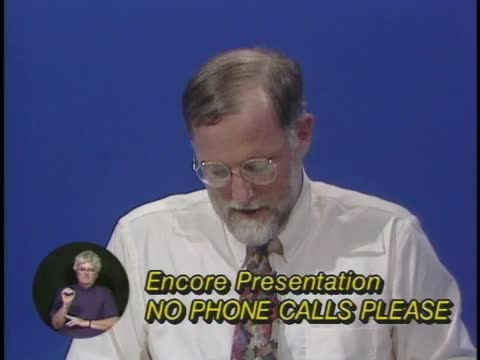
- DIALOG program encore presentation. Host Dan Boylan talks with Jonathan McRoberts (Parent), Joy Denman (Teacher, Roosevelt High School), Lester Cingcade (President, Mid-Pacific Institute), and Rep. David Ige (Chair, Education Committee) about education.
- Copyright Date
- 1994
- Asset type
- Episode
- Topics
- Public Affairs
- Rights
- Copyright, 1994
- Media type
- Moving Image
- Duration
- 01:01:12;11
- Credits
-
-
Producing Organization:
KHET
- AAPB Contributor Holdings
-
PBS Hawaii (KHET)
Identifier: cpb-aacip-4c16ee7261b (Filename)
Format: Betacam: SP
Generation: Master
Duration: 00:59:22
-
'Ulu'ulu: The Henry Ku'ualoha Guigni Moving Image Archive of Hawai'i
Identifier: cpb-aacip-bc0bb41da38 (Filename)
Format: Betacam: SP
If you have a copy of this asset and would like us to add it to our catalog, please contact us.
- Citations
- Chicago: “Dialog; Public vs. Private Schools,” 1994, PBS Hawaii, 'Ulu'ulu: The Henry Ku'ualoha Guigni Moving Image Archive of Hawai'i, American Archive of Public Broadcasting (GBH and the Library of Congress), Boston, MA and Washington, DC, accessed April 28, 2026, http://americanarchive.org/catalog/cpb-aacip-225-61rfjd66.
- MLA: “Dialog; Public vs. Private Schools.” 1994. PBS Hawaii, 'Ulu'ulu: The Henry Ku'ualoha Guigni Moving Image Archive of Hawai'i, American Archive of Public Broadcasting (GBH and the Library of Congress), Boston, MA and Washington, DC. Web. April 28, 2026. <http://americanarchive.org/catalog/cpb-aacip-225-61rfjd66>.
- APA: Dialog; Public vs. Private Schools. Boston, MA: PBS Hawaii, 'Ulu'ulu: The Henry Ku'ualoha Guigni Moving Image Archive of Hawai'i, American Archive of Public Broadcasting (GBH and the Library of Congress), Boston, MA and Washington, DC. Retrieved from http://americanarchive.org/catalog/cpb-aacip-225-61rfjd66