Dialog; The Media's Perspective: The 1998 Legislature
- Transcript
You You Dialogue is brought to you
by Hawaiian Electric Company, people with a powerful commitment. You You You You How Much has transpired since the gavel fell on the first session of the 19th Hawaii State Legislature. Most notably, Governor Ben Coyotano, Senate President Norman Mizoguchi and House Speaker Joe Suki have all
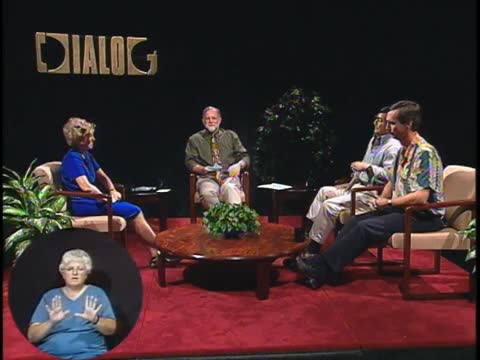
enthusiastically endorsed the proposals of the governor's economic revitalization task force. In the meantime, news from the state budget director has been bad. Says Erlanzai, in order to keep the state's budget in balance, more cuts and services appear to be in the offing. So how will lawmakers deal with these and other issues? Good evening and welcome to the first edition of the 1998 dialogue. My name is Dan Boyland. Boyland, I know my name, and I can pronounce it on good nights. To provide some answers on the direction of the election year session of the state legislature, we have gathered our by now familiar panel of capital reporters. Mike Ewan is the capital bureau chief of the Honolulu star bulletin. Before joining the bulletin, Mike worked for the Houston Post and National Public Radio in Washington, D .C. He has also studied Asian studies at the University of California at Berkeley and Benefellow of the Night Center for Specialized Journalism at the University of
Maryland. Denby Fawcett is part of the KITV News 4 capital bureau team. She is a graduate of Puna Hall and Columbia and attended Stanford on a journalism fellowship and the University of Hawaii as a student of anthropology, right? Included in her many journalism assignments was a stint in Vietnam as a war correspondent for the Honolulu advertiser. Daryl Hoff is the other part of the KITV News 4 capital bureau team. Daryl is a graduate of Kalani High School and the University of Hawaii prior to becoming a legislative lawyer, which is what he is. Daryl worked for elected politicians and has been in management positions at both KITV News 4 and KHON. Bill Kresnek, who is the capital bureau chief for the Honolulu advertiser, was the fourth panelist slated for tonight's show, but unfortunately he's feeling a little lousy, so he won't be joining us tonight. He did, however, promise to call
in a few questions for the other panelist, so we'll pretend that he's here, but we'll never forgive him for not coming. You and Hoff Foset and Kresnek, of course, bring a great deal of experience to our discussion, but dialogue needs your questions to tap it. So please call us at 973 -1000 with your questions or comments about the 1998 legislature. This year's elections, the media's role, Bill Kresnek's motorcycle, whatever you want to ask about. 973 -1000 is the number. Neighbor -I -the -residence may call us collect. Answering our phones this evening, our members of Beta Sigma Phi, the Zeta chapter, we appreciate their help. As we do that of Loretta McDonald, our sign language interpreter. Denby, I hear much grossing from senators and representatives alike about various recommendations of the economic revitalization task force, particularly the hike in the general excise tax. The folks in the legislature, House and Senate. Are they just going to follow
their leadership or do you think that some of them really are going to take a walk on this program? Well, I think the excise tax, of course, in that package will be the hardest bullet to buy, especially in an election year. I mean, how can you, when we're saying how horrible the economy is, say to your constituents, here's a tax hike for you, and it won't hurt you at all, because it will be offset by other factors. But I think it may pass in the House. I think Joe Suki will bring it through there, but I don't think it will pass in the Senate. I don't think overall it has a snowball's chance of getting through that legislature. The general excise tax. Correct. And we're talking about how big a raise in the tax. 34 % hike, so it's from 4 to 5 .35%. You know, Denby, I remember you telling me that you thought that one of the reasons that they cooked up these numbers was because there is room to come down to a more logical easier to understand figure, say from 5 .35 to 5%,
and so there could be that they've already built in a certain amount of compromise that make it easier to bite. But if you don't increase the excise tax, then you definitely don't get the income tax breaks that they're talking about. Well, but that's the way they've set it up. I think they have to come, people now expect a tax cut. So I think they have to come up with some sort of income tax cut, maybe not as big. But I don't think, again, I don't think they can get out of the legislature with that tax hike, and I don't think they can get out without an income tax cut, because people now are hearing all our income taxes are so horrible they have to be cut, and they expect it. Any thoughts on this, Mike? Well, the one thing I find interesting is the political aspects of the situation. You hear house Republicans in particular being very vociferous in their opposition to the GET hike, and it's interesting that placards for demonstrations come out of the
house minority office in that regard. The thing that really strikes me though about the situation is, can the proponents of the task force recommendations somehow shape a debate whereby it's not just on the increase in the general excise tax and talk in terms of linkages with the other aspects of the task force recommendations, ending the pyramiding of the excise tax, the income tax reductions this whole sense of trying to look at everything in a broader sense, rather than just focusing on the hike in the GET. Can that be done? Denby, do you think? I think that it could be done, but I think it's still too complex for people, and I think that it's, I don't think it'll get the hike out of the Senate. I mean, Ross Baker has already said it's dead on arrival. Well, it's very hard to do in an election year, isn't it? Yeah, well, exactly. We are trying to do this in an election year. It's been the criticism from day one, and then the other ways of blending it into entire
package, you may get an income tax cut, but you'll still be paying more taxes every day, and people, that's hard to explain to the average person. And so far, the Republicans have been successful, and this surprised me, is that the governor keeps saying the same thing over and over and over again, and has not been able to retake the, you know, get it back on his court, so to speak. Yeah, I think that he had it in his court. He looked very good for some period of time, but then, since then, all you've heard about this thing is excise tax, excise tax, excise tax, excise tax, so right now, Republicans have seized control of that issue. And then it's interesting what they've done, because for years, they've been screaming about the pyramiding of the tax. So if this tax does not pass, of course, the other pyramiding breaks won't either. I mean, you can't say no excise tax hike, but will reform pyramiding. So that's the thing, the small business to talk about. The math is not there, as I understand it, without the, without the raise in the excise tax, right? You're not going to go. I don't think it is. I mean, I think that without the raise in the excise tax, you're talking
about, you know, you might be able to tell the numbers, but even with the raise in the excise tax, they have to shave something like $100 million out of the budget. So if you don't raise the excise tax, then it becomes an insurmountable amount of service cuts. And, you know, the legislature, I think that you have to keep in mind, it's an election year, not just for the taxes issue, but they don't want to look like they screwed up again. You know, they don't want to make any big mistakes. And I think that the potential for really screwing this one up and having people go into the election, remembering the big screw up, is. But it's not their plan. I mean, it's their leadership's plan. And this is kind of the unfortunate thing. It's been put on these law -making. So you have to look like the ogres, just say we're going to raise your taxes. They aren't the ones that created it, they're only two. But that's my point. Does that's when they screw up, is when the leadership doesn't succeed in getting the membership together behind them? And they
look clumsy and foolish and the leaders try and jump in at the last minute, like, they did two years ago. And the voters think, this is a do -nothing, blah, blah, blah, legislature. I think that they're probably more afraid of making mistakes this year in a lot of areas then they are really going to take on really, really hard issue. Mike, I think we cut you off. Well, I just want to add one thing here. I think in fairness to lawmakers, the issue may not solely be a question of a lack of a political will to seriously consider whether there should be a hike in the general excise tax. I think there are some lawmakers, particularly those who have a long time concern about the poor, those at the lower end of the social economic ladder, so to speak, how these changes would impact on them. So I think that there is a genuine concern among some lawmakers as to what kind of fallout you would have from the hike in the GT and other changes proposed.
There's another hike in there, which I think has a better chance, which from the scuttle but I've heard around the Capitol, there's more hope on it. And that's the hotel tax, excuse me, better chance of passing the tax hike there because there hasn't been the, you notice the tourism industry has been very quiet about that. And then where that would bring in savings, and that hasn't been all added up yet, but what you would say by putting that money into tourism promotion, so you're going to see, I think you'll see this package moving around in different directions, some of it going, some of it not. One of the things that bothers me though is there always tends to be at this point in the legislative session, particularly when something's out there, a great deal of carping. And then some place around the middle, or things begin to gel, and then toward the end, there's an agreement is somehow reached. I have a feeling that maybe this is going to go, change somewhat, and maybe the exercise tax is not going to be as high, but isn't there sort
of an ebb and flow to the legislative session? I think there always is. But on this, I think it's just too dramatic. This is, we haven't ever seen anything like this in the years that I've covered, where someone comes in with a gigantic structural reform like this, and so I think it will be piecemealed and maybe through the years. But one important thing that's happened that, because of this, is we've seen, we see a paradigm shift down there now, that before they used to, I've been sitting through the finance hearings, and before they talk about legislation to drive social good, or for the betterment of people, and we need to do this, it's the right thing to do. But now every proposal, and so far come up, even in this early stage in the finance hearings, is couched in for the good of the economy. And that's never really happened so strongly as this year. And I think that's one thing this task force has done. It's changed a whole way of thinking, which people have talked about. Briefly,
but the whole role of government, as a mechanism of social change into a mechanism of economic change, which is interesting and different. Are there other aspects of the economic task force that you think, are there parts of the program that are in danger, or do you think most of it, aside from the excise tax, is going to make it through? The Land Use Commission, that won't go. The abolishment of that. The abolishment of that. And there's just overwhelming sentiment to keep it. Well, I think it's the political pressure from the outside. I think that environmentalists have done a very good job of scaring people about that. Because the task force is right in ways that it would cut down on a lot of permitting and to the average person when they're buying a house, they don't realize there may be more tacked onto the cost because your developers had to go through more permitting, that sort of an abstraction. But when you get environmentalists saying, if you let this happen, Hawaii will become more cemented over than you think it is already now. And I think they've been very successful so
far and we'll be continuing to hear from them in the session. Because the only people that matter in this deeply, the two arguing parties are developers and the environmentalists, but they're not many developers. Well, you know, the other two is that one of the things that the economic task force talked about was the quality of education and how prepared public school graduates, university graduates are for the workforce. Just the other day in ways and means, the DOE came up with what really looks like an incredibly inflated figure for how much it would cost to improve the foreign language requirement and improve the computers. And the ways it means, people just called them on it. They said, you're not playing the game. This we'll just consider this the first draft and we'll talk to you about this later. And I think that you're seeing a lot of resistance to a lot of these ideas. A lot of people are saying, we're not willing to even talk about this idea. You're treading on sacred ground here. And I think that they have to come up with some kind
of a package. The governor totally has them over a barrel right now because it's in their lap. And even if they can't agree on the taxes or they can't agree on the Land Use Commission or they can't agree on the education system, they have set themselves up to economy is everything. So they've got to come up with something. It's got to follow some of the parameters of what the task force came out with. And they've got to be able to sell people during this election year that they did something. And the governor who hasn't always been that active and sort of an active lobbyist in this, doesn't he have to play a role this session? I mean, and working very hard to get this task force or some semblance of it through. Well, his whole cabinet, in all their testimony, has pretty much been very soldierly about it, even though you know that in many cases they're not comfortable, even Seijinaya from D -Bed, again this is ways and means, kind of had to concede that you move 100 million from the corporate tax and
income tax and you put it in the excise tax and that's the back into the economy. You know, and he says, I have to kind of agree with you there, Senator, but at the same time they're pretty much four square behind it and they will be very important. But in the end, like it was before, the governor has to show up, go grab the leaders by the shirts and haul them into an office and talk it out. I don't think it's a question of the governor hauling Norman Mizoguchi or Joe Suki into a corner and trying to convince him. I think Suki and Mizoguchi are pretty much sold on the pact. I think it's convincing what you might call the rank and file, others who may be aligned with leadership, but who may have some hard questions about the package, particularly the general excise tax. Have we heard the last of high three same sex marriage and auto insurance reform? I think they're afraid. I think that they don't want to deal with those issues.
High three, they shouldn't have to deal with same sex marriage, even the people that agree that the domestic partner issue kind of got thrown aside quite cavalierly by the administration and so on. They're not that interested in mixing it up on that. Matt Mutz and August says that, you know, we've got to focus on this economic recovery issue. Turnstom says the same thing. In terms of the same sex issue, the next battle is going to be with the Constitution Amendment defining marriage, whether it's limited to one man, one woman. Denby, somebody wants to know, would you comment on the effects of the recent auto insurance legislation you referred to it as a sellout to the trial lawyers? Did you do that? No. One thing she did, would you comment on the effects of the auto insurance legislation? Do you have any thoughts on it? Well, we haven't really seen them yet. People are just changing their policies, but it could be better, you know? How about tightly controlled gambling?
Are we going to see gambling bills introduced to either any of them have any chance in this session? I think gambling bills have been introduced annually for the past several sessions. At least since I've been around, I think gambling may come up in terms of a discussion point when people who are against the excise tax that's taken off the board, then the question is going to be, so what's your suggestion? What's your option? You know, I haven't made those calls yet. I've been so preoccupied with Bishop Estate, but it would not surprise me at all if late in the session, when the rest of the economic revitalization thing is laying around in his shambles, that gambling doesn't appear as the miracle alternative to the excise tax increase or something like that, that makes everything add up, you know, it's just a wild thought, but that's my wild prediction, and maybe gambling will emerge as the savior because it's very popular with the voters. And if these guys feel like they're going to election year, and they might, should have nothing to show for the session,
but it's done that so many times before, shown up as the savior. Show up, but I think I'm saying it would not just show up, but it would actually pass us. But the finance chair has already said that the House Finance chair is something he would never consider. The governor won't go for it because he's always said the numbers don't match up of what you get back from it, at least in terms of education funding, you know, so it's something that's going to be cooler. But let me look at a $25 million deal, somewhere in there, casinos, a single casino, a Hawaiian casino, or an offshore type thing, something, I'm not talking about a $100 million panacea. I'm talking about a small cog that will balance, you know, when we get at the end of session and they're talking 25 million here, 25 million there, that's the way those things happen. The Bishop's State, since you brought it up, Darryl, the Bishop's State has been a growth industry for the media, and it's been a growth industry for lawyers in town, and a growth industry. Is there going to be a growth industry in this legislative session?
I mean, are we going to see a lot of legislation or a lot of discussion of some of the Bishop's State issues? I think so. I think that particularly the governor has made it clear he wants to build in there on compensation, which is a flashpoint. I think that they've cleverly, and I don't know if they did this by design, they've timed everything so that much of the new damaging information that might come out, won't come out until after the session is over. So efforts to remove trustees or change qualifications for trustees, you know, would surprise me. But I think something along the lines of compensation could pass. Bishop's State is a very popular whipping boy these days to say the least. Have you heard anything with, you know, among legislators, any responses to what's happening to the Bishop's State, or any response to the Supreme Court pulling back, or any of that? From Ed Case, who has an omnibus bill that deals with many aspects of Bishop's State, and he'll be very
active in this session, and that he has had Bishop's State bills in the past reform bills of Bishop's State, but they haven't gotten any work as they haven't gotten through the House Judiciary. And Terrance Tom, the Judiciary Chairman, is on a $50 ,000 -year retainer to Bishop's State. So the bills have stopped, it is committee. But this year the House Speaker says he will take Tom off and put the vice chair on, so. We have enough Republicans in the legislature these days to make them interesting. When we last met here, I think, and they're doing their best to change them in May or June. If I'm not mistaken, we had Jean Ward as the minority leader in the State House, and he no longer is. Quentin, Quentin and Acoa is now the leader, Barbara Moto is the assistant. What's that going to mean? And why did that happen over the summer? Essentially, what it means is that it's to give a forum for Quentin, Quentin, Quentin, for his
congressional race. Essentially, Quentin is going to be a minority leader from now until the elections. He's not going to be coming back if he follows through, it actually files his nomination papers. So as the head of the Republicans in the House, this gives him a forum, gives him more voter identification, puts him before the TV cameras in the papers, and it's essentially to help boost him for his congressional race. There wasn't a split. There among, and philosophy among the Republicans? No, I think there were some of those. Yeah, sure. But it was a philosophical split? Yes. Well, it's philosophical and both in terms of style. What you see with the new House leadership lineup, in one sense, it is younger, it has more color. You have Quentin Acoa, Sam Iona,
and some folks who thought that folks like Cynthia Thielen and Gene Ward were just too dogmatic in their opposition to the Democratic majority. After he was named a minority leader, Quentin, to promise cooperation with the Democrats. I find your gentler Republican minority, is that it? Well, but it's kind of interesting, whether that in fact will happen, particularly in the election year, Quentin Acoa, I believe today, sent out what I believe will be one of many press releases, and this press release was criticizing talk among Democrats for having a Hawaii prison on the mainland where it will be cheaper, both in terms of land and in terms of incarceration. Quentin Acoa's point is that's exporting Hawaii's money and jobs. So I think you'll hear more
from Quentin Acoa, and he'll definitely let us know how he feels about things. That's such an interesting response to that prison, too, from a Republican, because you're talking about a privatized prison that will go against what unions don't like here, which would be one reason for doing it up there. Cheaper for testing. Cheaper for testing. You know, like to incarcerate one Hawaii prisoner on the mainland, cost $42 a day. Here it's $87, so you cut the price. That's a very, I didn't see that letter, but that's very interesting. It could very well be that what, you know, we've gone from, Mike used the term dogmatic. In many ways, it was automatic. It was just automatically opposed, whatever the leadership was opposed to, sometimes on very thin grounds, and often, as Demby described, flip -flopping on traditional Republican issues. It could be Quentin Acoa wants to be seen as a person with a name, Quentin Acoa, who has ideas on different issues, and is trying to get away from either a solid opposition or a pure Republican ideals. Well, what is
a party that has 12 people in the house, and only two in the Senate? Fourteen people have two people coming out of the house running for the same congressional seat. What kind of madness is this? Well, let me tell you about a little... The whole interest in the first Congressional seat, right? Well, let me tell you about a little joke that's kind of floating around, Neil Abercrombie's supporters, they're saying among themselves that Neil will be able to take out two Republicans at once, that the whole point being that one, if there is, in fact, both sign up and do run, one will lose the primary one, and then the other will go up against Neil and lose. So, there's some chuckling in some democratic circles about how this is happening and how this may be a prelude to the fact that the Republicans may not be able to attain the number 12, which they have now in their house ranks. One thing, too, when Quentin and Quentin Acoa announced, he, in effect,
said he hoped that Gene Ward would step down, which... They both said that, and a reminder at this point that, after many weeks, we are finally live again. So, if you dial 973 -1000, you can get us here at Dialogue, please do talk to these fine people with your questions. What about the majority side? Now, Mike McCartney is leaving. At the end of this, he has announced, Mike, I remember when he came in, great promise. People talked about, I remember, McCartney for governor within six months after he was in office, and now he's leaving after 10 years. What happened? Well... Well... He loves business. He loves the business that he's in, and he also, I think, for the unhappiness side was same -sex, was very hard on him. He's a very likable man who's used to people liking him and being favorable toward him, and many of the lawmakers that took the stand that he did in favor of domestic partnerships were just drilled and
called late at night and screamed at and sworn at. I think that was hard on him. Is that going to have an effect on the Senate organization down the road, not in this session, obviously, but down the road? His departure? I think you have to look at the situation, not just in terms of the McCartney race. You've got 13 senators who will be up for a reelection if you include one, not including McCartney, but you'll have 13 seats up next year by calculations. There's about, I think, five of the dissidents will be up. There's six, what you might call hardcore majority Democrats will be up, and two, you might say, who are soft. So, the overall feel of that election could have some, a lot of impact, for example, Roz Baker is up also this year. Yeah, I think you can't. I think the Senate is more, most likely, I think,
keep the same organizational structures through this year, because, again, they don't want to make big, ugly, public mistakes, and then hope that they can ride through the next election based on their session last year, and something out of this year. Which most people felt was successful. Last. Last session. I think that's why I'm talking about not making any mistakes. I think they feel, generally, like, they did okay. They're probably hoping the economy recovers a little bit. Richard Breck, I remember two years ago, said in this program, it's the economy. You know, the economy is going to suck, and the election is going to be very bad for a lot of Democrats, and he was right. So I think that, you know, where the economy goes, we'll probably have something to do. But is that why it was bad for Democrats? I don't think entirely, but I think that if your family is under stress, and you're frustrated in your life, and you're still paying all the taxes, it really makes you mad. And you've got to add, the Vody Booth is a great place to take it out on somebody.
And we're going to take it out of here, because we're at the midpoint of our dialogue on the upcoming legislative session. We need to fill our mugs with water here, catch our brush, shift in our seats, but we'll be back with more of the media's perspective on the 1998 legislature. A lot of the new material that's getting created is being created electronically to begin with. It doesn't exist on paper. Whether records survive or not depends on whether we as a society think it's important to see that they survive. I can't imagine anything that we are making today will be available 100 years from now. I don't think it'll be available 25 years from now. Into the future Tuesday night at 10. In the 20th century, science has advanced further and faster
than ever before, from automobiles to organ transplants to the worldwide web. Take a technological tour of discovery with a few scientific surprises. Join host Charles Osgood for the journey of a century. A science Odyssey coming soon on PBS. Welcome back to our dialogue with three distinguished members of the local media. We use distinguished very broadly. We're talking about the 1998 legislative session with KITV 4's Denby Fawcett and Darryl Huff and the star bulletins might you in. You can talk to them as well by calling 973 -1000 and we are live where these wonderful volunteers from Beta Sigma Phi Zeta Chapter are awaiting your call. We very much appreciate their help tonight. Again, the number is 973 -1000. Neighbor Island residents may call us collect 973 -1000. Will the legislature cut the university loose this
session? John Radcliffe called us in. One of the lobbyists for the union. What do you think? Wasn't that one of the tax force Denby? More autonomy for the university. Yeah. Do you hear any argument about that? I haven't really talked to anyone about that. When they talk about cut -abloos, I'm not sure what that means. I mean, there's a number of pieces of legislation. Cut -abloos roll them out. I think that people could hold the university accountable pretty much for their own its own behavior at this point. I mean, if they're saying it's given them a blank check, no, that's not going to happen. What is the status of the constitutional convention convening? Anyone know? No, no, we got it off until it got John and Phil. It's a java word. This is my thought. I think it's for the courts, right? We're waiting some sort
of legal decision. Because I think I covered that decision. I'm trying to remember. It seems to me that it was put off. There was a pun. We don't have to worry about it this year. It's like at the earliest, it'll happen is 1999. That's what's jumping out in my mind. Maybe someone could call and correct me. Yeah, if anyone knows, call us where we know almost everything among this group tonight, but not quite. If not, we're not worried about it at all. Not quite everything. What do you think of Representative Tom not being on the final list of the Judicial Selection Committee? I think that that was bound to happen because it's a very difficult time for the Judiciary now with Bishop Estate. And when you have a lawmaker kind of openly saying that he wants to be a district court judge, plus a lawmaker who has a retainer from the Bishop Estate, a yearly retainer, that it's hard because they're accused that Judiciary already have been too political. And I think the only way a lawmaker could get in now as a judge would be to like Russell Blair did move out of the legislature, go into
private practice, do that for a year and then apply. I think that the commission was probably being somewhat merciful to Terence Tom. I mean because the fact that he was a candidate became public, had they stalled any length of time or had that, but not happened before the legislature, he would have been in a horrible position. He might have lost his committee chairmanship simply because there's so many issues that he could not consider. So by clearing, clearly stating he's not a candidate, I think they did him a favor. Denby, having brought up the name of Russell Blair, who I believe used to own a tape recorder, what's going to happen to James Aki, former Senate president, and now he let people gamble on his property and he's been a, he's led no contest, right? I think that what's probably going to happen is that he is going to lose what little power he really has, which is the co -chairmanship of the education committee. He'll probably be replaced on that. Other than that, beyond that, it would surprise me because they're really caught in a
muddle over in the Senate about exactly even how the process should go on this. His theory is that they've just been out to publicly embarrass him by hashing this all out in public during an election year because this process that they came up with to examine him. But I think that probably, they won't do anything that drastic. Matt Monsonaga told Denby that there weren't the votes to remove him from the Senate. He'll probably just muddle along and then if his constituents vote him in and give it all that they know about him, then he'll probably be restored to full credit next year. Any thoughts, Mike? But I think it also raises a question for the Senate in terms of what do you do with a sitting colleague who has pled no contest to a felony charge? As far as I can recall, that hasn't happened here before. The case would seem to be much more egregious than what happened with Milton Holt and Steve
Carb, I believe. Also, in terms of the fact finding that that's going on with the key, what was stated was that the fact finding includes information that went beyond what occurred in court. So it'll be intriguing to see what comes out in that report that those types of information that did not make it in court. Well, that report will be released this week and there will be that kind of information, but still what it goes back to, it's a felony, but it's bingo. It's a different kind of felony. One, I think that people can feel not so bad about is something more horrible. So when you say gambling bingo, a social group. I think if you look at the charge within the larger context, and also in terms of a lawmaker in terms of sound judgment, this also traces back,
I think, overall, and not directly tied to that particular gambling charge, but the soundness of a key judgment in terms of his consult, his talks with Sukarm and Sukarm about development of his land for some commercial purposes at the time when the state was considering a convention center site and he was Senate president. Of course, the ethics committee cleared him of any wrong during in that case, but it does raise questions, I think, among his colleagues in particular, in terms of the soundness of his judgment and how that reflects on the institution as a whole. But he's only being judged on this one issue. So I think that's all they can deal with, and then again, we play bingo. Well, Christmas Eve at my house, ultimately at the family party. I mean, what bingo, it's as American. Back to politics is, though, it's a Jimmy Aki is part
of a group of senators who are regularly poised to challenge the leadership, and I think that in the end, they won't be too hard on Jimmy in part because why get these guys all riled up early in the session forever to just be, but be buzzing on you all through the session. Daryl, to refresh your memory. Gary Rodriguez called. He said that next Friday, thanks for watching, Gary. Next Friday, the Constitutional Convention issue will go before the 9th Circuit Court of Appeals. And someone else called, but not Gary, apparently, says the Constitutional Convention, should be a hearing about it in mid -January. Those, uh, those match, those don't match, do they? No, they do match. They do match. Mid -January is next week. Oh, that's right. Hey, uh, I'm still back before we went on readrooms. Well, we know it carries. Listen, let's change the subject. I'm not listening. Will there be any laws to cut back government agencies in this session? Are we going to cut anything? We're not going to cut the land use commission, you say? You think that's dead on arrival?
Is anything else going to be? We're going to combine, is what we'll see, but I don't, I can't seem to eek out of anyone. What? I was just listening, trying to read between the lines when Earl Anzai was speaking before the House Finance Committee. So I think there will be combining and consolidating, but I don't know where. But, uh, but I don't know if it's going to occur on in a significant scale. I believe two years ago, there was a bill passed out of the legislature whereby the administration was supposed to come back with some sort of report to lawmakers saying on the, uh, what the other plans on consolidating, I believe, was agriculture, commerce and some other departments. I can't recall the exact details, but the bottom line of that was that essentially a report was done, but nothing happened. A reminder, 973 1000, we are live here at Hawaii Public Television and you can speak to ask questions of these, three fine people, is the legislature ready to help small business by undoing regulations the strangle business? Sam, call that
on in. Uh, I think if they can, if they can find ones that, uh, that make sense, you know, sure, but I think that a lot of that in that question goes to Demby's original point, the role of government, you know, the Civil Rights Commission just came out with a set of rules that again get into exactly the questions that you can ask an employee about their criminal records or potential employee about their criminal records. Those are the kind of things that drive people crazy and then a lot of those regulations are on the city level, the convention center can't have a party on the roof, you know, all that stuff is the kind of things that drive business people crazy, you know, they can't get a sign up. They, you know, they've got to kick out of a lady complaining about the city sign ordinance. She can't get a sign up, take six months, you open your business, it takes six months before you can get a sign. You know, a lot of that stuff is, uh, city issue that really drives the business is crazy. Are we going to hear more, you mentioned privatization
earlier and that was a big flap at the end of the last session? Are we going to hear more about privatization in this session? Yes. Definitely. Uh, from Haku's preparing the bill and just looking for some Haku alliances, prepared a bill that they say is, uh, uh, more dramatic than even the most dramatic pro privatization bills were last year, they're just looking for someone to introduce it. So we can see the same forces, uh, out and forth. Then already hearing it from public safety with a proposal of a prison on the mainland. One thing they're looking at, Keith Connoceiro seems more in favor of keeping a prison here, but we haven't really heard that posed. Um, any? Oh, I'll, uh, other privatization proposals that you've, uh, privatization that there's always been talk about, uh, uh, more privatization of, of, uh, government, uh, services, uh, the primary one has, has,
I long been with prisons and, uh, I think we need to see how, how that just going to be more talk about, about that, you think? Yes. It's a money question because they, uh, Calvin Seis says they, they just don't have the money for Geo -Bonds to float Geo -Bonds for that 100 million plus new prison. You know, a lot of these things about privatization or about, uh, cutting government agencies and reducing government agencies and so on, those are, those tend to be kind of penny -annied dollar figures. When you come to emergency things where you've got to find a lot of money, that usually you have to go to the, the big budgets, the big entitlement programs, you know, uh, Medicaid, uh, the welfare programs. That's where you really save money. You, you could consolidate the Department of Ag and the Department of Business or something like that. And you might save, you know, a million or two million dollars a year, but that's about it. Uh, here's, here's a question for our time. Who are the lobbyists to watch this session? And not legislators, who are the lobbyists to watch? Well, Gary Rodriguez was last time.
Gary Rodriguez. He was the one we always watch. Yeah. And then, uh, uh, the same ones, Rick Sugibara for the insurance industry. Um, fun one to watch is Dick Body. Uh -huh. That's his clients at restaurant industry. Well, I think what's going to be interesting is, uh, who's going to be doing the, uh, the lobbying for Bishop estate on those, uh, Bishop estate bills that might come up, uh, uh, uh, you know, to see who surfaces. Oh, what do you think about the dual chair system in the Senate last year? Did it accomplish anything? Work better than, I think, a lot of people thought. I mean, I thought that in, in many cases, and particularly, uh, Judiciary Committee, I thought that those two balanced each other pretty well. I think it was more to, uh, chemistry, I think, uh, the, the relationship between, uh, Chumbly and Mats Nag, I think had a lot more to do with, uh, chemistry rather than the, the structure of the system. Uh, I think the whole co -chair concept, uh, uh, it, it has a good intentions in terms of, uh, uh,
making the power, more diffuse in the system. But I think once you have a chamber of 25 people with co -chairs for system, that creates, uh, a number of logistical problems beyond just what you might call the, the human inter -dynamic problems and also the way the, the, the co -chair system, uh, uh, essentially required more time of lawmakers, particularly more time when, when the crunch came down, uh, at the end of session, uh, if you got a consult with a co -chair, that's going to take time and you have two co -chairs on one committee and, and those co -chairs are, uh, one in another committee. Alfonso and Gaston, after you, after you, after you, that kind of stuff. Um, uh, ways and means we'll, we'll be a more effective committee this year because probably because of the chemistry seems to be better, but the care of a good audience. This should do really well. They just did a few talks I've had with them. Well, that case is billed to dismantle OHA, succeed this session. I don't think it sees it that way, but will it succeed this time? No. It won't. Not going anywhere. Uh, but usually I think, you know, for bills of that nature, what, what, what you might call
cosmic bills, uh, uh, you know, those things come back and it's, it's not just, uh, it's introduced one year and instead I think it's a starting point for discussion and, uh, you'll probably be back, uh, uh, another session. And to describe the bill as purely killing in OHA bill, I think, uh, it has a much broader idea in mind, some more terms of consolidation and more, uh, in terms of, uh, having, uh, Hawaiians empowered to decide what to do in terms of, uh, my understanding of that bill and correct me if I'm wrong was that the financing was way short of even what those agencies together have now. It, it didn't have the regular, uh, entitlement payments, uh, the way that they have now. I mean, there's been a lot of talk over the years of OHA and Hawaiian, uh, homes being put together. That, you know, and that's supported by, you know, some people in those agencies. It's just if you, if you take away all the money, then there's almost no point. Uh, Mike, uh, someone's after you. How can
you, how can you compare Aki's gambling on property to Milton Holt's wife beating and Steve Cobb's using prostitutes? How can you do that? Well, I guess the, the caller has a good point there, uh, we'll give one for a caller, one for a caller. Uh, the, um, I wanted to ask. Let me, let me, let me defend Mike, if you don't like, I mean, I'm not going to step into comparing those crimes, but you have to look at the history of the Senate's disciplinary handling of different people in different circumstances. I think more of what those things point up is that how you are handled by your colleagues, earlier we were talking about Steve Cobb, the main reason Cobb got slammed more than anybody so far was because he misled his colleagues about what had happened and then subsequent reports show that he hadn't told the truth. That's what outraged them. I think often, they're not comparing the crimes when they make a disciplinary action. It's, it has much more
to do with the person that's involved in their relationship in the Senate. Uh, I, I think partly, probably to Mike, my comments had a lot more to do in terms of, uh, by what standards do senators judge their, their colleagues? If you use the, uh, the Holt and the, uh, Cobb example, it was, it was pretty much, uh, uh, I, I hate to use this phrase a slap on the wrist, but in terms of, uh, uh, the situation now, and particularly, I guess, when, when you had a, uh, election back in 1994, it went, uh, integrity and public trust, what, what were such key issues and, uh, went, uh, a member of the fact -finding committee tells me that, uh, he doesn't think, uh, that, that issue is dissipated. That, that is still a concern of the public. Uh, then that, that raises, you know, how do you deal with, uh, a senator like, uh, Jimmy, in a way that exhibits the kind of standards that senators themselves think they should adhere to? Um, I, I, I thought we answered this, but maybe we didn't. Can they pass? Can the legislature pass
just part of the revitalization package, or does it have to be all or nothing? Well, I think they can, it'll appear in, uh, number of bills that will be signed by the governor and kind of unusually the, uh, the speaker of the house and the senator, they're gonna present it together, the speaker of the house. But they all agree that it's, it's, it's to be picked in. It can be, yeah, it can be picked in chosen and then of course with any bill, you can do whatever you want to it so you can insert what you want and take out. So I, I think it will be whittled down and moved all over the place. Well, here's a comment. The caller is state senator Brian Connell. He would like me to mention the town meeting on ERTF proposals, the economic revitalization task force proposals, in the Campbell building, Wednesday, January 14th at 7 p .m. That's gonna cost you money. Uh, Senator Connell? What's that? I don't know if he's sitting there with Gary Rodriguez. Yeah, we want to, uh, that's gonna cost you money. Just kidding, just kidding. Hey, you see on the, you're from that part of town. Uh, if programs will
be cut, now we've got, we've got, ons i saying there's no money with the economic testimony, everybody's calling for cutting. Which ones do you think are gonna go? Will programs be cut in an election year? No, there's a, I don't know. I think they could be. This is the first time it seems they've discussed that seriously, because they're adding up what they've got and work and they, they can early on size as he can make that, make it through this year with a balance. Right, that's right. That's right. But then the next year has a deficit of 42 by his accounting and then the year 2000, 322 million. You know, one of the things about the task force proposal is that it does shift by taking the excise tax and making it bigger. It's a structural change that shifts, you know, more of the tax burden onto tourists. And, uh, if you make that kind of a structural change this year, theoretically, your revenue stream is gonna grow without impacting local residents as much as, as another tinkering might
do. So that's one of the thoughts, too. Uh, who are the lesser known legislators with innovative ideas in both the House and the Senate? You get to name one, Denby. With innovative ideas? Yes. You cannot hesitate. Because I think of the ones that are known. You're not allowed to. Well, Ed Case wasn't that well known until last year. I mean, he's known. Okay, shucks. Yeah. Innovative ideas. Uh, hasn't had any skill on my own indictment. Well, uh, this is somewhat awkward since, uh, I would be relating a hallway conversation I had with Roy Takumi, uh, and he's, uh, he's a bit unknown now because he's in a political sidebeer with the leadership. But one of the things that that arose as we were talking about the state's financial situation was, hey, voluntary furloughs, uh, workers
themselves, uh, the side, uh, not to work a particular day. That one goes back to the state. Uh, that I think is, uh, a good idea. Uh, the, the problem I think with that might be how do you get a handle as, as to how much will that deliver, uh, to the state? Takumi is an interesting guy. He, he, I think Norman, uh, not Norman Suzuki. Norman talking about him? No. That's it. You guys, uh, can't hear Rocky from downtown. Even said that Judiciary had, he had the number of good ideas last. What do you feel? Ah, this is something everybody brings up every election year. What do you feel is the integrity of the election of the elections in a while? We've had delays in counting and past elections and so forth. It's all corrupt. They're in a back room stuff in a ballot box, right? I don't think so. I don't think so. You think the elections are fine. I think you can trust the system. I, I've seen no evidence so far and plus you've had some of those elections
observers. I believe what Russell, Mukalia, uh, I think, uh, if, if anything had occurred, I think Russell would have spoken out. Yeah, there've been accusations, but no one has ever shown anything. Uh, what's the gossip on, uh, who's running for Mike McCartney's position if he gives it up this year? For Debbie Hartman. Debbie Hartman. But I haven't had the chance to call or ask and red bellinger former school board member, red bellinger former state house member. And Terry, Tom has said he won't rule it out either. Yeah, I talked with Terry and he did say that to that, his primary intention right now is to seek reelection to his house seat, but he's not ruling out a run for that Senate district. Just a little footnote that I may add that someone else has said is that, uh, that, that district is very, very large. It runs from, uh, uh, Kahuku down to Kaniyoki and it's going to be a hard district for someone like Terry to campaign and given that, that he's blind, he would definitely need support staff helping him, him, him out and it's going to be, it's, it's a big
district. That's a lot of one runs forever. Uh, it's Joe Suki. Is this his last session of speaker? Is he, uh, is he going to run for mayor? No, he's going to stay. He's going to stay. Likes it too much. Uh, is this, he says he can't be mayor after being on the task force with some of the proposals, which were so anti -county. What about every chimney? Is he going to be around the, the Maui Senators? Are you going to run for, for mayor Maui? Have you heard any? Haven't touched base with him recently. He used to be interested. Yeah. On the basis of the funds that are available for different candidates, are we going to have any kind of a gubernatorial election this year? The last, the last time I noticed, uh, um, kaitano had all the money in the world. The other three guys needed to mortgage their house. Uh, and then you've got now Fosse in the mix. So you know, what they're, Fosse is coming in as, as done. Any thoughts? I think that, uh, if, you know, you always, you can never know if Frank thinks on so many levels, but I, I was, I, I actually pictured
him actually out to screw Jeremy again, because by running in a Republican party, he might soak some of Jeremy Harris' votes away if there's a Democratic primary with Harris versus kaitano. So I, in my most, fairies view, that was possible. But, uh, I think that he also knows that maybe without much of a campaign, he might be able to beat Linda Lingle in a Republican primary with all his power on, on a Lulu, and, and, and maybe even make a run at, uh, whoever wins to. Well, one of the theories I heard in terms of, uh, Fosse's, uh, uh, announcement that, uh, he'll, uh, run the, uh, the, uh, GOP primary is that he may try and, uh, uh, shift at, uh, in, in, in terms of a, uh, neighbor island versus, uh, Oahu type of race, which would be, uh, in his benefit. Oh, we're down to one minute, but I wonder if you might respond to this, because a lot of people have, what is the media's, uh, perspective on Bank of the Y President's statements to put money into lobbying legislators to support the task force recommendations? Any thoughts on that? Just new words for this. This is
Larry Johnson. What? New words for a time -old practice. Uh, and there's not going to be any, any reaction to it. I think the campaign spending commission directors already said that's no big deal. Bob Botanus said it's no big deal. Well, it seems to me that that's how the system works. Uh, you, you, you support your, your, your friends, people who, uh, back, uh, your ideas. Uh, you, you don't support someone that, uh, would do something that that you oppose to. I think as long as, as, uh, it's, it's publicly traceable where, uh, uh, Larry Johnson's money goes, uh, you know, it's out there for, for people to, uh, no, and, and they can draw their own conclusions from that. And, and as voters, uh, take appropriate actions, they feel so, feel too. God, we swimming cynicism, cynicism, don't we? And there, there will be no pressure for campaign finance reform in this legislation's legislative session. There will, there will be, uh, uh, what comes out though. I, I think, uh,
it's, it's still, uh, still unclear. You've got a new group. I think it's called, uh, Hawaii clean, uh, sea calf tell will be in town in a, this month, and in this month. But, and our time is up, however, and we've got to go. Our thanks to our guests, and be faucet, Mike, you and Darryl Huff, and we're sorry that no good, that we won't even mention couldn't make it. And to our phone answers, uh, from beta signify, a reminder that if you'd like to send us your questions or comments for dialogue by email, our address is dialogue at kht .pbs .org. Next week, my colleague Lynn Waters will be here to moderate a dialogue with House and Senate majority leaders. And I'll be back the following week with the minority leaders perspective. And on Wednesday, January 21st, Lynn and I will be at the state capital to bring you a special dialogue report, live coverage of the 1998 legislature's opening ceremonies. Until the next time, for all of us at a Hawaii public television, thank you for watching dialogue. Aloha.
Dialogue is brought to you by Hawaiian Electric
Company, people with a powerful commitment.
- Series
- Dialog
- Producing Organization
- KHET
- Contributing Organization
- PBS Hawaii (Honolulu, Hawaii)
- 'Ulu'ulu: The Henry Ku'ualoha Guigni Moving Image Archive of Hawai'i (Kapolei, Hawaii)
- AAPB ID
- cpb-aacip-225-53jwt0ht
If you have more information about this item than what is given here, or if you have concerns about this record, we want to know! Contact us, indicating the AAPB ID (cpb-aacip-225-53jwt0ht).
- Description
- Episode Description
- Moderator: Dan Boylan. Panelists: Denby Fawcett, KITV 4 News Government Reporter; Daryl Huff, KITV 4 News Government/Legislative Reporter; Michael Yuen, Star-Bulletin Capitol Bureau Chief.
- Created Date
- 1998
- Asset type
- Episode
- Media type
- Moving Image
- Duration
- 01:01:59;09
- Credits
-
-
Producing Organization: KHET
- AAPB Contributor Holdings
-
PBS Hawaii (KHET)
Identifier: cpb-aacip-77d79920ba7 (Filename)
Format: Betacam: SP
Generation: Master
Duration: 00:58:55
-
'Ulu'ulu: The Henry Ku'ualoha Guigni Moving Image Archive of Hawai'i
Identifier: cpb-aacip-685a9f51569 (Filename)
Format: Betacam: SP
If you have a copy of this asset and would like us to add it to our catalog, please contact us.
- Citations
- Chicago: “Dialog; The Media's Perspective: The 1998 Legislature,” 1998, PBS Hawaii, 'Ulu'ulu: The Henry Ku'ualoha Guigni Moving Image Archive of Hawai'i, American Archive of Public Broadcasting (GBH and the Library of Congress), Boston, MA and Washington, DC, accessed March 18, 2026, http://americanarchive.org/catalog/cpb-aacip-225-53jwt0ht.
- MLA: “Dialog; The Media's Perspective: The 1998 Legislature.” 1998. PBS Hawaii, 'Ulu'ulu: The Henry Ku'ualoha Guigni Moving Image Archive of Hawai'i, American Archive of Public Broadcasting (GBH and the Library of Congress), Boston, MA and Washington, DC. Web. March 18, 2026. <http://americanarchive.org/catalog/cpb-aacip-225-53jwt0ht>.
- APA: Dialog; The Media's Perspective: The 1998 Legislature. Boston, MA: PBS Hawaii, 'Ulu'ulu: The Henry Ku'ualoha Guigni Moving Image Archive of Hawai'i, American Archive of Public Broadcasting (GBH and the Library of Congress), Boston, MA and Washington, DC. Retrieved from http://americanarchive.org/catalog/cpb-aacip-225-53jwt0ht