Dialog; Hawaii's Worker Compensation Issue
- Transcript
You Dialogue is brought to you by Hawaiian Electric Company, people with a powerful commitment. Good evening. Welcome to Dialogue. My name is Stan Boylin.
Two years ago, Hawaii's business community called behind an organization called the Haku Alliance. Their principal aim was to lobby for reform of Hawaii's workers' comp law. Changes were made in the 1995 legislative session and again in 1996. Changes designed to save employers between 20 and at one time an estimate of 45 % in their worker's comp insurance rates. But the Haku Alliance and other business groups sought further changes this past legislative session. Without success, are there demands warranted and how long can business carry the burden of Hawaii's workmen's comp law in the state's stagnant economy? To answer those questions, we've gathered four interested parties. Senator Suzanne Chan Oakland co -chairs the Senate's Human Resources Committee and shares the responsibility with Senator Brian Kano. Before becoming a senator, she spent three terms in the House of Representatives where she was the chairperson of the House Human Services Committee. Senator Chan Oakland's background is in psychology.
Darren Akiyona is the executive director of the Haku Alliance, a group comprised of more than 10 ,000 businesses throughout Hawaii who are working toward the reform of state's workers' comp system. And it's also the group's principal lobbyist and spokesman. I'm going to question you about that 10 ,000. He also worked as a legislative aide for former state representative Anel Amaral and for the House Judiciary Committee. Dr. Scott McCaffrey is a physician who specializes in occupational health care, which includes the treatment of injured workers. A former chief of occupational medicine at Kaiser Permanente, Dr. McCaffrey has been in private practice since 1990 and has treated over 4 ,000 injured workers, and has overseen more than 10 ,000 cases. And he is working for a workers' comp reform. Lorraine Akiyona has been Governor Kaya Tano's director of the Department of Labor and Industrial Relations since
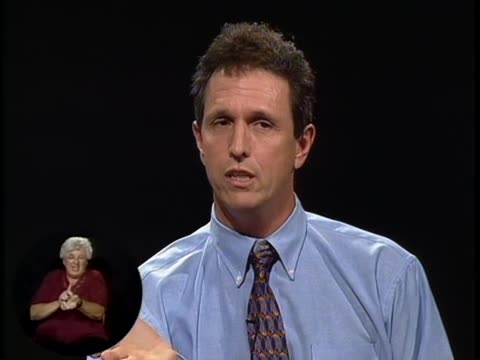
1995. Before taking on that assignment, Ms. Akiyona was a partner in the law firm of Cage, Shuddy, Fleming, and Wright, where she headed the firm's environmental practice group, and specialized in environmental and commercial litigation. Our knowledgeable guests await your questions, so please call in your queries to 973 -1000. Neighborhood and residents, of course, may call us collect. Again, the number is 973 -1000. Waiting to answer your calls are our good friends and workers from the Hawaiian Humane Society. And our sign language interpreter is Loretta McDonald. I remind those of you listening to our simulcast on Hawaii Public Radio's KIFO 1380 AM that we solicit your questions and comments as well. 973 -1000 is the number. Dr. McCaffrey, what's still wrong with Hawaii's workers' compensation law? I'm glad you asked me that. I thought you would. Despite all the efforts that have been made to date and the name of reform,
unfortunately it is becoming and has become more and more difficult through this period than ever to deliver health care to the injured worker. I think the intentions have been good for the most part. However, as treating physicians and occupational medicine, we find ourselves more and more mired in regulatory paperwork. We find ourselves having more and more difficulty getting care approved for patients. And by and large, it has become such an oppressive system from a practicing standpoint that many providers have actually left the state. And I'm not talking about just some of the ancillary services, but also a very well -qualified MDs, physical therapists, and so on. We've done our own independent poll. And unfortunately, the reform today has had the backfire effect of actually creating access to care barriers for injured workers. On one of our telephone polls, we found that 70 % of the primary care doctors pulled, and that would be internal medicine doctors, family doctors, were not willing to accept an industrial injured patient unless they were already part of
their panel. For some of the reasons that I listed. So it's really become a more and more difficult environment to practice in. You're not making as much money. Is that doctors are not making as much money now because of the rate? Well, about two years ago, our fees were cut 50 % with about two months warning. And that flushed a lot of providers out of the state and out of the system, or made them to decide just not to treat anymore. So I actually had a call from one patient the other day. They finally found the way to our door. They had called 39 physicians, primary care physicians, before they finally got our number. Let's get back to some basics, though. What happens because I'm not sure everyone understands the worker's comp law. Laws, laws. What happens if I'm on the job? I work at a construction site, and I pick up something too heavy, and I hurt my back, and I'm aware that I am hurt. What do I do? What's the first thing that's going to happen? Anyone want to take that down? Essentially, if the worker's sufferers are work related injury, he or she would
fill out forms notifying the employer of the injury, then proceed essentially on the Hawaii system to the medical provider of their choice for treatment. The forms would actually, in most instances, be filed with the employer's insurance company. And the insurance company would have a claim that suggested they reviews the claim. And I think it's safe to say that probably 85 % and 90 % of the claims would never even be challenged, but insurance company. Somebody saw the injury. I mean, you know, it's just common knowledge that the injury took place, trustworth, the readiness of the employee. And they would proceed through the system, getting medical treatment, getting their wage replacement, taking care of it, and hopefully be back to work in a quick fashion, and then proceed back on the employment track. What about the 15 %? I think, you know, that's where I think the big problem is. Obviously, in this system, which has supposed to have been a no -fall system, you know, there wasn't supposed to be a situation where you're going to litigate a claim. But, you know, there are cases where employers will say
it wasn't work related. And the employee will hold to the position that it was work related, and then you're going to have a conflict. Either the insurance company is going to contest the claim, the employer is going to contest the claim, you know, or the employee will hold their position that it's work related, and you will end up in a mediation situation, going before the labor board, contesting claims, contesting the extent of the injury, and then you will have problems. I mean, that's where the cost will start being driven in workers' copies, when that conflict starts taking place. Director Akita, what are those mediation processes, and what is a patient, if you will, someone who's injured? What's their final appeal, if you will? Well, basically, how the process works or the procedure works is the Department of Labor really does act like the adjudicator. We determine in those smaller percentage of cases that don't resolve on their own, or where there is a dispute, either with respect to the issues that Darren talked about, compensability, whether it is a work related or not, or sometimes on the issues of what kind of treatment, sometimes
there will be issues or disputes regarding the extent of treatment or the kind of treatment, and also other things, maybe sometimes when there's been a permanent disability, the amounts to be paid to the injured worker. What happens is if there are those kinds of disputed claims, they will come before the Department for hearing and administrative hearing, which is a very informal process, and hearing's officers at the administrative level will hear from both parties, often times attorneys are representing me parties, but that's not required. There are times when workers, injured workers will represent themselves, and it's a very informal proceeding. It's not like a court proceeding where the rules of evidence and the rules of civil procedure apply, but the facts are brought out, a transcript, a recording is kept of the proceeding, and then a decision is made. And if any party, once that decision has been rendered, is not happy with that decision, or does not like the outcome, they can then appeal that to the labor and industrial relations appeals board, which is, say, three member
board, which then conducts a much more formal proceeding. And that's the last appeal? No, that's not the last appeal. That's actually the beginning of the formal proceedings. It's like a trial on the merits. It's very formal. Rules of evidence apply, the rules of civil procedure that the courts are governed by apply. And the parties are represented by attorneys? Usually, represented by attorneys, and then a decision is made. And at that point, that decision either becomes final with nobody appeals, but if there is, again, a desire to appeal from that decision, then the party that's agreed by the decision can appeal up to the Hawaii Supreme Court. Senator Oakland, you have churned Oakland, I'm sorry. You have undoubtedly heard Dr. McCaffrey's complaints before at your committee. Is there validity to them? Is he the only physician complaining about what's happened in the last two years? I've heard from physicians that actually have
known of other physicians leaving. The ones that I've talked to have actually stayed and want to work with injured workers. But I think there is concern there, and I know there was pieces of legislation like the coordinated care bill that looked at how we can help an injured worker through this whole maze of procedures, so that they get the timely and appropriate care and get back to work in timely way. Hopefully, for those that are not able to return to the exact kind of position, you know, something needs to be done to help modify the work environment, so they still can work. That's what we're grappling with right now. What did you ask of Senator John Oakland's committee this past session, Akiyona, that she didn't give you? Well, I hope it wasn't only me asking, because then I deserve not to get anything. I think 10 ,000 businesses.
At least. At least we communicated with. But what we've asked is, in the 95 reform that was passed, there was a provision that allowed or began to start the process for a coordinated care type system being put in place in a ways where it comes system. What we asked last year was that we begin setting up the rules and the procedures for the system so we can start instituting the concept of coordinated care. And that passed out of the house. We got into the Senate and, you know, we had opposition, and we weren't the only one. There were labor unions testifying in favor of it, too. It wasn't only if the Haku aligns doing it. And we, you know, we got into a situation I think that. I think it was agreed towards the end of the session that maybe there was too many questions remaining on coordinated care that we needed to look at. What is coordinated care? You asked 20 different people, you're going to get 20 different opinions. In our opinion, coordinated care is a concept that upon injury, upon the injury, right, there is created a system of communication between provider injured employee, employer insurance
company so that you can take the injured employee into a system that's going to assure quality care from the beginning, that is going to reduce the chance of conflict and litigation, treat the patient throughout with each party communicating, which we think in the present system we don't have. And that's why we have so much conflict. I think as Dr. McCarthy said, you know, bureaucratic paperwork, which I think director of key was department that has done a hell of a job since 95 of reducing this type of paperwork. But we think coordinated care is a system that can reduce that bureaucratic burden, provide quality health care, return workers to work in a timely fashion and bring down the cost at the same time. Where's the administration on this? Well, I think we support the concept of coordinated care, coordinated care really is coordinating delivery of the medical services to the injured worker. It also means very active involvement and case management by the insurance company, the adjuster, the medical practitioner delivering the services as well as involving the employer and the worker
in knowing about what's going on with their case. And I think conceptually it's a good thing to explore. I would add, you know, in addition to what Darren said, there are coordinated care pilots that are going forward now. In the 1995 legislation, workers' comp reform legislation that was passed, we allowed organizations that are subject to collective bargaining agreements to fashion different things that were more innovative and coordinated care was one of the things that various, in fact, labor unions together with the employers, labor and management are exploring and we're looking very carefully at what these pilots are doing and what kinds of things are putting into their programs. Dr. McCaffey, wouldn't it? I'd like to respond to some of those issues, because in all due respect to Mr. Keeper's department, if there's been a reduction in paperwork down on the treatment level, where the rubber meets the road, I'm still waiting and my colleagues are still waiting for it to trickle down. I think one of the big problems that we
have here in the reform movement that's gone on and why is that the changes that have been made thus far have by and large favored the insurance carrier with very little reformer concessions to the people delivering the care or even more important to delivery of the benefits to the injured workers, which this whole system is supposed to be for. With all due respect to the Haku Alliance, I think it's important that the public know that there may be thousands of affiliates, but it is funded up to a level of about 40%, I think, Darren, you said in one lecture by the insurance industry, I'm so. So I think we want to look back and take a look at the players in this situation and who wants what and for what reason. And I don't think we should, or can never lose sight of the fact that this system is for the efficient delivery of health care to injured workers so that they can get back to work and be productive. These are the human resources of our business, the backbone of the economy. And we seem to have lost sight of that in all this reform process. I know we have set up, there have been some good moves, I believe, by the
Department of Labor. But I have to criticize them a little bit in their follow -through, for instance, they did set up a panel of physicians about a year and a half ago to study the issue and to make recommendations. Well, they've only met once and they haven't met in over 12 months. And none of the recommendations that I'm aware were made have even begun to become implementing. So there's a lot of, there's a lot of good things being said, but I would like to see them translate into action. Either of you want to respond to that? I think I would like to respond to that because I think perhaps Dr. McCaffrey hasn't been involved with some of the other task forces that the Disability Compensation Division and Gary Hamad, who is the administrative of that division, has called together in terms of revising forms. And in fact, we're going out for public hearing on some rule changes to actually ease the burden. And some of that was statutorily mandated, some of it was more within our control flexible because it's governed by administrative rules. I would also say that the workers' comp reform legislation did address some concerns of both not only the employer and insurance community, but also of the injured worker community. And I think that the system
has developed into a very complex system. And one of the good things that we did to address the needs of injured workers was to establish a facilitator office to help injured workers through the process. Has that not helped the facilitator's office? They're just instituting it now. I don't think it started yet. I called after the part 95. We had to be able to get funding for it and we also have to establish the positions and that takes up a while. So we are currently recruiting. We're currently trying to recruit for those positions and hope to have them up and running and filled by next year. But that's the normal process, unfortunately, in civil service to state government positions. We're talking about the on -budgetment program? No, we're talking about the facilitator office. Because there was a non -budgetment program that was first set up to help the injured worker that had drives problems getting care. But I've had people call down to the department or the DCD Department of Labor. And we're told over the phone that by a secretary that this was primarily for complaints from the insurance industry. So maybe
there's miscommunication or, you know, as I said, some of these programs sound very good. And I'd certainly like to see them implemented to help the injured worker. Dr. McAfee, since you're on, you're on at the moment. Caller wants to know, are providers really leaving the state because they can't sponge any longer awful workers gone? Well, I know there is a lot of talk about patient treatment mills, about the collusion of attorneys with doctors to create problems. So they can build the system and build the insurance carriers and employers out of money. In fact, that's been the battle cry from the insurance industry side in this reform process. Point of fact is, it doesn't really hold water when you look at it analytically. There are anecdotal cases. They do go on. We all sell the 60 -minute episode in California. However, the, by and large, in fact, industrial indemnity, one of the leading insurance carriers in the state, actually calculates a 4 % or about one in 25 cases to be actually fraudulent claims that are out to get the system. One in 25. Only,
in other words, 95 % of the people claiming industrial injuries are legitimate, hard -working folks that don't want to be where they are, and are trying to get back to where they were. Senator, someone asked, the legislature is planning to look at workers' comp, will changes be retroactive to current cases or future cases only? We haven't really discussed that. I would think it would be prospective. It would depend on how you end up writing the law, right? And so we can take that into consideration. What about Darren's point about, say that again, coordinated care? Are they going to get that in the next session? We're actually working with the business sector, with providers, with government officials, and trying to craft something for next session for consideration. And some of the concerns that were raised by the doctor, as well as some others, we are trying to address prior to
having a hearing on something next session. So Darren's organization, Lorraine, is also involved. There are the medical doctors, the Hawaii Medical Association, that's involved in others. Darren, I've got to go back to something that the good doctor said. The doctors are always only good, and the good senator, and the good director. Are you really representing the insurance companies? I tell you, we've been told that, and Dr. McAfee said 40%, initially in 95%. Initially about 95, about 20 % to 25 % of the fundraising that we did came from insurance. But ironically, if insurance is so much behind hockey, their rates were cut. And average of 27%, but we know it's about 35 % to 40%. So actually in premium dollars, the insurance industry lost easily over 60 million dollars by supporting this reform. So I don't agree with that. I don't agree with Dr. McAfee's figures, but I can tell you that as you can talk to any insurance company, their rates went way down.
And it was mandated by the governor. He mandated a minimum of a 27 % reduction. But I remember two years ago, Dr. McAfee, when we sat here and went over this before, the point was made, and I think everyone agreed that the cost driver in all of this tended to be the cost of medical care. Well, that simply doesn't hold water. If you look at the cost analysis of the system before the reform changes. Only 25 % of every healthcare premium dollar that went into the system went to providers. And that includes hospitals, MRI imaging, physical therapy, even the chiropractor. That means 75 % of the money went elsewhere. Since the reform happened, now the providers, the people actually taking care of the patients, are only getting about 15%. Which I think is very much out of balance. As far as Darren's comment that insurance companies lost money, the most recent insurance commissioners report out, indicates about 120 million dollars of profit. That is, money that was taken
in versus what was paid out. Yeah, did not. So I'm sorry, the numbers just don't agree with this. And then the virus section is getting there. I didn't say the insurance company lost money. I said the premiums were caught by the governor and insurance commissioner of a minimum of 27%. That was mandated as a cut. Now, on Dr. McAfee's figure of 25%, the study that was done by the legislature and the governor said, in 1995, the 42 cents of every dollar went to the medical community in workers' comp. I remember that figure. It was a tilling that study that was done. And it said 42 % of the workers' comp dollar went to the medical community. And the legislature looked at that and it's no secret why the medical fee schedule was caught in 1995. It was based on that study. Well, that was 1991 figures. And I have to disagree. I think the people down there taking care of these folks, I don't think 40 % is an inordinate piece of the path. A question. What is the process
of appealing a decision and how long does it take? We've talked about the process. How long does it take, Director? Well, I think with the volume of cases that are before the Labor and National Relations Appeals Board, sometimes it can take several months and extend out. But we were trying to address that backlog. But it does take several months to get to a hearing. So it is not an instant process. Unfortunately, we want to improve that. But there is a backlog of cases right now before the Labor and National Relations Appeals Board. Why does the legislature keep the cap at 501 per week when it should be up with the current economy? Do you understand that question? No. I think they're speaking about the average weight state average week and wage compensation, which I think this year is at $501 per week. And that thing is statutorily increased every year, regardless of how the economy goes. That goes statutorily up. So I would disagree that it's not keeping up with inflation. In fact, he probably bypassed it. Someone
calls and asks, why don't you have a long suffering businessman on the panel? We have a representative of long suffering businessman on the panel, and we only have four chairs. So that's why. Why isn't the ILWU or a group that represents employees involved in the panel since its employees who will lose benefits with workman's comp reform? Pretty good point. Are you guys making the progress that you are right now? Because unions are backpedaling and unions have been in retreat for a long time now, and this is a very conservative age. Are you folks really worried about workers getting treated then? You know, we took a position and we took a position of taking businesses stance at the legislature. Are the unions retreating? If they're doing it in Hawaii, you could be fooling me. Because they will be very aggressively against almost everything that Haku is strive for. So I don't see them retreating. But I
think many of the unions have realized that workers' compensation cost is a factor for their members. And are you seeing a great deal of testimony by unions at your committee on workers' comp issues? There's usually a few spokespersons. It's pretty organized the unions. But again, there are unions that have been supportive of some of the legislations, some that have expressed concern. What we're trying to do at the legislature is to build partnerships. And a lot of this conflict is what I came into as co -chair. And I hope that through the interim work we're doing, that we actually will try to encourage a lot more of the working together. I think each party has something to contribute towards improving the workers' compensation. What we're doing is we have a number of... representatives from all the different parties, unions, we have the business sector providers. And we're getting a sense of how a coordinated
care system, for example, could best function here in Hawaii to hopefully ensure quality of care that the workers will get, that will help maintain the reduction that a number of businesses have experienced in premiums and also to address some of the concerns of the medical professionals where they feel maybe the 110 % is not adequate. 110 % of Medicare. That's the reimbursement. I think you should know that both Director Kibe and myself last year at the session testified about lifting the 110 of a Medicare fee schedule on the coordinated care system. So, you know, I think we testified on the fact that maybe if we go into... we're going to coordinate care that the fee schedule should be lifted and it should be an open market on it.
Can I address a thing about... One and two. It's a point that, you know, Senator Chanuklin's Suzanne made. Basically, another thing that the Tilling House study found was that another cost driver was adversarialness in the system. And that's why it's important and the efforts have been in recent times not only by the department, but the main parties that are involved in workers' reform, that we really try to reduce that adversarialness between insurance company, injured worker, employer, and healthcare provider, and try to make the process more simple so that people don't have to resort to attorneys to represent them all the time. That's the idea of the facilitator's office, and also reduce adversity just among the various interest groups so we can come together. Labor management can come together and address some of the common concerns in workers' comm. Scott, could I take my head off to that comment? That's been one of my primary identified cost drivers in the system as well. If you have a case, if you're unfortunate enough to have the back
injury, that doesn't get better in four to six months. You have a, right now, within the system, and this is Tilling House, and it's also my own clinical experience down the front lines, you have an 80 % chance of having to go out and get in a turn if you're not well within four to six months, just to protect your benefits and keep them from getting stripped away. To me, that's one of the most outrageous things that's going on. And if you want to look at cost drivers, that is the huge one. For instance, in 1994, I believe, the system actually paid attorneys more money than they paid the providers taking care of the injured workers. And that's how outrageous that is. I got that number from Congressman John Amini, who did quite a bit of study on that. Representing. Representing human. He might want to. Go, go, go, go. So, absolutely, that's a major, major problem. And that brings up the coordinated care issue. We've got the potential right now to coordinate ourselves. We don't have to wait for coordinated care. In fact, although there's potential there,
it's a double -edged sword. It could either help us coordinate or it could go further in stripping injured workers of their right to choose their doctor. Also, put providers under more and more pressure to cost -contain. And we've all heard the managed care stories about the gag clauses. And the pressure that physicians are under right now to cost -contain. That wouldn't be in the interest of the patient either. Hard to believe it. We're having such a good time, but half our program is gone. So, we must take a break. But we will be back with more dialogue about Hawaii's workman's compensation laws. With Lorraine Akeba, Darren Akeona, Dr. Scott McCaffrey, and Senator Suzanne Chun Oakland. What brings a story to life, an audience to its feet? At PBS, we know it takes a story well -told,
a mood unblocked, to live due to another place, and into another life. It's what makes us dramatically different. And if PBS doesn't do it, who will? Remember this? New Year's Eve 1987. Then remember also that flooding is Hawaii's number one cause of property damage. It can cause injury and death. So when we do have prolonged heavy rains, storm surge, or high surf, if you live or work in an area prone to flooding, listen for weather information and emergency instructions, and be prepared to act quickly. The civil defense emergency information in the white pages of your phone book can help. Knowing now will make a difference. What if animals could talk? What would they say? Would they say anything at all? At PBS, we know a silent gesture says more than a thousand words. After all, it's in our nature. Maybe we just need to listen.
Creating an oasis in the storm of life. If PBS doesn't do it, who will? Welcome back to our dialogue on a WISE Workers Compensation System. My name is Dan Boylan, and volunteering to answer our dialogue phones this Friday evening are our hardworking friends from the Hawaiian Humane Society. Please call them at 973 -1000 with your questions or comments for our guests. Dr. Scott McCaffrey, Darren Achaona, Lorraine Achaiba, and Senator Susan Chun Oakland. Recently, the Hawaii State Supreme Court passed a law. I don't think they passed a law. But they interpreted a law saying that stress on the job may be compensated. Did the Supreme Court go too far your opinion? Please, Lorraine, you're a lawyer. You're going to do this. Well, I believe after reviewing the Mitchell decision, I think the Supreme Court basically ruled correctly in the sense that they looked at the statute which does not currently have a specific
exemption for stress -related claims arising out of discipline connected to work. This person claimed that they were under stress because their employer had threatened to fire them or had fired them, is that it? Well, no, they had been disciplined as a result of not following specific procedures in the workplace and that governed their performance in the workplace. And so there was a disciplinary action and the party in the Mitchell case who the claimant had experienced stress as a result of that disciplinary action. And so it is true there are other jurisdictions, other states, that have these specific statutory exemptions. And although the labor and Dutch relations appeals board tried to by administrative ruling and decision -making craft a exception to recognize that disciplinary related action and stress -related to
that should not be compensable, it is not specifically spelled out in the statute and that does need to be addressed and corrected. Will it be addressed in this next session? Yes, I believe both the Senate and House during the interim is looking at this particular issue and hopefully we'll have a measure crafted to address it. I'm sure the executive branch will also be supportive of something. Darren, some of your people and your alliance, their blood must have been boiling at that interpretation, wasn't it? Oh yeah, you know, I'll give it direct to the key, but the ruling was correct based on the statute. But for employers, especially small employers, if you're going to allow a stress claim for disciplinary action or job correction, termination for good cause, you're essentially going to turn that relationship up on his head. And other states have corrected it. California had tremendous problems with stress claims in the early 90s and they did statutory changes. So we look forward to some changes at the legislature this year. Dr. McCaffrey, understand that this caller
understands that a why as the fewest workmen's claims, but physicians keep people out of work longer. Why are people kept out of work longer? Is it so physicians can get more money? Caller says he's not an insurance caller, says he's an employer. Please answer as honestly as you can because as we know, you're basically just on his first and you must be. You wouldn't be here. That's a poor thing. We're all just so greedy in here. I'm sorry for that comment. In point of fact, and although there are abusers in every corner, and game players in every corner, and we have to acknowledge that, I don't believe most physicians are in any way trying to keep people out of work for their financial gain. In point of fact, I think we've revolutionized, at least with some businesses, an ability to get people back to work at a light duty or modified or bridge duty level, where even though the person isn't able to go back to their usual job that they got hurt at, particularly in a heavier type of labor position, we can at least keep them
back in the workplace, get them out of the house, so they're not sitting at home, refrigerator full of beer, daytime soaps, so on, which is very unhealthy mentally for people that have been temporarily disabled. So I think we've really come a long way. Eight years ago, light duty was almost unheard of. Now it is commonplace, so I think we're coming along quite a ways there. I'm sure there's still some exceptions, and otherwise you'd have to deal with case by case, because sometimes there are big barriers to get people back to work. Either there's no light duty offered. They want to be 100 % before they go back. They're unfriendly work environments for light duty workers, where the other workers will even harass and make fun of them, because they're not carrying the load, and it's pretty complex dynamics. But by the way, I think we are making progress. A comment, the number one roadblock is Senator Kano. He is unreachable, and someone says to Senator Oakland, why is
Senator Kano so hard to get a hold of? I think Senator Kano has very strong feelings about this particular issue, and he wants to assure that the quality of care for the workers are priority in any kind of system of workers come. So that's why in the process, what we've done in the Senate has actually established this interim work group, and I'm glad that all the parties are willing to go through this to see how we can make sure that the quality of care is kept as a priority without diminishing some of the other concerns that have been mentioned here. Why are, I think we've spoken about this in regard to the Supreme Court decision, but why are subjective illnesses like stress covered under the current workman's compensation law? Why are they? Well, the statute, as it was originally drafted many, many years ago by the legislature, it's a social policy legislation. It was meant in exchange for the right of the worker to give up the right to sue the employer, to be covered for
all work related injuries, and to get reasonable and necessary medical care for those injuries as quickly as possible, and then return to work as quickly as possible. So the statute is broad in that respect, and over the years, there have been various changes made to the statute, but it still reflects that social policy intent, which I think is a good one that we want to see injured workers get treatment as quickly as possible, reasonable treatment, necessary treatment, and get back to work as quickly as possible. But once the appeal, actually, for you, if a claimant has denied a medical claim by labor appeals board, can he or she appeal right away to the Supreme Court? Or do they have to wait until the case has been treated, raided, and come to a conclusion? I think on certain issues, if certain issues are still interim, if the labor industrial relations appeals board has made a determination that still has to go back to the administrative level at the division, at the department, they have to wait until that determination is made, and then seek whatever next recourse or review. Someone calls and says,
I think this came up a couple of years ago, Darren. I want you to respond to this. Caller feels the most significant thing for people to know, workers gave up the right to suit, exchange for the presumption clause, which enabled them to get quick treatment. However, the insurance companies are contesting the presumption clause, violating the presumption clause, and denying workers' quick treatment. Should we go back to the right to suit? Well, you know, it's a two -edged start, because we've had that discussed at the legislature. Should we go back to the right to suit? Well, you know, along with the right to suit, the employer then gets the defenses against a third, too. Contributory negligence, you know, and such things. I don't think the worker wants to be put in a situation where you have, let's say, a big multinational company, and you get injured, and they decide to contest the claim, and they flood you with litigation and attorneys, and you're just one worker trying to contest the case. And I think, you know, the balance, the concept, and as director Kiba said, it was a social policy whereby the worker did give up the right to suit, and exchange for immediate
medical treatment and wage replacement. And we think the system works. I think, you know, we're having too much litigation in the system that's a problem, but I think everybody here is working towards solving that problem. You know, I need to highlight one thing about the Department of Labor, where in 94 and 95, when we came up to the legislature, and they emphasized the fact of safety in the workplace and injury prevention. And I think the employers in this state have finally, I think after the emphasis was placed in 94 and 95, began to realize, like, return to work, that these things can bring the cost of workers' compensation down. And you see industries, in particular, being more aggressive in training, doing injury prevention, you know, doing safety courses to bring down the cost of workers' compensation. I'm still bothered by something that Dr. McCaffrey said earlier, though, Lorraine. Is your department doing anything to find out whether access is really being denied, no? Because of the lowering of compensation to the physicians, do we know that? Because that, it seems to me, would affect any kind of reform of the system, wouldn't
it? Yes. I think that was the first thing we looked into. When we heard that the legislative reforms, especially the medical fee schedule reductions, which greatly reduced the amount of fees for certain services and certain categories, we wanted to see, and we did touch base with the practitioners. And it is true that some did leave the state. But by and large, I think, as a credit to the healthcare community, a lot of the doctors are still providing services. And that is why, as Darren mentioned, you know, as Dr. McCaffrey mentioned, and Senator, John Oakland mentioned, we're all trying to work to address adjustments to that medical fee schedule. If, in fact, they need to be made. And I think that, again, is something that we can do in collaboration. It doesn't have to be adversarial. It can be worked out together. Scott McCaffrey, where does chiropractic care fit in the injured workers in coordinated, from your point of view? Should chiropractic be in the workers' comp long? I think the entire spectrum of medical
care should be available to the injured worker. For chiropractic per se, it is applicable to a subset of patients. It shouldn't be applied to everybody. But then neither should any other treatment. So I guess my answer is, yes, they're the place for chiropractic. I think it's no secret that they have developed either through failing to police their own ranks, or whatever, or that there was maybe too much treatment over treatment going on at one point. But I've seen the chiropractor step forward and are hearing them voice at least, a willingness to step up to the plate with the rest of us and try to get coordinated. Do insurance agents get kicked backs for claims denied? If they do, they're in tremendous violation of the law. And I've never heard of issues. Maybe not claims denied. But my sources say that if they can close a case before they reach a certain threshold or amount of money that was put aside
initially, that that does affect their bonus. So from that standpoint, they aren't a conflict of interest. I think we need to clarify this. The insurance agents do not do claims. I'm talking about adjusters. Yeah, okay. But the question was insurance. The insurance agency sells insurance boxes. They don't handle claims. But people that oversee these claims and decide what's going to be paid or what isn't, which by the way, in my opinion, are not trained to the level that they should be to be making these type of decisions. And so there's certainly room for improvement there. I think we're in a conflict of interest with respect to providing adequate and full medical care. Oh, Lorraine, I guess this is for you. Don't you think the department has been unfair to the people having to go through hearings and appeals by using them escape goats? Because of a very few who tried to defraud the government. Well, I don't think that they've been used to escape goats. I think the department's position is it tries to have a level playing field for all parties that come before it. So I'm not sure what that question addresses if it's a particular case where a party was
not happy with the outcome. As far as fraud cases go, we've always maintained as the department that fraud cases are a minority. I mean, it's less than 0 .3%. And in those cases, we don't feel that the systems should be ratcheted down. Because 95 % of people in the system are honest and abide by the rules. And we don't need to overburden the system whether it's the insurance companies or the injured workers or the healthcare providers with unnecessary regulations. And that's one of my big problems with the way the system's being run now. If you don't get better within a four to six months period, I don't care if you're in the 5 % or the 95 % certain actions go forth which tend to undermine your healthcare benefits. And what actions go forth? Increased scrutiny, assignment of various insurance company agents, sometimes nurse case managers, so on and so forth that become involved. There's also an unscrupulous practice going on
right now where outside doctors are flown in from the mainland to evaluate cases and almost always spit out a boilerplate that there's not much wrong with the person. That IME independent and I use in quotes independent exam because they get paid about $2 ,000 from the exam. Same service that local doctors might get paid $150 for. The carrier will enter the agent or excuse me, the adjuster will then take that report that there's nothing wrong and use it as a justification for cutting off care. I really have a problem with that. I think it's not ethical. People are complaining because they feel doctors are sponging the system. What about the number of doctors who will not take workman's patients because the fee scale is so low? Don't you guys take an oath? I mean, if somebody's heard, aren't you supposed to take them no matter what the pay is? I think in the ideal world, yes. However, doctors, and I don't think doctors are given enough credit for having the responsibility of being small businessmen. And we've got practices that we have to run and employees that we have to pay and taxes to pay.
And I really can't fault my colleagues that refuse to take these type of cases because it's of the excess of paperwork burden, they're very time consuming. And they just don't want to deal with the legal and all the conflict which inevitably will creep in. Scott, I know a good guy you should get to represent you in this. You already have a job. Stress someone says, why can't employers sue employees for stress -related illnesses? I don't think that was a legitimate question. Well, they can file a work comp plan. I don't know if they can sue them. But if they have stresses in it. No, but he's saying he's an employer. I know. Employers get stress too. Stress in and of itself is not a horrible thing. It gets a lot of us out of bed in the morning to get our occulties to work so we can pay our mortgage. But it's when stress causes disease that it becomes a little bit dicey. And on that subject, I'm with Darren on this one. And I think everyone in this room, if we can't discipline employees effectively to improve our workplace, American business and our entire
economy is in trouble. Yeah, that was the problem with that case. There's such an absurd nature to the, I guess, not to the decision based on the law, but the law has to be changed, does it? Yes, and that's why we're looking at it during the interim. Yeah, in the Supreme Court decision, the Supreme Court essentially said, until the law has changed, we cannot rule otherwise. The court was very helpful in the opinion in that they cited a number of states that actually have dealt with this kind of problem. So that's what we're using in looking at. I think the case decision suggested language, so that would be a guidance for the legislature. And I know representative Yona Minin and Senator Innocent on Oakland and Senator Conno have looked at that. Why can employers cancel insurance for injured workers? That's not fair. This person says they can't get insurance now. Workers' comp insurance? Yeah, I guess. I think the legislature addressed that they created a mutual -called hammock that's up and running now to address the
problem of employers not being able to get workers' comp coverage. So I would suggest to that caller, if anything, to call hammock because they're the market of last resort, they are designed to pick up those employers that cannot find insurance in the private market. Insurance companies are not required to report their reserves, so nobody knows how much of a profit they are really making. Would the Department of Labor and Industrial Relations support a movement to require insurance companies to disclose their reserves? Well, I guess we could support it as the Department of Labor, but we don't have the jurisdiction over the insurance industry. Really that question or should as a policy matter be directed to the Department of Commerce and Consumer Affairs Insurance Commissioner? Because we, again, as I said, we don't regulate the insurance companies, we don't regulate the workers' comp insurance premiums. We are on the role, we play the role, the Department of Labor, of adjudicating disputes that arise between claimants of course and employers or insurance companies with respect to benefits, compensability, and we administer the workers' comp system, not the
insurance companies. The presumptive clause, presumption clause, presumption clause assumes that an injury was related to the job. The injury was possibly caused by the job. Why does the legislature not address changing the presumption interpretation? We no longer live under a plantation rule where the workers need that degree of protection. I think it was addressed to some extent earlier where the workers did give up their right to sue and to the extent that we're going to have that right taken away or given up. There needs to be a balance for the worker who is injured. And I think that was the whole intent. I think Lorraine and Darren did a good job in describing that. On that issue, there's only about four or five states left with the presumption clause in the workers' comp, which Hawaii probably has the most broad presumption clause. The question was, why do
employers go in contest claims, why do they start scrutinizing treatment? There is no option to the employer. If the employer suspects that that claim is not work related, that employer must overcome a great burden by producing substantial evidence to prove that the claim was not work related. Many people argue against this, but a lot of employers believe that the presumption clause is one of the biggest problems of causing litigation. Because if I want to contest that claim in Hawaii, the burden is on the employer to produce substantial evidence that either Dr. McAffrey is not providing treatment or treatment that's not related to the work related injury or that injury was not work related. And that's a problem. And I will tell you that will always be a problem in the state of Hawaii on the workers' compensation law because employers believe that it slants the system too much in the employee's favor. And the legislature has held a position, the governor's held a position that they will not address that issue. And so be it. I think the argument of it being the trade off, it may be a valid argument, but
I understand that there's very few states left that allow presumption to be in that big of an issue in workers' comp. Well, I think I guess I would just add and I guess I'd cite from the same study that the Haku Alliance did present to the legislature in both sessions was that when they cost it out, what would actually be saved in the system from doing away with the presumption clause, it was a very small amount. And really, again, we need to address the cost drivers in the system, not I think in this given the history of the legislation, given the successes of when the system does work and the social policy intent, I think to make radical changes and really attack a lot of the basic fundamentals of the legislation and the statute would create more problems than help. Darren, I think this was called in by Scott's wife or sister or good friend or something. How long should doctors be expected to subsidize the economy by reducing
rates by 40 % because of workers' comp cases? Could your business survive Mr. Achaono? If you were being asked to do the same? You know, with the lowering of the medical fee schedule, you need to go back to what happened at the 95 legislature and the lobbying that took place. The medical community came out in the 95 legislature saying don't change anything. Don't change anything. That was their position. Don't change anything. Everything is all right with the system. They'll be the last to admit that the medical fee schedule at that time was at about 200 to 220 % of a Medicare and the figures were there. That's not entirely true. Well, let me finish. They had a burden of lobbying for their community, their support. They did a poor job and I'll be the first to tell them. They did a poor job. Chiropractors, medical doctors could not get the act together. They started fighting among themselves over medical treatment, over utilization guidelines and the legislature then looked at this and said, and we didn't even say 110 of a Medicare.
The legislature then came down and said the medical fee schedule is now said at 110 of a Medicare. Did Haku agree with that? No. The very next year Haku came back and said, lift the medical fee schedule. Let the doctors go and compete on an open market for what they feel was adequate compensation for their services. We've held that position for the last two years and I think the burden falls on the medical community. They need to come forward and testify and show the burdens of 110 of a Medicare. Besides giving this, everybody is leaving the state because we know they're not. So I think the medical community, if they see as such a big problem that is 110 of a Medicare, they need to step forward, I think in the Senate's interim committee and bring forward evidence. But the constant saying that they had in 95 didn't cut mustard with anybody and they ended up losing the argument. So here's the interim study committee. There's a lot of providers in it. There's a lot of networks, there's Kaiser, there's agency, there's individual providers. If it's an issue, then they have the forum right now to bring
it forward in that interim study committee. Yes, and our Hawaii Medical Association is working on a survey right now and I agree with Mr. Haku and we got caught unawares. This whole movement toward reducing fees for provision of medical care and taking away other benefits to injured workers. And let's look at it, really the end victim of this whole thing is the patient. I mean doctors are going to survive and I don't think there's a whole lot of sympathy in general for physicians because it's widely known that we're okay financially, some do better than others. Unfortunately, in that particular situation, doctors are very much busy taking care of patients and they hold hearings and a lot of this political activity and decision making and lobbying goes on during office hours. We just don't have the resources to hire for instance like the six lobbyists at the insurance industry has working down there full time to represent our issues. We are trusting and hoping and I like to appeal to all the legislators watching right
now that our interest will be acknowledged and accepted in the context of the fact that we are in there taking care of people. And that's our job. The sad part of Scott is legislators don't watch us, it's very sad. I've been trying for years to get them to... Can we send them a free video? A number of them are taping it right now. Thank you, Sue. You're good. Someone calls Lorraine, could you deal with this one rather quickly? How do you justify the judgment of IME? Who's that? The independent medical exam, I think Dr. McCaffrey talked about that. Over the judgment of regular long time MDs. I think the IME process in the past sometimes has been abused and I think some of the reforms that were made not only in the last two legislative sessions but through the administrative rules that this tried to cut back on that abuse on either side. But I think the hearings officer or if it's the labor and industrial relations appeals board can give the weight of that testimony whatever they deem as fact finder to be
entitled. And in some cases in IME may not be. It is up to that fact finder whether it's the hearings officer or the labor and industrial relations appeals board. Scott, we've got to go. We're out of time. Many thanks to Darren Acheona. Darren, I'm having trouble with your last name. I've only said it in the Acheona. Lorraine Acheba, Senator Cezanne Chan Oakland, and Dr. Scott McCaffrey. We appreciate your sharing your evening with Dialog's audience. Many thanks as well to our hardworking friends from the Hawaiian Humane Society for answering our phones tonight. A reminder that following Dialog, Hawaii Public Television will be joining the BBC Network and their commentator David Dimbleby for their broadcast and live coverage of Princess Diana's funeral. And Washington Reacon Review will air tomorrow afternoon at 1 p .m. after Dialog's repeat telecast. Next week I'll be back again for a second installment of Dialog's series of programs on Hawaii's Stalled Economy. This time we'll concentrate on small businesses' problems and the
alternative visions for Hawaii's economy. Until next week, for all of us at Hawaii Public Television, thank you for watching Dialog. Aloha. Dialog is brought to you by Hawaiian Electric Company. People
with a powerful commitment. You You
You
- Series
- Dialog
- Producing Organization
- KHET
- Contributing Organization
- PBS Hawaii (Honolulu, Hawaii)
- 'Ulu'ulu: The Henry Ku'ualoha Guigni Moving Image Archive of Hawai'i (Kapolei, Hawaii)
- AAPB ID
- cpb-aacip-225-50tqjvjg
If you have more information about this item than what is given here, or if you have concerns about this record, we want to know! Contact us, indicating the AAPB ID (cpb-aacip-225-50tqjvjg).
- Description
- Episode Description
- Moderator: Dan Boylan. Guests: Lorraine H. Akiba, Director, Dept. of Labor & Industrial Relations; Deon Akiona, Executive Director, Haku Alliance Group; Dr. Scott McCaffrey, occupational medicine physician; Sen. Suzanne Chun Oakland, Co-chair, Senate Human Services Committee
- Copyright Date
- 1997
- Asset type
- Episode
- Media type
- Moving Image
- Duration
- 01:02:14;20
- Credits
-
-
Producing Organization: KHET
- AAPB Contributor Holdings
-
PBS Hawaii (KHET)
Identifier: cpb-aacip-0c1f82f2b60 (Filename)
Format: Betacam: SP
Generation: Master
Duration: 00:59:10
-
'Ulu'ulu: The Henry Ku'ualoha Guigni Moving Image Archive of Hawai'i
Identifier: cpb-aacip-0f0c50e8016 (Filename)
Format: Betacam: SP
If you have a copy of this asset and would like us to add it to our catalog, please contact us.
- Citations
- Chicago: “Dialog; Hawaii's Worker Compensation Issue,” 1997, PBS Hawaii, 'Ulu'ulu: The Henry Ku'ualoha Guigni Moving Image Archive of Hawai'i, American Archive of Public Broadcasting (GBH and the Library of Congress), Boston, MA and Washington, DC, accessed March 4, 2026, http://americanarchive.org/catalog/cpb-aacip-225-50tqjvjg.
- MLA: “Dialog; Hawaii's Worker Compensation Issue.” 1997. PBS Hawaii, 'Ulu'ulu: The Henry Ku'ualoha Guigni Moving Image Archive of Hawai'i, American Archive of Public Broadcasting (GBH and the Library of Congress), Boston, MA and Washington, DC. Web. March 4, 2026. <http://americanarchive.org/catalog/cpb-aacip-225-50tqjvjg>.
- APA: Dialog; Hawaii's Worker Compensation Issue. Boston, MA: PBS Hawaii, 'Ulu'ulu: The Henry Ku'ualoha Guigni Moving Image Archive of Hawai'i, American Archive of Public Broadcasting (GBH and the Library of Congress), Boston, MA and Washington, DC. Retrieved from http://americanarchive.org/catalog/cpb-aacip-225-50tqjvjg