Dialog; Our Ocean: It's More Than Water
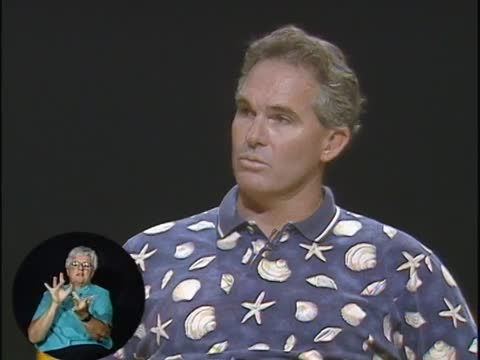
- Transcript
You Dialogue is brought to you by Hawaiian Electric Company, people with a powerful commitment. Good evening and welcome to Dialogue. I'm Ray Lovell. It's the largest body of water
in the known universe. It covers one -third of our planet and these islands where we live are more or less in the middle of it. It is of course the Pacific Ocean and our lives are so influenced by it and intertwined with it that it is probably impossible to fully define our relationship with the Pacific. But are we good for it as it is good for us? That's one of the questions we will be asking our guests tonight and they are. Dr. Beth Flint, wildlife biologist with the U .S. Fish and Wildlife Service with the Refuge Complex, the area that extends from the Northwestern Hawaiian Islands to American Samoa. She works with marine birds and other ocean issues, also helps to manage 570 ,000 acres of coral reef and marine ecosystem and has conducted research on the ecology, physiology and behavior of marine birds and the bearing sea and in the Pacific. Athlean Clark is the community service coordinator for the Department of Land and Natural Resources prior to her present position. She served as marine program specialist for the ocean resources
branch in the Department of Business and Economic Development and Tourism and was on the staff of the Hawaii Ocean and Marine Resources Council. Jim Howard is the chief of lifeguard operations for the Ocean Safety and Lifeguard Services Division of the City and County Department of Parks and Recreation. And prior to his appointment two years ago he was a lifeguard captain for eight years overseeing Windward Oahu beaches from Hawaii Kai to Kahuku. He has written and produced videos on ocean sports and recreation and also works with the injury prevention and ocean sports. Dr. Barry Raleigh, before he was appointed Dean of the University of Hawaii School of Ocean and Earth Science and Technology, headed the earthquake prediction research program of the U .S. Geological Survey and was head of Columbia University's Lamont Dirty Geological Observatory. He has conducted research into earthquake prediction, even turning them on and off and also research into climatic changes. And Steve Thompson, before he was appointed the Oahu District Manager for the State Department of Land and
Natural Resources Division of Boating and Ocean Recreation six years ago. He taught marine science and high schools here for ten years. He holds a U .S. Coast Guard Merchant Marine Officers License and is a veteran of the U .S. Navy. Welcome to dialogue. Also we want to welcome our viewing audience on public television and our listening audience on Hawaii Public Radio, KIFO 1380. Our sign language interpreter for this show is Loretta McDonald. Now if you have a question or comment about the ocean, big subject, our phone volunteers from PLCO, a cancer research group also known as Friends of Rebecca Troyer, they are ready to take your calls at 973 -1000. Neighbor Island viewers please call us collect 973 -1000. I'm going to start off Dr. Flint. There's a conference that's going on at Kauai right now on the oceans. One of the things they're talking about is the
damage to the reefs, the coral reefs. How are the coral reefs around our islands? Well this is the year of the coral reefs, so that's a pretty important question. And the answer is somewhat of a mixed one. In general, the coral reefs around Hawaii, and I'm talking about Hawaii from here, from the island of Hawaii, all the way up to Kiri Atul, are very healthy. It's a huge vast area, but there are definite problems, especially in areas of high population, from sedimentation and runoff, from other non -point source pollution, from mechanical damage, and from just overuse of some of the organisms using the coral reef habitat. So I would say that we have some health problems with our coral reefs in Hawaii. But go back across the table and talk to Dean Raleigh for just a moment. The work that you have conducted in the past has to do, and still do, has to do with the
climate, has to do with what the ocean generates for us. It is a huge generator, isn't it? Yeah, the a little -known fact is that between the glacial and the warm periods of the earth, there are transition times between full -on glacial temperatures around the world and full -on warm temperatures, actually only a very few decades. And the only explanations for that can be something to do probably with the amount of water vapor in the atmosphere. If you reduce it by 30 percent from what it is now, you go to glacial conditions. So the ocean is really the only source of the thermal energy and the water vapor that can control the atmosphere in the way that leads to this very sudden and dramatically somewhat frightening change in the climate regime. We don't quite know how that happens. In fact, truth is, we don't really know it all. But there's a lot of very good people working on the problem right now. You know, for most of us,
the ocean, Pacific Ocean means going out and swimming or surfing or fishing or something like that. When they go swimming or surfing, Jim, how they're likely to run into you are one of your lifeguards. Is the ocean a dangerous place? The ocean is an environment in which most people are not familiar. And if you're trained and if you can look at the ocean from the perspective of the beach and you can understand what's happening in the very dynamic environment that we see in the near shore areas, it is a relatively safe place. Millions of people recreate in the ocean every year and most of them don't have a lot of trouble. But there's many people that come down to the beach who don't know what they see when they look out at the ocean. It's not a lake. It's not a flat body of water. And there are hazards that are present. And that's what our role is to try to make people aware of those hazards and to change a little bit of behavior so that people don't
go out when it's hazardous beyond the scope of their ability. That's when we find people get into trouble. You know, one of the things I just learned before we went on the air that if we had a representative here from every agency, state, local, federal that has something to do with the ocean, we would have a whole room full of people. I learned that from Kathleen Clark. Now, the Department of Land and Natural Resources, what's its role with the ocean? I mean, how much the ocean is yours? Well ours is not probably the right term that we manage for the public is a better way to describe the ocean. Basically, the shoreline, the whole shoreline around the state is considered a conservation land. And so we go from the shoreline underneath the water all the way out to the end of the three mile limit. The water column itself and all habitats within that and all creatures within that. Now, in some cases, we also have cross jurisdiction with the federal government for endangered species
like the humpback whale or turtles or things along those lines. But we also manage all the activities that occur therein with our boating and ocean recreation program. And I wanted to ask, Steve Thompson, boating an ocean recreation. A lot of people are out there in boats. So this caused some of the problems with damage to the reef. Well, I think boat owners, responsible boat owners are not damaging the reefs or the oceans. But of course, there's always a responsible people. One of the concerns we have are things that come into our ocean environment that are not generated here in Hawaii. The oceans are littered with debris, styrofones and plastics, nets from fishing practices that are not prudent or lawful. But I think it would be unfair to characterize all boaters as being detrimental to our environment. Many of them take great care in it. Now, a lot of people, many businesses
that make the money from ocean recreation, not competing interest out there. How do you deal with all that? How do you juggle it? Well, that's a difficult job. And it's our responsibility to try to balance that. And also to sustain our precious resource as well, we do that. Our tourist economy is demanding more and more outdoor ocean -related activities. And at the same time, our environmental interests are on the other side of that issue. And my particular agency is always trying to balance those. And we do that through a lot of public input. We have some questions that have come in now. And Dean Raleigh, we talked about this as a whole on the air. But one of the questions, what is happening with OTEC? That's ocean thermal energy conversion. And why isn't the electric company contracting for an OTEC power plant? The simple fact is that the engineering
research has, by and large, been done. The federal government and the state government put up a total of a couple hundred million dollars over the past 20 years or so to develop the technology. If it were competitive, if OTEC produced power or were competitive with fossil fuels, it would believe me you wouldn't need to encourage anyone to build plants. The fact is that fossil fuels are vastly more cheap artificially so, but nevertheless, they're much more cheap than the cost of producing power from an OTEC plant. Now if it costs twice as much from an OTEC plant, it doesn't mean that switching to that kind of energy that that's all you pay for a lot of other things. Well, the reason it's more expensive is simply the capital cost of building an OTEC plant, giving the amount of power it produces. That's the big issue. Once you've got it, then of course, the water's free, but it's also kind of hard to imagine how I surrounded by these very large, big floating platforms producing power. I don't think the environmental or the tourist interest would be too
thrilled with it. The question that came in says, do the panelists think that the marine mammal sanctuary approved by the governor is adequate, or should it be expanded? Would you like to take this? Well, part of land, natural resources, state. The humpback whale sanctuary, as it was designated, does take into account where the major populations of the humpback whales are, having and breeding for the most part. And it was a compromise, as is many of the ways that we put aside protected areas, and it has to be developed in a balance sustainably with all the other uses that are out there. Part of the way that it had to be designated was with
concerns for our military interests, and also with concerns for our recreational interests, and finding a happy medium between all the concerns that were out there. And so I think that what was proposed was a good attempt at trying to do that. Any follow -up to that, many one? Well, I'd like to comment, not specifically on the sanctuary itself and that issue, but it raises the broader issue that I think we face here in the Hawaiian islands, which is the demands that are placed on our ocean resource is increasing, as Steve mentioned. It's increased, you know, incredibly, as technology has come out, and we've seen windsurfing being developed, a sport that didn't exist 10 or 15 years ago, boogie boards being mass -produced, which is getting more people in the water. The latest thing that we're
seeing now is the hardcast molded kayaks. And all of these things are putting more people out into the resource. As we begin to put more people out into the resource, the risks increase, and also the user conflicts increase. And I think that the humpback whale sanctuary issue really highlights that, and the reason that we're having this controversy is that we have competing usage for a limited resource, and how we're going to sort all that out in our state, I think is real critical to our future. Because as tourism grows and as the population grows, we're going to have more and more of these. When you put more people in the water, you're going to have competition for a limited resource. As that competition grows, you get conflict. The governor recognized this past legislative session that our ocean resources were in some cases in decline, especially some of our fish populations and near -shore fishery resources. Because of
that, had an ocean initiative that basically asked for an increase in funding for our division of aquatic resources, which manages the coral reefs and all the fisheries, and our division of conservation and resources enforcement, which are the enforcement officers that enforce all the conservation laws. Our department is 48th in the nation, in Fish and Wildlife funding. We're behind Wyoming, all the desert states, we're behind the majority of the other states within the country that have any coastal state whatsoever. And we also have the fourth largest coastline in the United States. So when you have the fourth largest coastline and the third -less most funding in the entire United States, it doesn't create a balanced way to manage the ecosystem and or to sustain our resources. And so he did make it a priority. And the good news is that we did receive
about half the funding we'd asked for. But that's only the first step in where we need to go in order to better be able to manage it. And that's only for just the aquatic resources part. That's not for the lifeguards, it's not for the boating, it's not for for a greater presence on the water, which is which there just isn't right now. The question says, why are submarine tour operators allowed to take tourists on open ocean scuba dives without classroom or swimming pool instruction shouldn't that instruction be required? I'm not sure that they don't. Scuba diving certification is well regulated. Scuba diving for charter is that activity in terms of how the people will access the water, is regulated. The area that is probably the least
regulated and all marine tourist related activities is when that diver actually gets into the water. And that is another controversial issue where certain interests oppose any regulation and others are demanding it. And I think it's only a matter of time because the divers are now competing in areas with jet skis, with kayaks, with high speed boats. We just have two little area for the number of people in water enthusiasts that we have. In fact, the question, the next question I was holding is what's the panel's opinion of jet skis, they seem excessive, and do jet skis cause damage to the reef or the oceans? Because damage to the reef? I'm not aware of any specific instances of known damage to the actual structure of the reef, but I have at the recent Western Pacific Regional Fisheries Management Council there was some indication from some of the folks who are real familiar with accruely spawning that it
can disrupt fish behavior, mating behavior, and congregations and aggregations of fish. I can't think of a way that they could actually damage coral, but I may be ignorant of it, unless turbulence in real shallow areas, but they wouldn't be there then, so. In the boating realm, jet skis probably account for the greatest number of public complaints. The Coneoay Bay Master Plan has recommended the complete prohibition of recreational jet skiing within Coneoay Bay. A few months ago, the Hollywood neighborhood board unanimously recommended our department to ban all commercial and recreational jet ski riding in Hollywood area. We have very restrictive recreational jet ski regulations on the books. The issue is whether we have enough officers on the water to adequately enforce them, and I'll predict that this summer it'll show that we don't. We don't have any officers with jet
skis just to start with. Let alone. We have a total of 57 for the whole state, and that's to do from the tops of the mountains to three miles out offshore. One other thing I'd like to comment about jet skis is that, I think Jim Howes group of professional jet ski lifeguard operators show just how much good a jet ski can do with responsible operators. It's really not the jet ski that's the problem. It's the caliber of the or the behavior of the operator. I think that's more to the point. I think this question may be for you. It says ocean farming. There's a new technology, something called floating net farming, and a caller wants to know if it works and how you can learn more. The Norwegians, Canadians, and now several other countries have actually
built cages to grow salmon offshore, and they feed them, and the salmon do very well, and we benefit. We pay about half for salmon what we would be paying otherwise. There are adaptations of the technology of the cage, if you will, to try to produce a larger floating system somewhat less expensively, and that includes nets, but also some rigid structure. I think it has some potential possibly for the wine islands, and the question is whether a pelagic fish like Ahi or others that are great delicacy here and elsewhere could actually be grown in such a situation. The research hasn't been done, but I know there's a lot of interest in it. I have a comment from a viewer who simply said or a listener, they should close down Hanama Bay because it ruins the coral reefs. It plays like Hanama Bay. I'll offer a lot of people out there. I know the city's done a lot of adjusting to allow trying to keep the control of the people who go in there, but that does
kill reefs. People stepping on the reefs, marching across the reefs, the amount of suntan lotion that comes off of people when they're in the water, especially when you put a significant number of people in the water. It actually floats to the surface and blocks the sunlight coming down to the reef where the reef needs it. So there are significant impacts, the sedimentation from just all the cars in the parking lot. There are effects to a reef ecosystem from all of that kind of stuff. The city is actually in the process now of actually putting out a contract to do a carrying capacity study for the bay. And in addition to that, and our department is also involved in that. But there's also some misconceptions about Hanama Bay and the inner reef or the for reef of the bay was never well, not in current historic times was it
an actual living thriving coral reef. There are individual or isolated coral heads that have been impacted by the people walking across the reef shelf. But that reef shelf we're not even sure was ever a coral reef shelf. It may have been an uplifted limestone shelf. We're really, you know, and so there is some misconception about the impacts of all of that activity. But it is significant in terms of the water quality and in terms of the effects on the balance of the ecosystem. Because with all the feeding, the species of fish changed. And so you had a huge diversity of fish, I mean, a huge density of one kind of fish instead of a huge diversity of many, many kinds of fish within the bay. And some of that's changed now with the institutionalization of the new city regulations. But again, it's just this competition, competing interest. People come here and many of them come here to go to Hanama Bay and to snorkel and to see the fish up close. And there aren't very many other places where they
can do that. That's the other part of the problem because the inner reef is a protected environment most of the time. And there isn't very many other options for people to go in the water and actually be in and in close, safe, relatively safe environment where fish come up to them and actively interact with them. And so that's part of the problem too, is there just aren't many places that people can do that. If you don't put the sentan lotion on your reef skin cancer, I mean, it's still, I guess it's still one of the things. Dr. Flint, this question came in directed at you. It says does the U .S. or Hawaii so we can bounce this one around. Plan to implement the same plan as Australia where snorkelers or divers are not allowed to use fins because the wave action injures the reef. You know, that was directed at me but I bet there are people here that are more well qualified to answer that than I am. I have not heard about that. I'm not aware of any,
though. I know that some places they ask them not to wear gloves. So they won't be so tempted to touch the reef but in terms of fins. Dive training in general in recent years has become much more oriented toward environmental training and you get a lot of environmental education when you learn to dive and people are taught that coral is fragile and you shouldn't touch it. So it's probably just an extension of that and Australia is very forward thinking on a lot of environmental issues. But again, you're also talking about a protected waterway and from a safety perspective here. From a safety perspective, I would suggest that we would be adamantly opposed to putting people into our oceans without fins. There's no question that that would be putting people at tremendous risk. On this subject of risks, people going into the ocean are particular groups of people who are more
at risk. I mean, I'm talking about folks that's going out swimming or surfing are the usual things that people do that you and your lifeguards have to be concerned about. I'd like to answer your question in this way. We as an organization, the 180 of us, sought on the beach every day, view risk as hazards plus people and that's really a very simple formula. So the fact that we're putting people into a hazardous environment creates risk. So yes, indeed, everyone has had some degree of risk when you go into the ocean. Although again, as I mentioned earlier, it's minimal for those that understand and know the conditions and know how to deal with those conditions. So education is a big component in that. The people who are at highest risk in our local population are our teenage males, basically 14 to 20. They're doing risk taking behavior, they're surfing, they're boogie boarding, they're in the waves, they're challenging their limits and things of that nature. And many cases, they're reaching a little
bit beyond their their abilities or their talents. Absolutely. And what they're doing is they go out and they test the limits. We also find that a lot of young people don't have adequate swimming skills and they're relying on the leash, on the boogie board or the leash on the surf board. Once you get out into surf over about five feet, the probability or the potential for your leash to break or separate or something like that increases significantly. You break that leash, you're in swimming, you don't have swimming skills, the current takes you, you get in trouble, you panic and you drown, or you meet one of my guys that come up and say hello. For visitors, it's a whole different scenario. With our visitors, we have two groups that are at particular risk. One is Japanese females between the ages of 20 and 24, primarily at Hanama Bay. A lot of them go there. Hanama Bay, we would generally as residents, think is a very safe area. For visitors, Hanama Bay
can be deceptively dangerous. A lot of non -summers go there, they're walking on that, not the coral, but the limestone, I guess. Well said, and there's holes in it, or one of the funny things that happened is that the dive operators or the tour companies used to give them fins so that they could swim. They trip over the rock and they'd skin up so they wouldn't give them fins anymore. They tell them to wear their rubber slippers. The rubber slippers would float away into the deep water. They'd go after it and down to the bottom. That's our visitors from Asia. They're a particular concern. They don't have an ocean recreation background. They don't even understand what ocean safety is. For our mainland visitors, the highest risk group is our middle -aged males, primarily from California Western states. Is that they're just not in shape to handle what they're going to be doing? Or are they like the teenage kids? They over extend themselves. Well, it's a little bit of both. We've done a lot of work with the School of Medicine and also the injury prevention group with the Department of Health in terms of
identifying who's at risk in the ocean and we have a beach user profile. Those people are at risk because they do have some knowledge of the near -shore ocean environment. They go to the beach once one or two weeks a year, things like that. Generally, they're not prepared for the kinds of conditions that they're going to find here in Hawaii. Our oceans are much rougher. The wave energy is somewhere between five and ten times what you would find in Florida, California, just because of the physics of the ocean here. Whenever you get that wave energy generated, it creates currents that run back out to sea and they're just not prepared for the power that they find in our ocean here and they get in trouble very quickly. For somebody who just casually goes to the beach ever down, then is there any particular advice? I mean, do you make sure you're going to want to close the lifeguard stand with? Well, again, we have developed the beach user profile. For
persons with extensive exposure to the near -shore environment, that would be our residents, our surfers, our kayakers, the regulars. Really, all we can do is suggest that they look at the conditions and understand them and if you don't know them, check with the lifeguard. The group that we're most concerned about is the group with some exposure. That particular group, we feel that we have to intervene. My lifeguard's out on the beach do somewhere in the range of 250 to 300 ,000, what we call public contacts and prevent actions a year, which is where they're out of the tower down talking to people. I want to cut in here just for a second. Pacific Ocean, it's a big subject and we haven't even crossed the international date line yet, but we have reached the halfway point of our show. So it'll be a good time for us to take a short break. We'll be back in a minute with Kathleen Clark, Jim Howell, Steve Thompson, and Dr. Sparey Raleigh and Beth Fleth.
Hawaii Public Television continues its 25th anniversary celebration with another archival favorite. Here are some scenes from that show. Please join us as we celebrate 25 in retrospect. Oh, my name is Stan Boylan. Hawaii's economy continues to stagnate. Forbes Magazine attributes it to over -regulation and uploaded government. Many business people point to the state's tax structure. Still, while there's talk of the Gulf War, a slow Japanese economy and smaller military and agricultural sectors, what is the problem and is there a solution in the foreseeable future? Join us Friday night at 8 for a dialogue on Hawaii's economic outlook.
Welcome back to the second half of dialogue. I'm Ray Lovell and those volunteers answering the phones are from PLCO. It's a cancer research group also known as Friends of Rebecca Troyer. And they're ready to take your calls at 973 -1000. And as always, neighborhood and viewers may call us collect 973 -1000. But you really got a question here that says, what is your view of the sustainability of the ocean as a food source? That's a tough question. You know, they're wonderful descriptions from the Captain Cook Voyages to the Antarctic. And they said the sea was teaming with fish. They literally could reach out with a paddle and hit them. And we know now, of course, that there are very few fish out there and they're much harder to catch. There isn't in the entire world with perhaps one exception in New Zealand,
the fishery that would be profitable without government subsidies. So the fish populations in the open oceans have really dropped so dramatically that in fact, it's not worth the money to invest to catch them anymore. If we allow them to recover, that's great, except the population in the world is increasing so rapidly that we're going to go out and fish them again. And again, until we're really forced, I think, at some point to find a way to farm fish and hopefully to use the ocean to do so. Because farming in the Monland has a lot of problems involving added nutrients to the coastal waters from the fish farming itself. I'm a little pessimistic about the open oceans as a source of wild fish stock to feed the human populations 20 years from now. And that's short of time spent 20 years? Right now, the fish catches have
peaked out about three or four years ago and they've been dropping slowly since that time for the first time in anyone's memory. This is a little bit of a change of subject, but while I've gotten you here, I read recently, I think it was about the El Nino effect and it's coming back and the article I read said we are likely to have more tropical disturbance as it will turn into tropical storms and so forth. Is that correct? Actually, is the reverse in the Atlantic, that is to say there are more tropical storms during non -El Nino years and the Pacific, the numbers don't seem to be different, but their distribution is different. So you find more hurricanes and typhoons towards the west, towards the central and western Pacific in El Nino years. So this is some extent, you could say the risk is somewhat increased during an El Nino year, but
there isn't any evidence that we get hit more often during those years than just normal years. El Nino, that's a warming of the water. The El Nino process really is restricted to the equatorial Pacific and what happens is that from the western Pacific where a very large low atmospheric depression sits there for years, rains warm water onto the surface ocean, the warm water pool actually accumulates and at some point in the process the normal easterly winds that blow across the Pacific to the west stop, die down, and the warm water pool spreads towards the South American coastline. And so when the warming takes place, all kinds of weather effects happen. Droughts in Australia, floods in Peru and coastal Peru where it never rains, and a number of effects on fisheries and worldwide climate ensue. The
nice thing about this, if there is something nice to be said about it, is that we can predict the phenomenon well over a year in advance, so that in the last one in 86 when we first made the predictions at Columbia where I was, the Peruvians decided based on their predictions in hours to go ahead and plant rice instead of cotton because it was going to rain, if we were right. And fortunately, we were right and for the first time in 30 years they didn't have to import rice into Peru, which is a sort of snapshot of a much larger worldwide climateological variation where I think the predictions can be of enormous help in the future, agriculturally fisheries, their wives. Coming back to closer to home, a caller from Coa said, what can be done about the raw sewage dumped into the stream leading to lidgate park, dumping seems to be done on a weekly basis. Is this something you would
report to the local authorities or the health department? Health department? Health department? Yeah, government health specifically. Yeah, a lot of the pollution that we see, though, is this non, what was it called non -hoin source? It just comes down the streams from pesticides, fertilizers, one of the facilities that I'm responsible for is the alloy boat harbor, and that's a classic case because everything that comes down into the alloy canal eventually finds its way into the alloy boat harbor. And I mean, it's anything and everything from grass cuttings, shrubbery, plastics, paper, I mean, large trees, I mean, it's shopping carts, it's toys, it's McDonald's wrappers, it's just anything you can imagine. And unfortunately, the boaters in the harbor are usually the ones that are deemed to be responsible, one in fact, they're not, and oftentimes they're at their expense, they have to clean it up. Another question says, there seems to be fewer near
shorefish, are the current fishing laws adequate or do they need to become more strict? Okay, we won't make it a policy question or the law is adequate. We'll edit this a little bit for the viewer. If indeed there are fewer in shorefish, what's the best way to make sure that the fish population increases? Stop fishing. Stop fishing. It's a pleasure. People just have this feeling that the ocean is infinite and it's really hard for terrestrial organisms to see the damage that we can do to a very finite resource, the marine system because we can't see it in front of our very eyes, so we just make the assumption that it is much greater than it is, so it's just a simple case of reducing the pressure by catch limits or closures or whatever you need to do to quit killing as many fish. I think the current school of thought on
one of the most effective ways to do that would be to set up or establish many more marine protected areas, and so that you actually have an area that set aside to keep the populations in the area that are fished from becoming too, from declining too readily, and that's been proposed not only here, but in a number of other places across the country, and that if you could establish a whole series of those kinds of systems, which is actually similar to what we used to do in the old Hawaiian days with the Kapoo system, they had it right, you take an area out for a while so that it could replenish itself and then put it back in, that that would be a way to effectively help to manage it better from the current fishing pressure. This may be right in line with that, this question or wanted to know about fishing on public beaches, Carla wants to know why rod and real fishing
is allowed every other year on public beaches. Well actually there is no limitation on shorecasting or shore fishing, there's no restriction at all, other than in the ML CDs, the Green Life Conservation Districts. They'd be like Waikiki or Hanama Bay is one, there is one in the Waikiki area. There's an area in Waikiki from the Kapoo lagre to the Natatorium that is a conservation district that's off limits all the time, it's never, it's supposed to be a no take zone. From the Natatorium to Diamondhead is an area that's called a fisheries management area that is adjacent to the no take zone, that area every other year is opened and then closed, and when it's opened it's all kinds of harvest techniques, when it's closed it's no harvest techniques, so they do rotate it on a yearly basis, and it's adjacent to an area that they're actually doing some studies
on now to see if having the one area set aside next to an area that they open and close helps to make a difference from one to the other. Questioner says, wouldn't it be a good idea for airlines to show videos to their passengers about how to care for Hawaii's waters, how to hike safely, how to use Hawaii's resources without damaging them or hurting the visitor at the same time. I think I might agree with me a great idea. We have produced several videos and made them available to all of the airlines at no charge, of course, however the airlines have, with the exception of Northwest Airlines, have not used them. What we feel is that this is a very important component of our education measures, especially for our visitors, to give them some idea of what they're going to find when they get here and how to take care of this beautiful place that we have. And I think that it behooves all businesses
to participate in that or what we will find is a situation like Hanama Bay where government ultimately may have to step in and restrict commercial activity, restrict the numbers of people's. Lest we destroy the resources that we need for our livelihood here. Caller says, what can be done about dump trucks which take pebbles from a nearby beach, a caller said they did inform department of land and natural resources with the license number. Is that who you should call? Our conservation enforcement office would specifically be who they would call and they would, after a report is filed, they would then do a follow -up if they can't get there in time. And often that's the cases if they can't be on the scene on time. Here in Oahu, if you have a problem like that you should call 587 -007 -7. And that would be the conservation enforcement office. Say the number one more time because we don't have a super on our screen. 587 -007 -7. 587 -007 -7. And that's that's anyone you see?
Breaking any of the conservation rules. Yeah. Caller used to sail extensively in Hawaiian waters in the 1960s and never saw any hot back whales. Now the caller says they're all over the place. Why all this fuss about hot back whale sanctuaries? He said the caller seems to think they are doing fine. Are the hot back whales doing fine? The hot back whales are certainly recovering from historic lows when they were killed during the wailing era. Recovery and the definition of fine is of course going to be different for different people but they have not recovered to their pre -human contact levels certainly. How do you determine how many of them there are? There's a statewide count here where they have observers on all the promenatories on a single day and they do that county. I imagine that there are other senses too.
Again that's a NOAA issue so I'm not real familiar with it. You fly over and count in the water? Well and there's a lot of research being done on identifying different ones by their flukes, their individual flukes and their tails and so they really know some of the ones that come back here year after year. They're starting to get an idea and be able to identify certain herds or certain single ones that are in a particular area year after year. But in terms of a handle on exactly how many there are, it's like anything else that's in the water. It's hard to count it all the time, right? And they can't see it all the time, right? The Pacific Ocean, Dr. Raleigh, is it a lot more dirty than it used to be?
It's very difficult in the open ocean to measure anything different now than you might have measured 20 years ago in terms of the chemistry of the ocean waters. It's a vast medium. It's the order of about three miles deep and it covers two -thirds of the earth's surface. It's a lot of water and in the coastal waters, the story, however, is really very different. The coastal waters in some places are eutrophied and they've lost their oxygen. The living organisms are essentially dying because so many nutrients have been dumped in the near -shore environment that algae grow too fast. They absorb the oxygen, the rest of the organisms die. It's a big problem and the highly populated coastal regions of the mainland, certainly in Asia as well. But in the open ocean, it's pretty hard to see any distinct differences. We do just one point about this. We do
have a station north of Oahu, one of two in the world's oceans, where every month we go out and measure the biology and the chemistry and the physics of the entire water column, from 15 ,000 feet depth all the way to the surface. As tedious as that is, what it does give us is some sort of long -time series of information about what's happening to the ocean and what is mankind doing to it that you can actually measure rather than simply speculate about, which is unfortunately what we've had to do up till now. The oceans here were here a long time before there were people. There would still be species what we would turn bad things happen, even if there weren't people doing these things. Is that right? I mean, it's a change in kind of environment all the time. Yeah, sure. I mean, it changes, but it gets colder when they're glaciers and when a very large meteorite impact takes place, a lot of things
die, but these are not events that I think really concern us compared to the potential loss of species that pollution ultimately might cause, particularly in the coastal oceans. I'm not too worried about a large meteorite. Nothing on the radar out there tonight. It kind of falls, I guess, to the Department of Land Natural Resources. You said the ocean, not to three miles, falls under your department. So you folks along with the health department, along with the federal people, are trying to keep this from being more polluted and trying to keep people from damaging it. And you've got to work with another couple of dozen agencies. The Coast Guard's very active in any kind of oil or petroleum -based pollution on the water. They have dispatched teams. They have 24 -hour phone numbers.
They have supplies readily available to help separate the oil from the water. They pursue violators. They take a very active interest along with our state health department. The caller says, what does the panel think would be the course of action to take to ensure the survival of OPEE? Don't pick as much OPEE. I mean, it's like don't fish as much. I think the way that I would take many of these kind of questions is that what we really have is what is called an economics, the tragedy of the commons. We have a common resource that there are very few limitations on right now. So everybody's out there taking as much as they can, whether it's OPEE, whether it's Onaga, whether it's the limited number of waves. You name it. And everybody's out there just grabbing as much as they can because the competition is that if I don't get it today, the next guy walking down the beach is going to grab it. And
to go back to what Athlean said is that the people that preceded us here had it right. That's interesting. It falls to the question. I was just a comment actually. I was just a hand. It said, I guess it is a question. Should we reactivate the Hawaiian fish pond aquaculture to better control marine resources? In some cases, we actually already are doing that. And it's kind of interesting because in some cases, what we're doing is we're using new technology to sustain old systems in places where the ponds, the pond walls are still pretty intact. We've actually started doing things like not only rearing new kinds of fish, but also doing new things that help with the aquarium trade industry. For example, putting rocks, seeding it with rocks, and then letting the rocks just sit there for a couple of years. And all kinds of organisms come and settle on to the rocks and grow on the rocks. And then
the rocks become live rocks because they have all kinds of organisms covering them. And they are very, very marketable in the aquarium trade. And so instead of taking it out of the ecosystem out on the open reef, the rocks are being raised in a fish pond and then sent off that way. And so fish ponds do have a significant role in some cases. And we're also on Molokai growing different kinds of seaweeds in them and working with the community over there to rebuild some of the ecosystems and things along those lines. And we do have quite a few that have worked, are still working from old times till today. So, but there's a lot that are so far gone that we're talking about a significant restoration project before we can actually get to a point where we can utilize them again. And once you're utilizing it, it still takes a while before you see the benefits. We'll make this, we've got a few more minutes left,
wish list, time, and we'll start with Dr. Flint. What do you wish? What's your number one wish that would make your job easier or your number one wish for what you're trying to accomplish? Oh yeah, that's my number one wish would just be a better public education and awareness of what we have and what we stand to lose by not immediately starting to manage our ocean resources somewhat similarly to the way we manage our terrestrial resources. Again, we're much more advanced in terms of ecosystem management and wildlife management and terrestrial systems because we've seen them and we've thought about it for many more years. So, I think if we could just get people to think about the ocean the way they do about any other ecosystem that it's a
habitat full of a complex wildlife habitat. We'll throw the question back across the table then to Dean Rowley. What would you like to see? What do you say would be your number one priority if you could just make it happen? I'm always a little dismayed by the level of emotion that attends any discussions about use of the ocean's resources and the virtual absence of rationality and being a scientist, we know scientifically things that can be done. We know how to do it in a quantitative way to say what the impact of doing something on the watershed whether it's fishing or whether it's development. We know ways to actually bring hard science into the issue and we are singularly unsuccessful at persuading anybody who has a has a point of view that's a counter to what the scientific evidence might tell you that we have something to say and I think
unless we find ways to deal with the coastal ocean issues rationally, quantitatively and with the shared view that the preservation of those resources and the interest of all of us and our kids, I think we're in trouble. I really like that's what I would like to see change. How about you Jim? I have a long wish list. I'll just do one. I would really like to see a streamline the way we manage the ocean. We've got I think the number is somewhere between 32 and 40 agencies all out there kind of acting independently. A coordinated effort is what we need and it's going to take real leadership at I think at the highest level in our state to coordinate the efforts that all of us at this table make and the many others that aren't here. It's sort of a two -part thing. One is that
with the right to utilize the resources comes a responsibility and I think that that we need to take a look at responsible use of our ocean resources and where it starts is with the community and it's an acceptance from the community that that they are a responsible partner with us in managing the resource and that it it's not whether the guy is going to bus you because you didn't take the fish or you took the fish or it's that that's not where it's at anymore that we all have to accept that what we do out there is going to have an effect on it and that it has to be done. It can't be done within these agencies anymore. It has to be done on a much more broader basis. Steve Thompson we have about 30 seconds left. Well I deal primarily in the areas where people access the ocean and the harbors and the launch ramps and those are in need of great financial support from our administration and our legislature to help keep them in good repair and provide safe and adequate space for our our
residents and guests alike to access the ocean. So we need money to to maintain our aging facilities. That's the harbors that ramps the harbors the ramps the the beach parks still comes back to money public education support of the ocean support of the ocean. Well a big subject the ocean and we never did make it across the international date line but we have run out of time. We've learned a lot this past hour about how our lives are influenced by the ocean and but there's so much more to know and we still would like to thank our guest for what we have learned tonight. We wish we had a couple more hours to keep this going. Athlene Clark, Dr. Beth Flint, Jim Howe, Dr. Barry Rowley and Steve Thompson and also would like to thank our phone volunteers who are friends of Rebecca Throyer and members of the Cancer Research Group PLCO. If you'd like to volunteer for dialogue to give Jennifer Thomas a call at
973 1000 to volunteer to answer the phones and if you're sending us your email our address is dialogue at kht .ps .org ORG. Next week Dan Boylon will be back in the dialogue chair here with the economist Paul Rubekier and Dr. Spurl Imada Ibochi, Jim Mock and Karl Bonham. We'll find out how Hawaii is ferring financially when they discuss Hawaii's economic outlook. Till then I'm Ray Level for Hawaii Public Television we wish you a very good weekend from dialogue. Dialogue is brought to you by
Hawaiian Electric Company, people with a powerful commitment. On Friday Ray Level will host a dialogue entitled Our Ocean is More
Than Water, a look at a Hawaii's ocean resources and the challenges they face from the island's growing resident and tourist population. Discussing ways to preserve ocean resources will be Dean Barry Rowley from the University of Hawaii, Jim Howe, Chief of Lifeguard Operations, and from the states boating an ocean recreation division, Steve Thompson. Hope you'll join them on dialogue Friday night at 8. Hello, my name is Dan Boylon. Next
week Ray Level will host a dialogue entitled Our Ocean, It's More Than Water, a look at a wise ocean resources and the challenges they face from the island's growing resident and tourist population. Discussing ways to preserve ocean resources will be Dean Rowley from the University of Hawaii, Jim Howe, Chief of Lifeguard Operations, and Steve Thompson from the states boating an ocean recreation division. Hope you'll join them for dialogue tonight at 8.
- Series
- Dialog
- Episode
- Our Ocean: It's More Than Water
- Producing Organization
- KHET
- Contributing Organization
- PBS Hawaii (Honolulu, Hawaii)
- 'Ulu'ulu: The Henry Ku'ualoha Guigni Moving Image Archive of Hawai'i (Kapolei, Hawaii)
- AAPB ID
- cpb-aacip-225-33dz0cmq
If you have more information about this item than what is given here, or if you have concerns about this record, we want to know! Contact us, indicating the AAPB ID (cpb-aacip-225-33dz0cmq).
- Description
- Episode Description
- Moderator: Ray Lovell. Guests: Athline Clark, DLNR Community Services Coordinator; Beth Flint, Ph.D., wildlife biologist, U.S. Fish & Wildlife Service; Jim Howe, P&R Chief of Lifeguard Operations; C. Barry Raleigh, Dean, U.H. School of Ocean & Earth Science; Stephen Thompson, DLNR, Oahu District Manager
- Created Date
- 1997-06-13
- Asset type
- Episode
- Media type
- Moving Image
- Duration
- 01:03:41;13
- Credits
-
-
Producing Organization:
KHET
- AAPB Contributor Holdings
-
PBS Hawaii (KHET)
Identifier: cpb-aacip-dc7ebb1f47c (Filename)
Format: Betacam: SP
Generation: Master
Duration: 00:58:48
-
'Ulu'ulu: The Henry Ku'ualoha Guigni Moving Image Archive of Hawai'i
Identifier: cpb-aacip-09e64c5483e (Filename)
Format: Betacam: SP
If you have a copy of this asset and would like us to add it to our catalog, please contact us.
- Citations
- Chicago: “Dialog; Our Ocean: It's More Than Water,” 1997-06-13, PBS Hawaii, 'Ulu'ulu: The Henry Ku'ualoha Guigni Moving Image Archive of Hawai'i, American Archive of Public Broadcasting (GBH and the Library of Congress), Boston, MA and Washington, DC, accessed September 22, 2026, http://americanarchive.org/catalog/cpb-aacip-225-33dz0cmq.
- MLA: “Dialog; Our Ocean: It's More Than Water.” 1997-06-13. PBS Hawaii, 'Ulu'ulu: The Henry Ku'ualoha Guigni Moving Image Archive of Hawai'i, American Archive of Public Broadcasting (GBH and the Library of Congress), Boston, MA and Washington, DC. Web. September 22, 2026. <http://americanarchive.org/catalog/cpb-aacip-225-33dz0cmq>.
- APA: Dialog; Our Ocean: It's More Than Water. Boston, MA: PBS Hawaii, 'Ulu'ulu: The Henry Ku'ualoha Guigni Moving Image Archive of Hawai'i, American Archive of Public Broadcasting (GBH and the Library of Congress), Boston, MA and Washington, DC. Retrieved from http://americanarchive.org/catalog/cpb-aacip-225-33dz0cmq