Dialog; Women's Issues
- Transcript
As some of you get ready to bid farewell to summer and welcome in the fall, others are and have been busy focusing on women's issues. Hello, I'm Dan Boylin, inviting you to join my colleague Lynn Waters and a panel of experts who have delved into the subject of women's issues. They'll discuss women's health, both physical and mental, women's health month, domestic violence and other topics of concern to today's women. So if you want to get in on the discussion of women's issues, join them Friday night today on Dialogue. As some of you get ready to bid farewell to summer and welcome in the fall, others are and have been busy focusing on women's issues. Hello, I'm Dan Boylin, inviting you to join my colleague Lynn Waters and a panel of experts who have delved into the subject of women's issues. They'll discuss women's health, both physical and mental, women's health month, domestic violence and other topics of concern to today's women.
If you want to get in on the discussion of women's issues, join them tonight at 8 on Dialogue. Thank you very much. Dialogue
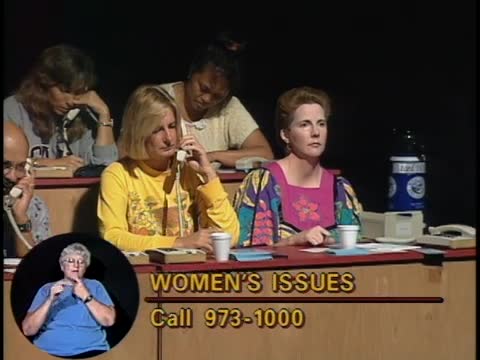
is brought to you by Hawaiian Electric Company, people with a powerful commitment. Thank you. Good evening and welcome to Dialogue. I'm Lynn Waters. September has been women's health month. It's rapidly drawing to a close, of course, and there's a lot we can talk about with regard to women's health. It's a pretty broad topic. But during the next hour, we're hoping to address some of the
stresses on women, which could lead to the type of behaviors we've been reading about in the newspapers and seeing on television lately. Abuse of the vulnerable and unprotected in our society, children. We'll also cover several other topics of interest regarding women's health and we'll answer as many of your questions that we can get to during the hour, so it is an open forum. We're live here on Hawaii Public Television until 9 o 'clock and our phone lines are open, so please give us a call if you have a question or comment for our panel of guests tonight, and I would like to introduce them. Edward Cubany is a research psychologist for the Department of Veterans Affairs, Pacific Islands Division, National Center for Post Traumatic Stress Disorder, or NCPTSD. I think I got that acronym correctly and is also on the faculty of the University of Hawaii Psychology Department. In private practice, he deals exclusively with physically and sexually abused women. Ina Percival is the Executive Director of the Hawaii State Commission on the Status of Women, a policymaking and advocacy body which deals
with a wide range of women's issues. She is a former employee of the Department of Health, where she was the Program Manager and Health Educator for the Department's Injury Prevention and Control Program. Want to emphasize that it's not work related, it's intentional injury, child abuse, domestic violence and that sort of thing, right? And Maurice Arisgato is a deputy prosecuting attorney and team captain of the trial division in the Honolulu City and County Prosecutors Office. Prior to that appointment in May of this year, he was in charge of the homicide and assault branch and also chief of the Department's Domestic Violence Branch. Once again, we're live here on Hawaii Public Television. The number to call is 973 -1000. Neighbor Island viewers, you can call us collect at that same number 973 -1000. And our volunteers manning the phones tonight are the friends of Rebecca Troyer and the friends of Hawaii Public Television. We thank them for being with us tonight. Our interpreter for the hearing impaired is Loretta McDonald and for those of you in your cars, we're also being simulcast on KIFO, Hawaii Public Radio
1380 on your AM dial. A lot to talk about in this hour as we were discussing before we came down to the studio tonight. But we do want to talk about some of the recent news stories that we've seen regarding child abuse and the special stresses on women. But this is Women's Health Month and I'd like to ask Eina, first of all, to give us a little background on what is Women's Health Month? What does it mean? How long have we had it? And what's the purpose of it? Well, the commission recognized several years ago that Women's Health does not necessarily get the kind of focus that it needs, whether it's in research or preventive care. And that often women are so concerned about worrying about the health of their family members that they don't necessarily address their own health needs. So we worked with a lot of folks out in the community in the public health sector and in the medical community to organize Women's Health Month. This is a fourth annual Women's Health Month. There are about 200 events across the state and communities covering a range of women's health topics from cancer prevention to healthy lifestyles. And one of the issues that we really need to address is the issue of violence against women, which includes domestic violence and sexual assault.
And this year we're doing Women's Health Month in collaboration with the Department of Health and we've had a wonderful response from the community. Dr. Cubania, again, I mentioned at the top of the program that we have seen we've read of three recent high profile child abuse cases. And certainly mental health is as important to Women as physical health. I'm interested in your take on these three recent cases. Are we seeing, quote, a rash? Or are these cases that we, that go on all the time that we just don't hear about? Why, why so many in such a short span of time? Well, I don't think we're seeing an epidemic of childhood deaths. I think it was relatively coincidental that there were these three unfortunate cases of children actually dying. On the other hand, what I do think is epidemic is the problem of child abuse in our society. Many, many children are being physically abused, bruised and which can have devastating effects on their psychological well -being as they grow up. In fact, we have evidence that children who are physically and sexually abused as children are at heightened risk for
lots of other problems such as later depression, eating disorders, substance abuse disorders, borderline personality disorder, obsessive compulsive disorder. And so if, if there are children receiving physical injuries in the course of their growing up, it's going to have enormous developmental implications for their psychological as well as their physical health. In your practice, you work exclusively with, with adults who have been abused and women who have been abused more specifically. Is this a pattern that is repeated when they themselves have children? Having been exposed to domestic violence, I think it probably is particularly in the case of boys who are exposed to domestic violence because they identify with the fathers who are most likely to be the dominant one, the man
who gets his way by being physical and children who are exposed to that kind of environment. Children are at increased risk to become batterers themselves. The vast majority of batterers have been raised in environments where there's domestic violence. This doesn't mean that all boys who are exposed to domestic violence will become batterers. Marie's two of the three cases that we've read about recently are military wives. In a situation like that, does the federal government have jurisdiction? Are they referred to your office? How does the relationship work there? Well, the short answer is, it's the federal government that has jurisdiction because they occur in federal property, federal government property. However, there's concurred jurisdiction both the state and the federal government has jurisdiction whenever it occurs in a state of Hawaii. It probably is going to be more advantageous to prosecute those cases within the state jurisdiction because the state has much stricter laws with respect to child abuse and the penalties are higher.
But it all depends on whether or not the federal government wants to pass those cases over. And there are ongoing discussions right now with respect to both of those cases. Are there any special stresses there was an article in the paper this morning talking about the special stresses of being a military wife that could put a wife in a position of being susceptible to abusing their children? Well, I think there's a whole range of issues and patterns of behavior that are related to child abuse, but certainly military wives tend to be more isolated. They move periodically every three or four years. And so sometimes it's difficult to establish a strong support network just about the time that might be occurring. There's another move that happens. They're oftentimes particularly when they're young. It may be their first experience away from home and family and those kinds of support networks. So I think that it does add additional stresses and strains. And again,
I would want to emphasize that doesn't mean that every military wife who's isolated is going to abuse. I don't think we can remotely say that. But I do think that probably not knowing these particular cases, chances are when abuse like this is involved, most of the time the perpetrators have also been victims of abuse. Want to remind our viewers that we're live. We are talking about women's health, but specifically for the last few minutes we've been talking about mental health and we've been talking about domestic and child abuse. But if you have a question on the broader issue of women's health, please feel free to call us. The number is 973 -1000. Before we move off of this subject, how do we and what you compare in terms of domestic violence cases or child violence cases? Does anybody have any information that we can judge how to rate ourselves as a state? I think when it comes to the issue of community violence, why statistics are better than they are in most places in the mainland, comparatively population -wise and so forth. However, when it comes to the issue of interpersonal violence, child abuse, domestic
abuse, and sexual assault, our rates aren't any better. And in some cases, their worst, in some cases, their worst. Our sexual assault reporting rate is when one in 20, when on the mainland it's one in 10, our domestic violence homicide rate is 30%, and on the mainland it's about 15%. So we definitely have some serious issues in our community that we need to address and certainly over time that could translate into a larger community violence problem as well. Why would our reporting rate be lower? Why would women be afraid to report? Well, it was an interesting question that came up at the lunch and forum last week when Peter Carlisle suggested there was a difference between domestic violence and sexual violence in that women who had been raped are more likely to testify. I think the difference is not between domestic violence and sexual violence, but I think that women who have been sexually abused by their intimate partners are not willing to press charges.
And so they never have the opportunity to go to court to testify. But on the point of the prevalence of sexual violence and domestic violence, the rates nationwide are incredibly high, far higher than many people had ever previously believed. And also in Hawaii, and just to give you a couple of recent statistics of a study that we conducted at the University of Hawaii, and this was with 404 female undergraduates in psychology classes. 38 % of these women we had reported said that indicated that they had been sexually abused at least once in their lifetime. And 26 % of the women said that they had been physically hurt by an intimate partner. Now these are very young women at the average age of 23. When we looked at the women who were older than 23, 39 % had been physically hurt by an intimate partner. And this suggests not only the problems are big time in terms of the felonies and the misdemeanors that are
being perpetrated, but in terms of the psychological effects that physical and sexual violence has on the emotional quality of women. Well, to get back to that particular question, I think there's a whole range of reasons why women don't feel comfortable reporting violence. Sometimes it's as basic as being a safety issue as a fear additional violence from the perpetrator. Certainly there's a lot of shame associated with sexual assault and partner abuse. Those are real critical issues and I think that we really need to understand that. Sometimes we have societal attitudes that condone certain violence against women. And we have to recognize that history of condoning violence against women that we've had in our country for a long time. That it's a family issue, it's a private issue, that it's okay that the victim did something wrong. Oftentimes the first
question is, what did you do to the victim? What did you do to deserve the issue? And so there's a whole range of issues why women don't report. And so I think it's incumbent upon all of us in the community to create a society where it's safer and more acceptable for victims to report and to create a safety net so that they're not adding increased risk when they report. Marie, I'm sure that you have experience with victims who both want to testify and or press charges and then don't want to testify. How do you convince somebody what rationale do you use to reach those who are afraid to testify? Well, the way we do it is to get with the victim early on through our investigation, through the police detectives, is to either videotape their testimony or to audio tape their testimony so that that's memorialized at the time when they really feel the impact of the violence. Because almost in all cases within a week or two, they're in a position where they want to forgive and they want to give
the perpetrator another chance and we end up with a victim that's going to recant with us. So we go to early court hearing, get her testimony on the record and if she does change her story at some later point at trial, we have that earlier statements which incriminate the perpetrator. So that's how we have to deal with it. Want to remind our viewers we are talking about women's health in general although we are talking about domestic violence and mental health right now. But if you have a question or a comment, please give us a call at 973 1000. This caller wants to know shouldn't the military have a mandatory domestic violence education class for all new arrivals to Hawaii? I think they should have them period certainly and I'm not familiar with all the different programs that the different military departments have. I know that they have services related but oftentimes people have to go participate or the services kick in when incidents are already being suspected or reported. I think it's incumbent for us to do that kind of education,
comprehensive violence prevention education in our school starting in kindergarten or earlier if possible and do it progressively throughout our education system. We need to do it at our universities, we need to do it for teachers in training, for physicians in training, nurses, social workers, public health educators. And certainly I think that I would like to see a more proactive approach in the military that addresses these issues of violence against women and that includes sexual harassment as well. I'd like to add to that point in a different dimension. I was in a service for 20 years and I've had dealings with military cases over the last 14 years and I just want to say that the military has excellent programs to help address especially families that have difficulties with children because of isolation etc. And so does our own local agencies and our hospitals. They have great outreach and follow -up programs to help
new mothers with infants and so forth. The point I want to make is that you know they're not these programs, these people that work in these programs are not psychic. They don't know when you're suffering a problem. So to me it's personal responsibility is important. You've got to go out and get the help. The help's out there. Your neighbors are there, your friends and relatives may be there and the agencies are there. But to me somebody who says you know I'm really losing it I think I'm going to hurt my child. It's her or his responsibility going to get help and that's the way I look at it. Anything to add to that Dr. Cubani is somebody who's with the Department of Veterans Affairs? Well I'm on the intervention and prevention. But going back to the previous point about why women don't report these crimes. Our society simply tends to blame the victim.
What did you do to provoke the abuse? Why didn't you leave sooner? What were you doing out at that time in the morning? There's a tendency to point the finger at the woman who was violated as opposed to the perpetrator. Who wants to expose them for that kind of humiliation? And so many of our resources are focused on you know the perpetrators, perpetrator programs, perpetrators, services and much not nearly enough resources or investment. If you want to look at that our investment on behalf of victims. And from my perspective and from what I can see that's out there in the system the return on our investment in victim services is much better than our return on investment and perpetrator services. We don't really have a good handle on what works other than really closely monitoring their behavior and sending the strong message that there will be quick and certain consequences which we always don't have. I mean that's part of the problem. So we don't have quick and certain circumstances and there's still a certain
level of acceptability for some of these, essentially some of these crimes. This caller wants to know are the employees of the State Department of Child Protective Services held accountable if they place a child in a harmful situation? I've read many comments about why was that child returned to her parent even though there was evidence of history of abuse etc etc. I'm not familiar with all of the rules and regulations and policies of the Department of Human Services in regards to child protective cases but I do feel strongly that as long as family reunification is a primary goal or even a priority goal we're going to continue to have these cases. In incest cases we have perpetrators put back in families. We have children continually put back in families where they have demonstrated their inability and capacity to appropriately raise their children. I think that we continue as a society and as a policy making bodies
to support the parent's opportunity to change at the risk of the child when I personally and professionally I think it should be reversed. We really need to be setting up a system that's in the best interest of the child and the parental rights should come secondly. We need to set up a system where CPS workers and others can feel comfortable removing that child from a family and knowing that that child can be put into a safe and healthy environment and we're really not addressing those issues very well. Agreement or disagreement from the prosecutor's side or the... I certainly agree with I know that the emphasis and the priority should be on the safety of the children and reunification should have a second seat. Often times when they go in, CPS goes in or the state goes in for a termination of parental rights, the parents, I mean it's their right, they have a lawyer appointed and it's highly litigated. They fight tooth and nail, why I don't know maybe it's an economic situation
and the child's welfare is becomes lost in the shuffle because of the stifled litigious action that goes on. We're dealing with a long history, Western history of looking at women and children as property and not as sentient human beings whose rights are equal to the rights of an adult and often equal to the rights of the patriarch and while that's uncomfortable in this day and age to acknowledge that that ever existed and that we may still be dealing with vestiges of that, the truth is it's there. And we need to really have detailed discussion about that, we need to acknowledge that it's still there, we need to acknowledge that it's still a problem and until we can start to acknowledge that we're not going to be able to solve it effectively. About the only thing I can add is I'm a strong believer in there are not simple solutions to complex problems that the other side of the coin is the extent that we're going to keep children out of the home in foster care but leave the foster parents in limbo that they cannot adopt the children and these children grow up in
limbo without a family. Maybe part of the answer is providing better services to the families that are getting their children back in terms of family counseling. We need to have a, I mean it's got to be a multi -pronged approach and again I would go back and say until we start investing more effectively in primary prevention and keeping these problems from happening in the first place. And once someone's perpetrating, once someone's been victimized you can't take that away and the chance and what you have to invest to change that behavior is a great, great deal and you don't always have a guarantee, in fact often you have no guarantee that you're going to be able to reverse the behavior. So we need as a society to spend more time, money and energy on preventing those occurrences in the first place. That's a good point. And to the extent that the child abuse is a greater problem than the military, one very, very effective form of intervention would be the healthy start and teaching parents before they have children of
how to take care of their children, how to handle the baby. What does it mean when the baby won't stop crying? Does it mean that the baby is trying to, is mad at you or does it mean something else? Unfortunately, many parents who abuse their children attribute malicious motivations to their children. For example, if the baby soils, the parent will, in their naïve, in a mature way of looking at it, they think the child did it on purpose. And then they see for perceives herself in a power struggle with the child and then it's more likely to become impulsively aggressive. And people who grow up in violence think that violence is normal. Leads into this next question. Our panelists are aware of the role the limbic system neurology plays in child abuse. You're smiling as if you know what this means. Abusers are often victims of abuse when they were children. limbic system is damaged by abuse and abuse goes from generation to generation. Do you know what this caller is referring to? Well, the reason I was smiling is that that is not my area of expertise. My area of expertise is that psychological
effects of abuse. And how to eliminate those effects with psychological interventions. That there is a physiological or chemical basis to problems caused by abuse, such as post -traumatic stress disorder, is relatively undeniable. And that is not my area of expertise. But I do think the caller makes a point that we've been making here that oftentimes abuse goes from generation to generation. Not everyone who is abused becomes an abuser, but it's certainly not giving them a fair shot and out the gate when they've been abused. And you do increase the risk of somebody either becoming an abuser or becoming a victim of abuse, if they grow up in that kind of environment. And again, I can't emphasize strongly enough. We need to send a message early on starting in kindergarten. We need to address this issue of violence prevention the same way we do reading, writing, and arithmetic. At each grade level we need to have increased knowledge, skills, and
understanding. We need to be addressing at all levels. We need to be talking about gender equity and about discrimination. We need to be talking about effective ways to deal with emotion and anger. An anger management class is only one component of violence prevention. And all these issues have implications into vandalism. They have implications in substance abuse and alcohol abuse. And we need to be addressing it in a comprehensive effective way in all areas. This caller wants to know, did any legislation come up for discussion at the last session that would have increased the penalty for domestic violence? And if so, what was the outcome of that bill? I'm not aware of any bills that came up to increase the penalty of domestic violence. They all come under the criminal statute, essentially. We didn't have any to increase the penalties, but we have several domestic violence related to proposals at the legislature. And I think we've got one of them through on the issue of expungement
of records where someone can't expunge the history of their prosecution and conviction for domestic violence. But there are many other areas where we need to tighten up the law. We have continually run into roadblocks in the House Judiciary Committee. And I hope that that won't continue to happen, but it is a problem. It's a problem for sex assault. It's a problem for domestic violence. When we need to have more discussion about penalties, we need to have more discussion about making sure that there are quick and certain consequences when someone violates parole or probation or any part of their sentence. Make sure that of users are serving the time. Make sure that they're being monitored carefully. But it's a problem. I might want to add one thing that was mentioned earlier. Whenever you have domestic violence situation where the police respond to intervene, oftentimes you'll find that children are the witnesses as well. Some of them old enough to testify in court,
some of them too young. But I think it should be almost automatic. Whenever you have children exposed to domestic violence, that CPS should be notified so that you do have children at risk here. And perhaps that's not being done right now. Well, part of the problem with that is oftentimes women who are already in a very precarious position and worried about their safety and who are at great risk when they leave, something we really have to emphasize. Most domestic violence homicides occur to women who are trying to leave or who have left their partner. That is the most dangerous time for victims. So when we always say, you know, why don't you leave? That's a very real reason why people don't leave. And yet if they don't leave and their children are also at risk, then yes, CPS can sometimes come in and hold the partner responsible for the negligence and abuse. We're going to have to take a very quick break. We're halfway through the show. It went by fast. I'm sure the second half will go by just as quickly. But this is a good time for you to pick up the phone. If you have a question or a comment
for the guests tonight, the numbers 973 1000 and we'll be back to talk more about women's health after this. This month, let us be your guide. To the world around you, where masterpieces are revealed, and the past comes alive. The performance comes to your house only on PBS. For anyone who's ever questioned, what can one person do? Comes a story of one man who brought relief to Ethiopia, water to Sarajevo, and try and desperately to bring peace to Chisholam.
The complex life and mysterious disappearance of an American hero coming October 14th on frontline. Welcome back to dialogue. Our topic tonight is women's health and our guests in the studio are Edward Cubany, Ina Percival and Deputy Prosecuting Attorney Maurice Aris Scotto. Lots of questions. We'll try to get to as many as we can in the next half hour first off from a caller who was molested by a family friend. Can you, Dr. for you? Can you explain PTSD and where can one call for help if they have it? Well, for starters, maybe I can give a little plug to the Department of Veterans Affairs, which recently, by the way, has increased its commitment to serving women veterans. In fact, any women veterans with health issues are encouraged to call Janice Cruz, who is the woman's health coordinator at the Department of Veterans Affairs. Janice's number is 566 -1719.
It's 566 -1719, and her name again is Janice Cruz -C -R -U -C -E, and call her for information, and she can make you aware of the various health programs that are available, which include sexual abuse counseling, as well as other trauma counseling. And if the gentleman who called is a veteran, he certainly is entitled to those services as well. We also have, if in any phone book, or any operate, if you call information, can provide lines for sexual assault hotlines, also for shelter hotlines. Here on Oahu, we have a sex abuse treatment center who works with both adults who were victimized as children, and those who were victimized as adults. And I would encourage folks to call and find out the resources that are available to them. You mentioned also in the front of the telephone book, there's a list of where all the emergency numbers are. The local phone books always list the shelter hotlines and the sex assault hotlines. They try to keep them
at 24 -hour service. It's been hard to do with recent budget cuts, but they do try to respond to every single one of the calls and try to find out what kinds of services are available in your particular community. Some folks do have health plans that will cover longer term counseling. Unfortunately, this is an issue of real contention because too many health plans do not cover mental health services. And so survivors are in a real dilemma because there aren't enough public funds going out there to provide services for victims. And at the same time, we don't have enough coverage in our private medical plans to address this issue. Does the prosecutor's office still have the Victim Witness Cocoa Program? Yes, we certainly do, and they do help with our victims and our witnesses to prosecute our cases. This caller wants to know when a public school teacher is attacked by a student and choked, where should the teacher seek assistance or help? Well, I think that first of all, anytime there's an incident, it should be reported and at the time of an incident, of course, 9 -1 -1.
And again, there are resources out there. It depends on the school and the services that are available through that department and through their medical plan in terms of if they're having any trauma incidents. Okay, there's a link between the death caller and the caller who was molested. Both of those events are potentially traumatic events. Traumatic events are events where individuals are faced with a threat of death or serious bodily harm, for example. And they are events which tend to evoke intense fear, helplessness, or horror. And it's a strong response of horror or terror that tends to produce the symptoms of post -traumatic stress disorder, which is PTSD. And that post -traumatic stress disorder means post is after the stress that persists after you're safe from the stressor. This particular disorder did not exist prior to
1980. And up until that time, most of the people in the psychiatric profession believe that a person didn't snap out of it and get over it and get on with their life about a month after some highly distressing events such as combat or rape. There was something wrong with them prior to the trauma that it was due to some pre -existing condition or maybe perhaps some psychological conflicts in childhood. We have come to find that the symptoms of post -traumatic stress disorder are simply caused by extreme pathological stress. And I think it's important for the listeners who are experiencing some of these symptoms to know that they're normal human reactions to pathological stress. They're not like many other disorders that are considered to be pathological, psychological reactions to normal everyday stressors. And in fact, that's one of the things that I do early on in counseling with trauma survivors is to educate them about the symptoms that they are experiencing, such as recurring bad dreams about
the abuse, such as feelings of emotional numbness where they have difficulty experiencing feelings of warmth, tenderness, or even crying. Unusual irritability or anger, hyper vigilance, these kinds of symptoms are extremely common and they're extremely normal. And the important thing to point out is that if they're not properly addressed and treated, they tend to continue. For example, in a recent nationwide study, they found that, well, first of all, PTSD is the second or third most common psychiatric disorder in the world. In the United States, there are estimates that more than 10 % of American women have had PTSD. And in this nationwide study, what they found alarmingly is that among those individuals who are diagnosed to have PTSD, over 35 % of them still had it five years later. And what they did find in the 1980 publication of the Diagnostic Statistical Manual, that these effects
can be long lasting and for many people can be lifelong. This caller wants to know, if you suspect someone is being battered or abused, what should you do to help? Well, there are many things that can be done. I think the first thing is to really try hard not to blame the victim, to not come up with that question, why don't you leave, what's wrong with you, what are you doing? And sometimes that is a very common reaction. And to recognize that her safety needs to be number one, and that the person most familiar with her safety issues is the victim. Sometimes passing information regarding services that are available in the community, simple as a little card with the number of phone numbers, shelter numbers available. Simple as letting someone know that if you ever need to talk, we'll be there. Sometimes it's about reporting the violence when it's going on. Oftentimes we think, oh well, it's in their house, it's private, it's not an issue.
But picking up the telephone and calling 911 when violence is occurring can be a real important and critical intervention, it could be a life -saving thing. And so the tendency often is for people to get in their car and drive away or get in their house and shut the door, pull down the shades. We need to change that reaction to one of being willing to pick up the phone and report the abuse. I agree, that's the first thing that you suspect somebody is being battered regardless of whether you think you've actually seen her or not. You've got to call 911, let the police get there, at least check the place out, because if you don't, it might be fatal. Same thing with a teacher, a teacher who's assaulted by a student, that's a class C felony. Any school employee who's assaulted, whether it's a campus police person or whether it's school teacher connected with the education system. That's a class C felony, we need to nip that at the bud, you've got children assaulting the teacher, they don't belong in schools. A lot of places could provide more help and assistance. The more agencies or organizations or
stores who display posters with these phone numbers on them, who distribute the cards that are available in the communities, hospitals and clinics and doctors offices can keep these referral information, for instance, in the women's bathroom. Sometimes that's a safe place, the men don't follow her into the restroom. She can take that card and she can tuck it away, she can memorize the number when she needs it. There's a lot of things that everybody in the community can do to acknowledge that this is a problem and to try to get the information out to the victims that services are available for them. This caller wants to know, why does the court almost always return and abuse child to the family? Why no follow -up to check on the child's welfare? The law in the book says the child's welfare is more important than family unity. You touched on this earlier, Aina, Marie, some sure you have some thoughts on this topic as well. Well, I'm not so sure, it's as simple as the courts allowing the children to go back to a dangerous situation. As we pointed out, there's this tension between reunification and protection of child and we've all agreed that protection of child is probably the primary concern. But
oftentimes the courts, based on reports they receive and the promises made by parents or caretakers that they're going to change and they're going to follow a very strict regimen to ensure the safety of the children are obligated to give the child back. And sometimes it doesn't work out. We just have to be more vigilant. I think we have to look at some alternatives. Sometimes we seem to look at it as a black or white issue. Either the parents have absolutely no contact or we put the child back in a situation that may not be safe or healthy for them. Maybe we need to start having a discussion about how we can take children away from that unsafe environment and yet still find a way to maintain some kind of contact because often the children do love their parents. They want to have some kind of contact. Maybe we need to find a way to have safer and healthy contact and yet having the child in a safer and healthy environment. These are the kinds of discussions that we need to have and we need to find out a way to apportion our resources better to support that kind of system. And I think provide,
personally I'd rather see some of our precious public dollars going into services that make sure that we have safe and healthy environments for our kids than spending lots and lots of money on perpetrators of child abuse in drug rehab and a whole array of services. We need to really put our money where our mouth is. If kids are the most important, if their safety and their health is the most important, that's where we need to be changing our policies and that's where we need to be putting our resources. A comment from a caller, it seems that the current emphasis is that we find excuses for the abusive person such as he was abused as a child etc. Rather than identifying the abusive person's action as an unacceptable behavior, I see you nodding your head over there. No. Let me say this. Marie, it was Marie. Yeah, that was me nodding my head. Well, let me put this way, you know, where the human race is not too far removed from the animal kingdom and sure someone was recognized. We still have these very murderous traits within us and when
somebody decides to act out on the dark side of our humanity, they've got to be held accountable. And it's as simple as that and certain people have to be incapacitated to protect the rest of our society. And that's why you've got to have punishment when it's called for, when a child is killed, a child is just as precious as any other human being, adults as well. They should be punished, they should be some type of deterrence based on that punishment and this got to be rehabilitation. So, you know, we have to take accountability for our actions and excuses don't work. I think that nobody here is excusing that kind of behavior and would never want to. I think what we're doing, what we are though trying to emphasize is that if we don't address these issues through prevention, it's more likely that the problem is going to do nothing but get worse. I think in acknowledging the fact that lots of perpetrators and lots of victims, lots of perpetrators have
been victimized in the past, isn't excusing that behavior now. As a society, we need to recognize that we've got to get involved in the problem much earlier in the game, you know, before it starts and focusing on that. But certainly we shouldn't excuse behaviors. And I think that we do have ideals in our society, we're gaining those ideals in our society about the kind of society we want, but for various reasons we kind of haven't created the structure and the systems that are going to allow us to reach those ideals. And so that's what we kind of have to go back and look at. I think that maybe my view isn't quite dark about it, quite as dark as yours about our human nature. And I think that we do know the things that we can do to have a safer, healthier community and we need to do them. I know you're going to nod your head at this, Dr. This question is for you specifically. Are women who have been sexually assaulted or raped, susceptible or statistically more inclined to have been raped before? Did these women quote, attract these kind of men? To answer the
last part of the question, absolutely not. Women are not massacres. Women do not want to be sexually abused. Is a person who is sexually assaulted likely to have been previously sexually assaulted? We don't know about that. We do know that women who had been physically and sexually abused as children may be at risk for revictimization. And there can be several different reasons for that. First of all, women who have been chronically physically and sexually abused tend to be very unassertive and have a very time, hard time expressing their feelings and standing up for their rights. And they come across that, you know, to perpetrators as somebody is being a target, as being a passive person, who somebody is not going to argue with you, is not going to get an argument with you and seen as someone you can be taken advantage of.
This relates also, by the way, the observations of some people who work with prostitutes in Waka Keep in terms of HIV education trying to get women out of prostitution. The point being that pimps can spot a homeless teenager a mile away. They see the vulnerability. And in that sense, a person may be at risk for revictimization. The other important point to be made, by the way, is that when there's revictimization, the psychological effects of trauma tend to be accumulative. People don't get used to being abused. The symptoms tend to be worse. They tend to be more widespread, over pervasive aspects of their personality. And it certainly can not only disable their quality of life, but disable their capacity to be independent and make a living. There's two points, if I may, that I'd like to make about that question. The first is that question is indicative of some of the problems
we have in our society, just asking that question. The question should be, why is the perpetrator perpetrating? That's the question. And I think the other thing that needs to be addressed here is that we grow up, we raise our daughters, in particular, to be fearful of stranger violence. When, in fact, they're most at risk from the people who ostensibly love and care about them, the people that they know, they're at most risk, both of us are at most risk, from people we know at work, or at school, or at home. That's where we tend to be victimized by violence. And we're talking about all women. Your greatest risk for violence is just being a woman. And the statistics are demonstrating that from birth, female children are at a greater risk for a whole variety of abuse, not to diminish the abuse that boys suffer, but just by virtue of being a woman. And it doesn't matter how old you are, it doesn't matter what country you come from, what your cultural orientation is, your sexual orientation, your religious background, whether or not you're educated
or not, a professional or a blue collar worker, it goes across the board. And the intentional injury statistics show that repeatedly, here in Hawaii they'd support that, and across the country they support that. It's about being a woman, and that's the issue here, and it's about perpetrators doing this. It's not about victims asking for it. This caller wants to know, how do you protect yourself from violence, and still keep your home, your job, and your other routines intact if the shelters are full? That's a really hard question. I think that we need to have more of a safety net, and we need to do a better job with the safety net that we have. It's true that women who are victims of stalking and a whole variety of issues related to sexual harassment, sexual assault, and domestic violence, become at risk economically when they're harassed at work, when they're abused, and they can't go to work
because of their injuries, their late for work, their abusers shows up on the job. It makes it very difficult. They can go through a variety of procedures like getting a temporary restraining order and contact police when the perpetrator shows up, but the restraining order is something that they have to deal with after the fact. In fact, he shows up, then you can call the police, and sometimes there's holes in that system. We don't have a safe proof system. As we just saw this week, with the instance of where the father shot and killed, the daughter's boyfriend who visited, and then the prosecutor decided not to prosecute, which I think was a decision that a lot of people applauded. The whole issue of TROs, is it safe? Is it not safe? Does it work? Does it not work? It's not a shield, that's for sure. We spend a lot of time now around other health issues, telling people the signs to watch out for so they don't get heart disease, be
careful of high blood pressure, be careful of your cholesterol, but watch your lipids, all those things. We need to kind of take a similar approach when it comes to these issues of violence. We need to be teaching everyone, but girls in particular, these are the things that you need to watch out for, demeaning talk that lowers your self -esteem or reduces your self -confidence. That's a warning signal. Being involved with somebody who tries to isolate you from your friends or family, that's another warning signal. Someone who tries to take control of your life, of your choices, of your money, those are all warning signals, and those things typically happen long before anybody gets hit. We need to start teaching these kinds of signals so that women can watch out, pull back, reach out to get help earlier on. Question, Maurice, maybe you can handle this. Why is it that when sex offenders get sentenced for long terms, they only serve a short time and are released? What can be done about this problem? Well, sex assault in the first
degree is a mandatory sentence because it's a class -afe family of 20 years. What most of the public doesn't know is when that person appears before the parole board, three to six months after his sentence, the parole board sets the minimum time that he or she will serve of the 20 years. And they go and look at the person's history and they look at whether or not he's a real threat to the community, whether he's a repeat offender, and then the three people who sit in the parole board decide that out of the 20 years, you're going to serve 10 years before you're eligible for parole. So even though the mandatory term by the judge is 20 years, there's still another agency that decides finally whether that person is going to be paroled and win. Is there a typical profile for a man who abuses women in relationships with others? What are the typical traits? You mentioned a few, isolating you from your family,
wanting control over your finances, etc. under my whole self -esteem. And I think the continuum begins with non -physically violent acts, things like undermining self -esteem and the opposite end of the continuum is injury that leads to death. And they will typically use violence if they don't need to use violence, if they can control your life using those other techniques they will. And the violence is about power and control and being able to control the victims, movements and activities. And typically to a tee every victim here is if I can't have you no one will, which means if you leave, watch out, I'm going to kill you. And so there's all these threats that occur. It might start with that verbal abuse, with the isolation, economic control. It might then move on to slapping, to punching, to kicking, using implements. It might sexual assault as another means to
control. And it can escalate. And these behaviors can occur over many, many years. And there may be a victim who is never physically hit by a partner but is a victim of abuse because of that isolation, because of that economic control. She knows that if she steps out of line in those areas, she's probably going to be hit. But impending threat is there. Maybe all he does is hit the wall. But what does that tell you? If you're willing to hit the wall, you might be willing to hit me. Any more signals to add to that? Not really. Okay, can illegal immigrants still receive help at shelters and from police if they are abused? Good question. Anybody who is under any assault can call 911 and have a police response. The police aren't going to not respond because somebody is an illegal immigrant. And I think likewise at the shelters, I don't think a question that they ask, the first question that they ask is not, are you a legal resident? The question is, do you need a safe place to stay? Are you
at risk of abuse? And what kinds of, you know, do you need safety plan? And those are the questions that are asked. And people shouldn't hesitate to try to get services because they are an illegal immigrant. Or for that matter, any kind of immigrant. There are increasing number of cases where men marry immigrant women who are really isolated because of their language and cultural skills. And sometimes that's a real problem. Yes, and they're threatening them with deportation, or turning their men so they keep quiet. Right. Or being able to keep their children. Right. This caller wants to know, or has a comment, actually, men can also be victims of abuse. Why no mention of that. You touched on that a little bit earlier. This caller says it's more common than people think. Is that true? Okay, I'm glad that caller called in that particular comment because I wanted to say something about that. And that's the effects of partner abuse on men versus women. We happen to know that women are
more than four times likely than men to experience intense fear, helplessness, or horror if they've been hit, slapped, kicked, or otherwise hurt by an intimate partner. In other words, they're at far, far greater risk for the development of post -traumatic stress disorder than are the men. So the psychological effects on women are so much worse in general, for example. And this relates also to a sort of potential victim blaming issue that we do know that rates of partner aggression are high among women as well as men. And that in other words, many women will hit back. And for example, when the police officer comes to the door and he says he's blood on the man and on the woman, and he thinks the effects of the violence is the same for both the husband and wife, that's not true. The woman is much more likely to be psychologically devastated. This is not to say that some men are not battered by women, but it's dwarfs
in comparison to the amount of battering of women by men. And oftentimes when police come to the scene, and that's the point in time where they see a woman fighting back, it's because now the police are there and maybe she feels safer to be able to do that. And we really have to acknowledge the fact that in the vast majority of cases, in terms of lethality, the male hitting the female, she's at a much, much greater risk of serious injury. In fact, I know the case where a man when the police were coming, he broke a bottle of beer over his head. And the police saw the blood. Okay, we have a military question I want to get to. Is the military aware that transferring a new father after a newborn's birth on temporary duty has a traumatic effect on the family, particularly in reference to the Renee Smith incident? Does the military take into account family situations when they assign duty or send a new father away for an extended period of time? Is that a consideration at all
that you know of? I'm not familiar with the military policy, so I don't know. Anybody know? I can only, you know, guess at that. Okay, sorry, we don't have a representative from the military on the panel. What can government do to increase women's health in general in the workplace, such as stress management, indoor air quality, incandescent lighting, breaks for exercise, et cetera? Well, I think that we certainly can promote different policies. We can act as a liaison in the community to try to pull people together to encourage the development of policies. I think since women's health months has begun, we've seen an increase in the number of offerings available to women that kind of outreach to women regarding women's health issues from different medical organizations and from the public health department. Those are the kinds of things I think that we can do. We can also look at, you know, mandating certain basic kinds of coverages for women. And until recent years, some of those areas were dramatically lacking. Some of the basic women's health concerns weren't being covered by insurance
or weren't being covered adequately, so those are some of the things that we can do. We only have about a minute left. I just like to let the viewers out there know once more where can somebody call for help if they're in an abusive situation or feel like they may be an abuser, a potential abuser or a children. As I said in any phone book, if you open up where all the emergency numbers are, there are usually hotlines. I think CPS has a hotline where you can report incidents of abuse, the shelter hotlines, the sex assault hotlines. There are different organizations calling those to find out where there are victim programs for counseling and intervention and where they're also perpetrator programs. Most perpetrators are mandated by the courts to go, but occasionally we do see an occasional man who, either from family pressure or from recognition that his behavior is criminal or inappropriate, will elect to go to perpetrator program on his own. And we would certainly encourage that. Okay, I think you covered most of the numbers.
Believe it or not, we're out of time. It's been a quick hour, hopefully a helpful one to those who are watching. Even if we didn't get to your question, I can assure you that all of the guests will receive copies of everything that you called and asked about. So they'll know what you wanted to know about. If you would like to contact us by email, our address is dialogue at kht .pbs .org. Once again, thanks again to Deputy Prosecutor Maurice Arasgato, I know Percival from the Commission on the Status of Women and Dr. Edward Cubany from the Cubany, right? I'm sorry, I called, pronounced your name incorrectly at the beginning from the Veterans Affairs Department and certainly to you for watching tonight. Mahalo also to the friends of Rebecca Troyer for answering our telephone calls. Thank you folks for being with us this evening. And thank you for watching. I'm Lynn Waters wishing you a very good weekend from dialogue. Take care. Hey!
Hey! Dialogue is brought to you by
Hawaiian Electric Company, people with a powerful commitment. You You
- Series
- Dialog
- Episode
- Women's Issues
- Producing Organization
- KHET
- Contributing Organization
- PBS Hawaii (Honolulu, Hawaii)
- 'Ulu'ulu: The Henry Ku'ualoha Guigni Moving Image Archive of Hawai'i (Kapolei, Hawaii)
- AAPB ID
- cpb-aacip-225-22v41r4g
If you have more information about this item than what is given here, or if you have concerns about this record, we want to know! Contact us, indicating the AAPB ID (cpb-aacip-225-22v41r4g).
- Description
- Episode Description
- Moderator: Dan Boylan. Guests: Dr. Edward Kubany, Ph.D., clinical psychologist; Ina Percival, Executive Director, Commission on the Status of Women; Dr. Cynthia Tinsley, M.D., Pediatric Intensive Care - Kapiolani Hospital; Maurice Arriescado, Deputy Prosecuting Attorney
- Copyright Date
- 1997
- Asset type
- Episode
- Media type
- Moving Image
- Duration
- 01:02:43:01
- Credits
-
-
Producing Organization: KHET
- AAPB Contributor Holdings
-
PBS Hawaii (KHET)
Identifier: cpb-aacip-a5b313f826f (Filename)
Format: Betacam: SP
Generation: Master
Duration: 00:59:04
-
'Ulu'ulu: The Henry Ku'ualoha Guigni Moving Image Archive of Hawai'i
Identifier: cpb-aacip-d34acf17fd2 (Filename)
Format: Betacam: SP
If you have a copy of this asset and would like us to add it to our catalog, please contact us.
- Citations
- Chicago: “Dialog; Women's Issues,” 1997, PBS Hawaii, 'Ulu'ulu: The Henry Ku'ualoha Guigni Moving Image Archive of Hawai'i, American Archive of Public Broadcasting (GBH and the Library of Congress), Boston, MA and Washington, DC, accessed March 5, 2026, http://americanarchive.org/catalog/cpb-aacip-225-22v41r4g.
- MLA: “Dialog; Women's Issues.” 1997. PBS Hawaii, 'Ulu'ulu: The Henry Ku'ualoha Guigni Moving Image Archive of Hawai'i, American Archive of Public Broadcasting (GBH and the Library of Congress), Boston, MA and Washington, DC. Web. March 5, 2026. <http://americanarchive.org/catalog/cpb-aacip-225-22v41r4g>.
- APA: Dialog; Women's Issues. Boston, MA: PBS Hawaii, 'Ulu'ulu: The Henry Ku'ualoha Guigni Moving Image Archive of Hawai'i, American Archive of Public Broadcasting (GBH and the Library of Congress), Boston, MA and Washington, DC. Retrieved from http://americanarchive.org/catalog/cpb-aacip-225-22v41r4g