Dialog; Depression
- Transcript
You You You You
You You You
You You You
You You You
You You You
You You You You
You You You You You You You
You You You
You You You
You You You
You You You
You You You
You You You
You You You
You You You
You You You You
You You You You
You You You
You You You You
You You You
You You You
You You You
You You You
You You You
You You Welcome back to dialogue.
I'm Leslie Wilcox passing along your questions to our guests with expertise in the field of depression and any one of these volunteers may be the one on the other end of the line when you call. They're from Cocoa Nurses and paraprofessionals and we thank them for giving us their time and their ear tonight. We'd like you to call us at 9 -5 -5 -7 -8 -7 -8 if you have a question or a comment for our guest neighbor islanders call us collect and I'd like to just give you another phone number briefly. The suicide and crisis hotline number is 521 -4555. That's an Oahu number. If you live on a neighbor island just check the front cover of your phone book and you'll find a number there for you to call toll free on your island or a nearby island. All right. Let's move on to more questions. But first as I'm listening to each of you talk I just wonder whether the two doctors who treat depression and page on the hotline and and Leslie too because you must talk with a lot of other people with the illness. Do you get depressed about depression? I mean isn't it difficult to deal with it even if it's somebody else's all day?
I get depressed about depression when I'm depressed and it has actually coming out of my closet so to speak and dragging my skeletons with me and coming on shows like this and speaking in the schools has been one of the best things I've done for myself. And because I walk out of those classrooms and sometimes I feel like I'm two inches off the ground because my esteem and confidence have increased so much. So on the contrary talking about it really helps because you know you're sharing and doing some good? Yes. At least I hope I'm doing some good. I'd underline what Leslie has said if you feel that you can help somebody by this focus on depression then it makes you feel that much less depressed yourself and of course all of us do from time to time. That includes us who work with depression but I think we feel better
when we can when we feel we're working it all effectively. For me my patients get better when I treat depression. Depression is a very treatable illness and that feels good to me. I'm not caught up in the depression that my patient is in because I know that they're going to be out of it soon. On the other hand Mr. Nassilio you may not know if the person you've talked with on the phone gets out of it or gets treatment. That's right so I would say that I have as far as depression I recognize that the person who is depressed has a responsibility to get help and they have a responsibility and the law gives them the right to wait till however late they want to go to get treatment but that I have a certain limitation myself. So if I can be of change a moment for somebody or connect with somebody I feel that it's really energizing. But you don't have the feeling that when you talk with somebody on the phone you will help that
person solve the problem and wrap it all up for them. Well I think that sometimes a caller might want me to take on their problem but be my guest too. Just keep them on over here. So I realize for my own help and safety is to be concerned and somewhat detached knowing that I could choose and I have had depression before where I couldn't concentrate and I was in an adjustment disorder probably. And many people do not seek treatment for depression the majority do not and some depression lifts without seeking treatment and so I know that I did some things that were helpful to me. I started swimming laps a mile a day I started ignoring my negative
thoughts and pretty soon people started liking me and I was having a lot of people and I just moved on. I didn't focus on my failures anymore. You know I notice when people call in and they say I've been diagnosed as manic depressive or I am depressed. Usually they mention what medication they're on and I have an alphabet soup of many types of medication. Dr. Jackson you're saying depression is one of the most treatable diseases there is in the field but how easy it is to get the measure and the dosage and the frequency of medication right? Well there are certain ranges most people fall within a certain range we have an idea of where we're heading and if that patient doesn't respond at that level then we'll increase the dose. It's not that hard really to adjust over a period of time. There are a lot of drugs to choose from. By and large the statistics are pretty much the same on the average for each drug so we choose them largely by side
effect though sometimes particular types of depression we might choose one drug over another. But it's not that hard to find the correct dose. Also I might mention that for some drugs and especially this is true of some of the older drugs. There exists blood tests that can tell us just how much drug there is in a patient's body and we can compare that to how much there should be on average to produce a result. And that can be helpful in adjusting doses. So I'd agree entirely with what John says. It's not really a tremendously difficult job although it does take some skill. Dr. Fuminesco you mentioned the word melancholia and somehow I think of that word as someone else this question. What's the difference between a nervous breakdown and depression? Well nervous breakdown isn't really a terribly technical term of course but I think it covers rather wide territory. I think people use the
term nervous breakdown to mean any situation in which they function which is catastrophic. They function badly, their ability to handle things falls apart and they may have any one of many different kinds of symptoms. So that's almost not meaningful for some treatment? So that's a kind of gnar specific term. Depression has a more definite meaning to it. I love our viewers. Here's another question. What type of depression did Abraham Lincoln have? Historical depression question. You forgot to ask the historian on this show. He was basically a uni -poor to press it as was Churchill with his black dog. And a lot of famous people. They had that diagnosis then? No. In retrospect, he died in his day of anything they just probably called it melancholia. But he was very functional. Same
strike. I mean he did a lot. He apparently was quite severely depressed though at times. And Churchill was able to function and do a lot. And I can do that too. I can overcome it. Sorry many depressed people like yourself can accomplish a great deal. Depression isn't for most people an absolutely constant thing. With treatment or without, it does shift from time to time and get better from time to time. And many people are very, very high achievers when not depressed. And of course it's tragic when depression knocks the bottom out of that. But I think it's not surprising to find that people have accomplished a great deal in spite of having had depression. Dr. Jackson you talked a little while ago about a person who is depressed is self absorbed in a sense. This
viewer would like to know can a depressed person feel detached from himself? That can be one of the symptoms of depression or of anxiety, this feeling of depersonalization or derealization. Those are words that we use to describe this detached feeling that people feel either from themselves or from the world around them. That can be part of the symptom of an autology, yes. Depression though really is a constellation of symptoms. Our diagnostic manual gives us nine symptoms and you have to have five of them. And they involve some emotional psychological symptoms and some physical symptoms. You don't necessarily have to feel sad. But if you have five out of those nine we make a depression diagnosis. I would have to agree less way that is for me it has been very multifaceted. The fatigue that you were talking about, the
various environmental things that can be a stressor. And I can do it to myself too. I can get myself depressed about me. It's a very strange illness to deal with. But it feels good when I've gotten to the point where I've gotten today and I can function and I can help other people. The whole idea of the brain figuring out the brain. Let's talk about pro -Zach now. We had all kinds of publicity. Patients trumpeted pro -Zach as a wonder drug. They said it was miraculous what it did to them. It was terrific. And then we got a spate of publicity going the other way. And of course the Church of Scientology mounted a year long or so campaign saying this is bad stuff. Is it good or bad? Dr. Marcloth? Well, like any other drug it has its particular advantages and its uses.
As a matter of fact I think on balance it's a very good drug. The side effects that it produces are definite and they exist. For most people they consist of an unwelcome degree of arousal. It may make you feel almost as though you were more anxious. If you're very sensitive to that effect or if the dose is too high. There was a lot of publicity given to the notion that pro -Zach would produce suicidal behavior in people. If that occurs and there still is a good deal of debate in the professional literature about whether this is actually a true phenomenon or not. Whether it's circumstantial because it's a very widely used drug. And depression, as Paige has pointed out, is one of the commonest causes of suicidal behavior. But
if it's true it's an extremely rare effect. So I think on balance pro -Zach is a good drug. It's not the best drug for everybody. It's not the panacea for every depressed patient. But it certainly makes a sizable addition to our armamentarian treatment procedure. So you think the truth about pro -Zach is somewhere in the middle of the great and the bad publicity about it? Well, somewhere in the middle, but closer to the good side than the bad by quite a bit. And you agreed Dr. Johnson? I'd like to say that I think with a lot of medications. The ones that we don't talk about now, the ones that have helped people. My reaction to a medication or to my illness is going to be very different than another patient. And as a mental health consumer, I finally remembered the right term I'm supposed to use.
I have been on the same dose, the same medication as someone else. And it doesn't phase them, it doesn't help them. And it's helped me a great deal and vice versa. And also the illness itself is how you react to that, the individualized response. I think just to comment on what Leslie has said very effectively. We're all different from one another and we respond differently to a given chemical that's used in our treatment. And also depression is not really a single thing. We really should talk about depressions rather than depression. And we probably haven't really gotten that close to the truth about how to divide up depressions and how many different kinds of depression there are. So there's room for a great many different kinds of treatment of drug treatment
and other kinds of treatment. And within that spectrum of treatment measures, prozac and similar drugs play a significant part. Without being, excuse me John. Without being, I'm probably not to be dramatic, but I've been on many medications. I do take lithium, which is four manic depressions or bipolar disorder. But I've always had to take an antidepressant because I suffer more from depression. And I've been through a whole bunch of them. And prozac actually did. I credit it with saving my life, literally. But it was after many trials and errors with other medications and with electroshock therapy. Until I was very glad when prozac started working. And that was five years ago. I'd like to just pass along this comment from a viewer who says, thanks to all the panelists for your comments.
Collar is a patient or a mental health consumer as you put it, Leslie. Whose life turned around from drug treatment. Great to hear this said aloud, the caller says. And we have another caller who says people shouldn't be forced to take medicine. They don't want to. Don't use people as experiments. And I take it, people aren't forced to take medication. I never forced patients to take a medication. In my private practice, a fair percentage of them decide not to. And I'll engage in, of course, a psychotherapy with them. Because I think psychotherapy can be beneficial for many patients. On the university campus, it's even more common, I think. A lot of students don't want to take a medication for one reason or another. And there is a growing movement. And it's a very active group in Honolulu. They've done some very good work. And Leslie Kelly is part of it. United self -health, which is a movement of mental health consumers. These are mental patients taking an active role in wanting to know what is this for. And what is it going to do? And they're trying to hold their doctors accountable and make sure they know what their treatment is. How do you feel about that as psychiatrists? Do
you feel second -guestered? Do you feel that's healthy? I don't know. The better educated our patients are. The more active and collaborative they are with treatment, the better we like it. And the better the results are. So that benefits everybody. We're all four United self -health. The patient said something earlier about the patient needing to take responsibility. And that's really true. The patient needs to take responsibility for their own self and for their own health. And that's the way that I try to do my therapy. That's very true, Leslie. I speak to mental health consumer groups at the various community centers as well as speaking in the schools. And one of my major things that I try to, the point I can try to get across to the mental health consumers who are at that point a little more acutely affected and recovering, is that they do have a responsibility. They're not just something like this couple to be pushed around and take this medication, do this, do that.
You have to know yourself and you have to be responsible to tell your doctors what's happening. And let them know. They're not my readers. Paige, every holiday season, the newspapers, TV stations, the media of all kinds do stories saying watch out for holiday depression. People are more susceptible to that at this time of year. Is that true by listening to the phones of the suicide and crisis hotline? The months of highest suicide rates are in spring. And we do have a pickup of calls in April and May. And at Christmas time, we have Christmas related stories. Somebody who is depressed because they're spending Christmas away from someone. And I know that there is such a thing as holiday blues. But I think that most psychiatric hospitals have low admission right over the Christmas holiday. And some people, I think that the holiday
spirit also does help depressed people as well. It provides a lot of new and fun activities. A lot of them free and a good spirit and reason to go spend money or get a gift or whatever. So I think that it's sort of a myth. A myth, okay. What about you, Dr. Markle? Do you think that's a myth? Well, I think Paige is absolutely right. Hospitals do run low senses around Christmas. And I think she's quite right about the effect of the holidays. We do see something of a reaction later in mid -late January. When perhaps that uplift that came from the holiday socializing ebbs, there is the springtime increase that Paige mentioned. I should mention that one kind of depression is called seasonal
affective disorder. And this affects a certain, a small number of people with depression. They have their depressions characteristically in the wintertime when there's less light, when the days are shorter. Some of them have manic episodes in the spring and summer. When we looked at that question here in Hawaii a number of years ago at Hawaii State Hospital, we found that there were a group of patients who tended to become depressed right around the winter solstice, the period of the shortest day, and vice versa for the summer solstice. And that spread out over the season in higher latitude. So there's something to this expression, holiday depression, but perhaps not in a clinical sense or a wide -ranging sense. But it may not be the holiday so much as the time of year. Right, it's usually an anniversary date. It's related to loss and grief. It's a big hurdle to get through if this year is not as good as
last year. And it could also be increased stress period because I tell you, you know, women have a lot to do during the holidays. I always overdo it. And you tend to overdo eating and there's a whole lot of it. So it's another kind of thing. I do suffer slightly from the sad or seasonal effective disorder. And I have, since I, as long back as I can go as a kid, even after two days of splashing in the gutter, I'd start getting down. And it seems like something I've always had. How could you have it in Hawaii, though? I mean, I think we ought to build up. No, but when it gets very gloomy, I give it just to get sun. I think I had it in Ohio. And then, in fact, it does occur in Hawaii, though. Oh, yes, it does. It's perhaps less prominent here than it is on the mainland. But we do record cases. And it can be treated sometimes with the use of
intense light. We have a viewer who is disappointed. And I want to address this viewer's question. And perhaps what you're talking about partially addresses it. This viewer is chiding us because we have not addressed the environmental aspects of depression. Dr. Jackson? Well, I'm not sure either. Are there environmental factors responsible for depression? Well, I think the way that we look at people who are depressed now as we look at individuals as having a certain vulnerability in a certain environment. And when I say environment, I'm usually speaking in terms of social environment. I'm not sure if the caller is speaking in terms of physical environment or the environment, you know, say the atmosphere or whatnot. But I think certain people have a certain susceptibility to depression, a certain ability to resist stresses. Other people maybe don't have that same ability to resist. They're more vulnerable to depression. There's no doubt that the
environment plays a role. There comes a point, though, where it becomes something physical. It becomes something chemical in the brain. And that's what we're talking about in terms of treatment. Would you agree, though, that the stressors still remain? Because if I'm already slightly depressed and family says, well, they're fighting it. If something comes along that really pulls a rug out from under me, I will go down the tubes a lot faster in a biological sense. But that stressor has been sort of a trigger. And I have to watch out for what might do that to me in my environment. Dr. Jackson, you said a few moments ago there were nine symptoms to diagnose depression. What are they? Pop quiz. Well, you have to have one of two or some people have both. One of them can be sad mood or a feeling of sadness. It doesn't have to be every day, but it usually is
every day most of the day. The other is a lack of interest or lack of pleasure in things that you normally would have interest in or pleasure doing. One of those two has to be present. So it doesn't necessarily have to be sadness. It can just be simply blah, you know, no interest. Then there's things like disturbance of sleep pattern. It usually is typically a decrease in sleep, early morning awakening, but it can be increased amount of sleep. A change in appetite, usually decreased appetite, weight loss, 5 % or more of your body weight, or in some people increased weight, increased eating. So right off just to make a point here, physical symptoms to diagnose depression. Also feeling of low energy. Problems concentrating, problems remembering, problems making decisions.
Some people are just terribly indecisive and can't make a decision. The simplest little thing is too much for them. And this doesn't go away over time as well, right? No, it has to be present for at least two weeks to make the diagnosis of depression, and most depressions will last several months. Question of viewer would like to clarify. What's the difference, Dr. Markov, between manic depressive behavior and depressive behavior? Well, manic depressive illness, or is it's now called bipolar illness, is an illness in which there are shifts in mood, so that moods of depression occur, periods of depression occur, but also periods that can be periods of increased activity. One may be elated, one may be grandiose, one may be irritable. Usually one becomes overactive, seems to have
less than the normal need for sleep. This doesn't mean that you necessarily accomplish a great deal because you may not be able to focus attention or organize yourself at all well. Some people in a condition like this, for instance, will spend money that they really don't have on things that they really don't need, or will commit various other risky or indiscreet behaviors. That's what a manic mood swing is like. And patients with bipolar or manic depressive illness tend to have both, rather than simply depression. Although, as Leslie was pointing out, one of these moods, depression or mania, may bulk larger in the picture than the other. Thank you, all of you, for being here. Our time is up. We've certainly gotten a lot of questions, and our guests have told you where you can go, who you can call for help, and please, if you need help, if you suspect you're depressed, call your family, doctor, call a mental health center. And we'd like to just pass on one
comment from a nurse, who wants a fellow nurse, Leslie Kelly, here, to know that she loves you and gives you lots of love and encouragement for being on the program and speaking up for people who have gone through the pain of depression. That means a great deal, Leslie. All right. And again, the number of the Suicide and Crisis Hotline that Paige runs is 521 -4555, 521 -4555. And there is someone there 24 hours a day. Next week, Friday night on dialogue, Dan Boylin will be in the moderator's chair for a program on homosexuals in the military. Guests will include active and retired members of the armed forces and a national representative of the gay and lesbian task force. Thank you for being with us on dialogue tonight. I'm Leslie Wilcox. Take care and Aloha. Thank
you. The views expressed on this program do not necessarily reflect the views of the Hawaii Public Broadcasting Authority or the staff of this station. Questions or comments about the program may be addressed to News and Public Affairs Department 2350 Doll Street, Honolulu, Hawaii 96822. Thank
you. Thank you. Thank you.
- Series
- Dialog
- Episode
- Depression
- Producing Organization
- KHET
- Contributing Organization
- PBS Hawaii (Honolulu, Hawaii)
- 'Ulu'ulu: The Henry Ku'ualoha Guigni Moving Image Archive of Hawai'i (Kapolei, Hawaii)
- AAPB ID
- cpb-aacip-225-117m0dm4
If you have more information about this item than what is given here, or if you have concerns about this record, we want to know! Contact us, indicating the AAPB ID (cpb-aacip-225-117m0dm4).
- Description
- Episode Description
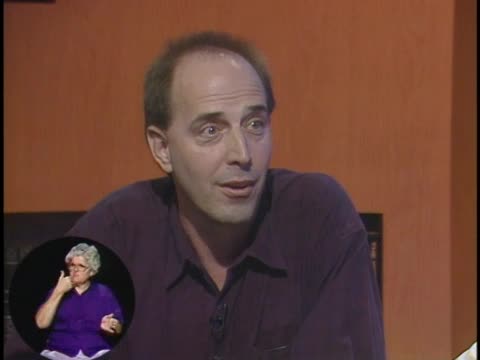
- DIALOG program encore presentation. Moderator Leslie Wilcox, with guests Leslie Kelly, Richard Markoff (Queen's Mental Health Clinic), Jon Jackson (Psychiatrist), and Paige Demecilio (Suicide and Crisis Hotline)
- Copyright Date
- 1993
- Asset type
- Episode
- Topics
- Public Affairs
- Rights
- Copyright, 1993
- Media type
- Moving Image
- Duration
- 01:02:35;25
- Credits
-
-
Producing Organization:
KHET
- AAPB Contributor Holdings
-
PBS Hawaii (KHET)
Identifier: cpb-aacip-e5d7628c6bf (Filename)
Format: Betacam: SP
Generation: Master
Duration: 00:58:46
-
'Ulu'ulu: The Henry Ku'ualoha Guigni Moving Image Archive of Hawai'i
Identifier: cpb-aacip-16aa0d2b175 (Filename)
Format: Betacam: SP
If you have a copy of this asset and would like us to add it to our catalog, please contact us.
- Citations
- Chicago: “Dialog; Depression,” 1993, PBS Hawaii, 'Ulu'ulu: The Henry Ku'ualoha Guigni Moving Image Archive of Hawai'i, American Archive of Public Broadcasting (GBH and the Library of Congress), Boston, MA and Washington, DC, accessed September 22, 2026, http://americanarchive.org/catalog/cpb-aacip-225-117m0dm4.
- MLA: “Dialog; Depression.” 1993. PBS Hawaii, 'Ulu'ulu: The Henry Ku'ualoha Guigni Moving Image Archive of Hawai'i, American Archive of Public Broadcasting (GBH and the Library of Congress), Boston, MA and Washington, DC. Web. September 22, 2026. <http://americanarchive.org/catalog/cpb-aacip-225-117m0dm4>.
- APA: Dialog; Depression. Boston, MA: PBS Hawaii, 'Ulu'ulu: The Henry Ku'ualoha Guigni Moving Image Archive of Hawai'i, American Archive of Public Broadcasting (GBH and the Library of Congress), Boston, MA and Washington, DC. Retrieved from http://americanarchive.org/catalog/cpb-aacip-225-117m0dm4