Dialog; Original Art?
- Transcript
You You You You
You You You
You You You
You You You You You
You You You You You You You You You You You You You Anywhere you look, I mean,
the fact is that investing in art is probably one of the most risky on any level, one of the riskiest propositions anybody could make. And I think that, you know, far be it for me to tell anybody what they should put in their living room on, their living room wall, I would say that basically either people collect art because they like it or because they're looking at it from a standpoint of investment and if looking at it from this standpoint of investment, I would say that they're in for a very, very risky climate, particularly nowadays. Would you agree with that, Wendell? You sell reproductions? I sell reproduction. Do you sell them as investments in art? No, I sell them because people like them. And I know about trying to buy art from investment. It's expensive. It's risky. And I believe I have found almost a risk -free product. It's beautiful. It's a masterful work.
It's handcrafted. And it's inexpensive. Well, here we are talking about something visual and not showing it, but I know you've brought one. Would you show us one of these reproductions of a classic? OK. This classic piece was painted by Renoir. On the terrace, it's an excellent piece. It's beautifully handcrafted. It's in a florentine frame. And who did it? This piece is unsigned and I won't be able to say who the artist is, but I can guarantee you, it was hand painted. And because of that, you don't have to go through the speculation of was it photo embossed? Is it numbered? Is it this or is it that? Somebody was taking a look at the original or a poster or a postcard and they painted it. And it's amazing. Could I get some reaction from the other art people here? What do you think? I'd like
to know a little bit more about the process by which is created. You know, I have in mind the long standing tradition of the artists or the art student who goes into the Louvre sets up his or her easel and basically is allowed to create a reproduction of a painting in that collection. And there are some specifications as to, for example, you cannot painted the same size as the original. And I think that's the primary one to distinguish a copy from the original. This is an interesting approach. It's sort of like an original copy in the sense that being hand painted, it gets around the issue of photomechanical reproduction at the same time. It in and of itself is not original in terms of its subject. Right. And it's an interesting and I think problematic sort of conflation of issues here. But I think the point that we may touch on later is that so often it's a question of intention. I don't think that Wendell is in any way intent on trading on his
customers ignorance or presenting this for something that it isn't, which I think is rather refreshing in the art market. And it's kind of hard to do. I mean, I believe that this piece by Renoir would sell for approximately 12 million as the original. And so either I would be a crook or a fool to try to sell this as an original for $700. Or in this case, it's more good. So, could you, what kind of documentation do you provide with these things? Do you provide people with a photo of the original from which this was painted? I have. I have, on hand, in the gallery, a large number of the coffee table type books that they can look at the original pieces or photographs of the original pieces and try to compare this replica to the photograph of the original. And, you know, photographic technology is excellent these days. I mean, you can take a photograph of something and you can be assured
that the color separation is going to be right if they put the time and the effort into it. Well, in this, you have somebody's sweat. They've worked over this piece. And, you know, it's not the original. It's a replica. Roy, do you have any thoughts on this? Yeah, I agree with Marci that it is an interesting way to have art that you admire and say if you're a frequent visitor of a museum and you're taken by a lot of the paintings that are there. And if you wish to somehow get that same feeling again, you know, from a particular piece. And now, I guess, Wendell's got something for you, you know, as long as, you know, like he said earlier, is that I don't think anybody's going to mistake this for an original and I don't think Wendell's the kind of person that's going to pass it off as the real thing. And the thing about it is that with the business of art, there are times that it's been very controversial and all of that. But
I've always stressed with my associations with any of the galleries that you've got to tell the people the truth. What is it that you're selling? You know, and with the legislation and everything, that's going to help. Okay, so that even though certain galleries may have people that don't want to follow the rules as they should be followed, well, you know, people will just be generally informed and it is their benefit to them. Well, you said you agreed with Marcia who also said it's problematic as well. Well, it's problematic because a lot of people have misinformation, okay? There are people that don't have any opinion about a certain thing one way or the other, not because, you know, they don't have the capability to form an opinion, just that they haven't thought about it. All of a sudden, they get bombarded with a certain type of information. May or may not be accurate, okay? And people get swayed into thinking one way or the other. You brought, you started the program with a Dolly fraud thing
and I've got a couple of friends that got burnt by that. And from the start, I told them, well, I don't know, if you want to do that, that's up to you. You know, I certainly can't tell people what to do and what not to do. But you didn't believe it? That it was... That it was for real? Whatever they bought from... It just seemed highly unlikely. Of course, you know, I didn't have any evidence either, but it seemed highly unlikely that they were able to do what they said they were doing and that I've also run into people that all of a sudden they were saying that they got misinformation from the galleries, you know, when they say it's limited to X amount of, let's say, we had 450 prints. Well, they forgot to tell those people that that is the, let's say, the US edition. They forgot to tell them about the Japan edition that had another 450. And when you added them all up, well, there aren't 450 pieces all together and that's not right because the whole industry suffers from that. And so I'm, you know,
I'm against that too, obviously. Well, how do you handle, you reproduce some of your work? Yes, I do. How about showing us what your work is as an original and then tell us how you handle reproduction? All right. Well, this is an example of an original oil painting that I did, 12 by 16 inches. And this is the smallest size of painting that I do. And I started showing my work in Honolulu at the zoo fence in 1982. That's two years after I graduated from UH. And the following year I was able to get into a gallery. Unfortunately, it was center art. And I spent the whole year trying to get out. But, you know, but I was new to the art scene here in Hawaii. But, but I was still excited. You know, I've always been excited about the lifestyle of being an artist and then showing my art and everything. But there came a time when it was introduced to me the notion
of having prints. Because I guess I was lucky enough to be in a situation where I could not create enough paintings to satisfy the people that wanted them. So that, to me, that was the next best thing to do. And so, you know, I did that. And I felt good about that. The main thing is don't lie to the people. Tell them what it is that they are buying, you know. And don't, I've always stressed that don't ever, ever buy the art for investment. Not because it's bad, but because we don't know. We don't know the future. Nobody has a crystal ball. Nobody can predict that. And if they claim that they can, then, you know, maybe there's something else to that person that you need to know. But as long as you're up front with what you're doing, what you're saying, declare everything, the names of the printers that you worked with, the capacity in which you work with them, let the people decide, you know, what they're going to do. Bob, do you think it makes a
difference whether an artist has had a hand in helping to reproduce the artwork or whether it's all just kind of photomechanically or done in some way that does not involve the artist's participation? Well, see, I think the problem here is that, you know, you speak, when one speaks of originality, that doesn't necessarily equate in any way with market value. And, you know, the problem, I think part of the problem nowadays is that I think so many people think in terms of market value of investment rather than what they really like. I mean, all you have to is pick up any TV guide and go through and find, you know, these wonderful investment opportunities in plates and dolls and everything else. And that, to me, is kind of bothersome because I think that people so often tend to think in terms of the really substituting market value for any, any aesthetic sense. And I think we're all basically saying that in one way or another. But, I mean, if you take, for example, I mean, there's so many problematic situations that come up because if you take, for
example, photographers, I mean, a lot of photographers and a lot of painters and printmakers don't make their own work. I mean, they come up with the image, but the physical production of the series is left to highly skilled technicians. And, you know, you come up with situations like Gary Winnegrin, the photographer who died and left behind something like, I don't know how many thousands of roles have undeveloped film. Well, I mean, it gets very, very problematic because somebody could make a decision after his death to print one print of a negative or 10 ,000. And the decision is obviously out of Gary's hands. You know, he's no longer with us. So, I mean, these things, they really boil down to economics in a lot of ways. And that's why I think ultimately people should perhaps think a lot more about what they like rather than what they think is going to be a good investment. All right. Well, as far as what you like and what, what is
really good art, does it matter whether the artist's hands were involved in the reproduction there do you think? Not necessarily. I mean, but again, you know, I think that I'm approaching this from the standpoint of an artist's story and, you know, more than a critic or an artist. An artist's story tends to look at it in terms of what is significant, you know, historically significant when they look back on it. And I would say this much, I think that if you take, for example, a case where it is a more or less exact replica of the original work, I don't have any problems. Somebody buying that, putting it in their house, because they think they really like the image. And it has the texture and the surface of a while painting. Fine. But I think the one thing that is a bit of a problem to me is that, you know, this person who did this is not expressing their own spirit as an artist. They're great
copycats at best. I mean, this is a complicated issue too, but I think, you know, if somebody is spending two or three hundred dollars in Honolulu for a work of art, I would suggest that there are an enormous number of extraordinarily talented artists in this town that you can buy a painting from for two or three or four hundred dollars, that is their spirit, their artistic inspiration, and nobody else's. Now, as to which one wants in their house, that's up to them. I wouldn't want to get involved in it in any way. Okay. We have a couple questions, well, we have more than a couple questions, but I want to ask Wendell a couple of questions because most of them seem to be for you. When does art become public domain? Art becomes public domain from my understanding after the artist has died for 50 years, has been dead 50 years. Then I believe that the United States Congress has stated that the artist's signature on the work becomes part of the work when the artist has been dead 50 years. So, if I had Van Gogh's son flowers,
and I do, and had Vincent on the vase, it would be fine. As long as I'm not trying to sell it as an original, but then again, it sold recently for forty million dollars. And so, my copy for two hundred and fifty is not the original. Vincent? Another question from a viewer. When you have an original, when you have original art in museums, why would anyone wish to buy a copy or duplicate? Because these pieces in museums say like The Night Watch by Rembrandt is in Amsterdam. And I'm sure. I saw it when I was a child. And if I could go back to Amsterdam now just to see it, I would. But if I could do that, I could buy somebody else's original art. I can't afford to go. And so, I can get a copy of it, paint it, buy somebody's hand, and hang it in
my living room, and enjoy it just like I did when I was twelve years old. It'll bring back those same memories. Question from Marcia. If you buy a forged piece of art that was copied by hand and labeled by the copier, isn't that also art? And the question implies you realize that it's art. It's, you realize it is, when they say forged, I think they mean just knowingly copied. You know it's a copy. Isn't it still art? Good question. I'm not sure I really want to tackle that because I think you're dealing with sort of layers of meaning and language here. I think I'd rather call it a copy. And if it's presented as such fine, you know, I think, again, going back to Bob's distinction, distinguishing between perhaps the spirit and the mechanics, if you will, or between the aesthetic sensibility and the kind of marketability or the marketplace role of a work of art, you know, that gets to be rather confused. I think
I'm not sure. I fully understand the implications of the question, but I think what I would look for is willing and knowing disclosure, how is the work being presented? Is the person or person, are the persons involved in the process of reproducing or replicating the work, willing to identify themselves in those respective roles? I think those are very different questions from whether or not it is a work of art, which really brings into play aesthetic considerations, which may be quite, you know, another direction to take. Okay. And I think maybe we've got ahead of ourselves in some respects, because a viewer would like us to explain, and I hope you'll explain, what's the difference between a print and a painting? A print and a painting. Well, it all depends. There are many different types of prints. There are prints that are, by way of the limestone, stone lithographs. There are
all kinds of etchings, and they're considered original prints. All right. And there are such prints that are actually reproductions of an artwork in another medium. Okay. So, and then in painting, and there's different types of paintings, too. There's watercolor painting. There's acrylic painting. There's oil painting. I don't know exactly. I guess I don't know exactly what they were trying to get at with that question, but each one of those, there's a variety of different things within each category. And I guess the paintings, I don't know, traditionally you use brushes, but you don't have to. You can paint with whatever instrument you want. And I guess that's the behind the question is that that tricky business of a unique original
versus a multiple original. And I think that's where you might look at paintings and prints being in those two respective categories. You know, a painting is a unique production because of the technology that has created it. You know, each brush stroke is laid in or whatever medium you're choosing. But a print is moving into a different territory in the sense that, you know, traditionally the unique part of the artist's production was creating the matrix, whether it was the carved block of wood or the etched metal plate or the stone on which drawing had been done with a grease -based material. And that, because of the nature of that matrix, it allowed for creating not only one, but multiple impressions, each of which could be considered an original, you know, sort of off -print, if you will, from the matrix. So you introduce another dimension, if you will, of originality, which gets beyond the notion of uniqueness as being required for an original work. Okay. We have a request that Roy show
his painting again. And while you show it, please, I'd like to ask you a question, Bob, because I know you've written extensively about European art. Would you do that? Would you show it to us now? And our camera will pick that up as Bob answers this question, I hope. Isn't it true that in Europe, a viewer wants to know, there is a law as to what constitutes an original print. And in America, there is not, no matter what the legislature says, this viewer tells us. Oh, well, I'm not sure. I mean, I think that laws vary a lot from one country to another. And each country has its own laws. But, you know, I think that, in a way, we're sort of maybe missing one point here, which is very relevant to this issue of value, in at least in a material sense. And that is that, you know, something, the fact that it may be an original work of art, does not necessarily have anything to do with its material value.
I mean, just decide a classic case and point. I mean, if somebody bought the first issue of Superman, you know, comic book, back in the late 30s, they paid ten cents for it. Now it's worth untold thousands of dollars. The reason why is not because it's an original work of art is because of supply and demand. The supply is like one copy. The same thing with the, you know, the baseball card phenomenon, or any other number of things you could cite. I mean, really, it comes down to ultimately to supply and demand. And if something is sought because of its rarity, obviously you can be with a lot of money. Just to cite another example. I mean, just this week Vivian lays Oscar, you know, the Oscar that she won for, you know, her, her, her, her gone with the wind. I mean, you know, the auction company was hoping against hope that they would get $150 ,000 on the auction block. It went for almost 600 ,000. Nobody expected that. And people look at these kinds of things. They say, oh my, just imagine, you know, if I buy the right thing, how,
how enormously I could, I could increase my, you know, my initial investment. Forget it. I mean, it's, it's not really, normally in the cards, unless you have the kind of expertise that can follow, you know, these kinds of auction, and be there at the auction, too, that has to go along with it. So, I mean, you know, it's, it's really, I think there's one issue is originality of the artwork. And that can be problematic when you're talking about serial things such as lithographs or photographs or whatever. But, you know, that is quite a separate issue, I think, from what makes the work materially valuable. Okay, you know, it's time to take a quick break. And since this is public television, it will be a quick break. We don't have conventional commercials. Then we'll be back with more of art on dialogue. Welcome back to dialogue. I'm Leslie Wilcox. And tonight's subject is art. And
what constitutes original art? The volunteers from the Hawaii Chi Lions Club who are staffing our phone bank tonight. Welcome your calls at 9 -5 -5 -7 -8 -7 -8. Neighbor Islanders, please charge the call to us, make it collect. And you can see that one of the lions is representative David Stigmeyer on the phone right now in the front line. You want to give a wave? Hi. I'll do my best to get the questions they're taking to our guests. And Marcia, you wanted to follow up with what Bob was saying. Yeah, I think just going back to some of the issues, Bob raised. I think that what comes into play here too is the way we respond to the cult of genius or celebrity. Wendell's product, as forthrightly as it is marketed, depends heavily on the fact that this is a copy of a Renoir, not somebody else who does not have already an established reputation. I think what's interesting here is that, you know, as honest as Wendell is, I would be concerned for what comes down the line. I mean, there's a lot of slippage that's potential here from this going from this is a
copy of a Renoir to this is a Renoir. And, you know, sort of wondering what might happen once that, you know, that change or that distinction has been lost. I'm interested also to know, when do you use the term or the terms about replica and reproduction? Is there some distinction in your mind between those terms? No, not at all. I mean, the replica definitely gives the connotation of the hand painting, but we were speaking of reproductions of art's posters, lithographs. So it is a reproduction of an original beat is a hand produced. Let me ask you a question from a viewer. Why do you use artists who aren't from Hawaii? Are there artists here who could do this well? I have. I have a large selection of Hawaii on it. It's beautiful. I have the poly that was done back in 1869. I have a view of Manoa from Waikiki. That's fabulous. But say, art by the masters, European masters is
usually done by some reproduction person somewhere else, right? Yes, I suppose so. It is called masterpiece classics. And I believe there are quite a few masters who have painted in Hawaii. But at this time, I don't have any. And so I would like to, well, I guess go back to the points that were being made. I do understand that it is possible for someone to further down the line to say, yes, this is an original. But this medium art is the painter's sculptures, maybe. This is the only area where the topic seems to come up. Nobody ever mentions the fact that I have a reproduction of Shakespeare's writing. Everybody knows that there's only one. And yet nobody talks about going to the bookstore and buying a copy of Shakespeare. And so it doesn't seem to be a problem. And then everybody has the question about it's not the inspiration
behind it. But I do think the man said it was 1 % inspiration and 99 % perspiration. People are actually painting these. They're not trying to, you know, fake anybody out. They're talented. A question from a viewer again. I want to try to stick to what the viewers want us to talk about. Lady asks, what happens when, let's say she buys this down the line. And she's told it's an original. How can she be sure of what it is? It's not sign, first of all. And if she buys it for $15 million dollars, then, you know, I think she might be able to afford an expert to check out the work. But if she buys it for $500, well, I don't know. I believe there was a man that did buy a Picasso at a garage cell and it turned out to be an original and now he's very wealthy. But then that person that bought that Rolex from the man on the street for $1, I think he knows he doesn't have an original or he bought stolen property.
What should buyers do to make sure something is original? What do you recommend? Well, I think that they somehow get themselves educated because I think ultimately in any aspect of life, you owe it to yourself to educate yourself. And if you don't know, hire some people or get the knowledge, you know, go to somebody who has the knowledge and that way, no matter what comes up, they would still have to deal with the knowledge that you have gained for yourself, you know, just to protect yourself. It's always a good idea to be informed. Okay. We have lots of questions about copying and Roy, since you're talking, I hope you'll keep talking and answer this question. Isn't copying other artists work part of a budding artist's education? Yes. Actually, I did that. When I was a little boy, my first early training came by way of my grandfather and my uncle and
they would ask me to copy what they were doing. Okay. And at that point, it's just an exercise of our hand coordination. You know, we lived in the city, but you know, they wanted me to paint the ocean. And obviously, I don't have any inspiration to turn to other than what, and also at that time, it's just do what you're told. Okay. So I did it as I was told, but inevitably, I think what would need to happen is that after you have acquired, well, hone your skills, you know, to a degree, then you could then tap into your to your inner self and do what you want to do with all these techniques and all these skills that you have learned to express yourself, you know, and not, I could say that mainly because that's the way I had done my art, you know, and that is where I get the most joy. But if you have an artist that gets the most joy
out of doing somebody else's, like, you know, with the reproductions that Wendell has, I think, well, that's good for you, you know, because it does something for you to do that. And if it means reproducing somebody else's, who am I to tell this guy what to paint, you know? Question from a viewer, what is fine art, Bob? Perfect guy to answer. Here's a question. I'm going to say for the first time you asked my story about art, and they respond, I may know art, but I don't know what I like. I think that that question or what is fine art, what is not, is something that has been debated to an extraordinary extent in the last, particularly the last 20, 30 years. And a lot of ways, I think that the distinction is getting more and more blurred all the time, because, you know, you have artists nowadays who are
appropriating graffiti, who are using, who are expressing themselves in ways which are not intrinsically collectible in the first place. I mean, they may be doing things that are there one minute to the next minute they're gone, unless you've got it on videotape, you know, there's no record of it. Conceptual art in the last 20, 30 years has totally redefined, you know, the idea of what is intrinsically fine art. So I think it's, you know, it's a very interesting question, but I think that, you know, the certainty that people had about the distinction fine art and popular art or mass art, that sort of thing, the existed, say, before the 1950s is no longer there. I mean, the gray area has become so huge that it's really difficult to put things on one side of the fence or the other. Okay, a question for our other professor on the panel. Marcia, in fact, this is the most commonly asked
question among the questions we have now. Where do you take a piece of work that you believe is an original to authenticate it? Who do you go to? Where do you go? That's a good question. There are resources in the community, and I hope I'm speaking correctly about who they are. There are a number of people who are licensed as professional appraisers of art, who are able, both to, you know, assess a work in terms of its physical properties, aesthetic and historical properties, but also perhaps position it in terms of market and often to authenticate it as original, although authentication is really a distinct, I think, if you will, process from simply appraising, although appraising in work certainly goes to whether or not something is real, if you will. Do you have a ballpark estimate of what it would cost to have a piece of art authenticated? I think most appraisers work on an hourly or daily rate
basis, and will, you know, may have a flat rate for a single work up to being able to give you an estimate if you have a larger and more substantial collection, for example, to appraise. I think also the staff members at the Honolulu Academy of Art, and it may be true for the Bishop Museum as well, I don't know for sure in that case, are willing to look at work and advise you. Sometimes you may be referred to people off Islander out of state, if it's within an area of collection that there isn't local expertise for. I think those are both sources. Question for Roy. A print from a local artist numbered and signed. That's one thing this artist sells, and then this artist also sells the same work, print, unnumbered and unsigned. Does this affect the value, and how do you decide how you sell your work? The value. I would assume they mean, like in
terms of money, right? Okay, well, I'm with Bob on this. I don't place a whole lot of attention to the value, something when I purchase art. What about when you sell yours, though? How do you decide how many reproductions to make, and whether to sign them, number them, or to be honest with you? I went with the galleries that I was showing with, and I just assume that they are in the business of art, because I am not really a businessman for say, you know, I have no passion for the business end of it. Okay, so I had to go with the people that I felt that know. Okay, so we looked at the industry and you can go to all kinds of expositions and exhibits and whatnot, and you can perhaps try to rate yourself against all of what's going on at the present time and
see if you're amongst these people. And that's one way. Other people calculated by hours put in, but I don't believe in okay, and if an artist worked on a piece for half their life and it doesn't do anything for anybody, that's just too bad, you know, but that's how I determined the prices, you know, I started out at the zoo fence, like I said, so it started out at $35 for a little painting, but with the supply and demand that Bob raised, that ultimately that's what it came down to. I didn't know that, but I got a quick education that, you know, you raised your prizes and then without even really paying that much attention to it, you find yourself settling for X amount of dollars. So that's the story on that. Okay, here's
an interesting question, and I'd like to ask it to Bob. Some people don't consider photography to be original art, says this viewer, is it? Sure. Again, you know, this gets into this whole issue of uniqueness, you know, of something being because there's only one of them, it's somehow different than if there's more than one of them, the serial versus the individual work. It's the same kind of situation, really, as you have with with printmaking. There's no difference. I mean, a lithographer may choose to make five lithographs from the stone, or they may choose to make five thousand from the stone. That's going to affect the value of the work. It's exactly the same with photography. And, you know, I think photographers have probably tended to be very defensive about this, but in fact, they shouldn't be, because really it's exactly the same kind of situation as exists in printmaking. And I think, by the way, to just follow
up on that question, that interestingly enough, photography is one of the areas, in terms of, I know that I said all this about how risky it is to invest in the art world, but actually, I think photography, if one does a little bit of homework, is one of the areas that you can collect in that is really coming up, that is there are some strong, you know, possibilities there if you do your homework. I think that the relatively speaking, the prices of photographs by well -known photographers have really done very, very well in the last several years. All right. Another question from a viewer is computer art original. Sure. And how do you set the value of that? Well, see, that's something I've actually been, you know, following this on the internet a little bit myself lately. And it's something that is really going to blow a lot of things wide open. I think that,
you know, in the same thing, by the way, it's also true in terms of publishing poems or short stories. All of a sudden, the normal controls, the normal economic controls over these things are no longer there. And I think it's going to make a lot of, give a lot of lawyers a whole lot of work in the next several years. But right now, for example, in Omaha, there is a nonprofit organization that has devoted specifically to the dissemination of computer art across various networks like the internet. And it's going to be a very big issue, very soon. I'm not sure who to address this to. I'll just throw it out. This viewer believes there are instances of commercial art, which later become high art in museums and the artist becomes famous. Please comment. I mean, rock well. Sure. I mean, I think there are examples of things that were created, I mean, two assault tracks, posters, for example, are things that
come most immediately to my mind, you know, created for very specific marketing purposes. But we're created with techniques that we associate with fine art printmaking, lithography, for example. And because of the relationship of those products to the entire body of low -tracks work, you know, they've gained market viability, if you will. Okay. Here's a question for Wendell, and I hope I'm understanding it right. If a sculpture does a famous sculpture, and then paints a picture of it, could you sell that picture as original, the painting of the sculpture? If the sculptor painted the picture? Yes. Why not? What if someone painted the sculpture? Would it then be original? Just because it's in another medium? Another medium? But another person did it? I don't know. I really
don't. I don't see why not though. I mean, artists, they say that, that, you know, this, this is an oil, and this is an acrylic. It's different. This is, this is watercolors opposed to oil. Well, then they would be saying, this is a sculpture, and this is a painting. They're different. Okay. When does original art become priceless? Is this one of those unanswerable, unknowable things? It's always a price. It just makes me very high. God, you're lucky. I don't ask you this question. I asked you earlier, what is fine art? Somebody now wants to know what is art, but I don't think we have time for that one. It's a very wide ranging, long explanation involving almost everything in the world, I think. Okay. We have a lot of questions. I want to try to get to the main themes. What's the difference between an art product and a piece of original art work? Is that too general? I don't know. I mean, I think
it could go to the issues that we've been discussing in terms of an originary work versus copies or poster reproduction. There's a copy art in itself, right? Okay. Possibly. Yeah. Was that a sign of some kind? All right. What are the current trends in art? Is the question? Who can take that one? He pointed at you first. I think probably at this point about anything goes, and I think it's exciting. I mean, I think that it crosses those linkages of high art versus low art, art, fine art versus popular, fine art versus crafts, art that comes from different and cross currents of cultures, conceptual work, work that is very ephemeral, you know, raising the whole question of durability and longevity in the work.
I think what results from that, you know, both is real complexities in terms of the marketplace, which we've seen go up and down a lot in the last couple of years, but also it seems to me the other aspect, and I speak now from my own professional perspective, is how do we educate people who are interested in developing as artists or engaging in that as a profession? Is there a profession anymore? Just one, throwing one thing, following up on that, and that is that if you look at museum attendance in this country over the last several years, it has gone through the ceiling. And I think that one can be very optimistic in terms of, you know, despite all the, you know, doom and gloom about, you know, the state of popular culture and television and all that sort of thing. I think there's no question that the general public interest in the fine arts has steadily increased over the last several years.
Part of that may be because of certain blockbuster exhibitions to get a lot of coverage. But still, I'm very, very optimistic in terms of, you know, the general concern of the public for the fine arts. And in this state, we're very lucky also that we have, you know, state agencies that have done a great deal to help that along. Not only in terms of popular awareness, but also supporting local artists, which I think is very, very important. Here's an interesting question. Is inventors art valuable, such as the Mongoose Nutcracker from the Big Island? Can you give us a more back? Can we only background on that? Okay, let's move to the next question. Roy, do artists produce for a market? Do you think some do? Absolutely, some do. During my experience at the
zoo fence when I first started, one of the neat things about it is that you're amongst your colleagues from coming from all different angles, you know, and some of them are there just because they want to paint every Sunday. And that's fine. They're happy, you know. And there are those that want to use it as a stepping stone. That's fine too. And there are those that want to figure out what sells now, and that's what they'll paint now. And then when something else is hot, they'll paint that, okay. And it's hard for me to relate to any other motive other than my own, you know, because I don't want to be judgmental of other people, what it is that thrills them to death to do what they want to do. But yeah, those people certainly do exist, you know. But I'm not going to sit here and try and validate or validate that one way or the other. Okay, we have a viewer who was feeling good when you said photography is original art. Now he's starting to think about that and he says, oh, oh, well, if I have a photograph that's
original art, how can I be sure it won't be duplicated on mass? Well, there are, I mean, there are ways that one can determine whether it's from the original negative or not. It gets a little bit more complicated now with scanning computer scanning and whatnot. But I think the safeguards basically are there for anybody that is thinking about investing in photography. It's really not anything to worry that much about, I think. Again, just as in the case of the infamous Dolly Prince, I mean, it does have to do with just how enormous the runs of any particular addition to Prince may be. But the thing that you need to worry about perhaps more anything else with photography is the appropriate conditions under which they're capped because it is a medium that particularly in our climate is subject to
some real deterioration. So how do you keep your photographs fresh? Well, you keep them in an air -conditioned space and away from all those little bugs and things that love to get to all kinds of paper products. But for photographs, I should also mention, I mean, particularly in the case of color photographs, there have been concerns about the longevity of the print itself. But I don't know. I mean, that's something that I still think really is not a major concern, particularly if they're kept in the right conditions. Any work of art can deteriorate. Right now we have, for example, problems with people doing multimedia stuff with new kinds of pigments, new kinds of paints that nobody has ever stopped to think how long these things are going to last. These paintings may literally disintegrate to nothing in 20 years
because they're using, you know, house paints, they're using, and I haven't noticed what. Pieces of schnaubles paintings are falling off of the canvas onto the floor and having to tack them back up. That's always a major problem, whether it's talking about photography or anything else. Here's a question for Marcia, and it concerns offset lithography. If the artist signs and numbers the print, say, says one slash 500, the first of a run of 500, then makes more unsigned copies. Is it legal? I think it depends on what legislation exists in the location which the sale takes place. Then I think it's not legal and it's also highly unethical, it seems to me. Well, but if the first, if some are signed and the rest are not signed. If the medium is the same
and the limit, then there is the original intention to produce that limited edition even as large as 500. I'm just trying to flesh out the scenario and let's say those 500 are sold and then the artist wants to produce more. They could produce a second edition or a second state. If it's labeled as such, then fine. It does work against the original 500 purchasers who thought they were in fact getting something from a limited edition. In that sense, I think it is unfair and potentially deceptive practice depending on the market. Something you can sue for. Well, I think it depends on how much money has been involved. It might be a small claims item. It might be something more substantial than that. But I think again, it goes back. It seems to me that we're more fundamental issue of ethical practice regardless of the legalities. I think that in so far as artists or dealers take advantage of
a client or a buyer's ignorance, that doesn't do anything good for the market ultimately. Well, that's why I'm pretty confident about this product because it's impossible to take a look at this and say this was done by a color separation or a machine. You can put your hands on it. You can feel this product and know that it's real. I don't think anybody would have to worry about somebody knocking off 2 ,000 copies of this when they got to sit there with the paint brush in their hand and do it. It's just not an easy thing to do. That's why I'm very pleased with this product. I've looked long and hard for a long time for a great product and I love art and I love what I have. Let me read you a couple of comments we've gotten over the hour. This one comment is framing is so expensive. Prince have to be cheap. You don't like to hear this too. Anyway, this viewer says it puts art in the hands of the general public. Another
caller says I feel we need more patrons and recognition for so -called unknown local artists so the public can learn to appreciate what art is. Here's a caller who says I know Roy. He does beautiful work usually on Kawaii to -to sense her best. I want to thank each of you for being here today to help us sort out what is original art. I'm sorry that's all we have time for tonight. I'd like to thank you for sharing hard information plus your perspective. Next week Friday night on dialogue, it happens to be Christmas Eve. Dialogue will be a repeat or as they say encore presentation. That means copy, I believe. Reproduction. The subject will be eating disorders and the guests will be psychiatrist Neil Anzai, nutritionist Kristen Lindsay Dudley, a young woman who used to have anorexia, charity fears, and former bulimic Joyce Basinger. Thank you for watching Hawaii Public Television or as the case may be listening to Hawaii Public Radio, whichever medium you're using. Good night. I'm Leslie Wilcox.
The views
expressed on this program do not necessarily reflect the views of the Hawaii Public Broadcasting Authority or the staff of this station. Questions or comments about the program may be addressed to News and Public Affairs Department, 2350 Dolstreet, Honolulu Hawaii, 96822.
- Series
- Dialog
- Episode
- Original Art?
- Producing Organization
- KHET
- Contributing Organization
- PBS Hawaii (Honolulu, Hawaii)
- 'Ulu'ulu: The Henry Ku'ualoha Guigni Moving Image Archive of Hawai'i (Kapolei, Hawaii)
- AAPB ID
- cpb-aacip-225-08hdr8nt
If you have more information about this item than what is given here, or if you have concerns about this record, we want to know! Contact us, indicating the AAPB ID (cpb-aacip-225-08hdr8nt).
- Description
- Episode Description
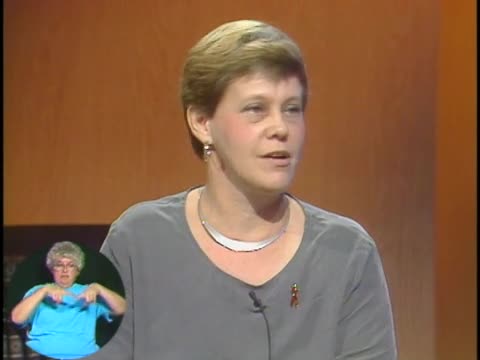
- Host Leslie Wilcox talks with Marcia Morse (Art Critic), Robert Jay (UH Art Department), Wendell Love (Manager, Masterpiece Classics), and Roy Tabora (Artist) about photocopied reproductions of classical art in the public domain. DIALOG program encore presentation.
- Copyright Date
- 1993
- Asset type
- Episode
- Topics
- Fine Arts
- Rights
- Copyright, 1994
- Media type
- Moving Image
- Duration
- 01:00:34;07
- Credits
-
-
Executive producer:
Trifonovitch, Kelli Abe
Guest: Morse, Marcia
Guest: Love, Wendell
Guest: Jay, Robert
Guest: Tabora, Roy
Host: Wilcox, Leslie
Producer: Simmons, Charlotte
Producing Organization: KHET
- AAPB Contributor Holdings
-
PBS Hawaii (KHET)
Identifier: cpb-aacip-961935fddcc (Filename)
Format: Betacam: SP
Generation: Master
Duration: 00:56:47
-
'Ulu'ulu: The Henry Ku'ualoha Guigni Moving Image Archive of Hawai'i
Identifier: cpb-aacip-99551946258 (Filename)
Format: Betacam: SP
If you have a copy of this asset and would like us to add it to our catalog, please contact us.
- Citations
- Chicago: “Dialog; Original Art?,” 1993, PBS Hawaii, 'Ulu'ulu: The Henry Ku'ualoha Guigni Moving Image Archive of Hawai'i, American Archive of Public Broadcasting (GBH and the Library of Congress), Boston, MA and Washington, DC, accessed September 22, 2026, http://americanarchive.org/catalog/cpb-aacip-225-08hdr8nt.
- MLA: “Dialog; Original Art?.” 1993. PBS Hawaii, 'Ulu'ulu: The Henry Ku'ualoha Guigni Moving Image Archive of Hawai'i, American Archive of Public Broadcasting (GBH and the Library of Congress), Boston, MA and Washington, DC. Web. September 22, 2026. <http://americanarchive.org/catalog/cpb-aacip-225-08hdr8nt>.
- APA: Dialog; Original Art?. Boston, MA: PBS Hawaii, 'Ulu'ulu: The Henry Ku'ualoha Guigni Moving Image Archive of Hawai'i, American Archive of Public Broadcasting (GBH and the Library of Congress), Boston, MA and Washington, DC. Retrieved from http://americanarchive.org/catalog/cpb-aacip-225-08hdr8nt