Dialog; Tourism
- Transcript
I'm sorry, sorry
I sorry Welcome to kitchen Good evening welcome to diet log on Hawaii Public Television I realized he's dangerous Don't worry Hi years, several years of dreary headlines on visitor numbers, and many people in the industry are
hurting. Although just this month, Waikiki Hotels reported that last month, January, they had the highest occupancy rate since the Persian Gulf War. That, notwithstanding, if you want a challenge, take on the job of drumming up more tourism business. You'll have to contend with the economic problems on the mainland and in Japan, and an increasingly visible sovereignty movement that have laid has been appearing in Waikiki, telling the visitors to go home, and also a very touchy, same -sex marriage issue that has people on both sides of the issue saying, if the matter doesn't go their way, what is going to lose visitors who think their way? Now our guests are very aware of these problems, and we're going to find out what they intend to do about some of them. Mufi Hanaman is the director of the State Department of Business, Economic Development, and Tourism, a department which the state auditor recently said is not showing clarity about its role in the state's tourism program. We'll hear what Mufi has to say about that and the rest of the job before him. Tom Sakata is a long -time Hawaii visitors bureau official, picked to be president last fall. The bureau has a $20 million contract with the state to
promote Hawaii tourism, and he says his organization began moving to correct its problems, even before the state auditors report came down hard on it recently. Christina Kemmer is president of the Waikiki Improvement Association, a private, non -profit organization that focuses on the social, economic, and cultural renewal of Waikiki. She's out there fighting hand -billing street vendors, including prostitutes, and a host of other threats she sees to Waikiki and the interests of the association's mostly business membership. And Stephen Boyle is vice president and general manager of the new Otani Kaimana Beach Hotel on the diamond head side of Waikiki. He's been at the hotel, which he refers to as a small boutique resort for 10 and a half years, and he was one of the first hotel people in Hawaii to advocate eco -tourism. And just the other day, he had the Ohana Council outside his hotel, giving tourists leaflets, saying very directly, go home. I invite everyone watching at home to call us with a question or comment.
There's the first call for our guest to respond to now. You don't often get their collective ear like this. Just call the volunteers from the Carl Erdman travel agency, staffing our phone bank tonight. 955 -7878, and please make a collect call if you're on a neighbor island. You may also listen to this program on the radio on KIFOAM1380 or KIPO89 .3, handling sign language interpretation for viewers who are hearing impaired, Loretta McDonald. Let me ask you the first question, Steve. Tell me about the incident at your hotel, what was it like when the Ohana Council came by? Well, it was last Monday and a half a holiday. Some of us had to work, and the group gathered up and coppied on the park, the gateway to the park, and started handing out the leaflets to pass their buys and people in autumn bills and saying very abruptly, go home here.
Later in the day, they wandered onto the beach and also handed out their flyer, which you have a copy. Again, a brief comment, go home. When we have worked so hard in the industry to overcome the last three years, we have optimism and hope, and the weather is working in our favor and to put yourself in any vacation or shoes to go to a vacation spot and then have somebody hand you the go home notice. It's very uncomfortable, and they did it very aggressively, finally, by handing them over the railings at the Howtree, which is an outside restaurant. So our guest came to us and said, do you really want us to go home? I said absolutely not. A small group, very vocal. The visitor's bureau will welcome your calls, we'll try and ally any fears that you have. And that's about
it. I have one of the leaflets that were passed out and they say, go home and do not return until the illegal state of Hawaii ceases all acts of complicity and aggression against the native Hawaiians. May the spirit of Aloha guide you safely to your homeland. Let me ask you, Steve, you've lived here a while and you obviously have paid attention to the issues. Do you feel like they have a good point? You just don't want them choosing this way to express it or do you think they don't have a good point? I've lived here over 25 years now and so I have a great deal of sympathy for the Hawaiian and their feeling that they should have some compensation and recognition. And I think most people in the industry feel that way. But the idea that as I said before, you work to overcome trying to get full employment back so you don't have to lay people off and so everybody is feeling comfortable about the economy and then to have somebody come in with
a message that's very abrupt and very negative is not the way to accomplish anything. It's like lighting a match in your haystack. Your bound to be burned at the same time, you're burning everybody else. So you referred people to the HVB, which means Tom, you were getting calls and what were you telling people? Well, as a matter of fact, the other day we had breakfast with Cebunpi -Kanahelis group who feed myself a marital and have a much smarter from the state. We had a very good conversation with them. And myself, I feel that sovereignty is a big issue that we all got to face. And I'm personally sympathetic to the sovereignty issue, but as Steve points out, we don't know what the solution is. Now, that's one side of the question, but I think that going on the beach and telling the tourists to go home is kind of productive. You know, this is our biggest industry, everybody depends on it and Hawaiians too. And a lot of Hawaiians
do not agree with what the O 'Hana Council was doing, although they support the sovereignty movement. So I don't think we should take away our prime earning power, our prime industry that everybody needs and it's going to be kind of productive if the televisions stay away. So we had a nice discussion with them and I think we can have some reasonable solutions. You know, there's obviously other ways that we're hoping that they can show their expression of support for sovereignty. You know, it's a very complex issue and one that I think we all can benefit from getting a better understanding and education about and that's what we're trying to stress now that there are other ways to do it because the timing couldn't have been worse. I mean, we've just come through a rough year in 1993. We're starting to see some indications that things are going to be a little better in 1994 and we're starting to benefit from things that perhaps we weren't counting on like the really bad weather that's happening throughout the mainland.
So this is an issue that we're trying to come to grips with and obviously keep a dialogue and communication going with the sovereignty groups, but at the same time try to impress upon them that we're only hurting ourselves. Many people of Hawaiian ancestry, for example, that are employed in the visitor industry that feel very strongly about sovereignty, but feel perhaps maybe there are other ways of expressing their support for it. But I think the Oana Council has said too that it wouldn't have been necessary to resort to that if they felt that the allegedly illegal state government had and people in general were listening more closely. Well, you know, I can say this is a very complex issue. It goes beyond just the visitor industry, goes to the issue of land rights, water rights and the like. So I think where we can come in from the visitor industry is just a continuing press that upon folks that press may want to resort to this type of tactic that is really is counterproductive because we only end up hurting ourselves in the long term. And as this group was pointing out the other morning was the individual that cut across state
agency lines and the like and that's what I think we have to continue to do. And so what are you telling the Oana Council? How do you think will it be possible to reach an agreement where they will not use this forum, the beaches and the streets of Waikiki and tourist areas? We have an agreement right now that they're going to stay off the beaches and I think what we want to do work with them in terms of educating people about sovereignty in the visitor industry as well as the community at large and that's where the dialogue is going now. Christina, is that what your membership is complaining most loudly about at this point or is there some other more pressing concern? Well, of course, we've been very concerned about the street solicitation issues in Waikiki. Our public rights of Waay have recently been taken up with charitable sales, primarily using the vehicle of t -shirts. That combined with aggressive prostitution in the evenings, drug sales and of course shoplifting which comes along with drugs. I think that our particular organization is focusing on partnerships
with both the city and the state as well as other community organizations to come forward and look at joint solutions. As a result of being able to, as Moufi says, using dialogue and communication, fortunately we've been able to move, for instance, at the legislature, legislation which is addressing prostitution, the institution of the night court again as well as alternative sentencing. On the other hand, we're very aggressive right now with the city council in terms of trying to move a bill seven which is addressing the charitable sales issue. I think that we need to remember that when we have visitors, the visitors experience is with the product and that product for them is first experienced on the street and on the beaches and all the public areas. Any kind of communication, even with the Hawaiian community, I think it's important for us to have forums with them, have them lead us through what can Waikiki do in terms of bringing in the Hawaiian
community, in our planning, in our solution seeking. What does sovereignty mean for Waikiki, because what does it mean for tourism? So the necessity to bring everybody to the table to arrive at community solutions is very important. There was a conference recently in which tourism officials in the industry were challenged to be the keeper of the culture and what Hawaiians are saying about rights and things important to them could be incorporated as part of what Hawaii offers. Well, there's no question. I don't think that we can no longer sit in government offices or sit in the offices that at the Hawaii Visitors Bureau and plan tourism for Hawaii. It's got to be a community process and that's what we're seeing around the world and certainly has hit us here at home. The sovereignty issue must be addressed. Local people have to feel good about tourism and feel that it in fact is everybody's business. And we had this tourism congress in December where
we reached out to some 400 people from throughout the state that came forward and it was really good to address such issues as the sovereignty issue, the airline issue. Some of these things that perhaps we would sort of say, well, that's too controversial, that's too, you know, that's going to create a lot of confusion if you will, but I think we have to come to groups with it and the only way you're going to do that if you truly have this community dialogue. Question for you from a viewer, taking a look at just the whole premise of the show we're saying, what can be done to bolster tourism while this question is, why should we revitalize tourism? Why don't we diversify agriculture, information services, marine research, financial services, film, just be creative? Well, you know, from where I said, it just seems to me that we have to continue to bolster tourism. It is our largest industry. It creates some 250 ,000 jobs in the community, some $10 billion in revenues. You know, it far surpasses our number two industry, which is the military, defense spending, some $3 billion. Sugar and pineapple continues to decline, but I think what we can do is start to bring in some of these other industries that have
a synergistic relationship with tourism. The viewer mentioned film. That's what we've been preaching. The tie -in film and movie production, tie -in sports, tie -in Hawaii products. All of this can be a bigger picture of tourism. At the same time, you know, we have to keep the long -term view, which is to continue to try to diversify the economy. But there's no question that tourism has to be strengthened. And that's our best hope and continues to be the best hope we have in the near -term future for Hawaii. Okay. Several questions about the role of the HVB and how it is doing its job. Tom, why are mainland producers creating TV ads for the HVB instead of Hawaii -based creative people? Well, our advertising agency is Hawaii -based. Now, we have a contract. You know, we put out AVA every so many years. And it's a bid process and the local companies have wanted. But sometimes, of course, they use mainland counterparts subcontractors to do that. But it's Hawaii
-based, and they may do some shooting on the mainland. But basically, it's Hawaii. And we want to be sure that we portray Hawaii, the culture of Hawaii, the people, not just beaches and surf and sand. So we want to bring that into the advertising pictures so that we sell the people of Hawaii, the history, the culture. And we say that, you know, Hawaii is place, host, and the guests itself. So it has to be a three -partnership and not just beaches, but we do use local people. This question, I think, it goes on to comment that in terms of hiring some mainland producers, millions of dollars goes out of the state, which could be refundled in the state economy. Well, and I'm not sure what they exactly mean, but if not, if you buy TV time, it goes to the mainland. I think they mean people creating TV ads. The agency is here, and they do a lot of the creatives here. They do use
some consultants on the mainland, but it's a partnership. We try to keep the money here because, you know, this is our community. We wanted to stay here. Steve, you're looking at, you've talked about niche marketing, and I've heard a lot about that recently, about developing the health, you know, finding partnerships in health and tourism and environment and tourism. What do you do as far as niche marketing? Well, several years ago, we realized that people travel around the world when they go to Japan, they climb to the top of Mount Fuji, and they go to the top of Ayers Rock, if they go to Australia, and we created a diamond head hiker's hooey, and not only for the safe adventure, that if we give instructions on how to get it to the middle of the crater by the inside, the tunnel, and no danger, and reward them or reward them a certificate. But the real value
to us was we also gave them with their instructions and their flesh, like a little litter bag, and they had them clean up the path on the way up, clean up at the top, and it's been absolutely a wonderful eco -tourism adventure for our little hotel. We put ourselves up as the base camp Kaimana, meaning base camp, if you were going up Mount Everest or something like that. We've had a lot of fun with that, and we think we've done a lot of good, and now talking about expanding in ecological areas, we're getting people to say, where can we climb next? We did diamond head last week. We're exploring now with the nature center to send visitors up there and have them again go on the safe adventure. So as one little hotel, we've created that niche. And there's also sport marketing. What are the other
options? I mean, what can we look forward to that we're not doing now? It's obvious that we cannot continue to promote Hawaii as strictly a sun, sand, and sea, surf, destination. And what we have to do is bring out the attributes and assets we have with cultural tourism, eco -tourism, and really make the case that Hawaii is six unique islands that offer six different experiences, unlike some of these other places. And so we really have, many ways, a long way to go in terms of bringing out the kinds of assets that we can do. So our sports potential, I mean, we saw this past year with the Pro Bowl and with the Honolulu Marathon in December. People continue to look to Hawaii as a sporting center, if you want, and we need to continue to expand that. We, a new event was created this past year where we had a tour of Hawaii that someday can be a bicycling race that may be rival to the Tour de France. In the area of movie and film production, I think we all remember the heyday in which we had Magnum PI and Y5O this year, the future of film has never been brighter. We may have the possibility of me three prime time television series here. And so these are the kinds of things I think we need to work towards and be able to make the case to people that Hawaii is a great place to come and visit.
And I think the other area too, Leslie, that we have to get out there is that we're in a affordable place to visit. Sometimes people have this impression that we're at the high end and all we offer is a thousand -dollar rooms and so forth. But that is what recent surveys showed in the places number two or three in terms of what people spend per day. Well, what I'm saying is that we offer the full menu and we are really an affordable place to come and visit as opposed to the things that sometimes people use against coming to Hawaii is that it's a very expensive place to come and visit. Well, I thought we were expensive. No, we're not. We offer the full menu. I mean, from Steve's hotel there in Waikiki or the Algriger Chains, I mean, we are one of the few big cities I think where you can still get a room under a hundred dollars in a prime time location. I think what we're trying to do is put more emphasis on the public relations area. To remind people that we have the finest, the most expensive. But we also have very economical, very good for families and economy packages. So we have everything. We offer the full menu. We have about 70 ,000 hotel
rooms and one of the beauties of Hawaii is that you can go from $40, $50 to $4, $5, $600 is a big range for, actually we have hotels to suit any budget. So this is one of the beauties of Hawaii. But there is this pre -seed concept because A new hotel opens in Hawaii, the newest one out. Eilani. Eilani. $350 a night. So they're going to get a lot of publicity about being the newest hotel in Onoahu. And we have to do a little counter publicity saying, yes, and the economy programs are still available. I think more than anything though, there's, we have the other opportunity in that, that you can get an awful lot of value for your vacation while you're in Hawaii. We are a multicultural state with multicultural experiences. So I think it's really incumbent upon us to ensure that our visitor has that opportunity to interface with the multi
-cultures that we have. And I think one way we can do that is by bringing local people into the resort areas, whether it's in Waikiki and urban resort or in our rural resorts. And then that way, whether it's experiencing a true halau, true dancing, or other meeting with a kupuna to talk about Hawaiian medicinal, herbal experiences, those are all ways to bring the community in. But at the same time, I think then the visitor feels, oh, my stay, whether it's for golf and hotel and airfare, et cetera, it was all worth it because I had all these other multicultural experiences. We're certainly not single out of Hawaiian music in Waikiki in terms of the showrooms. I mean, musicians are saying they're just really, very little for them now. You see any hope that that will improve? Well, for instance, right now we have a program which we started a month ago with different members of the community coming forward and helping sponsor. And that's the Malahui Waikiki, Twilight at Waikiki. We have a torch lighting ceremony. And then of course, we have Hawaiian halau performing on the weekends. But the wonderful thing about that is they bring in
their own musicians. And then that way, it's in public open space. So it is not like they have to go into a hotel. They encounter this in a public open space, and in this particular case it's co -heo beach. They get to hear Hawaiian music, experience authentic Hawaiian dancing with local people, some of whom are Hawaiian, and at the same time also the experience of the conch blowing and the torch lighting. Is there any place you think we're really missing it as far as serving your membership? Any direction that has been embarked upon that's going the wrong way? I think that at this point, I would just like to say that we're at a point where we all need to contribute to ensure that there are more experiences at the street level, whether it's from the time they arrive at the airport, to the time they arrive at their destination in their hotel, to the time they walk out on the sidewalks or the beaches, or the area that they're staying in. And I think there are many, many examples of things that can be done, but I think it's a matter of really focusing on the product and seeing that the visitor experiences it.
I think in a state's perspective, I think, you know, what Christine has been doing with WIA, you know, we're really interested in that and want to support it because it's the product. Waikiki needs to have some sort of revival if you want to bring back the culture, bring the people back, especially the local community. This past year, the Christmas and Waikiki effort, I think, was on a grander scale than I've ever seen before. It's those kinds of things that I think we need to do at the same time. I think what makes Hawaii very special is our hospitality, is our love spirit, is our quality of service. And I don't think that we can ever underestimate that or neglect it. And so I think that we also need to remind ourselves from time to time that that's what's important to us, so that people will come back because they can find nice beaches elsewhere, a lot of other activities, but they keep telling us at least people that we talk to saying, you know, it's your love spirit. It's the people of WIA that makes it very special and that's why we want to return. Keep in mind, let's say that one of the things Hawaii can offer is that we have six destinations. It's not just a Waikiki or Waikiki and the neighbor islands offer a different experience. And sometimes I think that this is where the future
will be in terms of getting a better image, sometimes, you know, Wa who gets sort of, somewhat jaded and you can get a better friendlier experience on a neighbor island. So we advocate visiting the neighbor island. So here they have more aloha spirit, I think. So people can come to Hawaii and really visit six destinations, not just Waikiki or Wa. So that's a beautiful way. I can see how people would be conflicted about the aloha spirit if they're unsure about whether, you know, are we doing the right thing for Native Hawaiians? Are we considering what's right? And are we handling this matter? Well, I think it would make people a little afraid about extending aloha. But you mentioned tourism, people of the culture, which was the authored by another kind of Haley George. And he has done a very good job of talking to hoteliers like myself. And I guess in other industries,
all in the visitor industry, about the importance and the value of teaching the aloha concept. And we believe it, we preach it, we sell it. And that's one of the tough things to take when somebody's passing out a hand -built very short -sighted. Because I think people really do feel differently when they come to Hawaii. As somebody said, they were here only a short time before they refrained from honking horn at somebody because nobody honks horns. They show some love or aloha. And I think the keeper of the culture can be tourism. And I think we're going to grow together positively. Leslie, that's the programming we're referring to. It's the Waioha Foundation. That's right. That George Khan of Haley has been a prime mover and in the state has been really supportive of that. In fact, the Maui Khan of
Pala Beach Hotel took that to heart and is now just a service as a model, if you will, of what it means to have your employees involved at the Hawaiian culture and so forth. And that's I think the direction that we want to move towards. And by the way, George Khan of Haley was invited to be a guest here tonight. And unfortunately, he was out of town a lot. We couldn't hook up with him in time. So we would have liked to have George Khan of Haley here. It would have been nice to have a native Hawaiian on the panel as well. We're going to take a quick break. Then we have a lot more to talk about when we come back on dialogue. For people in Hawaii, Asia has always been more than a far away exotic place. It's a place where some of our ancestors came from. It's a place where some of our neighbors are still coming from. And more and more, it's a place where we do business. Each week, Asia now brings you unparalleled coverage of Asia from late -breaking stories to in -depth features you probably won't see on the nightly news. Whether it's covering the business boom in Vietnam or tracking nuclear tensions in
East Asia, these are stories that keep you in touch with the rising economic powers and the volatile hotspots in this dynamic region of the world. Join us every Friday night at 730 for Asia now on Hawaii public television, because what happens over there most definitely affects what happens over here. Welcome back to dialogue. We're talking about a big subject with big problems. Tourism in Hawaii and we invite you to call in with your question or your comment at 955 -7878, neighbor islanders, please call collect. Your calls are being taken by volunteers from Carl Erdman travel and they write down your concerns and pass them over here to me and I simply am the question repeater. Let me ask you, color would like to know why not just have one island for tourism and concentrate efforts on one island. Anybody want to take a stab at that? Well
once again I think Tom had mentioned it earlier, you know we have some God -given assets here that wouldn't be ashamed if we did not try to take advantage of it. In the fact of the matter is we have six unique islands that offer six very different experiences and it's one that we haven't even even tapped I think it's potential. I think for a long time people thought it was Waikiki and that was their experience of coming to Hawaii. I think now with with Kawaii, Maui, Molokai, Lanai and the rest of the island say I have so much to offer and that's what I would argue. Yes. Okay I got to tell you there are several viewers concerned about whether the two of you are doing what you should with state public money is going into paying your salaries and paying for your efforts and here we have the state auditor recently coming down hard on both agencies. Would you care to respond? Sure. You know I came into this job with July of 92. I couldn't have picked the worst time to be the head of an economic development agency that has
major responsibilities for tourism. The fact of the matter is I think I've tried to be very proactive. I've developed a strategy if you will to try to deal with with tourism I think for the first time the tea has counted in DBEDT and so a lot of the problems that were cited in the auditor's report were some things that perhaps were not addressed well before my time. I've said for example in the contract management situation that yes there needs to be some tightening up in the like but I think what we're finding now with the new leadership at HVB and in DBED we've really taken a whole new approach. We have a brand new contract now that covers 18 months in which we took into effect many of the recommendations that were in the auditor's report and by the way we were already working on those problems well before the auditor's report was issued so we commend the auditor's team for pointing out the problems but I think that sometimes in the criticisms that were a level that both HVB and DBED not enough credit was given to the groundwork that we were already laying in terms of setting forth this new
relationship if you will. Last year in the midst of a downturn in all the problems having the legislature to their credit granted DBED and HVB the single biggest increase in the history of funding for tourism in the state and this year we've got another plan going back in where we see based on cooperative marketing advertising where we can match a dollar of state funds for a dollar that's coming for the private sector we're asking for an increase again to once again bolster tourism. So I feel that we're on a better relationship perhaps and my feeling all along is that when I left this job I want to leave it in a better place then when I found it coming in in July of 1992 and I really believe that's the case I make no apologies for the strong proactive leadership that we've taken at DBED since I've been at the helm. Tom one of the auditor's complaints was about weak organization at your on your board. Well like Muffy I've been on board as president five months and right now we have a very strong executive committee very strong board we meet monthly and we've got very good people maybe in the past they didn't meet us often but today it's a different ballgame
you know people don't realize that we are constantly reviewed by the DBED by the legislature we have many committees and the executive committee is very critical the board is very critical we are thoroughly reviewed more than most agencies in the state of Hawaii people don't realize that so everything we do is open and one of the things we're trying to do now is to make sure that whatever we do and whatever promotion we have accountability to show that we're getting some results with it if we can't measure it we don't want to do it so this is the new direction we are going in I'm very satisfied that we are accountable for what we're doing we may make some mistakes but we're moving in the right direction and people are watching us all the time which is no problem. People were watching you very closely on the recent testimony of the HVB chairman about same -sex marriages he and his wife testified that they don't support same -sex marriages don't want to see them legalized in Hawaii and there was some fallout from that you came on and you said hey that's not the HVB's position we have several questions and the theme among them is generally
do you think that there is potential to increase tourism in Hawaii with allowing gay marriages and are we concerned about developing that market at all? Well first of all you know as you mentioned we are we don't have a position for against gay marriages and it's a big niche it's a big market and we haven't to be honest tapped at as much as we should but there are many in niches 20 -30 areas history culture we talked about and maybe gay is an area and we just haven't started and we we started to awaken to the potential so we welcome all visitors as long as the the good visitors and behave themselves and our good citizens we don't get where they come from or what background they have or what sexual orientation and I noticed I think I read a comment by you recently saying that you've really been only looking at demographics geographically you're going to start taking a look at other segments of the market and one of the reasons in the past we didn't have enough money to be in every niche everybody tells us why don't you do this
why don't you do that well we can't split our funds all over and not be effective so we are doing mostly geographic marketing but slowly we'll get into the niches where we think it should be but are you doing what you want to do or do you see and envision things that you feel aren't being done perhaps you feel hamstrung or are we are you is is everyone doing what they should be are you satisfied first of all you know I think Tom here on a keynote that perhaps we haven't done as well in the past and that is this whole question of return on investment what are we getting for every dollar that we spend on tourism and I think that that speaks for the industry in general I think we need to underscore more than ever how important the industry is and and and so that goes to the heart of what are we getting as a return investment more probably I don't think money alone is going to do it we have to do other things there we've talked about creative and innovative marketing we have to deal with the airline issues to ensure that there's going to be sufficient lift in the state we have to be concerned about our product you know why did we wait so long for a convention center you know those are the kind of issues that that we need to perhaps in the
future move more quickly on and then of course the quality of the human dimension of your spirit I feel that that what we're doing now is at least laying the groundwork I think for more solid foundation which to build them because I really feel optimistic about 94 and everybody say stay alive to 95 I think 94 we're going to see some progress and you know these things going cycles Leslie so what I'm hoping is that whenever we have the next downturn again there'll be enough of a cushion there so that we can brace ourselves from the kind of setbacks that we saw this time around when I think some of us perhaps felt that tourism was going to come forever from Japan and California and we didn't do enough of the innovative creative things to brace before you think the fundamental structure and approach has to change in order to provide that cushion yes yes and I think that's what we're doing now we're going beyond Japan and looking at markets like Korea Taiwan even China Hong Kong and Vietnam and Europe and of course in Europe you know I don't think that we can consider that a distant market anymore they are coming to Hawaii we saw another increase again with German visitors last year to Hawaii and if we ever get non
-stop flights from Europe to Hawaii that's going to go a long way towards increasing that market Christina a lot of questions for you about hand -billing you talked about how street solicitation has been very much a preoccupation of businesses and your organization but the viewers say isn't it true that you're just always fighting it is is anything ever really done is there ever resolution on some of these assaults on the sidewalk well here's where the partnership with the city which has jurisdiction over the city needs to occur in terms of of creating ordinances that have a lot of teeth in them all right currently the ordinances that we have relating to hand -billing allows a hand -biller to be anywhere on the sidewalk there currently is an ordinance bill before the city council to hopefully tell them where they cannot be but just as an example I mean the only way that it really we have to you have to look at enforcement I'm going to use the example of Australia surface paradise their hand -billing doesn't occur on the sidewalks
why they're fined 5 ,000 U .S. I mean excuse me Australian dollars and they are allowed to hand -billet the entrance to an establishment but not on the sidewalk well with a deterrent of 5 ,000 Australian dollars no one is out their hand -billing so here in in Waikiki for instance it's a $25 fine and you have and then with the new bill that's being proposed it's a matter of staying within so many feet from the curb and away from the corner well what is the priority for enforcement so that's where I say that you know we really have to work at stronger partnerships with the city at resolution at resolving I think what's important too is that I think perhaps at times state agencies have taken the view that this is a city and county matter and it's a jurisdiction within a county I think Waikiki is too important product development is too important an issue for us to continue that view and so we're really looking forward to working with Christine in our group to see how the state might be able to mitigate some of those problems there in Waikiki because it's just gone beyond well we welcome those public
private partnerships because I think that as you just stated Waikiki is too important for the state it is the gateway it you know 50 .4 % of all visitor expenditures occur you know from Waikiki in Waikiki and so yes it's that starting point your first experience your first impression which then leads you to the neighbor islands which we certainly want our visitors to go to and have those particular experiences but that first place for Aloha that first place of fulfilling that fantasy you have about Hawaii starts in Waikiki so we do need that partnership. Question for Tom from a viewer I know you're in charge of the HVB efforts in Asia for a time for a long time in fact Bureau would like to know will the increase in U .S. and Japanese trade frictions mean a larger decrease in Japanese tourists. Personally I don't think so the reason is Japanese sort of put Hawaii as a different country that we're not part of Washington we're not part of the United States so our travel goes so and we are not in the trade business per se at Hawaii so
although there may be frictions I don't think it's going to less enter into Hawaii and the Aloha you might see or the friendly list of Japanese for United States is still very strong despite trade frictions and in the total context of U .S.-Japan relation is very small so I don't think it's going to be a major factor in stopping tourism to Hawaii. Interesting we have several questions about amusement parks and why don't we have an amusement park here and then local people can go and it would be an attraction for people from outside. Anybody thinking of that? You know that's obviously the way in which I think a lot of these other places Las Vegas for example is starting to have these family attractions and these parks and I like I think for Hawaii we got to find that niche I mean there's several efforts that have been made in the past I guess the last one was near Aloha Stadium where they had a park there of some sorts but you know I think something with a cultural theme may work here. Paul and Eason Cultures Center I guess is the closest thing I think even though it you know I shouldn't be saying it's an amusement park but at least in terms of a cultural attraction that
brings a lot of people there that gives them the whole range of issues something for everyone so I think if we could find something with a cultural theme it may work or something in the science and space area. Huntsfield of Alabama for example has a space park there with a space academy that might be something we might be able to do on the big island with a strong attachment to what's happening up on Monicaia and some of the ocean resources work there and the like so maybe a science and tech park or a cultural theme park might work here. Well we have the Paul and Eason glanced upon earlier and that is ecotourism and Steve how about taking that one? Definition. What is the ecotourism? It means visiting a place and leaving it the way you found it without leaving your tracks and your litter or whatever impression you would might make as a tourist any other place. Speaking of hot subjects ecotourism is because people are into the awareness and
the environment and most of the hotels in Hawaii have been leaders in doing the what is almost routine now and that's recycling your aluminum your paper your cardboard. Some of us are on the border on the brink of going just a little further and that's getting the visitor involved the guest in our hotel. We say we're a smart little elegant hotel how is a guest going to take it how would you take it if we said you can put this thing on your door knob and not be disturbed and you can also put this on your towel rack and not change your towel. How frequently do you change your towel at home you don't do it every night but you expect that in a hotel that causes all kind of conservation and water and detergent and everything else if you don't do that but it has to be approached very carefully. Hanama
Bay is an example of where we sort of went overboard and promoting a natural area and now it's overused so we're looking I hope with the state's help as little Hanama Bay's and areas like that and I think Hawaii has a possibility of being leading the whole Pacific nation in this ecological awareness. I know the Hawaii Nature Center is involved in something on Maui and people there say they see a line between some forms of tourism called ecotourism for example people who charged $70 to take folks up to sacred falls without the ecotourism you're bringing in people who wouldn't normally be there in charging 70 bucks. That would not be defined as ecotourism no the idea that I don't know the company that would be involved in that if they do it with sensitivity it could be
very included in that ecotourism definition but there is a problem or as I said before it's a hot subject and being involved in it and there is commercial aspect to some and naturally it could create a problem if you picked on a sacred falls or one particular area but if you do it with sensitivity and care and concern and the idea of restoring or replenishing I think it could be a benefit for us here in Hawaii. Is that the biggest of the niche so -called niche approaches that are being talked about? You talked about 30 or 40 niches top. I think honeymoon is a bigger niche probably than ecotourism. Oh yeah sports very big. Proble. Proble. Yeah well I think anything that deals you know once again because Hawaii so blessed with great weather and in some of the
other natural assets there I think it deals with our environment location that we have here certainly this is what we need to do more of and I think what Steve has talked about too is that we have to strike this balance however whereby we don't destroy something here and it can last for future generations and also keep in mind that you know local people also want access to some of these things here and I think perhaps that's been a problem that we've had in the past where we've denied some of our local people access. Oh we have a new theme of questions coming in now and these concern the Napoleon family which was recently moved off of the beach where the family was operating a beach concession that was said to be illegal and they said we're native Hawaiians and we deserve to be on the beach. You are being asked by our viewers wasn't that a perfect opportunity for leaders to get involved and resolve that in a way that was better than pulling people off the beach. Was there a better way to handle that? Well this was obviously in the jurisdiction of the Department of Land and Natural Resources I know because you know in just discussions I've had with
the Chairman of the Department that they were trying to seek all kinds of different remedies or options and in fact are continuing to to monitor in such a way that if it happens again that they can do it in a manner that is once again is you know respectful of people's rights and so forth so I don't know if there was a better way and then once again I'm just speaking second hand because this was really the kuliano of the DLNR that has jurisdiction over. Well let me ask Christina one of these caller says and it's an interesting point says what what we've opened the way for and the handling of that issue is for the Napoleon's to form a church a nonprofit organization and set themselves up on the beach like the t -shirt people who are operating under the the label of nonprofit tax exempt organizations. Well they're correct actually in expressing that particular concern and it's a concern that we have as well. First of all we have a peddling ordinance which doesn't allow for
any type of peddling on any of the public areas but what it doesn't cover is first amendment activity and that's why this particular bill which is up before the city council right now bill number seven is very important that it move forward because what it looks at is Waikiki as a very special area as special environment and deserve special protection the way that we look at our national parks and we see them as treasures Waikiki is also a treasure so that would apply to its beaches and to its sidewalks to any of its public areas and therefore if there is going to be first amendment activity it should be restricted to specific areas it isn't something that should occur just anywhere and yes you know there are sensitivities tied into what group is doing it and how they're going about it and this is where once again it becomes important to really come to the table and and arrive at some
solutions that are going to work for everyone because right I mean all of our beaches all of our sidewalks it isn't just Waikiki we're also talking about the neighbor islands this affects any area where anyone wishes to express their first amendment right do you think that problem of the t -shirt vendors and therefore similar problems will be resolved by the city soon well we are anticipating that if bill seven does pass and it becomes an ordinance that it would be contested it would have to go probably all the way up to the Supreme Court that's going to be a four or five year experience and I don't think that our merchants and certainly our business people in Waikiki can survive waiting four or five years so but we need to move forward I mean we need to you know we need to make some decisions and say yes Waikiki is a special environment and therefore we should restrict first amendment right activity to specific areas and at the same time we also
need as a community to come forward and hopefully come to the table and create some other solutions if we have to you know spend four or five years in court and for those of you who haven't seen the t -shirt vendors in Waikiki you probably haven't been to Waikiki lately the people who set up stands right outside stores selling t -shirts and they sell them for what what's the price now for you right now we're actually the going rate is ten t -shirts for twenty dollars so it's not a level playing field I mean I think that the issue here isn't about selling t -shirts it's about commercialism under the guise of the first amendment in the church say they don't have churchly or religious or spiritual or or those kind of sentiments on the shirts well supposedly in order to do that they have a message which is inextricably intertwined into the design and of the product whether it be a padeo or our t -shirt or or a cap and have you seen that message in the product you can find the message but you have to to to look carefully at the design in
order to find the inextricably intertwined message it isn't it can't be under the gaudia case which was a case which opened up this particular activity in San Diego and has opened up this activity you're in Mikey Key it when it says inextricably intertwined it isn't something that's just stamped on or or painted on they have to be able to integrate it as part of the screening on the product but does doesn't this open the way for say native Hawaiians or other groups to form non -profit tax exempt organizations and that that's correct that's set up on beaches and sidewalks that's correct this is a very serious issue with very serious repercussions and it's something that the state the city the private sector we are all going to have to come together to resolve basically all the things we've been talking about tonight are not Waikiki problems they're not the visitor industry problems really they're community problems all of us spirit same sex marriages ohana council
prostitution t -shirts this is for everybody people think it's a Waikiki and tourism issue but it's not they could well be your neighborhood selling t -shirts nothing to friend or prostitution so it's a communication so does that mean you folks are enlisting the whole community in trying to help you I don't think no one person no one organization is going to bring tourism back it's got to take a collective effort and the will to say in fact that it is our most important industry and and that we want to bring it back and and make it different and make it better and and create an industry that we all can feel good about and we can say it's not just low paying jobs or service or any economy I mean I think that you know as I try to explain tonight is that it will continue to be our best hope for the future I mean I see tourism opening doors for them it's a different world that we live in now get NAFTA all these trading regional blocks that are coming up tourism is an opportunity for us as people have disposable incomes and they want to travel and that's where Hawaii can talk about things other than sun and serve we can talk about
our expertise and in Asia Pacific affairs as a center for education of training as a center for high technology all these things will come about I think if we get tourism back on the right track Steve running your hotel do you feel like you know you're basically fighting odds you can't really face straight on kind of punching the wind no not really I have very high hopes for the future of Hawaii in general and through this clean industry that we've been the envy of the world for the last 25 years people have said how how does Hawaii do it and so no I'm not defeated at all by it I think we have a very beautiful place and we have something that's unique in the world and that's Aloha and we've got a nurture it and we've got to feed it and the Congress that Moofy referred to in December one of the ingredients is getting the community people involved in the visitor industry not saying this is your problem this
is because you bring in visitors yeah but those visitors provide bread and school and homes and so forth so no I'm very positive about the future okay let me just read a couple comments if I might one viewer says the cost of local attractions is too high for even local families viewer and we've gotten several calls about music viewer feels overlooking good old fashioned Hawaiian music is happening no other state has it and that should be used as a marketing tool you know that's exactly what we're doing we've taken Hawaiian regional cuisine it's another thing that we have here that we we need to talk more we're taking it on the road and then telling people that we have these assets here and every time I think we have an opportunity be at the Pro Bowl we brought up Israel Kamaka Vivooli who's never performed in a half -time show we had a perform in a half -time show Pro Bowl that's the kind of stuff that I think we want to look to do another comment bring back the
Hula dancers lay greeters and Hawaiian music to the airport what happened to them I think that that's very important I know that there's some programs in the works but I think that you know the lay stands for instance they should be moved into the airport I mean every person who arrives in Hawaii expects to be greeted with a lay and have Hula dancers there now obviously we can't give you know six million or seven million visitors a lay but certainly if the lay stands are there visible you can smell the flowers you see people buying lays you see people giving lays you have Hula dancers performing I know that you're looking at these particular kinds of programs but I think that there's some simple things there but I think I just would like to at this point say we've been talking about how tourism is you know the keeper of the culture but I think we need to also turn it around and when you have questions like the community saying well you know where where's the Hawaiian music etc culture is also the keeper of tourism and we have to allow the culture to be a part of the tourism environment and I think that that's where
we'll start to really see the difference okay and let's let that be the last note because we are out of time we want to thank all of you for being here with us and thank you for calling in your questions next week Friday night at nine on dialogue Dan Boiling will be here in the moderators chair and the subject will be holistic healing in Hawaii you don't see much of that on statewide TV so it's a good opportunity if you're interested I'm Leslie Wilcox thank you for being with us tonight Aloha the views
expressed on this program do not necessarily reflect the views of the Hawaii public broadcasting authority or the staff of this station questions or comments about the program may be addressed to news and public affairs department 2350 Dolstreet Honolulu Hawaii 96822
- Series
- Dialog
- Episode
- Tourism
- Producing Organization
- KHET
- Contributing Organization
- PBS Hawaii (Honolulu, Hawaii)
- 'Ulu'ulu: The Henry Ku'ualoha Guigni Moving Image Archive of Hawai'i (Kapolei, Hawaii)
- AAPB ID
- cpb-aacip-225-009w0w1j
If you have more information about this item than what is given here, or if you have concerns about this record, we want to know! Contact us, indicating the AAPB ID (cpb-aacip-225-009w0w1j).
- Description
- Episode Description
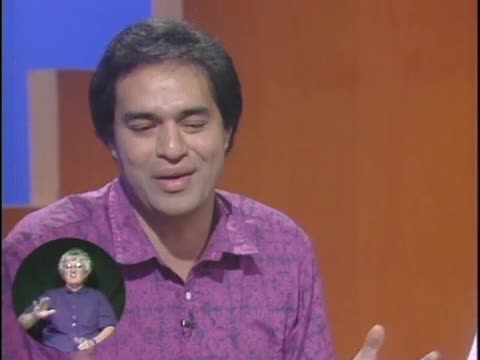
- DIALOG program encore presentation. Host Leslie Wilcox talks with Mufi Hannemann (Dept. of Business, Economic Development & Tourism), Tom Sakata (Hawaii Visitor's Bureau), Christina Kemmer (Waikiki Improvement Association), and Stephen Boyle (New Otani Kaimana Hotel) about tourism.
- Copyright Date
- 1994
- Asset type
- Episode
- Topics
- Economics
- Rights
- Copyright, 1994
- Media type
- Moving Image
- Duration
- 01:01:18;24
- Credits
-
-
Trifonovitch, Kelli Abe
Director: Beggin, Dave
Guest: Hannemann, Mufi
Guest: Kemmer, Christina
Guest: Boyle, Stephen
Guest: Sakata, Tom
Host: Wilcox, Leslie
Producing Organization: KHET
- AAPB Contributor Holdings
-
PBS Hawaii (KHET)
Identifier: cpb-aacip-db23807968c (Filename)
Format: Betacam: SP
Generation: Master
Duration: 00:59:00
-
'Ulu'ulu: The Henry Ku'ualoha Guigni Moving Image Archive of Hawai'i
Identifier: cpb-aacip-89b89f8bb70 (Filename)
Format: Betacam: SP
If you have a copy of this asset and would like us to add it to our catalog, please contact us.
- Citations
- Chicago: “Dialog; Tourism,” 1994, PBS Hawaii, 'Ulu'ulu: The Henry Ku'ualoha Guigni Moving Image Archive of Hawai'i, American Archive of Public Broadcasting (GBH and the Library of Congress), Boston, MA and Washington, DC, accessed June 26, 2026, http://americanarchive.org/catalog/cpb-aacip-225-009w0w1j.
- MLA: “Dialog; Tourism.” 1994. PBS Hawaii, 'Ulu'ulu: The Henry Ku'ualoha Guigni Moving Image Archive of Hawai'i, American Archive of Public Broadcasting (GBH and the Library of Congress), Boston, MA and Washington, DC. Web. June 26, 2026. <http://americanarchive.org/catalog/cpb-aacip-225-009w0w1j>.
- APA: Dialog; Tourism. Boston, MA: PBS Hawaii, 'Ulu'ulu: The Henry Ku'ualoha Guigni Moving Image Archive of Hawai'i, American Archive of Public Broadcasting (GBH and the Library of Congress), Boston, MA and Washington, DC. Retrieved from http://americanarchive.org/catalog/cpb-aacip-225-009w0w1j