Speaking of Rochester; 111; Archie Curry
- Transcript
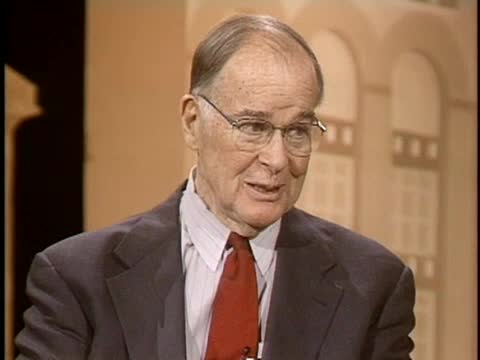
How do you do ladies and gentlemen I'm Barber Conable and this program is called Speaking of Rochester. In this program we try to explore the history and the traditions of Rochester, bring it down to the present and hopefully peer a little into the future to see where we're headed. We've a talked to a diverse number of community leaders in on this program and I have tried to pick their brains about a a their special visions of Rochester and we hope you'll enjoy it. Ah, our guest today is a long time member of the Rochester School Board. Seventeen years to be exact. A man a who a has a also served in many other capacities. His name is Archie Curry, and many of you know him. Archie came originally from Florida. He went to junior college there and then moved to Rochester about a 1962. He first worked as a social worker in
a local hospital and then a a transferred to the Kodak payroll, as many Rochesterians have at one time and another, and worked there until 1973 when with Kodak's agreement they actually paid him a year while he was working at the Urban League, under Bill Johnson, now our mayor, where he was in charge of youth programs. In a 1978 he ran for the School Board for the first time. He served at least three times as President of the School Board. And in a number of other capacities and, as such, he is thoroughly cognizant of the educational problems of Rochester: its strengths, its weaknesses, and we want to talk about them some today are actually welcome to our programs. Thank you, Barber, I appreciate being here. Well, it's a great privilege to have you because you have had the experience over the years that's brought you to a very firm knowledge of Rochester's problems and Rochester's prospects. [Guest] Yes. [Host] Now,
first of all, what led you toward the School Board, you'd been in charge of youth programs at the Urban League, but a was there some particular reason you wanted to be on the School Board? [Guest] Well, I kind of got [Host] You don't just drift on to something that, you know, [Guest]I I I was kind of drafted by the Community people and and folks I'd been involved with through the Urban League and as an active parent, a my wife and I served as a co-chair person of our parent group and I'm at Number 19 school when my son and my oldest daughter into school there, and it's just one thing led to another and [Host] and even even in your church you are active with the them, parents, and so forth.[Guest] Yes yes yes had any children yes [Host] So you were involved with children right from the start - [Guest] And then when Bill Johnson came to Rochester from Flint, Michigan to take over the Urban League, I had also worked for a brief
moment a with the Deputy Mayor Jeff Carson and so education always been a a concern and interest of the mayor and so he wanted someone to all not only come and deal with the youth, but also head up whatever effort he was going to he was one to deal with in the area of education. So that's how I got to Urban League and then from there a one thing led to another and I ended up being elected to the School Board. [host] Well, now tell me when you joined the school board what was the state of Rochester schools? They were in some turmoil weren't they? [Guest] Yes, not only were we going through I think the initial fiscal crisis you had the Waldrick decision and you have Municipal Overburden then you had... What was the Waldrick decision? That was where we were Taxing above about 2 percent state again you - higher taxes weren't permitted. [Guest] Yes and so when that day hit and then we were told we couldn't do it. [Host] So you had to cut back. [Guest] You had to cut back and you had to make some drastic cuts [Host] That's tough - In the
[ Guest] A'midst of all that the system was coming from out of the integration movement at the time ah a The de-seg movement then and you know [Host] It was coming out of it? [Guest] Yes, [Host] You mean the process of busing in [Guest]Busing, yes, yes, yes. [Host] The creation of special school districts and so forth [Guest] And that whole thing and a so on top of that then you had a fiscal problem and like most crises you-- it's hard to get the real truth. And so where the Community really [Host] People do resist change still [Guest] Oh yes, very much so, especially when you go through a major change like the the a integration or the bussing and that pulled on people's heartstrings then you come in saying, that now we can't fund music, and and after school activity and all that and then you talking about. I remember one -- we had to look at 15 million dollars to take out of the budget; so it was really
a trying time. [Host] Trying time. [Guest] Yes, yes. [Host] And, of course, since that time there've been a series of changes. One thing I've noticed about educational theory is if you don't like it just wait a couple of years and it'll change. Ah such things as concentration such things as magnet schools [Guest] Yes, yes. [Host] and so forth, differing attitudes. [Guest] Well, I think that grew out of the willingness of education and the education system to take on all the new ideas and a lot of the ones generating from the State Board of Education all the decision makers around education, most of it in my opinion now in hindsight was coming-- was driven from outside. Be it a community belief system. Or Federal laws, state laws, and then this system's school system had to deal with it. [Host] So you mean that the school boards didn't really have a lot of direct control over the details of schooling
much of that was dictated by mandates. [Guest]Yes, [Host] from from the state and federal governments [Guest] yes, yes, [Host] and so forth. [Guest]And then the schools being as are, are I'll use the word "gullible". They then took on more a of than they should, or they shouldn't have done and that just compound of the whole problem. [Host] One of the things about mandates is that there's a tendency for the government to impose them on you and then gradually to reduce the funding, so that you have to pick up the cost yourself. [Guest]Yes. [Host] Is that what happened here? As in other places? [Guest] Yes, and a lot of those mandates and policies are still on the board and on the books today. [Host] So you still have to do them, but you don't get any help? [Guest] Yes, like you, let's take the racial balance. There still is a federal law and a state law that dictates what a a school should look like If in the real world, if you had to the folks there percentage wise of of racial groups and you take the City schools, well you
have more of one racial group then you have of the other. But yet still if you want to get some of the federal dollars, a the office of civil rights could come in and say you're out of compliance [Host] Hm mm. [Guest] and so even now [Host] But to get into compliance would cost you a lot of money [Guest] It costs a lot of money and they have cut back [Host] And they've cut back and so there you are on the horns of a dilemma. [Guest]Yes. [Host] You do want to try to comply with the mandates that have been imposed on you, or do you want to put more money on the folks at home who have to pay [Guest] Who have to pay.[Host] through through a school taxes [Guest] Yes. [Host] for very very largely through real estate taxes which are regressive [Guest] And a [Host] they're not based on ability to pay, but on the ownership of property [Guest] And then the City is having a difficult time a to tax base that's not here, so that the folks who want to stay. Ah the ones that are footing and the tax bill is also where are at their limit too. [Host] But Archie isn't it true that Rochester is better off than a lot of other places in this respect simply because we have
a generally a higher community income than many other cities? [Guest] Yes and some of and that works against against us. I know when I have to come down when you was in Congress and talk to you, you used to raise that issue and when we try to say, yes you're right, but ah we still have all these problems that we can't do even trying to live up to that expectation. Ah or It's just it still works against us.[Host] Yeah. [Guest]Yes. [Host] And there's a higher expectancy because Rochester is what it is. [Guest]Yeah [Host] And the Rochester people expect better schools than you would find in other less fortunate places. [Guest] And I would have to say though the tax payers, might a they get the bang for the buck contrary they might not feel that way. We our schools are still that in much better shape than a lot of all of the all those cities our size and even some of the rural. [Host] Actually you seen quite a bit of evolution of your schools haven't you [Guest] Yes. [Host] in favor of a better
performance. [Guest]Yes. [Host] for instance some of the schools were in danger of being closed because the performance records were so low. They've been taken off that list. [Guest] Yes. They wanted -- especially at one elementary school. Sometimes I I think that was good. I think the threat of the state coming in and a taking over school helped our staff, helped the staff in the school to recognize that a a there's a thing that need to be done differently and they did and with super leadership of the superintendent that we have now. It's coming around. [Host] And it also told the people of Rochester that they had better be a willing to pay more if they wanted better schools, something that they might not have done had they not realized as threat of closing schools. [Guest] That's true. [Host] What other evolutions have you seen in schools during your period of time? Ah it seems to me that that's one of the more dynamic parts of our society. The education system is always
experimenting and always changing. Sometimes, ah in a circular fashion, [Guest] Hm mm. [Host] but sometimes moving forward also. What as you look back on those long years of struggling on the school board to try to satisfy people, to satisfy students, to satisfy teachers, and to satisfy the federal and state authorities. Where did you see a ah the biggest changes come? [Guest]I think now the educators, the school, the superintendents, ah are are now saying that look everybody else is like I said earlier they're telling us which way it should go and we're in the trenches; we're not going to say this is what we can or cannot do. Ah we can't take on all of the the social work functions, the psychological functions, and all that. We're about the business of of providing education and a a profession our professional effort should be providing the day to day education. It took a long time. Our still a lot of
our staff don't want to accept that that they themselves got to now say this is what I can do, this is what I am being paid to do. And if I delivered this, And let someone else take over to the social services functions and and the mental health. [Host] What about parents? The School Boards have to have a major interface with parents also who have very strong ideas about how their children should be taught and who ah, therefore, expect the School Board to be responsive to them particularly ah, [Guest] Hm mm. [Host] as a school board is an elected group. [Guest] Well, that's just another dynamic as it has evolved over the years. I got involved in the school because as an active parent I think Rochester been been blessed and probably that school systems around in this whole county that parents always want to be involved, but now with things moving so rapidly and change is coming so rapidly, you got the schools systems now got to educate
the parents to what to do and how you help your child at home. [Host] School can be a parent to the child, can't it? [Guest] Well, by law I love the teachers got to be a take on the role of a parent which mean that the whole system got to be a parent and the whole community. [Host] And still not to - Try as they may the teachers are not going to be in what they call in loco parentis easily [Guest] No. [Host] And they don't really have that degree of moral suasion over the children that come to their classes. [Guest] No, no and that's where I think if staff would really work hard with the parents. I I really believe, I always said this. Teachers are still held in high regard by parents. [Host] Yes. [Guest] I think they're not they're not viewed as the enemy, but you've got to teach the parent nowadays, you see. You've got computers, you've got all this technology, so what you got to help parents understand that. [Host] The parents have more distractions, they have 2 jobs and a lots of times the mother works, as well as, the father yes and so ah
the children need, need something to fill a gap here somewhere. [Guest] Yes, -Yes. And there's some parents who don't want to take on that responsibility. I I know know of instances where when I was involved that parents want to say well that's a school problem. I don't want to have to deal with it. Ah, but, but we've got to let the parent know that, no, we welcome you into the schools. And but this is a responsibility; here's where schools start and stop. And here's where the parent at home comes involved. And then here's where we can work together. [Host] Yeah, Um. Did you were you satisfied the School Board had enough power ah? They actually have to depend on the city to some extent. Um. And and that's tough because, of course, the City doesn't actually control the money and therefore they tend to be reluctant about it. Um, um
So the funding becomes difficult, doesn't it? - [Guest] Not, not really. I can honestly say in all of my time being involved we got a fair share of the dollars from the city. I think there's a lot of misunderstanding. Ah how our budget was put together; how the money comes in, and it was quite naturally ah the City once said that was since we leveed a tax, we should tell you how to spend it. But, ah New York state law clearly spells the do's and don'ts about spending of the funds, and and and really they can't tell us how to spend it. But there is-- there should be and and I think if they sit down and really honestly work at it and understand the roles that've functioned and where the lines are drawn. Ah, I I think ah it'd be much smoother. You see, putting together a school budget is different than putting together let's say the City budget because we had to deal with the
federal a fiscal year, state fiscal year, and locally there's a timeframe, by law, that we must submit a budget to the City Council, the Board and trying to balance those with with with the need of of the City decision-making fathers that it was difficult. [Host] As you struggled with these problems, Archie, you became fiscally quite conservative, didn't you? You you ah worried a lot about how to make the money go around, I know, and I think people respected you for that because you can't just a ignore the fiscal problems around you. You also took on controversial issues like a whether kids should be able to participate in sports, unless they made a certain level of of a grades in their studies, too, so that sports didn't come to dominate the schools. [Guest] Well, I I was proud of that that piece. But yeah [Host] I think you're dead right. Yeah let me tell you I think kids should have every incentive to put
their their major effort on studies and that athletics are good, but I mean you learn a lot about teamwork and things like that, but but if that's the be all and the end all becomes athletics you're not getting what you need later in life. - [Guest] And the young people understood. Today, I was I had young people who went through that time even today. They were saying it was a right decision, I was at one of the fast food restaurants and this young man came in and said I hate to interrupt you, but And he when it first hit he was there was in high school and he couldn't play and [Host] And he was mad [Guest] Yeah, he was mad, [Host] but he came, but he came to think about it later. [Guest] Yeah, yeah. [Host] Well that's one of the reasons we have a school board isn't it? [Guest] Well, yes, but it's too easy sometimes as a board member to go with what is a prevailing mindset. Ah it's tough to take a stand, and you're right. I was with was looked upon has been very, well coming in, and you were a liberal quote whatever that
means. And in that in the funding side. I always believed that you spend what you have [Laughter] and maybe take some chances. But, but, very cautious and trying to spend money you have that is not there. It got me in trouble even with my colleagues. But at least I try to be consistent and in my mindset and and when I and I have some priorities what I thought the dollars that we had should should fund and I want to thank, I have some of-- the respect that most of my colleagues that I dealt with. - [Host] Archie, I won't argue with you about that attitude on your part. I felt the same way about the central government when I was there. [Guest] And that's why when I had to come down and talk with you I always enjoyed that because you gave me another, you didn't know that at the time, but you gave me another perspective of how a things operated from your level and
what we was always there trying to get more more more, but I always enjoyed listening to you. So I did pick-up something about finance and funding of services. [Host] Now what are you doing now, Archie? You've moved over to working for the City haven't you and you're left the school board in '95. Is that correct? [Guest] Yes,yes. [Host] And you're now working in the environment in the City? [Guest] The Department of Environmental Service and the safety training part. I haven't gotten away from education, soon as I got in they said [Host] You've had an affinity for things involving young people, haven't you? [Guest] Yes and you know, Barber, I didn't plan it that way. It just happened. I've had even coming from [Host] You've had children of your own. [Guest] Yes but, but you know, but it's sometimes I don't know, I had no control over nothing. Nothing was planned it just happened and it happened in an area that I always had an interest in. So even at the City now with the Department of Environmental Services I've just started a a a GED program [Host] What's a GED?
[Guest] General Educational Diploma for someone at work who doesn't have their high school diploma. So they can get their high school diploma so that can so they can better advance if they will like to a inside the City government. [Host] So your friendship for Bill Johnson continues. You're working for him now in the City government. [Guest] Yes. Bill, I feel when [Host] I'm sure he's been supportive of [Guest] Oh yes, you know I couldn't have been involved to the extent that I was involved with the school school system, if it weren't for Bill because at the time the Urban League had National Urban League policy was that no staff person couldn't get involved in education, a board of education whether they were appointed to or elected. And Bill decided that he would challenge that policy and they finally said, yes. So so I I owe a lot to my experience in the Urban League. And Bill Johnson and also a Kodak I mean when they when they they gave
me a year [Indistnct] [Host] They're a very liberal [Guest] Yes, yes, yes. employer, aren't they? [Guest] And yes, they were really. And so we've just been there. But, but still I I didn't plan it I didn't say it this way I'm going to be it such that they. [Host] Well,let me ask you now that you're working for the City government, do you have a little more time for yourself? [Guest] After [Host] After the School Board you know one of the big things about being a school board member is everybody knows who you are and they get pick up the phone and if they've got something that's bothering them because it's bothering their children they let you know about it. [Guest] Oh, oh yes now that's the big change. Having time to myself don't have to worry about the weekends ah being interrupted by a meeting or a phone call. So I I do have time and I'm begining to do other things which is really nice. [Host] Doing other things what do you mean working in other organizations? [Guest] Well what I did I, I decided I would do anything in that arena right now. I took time for myself. I fool
around with photography, so I've doing a lot of photographing here and then going on photographing weekends, those type of things, just to, maybe I've said I say to myself. I'll give myself at least 2 and a half to 3 years before I really get back out there and then I'll pick. Try to pick what I what I want to get involved in. - [Host] Do you find the state of integration in the school, ah, ah dis-distressing to some degree now? There is really quite a bit of ah of a 1 race in school and the whole idea of integration has a suffered somewhat, as a result of, the lack of money to carry it about bring it off. [Guest] I'm not distressed as it relates to the status of schools because that's you have to ah deal with what you've got. You have to educate what you have regardless of what. But I'd-- I am distressed in a sense because our our country is such a diverse country, and our community's such a diverse
country and it doesn't appear that the different racial groups are interacting enough. Ah and that has failed. Ah maybe some trouble for our society as we go out. - [Host] I've heard it said though, Archie, that also many many different splits in the minority community. Ah. For instance, ah Hispanic and Black and so forth that make it difficult to speak with one voice. - [Guest] Yes, and that's because we are still separate. That's the danger I'm talking about because the similarities throughout our society especially now with the downsizing with the world economy and ah ah more than just the ah identifiable groups that was in the past have been affected. Everybody's being affected
when when the walls tumbled in a communist country, I'm sure we saw some of the Eastern Europeans who who probably want to come to this country or did come to this country. Ah are and when when big companies in in this country start downsizing, a lot of folks who have done nothing else, but work for those companies that are out there in the ah workforce trying to get into the workforce; they need training. And but then they're bumping heads with those groups that been out there for a long time. But that is the that is the the the hope for this country if we can we can find some way to come together and have that dialogue and talk. [Host] And as individuals we have a right to an individual point of view. We're not just racial stereotypes are we? [Guest] Yes, yes. No, we're not, no we're not. [Host] And that's the way it should be human beings should have individual identity and be respected for that. [Guest] Yes, yes, yeah. Yes, but we got to, we have to, unless you talk or interact in some way to to understand that point of view. You see, 1 of the problems with the
with the integration movement, I think, from my personal view we just thought that if if I sit next to you that was going to going to do it. Well, it it took more than just that, [Host] Yeah. [Guest] you know. And and because of a housing pattern, you have a right to move where you, can afford to live or would like to live, that that's what happened also. And, ah so we're not, we're not communicating with each other. [Host] So we do have some way to go yet. [Guest] Yeah. [Host] And and I think the schools are going to be a significant part of the resolution of the problem ultimately, if we can find ways of having the schools a respect diversity. [Guest] Yes. [Host] And so forth. Archie, there's a lot we could talk about here, but our time just about up. [Guest] All right. [Host] And, I'm I'm sorry that it is because I think we've had a good conversation and I think people who should be interested in the ah viewpoint of somebody who has served so long on school boards and served so
constructively. Ah, And I'd like to thank you for that work, as well as, for being on the program. - [Guest] Well, I want to thank you for having me and it's nice to see you again. And I'm sure I'll find something to do in the Community. [Host] I think you will. I think you're the kind of fellow who will always find something to do. Ladies and gentlemen our guest has been Archie Curry, of the a long time member of the Rochester School Board. Thank you for being with us.[Music] If you'd like a copy of this program send $19.95 to WXXI. Post Office Box 21, Rochester, New York 1 4 6 0 1.
- Series
- Speaking of Rochester
- Episode Number
- 111
- Episode
- Archie Curry
- Contributing Organization
- WXXI Public Broadcasting (Rochester, New York)
- AAPB ID
- cpb-aacip/189-67jq2jxn
If you have more information about this item than what is given here, or if you have concerns about this record, we want to know! Contact us, indicating the AAPB ID (cpb-aacip/189-67jq2jxn).
- Description
- Episode Description
- In this episode, host Barber Conable speaks with Archie Curry, who is a member of the Rochester school board. The two talk about Curry's career and how he got involved in the community through Urban League. They the talk about the evolution that the Rochester school system has undergone in recent years. They finish by discussing the level of integration in Rochester schools and how there is room for improvement.
- Series Description
- Speaking of Rochester is a talk show featuring in-depth conversations with local Rochester figures, who discuss the past, present, and future of the Rochester community, as well as their personal experiences.
- Date
- 1998-00-00
- Asset type
- Episode
- Genres
- Talk Show
- Rights
- WXXI 1998
- Media type
- Moving Image
- Duration
- 00:28:22
- Credits
-
-
Guest: Archie Curry
Host: Barber Conable
Release Agent: WXXI-TV
- AAPB Contributor Holdings
-
WXXI Public Broadcasting (WXXI-TV)
Identifier: LAC-826 (WXXI)
Format: Betacam: SP
Generation: Master
Duration: 1660.0
If you have a copy of this asset and would like us to add it to our catalog, please contact us.
- Citations
- Chicago: “Speaking of Rochester; 111; Archie Curry,” 1998-00-00, WXXI Public Broadcasting, American Archive of Public Broadcasting (GBH and the Library of Congress), Boston, MA and Washington, DC, accessed April 5, 2026, http://americanarchive.org/catalog/cpb-aacip-189-67jq2jxn.
- MLA: “Speaking of Rochester; 111; Archie Curry.” 1998-00-00. WXXI Public Broadcasting, American Archive of Public Broadcasting (GBH and the Library of Congress), Boston, MA and Washington, DC. Web. April 5, 2026. <http://americanarchive.org/catalog/cpb-aacip-189-67jq2jxn>.
- APA: Speaking of Rochester; 111; Archie Curry. Boston, MA: WXXI Public Broadcasting, American Archive of Public Broadcasting (GBH and the Library of Congress), Boston, MA and Washington, DC. Retrieved from http://americanarchive.org/catalog/cpb-aacip-189-67jq2jxn