Speaking of Rochester; 132; Susan Schilling
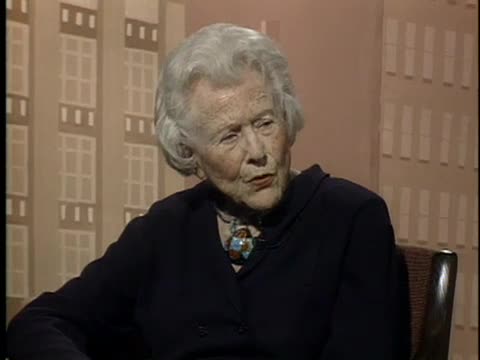
- Transcript
[Barber Conable] How do you do ladies and gentlemen. I'm Barber Conable and this program is called Speaking of Rochester. Herein we try to discuss Rochester's past, some of its institutions, the present, hopefully something about the future of our great metropolitan area. Today we have as a guest on our program one of Rochester's great ladies, Susan Schilling. Susan was born in York, Pennsylvania, came here in 1937. After having had her education at Mount Holyoke and at Harvard she came here to work as as education-- The head of education at the Memorial Art Gallery which is of course one of our great institutions here. She worked here for over 40 years, not necessarily in that capacity. And during the latter part of the time, worked here part time but she can give us a perspective on this institution and on some other very important cultural institutions
in the Rochester area. Welcome to the program, Susan it's a pleasure to have you with us. [Susan Schilling] Pleasure to be here. [Conable] When you came to the Memorial Art Gallery it probably didn't amount to much, did it? 1937? [Susan Schilling] It had a very small staff which has become at least ten times-- [Conable] Very small is three or four? [Schilling] I think about five, possibly. So that it's grown tremendously since then. [Conable] It had a very dominant family that was interested in art called the Herdles. [Schilling] That's right. [Conable] And George Herdle was apparently the original founder and-- [Schilling] He was the he was the original director. [Conable] That would go back to 1913 or '14? [Schilling] '13 was the date the building opened, when it opened. [Conable] It was a part of the of the University of Rochester then? [Schilling] Yes I guess it was, it was donated by Emily Sibley Watson In memory of her son James Abel. And she gave it
to the University but in the trustee-- in their trusteeship for the people of Rochester. [Conable] And you can't have had-- he can't have had much of a collection to start with. [Schilling] Oh no oh no. His own painting, he was a painter. He did a lot of painting abroad but he, no I understand that Mr. Watson, James Sibley Watson, had paintings that he put in Sibley Library and then they somehow disappeared. According to the text. [Conable] So that was that was the reason he wanted to have a gallery that would be stable? Things wouldn't disappear from it. [Schilling] That's right. Yes, the city needed something like that and the art club was quite active, that had begun in the 1870s the art club, and they wanted a place. Paintings used to be shown in the Powers Building. The Powers Art Gallery. And there's a picture of these paintings standing on
easels down the hall in the Powers Gallery which was I think on the top floor. [Conable] Well he lived until about 1922, so nine years after he founded it He passed away and the directorship fell to his daughter Gertrude. [Schilling] That's correct, Gertrude Herdle. [Conable] She she married someone-- [Schilling] She married a man named Walden Moore-- [Conable] So she became Gertrude Moore. [Schilling] That's right. [Conable] And she had a sister Isabel who also was active. [Schilling] Is still-- not active now, but she's still very much alive. [Conable] Gertrude just died recently didn't she? [Schilling] I can't remember how long ago, few years ago [Conable] In '93 I think it was. So she was a dominant figure for a long long time. [Schilling] She was. Although she retired in '62. She lived a long life. [Conable] And her sister Isabel was the curator from 1932 on, I think. [Schilling] She was Assistant Director. Maybe she was curator. [Conable] And she was curator too, whatever that means, I sometimes-- these titles are confusing. [Schilling] That means taking care of the pictures.
[Conable] Yes. Well from 1937 on you had a strong role up until the time you married Bernard Schilling. [Schilling] That's right. [Conable] Who who came here in 1947 and you got married a couple of years later and you worked part time thereafter. But I figured you spent a good deal of your time on the art gallery, the Memorial Art Gallery. [Schilling] I think so, Bernard said I was working full time. [Conable] Full time, probably being paid half time. That's a that's an old story. [Schilling] Oh, of course. [Conable] Did you have any formal art training yourself? [Schilling] As a painter? [Conable] Yes. [Schilling] No. My sister was a painter. But I never took up painting. [Conable] Oh but you became an expert, you traveled all over the world looking for paintings for our collection here in Rochester. [Schilling] Well I looked for a lot of things, tried to do research on the collection as it grew. [Conable] You did a good deal of research I think, I'm told that you -- when Bernard went sabbaticals to Rome or Paris or London that you would go with him and you spent all your time researching paintings there and trying to locate things for
our collection. [Schilling] It was really a great series of sabbaticals. [Conable] Tell us about the art gallery now in comparison to what it was back in those early days. It's-- it has a much larger membership obviously. But it also has a fine collection. [Susan Schilling] A very fine collection. It has, and one of the one of the great opportunities that came along for Gertrude and Isabel was the Brummer sale, Joseph Brummer was a dealer particularly of mediæval art but he dealt with other things too. And he was he was always traveling abroad and bringing back bits and pieces of sculpture and all kinds of things. And his, he died rather suddenly in I think 1949 but the the sale, The auctions of his collection took place in 1949. And Gertrude
and Isabel had very little money to spend, they had some from Mr. Watson, they had some from a very generous man named R.T. Miller and he lived in Scottsville. And they bid very astutely, of course things didn't cost as much in those days. [Conable] Oh back in those days you could get-- [Schilling] '49. [Conable] Get it for a tiny fraction of what they cost now. [Schilling] That's right. But they had wonderful eyes and knew what they wanted for the collection so they had a wonderful opportunity. [Conable] There was also a foundation that helps you a good deal wasn't there, it came up Gould Foundation? [Schilling] Well that was the Gould fund. That was the the fund that Mrs. Gould established in memory of her daughter. And she for some reason or other, it didn't become available for purchase until I think nineteen thirty seven.
[Conable] You mean the money didn't become available to purchase paintings? [Schilling] That's right. And maybe even 1938, but the first thing, I do remember this vividly, the first thing we were able to purchase from that fund was an El Greco painting. [Conable] El Greco. [Schilling] St. Dominic. [Conable] Now, how much would you pay for an El Greco now, many million dollars, wouldn't you? [Schilling] Oh yes everything is millions now. Oh! [Conable] So it was awfully important that these early but modest beginnings acquired what they could at that time because it would be impossible to replicate the collection now, short of hundreds of millions of dollars, would it? [Schilling] That's right. [Conable] Is Rochester's collection comparable to that in other parts of the state? [Susan Schilling] Oh yes I think so. I'm now trying to remember the name of the person who wrote a book about museums, I think in general I don't think it was just
confined to New York State. But he said that Rochester was tops in various areas of collecting, various areas of its collection because it was also a University Gallery and the university art department was using it partially for their teaching. So it has a wide spread, beginning with ancient, coming down to modern. [Conable] It's always interesting to compare it to Buffalo, the Albright Knox Gallery, in Buffalo has a marvelous collection, largely because of Seymour Knox, the heir to the Woolworth fortune who who bought a lot of very expensive paintings but I get the impression that Rochester is a much more active art gallery than-- [Schilling] Well it certainly is very active, I haven't been in Buffalo recently to see what's goes on there but we are very active and esspecially with school groups and in -- [Conable] Well, that's probably partly your doing isn't it? [Schilling] Well partly. [Conable] The tradition of dealing with school groups. [Schilling] Yes, yes partly. And then during the war when it was impossible for school groups to come to the
gallery because of gas rationing I did go out to high schools and related lectures to subjects they were studying. Greek art, and this and that, but they-- Yes we're very active with school groups and in the years that we were closed, more or less closed because of expansion when we added more space in 1966 - '68-- [Conable] More exhibit space or storage space or both? [Schilling] Everything, everything, both. And when we were doing that we established a group of docents so that it wasn't always the few members of the Education Department who went who talked to people and gave talks and took school groups around. So now they have-- there is a good core of docents and they get very careful training. We started training-- Langdon Clay and I started training docents during those early 60s.
[Conable] Who is Langdon Clay? [Schilling] Langdon Clay became Director of Education. He's retired now but he-- [Conable] He took your place when you got married. [Schilling] He was wonderful to work with, we had a marvelous time together. We did lectures and we got the docents going and we did-- now, of course, we have a big core of docents and they take groups around, smaller groups, they divide up groups and it's a much more satisfactory-- [Conable] More educational experience to go through. [Schilling] Yes, it is, yes. [Conable] I get the impression that Rochester is the kind of community that supports cultural events quite strongly. [Schilling] Well yes I think we do pretty much. We have a arts and cultural council now you know that does a lot for Various groups and Individuals. [Schilling And I have the impression also that the museum, the art museum has a good many more exhibits than many other art museums, in other words you
keep a very active program so that there will be exchanges, things of that sort. [Schilling] I just went in to see an exhibit that has just opened in a small gallery that the-- called the Lockhart gallery, of John Renwick's paintings, watercolor paintings that he did When he was in the army in the First World War. [Conable] Is he the man for the Renwick Gallery as named in Washington? No? Just a similar name. [Schilling] That's spelled differently. [Conable] I see. [Schilling] John Renwick is spelled with a W and the one in Washington there's an R but they are marvelous paintings, they belong to his son I think, son and daughter in law. And they are watercolors, opaque watercolors, they're gouache, that he did in France as he got-- just as he got out of the army. The first world war. [Conable] Tell me is is the gallery conservative on issues of
aesthetics? [Schilling] Not generally. Not oh no no no. [Conable] In other words-- [Schilling] Not very conservative. [Conable] In other words, very willing to reach out into into modern art and to explain it in ways that will be understandable. [Schilling] We try to. [Conable] Sometimes it's not very understandable [Schilling] I know, but we have to have everything [Conable] Everybody has to try to do something a little different. [Schilling] That's right. We had an exhibition last year that was called Breaking the Boundaries or some such title and it was installations rather, esoteric subjects, probably. [Conable] You know there's another subject I'd like to talk to you about and that is the landmark society here in Rochester. Anybody with an interest in history has got to be interested in the history of architecture to some extent. [Schilling] Yes. [Conable] Rochester is not as old as many of the cities on the eastern seaboard but we have a very active landmark society here and I think you have been a member of the board since 1961 or something. [Schilling] Something like that. [Conable] That fits
right in with with art, art and architecture. [Schilling] Certainly it does. [Conable] Tell me a little something about the Landmark Society. [Schilling] Well, the landmark society was founded in 1937 by a group of interested citizens, people who wanted to preserve some of the old buildings of Rochester, and one was about to be torn down. The Campbell-Whittlesey House. [Conable] Ah, the Campbell-Whittlesey House, which is now a famous landmark, yes. [Schilling] Well, we think it is. And Miss Elle Langer was one of the prime movers in this. [Conable] This is Elle Langer of Elle Langer's nurseries, the famous, there was a well-known-- [Schilling] Well, she is the daughter of George L. Langer. Yes. [Conable] Well known nurseryman who sold all over the Northeast I think. [Schilling] And abroad too. [Conable] He did it as well. Yeah but he was interested in In landmarks, why was he interested, did he live in one? [Schilling] I don't think he was so interested in landmarks. His daughter was, his daughter became interested. I don't really know an awful lot about
him. He did establish a garden which the landmark society Maintains with a very good horticulturalist. [Conable] Do you have any idea how many houses you're preserving here in Rochester With the landmark society? There's Stone-Tolan, there's the Campbell-Whittlesey. [Schilling] Oh just those two we've had-- are house museums but we can't support any more house museums, we don't have any funds for that. But we have tried to save for adaptive uses, a great many Other buildings. And you-- [Conable] You've had lots of success. [Schilling] We've had lots of success. You put through a bill bill in Washington that was very supportive of this conversion of a building and saving it into adaptive use. [Conable] Like many other bills, that's been abused to some extent though. [Schilling] Has it been? [Conable] The tendency is for people to leave the facade of a building standing in order to claim the tax
credit and to build, rebuild everything inside it so it is no longer an old building at all and and and it only has a facade impact. [Schilling] But it does have-- that helps in the general tone of the city. You can't use everything in an old building you know plumbing for instance and spaces, you have to adapt them to The use that they're going to-- [Conable] Now you've mentioned the Herdles and in connection with the Art Gallery is there somebody that was critical to the development of the of the landmark society? [Schilling] Well I think the early board was, I think Helen Ellwanger had something to do with it. And another person who did an awful lot of- [Conable] Harrington. [Schilling] Billy Harrington. [Conable] Billy Harrington, yes. [Schilling] Was the first real executive director when they were were restoring the Campbell-Whittlesey House a woman named Marjorie Selden, Mrs. George Selden, scraped down some of the paint and found what the original color was because it had gone
through 100 years. It was built in 1835-36 And she was, she did a lot of hard work recently, well that is a few years ago, somebody came who was an expert on old paint and scraped down and looked at the things, little scraps under a microscope to see whether she did a good job and he came out with a very good report. [Conable] Is there any connection between the landmark society and the Gennessee Country Museum? [Schilling] Oh no not really. [Conable] Directly, but of course they're doing the same sort of preservation of buildings around western New York, not necessarily from Rochester, although there are some Rochester buildings there. [Schilling] Oh yes the Livingston Park Seminary. [Conable] It gives you a sense of continuity doesn't it to have some preservation of these old buildings. So we get some sense of how people lived. [Schilling] That's right. It's very important and we get good publicity too, I mean through school children we get we have school groups that come to
see both the Stone-Tolan House which is the pioneer house of-- Well about 1814 although it started a little early. And they were-- [Conable] That gives rise to a question that's always perplexed me and that is what happened to American taste about the end of the Federal period and when some of these horrific Victorian buildings started going up? Course, some Victorian buildings are pretty interesting. [Schilling] Oh they are. [Conable] But but they're not beautiful the way the old Palladian style architecture was. [Schilling] Well what happened indeed. I don't know. Taste changes. I came across an interesting quote recently about-- I was doing a lecture for our docents I guess. The Campbell-Whittlesey House. About Greek architecture, Greek revival, classic revival. And I came across a quote from Nicholas Biddle who was a Philadelphian that travels a lot. [Conable] A head of the bank, the first U.S. bank.
[Schilling] Yes. And he had gone to Greece and he came back and he said the two major factors in our culture are the Bible and Greek architecture. [Conable] Well I think that may be stretching it just a little at least as far as the Greek architecture is concerned. Thomas Jefferson had a lot to do with the development of the Palladian architecture as part of the American style of the Federal period, didn't he, a man by the name of Palladio an Italian architect was imitated by Thomas Jefferson and it was reflected in Monticello and in many of the designs he made for other houses. [Schilling] That's right. But going back beyond Colonial. Thomas Jefferson was very interested in the building in-- well, he was an ambassador in France but he was interested in some of the Roman architecture that remained in the south of France like the Maison Carree in Nimes, and the buildings in Arles. He was interested in all those classical -- [Conable] Of couse, he was interested in almost everything.
That's the wonderful thing about Thomas Jefferson. Rochester must have had quite a few of those buildings of that period because the original hundred acre tract here was developed during the period from 1810 to 1830 and that was the heyday of of Greek revival and Federal period architecture. [Schilling] There were a lot of Greek Revival buildings on Fitzhugh Street that got torn down when the expressway went through and when they built the civic center, we're lucky to have the DAR house preserved with the example of doric architecture and the Campbell-Whittlesey House, which is Ionic. And the Jonathan Child House which is Corinthian. [Conable] Are there other-- does the landmark society have plans for further restoration at this point? They lack they lack funding, do they?
They do get federal and state funds occasionally. [Schilling] Oh yes we get some-- [Conable] For special projects. [Schilling] Yes but we don't really, we have to cut down on staff every now and then and in order to keep going, it's gets a little difficult. [Conable] Is there a connection between it and the National Trust for Historic Preservation? [Schilling] Oh, yes. We were founded before the National Trust, 10 years before. At '37 our founding. [Conable] That's the first national institution now. [Schilling] And they every now and then give us a pittance. I shouldn't say that. [Conable] In other words, volunteers are what keep that going. Not just any major fund or anything of that sort now, is that correct? [Schilling] I think that's correct yes but it's a very important organization and it really I think has spurred interest in the various communities around Rochester, of course the Genesee country museum has done that too but we have a preservation
Commission in Brighton. A very active one here in-- [Conable] You live in Brighton? [Schilling] Yes. And there's one in Perinton. But Perinton doesn't have very many old buildings, but they recognize what they have. And Fairport as well. I don't know if Fairport has a commission. But Pittsburgh does. [Conable] This is an area for volunteers isn't it? [Schilling] Really certainly yes. [Conable] As the Art Gallery is to a very substantial extent. Your docents are terribly important to the appreciation of art in this community. [Schilling] Yeah, they are. [Conable] And so people who are interested ought to contact these these groups and and share the richness of Rochester's culture through them. [Schilling] I think were a very active community. And as was pointed out, you pointed that out on one of your programs about the interest of people as volunteers. Helping out these various organizations. [Conable] We're fortunate enough to have a large pool of interested citizens aware
of the cultural diversity and richness of this community and willing to act through organizations like the art gallery or the the the landmark society to be sure that our children will have the same opportunities that we've had. [Schilling] Oh that's what we hope. Yes. [Conable] Well it's part of of community life. [Schilling] And you have an old house too, in Alexander. [Conable] I have an old house in Alexander, that is quite a ways from here. [Schilling] Well I know, but it's a general area. [Conable] But we love it and we find the fact that it's historic is of great interest to us and I think many people feel that way, if they have an old home that matter of fact we even have wonderful television programs now to sing the praises of old homes. [Schilling] Yes. [Conable] Well Susan Schilling thank you so much for being on our program here today. [Schilling] Thank you for asking me. [Conable] We've had a good conversation reflecting on Rochester's part
in this cultural richness. Ladies and gentlemen our guest has been Susan Schilling of the landmark society and formerly of the Memorial Art Gallery. I'm Barber Conable. Thank you very much for being with us. [music] If you'd like a copy of this program, send $19.95 to WXXI Post Office Box 21, Rochester New York 1 4 6 0 1 [silence]
- Series
- Speaking of Rochester
- Episode Number
- 132
- Episode
- Susan Schilling
- Contributing Organization
- WXXI Public Broadcasting (Rochester, New York)
- AAPB ID
- cpb-aacip/189-63fxpvk5
If you have more information about this item than what is given here, or if you have concerns about this record, we want to know! Contact us, indicating the AAPB ID (cpb-aacip/189-63fxpvk5).
- Description
- Series Description
- "Speaking of Rochester is a talk show featuring in-depth conversations with local Rochester figures, who discuss the past, present, and future of the Rochester community, as well as their personal experiences. "
- Created Date
- 1999-05-00
- Genres
- Talk Show
- Topics
- Local Communities
- Media type
- Moving Image
- Duration
- 00:26:16
- Credits
-
- AAPB Contributor Holdings
-
WXXI Public Broadcasting (WXXI-TV)
Identifier: LAC-845 (WXXI)
Format: Betacam: SP
Generation: Master
Duration: 1530.0
If you have a copy of this asset and would like us to add it to our catalog, please contact us.
- Citations
- Chicago: “Speaking of Rochester; 132; Susan Schilling,” 1999-05-00, WXXI Public Broadcasting, American Archive of Public Broadcasting (GBH and the Library of Congress), Boston, MA and Washington, DC, accessed April 1, 2026, http://americanarchive.org/catalog/cpb-aacip-189-63fxpvk5.
- MLA: “Speaking of Rochester; 132; Susan Schilling.” 1999-05-00. WXXI Public Broadcasting, American Archive of Public Broadcasting (GBH and the Library of Congress), Boston, MA and Washington, DC. Web. April 1, 2026. <http://americanarchive.org/catalog/cpb-aacip-189-63fxpvk5>.
- APA: Speaking of Rochester; 132; Susan Schilling. Boston, MA: WXXI Public Broadcasting, American Archive of Public Broadcasting (GBH and the Library of Congress), Boston, MA and Washington, DC. Retrieved from http://americanarchive.org/catalog/cpb-aacip-189-63fxpvk5