Louisiana: The State We're In; 759
- Transcript
Funding for the production of Louisiana, the state we're in, is provided in part by the Ziglar Foundation of Jennings and Gulf state utilities, helping Louisiana bridge the gap to our energy future. When teachers and other public school employees rallied at the state capital this week in support of a pay raise, Governor Edwards urged the group to put pressure on the legislature to get his plan for a pay raise approved. But if farmers have their way, lawmakers will not go along with the governor. Good evening, I'm Beth Cordney. Welcome to Friday's edition of Louisiana, the state we're in.
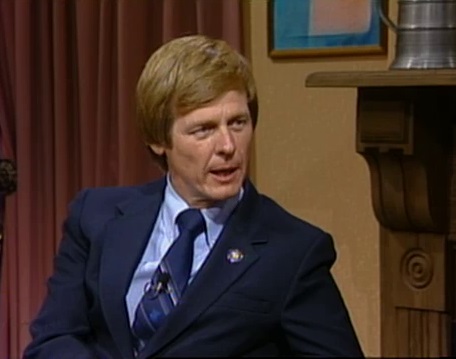
It was a busy week at the state capital with a spotlight on teachers. An estimated 15,000 teachers from all over Louisiana marched on Baton Rouge on Wednesday, hoping to pressure the legislature into coming up with a 10% pay raise. Meanwhile, Governor Edwards held a series of closed door meetings this week with legislators and special interest groups trying to sell them on his 293 million dollar tax package, which he says is needed to fund pay raises. The governor managed to persuade some lawmakers to support him, but he ran into a brick wall when he met with farm leaders and members of the powerful rural caucus. Tonight, we'll try and find out why farmers are so opposed to parts of Governor Edwards' plan. Our guest this evening, our representative Francis Thompson, chairman of the House Ira Cultural Committee, and Billy Rhimes, legislative director of the Louisiana Farm Bureau Federation. Beth, when teachers came to the capital this week, they were in no mood to bargain. It's been three years since they had a pay raise and they made it clear they're not waiting any longer. They came from Shreveport, Monroe, Alexandria, Lake Charles, Lafayette, Baton Rouge, and from hundreds of small towns around the state as well,
and they all came to say the same thing. We want more money. Some teachers are threatening to go on strike next fall if they don't get a 10% pay raise. At times, the mood of the crowd was belligerent. Even Governor Edwards, who has push for pay raises, was booed on occasion. We want 10%. I must tell you today that the last best effort that I have made is still a few votes short. Well, lesson, if that wasn't the case, you would not be here today. I am sorry and I regret it, but it is not my fault. It is not the fault of most members of the legislature. You supported me and I support you, but it was not the kind of reception Governor Edwards expected, not from a group that has supported him so solidly in the past, but a promise is a promise.
And later, Governor Edwards said he understands the teacher's frustrations. I was somewhat surprised that as the primary person trying to do something for the teacher groups, that they didn't seem to recognize it. I suppose it is a reflection of their frustration and understandable anxiety, but again, the message is very simple. It is not I. I have offered dozens of plans trying to do exactly what they have not done, and just have not been able to get the required two-thirds vote to do so. I hope that after listening to me yesterday, they will go back to their districts and counsel with their individual legislators and try to get some support for the plan. Well, the teacher's rally may have grabbed the headlines, but it was far from being the only big story of the week, with the session winding down, the action is heating up. A number of major bills came up for consideration this week. The Senate voted 21 to 16 to repeal Louisiana's controversial scientific creationism law. It also voted by an even wider margin to require the
licensing of childcare centers. Earlier in the week, Senate committees approved a state lottery with half of the money to fund teacher pay raises and another bill to allow civil service employees to become more involved in political campaigns. Keep in mind that we have the best form of government in the world. I hope that no one here wants to change that, but that form of government itself is pure political in nature. And there is nothing wrong with politics in America. Politics is what determines our government, who our leaders are going to be, what form of government we're going to continue to have. And if we get to the point to where any large segment of the population of our state and our nation is prohibited from being actively involved in politics, it can only help destroy the system, not protect that system. The House of Representatives also had its work cut out this week. On a close vote, members voted down a bill that would have allowed perishes to hold elections to decide which of any businesses may open on Sundays.
Supporters say they may come back with another bill that repeals the so-called Sunday blue laws altogether. The House also voted to phase out the controversial professional improvement program for teachers better known as PIPs. Later in the week, members of the House Criminal Justice Committee overwhelmingly defeated a bill which called for abolishing capital punishment in Louisiana. But the biggest fight of the week came on the Senate floor where lawmakers clashed over multi-parish banking, a bill by Senator Charles Barram of Rustin allows bank holding companies to operate in more than one parish, something that has been prohibited in Louisiana since 1902. Free enterprise involves competition and involves not having monopoly. We saw what happened with monopoly in the AT&T situation. You have to break it up. Somebody gets rich in that deal. Somebody gets rich in this deal. This is not a good bill because it's bad for the economy of the state of Louisiana. This bill has a tendency to take all the money
in the pot and put in one big pot and no little pot's gang. We have had this issue in the legislature some eight to ten years. More recently, in the last two to three years, it has become even more important that we pass this legislation and that it become law and that we get into the mainstream of the rest of the states in this country and the national economy and the deregulation of the gap of the bank in business so that Louisiana can go forward and increase the industrial expansion and economic growth. When it was all said and done, the Senate voted 22 to 17 in favor of the multi-banking bill and now moves to the House Commerce Committee. It was a good week for multi-parish banking supporters but debate on that issue is far from over. The biggest battle is expected in the House and both sides are working hard to line up their votes. Governor Edwin
Edward said this week that he's done all the lobbying he intends to do to get lawmakers to support his plan for pay raise money for teachers and state employees. He says he's a few votes short of what he needs to get the proposal approved. While teachers say they'll put pressure on legislators to support the governor, there is another powerful group that says it will do all it can to keep the pay raise plan from going through. When the state's teachers and other public school employees rallied on the capital steps this week, they were told by Governor Edwin Edwards to lobby their legislators to support what the governor has called his last best effort for a pay raise for teachers and state employees. That last best effort would mean more taxes for most Louisiana taxpayers. It includes an increase in the state's corporate franchise tax and an end to most exemptions on half of the state sales tax which will be four cents on a dollar beginning July 1st.
The plan would also reduce an increase in the tax on gasoline and diesel fuel levied by the state which is also set to go into effect in July. The proposal will come before a House Committee early next week. This week, Governor Edwards told teachers he is only a few votes short of the two-thirds majority he will need in the legislature to get the plan approved. But if farmers have their way, the governor's plan will not get final approval unless some changes are made. This week, the Louisiana Farm Bureau which represents some 65,000 farm families announced that it will oppose the pay raise plan. The farmers say they cannot afford to give up half of the many exemptions they now get from the state sales tax. Among the items farmers now pay no state sales tax on are pesticides, fertilizer, diesel fuel, and butane and seeds for planning crops. The estimated cost of all state sales tax exemptions granted farmers is about 20
to 25 million dollars a year. With several bad years behind them and more farmers than ever before filing for bankruptcy, the Farm Bureau says this is no time to add to the burden farmers must bear. The opposition from the Farm Bureau could mean the difference between passage and failure of the governor's plan. There are 44 members in the legislature who belong to a group called the Rural Caucus and many members of that group would not be in Baton Rouge without the support of farmers back home. Although I know we need additional money for teacher pay raise and service employees pay raises, the Farm Bureau still plays a large important part in in Louisiana politics and of course they play in a large important part in my area and it concerned me because I don't work on support the tax package or not when it takes the exemption away from the farmers and this would hurt those farmers in our area. Governor Edwards has said he opposes any attempts to include any more exemptions in his plan saying one exception will lead other
groups to ask for their own exemptions. Coming out with their opposition as they did the week the teachers marched on the capital and the governor was trying to get the votes for his tax proposal or the farmers looking like the bad guys at this point. Probably so but I think the teachers in everyone else realize that farmers also need help and they don't want to do anything to start a few bits feed them and I know I don't and I want to help the farmers as much as I possibly can and the school teachers and service employees and I do everything possible to help those folks. With us in the studio this evening are two gentlemen who are interested in farm issues and who should shed some light on this controversy. Representative Francis Thompson of Delhi who's chairman of the House Agricultural Committee and chairman also of the Rural Caucus and Billy rhymes who is a lobbyist for the Louisiana Farm Bureau. Well first Representative Thompson, Governor Edwards is certainly singled out the rural caucus. He said I'm about ten votes short and and he's given some teachers some direction is where they should go to look for those votes. Do you feel unfairly singled out or not? Well not really Beth. We are most of us in the rural caucus have
supported the governor and as a floor leader for the governor I've been very active with his total package but we have some problems with our exemptions. We feel like that we can support the teachers pay raise but certainly we feel like there's ample room to place the exemptions for certain categories back on the bill that he's proposing and we feel like that the farmers are integral part of our total package and we feel like with the support that we have garnered over the last several years that with our tax exemptions that we shouldn't just lay down and let those exemptions be taken off. Well earlier this week we saw the teachers come to Baton Rouge and we saw them rally on the steps of the Capitol and I saw you surrounded by some teachers what did you tell them? Well I tell the teachers what I have in the past. I have always been a very staunch supporter of the education sector of our state and education is certainly a top priority
in my book and that teacher pay raises are part of that package and I'm going to support them. I'm going to vote for a 10% pay hike for those people because they are one of the lowest paid group of teachers in the nation today and certainly that's not an indication of great educational achievement but with high pay but certainly it helps us to attract better teachers when they have paid commensurate with the work they do. Well now so we assume that you're in favor of the pay raise but you just don't like the plan that's proposed to pay for it perhaps Mr. Rhymes you could shed with us some like why these exemptions that the governor is talking about taking off they've you've been working on them for a long time to put them on for farmers. That's great are they? They're vital to the agricultural economy of this state. None of these exemptions are frivolous exemptions they're all very much involved with the production of
agriculture we have exemptions on feed we have exemptions on seed fertilizer we have exemptions on fuel we have exemptions on farm equipment all of these things make up the production process of agriculture in this state and they are vital to the continued success of a farming operation we have broken down the exemptions on an acreage basis for the average row crop farmer these exemptions mean about two dollars and 40 cents an acre and in many many areas of the state that is the difference as to whether or not that farmer is going to stay in business or not. Well I presume you made this argument to the governor and what was his response? Well the governor is very sympathetic to agriculture and has been a very close friend of the farm bureau for a number of years but his argument is is that everybody is going to have to sort of bite the bullet a little bit and give a little and that certainly agriculture
is going to have to do so also we have children in schools also but we of course have rejected that particular argument because we feel like that agriculture is at a crossroads we have not recovered from the terrible times that we had in the 70s and we have as many farmers on the verge of bankruptcy right now as we've had since the depression. Well if you have to get that message over that it is and make a break point these exemptions are important for farmers to stay in business can you persuade your colleagues that the farmer should be let out and not the commercial fishermen and not the race horse owners and not they're a lot of exemptions there. Well as I was looking at the exemptions the other day we have probably 400 and something million dollars worth of exemptions and of course you can't take politics out of politics. We're going to have to look at this as a political issue and we're going to have to see where the votes are and I feel like with the we're going to have to reach some type of consensus
with 53 people and I think we'll be able to do that to put our amendments on and we may have to take some from the shrimp industry we may have to take some from the boating industry and certainly we want to look at the utility bills for those that are on fixed income in the elderly and the blind some of the small exemption but there's enough room in that package to take care of some of the most needed exemptions and that's what we're going to try to do we don't want to stymie a particular industry in this state. So you think that the governor's plans is going to succeed in the House of Ways and Means Committee it's going to come out of committee and then on the floor of the House you're going to try and put back in some exemptions. Well I hate to give you my strategy today but I would imagine that we might work on it in committee Tuesday and because we're working with a fewer number of people and once we place our exemptions on I think we can take a hard line on the House floor and say that we don't need any of the
exemptions because we might wake the bill down. So that is I think the only possibility of us being able to pass out a piece of legislation that will be acceptable to a majority of the people so the governor can pass his tax package and we can give the teachers their needed raise we can give the farmers and other groups specific groups their exemptions and still have enough money in this state to take care of drainage take care highways take care of industrial inducement and higher education and the progressive changes in education that are needed. Well maybe you need to share some of that information with the governor because that's not the story he's telling he's saying we don't have enough money to do much of anything even after passing the taxes in the special session. Well I have examined the program pretty carefully and I know the plight that he is speaking up but of course we've got a lot of unanswered questions and I'm giving you the utopia but of course
we've got to go through a constitutional amendment to get some of our taxes we're going to have to garner the 70 votes to be able to pass his tax package we're going to be in a real serious position with teachers with industrial inducement flood control drainage highways should his package not pass in some form and I'm not saying that the form that was presented to us because it was only a makeshift a skeleton but hopefully we'll be able to mold it into something that will be meaningful to the people of Louisiana and we can also reduce the burden of the the gasoline tax and and maybe spread that burden over more of the citizens of this state. One of the interesting things in this particular controversy to me is the fact that for years we have seen a shift in power if you will from from the countryside to the cities we were constantly
saying that that the urban areas are controlling what goes on in state government this time it seems that the rural interest in Louisiana may be the deciding factor certainly in the direction the state's going on Mr. Grimes do you see well certainly we have a lot to lose and I think on this particular issue the the rural interest the agricultural interest in this state are going to speak very loudly probably as loud as you've heard them in recent years. Beth is one thing I do want to point out that the Farm Bureau and agricultural interest we are not opposed to the governor's plan for say what we are opposed to is of course the removal of the agricultural exemptions which we think are vital to the continued agricultural operations of the state. Do you think that he's going to stand from he being the governor and say if I open up this flood gate then everyone will come through is that what he's told you now. Well and I think that's part
of representative Thompson's thinking and you know part of the purpose of the committee system is to iron these sort of things out and we hope that we will be able to iron this out in committee next Tuesday and present a piece of legislation that can be supported by a cross section of people in this state. The black caucus is indicated they weren't happy with some portions of it certainly removing the exemptions on food and drug well it was certainly a heavy thing for them to to support and they are going to come with their own proposal they say will you be coming with more than amendments or your own proposal. Now primarily what we're going to deal with is the amendments we haven't seen the finished package but as we have seen the the framework we feel like just the exemptions that we could place on it would make the bill more reasonable and more acceptable to the majority of the legislature. I hate to even mention the possibility but do you think that there
is a possibility this could not be ironed out in this session of the legislature and you would see a special session in the fall. Well you know anything is possible in losing out of politics hopefully we won't see that but I think that if we don't address the problems we have in Louisiana and we have the opportunity to address them now then we're going to face the more serious times down the road I think that the people of the state have got to realize that the state of Louisiana has no opportunity to make money we have to gather our money through tax packages and budget cuts we have made budget cuts not only under the Edward's administration but under the training administration we made those cuts we we try to pass taxes on the training administration we're trying to pass taxes under the Edward's administration this didn't just happen overnight this is a accumulation of falling prices all prices revenues the national economy is affected all of us and we found ourselves in the same position that over 45 states have found themselves in
and we're going to have to solve our problem we have a challenge we're going to have to meet that challenge and now is the time. Do you think that the people back home are willing to pay more taxes? I mean your farmers aren't willing to give up those exemptions evidently but are people in general willing to pay more taxes? Well let me just speak for the Farm Bureau interest we are willing we are paying more taxes because we are affected by the tax increases of the special session the 1% increase in the state sales tax even though we enjoy agricultural exemptions we will still be paying that the gasoline tax is going to affect us greatly because even after we harvest those crops we've still got to go take those crops someplace and we have to use fuel to take them there we don't have exemptions for gasoline in that area so we are paying an increase in taxation in this state and we're willing to do so but those particular exemptions that that we've discussed today are
vital to the production process of agriculture. But the governor has indicated that he's going to reduce in the gasoline tax and he's going to drop off one cent it's going to be it's going to be a trade outcome he said there are a lot of benefits that the agricultural community already gets from the state and there's almost a little bit of a bite in some of the things he was saying like there might be some things we could look at almost an implied threat if you will. Do you sense that he's very strong in this as he really pressuring? Well yes he is very strong in his position but but the trade out we are willing to pay the gasoline increase in gasoline taxes we've told him that we're willing to pay the increase in the one cent sales tax you know we told him that we're not willing to lose the exemptions for production. And I might add here that out of the 400 million dollars worth of exemptions and I have placed many of those on the on the roads. The farmers only get according to production only 25 million dollars so that's a far
cry from the large amount that has been reported so they're not singled out any more than the shipbuilders, the shrimpers, the all companies, the newspapers, many many other areas enjoy those same benefits. You and I as citizens and consumers enjoy those same benefits on food drugs. Well gentlemen we'll have to see how this all sorts out certainly next week. Thank you so much for being with us this evening and we thank you for joining us as we'll examine the issues next week when our coverage continues at the Louisiana Legislative Session on Monday won't you join us then I'm Beth Courtney. Good evening. Funding for the production of Louisiana the state we're in is provided in part by the Ziegler
Foundation of Jennings and Gulf state utilities helping Louisiana bridge the gap to our energy future.
- Episode Number
- 759
- Producing Organization
- Louisiana Public Broadcasting
- AAPB ID
- cpb-aacip-17-13mw7gt6
If you have more information about this item than what is given here, or if you have concerns about this record, we want to know! Contact us, indicating the AAPB ID (cpb-aacip-17-13mw7gt6).
- Description
- Credits
-
-
Copyright Holder: Louisiana Educational Television Authority
Producing Organization: Louisiana Public Broadcasting
- AAPB Contributor Holdings
If you have a copy of this asset and would like us to add it to our catalog, please contact us.
- Citations
- Chicago: “Louisiana: The State We're In; 759,” 1984-05-25, American Archive of Public Broadcasting (GBH and the Library of Congress), Boston, MA and Washington, DC, accessed April 2, 2026, http://americanarchive.org/catalog/cpb-aacip-17-13mw7gt6.
- MLA: “Louisiana: The State We're In; 759.” 1984-05-25. American Archive of Public Broadcasting (GBH and the Library of Congress), Boston, MA and Washington, DC. Web. April 2, 2026. <http://americanarchive.org/catalog/cpb-aacip-17-13mw7gt6>.
- APA: Louisiana: The State We're In; 759. Boston, MA: American Archive of Public Broadcasting (GBH and the Library of Congress), Boston, MA and Washington, DC. Retrieved from http://americanarchive.org/catalog/cpb-aacip-17-13mw7gt6