Louisiana: The State We're In; 446
- Transcript
So Production funding for Louisiana, the state we're in, is made possible in part by grants from Kaiser Aluminum, and Southern Research Company Incorporated, Lee, as long as we can hobble around and sit in a boat and drive I think it'll be our life. Meet Annie Miller,
Cooper, alligator hunter, commercial pilot, licensed boat captain, former deputy sheriff, mother of two, grandmother to four, and now a swamp tour guide. In 1859, John Hemdon Randolph completed the building of his home. Not away was to become the largest plantation home in the south, an opulent and magnificent residence for his family of eight daughters and three sons. Today, the mansion is being restored to its former grandeur, and its doors have been opened to the public. Curator Steve Saunders shares with visitors the richness of the building and the history it contains. A lot of museums have room settings that tip by or authenticate actual rooms of a certain period of time, but in order to really get the feel of being in a house or whatever, you really need the house or the cabin to display the artifacts in, and I think that by having these buildings out here and having them realistically equipped with artifacts from the 19th
century, that people who visit us do get the idea that they are actually in a workers cabin or in a cadian house or dogtried house or whatever. Louisiana, Louisiana, the state were in with Beth George and Ron Bloam. Welcome to this edition of Louisiana, the state were in. During this Thanksgiving holiday season, when we celebrate our
American heritage, it seems appropriate that we have three reports concerning our unique Louisiana heritage. We'll pay some return visits to some of the places we've been this year. We'll go back to not-away plantation, the largest plantation home in the south. We'll visit the rural life museum, a part of LSU. And finally, we'll take a trip through Louisiana's swamp land with a remarkable lady who's trying to preserve a way of life that may soon be just a memory. Well, Ron, to say that not a way is the largest plantation home in the south is to say a lot, but not enough. Most of the south's gracious old homes are gone now, along with the way of life they represented, but it's not a way a certain grandeur of the past has been preserved along with the old cedar timbers. In 1859, John Hemdon Randolph completed the building of his home. Not away was to become the largest plantation home in the south, an opulent and magnificent residence for his family
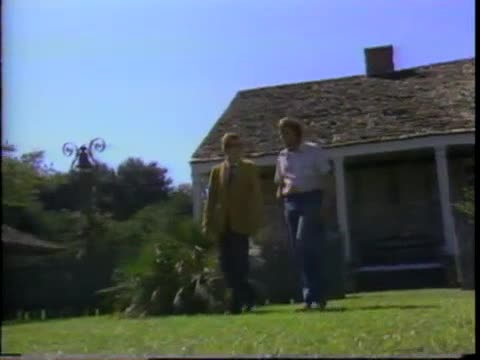
of eight daughters and three sons. Today, the mansion is being restored to its former grandeur, and its doors have been opened to the public. Curator Steve Saunders shares with visitors the richness of the building and the history it contains. What is the design, the style of this? It's an actually, it's a blending of two different styles of architecture. The Italian native looks very much like an Italian bill of the time and Greek revival with the entrance way and the Greek key design around the doors and windows. In fact, part of the house, as you can see, is around it and it's unlike any other plantation home in the south, not only because of the styling of it, but because of the sheer size of it, it has over 53,000 square feet and over 64 rooms in the house. It is the largest. The largest plantation home in the south, not away, and for many years, people never even heard of not away, but of course, it's always been a private home. And in fact, just three weeks ago, was the first time that it's ever been open for the public for viewing, so it's been a very exciting time. Tell us something about the family that built this.
Okay, this was the Randolph family from Virginia. John Hamdon Randolph built not away, but he was from the Virginia Randolph's related to George Washington and Thomas Jefferson. And when young John Hamdon Randolph was a boy, his parents moved from Virginia to Woodville, and there he grew cotton, but he got tired of that and he wanted to come to Louisiana where they were growing sugar cane along the banks of the Mississippi right out here in front of us. And in fact, when he arrived, he couldn't even buy any land along the river because it was so expensive and it had already all been taken. So what he did is he waited a while. He moved into someone else's home that was built about eight miles from here and waited for over a year until he could get this tract of land on which he built the house. As I understand it in the history of this plantation house, it almost didn't survive the Civil War. This accounting was kept in the diary by Cornelia Randolph, one of the eight daughters. And she mentioned one day in the 1860s, a northern gungo pulled right up in front of the house and started to fire upon it.
In fact, the grape shot came through the windows, cannonball, shells, crashed about the house, some struck the out buildings out here. And the only reason it was saved is that one of the officers on the gun boat had been to a garden party at not away before the war began and he recognized the house and he asked them to cease firing. In fact, he walked up to the front gallery here and Mrs. Randolph stepped out and she was very nervous. She was alone in the home with her children and he gave her his own silver handle pistol to defend herself because several days before troops had come through taking all of the animals from the house and all of the family weapons. So the northern gun boat officer giving a southern lady, his own handle the silver handle pistol and this was an incredible thing and it was just through the kind act of the northern gun boat officer that this home wasn't completely destroyed. Not away was an unusual house for its time, distinguished not only by its size but by its modern conveniences such as gas lights both inside and out. It was also known for a unique ballroom designed with the children in mind.
Steve, this is really the most famous, the most unique room in the home. Right, the white ballroom and this was created just for eight daughters of Mr. Randolph. You could imagine there could be no better way to introduce them to society and the wealthiest men in the south than to give them their own ballroom for dancing. In fact, six of the eight daughters were married right here in this ballroom. They came down the grand staircase and walked through the sliding doors and the ceremony took place just where we're standing right now. You can almost hear the music actually. You surely can, you surely can. In a room like this then the furniture was kept on the wall. Yes, because it was designed for dancing. This wasn't the sitting parlor, there were many here at not away. This was the ballroom and it's quite a room, the entire room, even the floor to the ceiling done in different shades of white and it's been known as the white ballroom since it was first finished in 1859. After the dancing, guests could retire to the parlor and gentlemen to their tobacco and port.
The color is important in this room, isn't it? Yes, it is because it's original and you'll see two shades of green. In fact, you'll see something else that may look a little familiar to you. This, the draperies in this room are an exact duplication from the movie Gone with the wind, the green velvet that missed scollet or yanked down off the windows of terror in order to make her dress to see Rick Butler in jail and even the finials at the ends of the drapery rods are American Mercury glass and were made in 1850. What was this room used for? This room was used basically by the men, the library of course and after a meal, the men would come into the room and close the door, they could then sit down and relax and discuss their business and light up their cigars and pipes. A man back then would never spoke in front of a lady that was considered totally improper. This dining room is trying to preserve the way it might have been during the rindles. Very much the way it was. In the diary kept by Cornelius, she mentioned that the table
was covered with French porcelain and what you're seeing now and not away today is the very finest of French porcelain that was ever created, the Sev's porcelain. For instance, let me show you a plate that was made for the king of France and noticed the crown above the cross-dale and the beautiful paintings on the front. Every piece on the dining table is hand painted with a different romantic scene and outside of a museum today it would be most unusual to find such a complete service. The crystal on the table is waterfered about 1840 and there's also a matching covered punch bowl over here on the sideboard so a beautiful beautiful service. The room was this peach color. Absolutely and two shades of peach in fact a lighter shade for the ceilings than the walls and you'll notice two chandeliers in the room that's because the room is 35 feet long and this provided proper lighting for the length of the room. Only a small number of the plantation is 64
rooms are completely restored and furnished. Not always new owner, 34 year old Arlen Dees is the man responsible for the restoration. Dees is owned and restored through other plantations and he says there may be more projects in his future. There are many others to restore. I'm in the restoration business but I want to use not away as my headquarters not only for homes in South Louisiana but throughout the country. They are constantly have relatives and investors calling that for properties that need the restoration work. But for today one more of Louisiana's architectural treasures has been preserved. Not away plantations stands open to the public and for those anxious for a glimpse of the way the old South may have been for a wealthy few there is no better example. Well not away is open seven days a week and this holiday season it will host a continuous
round of Christmas dinners and you'll tie parties by candlelight and even some weddings in a tradition of southern hospitality. Well Beth was so many of the restored plantation homes here in Louisiana not away represents what the richland owners had the top of society but for most Louisiana's in that time period life was represented by what was out back from the magnificent home. Here in Baton Rouge at the LSU Rural Life Museum that side of our heritage has been carefully preserved and the harsh realities of the lifestyle it reflects might make us all thankful during this week. Life in Louisiana the Louisiana of another century was very difficult. Those were the plantation days when cotton and sugar cane were king. Those were the days when the plantation owners lived in magnificent homes like this while most of the people lived in homes that looked more like this. There are plenty of restored plantation homes in Louisiana but only
one place to find the working side of the plantation and that's the LSU Rural Life Museum operated by LSU in Baton Rouge and located some 10 miles east to the campus on the grounds of the old wind rust plantation. When rust plantation built in 1855 by John Burton was turned over to LSU in the late 1960s by Steele and I own Burton descendants of the plantation builder. The museum began when LSU asked
to borrow the Burton's private collection of plantation artifacts instead of borrowing a small collection however LSU was given the collection in the land on which to build a museum and today the collection includes 17 buildings and a barn full of artifacts. What we're attempting to do is to show what life for the common man back in 19th century Louisiana would have been like this is a scenario that I feel is underrepresented in the way of museums and what have you particularly on a permanent basis. You have visiting exhibits that travel from one museum to another and from one university to another but on a permanent basis there's no place in the state that attempts to depict life in 19th century rural Louisiana which of course would be the would cover the predominant or majority of the white population and black population as well. John Burton is curator of the LSU Rural Life Museum and he sends the collection is grown
beyond anyone's expectations. Nobody ever dreamed it'd be this large it was strictly a kind of a collective you find operation there was no master plan as such. I suppose that once the idea of moving cabins onto the property was you know kicked about and then the idea of having a working portion of a plantation what you would find behind the elegant plantation home that took hold in people's mind and so consequently one of the main sections here is the plantation section which includes the overseer's house and slave cabins and kitchen schoolhouse on through the sugar house in Gristamil. There's quite a lot here a lot of varied articles. Do you have trouble identifying sometimes you have to be an expert on everything and jack of all trades at everything with this? Most museums have curators of specialized
interests and areas of study. You might have a curator of technology, a curator of textiles, fine arts curators and what have you out here that we have only two employees myself and Malcolm Tucker. So we have kind of blown up on interest that may not appeal to us but we've got to know what they are so that when people ask we can tell them. You have a lot of visitor groups that come in here some off the tour boats and they've just come off seeing a lot of magnificent mansions and they come here to the rural life museum. What's their reaction to this place? Especially with the people off the Mississippi Queen and Delta Queen we find that they've had a weeks touring of plantation homes. But when they finish seeing the homes they have yet to see what took place behind those big houses to create the wealth that allowed the plantation owner and its family to live in the style that they lived in those homes.
And so they're quite the visitors are quite impressed with coming out here since there only opportunity to see more or less an actual working section of a plantation. What took place in particular on a sugar plantation? We're in the sugar growing region and quite a few of our artifacts have come from the sugar cane areas particularly around condiment and grammasy. Although the collection of artifacts housed in the museum barn is extensive the key to this historic exhibit lies outside where some 17 buildings gathered from across Louisiana stands witness to life in the 19th century. A lot of museums have room settings that tipped by or authenticate actual rooms over a certain period of time but in order to really get the feel of being in a house or whatever you really need the house or the cabin to display the artifacts in and I think that by having these buildings out here and having them realistically equipped with artifacts from the
19th century that people who visit us do get the idea that they are actually in a worker's cabin or in a an occasion house or dog trot house or whatever or the commissary. The LSU Rural Life Museum is a place where history stands remembered not just a collection of odds and ends from an earlier day but a reflection on a lifestyle that built a state. Once worth noting that British Authority recently selected the LSU Rural Life Museum is one of the 10 best museums in the world which certainly makes it worth a visit for anyone who lives here in Louisiana. Well Ron I think that one of the things the Rural Life Museum points out to us is the many very lifestyles that make up our original Louisiana heritage and on our final segment this week we pay a return visit to any Miller a woman who came home to the swamps to share her
lifestyle with others. The Lee where Lee go to Lee come on baby come on that Lee look up there he is if it's someone that wants to snape we get them if it's one that doesn't want to get near them we stay far away from them. As long as we can hobble around and sit in a boat and drive I think it'll be our life. Meet Annie Miller, Trapper, Alligator Hunter, Commercial Pilot, licensed boat captain, former deputy sheriff, mother of two grandmother to four and now a swamp to her guide. Annie Miller who is known the swamps for over 60 years is sharing her treasured wilderness with the public now and drawing customers from his closest home and his far away is Europe. She knows these swamps and marshes of terrible in parish like the back of her hand. She ought to she grew up here. Annie Miller a bayou black and her husband Eddie began running their swamp tours 18 months ago
when officials with the home a tourist commission mentioned that a lot of visitors were anxious to see firsthand Louisiana's famous swamps and marshes. The tour can last from two hours to half a day and includes a look at all the wildlife that Annie can find which is usually a lot. One group she doesn't have any trouble finding however are the alligators. They seem to find each other when Annie's meal bucket arrives. You see there? Baby? Uh huh well now you're deciding to come get a bike engine. Well come on hurry up before the big ones get it. Come on baby. Oh gee was that good? Mm-hmm. Notice is uh the slipness eyes? Notice the people of his eyes as it gets dark and that slip will expand. You'll just when it's completely dark those people are almost round and you can see with the headlights from four to
five hundred feet now. Baby? Come on Lee. He should be up here. You see on that side watch him. You watch your fingers. Lee? I don't know. I don't see him. Oh there he is Lee. Come on baby. Come on that's me. Look how big he is right in business. Um did you ever hear about the crush and power of those jaws? They claim that a big one a big material alligator has a thousand pound pressure. Once it clamps down on anything you cannot let it go. I mean you cannot make them let go. And but he has no opening muscle to speak of but one hand you can hold those jaws closed. Snakes are also on the tour water snakes and tree snakes but they're not as popular with the tour as says the alligators. Some water see the snake and they'll even ask you to show them a snake or a catch a snake. Some of the pictures made with snake but some will not they don't want to
get within 24 or 50 feet of a snake especially the ladies. It don't like them at all. So we just if it's someone that wants to snake we get them. If it's one that doesn't want to get near them we stay far away from them. Nutri is valued by trappers for their fur play an important role in swamp life and Annie won't let the tour in unless you see at least one. We found a whole family. But the most impressive side of the marshes in swamps are the birds. As graceful on land as in the air the white egrets in the blue hair and sweep across the water to nest on a floating rookery and we are reminded that these graceful creatures were once almost extinct. During the nesting season these birds will grow 40 plumes which they call nuptial plumes. They're beautiful plumes and that's on the head the back and the neck and prior to 1909 France was paying a dollar a piece for these plumes which is 40 dollars a bird. So of course
the greedy Americans coming here nearly wiped them out. So in 1909 they passed the Lacey Act protecting the birds and they still protected. Are most of the people who come into the swamp area are they conservation-minded or are we taking care of the wildlife here in Louisiana or are we abusing it? Well I think most people are trying to take care of the wildlife. There's a lot of abuse I know going around like youngsters maybe shooting and alligators they'll see the alligators they'll see a neutral and they'll shoot them for fun for target practice but excuse me but the older individual I think are trying their best to protect the birds and the animals and even some of the reptiles. I know that the wildlife and fishery agents are doing their best. But is this environment threatened? Do you fear that perhaps this won't be here 30 or 40 years from now? Oh well no doubt that a lot of it will not be here. I can give you an example of that you used to be able to
look around and see snakes just about anywhere. Now you have to look very hard to find say maybe 10 or 15 snakes even during the early spring when you used to be able to find them on every bush you don't have to hibernation they come out and oh you'd see them on the logs you'd see them on low branches and you don't see that many anymore far from it. Can you ever imagine yourself just being a full-time housewife and not coming out here? No this is our life. I think it and I both like this life very very much and I like of course I like our home but I like to be out in the open. The outdoor has been my life for a long long time. Is it always going to be your life? I hope so. I hope so. We'll try to make it that way. As long as we can hobble around and sit in a boat and drive I think it'll be our life. Yep. I don't think I could be stuck in an office. I wouldn't like it anyway. I don't see. I guess I can do it if I had to but this is how it was raised. This is what I
like. Annie Miller has found her place in life here in the Terrebone Marshlands. She is a caretaker not only for the wildlife but for a lifestyle. Pay her a visit sometime and you'll share in more than just beautiful scenery. That was indeed a very nice experience being out in the Mayu's first-hand especially with Annie. In fact we had a lot of calls and comments on that story after we ran it the first time a lot of people wanted to know how to get in touch with Annie and the best ways to call the
home of tourist commission and they will put you in direct contact with them. Well that's a show for this week. We hope you have a very warm and friendly Thanksgiving holiday. We're thankful for a lot of things. I think one of the things that we don't have any elections to cover in the future but most of all we're thankful that you walked us every week and we hope you'll join us next week for another edition of Louisiana the state we're in. I'm Beth George. I'm Ron Glum. Production funding for Louisiana the state we're in is made possible in work by grants from Kaiser aluminum and southern research company at Carparated.
- Episode Number
- 446
- Producing Organization
- Louisiana Public Broadcasting
- AAPB ID
- cpb-aacip-17-12m64qgs
If you have more information about this item than what is given here, or if you have concerns about this record, we want to know! Contact us, indicating the AAPB ID (cpb-aacip-17-12m64qgs).
- Description
- Credits
-
-
Copyright Holder: Louisiana Educational Television Authority
Producing Organization: Louisiana Public Broadcasting
- AAPB Contributor Holdings
If you have a copy of this asset and would like us to add it to our catalog, please contact us.
- Citations
- Chicago: “Louisiana: The State We're In; 446,” 1980-11-28, American Archive of Public Broadcasting (GBH and the Library of Congress), Boston, MA and Washington, DC, accessed April 2, 2026, http://americanarchive.org/catalog/cpb-aacip-17-12m64qgs.
- MLA: “Louisiana: The State We're In; 446.” 1980-11-28. American Archive of Public Broadcasting (GBH and the Library of Congress), Boston, MA and Washington, DC. Web. April 2, 2026. <http://americanarchive.org/catalog/cpb-aacip-17-12m64qgs>.
- APA: Louisiana: The State We're In; 446. Boston, MA: American Archive of Public Broadcasting (GBH and the Library of Congress), Boston, MA and Washington, DC. Retrieved from http://americanarchive.org/catalog/cpb-aacip-17-12m64qgs