Louisiana: The State We're In; 206; Angola Rodeo
- Transcript
Production funding for this program was provided in part through contributions to Louisiana's for educational television. The following program is a production of Louisiana Public Broadcasting. Good evening, I'm Beth George, welcome to this edition of Louisiana the state we're in. This week we look at police, prison, and parole. We assess state police surveillance of state workers. Visit one of the rare happy events at Angola, and study possible changes in the state's parole system. Whatever your point of view, whether it's the criminal's fault or societies, there's
no denying that crime surrounds us, from used making murders to white collar frauds to parking tickets on the windshield, laws are broken every day. So we find that lawmakers aren't enough, the style and substance differ vastly, every society has to have its law enforcers. There are more than 800 uniformed commission state police in Louisiana, their main responsibility is patrolling the highways in search of law breakers, but they also have legal obligations in the fields of criminal investigation, intelligence, and narcotics. There's even a legislative mandate to patrol the state's waterways and keep livestock off the roads. Under the law, the state police and the Department of Public Safety have brought authority for the security and physical safety of the citizens in property of Louisiana. But the application of that authority and safeguards against possible abuse, the question recently in regard to the use of state police for surveillance of state employees. As soon as it was revealed that administration chief Charles Romer and state police
tailing forward Burma, became the vote around the state capitol to recount one's own adventures under surveillance for all the cynical joking, though, revelations did raise some disturbing questions. How routine is it for state police to tail state workers suspected of being derelict at their jobs? If testimony given a recent meeting in the legislative audit advisory council was taken at face value, it would appear to be a common occurrence. The revelation has grew out of the state's continuing investigation of its purchase of a $6.6 million Honeywell computer. Burma one time headed to the Louisiana Information Processing Authority, reportedly disagreed with some of Romer's computer purchases. Romer said surveillance wasn't motivated by any disability. I was contacted October 30th by Colonel Tibero who advised me at that time that he had gotten information that Mr. Romer, who was a state employee, was working or had some
outside job and was not performing his duties with the state. He felt that it was a, possibly it could be a payroll fraud, and he asked me if I would look into it. Did he tell you what the stills of this information was? Yes, sir, I believe he told me it was that he had talked to someone at the Division of Administration. I think Mr. Romer. A report delivered to members of the council answered questions about Burma, who wasn't beat on the job, that raised questions about the surveillance itself, state police chief from Garrison was called upon to answer just who could authorize an investigation. I hope I have a left impression with the committee that only at the request of the head of a state agency we can involve.
It's not so. Less than a month ago at the information we received from an underscore source that there was some class going on from a state agency, which we got involved in, and so did there was one. We came up with some arrests, and we sure will come up to convict and think it had been gone on for almost two years, that the state property. This information came to us and not from a head of a state agency. We informed the head of the state agency that there wasn't that's gate at that time he grew up with the spoke. It was not always from the head of a state agency, but when we get these requests with their supposition of suspicion. If we think of any criminal activity taking place, the court gets a common positive that the head of that agency knows there is an investigation involving some of the employees, which is I'll feel it's incumbent upon us to do this, so it proves not to be in back to name them. We've never failed to get the cooperation of any supervise state government on the investigation concerning any of the employees.
I've been reading a place in State Surplus property not long, but which was also in conditions. We've done it every question, which we investigated and came up with the rest of the government taking the state, I'd like to follow the record to my knowledge the state police have. I don't think we've gotten to the police state as yet, although some people and some media feel that we have, but it's never been our objective to do this in the past, the court's on the road, and I don't think it will be our objective in the future to dwell
in such things without proper justification to do so. I'm ready to just to try to learn, and then we did the question, I'm going to draw my hand in a moment, and we don't know how serious I'm going to call it, so I don't think my own mind, but I think it was a change in peace, how it could speak, by any one, a situation of a legitimate reason to give up for the initiation of the survey, a request of surveillance and the surveillance of a public state police, and determination of the state to find the evidence among which to charge the individual with any kind of government.
At a press conference, Governor Edwards gave more or less blanket approval to any state police investigation. Surveillance is certainly a proper investigative tool of the police, but in the wake of Watergate even the possibility that the state police might be used in a politically motivated vendetta should give the public and state police pause for thought. In the police have investigated and arrested when the courts have heard and judged the stories of course far from over, now is a time for crime and punishment for what our society prefers to emphasize rehabilitation. In Louisiana, this often means an extended visit to the state's contemporary at Angola, a frightening prospect in every way, but even Angola can put on a happier face in small doses as visitors to its rodeo discover. Each Sunday in October, Angola's sprawling farm at the end of a winding road between
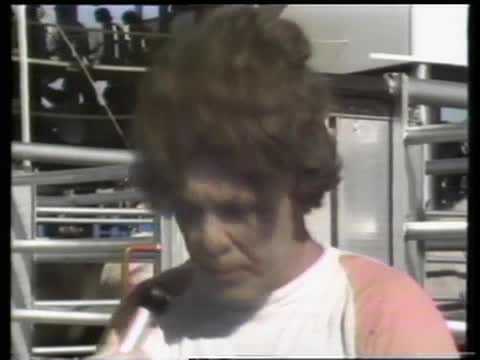
the river and the hills becomes a destination to be sought rather than avoided. The greary time-heavy atmosphere of the prison, once called the nation's worst, becomes a colorful action-packed excitement of a rodeo. The years the event has been as important to the inmates as to the clouds to fill the stands for the day. Prisoners can get both diversion from routine and spending money by competing as the ward in Ross Magio explained. And the rodeo has been going on for approximately 12 to 13 years. It was formed by some of the employees here along with the inmates. How do you decide whether an inmate can participate in the rodeo or not? It's strictly a voluntary thing. We have about 500 inmates that participate every year. And do the inmates have to train or anything or do some of them not know anything about horses? Most of the inmates here are from urban areas like New Orleans, Baton Rouge, and Street Board. So for the most part, they've never ridden before they come out here in the arena. Do you think most of them look forward to the rodeo over here?
I think so. I think it's a real morale booster and, of course, some of them pick up little extra change. How does that work? Well, of course, there's prize money for the first four winners in every contest. And the money that is derived from the ticket payers who come to see the rodeo, where does that go? All of the proceeds go to the inmate welfare fund and it's used to buy recreational equipment such as football equipment, basketball, television sets, all of the out of the inmate welfare fund and proceeds from the rodeo go into that fund. And do all of the U.S. award and seem to ride a horse very well? Do most of the guards around here? Are they used to riding horses, is this sort of thing? Well, at Angola, we use an exceptional amount of number of horses in our work every day. We probably saddle up maybe 50 or 60 horses every day here at Angola and working a farm in the farmlands. There's a striking contrast between the domesticated horses that work the Angola farms and the wild ones have explored out of corrals carrying inmates momentarily. Passing the time is a large part of the rodeo's appeal to inmates, but the event is
anything but casual, requires months of planning as well as close coordination of contestants and categories. The inmate in charge says the rodeo's can get hectic, the unexpected is always expected. Well, it's my responsibility for the preparations of rodeo grounds itself, the inmate the work here and the events as they take place. Do you have to make sure that everyone's lined up for every event? Yes, ma'am. Sometimes they can get hectic. Is this an odds or a rodeo, do you think? I would say so. Sometimes it gets terrible. What are some of the problems you run into? Sometimes we have a mix up an event sometimes like we had a drill team today that didn't
show up and we have to substitute otherwise it runs pretty small. Do you have to do a lot of preparation during the year for the rodeo? We start in June and we go all the way through in the October. Are you going to be here for long, Angola? I'm waiting for the governor to sign my commutation now and I would be eligible for parole in October 16th. How long have you been here? This is my 14th year. Next month. I'm not sure. I mean, it's going to flag up. I'm not going to have any. Excuse me. Excuse me. Excuse me. Clowns not only provide a humorous change of pace
for the rodeo audience, but often serve as life-savers for fallen riders, drawing bulls away from them onto themselves. Both the fight bulls and give the trouble left, you know. Like I said, our job is to keep the bulls off the riders when they come off the road, you know. Sometimes a dangerous job. Yes, especially when you have to work in clothes because what you're doing, you're taking all the heat off of him onto yourself. And a lot of times you have a backup crown to get the bull off of you when you take it off the horse fallen rider. Why do you do it? Well, I started out. I started out. I started out. This has a kick, and I get the like, and I didn't fish that in my blood, I can't enjoy it. Do the other inmates think of you as a sort of celebrity or something? Oh, some. Yes. They kind of enjoyed, you know. To some of the riders who've never been on a horse and forward, I talked to you beforehand and asked you about whether you'll take care of them or not. That's one of the first things you're going to be out there. We're going to be out there.
That's one of the first things you're going to ask before they walk there. So they expect us to do our job, you know. What do you do during the rest of the year? Do you look forward to the rodeo? Well, we're trying to head. Like, we started June getting it all ready for the rodeo and horse know, like, now we're going to have it. How long have you been here at doing this? About 15 years, yeah. We're not the rodeo 10 years. Do you think you'll be a clown for as long as you can be? Yes, ma'am, if I get out of here. In fact, I had to. See, we've been sent to Fjossie for the last seven years, and I come to find out last year, from the Amherst approach, I'll kind of swell up about it. So you're a professional rodeo clown. That's good. How did that come about? Well, we had a man here by the name of Jack. The favorite, he was a seven-time world champion, in RCA cowboy. And when he was chairman of the rodeo, he had sanctioned us with the RCA. And ever since then, we had been with the RCA. Does it, the rodeo make the rest of the year go better for you? Yes, ma'am. I was talking about how I escaped in two-time and a penitentiary.
You don't like penitentiary than only anywhere. Would you consider it, and you tried to escape? Yes, ma'am, four times. Over the last 15 years. With no success. Well, I've had some success by just meeting when I move on the bus. Do you think it's impossible to escape from Angola? No, because this is a thing we would, someone like, when you have escape when you're mine, this is something that's only mine in 25th of day. And the Fjossie for knowing they have a hole when you just go ahead and take it, you know. It's always thinking, you know, to escape. I mean, nothing will get proved, you know. Oh, they think it is, it's nothing. You have the Mississippi River on one side and the tuna kale's on the other. I have been involved. I had a swimmerist sippy three times, more drama every time, and I've been to the hills. And it's not a, it's not easy at all. So the rodeo is maybe a little way of escaping, if not physically. Right. Music First.
Here's the Mississippi really now. That's what you're about, that's what you're going to get about back, please. That's what you're going to get about. One event capsulizes the inmates' desires more than any other. A wild melee of bulls and prisoners known as freedom. Prisoners who have little to lose try to snag a washer representing $100 from the bulls horns. They're going to get out of there.
They're going to get out of there. They're going to get out of there. Kind of dangerous, but it was cool too, you know. It gives us something far to look for if you can meet, you know, the required standards and he wins his money. It goes in his account and the inmates account for him, you know. What do you think about these radios? I think they're good because it has a tendency to ease some of the tensions that are here in the penitentiary at, you know, certain times and each individual, such as myself, contestants, I look forward to each other when the rodeo is coming back to hand goal to participate in trying to win some money to put in his account. Thank you going to enjoy this much next year as you did this year.
I hope so. Well, I want a little money this year so it gives me more hope. Hope is a rarity in the state penitentiary that is necessary to both the theory and the reality of rehabilitation. Hope of getting out, hope of finding a job, hope of having a life, all are central to making a fresh start. But the most specific hope inmates harbor is for parole. As the theory of rehabilitation is modified, it's only natural that some see changes in the system of parole itself. The rate of incarceration in Louisiana is among the highest in the nation, but most inmates here secure release either through parole or earning good time. But certain exceptions that inmate is automatically considered for parole after serving one-third of a sentence. This is one way of equalizing sentences from angry or lenient judges. Presently the basic standard used by parole boards is risk when an inmate's release in dangerous society. Studies conducted over the past 25 years, however, have demonstrated not only that prison doesn't rehabilitate, but that parole boards cannot judge when an inmate has been cured.
The governor's pardon parole and rehabilitation commission met last week to consider legislative models for changing the system. I'd like to say this is kind of that. These models would alter that and consider all of the goals of criminal sanctioning, rather than just rehabilitation and preventive confinement in determining how long a person should serve in prison. The committee was assisted in developing new guidelines by Dr. Peter Hoffman, director of research for the U.S. parole commission, who said the prison system was under attack across the nation. First of all, there has been a concern about the way discretion is applied throughout the criminal justice system. It's not simply parole, which is under attack. It's sentencing also. The same thing is the role of the parole lease function is very frequently misunderstood. There has been a lot of claim lab parole boards attempt to rehabilitate people, rather than being sentencing disparity, reducing agencies.
In a sense, the public image of parole board and their practical function are very, very different. I think it's some of the misunderstanding, which has contributed to this attack. That is, there have been some researchers recently which have indicated that the rehabilitative model was not working. And the flag from the attack on the rehabilitative model is what appears to be hitting the parole board. If the function of parole boards has small collegial bodies which tend to promote equity in the actual service of prison terms, as well as to help maintain institutional water, was widely understood. I think the attacks from it would be less. Do you think around the country they are establishing certain guidelines for parole boards? That is, you can look sort of at a table and so that there isn't, they don't have so much leeway in deciding parole.
Yeah, the guideline model, which was started with the federal parole commission back in 1972, appears to have caught on. Minnesota, Oregon, are using guideline model. State of Washington, I believe here in Louisiana, the parole board, is adopting or has adopted guidelines. Virginia, North Carolina have also been experimenting with them. So the model is a good one, rather than attempt to eliminate discretion. What it does is it structures it, it brings it out in the open. In fact, the guideline model and parole has been so successful that there are a number of states which are talking about using guidelines for sentencing decisions that is moving the step somewhat earlier in the system so that disparity will reduce an equity promoted throughout. Do you think that there's a potential for abuse of power as you've looked at setups around the country? That is that a parole board or a pardon board could, because they have great authority, could perhaps be abused by those in power.
Wherever you have any power, of course you have that possibility, the role of a guideline model by making the discretion visible, by requiring reasons when decisions from the party from the customary policy made is the protection of openness. As Kenneth Colt Davis, sometimes called the Dean of Administrative Law Scholars has said in a complex system discretion. And the discretion means power is required, it's necessary. But the protection for the citizenry against the abuse of this power, whether intentional or not is openness, is the structuring of discretion. As he put, I think best of all, let us not try and eliminate the discretion, that's unrealistic. Let's structure it, bring it out in the open so that it can be properly exercised.
Your all in district attorney, Harry Connick has been involved and outspoken concerning the entire correctional system. Mr. Connick, are you generally satisfied with the way the parole board operates in Louisiana? I think so, it's a full-time board composed of professional people now, not too many years ago it wasn't. And I think we had some serious problems because of that. But in the time that this current parole board has been in operation, it's demonstrated to me that they're sensitive to the needs of the community, at least my community in New Orleans, and also sensitive to the needs of the inmate. And I think there's a possibility, and there should be a balance between the two interests. I would not subscribe to the recommendations that the parole board be abolished. You're generally considered a strong law in order, man. Do you anticipate that perhaps there'll be a move on to make more prisoners eligible for parole?
Or maybe, how do you feel about the guidelines for sentencing? Do you think that it may make sensing less strict? I believe that there should be guidelines. I think that the people in the system and the people out of the system should know what's going to happen if an individual does a certain thing. And I think that we ought to follow up on that. The legislature has promised that if a certain person commits a crime, then a certain penalty is going to follow. And that hasn't always been the case. And I think this has been one of the problems. I believe that guidelines should be established. And I think that they should be known to the people who are going to come into contact with them. And I think there's more fairness and equity in that approach. So basically, the parole board really controls that almost two-thirds of the sins of the individual. Do you think a lot of people are not aware of that? I don't think they are. I think that a lot of people are very frustrated because they know that a person who has been arrested and prosecuted and convicted and sentenced to the penitentiary. In a relatively short period of time is back on the streets again, committing other serious crimes.
And this is very frustrating to the public. The parole board has a lot of power. And I don't see the problem with the parole board. I think that some of the pardon board practices could be tightened up. And I would recommend a complete elimination of good time. I don't think that it's needed if you have a properly functioning parole board and a properly functioning pardon board. Citizens will have a chance to express their views and increase their understanding of the system that are hearing this Thursday. Is the parole board an effective means to equity of sentencing and institutional order? Or is it an outmoded institution or unable to exercise fairness or predict future criminal behavior? The Governor's Commission, the legislature, and to a limit to the extent the public must eventually decide. I'm back towards Good evening. The proceeding was an LPB production.
Production funding for this program was provided in part through contributions to Louisiana's for educational television.
- Episode Number
- 206
- Episode
- Angola Rodeo
- Producing Organization
- Louisiana Public Broadcasting
- AAPB ID
- cpb-aacip-17-10wq08gz
If you have more information about this item than what is given here, or if you have concerns about this record, we want to know! Contact us, indicating the AAPB ID (cpb-aacip-17-10wq08gz).
- Description
- Credits
-
-
Copyright Holder: Louisiana Educational Television Authority
Producing Organization: Louisiana Public Broadcasting
- AAPB Contributor Holdings
If you have a copy of this asset and would like us to add it to our catalog, please contact us.
- Citations
- Chicago: “Louisiana: The State We're In; 206; Angola Rodeo,” 1977-10-21, American Archive of Public Broadcasting (GBH and the Library of Congress), Boston, MA and Washington, DC, accessed April 2, 2026, http://americanarchive.org/catalog/cpb-aacip-17-10wq08gz.
- MLA: “Louisiana: The State We're In; 206; Angola Rodeo.” 1977-10-21. American Archive of Public Broadcasting (GBH and the Library of Congress), Boston, MA and Washington, DC. Web. April 2, 2026. <http://americanarchive.org/catalog/cpb-aacip-17-10wq08gz>.
- APA: Louisiana: The State We're In; 206; Angola Rodeo. Boston, MA: American Archive of Public Broadcasting (GBH and the Library of Congress), Boston, MA and Washington, DC. Retrieved from http://americanarchive.org/catalog/cpb-aacip-17-10wq08gz