Louisiana: The State We're In; Legislative Coverage #11
- Transcript
Production funding for this program was provided in part through contributions to Louisiana for educational television. The following program is an LPB Public Affairs production. Louisiana, the state we're in with Beth George and Ron Bloane. Good evening, welcome to this legislative edition of Louisiana, the state we're in. This week on In-depth, we present three very different but equally controversial topics, a lobbyist reporting bill, the merger of special skill schools, and a ban on sex education. On ProCon, we discuss the legality of fuzz busters, and we profile a legislator called by some, the best and the brightest.
But first, these legislative highlights. For Louisiana Senate, jumped on the House bandwagon this week and approved the first use tax. It's expected to bring in $170 billion a year. Such a tax would apply the federal offshore natural gas as it passes through the state on the way north. Already officials in three other states in Puerto Rico have expressed interest in the tax. On Monday, Governor Edwards told the Senate Committee that interest is spreading. And people in the political arena in Texas came to me and chatted briefly our lengthy about this legislation. And commented about his boldness, the innovativeness of it. And the fact that they were waiting anxious to see how the outcome would be. Apparently, interested in knowing whether or not Texas as a state and also a Gulf producing state might be able to benefit from our leadership in this particular area. Not one of these officials suggested to me that we were approaching the problem erroneously, that we were making an era.
All of them left me with the distinct impression that they concurred in the legislation and were anxious for us to succeed so that Texas could follow suit. A constitutional test of the first use tax is expected to take at least three years. The full Senate will get another chance to join the House in approving a major piece of legislation when they vote next week on whether to overhaul the rules that govern the control of property in a marriage. Earlier this week, a Senate committee gave unanimous approval to the measure that would abolish the old head and master property law. A legislative drive to consolidate the state's environmental agencies under one roof collapsed this week. The president of Manny Fernandez withdrew his bill from the House calendar, but before taking that action, he blamed the legislative failure on health department secretary, Dr. William Cherry. Industry supports it. Environmentalists support it all except one idiot who does give findings but with both hands who suggest, who suggest that I have to endure and representative toes that have to endure. Personal insults who ask my constituents to look at me because I'm trying to pull the world over people's eyes.
I want that kind of scrutiny. I invite that kind of scrutiny. And I suggest to you that it's all a bunch of hogwash for people who want to perpetuate themselves in the bureaucracy. And the do nothing is in the do nothing is in the state when the chief of the health department tells you, and I quote him. I am doing less in the environment than the pitiful job I have done in the past. And we're going to tolerate him. Not today. Insurance agents may celebrate a boom in business this holiday weekend as the state's compulsory auto liability insurance law takes effect. It's estimated that one out of every three drivers in Louisiana does not carry auto insurance. The Fourth of July is not only a time for fireworks. It's also a time for political speeches.
And this year, Public Service Commission Chairman Lewis Lambert chose the holiday week to kick off his campaign for the governor's race. Things were hectic around the Capitol this past week as the legislature heads into the home stretch. And this week, we offer a sample of some of the controversial issues up for consideration. There are well over 200 lobbyists who work the Louisiana legislature. And most of that work takes place here in committee rooms or on the floor of the House and the Senate. But some of that lobbying takes place outside the halls of the legislature at restaurants, silver veals, drinks, or sometimes at hunting lodges. And that's the concern of Senator Tony Grisco was introduced to Bill to make a lobbyist accountable. The whole idea of lobbying are recognized as the legitimacy of the enterprise. But I have a problem with the whole idea of lobbying in that they set up an inner position between the general public and their elected officials. It's that special relationship that Grisco wants to make his open as possible by requiring lobbyists to publicly report the money they spend on lawmakers.
But some legislators like Senator Claude Duvall objected, calling the bill an insult to their integrity. But what you're saying is that members of the Senate and the House are subject to being bought on legislation because $35 was spent on them by lobbyists. I think, and I believe that from your standpoint and from my standpoint, they don't have enough money in the state of Louisiana to buy your vote or my vote in this Senate. Why the dickens did we run for public office in the first place? It had to be because of the honor of the thing in the hope that we could serve the public. Are we here now trying to kid the public out there and say that, well, since legislate laws and government has fallen in disrepute somewhere, we're going to resurrect that by passing this kind of Mickey Mouse stuff. And I think that money can talk, and so far, maybe it's not always directly, say, blabbing someone, but certainly the influences that big money might bring in the way of hunting trips, fishing trips, playing rides, many, many gratuities.
And in excess of just someone bringing someone to dinner, being the least of those things that are used to influence legislation and to say that that money could not influence as a spurious argument and a fallacious. The Senate narrowly passed the lobby reporting bill on Monday, and after a lengthy debate Thursday, a House Committee sent the measure onto the full House for final action. But if there was a great deal of controversy on the floor of the Senate concerning the bill dealing with lobbyists that paled in the Paris in with what took place in this committee room, the House Education Committee earlier this week, two very controversial bills, both dealing with children and education in Louisiana.
The first piece of legislation taken up by the committee, concerned placing the Board of Elementary and Secondary Education over all the schools for the blind and the deaf and the state. The second piece of legislation, concerned lifting the ban on sex education in Louisiana. Why was there so much controversy concerning placing BC over the schools for blind and deaf? The state has to end that kind of a practice, and now the state is facing a September deadline, and that set the stage for this hearing. But the battle was more than a jurisdictional question. It was a political tug of war between the Southern University Board and the Board of Elementary and Secondary Education. They were supposed to work out a joint solution to merging the schools they run, but those efforts failed.
I would suggest to you that this is a proper board that the proper facilities exist at one place, and that we have the proper staffing and teachers to handle the situation that you have heard from a diverse element of society and people especially interested in favor of this bill. In fact, there were two teachers from the Southern Schools and the President of the Louisiana NAACP joining those in support of the bill. But despite that cross-racial support, committee member Alphonse Jackson called it a racial attack. Pure, clear, and simple. It's race. There's no way to get around it. The Board of Elementary and Secondary Education expressed no interest at all in this problem, until they had a mandate from the federal government. Jackson's remarks, however, failed to sway the committee as they voted to approve the measure. And while there was tearful joy among some, the anger was evident among others.
The plan ought to be one that would reflect the attitudes and the concerns of black folk as well as white folk. This bill concludes that, and that's why it's wrong, and the vote was clearly along racial lines. And it's unfortunate in 1978 that we can't have black and white folk to sit down and devise a plan that would be in the best interest of black and white children. You don't think that it's at all a question of people at Southern not wanting to give up something they already have? Of course, of course that's a concern, but that's not my concern. Is that in the best interest for the children? Or is it indeed a political thing too? I don't dare say that there are some political considerations, but once this bill is enacted, the Southern Board would not have any jurisdiction. We'll have no opportunity at all to force compromise and force the plan to reflect some of the needs of black children.
And that is what is unfortunate about it. I'm not concerned. I don't care about the children going downtown, but I do concern. I am concerned about a unilateral plan being developed to serve both black and white children by white folk because it simply won't work. It hasn't worked in the past and won't work this time. I just did hardly settled on the House Education Committee when they were forced to take up an even more heated issue. Legislators had barely returned from lunch when they were forced to hear once again one of the most controversial issues of the session. It is a touchy emotional issue. I concede that to you. And I want to tell you that sent a moot on and representative Jasper and I and others. And that on many occasions spent many hours trying to determine how we could teach sex education in Louisiana and to put every safeguard that we could think of in this bill to protect the child. You won't find these books in Louisiana schools because since 1968 there's been a ban on sex education in Louisiana.
The Senate earlier this week to the surprise of just about everyone passed a bill lifting that ban on sex education. House Committee members had earlier heard a bill and rejected it. But once again they were forced to take up the controversial issue. Committee members were told that Louisiana ranks among the top five in venereal disease and has one of the highest teenage pregnancy rates in the country. A diverse group of senators including two traditionally conservative lawmakers urged the committee to respond to a problem that cannot be ignored. I'm persuaded that we've got enough good decent teachers who properly prepared can make a contribution. And we're just unfortunate living a live in a time when everybody thinks you know you do your own thing. And while some added their reluctant support others vehemently expressed their opposition.
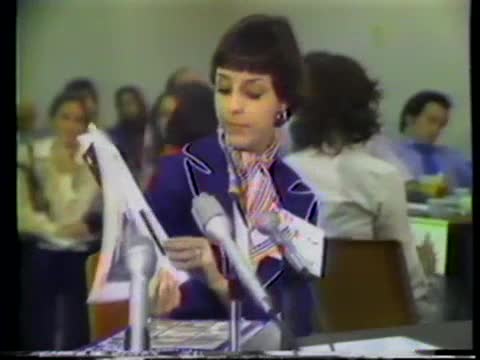
For one thing I find it amazing that we're hearing the same bill again twice in the same year I think it ridiculous. Now we've been hearing all this talk about doctors and educators that are going to be deciding these programs. Everybody going to listen. Good. So I want to let you know this is one of the books that I want to add to the bookstore and bought that was recommended to me for a three year old child. Now you'll have to forgive me for being so blind. I will read you some of this book. Now this book was actually endorsed by a doctor Ernest Solomon and he is also a sex education consultant for elementary schools. Okay here all the boys the little babies mother and father they love each other. Then it goes into the great detail about what the mother has and what the father has and what happens to the father when he feels especially loving.
Then it shows them in action. And then we go a little further then they show that she is pregnant. We keep going on and on. It's just unbelievable. I went a few weeks ago in saw movie with this young lady in Brooks Shields 12 years old in the nude acting like a prostitute. So what do we see in her own little book. This is an advertisement they had. The world's youngest sex symbol and after the sex education course we're going to have little sex symbols running all over the place. It goes on. It's unbelievable. I still can't believe that look at this 12 years old. Isn't it nice for the 12 year old girl to be acting like this. Then this is a very important point because this is what you're going to have if you do go ahead and approve this bill. First period map. Second period English. Third period. Because that's what it's going to be as young as these children can start having kids. That's when they're going to start having them because I know it's a child when I saw adults popping on cigarettes.
I'd reach an end puff on that little butts to anything that I'd see I tried to also do and that's exactly what these kids are going to be doing. You want a solution to the problem. The solution is not saying okay you're going to do what's fine. We'll just stop pregnancy. That is not the solution to the problem. The solution to the problem is we've got to find out why are these children experiencing sex as such early ages. Do they really need sex? Is it something they've got to have or is it something that's being pushed on in by the media. The committee members wouldn't be pushed into a quick decision. They continued the hearings a second day and then decided to table the matter all together, leaving the ban on sex education intact for another year. Another piece of legislation that may have to wait until next year is a bill that would ban fuzz busters. For those of you who observed the speed limit fuzz busters or those electronic devices that warn you about radar speed traps before you get a ticket. Some people feel the simply encourages citizens to circumvent the law while others feel that the government shouldn't tell you what you can and cannot buy.
So an anticipation of the debate that is sure to continue next year our pro-contopic is should fuzz busters be outlawed. Speaking in favor of the proposition representative Joachardo of Laplace speaking against representative Loy Weaver of Homer. Well I believe the state should pass legislation to outlaw the fuzz busters because while we pass legislation to try to have people drive safely and we spend money on radars for police departments in the state police and if we allow a device such as a fuzz buster to be used to circumvent the radar. I feel that we are working against the safety of the people when a person has a fuzz buster. Well he feels he can speed go through speed limits with immunity and it endangers the public, it endangers your children, it endangers you and I and the person himself and for that reason I feel that the legislature should have passed the fuzz buster legislation to outlaw that device. I believe that because this bill is dead for this session that an alternative way to outlaw that that device is to ask the Congress and the Federal Communication Commission to outlaw the use of that device since that commission has the power to limit the use of any radio frequency device.
Well I certainly agree with representative Akardo that speeding is a serious problem and that we ought to enforce that law. However I'm convinced that everybody who drives at one time or the other exceeds the legal speed limits and I object to the type of bill that would strip constitutional safeguards from people who are minor law violators when we do not strip those same constitutional rights. They have constitutional rights from serious felons people who commit armed robbery or heinous crimes. They have certain constitutional rights and yet this bill would do something that would deprive the average law abiding citizen of his rights specifically the Louisiana Constitution prohibits the confiscation by the government of any private property unless it be contraband or unless it be through expropriation proceedings. This bill circumfence that would just declare the fuzz buster or any other instrument of that type as subject to seizure by law enforcement officers.
I also think that the presence of this equipment in the vehicle would cause some real problems for law enforcement officers in locating the instrument. It would I believe bring about some unlawful searches and would be a dangerous precedent I think to begin in this state. The transportation committee defeated the fuzz buster bill this week but the state police say they'll be back again next year armed with more statistics that show the dangerous speeding and they think they'll be more successful. The subject of this week's profiles and man who generally makes nearly everyone's list of the ten best legislators. He certainly is on most women's list this year because he is the law maker most responsible for guiding the equal management of community property proposal through the legislature. If they wrote the live story of Representative Frank Simano it might sound too good to be true. It's a story of a poor south Louisiana boy from a large rural family who found the American dream of success can come true through hard work. Many of his constituents would be surprised because Simano the successful articulate low-key attorney has never traded politically on his humble origins.
We're sitting here on the floor and the House of Representatives and you seem to be very much in tune with the House these days. I remember when you first came to the legislature you didn't exactly fit in you didn't seem like one of the good old boys. Do you think you've changed or has the House changed? Well I think both I think the House has changed and I think I've changed also. I think just a matter of letting people know who you are and where you're from and that sort of thing. Do you think that some people who perceive you as a slick lawyer from the city might find you more attractive than you about your background? Probably so. Let's face it I'm a lawyer with a Baton Rouge law firm and to large extent I probably care that image and people didn't know me as where I had been and where I'd come from. I think more people know me now as an individual of personality rather than just simply the image. And in all human relations this is important.
Do you tell me something about your background? Well of course I was born near Napoliville in a very rural community. One of the children the more income family very much and at some early stage I realized that an education was extremely important. And I've worked my way through school and when I got to Bella Shoe decided to go to law school. Then when I graduated from law school I decided I wanted to practice law ambassadors. How decided getting politics is strange. There's no real reason for it. I just think it was something that I wanted to do. I think at that time the public was dissatisfied with the representatives in this parish and it looked like a challenge that was worthwhile and meaningful. So I undertook it at the time. A lot of people have termed you a very capable lawyer. In fact one of the most capable lawyers in the legislature. But do you think perhaps there are too many lawyers in the legislature? Well no to me what a person does and not an indication of his qualities in the legislature. Nor his characteristics.
Lawyers have an advantage they can read quickly and analyze the bill quickly. But I don't think lawyers have a predilection one way or the other. Lawyers vote generally what they believe in because lawyers are accustomed to representing different people and different businesses. Certainly some lawyers especially trial lawyers have a knack of being able to think and speak on their feet. You told me that at first you were hesitant to go down to the mic and speak on issue but now you've learned to gauge the proper time to go down and speak. Well yes I think you always timing is always very important. They won't hurt five members of the house. You just simply can't take more than your share of time allotted. There's no set rule of course but it's a field that you have. The second is a field for certain bills that you ought to speak on and others you ought not to. There's a field that's to whom you ought to oppose and whom you ought to support. For example if someone has a well-known feeling of political view that's well known to be absent in yours. There's no need for you to get a microphone and say that because the members of the house know that.
So you usually want to be in a position of presenting a view of the microphone when it would be helpful to the house or maybe persuasive. Not just because you want to do it. If you go down there sometime and speak to them and say gentlemen this is reasonable. You need to look at your conscience. You need to decide not all in special interest or anything about an issue. Do you think that there are many issues though that people really listen to the arguments of that? Well I don't do that very often and you have to select the time to do it. I think the house is getting better in that respect. But it's true that frequently it's difficult to get the members of the house away from what they've heard from lobbyists or what feelings that they've developed through their lifetime and cause them to drop these and then listen objectively to what's being said of the microphone. And that's why you have to be very selective about it. You have to speak about the first use tax that you said was perhaps not a politically wise speech.
But you ask people to think about what they were doing, having more sort of philosophical approach to something. In my opinion, and it's only the opinion, it's not a political and all honesty. I think all of us recognize that. That what I'm saying may be politically unwise. And I can hear Governor Edwards now telling me that the next time we meet. Well that was a foolish speech politically. Didn't get you any votes and it won't get you any votes. That's true. But we have to stand sometimes. We must stand sometimes. We are charged with standing sometimes and looking at the long road that we're going to travel. Look at it. I tell you that there is no way that you get a free meal ticket. And there's no way that another state will pay out of fright. Do you think that you can often persuade people and legislate your buy, sheer argument, or have they generally made up their minds how they're going to vote before?
In the case of the first use tax, it's obvious what was happening. Everyone was satisfied that we were going to ship our burden to someone else out of tax burden. And philosophically, that's wrong. That will destroy the country. Politically, it may be the thing that you want to do because the blue standard daughter or taxpayer will say, well someone else is paying for our fright. But in a long run, it's bad. I think when the great shortcomings of politics, here's that people tend to take a short-term view on most issues, rather than long-term view. It's difficult, but we need to do it. In the long-term, Frank Simmono must decide whether he should stay in the House of Representatives or seek another political office. And he says who becomes the next governor will help influence that decision. Giving some thought to running, possibly for a turn of general, maybe a real election to the House. Politics is such a broad feel and so much depends in Louisiana, who is governor. It can be something that's challenging. It can be very disappointing.
And a lot of that depends upon who is elected the next governor. And I don't know who that will be. So to logic step, that creates a great uncertainty in my mind as to what I would like to do. I know that I've asked you in various occasions, are you going to be a new federal judge? Are you going to be dean of law school? We're always trying to put you up for a new position. And a lot of times, you would say, well, I don't want to retire to something that's quiet. I enjoy the excitement. Do you like politics? I like the challenge of politics. I don't like the disappointments of politics. It's just like any of the human endeavor. There are ups and downs in it. There's more packed into a given day when you're in politics, especially in the legislature. There are so many bills, so many issues, so many people want to talk to you about so many things. But in the long run, it's like any other endeavor. There are ups and downs. And when you're up, it's fine when you're down, it's bad. And I don't think people grow into politics any more than they grow into anything else.
I've seen lawyers who slave away all day until the night. And other people just don't understand why they're doing it. I've seen people in other professions, other occupations do that. What makes us do those things difficult to say, but it's easy to keep doing it once you're doing it. And I think that's what many people see in politicians. You know, it's easy for them to keep going. But that's so about any walk of life. At this stage of the session, it's not so easy to keep going, is it? At this stage of the session, the hours are extremely long. The bad bills are coming up for review, and you're finding that time is short. And bills are not debated sufficiently. I wish we could change it. I just don't know how we can. Next week, the legislature begins winding down and wrapping up the session. And if past years or any indication, the final days are generally the most hectic and the most interesting. We'll be there to report on it, and we hope you'll join us next week on Louisiana the state we're in.
I'm Beth George for Ron Blum. Good evening. The preceding was an LBB production. Production funding for this program was provided in part through contributions to Louisiana's for educational television. Yes, Billy, in order to carry out the job in the classroom, which you do so well. If the conscious of the state education agency or state is measured by what it does for its less fortunate individuals. And I think the State Department of Education, indeed, the public school systems of Louisiana are very fortunate indeed in that we have a good conscience with which to live in these days and time. Thank you.
That concludes the introduction of the executive staff. I hope that this introduction has given you some insight into the people who are running the various divisions of your State Department of Education. I also feel that if you have questions in this particular area, please call and let us be of some assistance. On behalf of my executive staff, we wish you a very challenging as well as a very rewarding school year. Good luck. Staff development, a series of in-service workshops for Louisiana educators conducted by the State Department of Education. This has been the Louisiana Public Broadcasting Production.
- Episode
- Legislative Coverage #11
- Producing Organization
- Louisiana Public Broadcasting
- AAPB ID
- cpb-aacip-17-009w1nxt
If you have more information about this item than what is given here, or if you have concerns about this record, we want to know! Contact us, indicating the AAPB ID (cpb-aacip-17-009w1nxt).
- Description
- Credits
-
-
Copyright Holder: Louisiana Educational Television Authority
Producing Organization: Louisiana Public Broadcasting
- AAPB Contributor Holdings
If you have a copy of this asset and would like us to add it to our catalog, please contact us.
- Citations
- Chicago: “Louisiana: The State We're In; Legislative Coverage #11,” 1978, American Archive of Public Broadcasting (GBH and the Library of Congress), Boston, MA and Washington, DC, accessed April 2, 2026, http://americanarchive.org/catalog/cpb-aacip-17-009w1nxt.
- MLA: “Louisiana: The State We're In; Legislative Coverage #11.” 1978. American Archive of Public Broadcasting (GBH and the Library of Congress), Boston, MA and Washington, DC. Web. April 2, 2026. <http://americanarchive.org/catalog/cpb-aacip-17-009w1nxt>.
- APA: Louisiana: The State We're In; Legislative Coverage #11. Boston, MA: American Archive of Public Broadcasting (GBH and the Library of Congress), Boston, MA and Washington, DC. Retrieved from http://americanarchive.org/catalog/cpb-aacip-17-009w1nxt