Kids and Race
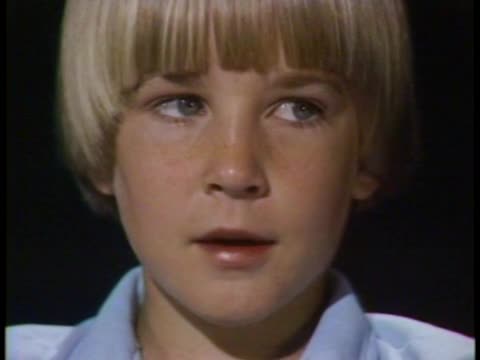
- Transcript
Okay, we're ready to go, okay, it's okay, what, you got to look it, okay, you look at the person who's talking, okay, whoever it is. How do we ask questions, we just ask to each other, okay. Good evening, I'm Susan Codill and this is Voices, a special one-hour discussion with students on racism and education, prejudice and friendship. The students, ages 9 through 12, are in the Dallas Independent School Districts, talented and gifted program. We're the tapes rolling, so we're starting now, and the students were interviewed in two different settings. First, each student answered questions without the others present. The individual interviews were then edited together and shown to the group as a basis for the second interview setting, a group discussion.
What you will see in this program is an edited collage of the individual interviews and the group discussion. Black children and white children, other races, they need to get along, because I think it's stupid living in a nation where people all living together can't get along. I think it's stupid, and I don't think God made this to be separate, I don't think that way. You get to know each other. You get to know what it's like to be, if you're white, what it's like to be black and to be around a black person, and they might think the same thing. You get to know how they feel and how they act and how they react to certain things. If you had all white people, and once I know all black people and the other, I have a lot of white friends.
It wouldn't be as much as fun to have all black friends and it would be white friends. I think it's a real good idea, because we might lose the king when I probably wouldn't be here. If there weren't blacks going to my school, I think it would be not as interesting as it is now. I have about seven friends that are black in my class. You could stay with them all day and not get in the fight with each other. I say if you get on the bus right now, it's half black and half white. You see most of the kids getting along together. They have way different feelings. It's like they're a complete different on the feelings. Yes, I'd have to say that white kids are afraid of the black kids because of their strength and how they show it off.
I would say about half and half white people think they're a lot better than black people. They also talk back to the teachers more than white kids do. A lot more. They're more brave to say something than I would. Every black kid that I know has, I'd have to say, more muscle than I do. The black's new five more. Like they don't settle down. It doesn't work. They work uptight and jibberjabbie. I think most white kids stick with their own color. They really don't want to. Some of you know like to be around white kids. And some of them don't just like to stick with other black kids. It's better friends. They get along better.
But I think it's better to deal with the upfront races because they're going to tell you all their feelings and you can tell them all yours about them. That's what I think. I'd say that more black kids are less intelligent than white kids. More black kids are less intelligent than white kids. The white kids are less intelligent than black kids. What I'm trying to say is that there are more black kids that are less intelligent than there are white kids. And if they come in here, what I do is I just hit them because really talking to them to me doesn't make any sense because they're just going to go ahead and do it to somebody else. And I think that if I do that, they'll remember not to do it again. Well, the black kids are more native. The white kids are more positive. It's wherever you're going to go. There's going to be prejudice. There's something you can't go around you have to go straight through if you don't get by. So if you want to be friends with them, you've got to understand that not to hit them or talk to them bad.
It's like I think most white kids that's my brats and nothing really wouldn't let that bug them. They're just with him. A pair of Josmo was black or white. Yes, treat him as he was any other person of his race. I think we're at the point where we're coming right out of a shell. Like if we were stuck in a shell, we're trying to get out. I think we're like, all we have to do is get our legs out and we're free. But my question basically is, what were all of your reactions to those interviews? What did you think about it? Were you surprised by anything anybody said? Well, my reaction was that I believe everybody showed their true release and what they think and there were some things I disagreed with.
And everything that they said I thought meant to be true. It was true and all the different perspectives that they looked at it. Everything was true. I think everybody showed them what they believed. They said what they thought was right. I did disagree with some things they said. But besides it, I think it was a very good interview. I think what everybody said was their opinion and some things I disagreed with and some things I thought was really right. What I thought. Well, I reacted real good. I think that what the people think, that they think is right, is perfect to them. Sometimes I didn't disagree with the people. Sometimes I did. But that's how it is. I think everybody had a different opinion and if everybody had a different opinion, that's what they thought.
And some things I did disagree on, but that was okay because I liked what I said. Let's talk about some of the things that some of you disagreed with. I remember everybody who had a disagreement. You said there were some things that you disagreed with, Christopher. I just like to know what Charles disagreed on. If you put a black kid in class with white kids and have one tough logic probably, the black kid would probably give up and say, I'm going to do that. I don't know why they just, like I said, they just seem to want to compete and they compete in physical force instead of their brains. I like school. I do my work and I try to get good grades. Some other kids, they just think they shouldn't be going to school. They don't like their teachers. That's why sometimes they don't do their work.
They think he shouldn't be bossing me around. Only my mother, my father should tell me what to do, not any teacher. White teachers expect that behavior out of children, therefore they receive it. And what they really don't want, they don't want it to be known that a black child can be smart. They want them all to be known as dumb. Nobody's smart or anything. I don't know why this is so, but a lot of my class has a lot of boys and most of them are black. They act like they don't care or try to get grades. They act like it matters. Because I think it's a lot harder on a black kid trying to go to school and try to make something out of self, because it'll always be this type of kid that always up there in the middle of them trying to put them down and make them feel a lot bad.
They're making them, which will really distract them and it's working a bit, and he'll pay more attention about being put down and being talked about that it's work, which will really make us grades go down a lot. I'm in TAG and we have this logic. And if we stuck a black in there and we had a real hard logic, the white would stick to it and the black would just give up. He'd say, I can't do it. White would keep on working. And after an hour or so he'd come up with the answer. The black would be sitting here. I gave up, but it's really too hard. I disagree with that. I think he probably will keep on going and stride and probably be with the first ones. He'll finish first if he really put his mind to it.
It also depends on who the person is. Inside, that was going to say too. He really took my answer. What were you going to say? Exactly what he was going to say. I think that if you put anybody together, white or black, and you had a hard logic problem, they wouldn't just give up. They'd keep on going until they get to the end. If they might not get the problem, the teacher might go over and say, I'm right or wrong. I disagree with what Chris said. When he said that, there are more black people that are less intelligent, because I know some white people that are less intelligent than black people. Because I don't think that all black people are dumb. It's kind of sounded like he was saying that all black people were dumb. I agree with you too. I don't envy. I don't envy.
I disagree with Chris too. I think it's about the same level. I wouldn't say it's more black people that are dumb. I wouldn't say it's more white people that are dumb than black people. Did you get a chance, Chris, to fully explain what you meant or did you get edited too briefly? Well, I guess I got edited a little bit too briefly. I wasn't really trying to say that all or most black people were dumb. I wouldn't say that anybody is dumb because dumb is like, you don't have a brain. Everybody I know has a brain. They all know something. They're not qualified as dumb. I'd say I'd have to say at least 60% of my class that I know of is they're not in the tag class. And I'm not trying to point out that they're dumb or anything like that. I'm just saying that I guess they're a little bit less intelligent than I am.
When he just said that, when kids that aren't in tag, they're a little bit less intelligent. Well, when you get in tag, you're smarter in different fields. You might get in tag because you write good poetry or something. You might be in tag because you can be real creative. Because you're not in tag that mean that you're less intelligent. It just means that maybe you're a little bit better than other fields than some people. Can you buy yours? No, that's fine. Before we move to the next issue and not to put you on spot, Christopher, what Chris has said, I've heard other students say too. So it's not original with him, but do you have any reaction to what you've heard so far? Still have the same opinion? Well, like Charles said that I didn't say everybody would give in on a hard logic. It's like if you stuck some normal grade black, you know, he would probably work and he'd work and he'd work and then he'd give up before it's even done.
But you know, tag students like Jeff, he's in tag and he's a black. I mean, he would work on logic until it's true. So I'm not saying everybody. It just depends on the person. Yeah, I think everybody does it like, you know. So it's different at different schools. Is that the consensus here? Yes, I agree. Some of you, some of you in the interviews that we did, did believe that you can kind of generalize a little bit. I've been describing black students and in describing white students and you can make some kinds of generalizations, although you know that some individuals may be accepted. If you accidentally look at somebody in the wrong way, a black person in the wrong way, or accidentally hit them and you do say you're sorry, they act like they don't believe you.
So they want to start a fight and when they do that, they're kind of acting like they can beat you up and they're bigger than you. More black kids go to the office or whatever and then my kids. I don't know why, they just, like I said, they just seem to want to compete. It doesn't bother me to go to a half and a half, or it doesn't bother me, you know, like a 30% white, but you know, like 5% white, I think that's a little bit up there. You know, it's like, it's like where the whites are being bothered. Kids at school, well there are most, like at first, the school I go to was all white and I was the only black there from kindergarten to third grade.
And there was blacks that were coming in and whites that were coming in. But they, it was fight started, you know, cunes, you know, here come the cunes and stuff like that. We don't want black kids. Black kids are probably mostly fighting because I always grew around people that like to fight and stuff like that, watch boxing a lot and think that's the fruit sport. Then he'd like to go around and try to be like that. And I think that if these white children have been hit by black kids, they had a perfect good reason, I think. They have some show off, some black show off, and the class trying to act, you know, real good. And some white kids try to brag, you know. We real show off, especially when substitutes are there.
I think if there is any violence, it's because probably I think if it's a black kid hitting a white kid, it's not really because they just want to do it. It's because they mess with them, edging them up. I think black people have discipline problem because like I said, they do live in kind of hard areas. It's real rough for them. And this is what I've heard. A lot of them don't have that much money. So the area around them is rougher. So they're more aware of if somebody is going to jump out at them or insult them that they're going to want to fight back. If the white kids are going to a black school, I think that they should not try to judge the black kids by their color.
They should judge them by their characteristic. If they're a nice person, play with them, you know. If they're not snotty or anything, I wouldn't go by their color. And they shouldn't go in with the prejudice attitude. For a black child who's going into a white school, they should be on guard and aware. And they shouldn't go in with the prejudice attitude unless they've had previous experiences, maybe they know what that school is like. But they shouldn't go in just right there with talent until something happens. If I could stand up and say what I say to the blacks, you know, I would say what I think, what you'll be. You know, I want to work and I want to do good in education. If you don't want to do good in education, it's fun with me. It's up to you what you want to do. And one thing that a lot of people in Dallas believe is that black students are more disruptive than white students. What do you think about that?
Well, I want to say it's really true, but I want to say it's false. That's what it is. Sometimes they reporters like to do that. It might be true, it might not be true. I don't really know because I really don't know. And my class is about half and half. A lot of the white kids act up and a lot of the white kids act up. Well, I think before he probably didn't do a lot of survey on, he probably went to look at one class, one school, and from his survey, he took it from it and said, I probably didn't have a school to find out what it was about. Yeah, we just didn't take enough time to study everything. When people say things like black kids are covered more in class, things like that, is that an example of prejudice or racism? What's prejudice? I think the prejudice is that you hate all of one race. You don't have any friends of that race. You don't want any friends of that race.
You just hate all of the friends of that race. Like if, say, for example, if I was prejudice of the black people, I wouldn't have any friends of the black people. I wouldn't like, I wouldn't want any friends of the black people. And I just, I would hate all black people. But I'm not prejudice and I have a lot of friends of black people. I disagree a little bit there. I think prejudice is just disliking a certain group of people or because of their color or where they live or for any number of reasons. But being prejudice is not being friends with somebody for a different, for them being different in some way. Well, I think prejudice comes mostly in the home around your folks, yeah. When your parents, like, let's say, you had a black or white person talking about what is a person of another color did, then you always listen to them. And you say, well, my mom's never gone on what she'd say and forget about going out and see her. I think that's what prejudice mostly comes from hearing it from your family and most of all.
Your friends, or you get it, you go along with other people. Yeah, I agree. Race prejudice comes from home, I think. And when I say, home, I didn't have to mean just the parents, but older sisters, bigger brothers. I think prejudice is blind. Once you see what I'm saying is just like, if you maybe close your eyes and lived with your eyes closed and became friends with everybody else, you could find that your friends could be black and white. You wouldn't see their color. You just hear what they have to say and how friendly they are and stuff like that. And so the color wouldn't interfere. Yeah, that's good. In your own lives, have you had any experiences with race prejudice? Yes. Obviously, I think I have a lot of, sometimes at school. I don't see it too much, but I have been like that. You see black or white person coming to somebody.
So I don't like you because of your color. Something like that. And DNA is still trying to edge you up and make you get in trouble from then on. Okay, but you think there's some at school, you said, right? Okay, okay, whatever. When I was in kindergarten, I had several incidents to happen because I was the only black child there. I asked this white girl to play hand stacks with me. She said, no, because some of my black might wrap off on her. Every time when I go to work for my mother, white kids try to beat me up because I didn't do anything to them. I was just a small kid in the gardener, but just because of my color, they would try to beat up on me. So my mother would have to be there early to keep them from meddling me. And I've had race problems with teachers. One time I was in math and this white teacher, she was helping another white kid. So I raised my hair and she goes, can't you say I'm helping Jared? I've had several races, races, experiences with kids and teachers.
What about you, Chris? I can't say that I haven't really had something like that bad happen to me or seen it ever happen to anybody else. Really, the closest thing that I'd say that I've ever seen to that, it wasn't really prejudice. The teacher was helping somebody else or doing something else and this other child came up and asked her for something and she might say, well, I don't become Wonder Woman overnight. Do you think you've ever had a deal with prejudice against white people? No. I haven't, I haven't ever had prejudice against. I haven't ever seen prejudice at school and I most definitely haven't seen it at home because my family doesn't believe in that. They don't think it's right. What about you, Chris? I'm with Chris. You know, I haven't seen it at any at school except for back to her.
I've had about three or four where I'd be raising my hand. She said, can't you see I'm helping so and so. And I think that she's trying to get the point that you got to look that I'm helping so many or she's in a bad mood. Yes, were you talking about adult child prejudice here? I mean sort of more like racial prejudice, like prejudice against black people or prejudice against white people. I haven't seen any at home or at school. Does never, never any like name calling? Yes, sometimes. Well, tell me about it. I don't like, if a person beat a person in soccer, 1-0, the guy may call him names just, you know, let's say it was white against black and the white beat the black 1-0. The black would start calling him his name because he won and maybe the white showing off or something. As a matter of fact, since you brought that up, I have seen one act of prejudice.
We were playing a game and this other team beat this other team and the black person on that team hit a white person because they lost. And that white person stuck back up and he hit him back and then they got into a fight and became a pretty big deal. And I don't know why the black person hit the white person because they lost the game. Maybe they just need somebody to hit on, but you know, why couldn't they hit on a black person or why couldn't they just hold it? I remember in the third. Okay, just a minute. I want to get to everybody. Sean's going to get a man to fight. Well, first jet. What's going to jet first? Instances in your life where you've seen examples of prejudice against white or black? Yeah, I was in a library class and she said if you pull this thing out the projector, something will come out.
You know, he didn't understand it. So I said, I'll go with you. She heard me, but she didn't say anything. I went up to the book room where they had the projector. I took it out and I brought it, you know, come back to the room and I handed it to Matthew. And you know, I did like that. He almost dropped it. And she said, I see you throwing that. I said in throw. He said, that was almost $500 and I said, I didn't know that. Then she said, I knew I shouldn't have trusted you. That's why I picked Matthew. And I said, well, I just walked away. Is it that Matthew's wide? And so you think that she was referring to color? She might have been because she's done that to me a couple of times. I asked to bring books, you know, to the rooms and she would tell me, no, she'd just say no. She would just like that. And I'd give it to Chris or somebody else. She wouldn't let me do it a lot of times. Okay. Well, most of the incidents that have happened to me have been in the hall, mostly.
Like, just going to your locker. There's usually a big crowd out in the hall in first period. So, you have to kind of squint around people. Well, if you accidentally hit a black person who's talking to somebody else and you say you're sorry, they take it as you're offending them. But if a black person hits another black person by accident, they don't say they're sorry, but the black person that they hit, it doesn't matter to them. It only mostly happens when a white person hits the black person by accident or on purpose. I mean, I didn't do it on purpose. I do it by accident. In your experience in school, how hard is it for black and white students to be friends together? Well, I think it's very easy for black and white people to be friends together. I think they get on pretty well, have a good time. And if most people, I wouldn't think they pray to this.
And if they are, they probably would hold it back and make it friends with a different color they probably do for really easily. Yeah, I mean, you can just say, you know, I like you a lot because I want to be your friend. You just sit down, you know, you talk, have a nice conversation. You can be real good friends. I don't think it's really hard. You just have to take the time and you'll do it just perfect. Having? I think that black and white kids could get along. But at my school, I sometimes think that it's the white kids that are talking more prejudice at home because at my school, there are several black kids that try to be the white kids' friends. And they won't let them. I know, I know two girls that the only reason they let them be their friends is to carry their trays, they tell them, pick up my books from me, go get my milk, go get my cake and lunch, they use them. And the reason I think that it's more white kids that are talking prejudice in the home because I've seen more black kids at my school to try to be white kids' friends.
I think it, you probably were right, it was kind of most in front of home. But I think it's very black here in your class, try to make friends with the white kids. Some will give in, then they'll affect on us and all the rest of them, try to give in too. It's just, it's not that many, it's about five or six that I know in my class. Okay, if you tell your friends to just try harder, maybe they'll probably get along before the school years down. I mean, next year. Some people that, that I have, have interviewed who are community leaders in the minority communities and talents have told me that, that racism today is a little different than it was 10 or 15 years ago, maybe, that it used to be a little bit more upfront in the old days. Somebody would really talk like they're a member of a clan. But today, it's that that racism on a part of white people is more subtle, indirect and sometimes hypocritical. I think that racism now is more sophisticated. About 10 or 15 years ago, when the hat segregation. Okay, that was racism because they were trying to separate the races.
But now it's more sophisticated and like in jobs and salaries, different things. And it's more judging by color. That's the way it's always been. But now it's more sophisticated racism. Now you have people that are in the clan, you don't have that many that are going to come up front and say it. You're going to have a lot of people that are going to pretend like they're not races, but they're going to go maybe to their home, the white friends and say that they are, but they won't say it around another black person. Okay, I've heard that observation made a lot. And I've also heard another observation from some white people who feel like all the civil rights movements and all the civil rights legislation and different laws that we've gone too far in our society. And now black people have too many privileges. Oh, I think we should go even farther because like Jeff said before, we're just beginning to get real good friends at all the races.
And if we've gone this far, I think we can go farther. And so that the people who are in the clans can realize that black people or Mexican people or Chinese or whoever aren't bad, they're just like everybody else. It's just a different custom. That's so clear. They might eat different or they talk different or the color, but there's really no difference. I think that depends on the people because you're going to have some people that are never going to change. They don't want to change. If you want to go further, it depends on the character of the people because like I said, this is going to be some people that are never changed. Well, it seems like there's more trouble starting because some of the white people don't want their white children best in the black schools.
Well, when I was going on the bus, you know, about to go on the bus, I said, you know, what school are going to be like if I'm gone to a far school? And my go there, I would say that I'd rather be with like half and half instead of like 85% black, I'd like to be 50 to 50. There are going, I think that the white people would treat the poor black people a little bit worse. Maybe I think because of the race and maybe because of the income like they think maybe because they're poor and nothing but trash and also because of the race. Out of all the black children, white children that I know, all the white children living two story houses with swimming pools and all the black children living apartments. If they're real poor, they don't think as well. I don't understand that either, but they just they don't think as well as a real rich person.
Some kids live in big houses, some living little like some people live in the projects, some people live in big old mansions. There's no difference. You might not have nothing money to buy a mansion. This might not be just because they are black, but a lot of black people are poor. And a lot of them aren't. I guess that's just their parents or that there are more black people who are poor than there are black people that are rich. Almost all the white people I know right now are pretty, they aren't poor, they're about medium. So they feel good about how they live and how they act. Maybe they were cut off shirts or they were coming with worn down sandals or coming with shorts or they're not combed or something that just doesn't belong in the school.
The white kids will be their friends, but what they'll do, they'll use them when they're around, take my tray, pick up my books, particular things like that to do things for them to be either like to be their butler or something. Okay, what does all of this and race relations of the things that we're talking about? What does it have to do with busing? What do you think about busing? Well, to mix them out, to mix the box and white and get what they know and get their feelings. I agree with Chris, but I think busing is the main reason to see how white and black people get along and see if they get along all right and then the fruits of their beard will work together. That's what I think the main reason in busing is just to make sure everybody, like kids like us grow up and be able to get along with people of different races and try to be better people and try to make more friends with them.
I don't think that busing is for black kids is fair because black kids have to be bused in a white school, but the white kids aren't being bused in a black school. I don't think that's fair. I think there needs to be two-way bus and there needs to be black kids busing to a white school and white kids busing to a black school. But the way it is right now is not fair. I just have to agree with Chris right now. If I used to be a sister school, there's a lot of white kids going to this black school about eight o'clock. You can see about five or six buses pulling up with a bunch of white kids going to this black school. And you'll see some same places. I'm just hosting a round of K through three. I think statistically that Ernie is correct overall that a much higher percentage of black kids ride the bus than white kids.
But there are also arguments on the other side of the fence on the white side of the fence. Have you ever heard any of the white kids talking about the hassle of being bused? Yes, I guess. The white kids in my school, they don't like busing because after this school year we're all going to be split up. We're all going to be going to different schools. I'm thinking why can't the people in one area go to just one school and then go to another school in a higher grade level in that same area. So that way that those people can always be with each other and then you don't make friends real good friends. And then you split up and never see each other again. Like Mrs. Clapper said, you're going out of your comfort zone. I think that's really good. And growing up you get to meet more people. And you're going to have to do that a lot of times when we're in different places. A lot of times when you grow up.
Yes, but when you go and you make new friends you probably make about the same number that you already had when they split up. And because those people that go to a different school you'd make more friends to take up their place. And so then why can't you just have those friends just keep on going? What's your opinion, Chris? I was thinking that Chris that when it was a one-on-one interview I said something about a judge. Well I asked my dad what did the judge say? And he said, why can't the people that want to be bust be bust? And why can't the people that don't want to be bust, not be bust and go to the neighborhood school? I don't think it would be fair for people to choose which school they would want to go to because I think that it would turn back to women race schools. And whites would go with whites, blacks would go with blacks. And it would turn back into segregation. And I don't think the segregation is quality education. I agree. Same here.
You didn't interrupt you. What? You can go here. OK, thank you. If busing can cause a lot of trouble, which you've all sort of acknowledged that it can be inconvenient in some cases or maybe unfair in other cases, it sort of leads up to a question. How important is it really for black and white children to go to school together? Well, I think it's a lot important because the way you get to go and learn about one side and how they feel. And let's say it's a prejudice person. There was a black or white and go to a black or white school, which there was school. With us, there was really all the same black kids went into a school. They were so white. For example, he was really prejudiced and here go around trying to make trouble. And then he was going to want class, trying to make trouble. And everybody knew him. And more he tried to make trouble. The more people tried to come friends with him. I think busing is the main reason to try to get people that's prejudiced and stop being prejudiced and look at the people for the good side instead of the color of racism or something like that.
Yes. Well, if busing wasn't here, we wouldn't have black people and white people going to the same school. We'd have white people going to one school and black people going to the other school. And it'd be sort of like a wall. And then when they decided to bring busing, let's say together, or for black people to meet white people, it would be much harder. It'd be like starting all over again. And so I'm glad that busing is here. So then you can be with black people, understand black people, talk to black people and be friends with black people. Well, Chris, since you said about losing your friends, why are you so... Didn't you lose a lot of friends at first when you won bus? How do you feel about that day in the same way? Yeah, I guess. But, you know, the friends maybe like, cut a hawkman or Rodney that live way across town, you know, I never get to see them.
You know, because they live way across town and the only time I really get to see them and talk to them, the friends with them, it's when we go to school and when we're bussed. And that's one good reason I like busing. But then I don't like busing because then we're all going to be split up. Well, go ahead, go ahead. What do you mean when you say I'm trying to understand black people? Well, it's, you know, understand their customs or, you know, what they feel. What kind of customs? Well, maybe, you know, maybe how they play after school or what they do, you know, just get to know them a lot better. Well, Chris, how do you feel about black people and white people going to school together? Well, it really doesn't bother me, but I just had an idea. If you put blacks, you know, mixed blacks and white everywhere and go to the neighborhood school, then you'd have the same thing. You'd have the mix, you'd have the neighborhood school.
What's your point? That, that, that if you mixed blacks and white, you know, housing, you know, you just mixed them all up. And then the neighborhood school, you'd put the blacks in the whites in the neighborhood school. And you wouldn't have busing, but you'd be going to the neighborhood school. If, you know, busing is, a lot of people think busing is a hassle, then why did they segregate the city so much? This day. Well, just everybody. Oh, well, the people who built the city or whoever. What do you think about the housing pattern situation? Well, I think that everybody, at least to be mixed neighborhoods, where everybody could get along. I mean, not just in school, but adults too. And housing, I think that all neighborhoods need to be mixed, not just one race. Well, yeah, I agree. I agree. I agree. I agree. I agree. I agree. I agree. I agree. I agree. I agree.
I agree. I agree. I not blame aoutgraged immigration like that because people... people... people who are true people and who are rich people. And the rich people, uh... some... most time, most of the white people in general, are black. And I think the main reason why it's like that because the rich folks want to get out for a place, like Кстати Camp or Fuji for themselves, The people that are over there and one bench is the poor people. I think the most reason why it's a segregation cause different money races and stuff like that. One area have more money. I think you go in a place where it's in between people not poor, not rich. You'll find a lot of mixed people in their black and white. I agree with Erie and Charles. It's pretty maxed. The only time that I get to see black people is when I go to school. I don't have any black people in my neighborhood or none at least that I've seen.
The only time I get to play with black people is at school. The only time I get to talk to my friends that are black people are at school or on the telephone or something like this. Not that I know there aren't any black kids surrounding my neighborhood. We're the only black family and it's an all white neighborhood. Sometimes in our neighborhood it's better. Sometimes like Ernst said, you try to get people mixed up blacks and whites in a neighborhood. Sometimes it's hard because some people it might be a real rich neighborhood with big houses and stuff like that. Some people can't afford houses like that. So it might not be mixed like Chris said. Most everybody on this black is white. There's not many black people that he's seen. Sometimes black people can't afford big houses. Sometimes white people can't afford big houses.
So that's why sometimes it's not mixed is that people want it to be. Maybe that causes prejudice. Maybe since you don't get to see black people, anything that since black people aren't in your neighborhood, when you're in a rich neighborhood let's say, all black people are poor. That's why they're different. You use that as a point. As a point of why they're different from you. And so then maybe that is one reason that cuts prejudice. A few minutes ago you asked Chris what he meant about different ways of whites learning about blacks. Did you have something behind the question? When he said to understand in their customs, I thought that black people are all the same. But I thought that when he said customs and things, well customs are like eating the chopsticks and things. I mean black people eat. I mean just like why people do with forks and knives and things. And I want to know what he meant by trying to understand black people and their customs. Because they're no different. It's just the color.
But that's no reason to judge them. And I don't think that black people have any different customs. When they go out to play after school. And I guess all black people play just like why people do. I don't think there's any difference. I think it might be a little difference. I think black people grow up around real hard neighborhoods. They play a lot of rough with white people. They're rich neighborhood. They play like tag or something like that. When they get around a black kid and they see how rough and how good he played. But I get hurt in different kinds of ways. They might jump to conclusions and say like Chris said. I know a lot of times at school we play football. He wants to try to understand how we play. And then how John and Jason they'll play. Well, what I really meant by customs.
I guess customs wasn't really the word I meant. But you know, I don't really know this as a fact. But you might maybe sing different songs than we do. Maybe celebrate different things. But you know, I don't know all this stuff for a fact. What about the differences between black and white people? I don't think it's really not a difference between white and black, except for the color. That's all. Well, black people celebrate Juneteenth in Texas, for example. And not a whole lot of white folks do. What was that I didn't understand that? Juneteenth. It's a... Juneteenth. Juneteenth, isn't it? It's a four. Independence, that Texans, that Texans. And you guys love us, right?
And the end of slavery. Well, the only thing I think there's a difference is skin color. I don't think that's any risk to judge people by the color. Because when you release it down, think about it hard. It's stupid and ignorant. I mean, there's no purpose for it. Okay. We're just about out of time. This is your chance if you'd like to take it to give a message to the viewers of public television on these issues. Anything that you'd like. And we will start. We'll go around this time. And we're going to start with Sean. Oh, no. Okay. I think that everybody should be treated equal. The personalities might be the same. They might act a different way. But all around, everybody's a human being. And you shouldn't treat anybody different because of their color or where they live. So... Just, you know... If you, you know...
Well, that's all in this area. Who do you think needs to shape up more? White people or black people? Well, both. But just some people. As I said before, we've gone a long way. And I think we've done good. Mm-hmm. That's about sums it up. You know, you can't say much after what Sean said, because I think you shouldn't go around judging people by their color or anything like that. You should just judge them by their personality or how they, you know, feel. But, you know, you shouldn't just go around here. I hate you because you're black. Well, I hate you because you're white. You really don't make much of a difference. Who needs to shape up the most? White people, black people, children or adults? Mm-hmm. You're really... I think, you know, some black people don't even think about that. Some white people don't either. I don't really think that one race to shape up one another. I think that everybody should just... Some people should just, you know, get to the point and say, let's work at this and we'll do a little better.
Let me ask you one other quick thing. Who do you think has a better handle on this? Children or adults? I think, probably, I don't know. I don't know. I think probably adults because they know, they probably know more. And they should say, okay, you're going to school now. It's going to be, might be some black people then, some white people there. But, you know, don't make fun of anybody. You know, you can make friends today and you can play with them, but don't judge them by the color and thing like that. I think adults do. Pardon? I tell you what to expect. Mm-hmm. You sound wise. Okay. Chris. Okay, well, what Sean just said. My parents started out, I think, they just sort of kept a secret. Because they didn't tell me anything about if I was going to be going with blacks or anything. And I think, you know, every person has the same, you know, they, if they were, if they really said what they wanted to say, they would mostly say the same thing.
And I think, really, that, you know, busing is sort of good and sort of bad because busing is, you get to know other people's feelings and busing is bad because you can go to that neighborhood school and really not even bother with busing. Well, I think you shouldn't be prejudiced on color, whatever you've prejudiced about. I think, like some people be prejudiced about people that steal. I think people that steal probably, uh, steal because they have to, not really because they have to because of the lacking stuff. I say about 60% of the time, there'll be poor people who will find stealing. Then the other 40% you might find some rich people that might even be stealing. And then, uh, I think, uh, prejudice, uh, it might still be here, till in a time or whatever. But like some people say, uh, give one race too many privilege out.
They may be just beginning to show a deal, a little race a lot more until it's time for that. And what's your opinion on who has their act together for children or adults? I don't say both, but I think now that, uh, who could stop prejudiced the most of the children because the adults most of, uh, now, uh, didn't know nothing about both bussing and, uh, they thought about, uh, probably the way they only kept their opinion about the way they was and went in their childhood, and then really go to see about, uh, uh, now working together with different people in different races. Like, children are like the bussing, which is a good thing for children to learn how to do, uh, uh, work with other people with a lot of, uh, the races like black president working with a Mexican white, uh, whatever color they are. And, uh, I think that's about it. Good to meet you.
Yes. Okay. I think when the whites first found the blacks, um, on Africa, and they brought them back as slaves, did a wall was built, a big wall, and one side was the blacks, one side was the whites, and that the whites would be using the blacks, and they wouldn't, um, have any feelings with the blacks or anything like that. And, and then when slavery was stopped, it was like the wall was broken, and everyone got to know each other, and they, you know, they got to be friends, and now, you know, it's, it's really gotten ahead, and we're all good friends now. I'd say that, you know, the black people and the white people are now, and say at least, um, 95% have become friends. Well, I would hope that in the future, that people would try not to judge people by their color. I really don't think that racism will ever completely stop. Um, if a black child is trying to get a white friend,
well, it's hard to because there are up front races, and there are kids that will deny it, that they are racists. So that kind of makes, that kind of makes us kind of hard. But I would hope that in the future, that people would try to stop judging people by their color because it's stupid and it's ignorant, and I don't think it's right. And I, like I said before, I don't think it will completely stop because you have people that will never change. Yeah, I agree to not disagree. I think racism will... Dear, we're done. We're done to go high. No, wait, no, we've got to sit here. Unless... I don't remember anything else. Okay, go ahead. No, let's just, let's just talk here for a minute while the camera's... Okay, let's get a mic, sir. No, you got it, you got it? We'll see you on TV. I did it. Hi, Mom. Hi, Mom.
And I see that's about you raising stuff like that. Okay. Are you? Thank you. Okay, fast. 100%. Of course.
- Program
- Kids and Race
- Producing Organization
- KERA
- Contributing Organization
- KERA (Dallas, Texas)
- AAPB ID
- cpb-aacip-16eee9ff026
If you have more information about this item than what is given here, or if you have concerns about this record, we want to know! Contact us, indicating the AAPB ID (cpb-aacip-16eee9ff026).
- Description
- Program Description
- Susan Caudale host of Voices, surrounded by multi cultural students from the DISD aged 9 -12; discuss topics ranging from racism, prejudice, friendship, and education.
- Created Date
- 1981-09-15
- Asset type
- Program
- Genres
- Talk Show
- Documentary
- Topics
- Education
- Race and Ethnicity
- Subjects
- Racism; Children and racism
- Media type
- Moving Image
- Duration
- 00:59:33.995
- Credits
-
-
Associate Producer:
Kaufman, Dianne
Director: Martin, Ginny
Interviewee: Stull, Chris
Interviewee: Hickman, Jeff
Interviewee: Joe, Earnie
Interviewee: Deuillet, Chris
Interviewee: Moore, Charles
Moderator: Caudill, Susan
Producer: Caudill, Susan
Producing Organization: KERA
- AAPB Contributor Holdings
-
KERA
Identifier: cpb-aacip-f12282d89e5 (Filename)
Format: 1 inch videotape: SMPTE Type C
If you have a copy of this asset and would like us to add it to our catalog, please contact us.
- Citations
- Chicago: “Kids and Race,” 1981-09-15, KERA, American Archive of Public Broadcasting (GBH and the Library of Congress), Boston, MA and Washington, DC, accessed September 26, 2026, http://americanarchive.org/catalog/cpb-aacip-16eee9ff026.
- MLA: “Kids and Race.” 1981-09-15. KERA, American Archive of Public Broadcasting (GBH and the Library of Congress), Boston, MA and Washington, DC. Web. September 26, 2026. <http://americanarchive.org/catalog/cpb-aacip-16eee9ff026>.
- APA: Kids and Race. Boston, MA: KERA, American Archive of Public Broadcasting (GBH and the Library of Congress), Boston, MA and Washington, DC. Retrieved from http://americanarchive.org/catalog/cpb-aacip-16eee9ff026