Rescue of a River
- Transcript
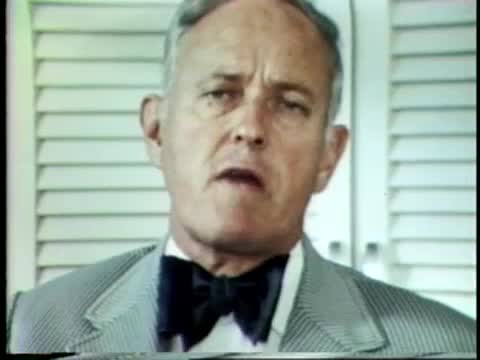
[Man] The quality of life in the Willamette River is good now. The real question is what is the quality of life going to be like on the Willamette River, because if nature is allowed to take its course, nature being the development of urban life in this area, the Willamette River could turn out to be just like some of the urbanized rivers of the East Coast. Contaminated by people and by everything that people produce. [Man 2] This is the last chance, the last frontier. Because it's all going to be gone unless in this decade of the 70s and early in the 70s we move we're trying to move in this Project Foresight. Wall to wall people will certainly come and the ?loss? is still more of a burden on the floor of the Willamette Valley. Project Foresight will lead to coordinated action toward preservation of open space and protection of our land in the valley from urban sprawl. The idea of asking the people to choose a future from among these alternatives is not drastic or new in any word or any sense at all. [music] [Host] As early as they 1920s,
[Host] Long before ecology became a fashionable cause, the people of Oregon adopted laws to conserve the river flowing through their historic land of milk and honey. In the 1960's they passed some of the nation's toughest antipollution measures to stop the spoilage of the Willamette River and began development of a string of river greenway parks. Today, Oregonians are talking about ways to protect the valley from overpopulation and ultimate destruction--all major turning points in the rescue of a river. [Man] The Willamette River is the largest river that is all contained in a single state. Largest, in terms, too, of the the water volume, and largest certainly in the Pacific Northwest.
In terms of its being the channel around which industry in the state of Oregon is clustered. [Host] More than 200 miles north of its wild beginnings in the mountains, the Willamette becomes a major industrial river at Portland. Here the Willamette joins the Columbia on its westward surge to the Pacific Ocean. The waterways together established Portland as a major port and commercial center. Thriving from the wealth of the land at the end of the Oregon Trail. [Music] [Man] There was a fork in the trail a thousand miles to the east of here, approximately, and they said you can go to the Oregon Territory or you can go down
and dig gold in California, and even at the height of the Gold Rush in California. Quite a few people took the road to the Willamette Valley because they heard that it was a magnificent place to live. It was fertile land and a gentle climate and a place where they could be happy and prosperous. So, that's what it is. It was portrayed to them by people who had gone back as a garden spot, and there was lots of room and lots of land, and great forests, and the trapping was good. So when you stack up an incentive to go someplace against gold, you must have a strong compulsion to go away from the gold when you reach the fork in the road and it tells you something I think about the pioneers who came here. About their depth of feeling about putting their roots down in the soil. That they would assume maybe that being rich and striking gold to come here where
they would strike a different kind of richness which would be a richness of living and richness of a wholesome family life and a mild prosperity but good everyday living in a beautiful place. [Host] Oregon's Willamette Valley, [music] [Host] 75 miles wide lies between two mountain ranges, the Cascades to the east and
and the Coast Range to the west. Evergreen forests, the state's richest natural resource, covers 60 percent of the basin's land. [Music] The rain washed The valley with its deep fertile soil is one of the nation's most productive agricultural areas.
The valley's products find their way to places around the world. [machinery] One goal of Project Foresight is to further public demand to save these rich lands from urban sprawl and freeways. [music] The river's major source is a volcanic lake, Waldo Lake.
It lies between Cascade peaks more than a mile above the Valley floor. The pure waters of the lake are fed by underwater springs, by rain, and by heavy winter snows. [Music] Forest industries provide jobs for nearly 40 percent of the people who work in Oregon
manufacturing. Wealth from the forest, trees two hundred feet tall, logs 8 feet in diameter feed Willamette Valley's saw mills. [Industrial sounds] From one medium sized mill, ten railroad cars and ten semi trailer Trucks move out each day with finished products for use around the globe. Decking for a shrimp boat in Florida, heavy lumber for a bridge in Minnesota, beams for a building in Japan, plywood for a
family home in Arizona. [factory noises] The integrated forest products industry, the state's primary industry, increasingly is shifting to the manufacture of pulp, paper, and paper board. While some plants turn logs into wood chips for the paper making process, others use the waste from mills and logging operation. Paper mills use and and discharge back into the Willamette River millions of gallons of water daily. Chemicals in the effluent have been a major pollution source.
[Man] That is why the Willamette was so heavily abused, was through the budding of a forest products industry which was the largest in any state in United States, and also was one of the most soiling. [Music] [Host] A million and a half people, 70% of Oregon's population, live in the Willamette Valley. Freeways have blocked people from the river in the heart of Portland. Conservation-minded people are demanding that once-spoiled areas be turned into riverside parks and esplanades. More than 1,500 ships arrive each year in Portland Harbor to pick up paper, logs, lumber, wheat and other products from the hinter land.
and to deliver cars and other goods imported from overseas. [Music] The Willamette It had been going the way of the Potomac, the Hudson, and the Cuyahoga, and countless others of the nation's waterways man had used as easy ways to dispose of human and industrial waste. The Willamette became a river where salmon and other game fish died; where people no longer dared to swim. [Man] The people started showing really official concerns. They started an organization to clean up the river in 1927. Then in 1938 they had the legislature pass a bill for something known as a Sanitary Authority--a statewide organization that primarily would
devote itself to cleaning up this river. I mean just like sitting by the bed of a friend who was sick, it was such a concern. It's not fancy concern, but concern in the hearts and souls of people in Oregon that this river will sit like a dear friend will sit. And that's why I think we did things in an early way that a lot of other states haven't done. [Host] Oregon's pulp and paper mills have spent more than 50 million dollars to install chemical recovery and waste treatment facilities to meet rigid anti-pollution laws. Enlightened manufacturers discovered that meeting standards was by far their easiest and least expensive option. An older mill, Publishers Paper Company at Oregon City, spent 20 million dollars to develop a waste recovery system with holding ponds where aerators cleanse the water before it's returned to the river. The new American Can Company plant at Halsey, 100 miles south, used
more than 10 percent of its 40 million dollar construction costs substantially to reduce air and water pollution. [Man] And the city is saying the same thing. So now we went from what we said after World War I should only be rudimentary treatment, we went to secondary treatment of the city's sewage. Again this matter of the latent feeling that we had to do the right thing toward our great friend we had made so ill, the Willamette River. [Host] Towns and cities, too, help to make the clean up of the Willamette one of the major environmental success stories of the nation. The city of Cottage Grove on the coast fork of the river became the first community to construct a tertiary system--a system which filtrates the water through sand and charcoal, making it 90 percent pure before being released into the river.
The citizen action groups in the city of 6,500 supported expansion of their sewage plant. A bond issue for its construction was passed by a majority of five to one. [Man] And so finally we were rewarded when after some 40 years of seeing this river posted against swimming by our citizens, the health officers all along it on both sides and the state itself said 'here is a river, finally, that is safe for swimming' and to a lot of people, this man here is your old friend again. [Music] Oregonians watch their river for pollution, [music] Number one river watcher had been L.B. Day, a director of Oregon's Department of
Environmental Quality. [Man 2] Here, Russ, because of the perfect weather conditions, we're seeing what appears to me to be a discharge we aren't aware of and I'd like to know more about it and have you look into it so that we know what is coming from that and to my knowledge, I know of no authority for a discharge in that area. At least I want you to find out what it is. It could just be cooling water and it could be a number of other things. Here is a lot of debris that has just been pushed over the side of the bank. Here for the first time in history salmon. I cared about conservation. We didn't get firemen here in Oregon,
Just like two or three years ago. they've had conservation on their minds for 50 years. The first water pollution laws actually were, the first one was passed in 1909. Another thing about Oregon is we believe in citizens' government. We are heavily involved in citizens' government. They take a great interest as to what's happening. So I think that's the main combination. Plus the fact that Governor McCall has just been a super individual why this thing all works. We have a sound top notch a leader that understands the problem, goes after it, and insists that we get the job done. [McCall] I think that our concern in Oregon for the matter of the environment borders almost on legend across this country. We created the first state agency in the nation to control water quality. We adopted the first bottle bill. We led the nation in achieving federal recognition of state water discharge limits, perhaps the only state that has that joint agreement with the federal government now. And the rest of our environmental achievements goes on.
[Music] [Host] A major turning point in the rescue of a river came in 1966. A group of conservationists led by the late Professor Carl Armsbank urged that the Willamette's banks be preserved as much as possible in their wilderness state as a green way for people to enjoy the legislative history of the Willamette's rescue began that same year, in 1966, when two conservationists opposed each other for governor. Democrat Robert Straub promptly endorsed the Greenway concept. Republican Tom McCall concurred within hours. An Oregon newspaper called the proposal a dream too silly for politics. The 1967 legislature passed Governor McCall's plan to create the Willamette River Greenway and appropriated the first funds to acquire land for a string of parks extending 200 miles through the heartland of Oregon. Cleaning the river and developing
parks along its banks do not tell the final story of the Willamette. The people problem persists. Forecasters predict another million will live in the valley within 30 years. The Willamette Valley Environmental Protection and Development Planning Council has commissioned a report known as Project Foresight. It is used in town hall meetings to alert citizens to the dangers of massive urban sprawl and suggest other solutions like cluster housing and mass transit systems. [McCall] Project Foresight is not planning and it is not zoning. It is designed only It is designed only to create, at great difficulty, a workable process that does honor to the right of people to enlist themselves as the decision maker as to what this Valley will ultimately be it. [Man] One of the very real problems you have in contemporary society is the conflict between the long term good of the public as a whole, society as a whole, and the immediate
interests, which are not necessarily illegitimate, of the people who are directly involved with the bank of the river. The question is entirely one of acquiring land or protecting land on the banks of the river. And how do you go about it? [McCall?] This is an enormous and a challenging project in its concept and the odds, quite frankly are not on our side. The word "planet" even here in environment-conscious Oregon still raises hackles on a lot of people. The political graveyards are full of former office holders who stake their futures on zoning and planning and law. [Man] The very real problem along this area is that because of its attractiveness, it also has incredible potential value for real estate development and, not unreasonably, there are people that have dollar signs dancing in front of their eyes. In fact, a great many dollar signs dancing in front of their eyes. [McCall?] Our goal, frankly is to stimulate public awareness of the problems and decisions in planning the growth and
development of the Valley for the next three decades. Then we want to focus that attention and that awareness and concern on the 1973 session of the legislature. From the Legislative Assembly we hope for a package of laws and resolutions that will expedite the decisions that must be made to save the Valley and ultimately every area of the state. [Man] I think it's one of the I think it is probably the greatest opportunity any section of the country has ever had to demonstrate how they can preserve the balance between human development and the natural quality of the area which attracted people there in the first place. [music] [Music] [McCall] If we can only get through some periods of belt tightening while I'm governor.
Forget about adding smokestacks. Forget about adding jobs and maybe we won't have as much bread on our tables, so to speak, right now. But if you want industry, you're going to have so much green industry that it's going to be lined up in a long queue waiting to get into Oregon because we'll have the things that enlightened industry wants for its workers and for its people when everybody else has destroyed them. So it's a wise economic policy in the long run to keep what you've got in the sense of your natural endowments. [music] [music]
- Program
- Rescue of a River
- Producing Organization
- Oregon Public Broadcasting
- Contributing Organization
- Oregon Public Broadcasting (Portland, Oregon)
- AAPB ID
- cpb-aacip/153-59q2c4kt
- Public Broadcasting Service Program NOLA
- TRNP 000001
If you have more information about this item than what is given here, or if you have concerns about this record, we want to know! Contact us, indicating the AAPB ID (cpb-aacip/153-59q2c4kt).
- Description
- Program Description
- This documentary looks at the famous efforts to clean up the Willamette River, and the introduction of Project Foresight to preserve the environment. Panoramic views of the river are juxtaposed alongside an audio narrative of its history and commentary from then-Governor Tom McCall.
- Broadcast Date
- 1973-06-26
- Asset type
- Program
- Genres
- Documentary
- Topics
- History
- Environment
- Rights
- 1973 Oregon Educational and Public Broadcasting Service
- Media type
- Moving Image
- Duration
- 00:28:20
- Credits
-
-
Director:
McBride, Robert
Editor: Hamerow, Eleanor
Executive Producer: Roberts, Luke
Narrator: Peccio, Carmen
Producing Organization: Oregon Public Broadcasting
Writer: Stein, Bob
- AAPB Contributor Holdings
-
Oregon Public Broadcasting (OPB)
Identifier: OPB_RescueofaRiver_113255 (OPB Archive)
Format: Digital Betacam
Generation: Master
Duration: 00:30:00:00?
If you have a copy of this asset and would like us to add it to our catalog, please contact us.
- Citations
- Chicago: “Rescue of a River,” 1973-06-26, Oregon Public Broadcasting, American Archive of Public Broadcasting (GBH and the Library of Congress), Boston, MA and Washington, DC, accessed June 10, 2026, http://americanarchive.org/catalog/cpb-aacip-153-59q2c4kt.
- MLA: “Rescue of a River.” 1973-06-26. Oregon Public Broadcasting, American Archive of Public Broadcasting (GBH and the Library of Congress), Boston, MA and Washington, DC. Web. June 10, 2026. <http://americanarchive.org/catalog/cpb-aacip-153-59q2c4kt>.
- APA: Rescue of a River. Boston, MA: Oregon Public Broadcasting, American Archive of Public Broadcasting (GBH and the Library of Congress), Boston, MA and Washington, DC. Retrieved from http://americanarchive.org/catalog/cpb-aacip-153-59q2c4kt