Real Time
- Transcript
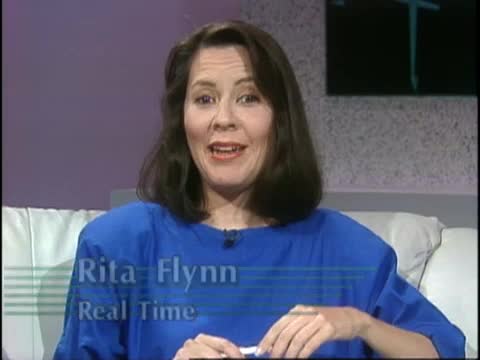
[silence] Tianna ?Toser? went to college on a basketball scholarship. Then she was hit by a drunk driver. She still plays but she doesn't have a jump shot anymore. This message in the broadcast of real time were both made possible by Blue Cross and Blue Shield of Oregon. [Mark] Good evening, I'm Mark Zusman. [Rita] I'm Rita Flynn. Great though they may be the Portland Trail Blazers are not the only phenomenon putting us on the map. Within the next 20 years, half a million more people will be heading our way. [Mark] Some are attracted to jobs. Others however see Oregon as the last bastion still free of pollution, jammed freeways, urban sprawl and outrageous housing prices. [Rita] The question is will the population boom in Oregon bring all that with it?
Tonight we pursue a number of important issues related to growth. First up, can we handle it? We're going to ask that question of Representatives from four of the area's fastest growing jurisdictions, Washington County, Gresham, Lake Oswego, and of course Happy Valley. [Mark] In the last five years, the average cost of a Portland home jumped 25 percent from 70,000 to 95,000 dollars. At that price, is the middle class on the verge of being priced out of the market. A realtor, a developer and a city planner help us answer that. [Rita] And why should growth even be a problem in Oregon? After all isn't this the state that leads the nation with respect to rational land use planning? Tonight we welcome three who represent that rare breed who critics say are nothing but big time behavior modification fanatics. They call themselves urban planners. [Mark] And to set the stage, we invite you along on a tour of the region's famed urban growth boundary, where exception areas may be becoming the rule. [Rita] So if the American dream of homeownership has become your personal nightmare, perhaps we
could help shed some light on the whys and wherefores. This is real time. [Music Plays] [Mark] Surrounding the Greater Portland metropolitan area the urban growth boundary stretches for 200 miles. It encompasses two hundred twenty six thousand acres, an area about three fourths the size of the city of Los Angeles. Its purpose, however, is to avoid the 50 suburbs in search of a city syndrome for which L.A. has become so famous. For a decade now, the boundary has remained virtually unchanged. But now with new pressures to expand the boundary, we thought it was time to take a look at what's happening there on its fringes. To do so we drew on the expertise of a man recommended to us by just about all of the other experts in the field. So come along with us for a little
drive. Along the way will visit an unincorporated area of Washington County, Lake Oswego, Wanker's Corner in Clackamas County and Happy Valley. [Rita] You give us a clearer picture of Oregon's growth, Charlie Hale spokesman and lobbyist for the Portland Homebuilders Association invited us along on what's becoming a popular tour for politicians and policymakers alike. From the farms to the newest subdivisions that drive along the urban growth boundary that defines the Greater Portland metropolitan area and upholds a fundamental way of thinking about how to plan for the future. [Charlie] You're not going to stop growth. Those who have that idea in their head should shake their head real hard and get it out because they're not going to stop growth. The trick is to make it work and to shape it rather than try to stop it. [Rita] OK tell us-- what tell us what's significant about this place we're going to stop and take a look at here. [Charlie] Well after 10 years of land use planning there are now some places where you can see the urban growth boundary very clearly just by looking at it and this is one of them. On the side of the
road you've got a barn in a working farm that's not under any kind of pressure to develop or at least it doesn't appear to be. And on the other side of the road you've got a subdivision with houses still under construction. That's a very clear example of the sharp line that gets drawn between farm uses, resources uses outside the urban growth boundary and urban uses inside. [Rita] And the way the law works here is that this development marches right up to there and stops here, this land is going to be like this for... [Charlie] for the foreseeable future. [Rita] If land is not within the urban growth boundary like this and not zoned for forests or farming like this, it's called exception land and according to Charlie Hale, the system of granting exceptions can invite abuse. But before we get to some examples of what's not working we visit a place where it is. [Charlie] This little area with shops, a gas station and restaurant is an exception area and this is in my mind how
exception areas were intended to work from the beginning, that this is preexisting rural, commercial, activity. [Rita] 'Exception', a process within the Oregon planning system for allowing a certain piece of land to not have to comply with all of the planning goals. Two reasons for land to be 'excepted'. A) Because it's needed for a particular kind of use that ordinarily would not be allowed in that location. B) Because it's committed to a kind of use that's not consistent with goals expected in that location. [Charlie] It was here before land use planning and so the county drew a line around this intersection and said 'This is an 'exception'. This isn't farmland. This is an 'exception' area.' [Rita] Atop a hill in Lake Oswego, demand for development is far outstripping supply with long term consequences. [Charlie] We have it all right here, we're standing inside the city of Lake Oswego, in a subdivision that's zoned for housing. Below us is some land that has been recently brought inside of the urban growth boundary in a very controversial case and in the distance is a
patchwork of land most of which is an 'exception' area, this area outside of the urban growth boundary that is neither fish nor fowl, that's really planned for low density housing, and that I think is going to create urban sprawl over the long run. [Rita] How come? Where do you see that? [Charlie] Because instead of this higher density housing much more compact way of living. The 'exception' area basically allows people to build a house on every five or 10 acres which means that over a very large area like this you're going to get a few hundred houses scattered over several thousand acres and you're going to have a subdivision but not quite. Not close enough to be neighborly but not farmland either. [Rita] What's wrong with it? [Charlie] They're not in water systems, they're using wells, they're not on sewer systems they're using septic systems on the site which over the long run could cause environmental problems once you have hundreds of houses on septic fields you could have an environmental problem [Rita] And when it comes time, say 20 years from now, and we've run out of room within the urban growth boundary, what does this kind of thing in the 'exception'
areas represent? [Charlie] This is the choice. You look at that gorgeous class 1 farmland in Washington County that's outside of the urban growth boundary there and you look at these 'exception' areas 20, 30, 50 years from now the region's going to have to say, "OK, where are we going to make a major expansion of the urban growth boundary?" Well, we've got several hundred hobby farmers out here on these exception lands and they've got a lot of money and they can hire lawyers and they can fight us every step of the way. So I guess we won't expand the boundary here. Maybe we ought to go out on that farmland in Washington County there are only a few farmers out there and they don't seem to mind the idea of selling us their land. What happens if that political equation occurs is we lose the resource of that farmland providing food for Oregonians and for export. This is an extreme example of what can happen in an exception area and if we don't deal with this issue we're going to see more and more of this. Very, very low density, big expensive houses. These people have to drive to everything. You can't walk to the corner grocery store because there isn't one. These
are people that used to have kids at home and now they're building the house of their dreams, and often you're getting simply a couple in big houses like this [Rita] A couple? [Rita] Two people? [Charlie] Oh yeah, they might entertain a lot, but these houses aren't big because there are big families involved. They're big because the owners have a lot of money, and a lot a house. We're having a wonderful time building them. Home builders are having a great time building these houses, even while we acknowledge that's its not very good use of the land. When people talk about growth, when people get concerned about growth, usually what they're concerned about is traffic. Transportation is the issue that usually drives public anxiety about growth. [Rita] We head for Clackamas County and at a spot five minutes south of Clackamas Town Center, just 15 minutes from downtown Portland, we arrive at what Charlie Hale says is the land use planners nightmare. They're not happy about the city of Happy Valley. [Charlie] This is downtown Happy Valley. This is as good as it gets in terms of
a downtown. A city office, a water district, a fire station and a church [Rita] This is a city. [Charlie] This is an incorporated city. This is downtown. [Rita] Now what bothered you so much about Happy Valley? [Charlie] What bothers us is that inside of the urban growth boundary, every city ,every urban area has got to take their share of the housing or the system doesn't work. The irony is that here's a city - supposed to be urban land with all the urban services you come to expect - and the base- the most basic urban service, sewers, is missing. And the city of Happy Valley has used that to stop most development. But they can't stop it all and here's what they get - they get this terrible situation with new homes being built on fairly normal sized lots, and no sewers. This is a health hazard waiting to happen, so somebody, probably all the rest of us, are going to have to pay to bring a sewer in here and hook all these houses up at great expense.
[Rita] Management of the urban growth boundary falls under the Metropolitan Service District: Metro, encompassing the interest of Clackamas, Washington and Multnomah Counties. Currently Metro is reviewing its policy, anticipating growth and new pressures to expand the boundary line. [Charlie] The big conflict in land use planning in Oregon is that most of the people and most of the best farmland are both in the Willamette Valley, a fairly small area. So we have to be very careful in conserving the resource of this wonderful first class soil that's naturally irrigated by rainfall. They're not making any more of it. [Rita] And with us all the way from Happy Valley, first up the land use planner for Happy Valley Bob Price. Mr. Price, What do you make of Charlie Hale's depiction as Happy Valley, your city, as something of a nightmare in planning terms, and the assumption- also I'd like to know, what do you make of the assumption that under Oregon law you're obligated to take some growth? [Bob] Well we have we have planned for growth and Mr. Hale's is absolutely wrong in his statements that
development in Happy Valley is occurring not on the sewers. Since acknowledgment of our comprehensive plan in 1985 by LCDC, the city of Happy Valley has approved 10 planned unit developments or subdivisions, totaling over two hundred fifty lots all of which have been... [Rita] Those are sewers in the Clackamas though, right? Into Clackamas County. They are not your own sewer lines. [Bob] Well none of the sewers that will ever be extended into Happy Valley will be ours they will all belong to Clackamas County service district anyway. All of the services that are extended into Happy Valley are not under the jurisdiction of the city of Happy Valley. [Rita] Are you happy though, about having to take the growth? [Bob] We don't object to the to the growth. In fact we've been encouraging developers to come and talk to us about growth and we have criteria and parameters that we ask them to work with us on. And thus far the developers that have come to Happy Valley have
been happy to work with us. They've had no objections to the criterion, to the parameters that we have asked them to work with. [Mark] Well let's let's get this straight. On the tape Charlie Hale's drove Rita by this street has nice houses on septic tanks and he's using that as an example to show that the community of Happy Valley is resisting the kind of planned development that the urban growth boundary called for. Is that just flatly untrue? [Bob] If I judge the location of the tape properly, it's a subdivision that was originally approved by the Clackamas County prior to the existence of Happy Valley. And we were obligated to allow them to develop without sewers at that particular location, because of the, of record nature of that particular development. That's the only one in Happy Valley that is developing on the subsurface systems. All the other development in Happy Valley as far as PUD's and
subdivisions are concerned, occur around sewers. [Rita] Okay, are you going to put sewers into the city though? [Charlie] We're in the process of developing a growth management plan for the city. [Rita] How long are we talking about here? Well we're trying to get it finished by the end of this year. [Rita] How long before you get sewers in? [Charlie] It depends on the financing mechanism, which is the biggest hang up that we have at the present time. [Rita] What are we looking at centuries, decades? [Charlie] Oh no. We're talking with DEQ EPA and Clackamas County Service District Number one right at the present time regarding the process of putting sewers into Happy Valley over a period of from now through fifteen years. All right, look, let's go to Gussie McRobert, who's the mayor of Gresham, who has as I understand it, done something that would cause you to be burned in effigy in many parts of the state. You've created a form letter to actually welcome Californian's moving to Gresham, and saying that you welcome them with open arms. Is that true? And I take it you feel that Gresham can handle whatever growth is headed its way.
[Gussie] Well our-- our major challenge will be to come up with the money to provide the public services that the 30,000 people that we understand are coming from now to the year 2015. I do have my letter. It's usually someone who has come called and complained. We have planned for growth, and they're assuming we haven't, and the reason is that, that they see as many apartments going up in one year, last year, as had in the previous 10 years so they think we're not planning for growth when in fact we can plan where things happen. We cannot plan when things happen. That is a market driven factor. Is you're attitude, would you say, representative of the people in Gresham? I mean, yes, you plan for growth but then there's also the emotional 'Do we want it?' As a general matter are people who reside in Gresham, are they as looking forward and as optimistic about the potential for adding another 30,000 people in how many years?
I think they're scared. I mean, I'm a little uneasy about it. Gresham was 3,000 people when I moved there in 1955. And we are now 65,500 and growing every day. I don't think, I don't think they're thrilled about it but I think they understand that there really isn't that much. I mean we can't build walls. Well, Jack Churchill, let's move to you for a second. You are on the city council in Lake Oswego, as I understand it have a slightly different attitude about all this, or rather Lake Oswego is in a slightly different position than that of Gresham. Well, let me say this:Lake Oswego is nearly all developed now, and one of our biggest problems is infilling into vacant lots and reducing the size of lots because people come in, buy a house-- Let me interrupt. Infilling, by that you mean-- --Infilling, meaning building houses within - one or two houses here, one or two houses there, because we have big lots, like Charlie was showing on the board. Filling in behind. Right. But I was one of the, one council, one of the only members of city council to vote for a moratorium in Lake Oswego when certain citizens raised that the
pace in rate of development is too fat. We had a situation where we didn't have the school bond issue passed, we didn't have the front-end investments in place. And one of the things that I violently disagree with Mr. Hales in, and his home builders association, is that he went to the Oregon legislature and got a law through that said that the developers should not pay for schools in advance of development. In California, every developer [pumps?]up for schools, parks, does the whole bloomin' bit. And a newcomer comes in and pays his fair share of the development costs. Not every [inaudible] Well, and in fact in Lake Oswego-- --But it doesn't drive out the aged and the people on fixed income! No, but in fact-- --Our taxes are skyrocketing because we are paying the cost of new development. We, the taxpayers who reside there. We have to pay for the new schools. We have to pay for the new teachers. Our bond issues is coming back to the people in much rate of advance of expectation because of the rate of
growth. We are subsidizing the developers. It's not a free market. Not.. Not to paint you too broadly here, but would it be fair to describe you as someone who feels that the current land use planning system and the urban growth boundary as it's implemented does not work? I think that it does not control the pace of development because the government can not get ahead of the development pressure. All right.. And, excuse me, Gussie, I take it you would suggest that as a general matter, at least in Gresham, it does work. Well I, I , you know I understand his concern about the pace. I don't know in a democracy how you can control the pace. OK. All right let's go to Bonnie Hayes in Washington County where so much is going on with respect to growth. Just for starters - it's my understanding that there has not been a new housing permit issued in Washington County in a very long time for any house under $100,000 on new construction. Are you getting a little concerned about affordability of housing in Washington County, where so many jobs are located? What's the picture there, as far as you see?
Yeah, there's a concern and it's a concern not only of government but it's a concern of the building development community. It's concern of the lenders, the lending institutions. And it should be a concern for our state government. We talked originally about affordable housing as subsidized housing. It's totally different now. Subsidized housing, yes we have a real crisis and the federal government has reduced its allocation toward housing for local jurisdiction about 60 percent over the last five years. And so that's really cut into what any local jurisdiction through its housing authority or whatever can do, but now for affordable housing, we're talking the old lenders rule of thumb that you should dedicate no more than 30 percent of your income toward housing. And, with as you mentioned, $100,000 permit or a purchase price for a new house, and up, you're talking a large income. Washington County does have the highest per capita income in the
state. But we are not desirous of creating an environment where only a few people can live and work, and the rest of the people have to leave at five o'clock. Do you have any sense of an increase in monthly housing, how much per month or household is having to spend just on housing? Has there been any marked change that you can determine? Yes. You've got two things going. You've either got an increase in how much people are spending toward their housing, or you have the degradation of the type of housing that they're allowed to expend their income on. The old American dream of myy kids will have a better life than I had, and they will be able to afford more things.. We're seeing the end of that. We seem to have here a very convenient polar opposite. Someone who's saying it's not working, someone who's saying it is. I take it that at least you're suggesting there is some room in some market out there for affordable housing?
Mr. Churchill is clearly saying that the development is driving the costs skyrocket and that the elderly are being forced out of their homes. From your vantage point, which on Washington County Commission is a little bit different, what.. They're both right. They're both right. They're both right. As soon as we put in an artificial barrier.. barrier. a [inaudible] on the ground and say 'We are going to be in the business of causing growth, actually encouraging growth to happen inside that boundary for the preservation of the land outside', you have all sorts of games that start to be played. You've got land banking, you've got an artificial increase in the cost of land. Also, because of densities and so forth, you're having an increase in the cost of providing services to it. So you've got what Jack had mentioned about the public agencies having to put out dollars. Again, this is Oregon. New development does not provide any new revenue to local jurisdictions. Things look different here.. the old Oregon slogan. And until we change Oregons tax structure
you're going to be getting a lot more people saying well,-- --by services you're talking about fire and police, etc? I'm talking roads, I'm talking schools, I'm talking-- -- but at the same time a community does have the legal right to pass on, or to insist that a developer, if he wants a building permit, has to pay $5,000 in system development charges. So, to somehow suggest that you're not generating any of those fees at the front end is not entirely accurate. Washington County is the most expensive place to develop in in the whole Pacific Northwest right now. And it's because we try to make growth pay for itself. We have a traffic impact fee in our unincorporated area that, I believe it's planned on the September ballot, will be voted upon by citizens to cause to go county wide. That was originally thought of as a way to make sure that the existing residents pay for the existing roadway system. As growth impacts add additional traffic, that growth would have to create a pot of money for the additional [lane-age?], for safety improvements, curbs and bus turnouts, anything like that.
And quite frankly, even though right now it's $1,250 equivalency per residence, it's not enough. Let me make a point on that. It takes a $350,000 house, the taxes on a $350,000 house, to support one child in the Lake Oswego school to pay for it. OK. What is happening is, with our growth, is that we're crowding our schools, and who's paying for it? The kids! They're getting less of a quality education. And that's the impact of growth on the people who live in Lake Oswego. Lower educational quality. Because we do not have the money to keep pace with development. Does this say-- [inaudible] fund dollars Just the development charges for wells and sewer and water.. We're in good shape on those. We're going to have the same problem that, that Jack is talking about. [inaudible] police and fire. for example in Florida they have system development charges for police and fire.
That's something that we're not able to do in this state. And of course the concern is you load all these charges at the front end and you make housing less affordable. That's right. So now, in Gresham can you get a $60,000 house? I talked to a realtor who is trying to find an $80,000 house for someone between 122nd and Sandy and there were three, and two of them were an embarrassment. They are not available. Do you see any way to further tighten the screws on growth at all, or is this something we all just accept? Well, we're bound by laws. And we, unless, with our state laws, if.. the only way that you could have a moratorium would be if the services aren't there. Mr. Price? Well, we've been obligated to, to plan in this, in the metro area under the Metropolitan Housing rule for certain levels, and all of our comprehensive plans have been created, adopted and acknowledged at those levels, and development is going to happen that way. The problem, and I think Gussie and Jack both alluded to this earlier, that we see in
Happy Valley, we've got 1,500 residents, and we have a comprehensive plan that ultimately calls for a build out in Happy Valley of almost 11,000 people. How are 1,500 people at the present time going to be able to fri-- finance and pay for the sewers, the streets, the storm drainage? We just haven't got that capability in Happy Valley to, to put in those facilities ahead of time to accommodate future growth to 11,000 people, It just, it's mind-boggling for us in Happy Valley. Well, unfortunately we don't have time to come up with a solution here-- But we'll track it. --I wish we could. We want to thank you all for joining us. Okay. Next up: we continue our search for affordable housing. Most Oregonians still want to own their own little piece of heaven. But nowadays finding it can seem like hell. Oh, it was horrifying. My first experience was
I walked.. I walked into a house that had a For Sale sign and an open house. And fell instantly in love with it, and found out that it was already sold before they even had the open house. I'm not sure why they decided to have the open house but they did. It was a closed bid process. The house had been repossessed by the Veterans Administration and we, when we put our bid in for $8,000 dollars over the minimum bid, and I called to find out if our bid did, did win I was informed that the winning bid was actually one penny less than $80,000 which would have meant the winning bid was $17,000 dollars over the minimum bid. I'm sure, well, for at least six months I probably saw an average of five houses a weekend. And I, I gave up on the newspaper because they- anything that made it to the newspaper was either a dog or overpriced. You know, they were, they were sold before they even got into the paper. Some
houses are selling here before they even put the For Sale signs up. We even went to the extent of making up a flyer. We took this upon ourselves without, you know doing this with a realtor. We made up a flyer saying we were a family of four looking for at least a three-bedroom house in this neighborhood for, you know, within a certain price range and within this school district area; and we asked people to contact us if they knew of a house, and we went door to door. Our family went door to door on a Sunday morning. we went up and down the streets of Hollywood. But this house I fell in love with before I even walked in the door. I had to have it. And I did what it took to get it. What did it take to get this house? $15,000 over asking price. I said I'm not.. I felt that it was worth $15,000 over asking price. I thought anything will work. You know I, I put up notices at Burger King. I even talked to a delivery driver from a local pizza company and she said she would look around for me. And she actually did
call me with a few houses she saw for sale on her route. So whatever works. I think you have to be very creative in this crazy real estate market in the Portland area to find a house. You have to have your checkbook in your hand. You have to be within striking distance. The minute a house is available becomes available you have to jump on it and you, Ii's probably a good idea to be pre-approved for a loan. Any advice? Live in a teepee. Well.. Have more patience than you think you possibly have, and time? Have lots of time and unfortunately, lots of money or very creative financing. I told one of my friends that I had just made an offer on a house, and he said what was the asking price and I told him and he said well, what did you offer? And I said $15,000 over the asking price, and he thought for a moment, and he said boy you sure drive a hard bargain! [laughs] OK. So, are there any bargains to be had? If you just arrived from California, back east or
Japan this is probably the promised land. But what if you were already here? Oregon wages do not appear to be keeping up with housing costs. According to economists at Security Pacific Bank, the average household costs including principal, interest, taxes, insurance and utilities is about $880 a month on a $60,000 house. To qualify, a family income must be $38,000 a year. But in the Portland metro area the average income is only $33,000. And this all assumes you can still find a $60,000 house that doesn't need major repairs and is ready to move in. According to the multiple listing service the average going rate for housing in the Portland metro area is $95,000. In Lake Oswego it's about $178,000. With us is a group of people who, one way or another assist in providing housing. Let's start with you, Beth [Mathod?], a relocation counselor with Luke Snyder. First of all, is there affordable housing to be had in the metro area? Well as Rita mentioned if you're coming up from California or from a city on the East
Coast our housing prices here are quite affordable, even compared to Seattle. They're very affordable. But if you take the statistic given here of $60,000 being something that's within range of, almost within range of the average Portland family, can you get a house for $60,000? You have to be very patient. They are out there, however the uh, they may not be in the condition that you would want them to be in. They may not be as livable as you would like them to be in or in the area. I'd say that most of the growth right now is happening on the west side in Washington County, as we were discussing earlier. And in Washington County it's very difficult to find a home for $60,000. And, you have to be ready. You have to be pre-qualified. You have to be there with check in hand. What about in new construction? In new construction, I was talking to a few of my friends that deal with builders on a regular basis and due to the price increases and lumber and the price increases in land, a number of builders are finding it very difficult to build under $140,000 on the..
[inaudible] under a hundred and forty? Under a hundred and forty. Due to certain profit margins that they all said, and due to the other reasons that I mentioned, it's just not worth their time. Let's go to Dennis Derby, who is a builder, a developer. What do you think about what Beth is saying? What's your price range? [Dennis] Well, we build homes in the middle of the market, typically. And that's a hundred -- in this market that is around 150,000 to 300,000. [Rita] That's middle market, as far as you're concerened? [Dennis] That's middle market, right, for the Westside of Portland. And I would add a couple comments to the things that she brought out. It starts with the land and it goes back to your first panel, we were- where they were talking about the cost of SDC's and some of the- some of the- [Male speaker] SDC? Systems development charges. [Dennis] Right, systems development charges. And builders and developers today in the Portland area, the ave- in creating the average building lot will pay around $8000 in public fees for systems development charges and for the
infrastructure of this put in place for that lot. [Mark] So are you saying that given the $60,000 figure we're talking about here as an affordable house for your average Portland family- [Rita] Middle-class... yeah. [Mark] Is that available in Portland in the metro area? [Dennis] No, it's not, and the reason it is not is because we're talking about starting out with a lot that cost twenty to thirty thousand dollars at the very least. [Mark] So the reason why you don't build affordable [Rita] 60,000, no. [Mark] houses is because- [Dennis] There's no affordable lots. [Mark] There's no affordable lots. So there's no- there's no money in it for you to do so. [Dennis] Well, it's not a matter of money in it. We have to -- we have to build it. We have to have a profit. We have to have a return on our investment when we build a house or when you develop a lot. And there's about 450 builders in the Portland markets that are out there every day trying to create housing for the people Portland. In fact I would I would suggest that the people in this country are the best housed people in the world and part of the reason is we have a free market system to develop that product. [Mark] OK. [Rita] Let's go to Bob Clay with the planning department, City of Portland. Can you help reconcile this? We're talking about not having a lot of what you might call middle-, lower-middle-class housing
available, 60 to 85,000. He doesn't touch it unless it's a hundred thousand up. [Bob] Well, that's true. I think one of the things that we've been seeing is that housing, especially new construction, has been occurring- occurring more in the suburban markets, and it has- and the home building industry, I think, has been tapping into the market that can afford a little bit more expensive housing. So in the- in the city of Portland average housing costs actually are still in the 60 to $65,000 range. So there is a good supply of affordable housing inside the city. As Beth mentioned earlier, some of that housing may require some additional work, a rehabilitation effort, might not be quite as desirable a neighborhood as some of the suburban environments. [Rita] So then it would actually be more than a $60,000 house if you have to buy it and put 10, 20, $30,000 into it, correct? [Bob] Somewhat more. But there- there- there are still a number of houses on the market in- in Portland that still fit that 60 to $65,000 range- [Mark] Beth's suggesting there really aren't- [Bob] that are still affordable. [Mark] with the exception of a couple neighborhoods. Or did I hear you wrong? [Beth] Well, I'd say on the west
side of town. [Mark] No. [Beth] No, no. Extremely difficult to do. [Bob] Yeah, I -- to jump back in again, I think it's important to kind of maybe distinguish if we're talking about the city of Portland between, say, the west side and the east side, we have seen very dramatic housing cost go up on the west side. There's a physical reappraisal process that's going on right now where the -- just the average reassessments are at 17 percent. They're stories of 25, 50, 100, 150 percent increases on the west side, and on the east side, however, through much of the neighborhoods in Southeast Portland, North and Northeast Portland, inner North- east Portland, there is still a very broad supply of affordable housing. [Rita] Mr. Clay, when you see the kind of development we're talking about on the fringes of the urban growth boundary, do you get a little bit worried about all that fancy housing, very wealthy people leaving or not putting their resources into the Center City? Is there something bigger here with respect to the health of the city we should be cncerned about? [Bob] Well, we are- we are concerned. I think the city historically has been concerned going back now 15, 20 years with- with the development of its comprehensive plan, and later housing policy, is it's been the
city's thrust to try to encourage re- reinvestment, redevelopment to occur back in the city. You know there's been. Now two Central City plans develop the original downtown plan that was adopted in 1972, central city plan. So we tried to make the core strong. We tried to keep the Center City strong, so that those neighborhoods that are immediately ringing the downtown and throughout the city are still desirable places to live- [Rita] Are they? [Bob] that they're in close proximity to employment. [Rita] Do you feel that they are, in north and northeast Portland, those particular areas? Or do we need to pay a little attention here. [Bob] Clear- clearly the city does need to pay some attention to those neighborhoods and the city more. Most recently has been paying quite a bit of attention to inner northeastern and North Portland. There have been, of course, a great deal of media attention given to some crime problems, public safety issues, gangs and drugs. And so I think to some degree, both real and perceived, there are some problems there. We have a good number of vacant and abandoned houses that are boarded up. We have some specific initiatives and agendas to try to address that problem.
[Rita] Let me. [Mark] So- [Rita] Go ahead. [Mark] Mr. Derby, let me- this relates, I think. As I understand it the urban growth boundary in your mind is this artificially created line by people like Mr. Clay and has no basis in reality and gets in the way of affordable housing, which theoretically is something that- that he and other planners stand for. Is that a fair characterization of your attitude? [Dennis] Well, not exactly. [Male speaker inaudible] [Dennis] First of all, please understand that I personally support the boundary and our organization, the Home Builders Association, supports the boundary. [Female host] But ... [Dennis] We believe the boundary will work. However, we believe that the boundary as a planning tool and it's there to help define where growth should occur and it is a line that can be expanded as there is a need for more land. We would suggest the land is needed when- when prices start artificially rising, because there is not a large enough supply of land to meet the demand. [Rita] How- how much artificial risen are they, do you think? [Dennis] Well, it depends on- [Rita] Like in Lake Oswego? [Dennis] In Lake Oswego, quite a bit because there is virtually no place left to build in Lake Oswego. That creates a shortage and a shortage will drive the price up. It's a market mechanism at work. I don't think the boundary needs to be modified in Gresham where there's still
quite a bit of developable land. So, we support the concept of a boundary. We just feel that it needs to be managed and it's not a line that God drew in the dirt so nobody can step across. [Mark] And yet I believe that someone at the city has come up with the projections that the city of Portland can handle another, what, two, three, four hundred thousand people- [Rita] No problem. [Mark] With infilling and- [Male speaker] I'm not sure if it's that high. [Mark] and increasing density? [Bob] But indeed we can, we can, we can handle substantially higher number of housing units in the city over the next 10, 10, and 20 years and been -- has been forecasted, in terms of the -- the regional growth model. And I guess that's if -- if Portland has a self-interest here, in terms of the urban growth boundary, it's to be very cautious when we're talking about expanding it, because we do see that- that as we expand the boundary and create additional opportunities on the fringe that may detract from opportunities inside the city. [Rita] Let me just raise a point here, Don Clark, the head of the Portland housing authority, told us that he is so concerned about middle-class housing, lack there of, that he thinks it might be necessary for the Portland Housing Authority to get into the building, providing of middle-class housing, because the
developers won't do it. As you said it's not in your financial interest to do it. Any thoughts? [Dennis] Well, it is in the financial interest to builders to provide a product that will market and sell and that they can make a return on their investment. And I don't believe that Mr. Clarke is suggesting that they would -- they would build houses, that there would be no return on investment for the men. [Rita] Well- [Dennis] However- [Rita] he's talking about building apartments or condominiums, maybe renting. [Dennis] Well- [Rita] They're looking at Oregon law, trying to figure it out. [Dennis] If the private sector doesn't provide it, the public -- and the public sector does, then it would be subsidized. If it was gonna be below the market. It would have to be. [Rita] For the middle class. [Dennis] Right. And I don't believe the middle class yet needs to be subsidized. I would hope that's not the case in this town. Now, the building community in this town has tried for years to build communities that were moderately priced and has been defeated again and again by the public and that effort- [Mark] OK. [Dennis] And an example of that is Fillmore for trying to build some row houses and the City of Portland. [Mark] And the resistance to that. [Rita] Oh, that's another show. [Quiet laugh] [Dennis] When we go to develop land, we get -- we have the community on our backs about the amount of units or densities that we tried to utilize on that land and
everybody wants it to be less, not more. And so that works against the development community and the building community in this- in this- in this case. [Mark] Beth. What is- what are the people in the real estate industry say about the outlook? What's- what's the future? Is it- is this gonna continue on up? [Beth] Yeah we- we see a very- [Mark] Or will there be a leveling off? [Beth] bright future ahead. Well, we do see a good deal more growth happening in the area. A very bright future. Of course everything does go in cycles, certain time cycles. People that- I do my counseling with a number of people that are being transferred into the area. They go on transfers every three to five years. And so we are expecting the cycle to sort of level off, but it will continue. We do see continued growth. [Rita] Nobody sees housing prices coming down anytime soon? [Mark] Or even leveling off? [Beth] Not, not in the immediate future. [Mark] Buy now. [Laughter] I'm afraid that's it. Thank you all, very much. There's a little dispute that buying into the Portland housing market requires more money than ever before. In 1978, the average down payment was one-third of a family's yearly income.
Now it's about half. We want to know how you feel about the housing situation. This week's Your Time question asks, "Do you think the urban growth boundary should or should not be expanded?" Give us a call at 2 9 3 1990. [Folk song plays] Little boxes on the hillside little boxes made of ticky tacky, little boxes, little boxes little boxes all the same. There's a green one and a pink one and a blue one and a yellow one, and they're all made out of ticky tacky and they all look just the same. [Rita] Compared to many other places in America, Oregon is an urban planners' paradise. For starters, it's not too late. There's still time and there's still room. [Mark] Oregon's land use laws, it's urban growth boundaries have been hailed as national models. Nevertheless even some of the people who plan the plan are beginning to wonder how well it's working. In with us are three of them.
Let's start, Paul, with you. You're a senior planner at Thousand Friends of Oregon, which is a land use watchdog group. Let me put it to you. Is it possible that the urban growth boundary is making housing unaffordable. [Paul] Well, I think that would be a gross oversimplification of the factors that affect housing costs. The urban growth boundary has an adequate amount of land to meet residential land needs to the year 2010. Metro recently- [Mark] Despite what Mr. Derby just said. [Paul] Despite what Mr. Derby said. [Rita] Not in Lake Oswego though. [Paul] Well, that's a separate issue of- of portions of the urban growth boundary are going to run out of land before other portions. But on the region as a whole, there's enough land in the boundary to meet housing needs. And that's why we have a regional urban growth boundary. That's what we plan as a region, because what- what we do in one jurisdiction can affect another jurisdiction. The land supply is a critical issue only if there is an insufficient supply of land to meet housing needs on a short-term basis. We have a 20-year land supply in the urban growth boundary.
[Mark] But clearly it appears that the price of housing is becoming, if not already, out of the reach of a lot of people who call Portland their home. [Paul] Well, let me just say this. The planning program has done a great deal for housing in terms of keeping prices down. There may be a lot of reasons why housing prices are increasing, which is primarily, I believe, the power of people to purchase. If you have people coming into the region who can buy more affordable hous- more expensive housing, they're going to find that kind of housing. The building market's going to provide it. The- that's the primary reason that housing prices are probably the way they are. [Mark] Rather than this boundary. Let- let's go to Rich Carson and let me come at this urban growth boundary from a slightly different point of view. Is it possible--Charlie Hales talked about the exceptions in this tape in which it appears that a great deal of growth is occurring outside the urban growth boundary--is it possible that as a result, it's not working?
[Rich] [inaudible] That particular area, I think we've added in the metropolitan area about 70,000 people out there in the last decade. [Rita] In the exception area? [Rich] In the outside of the urban growth boundary in the exception areas. And I think it was part of the system that wasn't completely thought through at the time. We need a way to preserve land immediately adjacent to the urban growth boundary. Part of what we're doing now is looking at the idea of developing future urban areas to do just that. [Mark] So we've created this boundary to focus development on the inside and the majority or at least a large minority of the development has occurred on the outside? [Rich] Yeah. Basically we said, Well, we're gonna draw a line that will be for 20 years' worth of growth, and no one really thought past the fact that for the next two generations or three generations, where ya gonna grow then? [Rita] I'd like to ask you and Mr. Sitzman, who's with the Land Conservation and Development Commission for the greater Portland metropolitan area. I think you had a big say-so about the original boundary line. You helped coordinate that. If you could kind of just give us a sense, in some quarters, there is a certain kind of panic. We heard people, you know, in Gresham, they don't like what's happening with
respect to growth. Can you give us your sense of perspective? Is this something we can handle? [Sitzman] Sure, I think it's extremely handable, if that's a proper term. The issue of whether Lake Oswego has enough land or not, compared to another part of the region, I think it goes back to the fact that we're not accustomed to thinking regionally. Paul makes the point that there's a lot of land in the boundary, enough for 20 years. That's a- that's probably a fact, depending on what kind of development actually occurs, terms of what's allowed that it would cover 20 years. But that doesn't mean that it's going to work out evenly in every local jurisdiction. At some point I think we've got to face the problem of identifying what our vision is for the region. Because it may not be, may not be in the region's interest to allow a lot of land in Hillsboro or Gresham to sit idle while we expand on a farm land somewhere else. [Mark] We've got this boundary. We've got all this
development that's occurring on the outside of the boundary in- [Rita] Very fancy pricing development- [Mark] Either because it's grandfathered in or because of decisions on a local level. And we have housing prices that are beginning to climb out of reach. Isn't it possible that we really are becoming an L.A. but just at a slower pace? [Rich] That's one thing you have to realize is that we went through a recession. Everybody forgot the fact that growth has been occurring in the West on the West Coast for a number of years. This is still the most affordable housing market on the West Coast for any metropolitan area, if you want to go up and down it. [Rita] That's sort of relative. I mean, compared to Los Angeles, yes we're, yes, we are. [Rich] Compared to Seattle, compared to San Francisco. [Rita] Okay, look compared to Portland, Oregon the prices are going up, compared to anything- [Rich] We're just starting to feel it now that we have come out of this recession. They are gonna go up. [Rita] Well, is this a sort of a, is this a hole that needs to be addressed by people like you who are planning? Does it kind of surprise you sometimes to see all this very, very fancy development going on the fringes? [Rich] I don't think it matters that it's fancy development. The fact that there is development out there that is going to take up future urban land is a problem, whether it's a
mobile home or a $500000 mansion it still is kind of mortgaging our future, and we need to deal with that issue. [Mark] Well, Paul- [Sitzman] Excuse me, if I could, just a little different perspective on the exception areas. I think what Rich says is accurate, that in terms of expanding the boundaries sometime in the future, what happens in those exception areas is important. We've gotta- we have not planned well for that. But the issue that I'd like to raise is the fact that the exception areas are not an unlimited supply. The exception areas came about as a result of the land use program, which said we want to contain growth in urban areas, we want to protect resource land for farming and forest use. We realize that outside of urban areas, there are some lands that have a historical pattern of development that makes them no longer suitable for resource use. So that was almost, not entirely, but almost a one-time identification of those lands. And what we're doing now is filling up that area. And there's not going to be a large supply coming on behind that. [Rita] But this kind of brings us to expectations.
Clearly, those people moved out there and put their 11,000 square feet on land, because they don't want to be in the urban growth boundary. So how are you gonna go round 'em up and bring 'em in? [Sitzman] I agree. That's the issue. [Paul] That's the central issue. The central issue is those exception areas are- are going to develop and basically sprawl, which is what the planning program in Oregon is supposed to prevent. The sprawl is going to pressure the farmlands adjacent to the urban growth. That's where people are going to be pushing for urban growth boundary expansion. [Rita] So what are you gonna do? [Mark] So how would you deal with this? [Paul] Well, my- our organization would- would- would like to see much stronger development controls in those exception areas. That granted, we have an existing problem of development that's already there. But the planning program should be responsive and should look at limiting future development. [Mark] No more exceptions. [Rita laughs] [Paul] No more exceptions and no more development in those areas to maximize the opportunity for those areas to be urbanized in the future. [Mark] Rich, what tinkering would you do? [Rich] Well, what Metro is doing now is we are looking at the idea of moving from a 20-year planning horizon to a 50-year. And it would be 20 years, as it is today, of urban, 30 years
of future urban. We would need to designate those areas that we felt we would expand into in the future and stop that kind of development and exception area. [Rita] So would that tie up the land, then, for 50 years? [Rich] Basically it'd tie it up for an additional 30, but yeah 50 years. [Rita] So then you'd have a lot of developers very unhappy about. [Rich] Why? [Rita] Well, because they might like to do something with that land, right? [Rich] You have the same 20 years they're developing today, and we're preserving an additional 30 for their own housing market. I think they would be happy about it. [Mark] And would you agree with Paul that you need to clamp down on exceptions, that- that local communities have been far too liberal. [Rich] Absolutely. [Rita] Mr. Sitzman, it's my understanding that sometimes people call you know when they have moved into their nice beautiful place and there's a beautiful farm field next door and then they come to find out that it's going to be an apartment complex and that that is in fact provided by urban growth boundary and Oregon land use laws. What do you say to em? How often does that happen? It kind of gets into our expectations, again, about what we think we should have for a house.
[Sitzman] How often it happens. I probably get at least a couple, three of those kinds of calls in a given week, three at a time, from people who are concerned about the loss of an area around them that they thought was not going to be committed to a store or a house or a factory. You know, part of what I what I need to say to them- two issues that come up, typically. One is, they didn't know what the planning of their own local city or county had done five, 10 years ago with regard to that land. So that, you know, the land may well be within the boundary. It's already planned and zoned for that urbanization to occur. It's just been a matter of time for the development to get there. They've been sitting there enjoying that pastoral setting and thinking that was never going to change. But all the time, everything was in place for that change to occur. So that's one kind of thing. And we simply have to try to explain that to them and help them try to understand that. The other is, just real quickly, that some of the times, what's getting lost is that the wetland, the his- the historic site, the viewpoint,
the natural stand of trees that the local plan maybe says, that's a significant natural area or a wildlife habitat location and it ought to be preserved. But they don't have the means to do that. [Rich] But that happens everywhere. That happens any place in a city. The difference here is that at least you know that what's going to be next door is probably going to be housing and not a pig farm. [Rita] [laughs] All right. What about what we heard from our- the elected officials who were with us who basically had serious questions and thought there might be some loopholes with respect to services. That we planned for this growth. We say where it can happen. But we don't figure out how we're going to pay for the road. We don't figure out how we're going to pay for the sewers. Is that a missing ingredient in planning- Yes. [Paul] Definitely, definitely. [Rita] to figure out where the money's going to come from? [Paul] The biggest issue facing a planning program is how to deal with the development, the rate of development and how to pay for it. And what are organization supports is a- a concurrency doctrine where development pays for itself as it goes along. And what we need to really get to is development paying not just only for sewer and water facility and
improvements that are needed but also other issues and social services that we commonly really don't associate with- with government such as provision of open space and parks, livability issues. --Go ahead. --How does all of this bring us back to the affordable home? What is pushing the urban growth boundary out doing? What is --Anything you can do? [Multiple people speaking] --I think we- [Paul] for perspective we need to look at what the planning program has done to benefit housing. And before we had the planning goals in the mid-70s the average lot size for single family homes was 12,800 square feet. Today the average lot size for single family homes is 8,500 square feet. There's now a provision for multi-family housing. That's one thing that's been missing from today's discussion is affordable housing is also being provided by multifamily housing. [Rita] You mean apartments and --[Paul] Apartments. [Rita] All right but what we understand with respect to apartments is that yes, there is the provision for that, but they turned out to be jacuzzi condominiums and things like that. [Paul] Well again -- [Rita] They're still out of reach. Again that gets back to what the market is responding to.
[Paul] People are demanding because they are able to pay for those kinds of-- [Rita] Not everybody seems to be willing to pay though. [multiple people speaking] --Since the federal government --I'm sorry. --We're out of time. --We're out of time. [Mark] Rich, Paul Ketchum, Jim Sitzman, thank you all very much. The planners must have done something right 10 years ago because Metro - the agency which is responsible for implementing the urban boundary plan - hasn't seen fit to make any dramatic changes. Since the plan was approved, Metro has added only about 2000 acres or about 1 percent of the total to the urban boundary area. If you'd like to hear more about this topic the City Club of Portland is sponsoring a free public forum titled, "Do We Need to Expand the Urban Growth Boundary Now?" This forum is here in Portland, Monday, June the 11th. Call the City Club for details at 228-7231. [Rita] --The Portland Trail Blazers head for game three in their NBA Finals series against Detroit. Just a reminder the next game will be played here at home on Sunday and broadcast by CBS. Thus far in the series the only truly negative comments we've heard have been about the CBS commentators. Oregon Field Guide's Steve Amen, a Blazer fan, had a few comments about those
commentators. [Steve] --It just seems to me that the only way Portland is going to get a fair shake in the NBA playoffs is if we take over the airwaves. So that's what I'm doing. Now I don't really mind if CBS sportscasters lean a little in favor of Detroit. We'll have our favorite. But what I can't believe is that highly paid group of sportscasters doesn't seem to care enough about their jobs to take the time to learn the names of the players and coaching staff of a team that's made it to the finals. This isn't just another road game fellas. This is the NBA championships and obviously I'm not alone in my disgust over how CBS is handling the playoffs. It seems a lot of people have called CBS to find out when the sportscasters are flying into Portland. CBS won't say. The sportscaster schedule is an even better-kept secret than the names of the Blazers. The only positive note to all of this is the way the Blazers are playing. We won't be subjected to this kind of unprofessionalism for long. But there's still time to get it together, Hubie or Doobie or whatever your name is.
OK so I don't know the names of the CBS sportscasters But then, that's not my job. [Rita] --So there. Last week's Your Time question followed our discussion of politics in the media; we asked you, Should political advertising be banned from television? A few people expressed that they would miss those all too familiar candidate commercials. [Message machine beep] [softly] I can't believe it. [recorded message] --I think political advertising should not be banned from TV because for a lot of people that is their main if not their only source of information from the outside world. [Rita] --An overwhelming majority however felt strongly that political advertising should be banned from television. [Message machine beep] --[recorded message] Political ads should be cut off. The cost of Campaign was cut in half 80 would be yeah yeah we would be sound bites to make our decision on. [Rita] Thanks to everyone who called. [Mark] Thanks for being with us this week. Next Friday we explore the issue
that's making headlines everywhere, physician-assisted suicide. [Rita] Plus the state's emergency board is spending a lot of your tax money during the 18 months every two years that the legislature';s not in session. The two things you can count on in life, death and taxes, next time on Real Time. [commercial] --Tiana Tozer went to college on a basketball scholarship. Then she was hit by a drunk driver.
She still plays, but she doesn't have a jump shot anymore. This message and the broadcast of Real Time were both made possible by Blue Cross and Blue Shield of Oregon.
- Series
- Real Time
- Contributing Organization
- Oregon Public Broadcasting (Portland, Oregon)
- AAPB ID
- cpb-aacip-153-38jdfsrj
If you have more information about this item than what is given here, or if you have concerns about this record, we want to know! Contact us, indicating the AAPB ID (cpb-aacip-153-38jdfsrj).
- Description
- Credits
-
- AAPB Contributor Holdings
-
Oregon Public Broadcasting (OPB)
Identifier: cpb-aacip-6e961b7e269 (Filename)
Format: Betacam: SP
Generation: Original
Duration: 00:30:00:00
If you have a copy of this asset and would like us to add it to our catalog, please contact us.
- Citations
- Chicago: “Real Time,” 1990-06-08, Oregon Public Broadcasting, American Archive of Public Broadcasting (GBH and the Library of Congress), Boston, MA and Washington, DC, accessed August 24, 2026, http://americanarchive.org/catalog/cpb-aacip-153-38jdfsrj.
- MLA: “Real Time.” 1990-06-08. Oregon Public Broadcasting, American Archive of Public Broadcasting (GBH and the Library of Congress), Boston, MA and Washington, DC. Web. August 24, 2026. <http://americanarchive.org/catalog/cpb-aacip-153-38jdfsrj>.
- APA: Real Time. Boston, MA: Oregon Public Broadcasting, American Archive of Public Broadcasting (GBH and the Library of Congress), Boston, MA and Washington, DC. Retrieved from http://americanarchive.org/catalog/cpb-aacip-153-38jdfsrj