Tapestry; No. 115
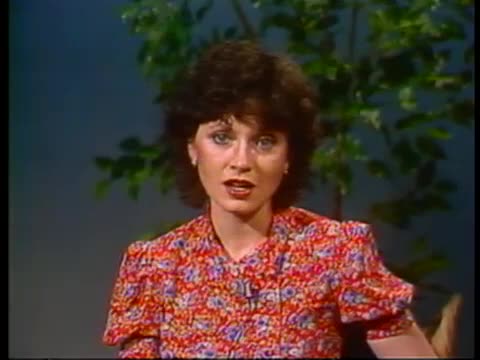
- Transcript
[Singing] [Singing] [Singing] [Host]: Bob Jackson and Dana Garrett [Bob] I'm Bob Jackson [Dana]: And I'm Dana Garrett. Welcome to Tapestry. In this edition Marly Stone a Portland artist with an original point of view. She is a photographer, painter and singer. And you just saw a bit of her starting things off. [Bob]: We'll also tell you about the 1982 Governor's Awards for the Arts presented by the
Oregon Arts Commission and we'll introduce you to would cover Ed Quigley at work. He's one of the winners. [Dana]: Let's begin with Honoré Daumier, he lived and worked in 19th century France and a collection of his paintings, lithographs, and sculpture has just come to Portland. [Bob]: It's the collection owned by industrialist Armand Hammer and we toured the exhibit with Dennis Gould, a former Portlander who is now the director of the Armand Hammer foundation but more of that later. First let's look at the world through the eyes of the Honoré Daumier. [Music] [Male Actor]: The last day for accepting new pictures. Good grief, here we are and my picture is not yet finished. [Female Actor]: Ingenious means of clearing snow off the roofs and onto pedestrians! Well... [Bob]: Daumier commented on human manners and morals with wit and perception and it's just possible that no one
knows his work as well as Armand Hammer who collects it and Dennis Gould, Director of the Armand Hammer Foundation. [Dennis Gould]: Daumier the artist is kind of an artist's artist if you will because everyone today especially appreciates what he had to go through to make a living. In this particular collection I would say that the works that that I value most are the ones where Daumier comes out. The Rue Transnonian for example is probably not only a great Daumier, but it's probably one of the greatest lithographs ever made by any artist. I think Daumier comes out in that... in that print. Some of the prints you can see he's following the editor's orders. Well he wanted two guys talking, so I'll draw two guys talking, you know. Other times the real Daumier comes out and that is a true pleasure. It's a subjective kind of perception. If we went around the galleries I'd say here's Daumier and here's the
editor. He was very often given assignments and he would carry out the assignments to the best of his ability. But sometimes his hand really takes over and he exceeds the limits of his assignment. And those are my favorites in the collection. [Host]: The thing that's surprising for me is to find the bronzes as well as the oils because I'd seen some of the drawings in the lithographs and uh they're in the history books. But to find these beautiful bronzes and these beautiful oils? What a surprise. [Gould]: Daumier is a very versatile artist. He like so much of our history is kind of pigeonholed as a caricaturist. In fact, when he died the note was that the Daumier the caricaturist has died. That's really unfair to him because he is such a major artist. Not only was he one of the most prolific artist that ever lived, his versatility is shown especially in this exhibition in all kinds of ways: drawings, paintings,
sculpture, graphic design, a poster... ...the sculpture. Now the sculpture was almost an accident. You know in in France in 1830 you simply couldn't go go into the courtroom and draw from from the action taking place the way we can today in various courtrooms. And now of course we can bring television in the courtrooms where just a few years ago we had rows upon rows of artists sketching the action that was taking place. But in Daumier's time he couldn't do that. So he would go to the various meetings of the of the parliament and he would make his own mental notes as to the characters that were represented there. Then he would go back to his studio and model them out of clay. And he'd paint them and fix them all up and then he would use these clays as as a kind of model for himself. To make further lithographs and drawings of the same characters. [Bob]: Tell us about the poster. [Gould]The poster is quite interesting because it's at an
interface between um the pictorial advertising graphic art and its past. Up until that time and there are some examples of lithographs in the collection that have billboards on the walls of the streets of Paris. But till that time the posters themselves were based on typography, just text. And just about that time lithography had reached a point that made it possible to make the posters pictorial. So here's Daumier toward the end of his life making a buck doing a poster for charcoal, you know, to fire the kitchen stove and it's one of the, really the first, examples of pictures used in posters. Not only is it the only poster Daumier did but it's as far as we can tell that there are only 11 examples of it in the entire world. And we have one of them here in the exhibition. [music] [Bob]: The Daumier collection is only one of Dennis Gould's responsibilities as director of the
Armand Hammer Foundation. [Gould]: We have three main exhibits that travel the world constantly and usually they're all shown someplace at any one given time. We have a manuscript by Leonardo DaVinci now called the Codex Hammer formally called the Codex Leicester and bought by Dr. Hammer in December of 1980 for, well a lot of money, 5.8 million dollars. And he thought he got a bargain at that. But when it was purchased it was formed together as a codex. A kind of a notebook of Leonardo's thoughts on water and cosmology and so forth. Dr. Hammer disassembled the Codex and now we've mounted it as an exhibition. It's rather remarkable because not only is it the only Leonardo manuscript owned by a private individual anywhere in the world. It's the only Leonardo manuscript in the western hemisphere and it's the only Leonardo manuscript that
travels the world. It's sealed in little environmental chambers and that's just one collection. That opens in Italy in February. Then we have what we call the Masterpiece Collection. This is about one hundred twenty seven catalog entries of paintings and drawings by everyone from Albert ?inaudible? to um Andrew Wyeth. And we have, now we have three Rembrandt drawings, we have three Rembrandt paintings, we have four Van Gogh oils, four Van Gogh drawings. We have the paintings by Rubens We have quite a collection. It's sort of a survey of of Western Art History from roughly 1500 to the present, so we call it the Armand Hammer Collection: Five Centuries of Masterpieces. Now that travels the world also. [Bob]: Where is that
exhibition now? [Gould]: We just brought it back to our storage facility in southern California and it had been been shown in Lexington, Kentucky, a city about the size of Eugene I'd say, about 100,000 people turned out, sometimes standing an hour in seven degree temperature to get into the museum to see the exhibition. [Bob]: Is there a chance that Portland and the Northwest could have this exhibit some time in the near future? [Gould]: I would love to see it. I think it's it's certainly up to Dr. Hammer but I would love to see it come to the northwest. Definitely. Dennis Gould is no stranger to the traveling art world. For eight years he directed the Smithsonian Institution's traveling exhibition service and now is head of the Hammer Foundation. He holds a job of great variety. [Gould]: It means organizing the exhibition into a coherent presentation, making sure the publications are proper that the catalog is done well, that the works themselves are prepared for the rigors of travel, getting them properly reinforced, strengthened, framed, packed. Then secured during transport. We have guards that travel along with the
collection. We want to make sure that they get there the best possible way. We want to make sure they get there on time and you want to make sure that they get into the museum when when the truck arrives, somebody is here to receive them. All those kinds of little nitty gritty details and of course it seems like every time we are in any one particular location we're always thinking about the next project coming up. We've been here looking forward to Dr. Hammers arrival at a dinner but at the same time we're talking about a presentation of another exhibition we have coming up in Florence, Italy in about two weeks. So here we're on the phone to Los Angeles all the time even though we're very concerned about the Daumier collection here we're always thinking ahead to the next presentation in another country. [Bob] The Armand Hammer collection of lithographs, paintings, and sculpture by Honoré Daumier now at the Portland Art Museum. [music] [Male Actor]: Damn it that fellow looks dangerous I would give ten years of my wife's life to have a pistol!
[Dana]: It's apparent that Daumier viewed the the world with a humor and perception that tickles the funny bone and gnaws at the conscience, even today. His work is timeless. [Bob]: But it won't remain here forever. The Armand Hammer Daumier collection will be at the Portland Art Museum until February 21st. The museum is open Tuesday through Sunday, noon to 5:00, after 4:00 on Fridays admission is free and the museum stays open until 10:00 pm. [Narrator]: Northwest is filled with mountains, lakes, trees and traditions. Woodcarving is an old Northwest tradition. [Ed Quigley]There's so many things in nature here that inspire an artist. I do consider myself a Northwest artist and a traditional artist to boot. I'm Ed Quigley, a woodcarver and painter, but carving has been more or less of a hobby for me. Uh It's fun to take a square block and start carving and make a figure or develop out of it that seems to have life. I've done a lot of carving commercially, but uh mostly for fun. [Dana]: Ed Quigley has been named one of four Oregon artists who received the 1982 Governor's Award for the Arts. He's seen here in an excerpt from the film "Oregon Woodcarvers." His award states in
part that Ed Quigley's life work as an artist has resulted in over 1500 oil paintings, watercolors, carvings, bronzers and murals depicting western life. And that he has truly captured the restless and wild spirt of the old and new west. [Bob]: Also honored this year are Rachel Griffon, Curator Emeritus of the Portland Art Museum, for being a dedicated spokeswoman for quality arts and for artists in the Northwest. [Dana]: Monford Orloff, Chief Executive Officer and Chairman of the board of Evans Products as an energetic and consistent supporter and financial backer of cultural activities across Oregon. [Bob]: and William Stafford Oregon's Poet Laureate, an inspiration to all generations, not only in his gift of time to others but in his quiet visions of the present, past and future. [Dana]: The fifth award goes to Salem Art Association for being a first rate community art center. Congratulations to all the recipients of the 1982 Governor's Awards for the Arts.
[Bob]: Now here's another name in the arts news, Marly Stone. [Dana]: Marly Stone is a painter and photographer who has a unique way of combining art forms. She's taught as part of the artists in the schools programs and from time to time you'll find her singing with a solo guitar, a combo, or a big band. Marly Stone is a Portlander with a lot of pizzazz and an original point of view. [Music][Marly Stone singing "I Can't Give You Anything but Love"] [Marly Stone]: Music and dance they're like religion to me. Really, I mean they're that important to me.
And so I jam when I sing. It makes me feel a lot better. So I get together and I jam with people and I jam with Arden Beck a lot, this guy, he really feels the kind of music that I like. I got interested about ten years ago in visual art work, I've been in art since I was three-years old but more in the performing arts. And I ignored my little, at the time I thought it was little, visual arts talent, because I was pretty directed. I would up traveling with a girlfriend of mine in a van. We were hippies together. And we were traveling and we were always meeting these new people which I felt kind of uncomfortable with. And so instead of having to have direct conversations with them I would sketch their picture and my sketching books kept bigger and bigger and my sketching utensils kept getting bigger and bigger so finally I was drawing with something I could wrap my hand around and the pictures were good. They were good right away.
And by the time I was through with the trip I knew that what I wanted to do with my life was visual art. I was totally committed and I went back to Los Angeles and I started working for a gallery in exchange for classes with the lady who was running the gallery who was a wonderful teacher, Corrine West, and that was the beginning. And I, I started painting and I met my husband shortly thereafter, who was a photographer and He started me in photography and so there I was, absolutely launched and then from then on I was totally committed and have always done this. [Music] When I submit things for review I don't let people know that I do everything. I just submit in one area. And recently the area that I've been most concentrating in has been photography. And because I have been getting a lot of positive response with that. And once they feel like you can do something really well, they're always thrilled to find out you can do other things. And I feel that's just part of my
personality to want to... I have a Gemini Rising so ?inaudible? [laughs] and it tethers all of those ?inaudible? I like that. I need to have diverse different things in my life. [Music] Everyone who is making a living as a photographer and doesn't do commercial work seems to either seem to be teachers. They get teaching positions, which I certainly have done and um or live on any other way they can. I've make commercials. I've do voiceovers. I pick up little jobs that don't take a lot of time but that I can do very well and that pay well Things are really popping for me these days it seems. I was in New York recently. I went back to try and sell my work and I just got a call from the Share Art Card Company, who handle fine art fine photographic art, note cards and they want to buy six of my
images at least and keep them um supplied with whatever I'm doing that they feel... that I feel is appropriate. So that's great. And so there's a way, also, to me help earn a living. And they distribute mostly through like museums and also card places. But they do distribute to museums and they handle people the likes of W. Eugene Smith. and ?inaudible? and I'm sort of one of the unknowns... one of the few unknowns that they handle I'm real excited about that, that's great. It's nice to have some money coming in considering how much I spend on my art. Which is a lot. [Different Speaker]: I think that people have trouble paying the the amounts that certain established photographers want for their work because they think of a a photograph as something that is relatively inexpensive to produce. Is that not true? [Marly]: No that is not true. I use... first of all I print on very large paper right now, 16 x 20. The paper itself costs about $2 a sheet which doesn't sound like a lot until you
consider that most... I don't know very many photographers who make their first print count. I mean It usually takes quite a few before you get that . ?inaudible? you shoot so many images too before you get to the ones that you finally edit down to and for instance I've worked on this series, a nude ?inaudible? series, for a couple of years and during this period of time and prior to that I was working on nude things not knowing exactly the focal direction. So until I found exactly the format I was going to use and how I was going to produce them, that that was a lot of photos I used. And then this series I must have produced at least a hundred pictures which I completed totally and then started editing down to the 30 that I have now. And in the next year or two I'll probably do a lot more editing so that by the time the series is finished what I have... of what I have now I'll probably pick 5. [Music] I'd do anything to change the image. I get so tired. I am not a photographer that says "This is it. I just love this image and I shouldn't even crop."
I don't believe in that. I feel you can do anything to get your final image and I think that's a wonderful idea. Besides that I'm not a very tight and meticulous person like most other photographers are so sometimes I have things to work with... or to work out and I've always believed that perimeters, that the problems that you have give you art. In other words if you have only four items to work with they're given items I think that can create great art. This piece is called "Lullaby Bird Land." For me it's an ecology piece because the hub cabs, the domes, which they're called, and the, all all the metal things represent the industrial society and how basically how it basically it's pushed out the natural society, the birds the natural ecology. And this skeleton is an eagle's skeleton. He looks real ravaged and I mean for him to look that way cause I want him... I mean people have told me I should bleach the bones when they first looked at it. But I thought that it was real important to leave it in its natural state.
I used to color real radically, which I think you'll see in some of the photographs. I used to take the paint and smear it on in my anger of having such a perfect image. I just hated that so I wanted to just change that. And now I'm doing the painting in a real selective manner and for instance in the nude beach series I only paint the sand and I paint that all the same color so there's a real cohesive feeling in the series. [Music] I'm also using silver pencil and that is a result of... there's a group of, there's a new group of work in the United States called Markers people who are marking and I saw a show at the San Francisco Museum of the Markers and I love the idea. And they scribbled all over there. Their uh pictures, they scribbled on the negative sometime or worked directly on the photograph and that excited me a lot. [Music]
[Interviewer]: Does it bother you when people interpret things differently than you had intended when you created them? [Marly]: No, I love it. I think it's great. It's a little more insight into what I'm doing, even if I didn't think of it that way to begin with that doesn't mean that's not what it means. Just ask all the art critics [laughs] No it's good because I feel that I don't even know what a picture means or a work means until it's over. I start with one idea. I start as an exercise or adjust to work which is the way an artist has to go if there's no inspiration you work anyhow. One step triggers the next step triggers the next step. Now in sculpture that has tended to be a problem in that, for instance with his piece right here, I didn't know where I was going when I started it and the armature is really not strong enough for the piece. [Interviewer] The armature? You mean the base? [Marly] The base. [Interviewer] the interior. [Marly] The metal, there's metal under here that I've welded
together and it's not strong enough to support all of this plaster. Fortunately this has become a bronze so it's no longer... it's become two bronzes actually and it's no longer that important, but trying to keep this piece together has been a joke. I've had to put it back together a couple of times. Since then, my next plaster pieces I've realized I had to plan ahead and I've done a much better job of that. So they're not so fragile. But I like the idea of discovery, in fact that's I think why I do art, because it is, it's one discovery after the other and I'm so pleased right now. I feel like I'm just at the top of the world. It's really strange, the thing that was missing in my life was I wanted, I wanted peer acceptance. And I really feel right now that that's happening and I feel... I, I, I must admit I'm a person who would like to be known by a lot of people but the reason, when I examine it very closely, is because
just, it's that little, it's that little bit of acceptance that makes you keep going, that helps you to keep going. I mean I'm going to keep going anyway. But the fact that you can bring joy or other people get something out of your work, that's what keeps me going. I just couldn't feel too much better. I mean, I'd like to be making money, but it's not primary off of my work. And I now have a gallery in town, Blackfish Gallery, and it's wonderful down there. All the other artists really respond to your work, You get feedback. That's what I've been looking for. So I feel very, I feel great. [Bob] That's one of the nice things about working for Tapestry. You meet interesting originals like Marley Stone. She has two shows coming up in March, at the Blackfish Gallery and the Arts and Crafts Society. [Dana] Another nice thing that is from time to time you get to travel. Next time Tapestry takes to the road. We'll visit some of the artists getting ready for the seventh annual Stayton Art Festival sponsored by the North Santiam Arts League [Bob] The Northwest has many fair
weather art festivals during the spring and summer but as far as we know Stayton is the only community to celebrate the visual and performing arts in winter so hold good thoughts about good weather [Dana] And join us for the seventh annual Stayton Festival of Arts in the next edition of Tapestry. Goodbye til then.
- Series
- Tapestry
- Episode Number
- No. 115
- Producing Organization
- Oregon Public Broadcasting
- Contributing Organization
- Oregon Public Broadcasting (Portland, Oregon)
- AAPB ID
- cpb-aacip/153-2683br74
- Public Broadcasting Service Program NOLA
- VTAP 000000
If you have more information about this item than what is given here, or if you have concerns about this record, we want to know! Contact us, indicating the AAPB ID (cpb-aacip/153-2683br74).
- Description
- Episode Description
- This episode features the following segments. The first segment "Daumier at the Portland Art Museum," is a feature on a selection of the works of 19th-century French artist Honor? Daumier, owned by business manager and noted art collector Armand Hammer. The second segment, "Marly Stone," is a profile on Marly Stone, a Portland native who works as an actress, photographer, painter and singer.
- Series Description
- Tapestry is a weekly magazine featuring segments that highlight the arts of the Pacific Northwest.
- Created Date
- 1982-02-05
- Copyright Date
- 1982-00-00
- Asset type
- Episode
- Genres
- Magazine
- Rights
- Presented by Oregon Public Broadcasting in Cooperation with KGW-Television, Tapestry, c. 1982
- Media type
- Moving Image
- Duration
- 00:29:13
- Credits
-
-
Associate Producer:
Garrett, Dana
Associate Producer: Jackson, Bob
Director: Chew, Dan
Guest: Stone, Marly
Host: Garrett, Dana
Host: Jackson, Bob
Producer: Joy, Patricia
Producing Organization: Oregon Public Broadcasting
- AAPB Contributor Holdings
-
Oregon Public Broadcasting (OPB)
Identifier: 115582.0 (Unique ID)
Format: U-matic
Generation: Original
Duration: 00:28:50:00
If you have a copy of this asset and would like us to add it to our catalog, please contact us.
- Citations
- Chicago: “Tapestry; No. 115,” 1982-02-05, Oregon Public Broadcasting, American Archive of Public Broadcasting (GBH and the Library of Congress), Boston, MA and Washington, DC, accessed June 4, 2026, http://americanarchive.org/catalog/cpb-aacip-153-2683br74.
- MLA: “Tapestry; No. 115.” 1982-02-05. Oregon Public Broadcasting, American Archive of Public Broadcasting (GBH and the Library of Congress), Boston, MA and Washington, DC. Web. June 4, 2026. <http://americanarchive.org/catalog/cpb-aacip-153-2683br74>.
- APA: Tapestry; No. 115. Boston, MA: Oregon Public Broadcasting, American Archive of Public Broadcasting (GBH and the Library of Congress), Boston, MA and Washington, DC. Retrieved from http://americanarchive.org/catalog/cpb-aacip-153-2683br74