Press And The People, The: An Inquiry Into The Work Of The American Press In Informing The American People ; 2; Washington And The Press
- Transcript
Today and every day the American people must make decisions on which there are whole survival may depend. To make sound decisions. The people must be informed. For all of this. They depend on the nation's free press. How well is the nation's press doing its essential job. The people have a right to know the truth. They have a responsibility to us. They are right to question. I'm not a guest on the program you're about to see. But I'm interested as you are in the subject. Washington and the press and I think we both agree that a good form of government like ours ought to be watched just as carefully as a bad one. And that's a job for the press. It's a tough job though because the news out of Washington gets very complicated and there's so much of it. Too much sometimes for us to digest over breakfast or after a hard day's work. Then once in a while
the story comes along it seems very important to us. And there's no news about that one at all. I wonder if that impression is our fault yours and mine or is it the government's. Or does the Washington reporter fall down on the job. Mr. Louis Lyme's I'm addressing those questions to you and your guest on this program. Can you give us any help. To go into these questions we have as I guess one of America's most distinguished CORRESPONDENTS the chief Washington correspondent of The New York Times Mr. James Reston. Mr. Ruston asserted quote power in any threesome son of three has to be one of the greater the power the greater the need for skepticism on the part of the press. You had the view of a veteran political journalist in just a moment we'll ask him to going to. The press and the people.
To answer our questions we have a distinguished correspondent from The New York Times Mr. James Reston. As moderator there from Harvard University the winner of the Peabody Award for television and radio journalism. And a lot of rock award for outstanding contributions in the field of civil liberties. Mr. Lowell line Mr. Reston like can you want to strike this great power complex in Washington that you have to watch. Illustrated very easily. Running the defense department of the government to spend say four billion dollars it wasn't necessary to watch them carefully. Today they spend over 40 billion dollars. Perhaps the greatest
employer of people in America today. With that amount. My point is a very simple one namely that you have to watch that very. Well and then after the chances of that Washington correspondent to do an adequate job of keeping this great complex under watch what are some of the reporters channels and sources we've all heard the president's press conference. How good a chance is that to get really into the camp. Well it's a very good it's a very good source of information and perhaps. It's perhaps the only way that people have direct opportunity to see the president precisely as a year. More and more in the last 10 or 15 years as you know as things have got very complicated. The tendency has been to see the president through speechwriters only in formal occasions. This at least as avoided by the press conference
because the press seems him. Informally. They can put it to him any question they like the response that you see in that. After all how much of a chance they have really to pressure question and challenge the administration in forming a fresh but it limited. Louis you knew or was conscious of the fact that. There you were standing before the president of the United States. I don't know about most people but I think most reporters. Have a sense of the majesty of the presidency. And. You cannot pass the President. Very far. Without committing. Proper manners courtesy and so on. I really want to say this is more of a ritual than a real question. No I wouldn't I wouldn't go that far you can ask the question and wait for your answer.
My only point is that you cannot bear to read Mr. Reston would you say that your county extend a little more and President Eisenhower than it did in Mr. Truman. No I wouldn't say that as a matter of fact. President Eisenhower has a press corps much more seasoned President Truman ever did. What I mean by that is this. When we used to. QUESTION President Truman or more particularly President Roosevelt. This was a little bit like pitching batting practice to the Yankees every time you want to get ready to duck. Is. Much less inclined to give back the shot to a direct question. That for one is more so.
Mr. Ashton I suppose this question also implied rather there's as much tendency on the price to question hard Republican administration. Or our correspondent feels he has complete sympathy and backing of his home office and if he's pushing or criticizing a Republican I think early on in this discussion we have to frame what we mean by the crass. Why don't you try when you're talking about the past of course that you're talking about an institution that stretches all the way from the New York Times to The New York move. Which incidentally is quite a distance. And I think you get one reaction one way and you get a totally different reaction from other groups in the press. But I'm not I don't want to duck that question really of course the press of this country it's been perfectly obvious for a long time. Here's more
partial. To the Republican administration meant it would be a Democratic administration. What we're all conscious of at least even since 1952 needling of the one party crasher in our mind somewhere else but the point I was trying make it you're talking about reporters yet and you shouldn't. I think equally reporters with the crass. Institutional ownership of the press. And may be biased toward the side of the Republicans. Reporters I think the Republicans are always complaining they have precisely the opposite price. They tend to lean the other way and be very lean in some ways. They usually tend to lean against the wind even against their own publishers. And think they get away with theirs and get adequate backing usually from their public. I think they do. Yes well actually very interesting observation Mr Reston. You've seen a lot of
wrong there's also been a great deal of talk about secrecy and barriers to news and classifying news. How much does all of this keep away from. Well I think it does to a certain extent. And there are a great many of my colleagues who are very worried about this they think there's a great conspiracy in Washington to suppress the news. And of course it's true in this sense that. Everybody who is confronted by a reporter on any given subject always tries to emphasize the good and minimize the bad this is. You make politicians will always do it. I don't happen to believe that we're in a situation in this country where the government is willfully conspiring to keep information from the people. I think if we have a problem it's more in the line that more inclined to manage than to use them to suppress them and you are too much of me by
that you mean to press conferences after record conferences. What are you in a variety of different ways there and I think more and more to. Make the big set presentation policy say in the television the grass where they cannot be questioned. Ten years ago the press conference was a much more common thing than others. Today for example when I first went to. Washington 17 years ago Secretary of State Powell. Used to have a press conference every day at noon. Secretary of State that US has one. The average room or say two every three weeks and how many were not better than most members. How many went to Mr. house by sponsor 17 years ago. Well this is one of the Great this is one of the great changes of course. Seventeen years ago it doesn't and you or you aren't.
And I would say it was a very informal casual kind of thing. Now it's a very formal thing with television cameras and batteries of propagandists all around him. So Mr. Reston whose fault is that. Why aren't the reporter digging in there and getting those press conferences why they're letting themselves be managed. Well this is an interesting question. I would like to have a memorandum from you or a suggestion from you were asked of you first the president of the United States or a secretary of state. The best we can report the fact that we have not got the power to compel. We can go to the car and we will if we find the sources and channels of information closing up. But we have no power to compel the party to explore it not to compel me to rest and to what extent would you say officials who cry as you say to
manage the news in their interest succeed in the image they want to create. Well I think that they manage to succeed to a certain extent. Let's take a case in point. If an administration finds that it is in good luck that events are running with them their policies are succeeding. They can have as many press conferences as they like. Are they running into part of events or running against them. They can find it convenient not the press. Again the question comes up What do you do about the purposes of attack and then if there is no response from the public. To come on public opinion if the people are not interested whether we get in or
not. Then this will continue. MR I know some of you do go digging into agencies or digging out the stories you feel the public ought to know now. If you dig out a story which makes an agency look less gross that it would like to look broader penalized for the losers do sources. You know I don't think so. Location may one runs into this kind of thing but. I don't think that we're in a situation in this country with good aggressive. Reporting on. Proper subjects leads to any penalizing the source moves against Mr masterly saying it's the public's we're not getting the information we ought to get out of Washington. No I'm not saying that. But if you press me I'll say this that there is more good stuff. Coming out of Washington than the public
has much stomach for. There is more good information solid information. About the great events of our ability to the public than the public the public isn't reading it. Yes I think you have to do is take a look. At what the people of the country really. More inclined I think the fact still quite quite obvious and more inclined to pick just the newspapers that is an entertaining than there is to concentrate upon in forming a mystery my friend and I know that for the New York Times cover to cover every day getting through the New York Times my friend is a life career. I think that there's a point where waiting for a moment that communication isn't a one way street the reporter has some right to feel that the reader will do something about it he can be discriminating in a source of news Mr Reston says he isn't enough self.
He needs to do a little homework to try to inform himself that in effect I think is what our correspondent is asking. Well Mr. Reston looking at things as they are now and looking ahead a bit what would you say are some of perhaps the most important stories that you would want a good correspondent. Keep an eye on what I think. I think perhaps the great. Developing story here at the present time is. Exercise executive power. In this country. After the resignation every time and the President Eisenhower. In 1960 the 906. Is we've got a lot of candidates when we watch them in an interesting situation at the present time we're at the point where the country is crying. From the man born in the 19th century to the men born and you think this is always a difficult exercise our generation was coming on.
This in something like 15 or 20 different young men. And I would think that it was of immense importance that question it right this sense by which I mean magazine books and all the rest of the papers that they concentrate upon digging into the past and even then. Not in the sense of trying to do an improper question no exposé. But in terms of trying to find out ahead of time what the quality is and really mystery how to begin to realize it and still know that was restless and a carte blanche to be giving us an appraisal of these candidates. Between now and I guess my point you remember we talked about this some time before. My point is this trap. If we pay a no if
we pay no attention we can now. In the in the period before the nominating convention runs then people tend to choose up sides. Then you can only choose between the two given to you by the nominating convention. Whereas if there's good aggressively courting. And informing the people about all the candidates they want their select their suggested timing is important and start looking at thank we've got a new Congress coming in pretty soon. And what about easy slack period January. Yes this is where there are no black areas in Washington this is the period of budget preparation the drafting of the state of the Union message and so on and so forth. When you mention I'm a mess when you mention budget an economic message sounds pretty
complicated to me. And I'm thinking not so much of your great girl as some of these one man bureaus in Washington there are so many of them are there a great many things in the government that are just too complicated to get adequate warning attention. Well it depends on the kind of bureau you're talking about as you say most of the running man however watching the report. On the events that affect the particular region or which that course comes from. The one man would not attempt to go into any detail. But. And he wouldn't have a great deal of attention to keep these candidates under appraisal and to be a job for the newspaper. RICE Oh and then such a newspaper depends on the wire services to cover the whole Washington. Yeah I missed the rest and getting back to the way the public has to handle it. You talk about political stories and economic stories and covering the State Department what would you
say is the number one source of important information right now. What's the big running story at this time. Watching the primary story of present time of course as. You see it is a curious thing about a democratic society. It gets us. Politician as we indicated earlier may want to give only one side of the story. But when the country gets and there's a will is a great nation. This means that every move has to be clear. With a lot of it has to be checked with the Foreign Affairs Committee of the house. It has to be checked with the Foreign Relations Committee of the Senate. For a variety of people get involved. Unfortunately the politician that thinks this.
And this information has a way of coming out of it uses his legs and as for our city and keeps going after the next arrest and I remember Senator Kerry came back from Russia recently and he gave no statements but they seem to be more press copy about that particular trip than any story that I've ever read how did all that happen. Well I think that the senator has never been known for his violence. Was concerned to exploit the fact that you're using the mosque and he was concerned as are politicians. Get the name of that perfectly normal property of the sea. I think my point that Mr Westerner just made is we're stopping for a moment on. He spoke of the loose from Berlin and that also comes from Washington that is Washington as a great center of world power deals not only with our national affairs but through this department and other agencies
with our own position in the world and is therefore in many senses a double Center which increases the importance of the job of the correspondent and must rest to night. We've just been reading in The Saturday Evening Post. An article by Stuart also of how we how we grafted close to rule the story of our time and ing up and the noise and the question it raises with me this is a really great chunk of history as you know is there something we have to wait for a big magazine to do. Is it more than you can expect the daily price to. Do for us. No I don't think so I think the two functions are really different. Louis. This is an extraordinarily good job reporting a first class professional report. In two years. However if you know yourself much much easier. To come along. And put together a story after the fire is gone out of an
event. When all the information has been rocky and it's easier then to do the round up and pull it together. Then it is at the moment when the communist guns are sending more and that soon. Now a great deal of this information is of course printed in the press. This is primary. Newspapers have magazines that do all that kind of material together. We on the primes have the review of the week which concentrates on the roundup in putting the News of the day in relation to its historical background and its implications for tomorrow. But these things are not competitive. They're very graphic. They're complimentary. We need to all be in the past should not be equated in terms of pay for all these things. Go out and I'm a threat and you yourself are both a correspondent the head of a bureau of correspondence and also a columnist and economist aspect I wanted to mention
as to whether that implies that there are certain limits expected of a correspondent that leaves out the issues which the columnist has a way to rein in this stuff. Well of course you over 30 men. Working for the New York Times special correspondents in Washington. These men are there primarily to Rupe report what happened. Not to state their opinion about but. Now from time to time they're asked to. Put things events into their proper historical perspective and. Even worse there's no good way that is normally given to a credit score. But your a great critic function. I think I've heard you say that
before a certain type of reporting March plaining getting a lot of the service and there is more of that done. Well yes of course this is the great this is the great change is doing now and it's pretty evident haven't you. We're living perhaps in the most complicated period in the history of the republic. This is no longer like where we were going or sports reporting or humanity. Tell who won. When you get into the subject. When you get into Germany you've got to explain the German in the Berlin question for example. How it was that we got wind of this talk. And that means going back into the history of the post-war struggle. Without telling that background the reader today cannot know cannot fully understand what is happening in Berlin.
And this of course finally informed reporter who knows this history besides the day to day development. Well if you've been watching this over a certain time how is it going. CORRESPONDENT The government is getting more complicated all the time the job of getting at the new Which is more difficult keeping up with it. But I don't suppose the press is a very different position than almost any other institution in America than the university the. Executive Branch of the government can legislate to ensure teaching institution Forrester. Yes but my point is my point is this that. Of course we're making great progress. But the basic problem of the country is that we're in a kind of race with the police of our own history. And the police of our history are so swift. We should be going faster we should been learning quicker. We should be achieving more things than we are. Are we doing as well as we should and of course we're
not nobody is doing as well as we could in this particular generation. And there's a very deep problem with this particularly in terms of the sources of our information. Washington has been saying as a key spot for that. Well. Thank you Mr. restaurant. I had a special tonight obviously has been with the top correspondent in Washington the head of the largest newspaper bureau representing the greatest newspaper in the United States. And of course the average performance of the newspaper with their single correspondent which is much more typical or without any depending on wire services which perhaps don't have as much opportunity to go about all the surface events is another story. Now as has been demonstrated by Mr. Reston the job of keeping an eye on this tremendous complex of government that so vital to us is one that requires the most direct and informed correspondents and requires them to be on their toes. And one
man a correspondent of these newspapers can't do this job all alone of keeping an eye on our government you've got to have the backing of his office which might feel a need of pressing for the fullest reader service and back of that. He needs the pressure of the reader letters to the newspaper. Are always open to the reader. And they make some difference. There never is enough pressure from any source for the fullest best reporting we need. And I think that last word might well be to the reader that there is a chance. To be. And to events more interest in this vital matter of reporting on our government. Well until next week at this time on the press and the people Alliance the press and the people. This program was made possible through a grant from the fund for the public.
Transcripts of this program are available of note by writing to box 2 5 8 for our Grand Central Station New York 7:53 New York. Next week. The rest of the people will again examine the work of the nation's free press and informing you the American public the press and the people.
- Episode Number
- 2
- Episode
- Washington And The Press
- Producing Organization
- WGBH Educational Foundation
- Contributing Organization
- WGBH (Boston, Massachusetts)
- AAPB ID
- cpb-aacip-15-805x6r0p
If you have more information about this item than what is given here, or if you have concerns about this record, we want to know! Contact us, indicating the AAPB ID (cpb-aacip-15-805x6r0p).
- Description
- Series Description
- Louis Lyons hosts this series that discusses the problems and performance of the American Press in reporting leading questions of the day.
- Description
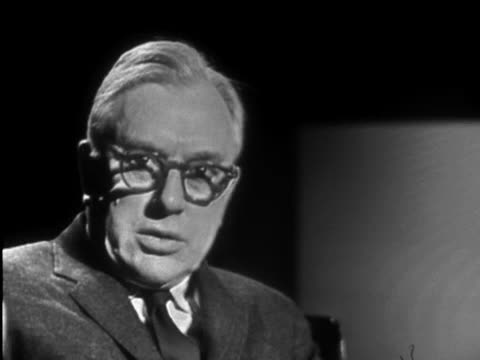
- Guest: James Reston, New York Times, Washington Bureau.
- Date
- 1958
- Genres
- Talk Show
- Topics
- Public Affairs
- Media type
- Moving Image
- Duration
- 00:30:00
- Credits
-
-
Producing Organization:
WGBH Educational Foundation
- AAPB Contributor Holdings
-
WGBH
Identifier: cpb-aacip-e6ec140dd74 (Filename)
Format: Digital Betacam
Generation: Master
Duration: 00:00:30
If you have a copy of this asset and would like us to add it to our catalog, please contact us.
- Citations
- Chicago: “ Press And The People, The: An Inquiry Into The Work Of The American Press In Informing The American People ; 2; Washington And The Press,” 1958, WGBH, American Archive of Public Broadcasting (GBH and the Library of Congress), Boston, MA and Washington, DC, accessed September 20, 2026, http://americanarchive.org/catalog/cpb-aacip-15-805x6r0p.
- MLA: “ Press And The People, The: An Inquiry Into The Work Of The American Press In Informing The American People ; 2; Washington And The Press.” 1958. WGBH, American Archive of Public Broadcasting (GBH and the Library of Congress), Boston, MA and Washington, DC. Web. September 20, 2026. <http://americanarchive.org/catalog/cpb-aacip-15-805x6r0p>.
- APA: Press And The People, The: An Inquiry Into The Work Of The American Press In Informing The American People ; 2; Washington And The Press. Boston, MA: WGBH, American Archive of Public Broadcasting (GBH and the Library of Congress), Boston, MA and Washington, DC. Retrieved from http://americanarchive.org/catalog/cpb-aacip-15-805x6r0p