WGBH Forum Network; Fairly Unbalanced: Writing Political Satire in the 21st Century; Cambridge Forum
- Transcript
Good afternoon and welcome to this special Cambridge forum presented with New England's freedom to write Committee today we're working in partnership as the New England presents its 2009 Vassell Stew's freedom to write award and host a panel discussion about the power and the pitfalls of writing political satire In the age of Jon Stewart. Al Franken the program is entitled fairly unbalanced. Our panel today is going to be moderated by Elizabeth Searl. She's the coal vice chair of New England and she is also the author of three books of fiction including celebrities in disgrace a satiric novella which is forthcoming as a short film from Bravo Sierra motion pictures. Her most recent work is a musical comedy. Tonya and Nancy the rock opera she is currently working on a novel inspired by Bristol Palin. Elizabeth teaches at St. Coast MFA. So
now here's our moderator to introduce the program and our panelists. But first an important reason why we are gathered here is to award Penn New England's 2009 Castle-Steward freedom to write award recognizing a writer who has suffered for the peaceful expression of his or her views. And this year that writer does happen to be a satirist. Good afternoon. The Vassell stews freedom to write award is given annually by pen New England to a writer who's currently being censored silenced or imprisoned. It honors Vasile stood as the Ukrainian poet who was the last writer to perish in the Soviet Gulag for obvious reasons. The award is most often given in absentia and this year is no exception. We've been unable to find a suitable proxy to accept the award on behalf of this year's winner and we're still trying to find the proper channels through which to bestow
the monetary portion of the award to this year's recipient without further endangering him or his family. The 2009 Vassos to us freedom to write award is presented to Nuremberg. It has seen in some countries writing can be the most dangerous business there is Noora Mohamed you are seen as a 35 year old writer a husband and a father. He writes poetry and essays and short stories. At least he used to once upon a time. Nora Mohamed Yasin is in prison. He was sent to prison in 2004 and he won't be released until 2014. He's there because he wrote a short story to be precise. He's in prison in prison because he wrote a good short story. The wild pigeon was good enough to be published. It was good enough to win an award good enough to be noticed and read and discussed.
But your scenes story was political allegory. A fable about a captured bird that would rather take its own life than remain in a cage and Yassine is a winner. You may have heard of the wiggers a mostly Muslim people who inhabit the oil and mineral rich area of China formerly known as Turkistan. People perhaps best known for their unhappiness at finding themselves a part of China to Western countries trying to paint the workers as terrorists or Iraq allied with radical Islam at home. China has been quietly dismantling their culture ethnic Chinese are being encouraged to move into Wigdor dominated areas while weaker homes are being demolished families broken up and dispersed to other parts of China in the wild pigeon. A mother warns her son that humans are encroaching on the birds traditional territory.
They want to chase us from the land we've occupied for thousands of years to steal our land from us. They want to change the character of our heritage to rob us of our intelligence and our kinship with one another. Strip us of our memory and identity in China allegory and satire are not acceptable forms of writing for a week or so. November 29 2004 the writer's dream became a living nightmare. Yaseen was arrested and charged with inciting weaker separatism. He was convicted in a trial held behind closed doors. He had no lawyer. Yasin was sentenced to 10 years in prison which in China means a work camp. In theory he'll be released in 2014 but he has not been allowed visitors. No one has seen him since he was transferred to Rome prison number one. We don't even know if he's still alive. Writing is a dangerous business.
Every American Should Know about Noor Noor Mohammed Yassine here where millions of people can watch The Daily Show and bookmark the onion. It's especially important to remember that in some countries the simple act of writing a short story can get you sent to prison. It's important to to remind the Chinese that the world has not forgotten this man that the world is watching and waiting for his release. Radio Free Asia is translation of the wild pigeon contains many moving passages. But for me the good don't like exchange between the pigeons captors as they watch the bird refuse to eat or drink is one of the most haunting. Just let him go. To watch a pigeon such as this. Slowly is too pitiful setting him free does us no good. Nothing good will come of this. Nothing good will come of this.
In any event thank you for remembering Noor have seen today we honor this brave young man whose only crime was to write a short story with the presentation in absentia of the vessel to his freedom to write award. Let's hear from you or Mohammed may someone surfing the web. Hear how much we care. Thanks. Thanks Richard. All right. Welcome to the Cambridge forum discussing fairly unbalanced writing political satire in the 21st century. I'm Elizabeth Searl co vice chair of Penn. New England. And let me first introduce our panelists and then we will have our dynamic demonstration of satire work by Jimmy Tingle and then we'll move right into our consideration of the power and pitfalls of writing political satire in this age of Jon Stewart's
entertainment news that many turn to as their major source of information of Al Franken the comedian and satirist who's become a serious political candidate and who spoke right here several years ago. I was lucky enough to be in the audience and I remember he received a standing ovation before walking onto stage just by being introduced with the title of his book Lies and the Lying Liars Who Tell Them. And I remember well the feeling that some had at that time especially that the closest thing they could get to the truth came from satirists and comedians. So here to discuss the art of writing satire in the time when a 24 hour news cycle can transform fair and balanced into fairly unbalanced are our fairly unbalanced panelists. First Percival Everett all the way from California is a distinguished professor of English at the University of Southern California and author of 16 books including And we have it over here. The 2009 publication of I am not Sidney Poitier three collections
of short fiction and two volumes of poetry his many awards include the pen Center USA Award for Fiction and the Academy Award from the American Academy of Arts and Letters. And thank you Percival for coming so far. Baron Wormser herbicide first of all is he wrote poetry and worked as a librarian for 25 years living with his family in an off the grid house on 48 acres in Mercer Maine. His memoir The road washes out in the spring a poet's memoir of living off the grid concerns that experience the author of eight books of poetry and three prose works he was poet laureate of Maine so he has walked the corridors of power since 2002. He has taught at the University of Southern Maine's MFA programs stone coast and the big banks Baron and beside him. We have Lisa Haynes.
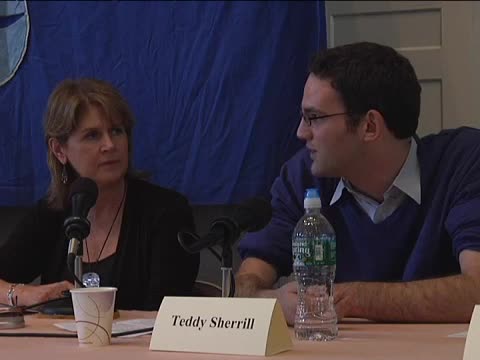
Lisa is the author of three books including her most recent small acts of sex and electricity. She is the writer in residence Emeric Emerson College and has served as the prestigious Briggs Copeland lecturer at Harvard. She has been a finalist in the pen Nelson Algren awards and the Pettersson fiction prize. Her new satiric novel girl in the arena is forthcoming this fall from Bloomsbury. Thanks. Lisa representing the Harvard Lampoon we have Teddy Cheryle the Harvard Lampoon is America's oldest continuously published humor magazine. It's long been famous for its satire of many types including thake issues of major magazines its editors have included George Plimpton Fred when John Updike its writers are widely successful in American TV comedy from Al Franken on Saturday Night Live to Conan O'Brien and B.J.
Novak. Thirty six Lampoon writers have worked for the Simpsons. Teddy Sherrell represent the Harvard Lampoon and on our panel. And finally to get us in gear for our discussion and to give us this demonstration of political satire. We have Jimmy Tingle down at the end there. Jimmy Tingle proudly born and raised here in Cambridge broke into Boston's legendary standup scene in the 1980s and quickly moved to paid gigs. His many TV credits include two seasons on CBS's 60 Minutes too. And he co-starred in PBS travels. He is the only Boston performer who has won a Best of Boston award both as a performer standup comedian and producer. His Off Broadway theater Jimmy tinkles uncommon sense the education of an American comic became the longest running one person show at the hasty pudding theater. His most recent CD is humor for humanity. Jimmy
Tingle for president. The funniest campaign in history available at his Web site Jimmy Tingle com. Welcome to Cambridge form with an excerpt from his show Jimmy Tingle. Thanks everybody for coming out this afternoon for such a great cause. I just like to start off on a positive note satire sometimes is very positive and uplifting some good news ladies and gentlemen. They say that Americans are living longer and healthier lives than ever before. They say that 60 60 years old is the new 40. I love that. 80 is the new 60 100 is the new 80 and the afterlife is the new assisted living. I love that. Now to the satire what with a mortgage companies thinking do you have a job. No I don't. Do you have any money in the bank. I really don't. Do you have any kind of collateral. Not at all.
You're going to need a house. I was reading recently that Delta Airlines Delta Airlines lost six billion dollars last year. Northwest Airlines lost $5 billion last year. Now they want to merge. Well kind of a business plan is that. We lost six billion dollars last year. Are you kidding me. We lost five billion. We should get together. But I was thinking if rival corporations can merge for their own mutual benefit why can't the pro-life forces and the pro-choice forces merge for their own mutual benefit. I am suggesting that Planned Parenthood merge with the Catholic Church. To create the largest reproductive rights adoption center in the world. Planned Catholics of the hood and focus on what we have in common. Wall Street lost billions of dollars last year. Yet many of the executives still
felt they were entitled to the end of the year bonuses because they compared their bonuses their multimillion dollar bonuses to tips for a waitress. Really. Let me ask you a question. If you order a steak dinner from a waitress and she loses it. You're supposed to tip her. Why can't the federal government fully fund national public radio and public television. Why. Why do they have to constantly do fundraisers. Why you don't see other publicly finance institutions in this country doing fundraisers. You never see the space program do a fundraiser. You never see some retired astronaut come on television and say listen we just put a man on the moon. We need a million dollars to bring him back. He's running out of gas. Let's go to the video clip. I can't see he's turning both. Are you going to send money or are you going to let him turn below.
Now some people of a recently say in all run television that waterboarding is not a form of torture that waterboarding is simply an enhanced interrogation technique. Right. I'd like to say the guillotine is not an instrument of death. The guillotine is merely a sustained cranium detachment the vice. You know what I would love. I wish Obama could put amnesty international in his cabinet. OK for a couple of reasons. Number one they're experts in terms of human rights. Number two by having him in the cabinet it would relieve them of the burden of fundraising these people's work is so important and they use so much energy asking people for money that they burn themselves out and they burn all the people who support them. I love the Amnesty International. I send them money all the time every 90 days I get another letter in the mail asking me for money. You can stop torture you can stop torture you can stop torture. So can you send to make things in the mail. Oh my goodness. And the Senate recently voted to build a 700 mile
fence across the Mexican border. Now a couple of problems with the 700 mile fence across the Mexican border. The first problem the border with Mexico is 19 miles long. I'm not an expert on immigration. But I would surmise that people fleeing abject poverty will go around the fence. And when you think about the risk these people take take that come to this country are they not modern day pilgrims. Think about that. Sneaking into a country to work. That's incredible. That's like somebody breaking into your house to clean it. Thanks so much for that listen to me folks enjoy the rest of the afternoon. Wow. Thank you Jimi. Great way to start. And we also thought we would start by giving each of the panelists a moment to say a few words that have a little brief reading or rant whichever they prefer.
And so we'll just pass the mike down in effect to Percival Everett first and let him say a few words to the audience before we start a discussion. First of all. I was afraid I was going to rephrase the first I don't know why I was invited here. I'm not. Really a satirist. And my first my initial impulse was to somehow make fun of panels and that's why I will. It's it it seems. Those of those who who who are on the other side of the political fence for me have this way of making up slogans they can capitalize their entire political beliefs and in one line. You know things like you can have my gun when you pry it from my dead cold fingers or something like that. And it seems that all of my friends instead will so spending our time writing slogans we write a page position papers and then we get together and discuss it. And by the end of our three hour discussion we realize just how complex the problem is.
But nothing for a poster though actually an eight page poster might be a good move. I don't write about politics as much as I write about the American experience. And it was as I said here it's it's I've always made myself a promise that I would never go into a church. But here I am I was tricked. I'll leave it at that. And very well I'm going to read a poem which is from a series of pumps I wrote about United States president who is a character whom I created and the president's name is Carthage. So he's named after that empire that was raised by the Romans. And so there's a little poem about this president.
It's called Carthage and airplanes. Carthage likes to ride in airplanes up in the sky. He can forget about the schedules of Earth. It is almost like thinking. Gazing out the window at the clouds. He likes to ponder. We're pretty high up he says to his aides. I wonder if we could go much higher. Everyone looks thoughtful. Back on Earth 10 year old TFT who says people drop dead on sidewalks friendships sours like old milk. How much better it is in the sky. Too bad you have to be going somewhere. Too bad the endless limo will appear and some suit turban. Or does Sheekey greet you and start telling you about what's going to happen soon or
happened yesterday. Why don't you fly around more. Carthage would like to say to them if you live in the sky nothing happens. You don't even see the rain. It is almost like thinking. Thank you. Thank you Karen and Lisa I'm going to read a short excerpt two pages from this novel that comes out in October called Girl on the arena and I have to set it up just for a moment for a brief intro if we can imagine our country as we know it in 2009 with this edition Neo gladiator sport. It is a high profile televised blood sport that rivals the NFL. My 18 year old narrator Lin has grown up in this culture as a neo gladiator daughter her
mother Alison has married one gladiator after another and each one has died in the arena. Lynde's current stepfather is her seventh father. She has begun to recognize that she might just be a pacifist and she isn't sure what to do about that. Chapter One girl in the arena. The clerk asked for my autograph. Do it right across my face he says. Usually when we're out in public everyone wants Allisons autograph. My mother is as famous as the men she is married. Over the years she has signed stomachs tip sheets shoes baby carriages even a sandwich once and of course thousands of arena souvenir booklets. But until recently few have asked for my signature before I can stop her. Allison tells the clerk that I'm the daughter of seven Gladiator's. Alison is on her usual kick. She wants to open me up more.
7. The guy laughs. I bet I've seen you on VH 1 right. Not really I say no no it's ESPN. I know who you are. We're talking real Glantz right. Swords shields heads flying arms lopped off that TV show with a bunch of buttons and car going nuts right. Mortal Kombat Elsom confirms with a slight smile though not always to the death. That's what I mean he says. Mortal Combat. We're at the store in Cambridge that has an underground operation selling war tickets. They aren't actual tickets they're just called that. You place bets on which countries will end up going to war with. In other words which countries we will bomb senseless. The store handles bets on all sorts of standard gambling as well. Scratch offs quick picks. Alison says our chance of winning war tickets is a whole lot better than the state lottery. And now that I've turned 18 I can buy my own glass
countertop. She leans against is part of the cabinet holding an entire display a miniature Baghdad scene with U.S. and Iraqi troops soldiers taking cover. Heading out on raids tiny men and women that look like they've already been blown up. My guess is he got that effect by melting them with a lighter. The clerk hands me a marker now he holds his hair off his forehead. So I have plenty of room to scrawl over his greasy brow. I admit it's really the only space he's heavily tattooed everywhere else I shoot Alice in a panicked look. But she continues with her ticket picking picks. I lift the pen. Don't worry if you hit the nose it's been broken so many times I can't feel a thing. This is permanent marker. I say nothing is permanent he says. So I sign Lin G quickly and then I buy mine five Ahrons three Afghanistan's two North Koreas. It's easy to feel horrible
about this kind of purchase. Being a pacifist and all but if it's going to happen anyway I just want to make enough money so Alison doesn't have to worry as much about my brother Thadd great samples of the work here and now Teddi Carol. Thanks Elizabeth. As you said I'm Teddy Cheryl probably the youngest person on this panel and definitely the least qualified. But as you said I am representing the Harvard Lampoon which founded in 1876 is the oldest comedy magazine in the world. I'm very honored to be here to discuss these interesting and important issues. I'll quickly tell you a little bit about the lampoon the Lampoon as I'm sure you know likes to boast about our many illustrious alumni from John Updike to Conan O'Brien. But we don't really brag about it. I'm going to correct something you said earlier is we don't we don't really brag about our illustrious failed applicants. Which Al Franken is actually one of you is not
is not elected. Al Franken the famous satirist who graduated from Harvard 73 applied applied to be on the Lampoon and was rejected wasn't what many people don't know is that he actually came very close. The case went to the Minnesota Supreme Court. Where Norm Coleman was actually elected to be an editor of the publication the Lampoon was actually once a bastion for satire especially Harvard related satire. But in recent decades we've tended to steer away from politics. In fact I looked this up the last presidential candidate we endorsed who was Calvin Coolidge. Of course we endorsed him in 1960 long after he had passed away. But in very recent years we've started to get back into it by reviving our old tradition of parodying real magazines. And while we're proud to say that these recent parodies have gotten a bit of notice in the news. Our business staff tells us that our readership remains between five and 10 people all of whom are parents like thanks Teddy and Jimmy you just gave such a fantastic
example of your work. But did you want to throw in a few words before we dive into the questions or do you want to just jump right in. Sure. OK well we put together a bunch of questions. The freedom to write Committee and at a certain point in the show Pat is going to come up and we're going to open it up to the audience to be thinking of your own questions. But I think I'll start with just some current events here to get us going. Very recently I think this past week maybe Karl Rove called satiric writer Maureen Dowd a bitter twisted deranged columnist and now you're playing with fire here whenever you do any sort of satire or touch satiric material. I'm wondering if any of you have had bitter twisted deranged responses to your own satiric works. Has anyone generated some actual hate or anger. I've only had those reactions. You know I'm it's an incredible compliment that he paid her. Right. Yeah. Yeah.
Well it made me wonder if if Rove thinks the Pulitzer Prize Committee is a subversive organization or simply bitter twisted enduring and honoring her with a Pulitzer. During that time you were at the Lampoon did you ever get in hot water with the things you did. One we actually did. One time we published a parody last year of National Geographic where we included an article that The Washington Post interpreted to be very offensive about AIDS in Africa. They completely misinterpreted the article it was about National Geographic and how they cover third world cultures. But they wrote some pretty inflammatory things. We were just honored that someone had noticed our parody like we didn't think anyone read it or knew about it so I guess to ask what was said. It's a huge compliment to have somebody disagree that sort of intensely with something you said right. Yeah. And Jimi you must have over the years have you run into any real angry responses. Yeah. Usually as a comic the response is silence. You know when you walk on stage and it really doesn't work you know you just hear crickets going in
the back of the room. But there's always if you do any political humor like call Wolf's statement for example there's a lot of people that are pretty vicious in the media all day long talking in various mediums. But. He doesn't go after those those people he goes after the person that he's whose point of view he disagrees with and that's usually how it works in terms of angry reactions whether it's right or in. You know a in a country like China that is threatening to to the status quo or maybe just a comic on stage or somebody like Maureen Dowd who's whatever she's writing Did that upset him. I'm sure it was just something he didn't agree with this was with his political point of view. I'd been at events where people have asked for their money back. Sure. I've got Yeah. And I thought the tide was turning in about oh right around 2004. And I did an event. There was a corporate event and they didn't it was funny. They wanted their money back. It was the strangest thing. So I gave them their money back. They go I don't
want your money if you don't think this is good if you don't think I did the job for you. You know for your organization that's fine. You can have that. You can give the money back. They were embarrassed about it but it was political satire it had to do with Guantanamo Bay. Right. It had to do with the story at the time that the Qur'an was flushed down the toilet in Guantanamo Bay and then they and Newsweek had to do a re you know up a correction said it wasn't the Koran. They had made a mistake. It was the Geneva Convention. That was that was actually flushed down the toilet. But stuff like that they didn't think was funny. Well now you know you've just mentioned a whole bunch of hot button. You know times when you grabbed hold of you know how do you guys come about you know what you take hold of in satire what you'll take on have you come upon topics they're too hot to handle ever attempted to satirize a subject then pulled back finding the material in some sense that you couldn't get a grip on it or what would what drove you to throw in jokes about Guantanamo Bay or you know you did take on some of the subjects you've taken on in
your book even though you might not think of them as satire but they're certainly hot button subjects. Oh. I don't know. Those subjects occur to me but I don't think I've ever been frightened off of anything by how I think people would respond. I have a novel that's called the title is a proposed history of the African-American people as by Strom Thurman as told to me I was told that first of all Everett and James Kincaid and I wrote this with my friend Jim Kincaid. But the novel came to me. I sat up one morning and I thought. That I would write a history of black people in America. But right from Strom Thurmond's point of view what became apparent right away was that. I couldn't do it unless I found something to like about during one of the things I didn't like about him was I realized that he didn't dislike black people he just like white people a lot more. And that. And that in some ways he was exceptional.
But you can read that how you like you back up more because I'm not connecting to the Strohm. I didn't back off so much as I came to understand more. Yeah. And there in these poems the whole book Carthage seemingly to resemble possibly George W. Bush. What drove you in that direction. Well you know I just instinctively I really want to write about a hapless human being. And you know I started writing the first poem and I realized Oh I think I know who this person is. You know. And so that was just kind of connect you found that. That's right. That's right. That poem was written before the whole hurricane fly over. Right. Yeah. And I know Lisa here. Her first two books she would say herself I think are not satiric or taking on their psychological novels. I was talking to the other two psychiatrists and she said well kind of novels do you
write and I said I think there's pretty psychological and she said what novel isn't. So that didn't give me any grounds. And yet so what drove you into the satiric arena with this girl in the ring. I'm not sure exactly. I keep trying to figure out the exact route. But one thing that came about was that I was in a video store when they still had video stores with my daughter. And she handed me a video and said look at the warning. And it was intense prolonged sequences of disaster and peril and I thought that sounds like our world. And that was your title at one point right. Yes it was it was and then I saw my daughter one day doing gaming on the internet. I can't remember if it was teens second life or World of Warcraft where you create an avatar someone who represents you even if they don't look at all like you who can get hoverboard and fly through the air and kill demons and so on.
And she had a spear through her chest and I thought am I supposed to call somebody about this. I wasn't sure. And so these different forces started to converge. And I. And suddenly I was writing about this young girl in this gladiator culture and for six months I kept thinking Why the hell am I writing this. I have no idea. I abhor violence. What is going on. And then I started to realize that in what what transpired over the last eight years everybody had to make some kind of shift in their lives and in their thinking because whatever. Happened with Bush and Cheney that golden that Midas touch they had were going to be paying for that gold for decades to come. So we all have to make that kind of shift. Teddy What years were you with the Lampoon and what did they take on and I know they're not always
political right. They take on satire of all sorts of things. Yeah Lampoon it. I was there from 2006 2008 the Lampoon actually relatively rarely delves into the political right. I think part of that especially especially recently. I mean certainly a big part of it is that we're just not that informed. But another part of it likely is you know I think perhaps until the Obama campaign you know maybe with some exception for the Dean campaign in 2004 I think that there was a sense of sort of checking out and sort of focusing on you know other things where the Lampoon felt they could have more more of an effect and you know there may have been some sense in which politics just wasn't that interesting it seemed like something where you know there was this terrible situation we couldn't effect.
Right. And you think that shifted to an extent. I mean I think still is not you know still folks is way more on non-political humor. But I think that overall I mean more there's certainly more involvement. I think as a trend towards political stuff. Right. Yeah. And Jimi what drove you into this business when you. First you know you try to make sense of the world. And as a comic it's an unbelievably liberating medium to be able to get up on stage and just say whatever you want to say. It's incredible and I think when it comes to political satire social satire it depends on the individual if they're interested in social political topics or themes it's going to be reflected in their wrocht they usually and I was just always interested in that type of material. I grew up right here in Cambridge as we all know it's a very academic city. I don't want to brag but I'm from a very from a long line of intellectuals
myself. I'm not saying I'm better than anybody here I'm just saying that. Growing up we live right near a college now. Is a matter of fact my father drove a cab here in Harvard Square. He would pick up a Harvard professor that would tell him things. He would come home and tell us. So. All that information that I gathered all those and we went everywhere in the cab our whole family whenever we were in my dad's cab. I mean everywhere I went to my father I kid you know he took us hunting in the cab. And I thought we going to the White Mountains he brought us to Woburn. But anyway it's just something that you know and I loved it. I loved it and it was passionate. Like the writers have talked about sometimes your writing and you don't even know why you're writing you don't even know what your goals are. You're just writing what's coming now. George Carlin had a great quote. I read an article an interview with them in Playboy magazine many years ago in the early 80s he said I don't know why I did it. It was all this stuff just screaming to come out.
And that's you know that's really what it was for me. There was no goal to be on the Tonight Show no goal to do street performing in Harvard Square. And I admit there was a fine line between street performing and simply being drunk in public I admit. But anyway so it was just a really a personal journey I guess personal passion. Yeah I love what you say about screaming to get out. And one thing we were wondering. Actually Richard Hoffman came up with this question which it's kind of trying to get at the deeper motivations he said it is if it's true that satire masks defiance with metaphor then toward what do you feel defiant and where have you found these metaphors to mask or couched that defiance or you know in some cases you're seeing it right out straight as a comedian but anyone want to jump in on that. Do you feel there's a sense of defiance in you. Like when you decided to write about George Bush or were you coming at it from a different place. Because I think of his George W. Bush poems is taking a Zen approach to the subject.
Well it's you know he said anger. I mean yeah I absolutely agree. With you with the defiance. I just think at times. The powerless does that you feel is unbearable. And you wonder how you're really going to go on to another day. And as a writer you know I have to get to that place you know can't really quite go on living with myself if I don't get to that place. And also it just came back to me actually. I'm looking at Teddy because it's so long ago. But I was almost thrown out of college in 1968 for satire. We did a piece on the college newspaper of Man of the year mass murder of the year. And we did the guy in the tower in Texas the guy killed the nurses in Chicago and Lyndon Baines
Johnson and the University looked at that and said Those guys are out of here. So it does come back to me defiance. Yeah right. Yeah knew in your fiction do you tap into that or you know that's fine about a lot of things I suppose. John Daly stuff about what I have to do around the house. But it's I find I used to be angry a lot of the time but now I find I'm I'm mostly amused and a sad sad amusement but I you know it's the sort of thing where I wake up and I read the paper and I think wow I never could have dreamed that up. And it's. And there a bit of of of morbid fun in it and I. You know I'm admitting to that. It's the first time I've actually admitted it to myself but there is a bit of morbid fun. I just.
And you had a there was a question on the sheet that you distributed to us our cheat sheet which which. Which asking if I forgot the question how memory is a thing I'm defiant about to. It's. Well I can't remember what it is so I let someone else I'll skim through and see if anything matches up I love that phrase morbid. He said morbid fun. I can get a word in. Yeah yeah. Now Lisa you were talking about as a mother and a person you were feeling a kind of anger. Yeah. I mean I think that in the back of my mind and I think if you write a novel or a work of fiction toward an end you've got a very wooden rotten piece of work when you're done. But I think somewhere in the back of my mind I was meditating on the level of violence cultural violence that in particular that young women are experiencing because I think there's so little that's really written about that.
Do we see a lot more young women going off to war. They go off to war. They get raped by their own troops we have dating violence. We have girls cutting themselves so they're turning the violence on themselves and all of these things get worse as the economy gets worse. If we look at the last census there's something like 12 percent of American families or father or mother child or children. And we have a great number of single parent and particularly single women homes and those women are making less on the dollar. They're paying more for services. I mean you can go on you know you know the litany I don't need to go through the list but violence is impacting young women in a way that they don't even have any cultural reference for. You know they did not grow up pretending to shoot guns and so on. It's just suddenly all coming at them and how do we cope how do we survive.
And I'm curious with them what Teddy said you know about a lot of. Your fellow students were very apolitical for a long time and feeling a sentence of nothing I do will make a difference. And were you that way do you feel that's shifting. You don't seem like an angry person. Was anger a part of what got you into the political satire in satirizing business. Yeah anger. I mean I think something that really resonated all the accusations of various types of electoral fraud and just the sense that the political system was in some sense rigged or you know I think that there was a lot. A lot of the sense of efficacy was sort of removed. You know I'm not sure you know I don't want to make a blanket statement about you know my generation or anything but I think there were there was a degree of. You know a degree of the sense that it was all you know sort of some sort of game that we could you know that was being
controlled by people who weren't us. Yeah. The Lampoon in particular is an interesting case. The Lampoon is not political in the sense that it is interested in any particular political end. But it is defiant in the sense that it likes to mess with people. That's you know the Lampoon I think is sort of an example of this sort of undirected sense that you know that's something people feel where there's not necessarily some arena some political arena where one is trying to make a difference but rather just a general sense that you know you'd like to disrupt that sort of system that's that's going on right. Yeah. It makes me wonder with the photographs we're getting back from Iran. Have you seen some of those and the protests in the streets. How do you see
the use in general are going to respond to that and you're not responsible for the whole use. Thanks. I'm relieved to hear that. But she did say there was kind of a change going on. Yeah. Well I was personally very. I was really inspired by some of the photographs that I saw the streets of Tehran. You know it's really interesting to see political protesters that sort of look the same age as me. And yeah I mean that that in particular and fall in coverage of that in particular did seem like something that was worth you know was you know no matter whether the results of this election changed. It did seem like the beginning of something. Yeah and I wanted to be sure to ask Jimmy this because I think one of the remarkable things about your career as a comedian and some of the quotes we had about you rave reviews and so on
that you do manage to have in a sense an upbeat you know act it doesn't come across as you know so much angry dark humor. But do you feel I mean is that something that fuels you underneath that or. I think what it is is you're in front of people and it's like there's a direct connection and they paid money and they're not going to a lecture. They're going to a an entertainment event. By and large. So my job really is to to make them laugh. And so it's it's hard it's hard. There were many long stretches of my career that during the 80s that was just really it was very strident. It was much more strident and if wasn't an audience that agreed with me they probably wouldn't enjoy it. Know a lot of those nights so I just try to develop my own shows and do theaters and I try to work in venues that would you know kind of be on the same wavelength as I was because the great thing about a theater audience is you can be serious for five seconds five minutes and it doesn't come across as oh my god he's bombing. There's
not a there's not a laugh in five minutes you know. And that's the difference between the club scene but really trying to figure out what's going on and sometimes just connecting the dots with the humor. I mean you know last eight months or whatever six months in the country look at all the things that have gone on. OK you've got to rent in Iraq and Afghanistan and Pakistan and unemployment and Wall Street and housing crisis and all these things are going on at some point I say well geez what else could possibly happen. Pirates. Pirates. What's next the flow. I mean. And so sometimes it's just a matter of trying to connect the dots and just hit people you know where they live in terms of Britain. Everybody laughed at exactly pirates What a thought would come off. It's great to see you know I'm so glad you were able to give a demonstration of this kind of live you know stand up routine. And I was wondering actually because Penn focus is a lot
of course on writers and the written page and of course you write your own material which is great to have you here but a little quote that struck me recently as in this guest edited issue of Newsweek. Stephen Colbert denounces quote the corrosive influence of the print media. Adding quote I prefer to yell my opinions at you in person. These days of course with the. Impossible to overstate power of Jon Stewart etc. that you know. Satire is kind of more effective on TV or on stage than on the page and you know are there satirists who are writing specifically on the page who are you know having the same kind of impact as anyone can just jump in on this. What do you think. Well television comes across obviously went into the living room and it's live and there's an audience and it's just an easier thing to absorb than reading. And so that's that's a big part of it.
You know we tried to get Maureen Dowd focus and got a very nice you know response but she couldn't do it. But you know of course I just was reading this you know angry I mean she certainly stirs up trouble in print. You know without being alive. But yes who are a satirist who come to your mind who are specifically you know we have two fiction writers here and a poet in the world of fiction and poetry who have an impact do you think. Well again I don't view literary fiction generally as being satire per se. It might well comment on on politics and things that are social but attempting the television television attempts to address things that are immediate and the effects are immediate and short lasting. But hopefully with with literature the effects are are are a little more sustained. I still read my favorite satirists would be Mark Twain. Does he speak to any particular specifically to anything that's going on now.
No but generally about the human condition. He does the same of Swift and the same of of them who is the cowboy will Roger Roger. Yeah. Who in the poetry world does anyone come to mind. He's really well you know as we saw earlier and heard your aria when Richard. Gave the award. There are people all over the planet. Who are struggling with horrendous political situations certainly for me a crucial writer over the course of. The second half of the 20th century as the Polish poet. Yeah. Herbert who you know in Poland is an enormous figure. But I think the difference for me of a writer like Herbert or Twain or Swift is that they're able to take satire past the sort
of immediate response into the world of reflection. And so it it goes to a deeper place. Television is fine but it's response basically. And then tomorrow there's another response. Whereas people like Herbert or twain are able to certainly be in touch with satire and humor but to go to her reflective place about the human condition. Yeah. And that was another question that was thrown out as you know is satire intrinsically short term. You were giving some good examples of where it can last you know how to steer novels manage to stretch that out. And you know again people were asking is it more suited to the Internet. You know it's different kinds of thing. There is the rapid response time that you do in your readings down there any one spring to mind fictionally or just purely on the page and go I'm going backwards I'm looking at Vonnegut and catch 22 right. Yeah. I'm not I'm not sure exactly who's doing. Really. Modern right now. Yeah. Who is the Vonnegut right now.
Sonders Yeah. Yeah I think that's a great example transponders. Tom Robbins Yeah. And Lisa by the way you got a wonderful quote from Dan Rather than her novel. Thanks Andy Borowitz. Good and great the book which we put really funny very short you know a couple of hundred words almost daily. Really really funny stuff. Don DeLillo writing do it. Lennon and Teddy who we to make you reference that you began with in terms of people in their 20s. Or is there a Vonnegut out there. Do they read George Saunders. Do you feel like people in your generation. First of all a lot of Lampoon grads I'd be remiss to point out including Andy Borowitz were just mentioned. I think the onion is basically the place where you know young people get their satirical
news. And the onion is an incredible institution. I mean it's just been going for so long in publishing for so long not staying viable from a business perspective. It's pretty impressive. I mean I look at Glenn and a lot of people probably read poltroons column that you just wrote about the sort of intensity of hate from the right wing media and then back when you responded started out with the New York Times that that still exists. I'm not surprised. So I think there is this sort of almost occasional bullying between media where the printed word is sort of looked down upon from other media. And so I think that that sort of comes out you know across all sorts of forms of writing satire definitely included. I was just going to say that I think one of the turning points. It can be satire can be really really effective and open the door for other people give can give permission to
serious people to be more critical. And I think a turning point in the Bush administration and its popularity and also the off limits nature of his presidency after 9/11 right now one of that one of the turning points was Stephen Colbert at the White House Correspondents Dinner. I believe it was 0 5. It was right after that. And you know whoever put him up there I thought he was the character on television. This you know gung ho conservative you know whatever and he gets up there and he was just incredibly funny and insightful and it and I think in that forum seen all those other journalists in the room who. I think a lot more reserved in their criticism of their critique or just the way they wrote about the administration. All of a sudden it gave them permission to be more at least objective. So is that right. And in the room it was said to bomb or whatever but then came this enormous
hit on the Internet. Right. Just unbelievable. It was said to bomb because they were afraid to laugh. Not only were they afraid to write. They were afraid to say I don't think there's been anything that's affected. The culture that we live in the way say. The painting Guernica affected the world. I said something about us. But the other question that I remember on here as well this sort of reflects it was whether. Our times are are are the worst more or less. And it seems to me we're always proprietary about bad times and our time is the worst. And let's face it you know things have never been good as far as human beings have been concerned. I just think it's remarkable that we can aspire to be better given our history from Elizabeth
Benedict referring to George Bush and Donald Rumsfeld. She said they can invade countries and force their subjects to maim and kill thousands of people. The power to make people laugh is what's left over for the rest of us who don't control armies and vast personal fortunes. Yeah and I think there's definitely been points when you know people felt like that was the only outlet I think that's part of Jon Stewart's power is when he rose up he seemed to be in a sense to some people telling the truth you know and you know having a kind of truth that you can only have with that kind of humor so there's just a tremendous amount of artistic freedom and liberty and humor you can say whatever you want on you know and the targets are not. They don't have to be limited to one political party or one individual or anything like that. You know that's one of the great things about it. I think one of the struggles is is to try to be you know to look at your own political values and to criticize
your own opinions somewhat your own political feelings. That's always a challenge yeah. Jon Stewart Oh sure. Let's bring in Jon Jon Stewart said about his show. It is a release valve in some respects. And if that's what we can be for people at times I'm very pleased to see that. You know I think there is honor in being that little thing on the tire that you unscrew. I love that they were bringing him in. And you were going to say something too. I was just going to sort of agree with Jimi's point about you know taking Jon Stewart as an example. But especially you know sort of the fake news or TV not giving people a really accessible voice to be cynical and critical of the news. I mean I read something just sort of a post on an internet message board a few days ago where somebody responded to the Iranian elections and they wrote I can just imagine
what Jon Stewart would say about this and then they say we're in it. After after angering the United States Israel Europe etc. Iran has had another group of people to to anger Iran. And and it was just interesting that to me that the way that it that somebody that this poster on the internet thought the way that they came to the conclusion that they should be cynical about the news was they imagined what Jon Stewart would say. Jon Stewart Yes exactly. And I think there's a sense in which the more popular a certain form of expression becomes the more people start to think and that voice and the more the implications of that voice sort of beat themselves into their consciousness. Right. Yeah. In terms of changing things. I mean that you know that I think a whole generation has got that voice in their consciousness not just him but a whole series of you know comedians who kind of use that ironic perspective.
Now what. Yeah I just wanted to add that you know one another thing is when the politicians themselves go on shows like Saturday Night Live right on they use humor themselves. It has a great humanizing effect. Oh yeah. With the audience now when McCain and Obama did the was at the dinner hour Al Smith Dinner in New York right before the election it was great to see them both being funny with them logs and the same thing with Sarah Palin when she went on Saturday Night Live said I was doing some great stuff on her for months leading up to the election. And that was just great for them. It was great for the country. Sarah Palin went on and I thought it was a huge huge victory for her as well. She came off very funny and confident when they won the rap song about her. She's up there and saying stuff. It was great. Yeah. Yeah. And you know speaking of turning point I mean Tina Fey You know how much did she have to do with you know the whole because there was a time there where Sarah Palin was surging. And then I think that impersonation so brilliant and so perfect you know had a
certain impact. And yeah. Well you remember the satirise for Sarah Palin with Sarah Palin. I know when they had on the Internet her actual words with Tina Fey and that was very effective too. And now of course she's been in the news this past week. Very much so. You're stirring up a lot of controversy about David Letterman's joke about one or another of her teenage daughters. It it matter which one. And they really are. That's got people quite inflamed and I wonder that might be a sort of silly example of this but are there areas where you feel like satirise should not go I mean you know political families are trotted out very prominently on stage and yet are is. You know during the Clinton administration there would be criticism of Chelsea Clinton jokes and things like that. Are there places where you personally wouldn't go or where you feel satirise wouldn't go or is that whole notion you know goes against the spirit of satire. I think it depends upon if the person has brought it on themselves. You know if somebody is out there
campaigning for their father and have a politician in there and they're of age if they're over 21 and they're campaigning that's different. If somebody is 15 and they might you know look a certain way or have some weird you know mannerisms and people going after them. In my opinion it's kind of off base. It's off limits for me personally but it's all it's all up to the person who with their own sense that own a compass that makes them what their level comfortability is right. There was a line. I don't know if it's a line that gets crossed but there is a duplicity. If anyone had made. And I can't stand Sarah Palin. But if anyone had had made the comment that Hillary Clinton was wearing slutty stewardess clothing I would have been in it I would have thought it was sexist. So in that same way I have to think that it's sexist when it's said about certain people and so I don't think. That that's acceptable.
But I'm not sure why it's not right. Right. I'm glad you mentioned that because I would definitely be on the side of you know being open to making fun of anything and yet there were things that happened to Hillary Clinton during the you know nutcrackers made of Hillary that were what have you. And you know there there were a lot of people quite upset about that and it seemed somehow different than what was being directed at other people. It's hard anyway. I think I actually think Hillary owns her. Oh Hilary. Yeah yeah yeah. They're all on different story. OK. Feel free to line up at the microphone and we've already got somebody there. So do you want to just address your question either to someone specific or to the whole panel whichever you prefer. Well I like to give a couple of examples on the matter of what goes too far. Try a couple of ideas to go there. Amy Goodman was one who got all upset when Newt Gingrich's
mother said that he referred to Hillary as a bitch. Now he didn't say it himself. She told Connie Chung that and Amy Goodman devote several pages to this going on and on and on about how horrible it was. But your boy Al Franken in his book which you mentioned earlier several times refers to Ann Coulter is a bitch. Is that OK. Do we have a double standard here. Hey good panel denounced this. And finally I want to drag in the example of the Sean Delonas cartoon in The New York Post which portrayed the stimulus package as a chimpanzee being shot by the cop in New York City and some folks the lefties usually are mostly the lefties. Saw some connection between Obama and a chimpanzee which is not intended. So is that what is it with liberals and leftists who see automatically so quickly connections between monkeys and black people.
OK well let's take that question. He's asking you know pretty clearly here what someone want to jump in and address that. Do you think there's a double standard in terms of what people get outraged by. Well I have to agree that I didn't think the cartoon. I didn't think of Obama when I saw. The chimpanzee and I was amazed that anyone did. And I think that was more an indication of the deep seated racism of all Americans not just conservatives. I didn't think of a chimpanzee when I saw the chimpanzee. But. Given that Ann Coulter is a bitch. I don't find any duplicity there. Well. It seems to me there's a difference between derision which is calling someone a bitch and satire. So you know and I don't quite see
you know see derision or operating under the auspices of satire I suppose if it's if it just derision then it's just derision name calling to me is derision. That's sort of the end of it from either of you want to jump in on that one. Yeah I mean I think it's know specifically a gender based division in the word bitch. I think people get derision. I mean people can use it as a code for all sorts of substantive issues but by tangling it up in a gender specific term I think you sacrifice a lot of credibility. That's right. And I think when that word comes in whether it was directed at Hillary Clinton or you know Ann Coulter people do get riled by it. I mean that does tend to happen on both ends. I think you want to ask a question here. You can probably jump that out of first. Just a point of information. I think
there are tons of histories of black people written from the perspective of Strom Thurmond. We generally call them history textbooks. But the question is have any of you talk about some direct experiences where your satirical work and say in the work of a particular social change group connect you know we are working together and you see some changes happening because if reaching people through the satire. I have a novel called The ratio in which the main character takes on the novel takes on the publishing industry and its insistence on creating. The category black fiction. And since and when the novel came out I actually mentioned Borders Books and
in the novel as a villain. And when the novel came out I was called by Barnes and Noble. Someone from their corporate office called me and assured me. As if I had any power that they would not have a black fiction section. They would however continue to put independent bookstores out of business but they were not having a section to and women's section Megalia women's fiction Yeah it looked like there were other ethnic groups connecting up with what you're doing with you know violence against. I don't know it's too early. It doesn't come out talked right. So I really have no idea. Yeah yeah. I don't know if Harvard Lampoon ever had that kind of experience with a group you know seizing something they did and using it in their own cause. I mean there's a chance that back when when anyone read the Lampoon that happened I did. OK next question.
Yeah. Well some people have talked about the you know question is there a double standard in this issue of derision versus satire and I wonder if we can get some comments about just the question of. Power versus powerlessness. And I mean it seems to me that if a group or a person out of power making fun of people in power is satire people in power are privileged people making fun of the powerless or the less privileged is ridicule or derision. So that's why sometimes something that might seem like a double standard may not be given all that. I guess my question is I don't suppose to only have one but it's already two parts. One is now that's a lot of people who we in this room are on this panel probably agree more with are actually in literal power. How does that shift the game. And are there people on the conservative end of the spectrum the right wing who are making and writing satire do any of you
follow it. Do any of you think it's any good. Teddy mentioned Glenn Beck previously he's sort of the only person who came to my mind. If you do follow it and they're good why do you think they are if you think they're not. Why do you think they are not Michael so good. We have a seat up here my mike. I don't bother. Do you watch Fox News. Well I wouldn't jump in to say that on the panel. We reached out and tried to get someone clearly from the right wing and I don't actually know any of you guys vote. Exactly. But you know yeah but I think that's a great question and you know is are there people from the opposite end of the spectrum where you are whatever that is who you read and are interested in or who sometimes make an impact on how you think they're just so not funny. It's really a problem. Also the satire and parody that moves me or I find interesting. Doesn't really have in it an
agenda. It takes what is happening and exposes the absurdity of it and that's the end of the mission of of of the writer. But it seems to me that for the most part from what I've seen and I watch Fox News because I find them hilarious probably for all the reasons they don't want me to find them hilarious. But when I when I when I listen to them they're so not funny that it is hilarious. And I got it and it's not because I don't agree with them. I think that's I think that's because I listen to their arguments. They're so dumb. And again I'm not saying this to be derisive in any way. It's just. This is just an observation in the way that the squirrels are gray. And yet there you are. I think Michael makes an interesting point about the position of power dictating how something comes off as
satire. I mean you look at Stephen Colbert doing a USO show having Obama call and you know having Clinton and two Bushes appear and it's hard to think of him as this sort of defiant you know speak truth to power type figure. And I think you know in some senses the American tendency to have for the government to shift in relatively short amount of time makes it hard for anyone to be sort of defiant figure for too long. Yeah. I think the point you know that you raise Michael. The satire then interests me and I think we've talked about this in various ways is is satire of human nature. So to me the political part is really pumps after the human nature part. So that's always there. And thinking of Twain. I mean I think Obama is an enormous figure for
satire because what's more to satirize than virtue. Right. I mean it's just you know there it is so but it comes to human nature. Well you both Mr. Everett Mr. and sort of start to answer my question which is how exactly satire works and is it how does it how can it rise above just preaching to the choir. Because if you look at the quote someone had from about Rush Limbaugh or something earlier you know or Karl Rove that the righteous can agree with that. And the last straw not. And so how can satire and missed words or earlier we're talking about getting to a level of reflection. But I and Mr. Everett just now about. Not having an agenda and just satirizing the absurd so how can that how. Especially in this day and age how can satire rise above
just you know easy categories and actually get people thinking or seeing in a different way than their usual political or other leanings. I'll take my answer off the air. I think Lisa actually answered that for me. And when she said that if you decide what you're writing that you have if you have a message and something it will it will ring hollow. We're writers and really nobody gives a damn what we think it's a good word. We're not pundits we we we make. Literary art so that. The. There is no agenda. There is no message whatever you get out of it it's whatever you make fun with. I think with us.
Have you stepped inside your character or are you simply going for the joke. Right I think always as a writer you have including satire you have to admit contradiction if you can admit contradiction then you're really not you know a serious writer certainly for me I best known as a poet and one of my favorite definitions of the art I practice for decades is by the poet. William matías which is the poetry is stand up tragedy. Great. Yes. I guess my son was already stoned. So I don't really have a question. I'll just make a brief comment relating to the power of humor. And I'm thinking in terms specifically of the minstrel tradition in this country and how it was you know for decades if not maybe a century the most popular form of entertainment.
And it really arose out of a political and I guess social need to ridicule the free black community in the north before the war for the civil war. And you know just had a had a very potent effect that the culture deeply and I think if you see any movies today with black comedians or black humor in general you still see the lingering effects of the minstrel tradition is still alive in many ways. So I don't I don't think that there's been you know sort of an analog to that in terms of humor attacking the powerful. You know I don't think well maybe Twain a little bit but I think rap is close to the minstrel tradition in certain ways. So yeah. And it's interesting that it kind of got co-opted by Rachel Lindsay by a white man.
Right. And then he became pretty big in the minstrel tradition. And certainly in folk music as well. Mm hmm. Yeah yeah. I mean the way it is it's to co-opt and take the power out of the thing. When you hear a car salesman using rap to sell you as some power has been removed from the Forum I mean at least. I guess my question is in two parts. First I'd like to ask you if you have personally ever experienced one of the pit one of the possible pitfalls of writing satire and that is being completely misunderstood. How did that feel. And then secondly I'd like to ask if you think it's harder to be an effective satirist today when there is a Jon Stewart and Stephen Colbert and Keith Oberholzer out there in everybody's face all the time.
Yeah you know Teddy had mentioned earlier the Lampoon being misunderstood. They felt on the National Geographic you know question satire. Yeah. Yeah. I think that's definitely true although it's always very easy when somebody refers to anything as offensive to claim that they misunderstood it. So you know I think the Lampoon has certainly been been misunderstood in some cases but a lot of times we try and offend people. So. Yeah if any of you first of all anything you've written that's been wildly misunderstood you were saying before the panel almost being called a satire was a misunderstanding of some of the things that you. It is holding well offending somebody isn't necessarily the same as being misunderstood. I mean what if somebody took you seriously like a modest proposal was taken seriously by some when people feel offended by my work.
I feel fairly successful first. I don't I'm not I don't feel in any competition at all with with with with Jon Stewart or they're doing different things. But to that end anything that makes people. In this culture think more I think can only benefit me as I write serious. Literature. So. It's a great thing but it's in no way a source of competition. What is what. I don't like the line right. I mean Whitman's on blue on blue Ontario. Sure. But until you're sure there's a couple of lines that say essentially if you want a better society produce better people. And I think that's why we all do what we do. Whatever form that is there's a quote I just saw recently by Martin Luther King about people not wanting to really think or think deeply. I don't I think life is offensive. Life isn't really difficult.
And if we can find some sense of humor some way to get through. I think that's that's fantastic. Yes another question Why should we look at the other side of the same question. I'm just hoping that some of you have a story of someone who came to you having responded to something that you wrote said I'm different now or or you touched me or you got this e-mail that you've got on your refrigerator or something. That's a great question. Yeah. And you getting response like that. I know I have said that to bear in about his poems. You know George Bush those poems did change me and I'm sure you've gotten other responses like that. Yeah. Well early. On. Yes you have a really creepy story about a former student show up on my ranch. And. I said it's good to see you. He said Yeah I said I have something to show you. OK. At which point he took off his shirt
and he turned around. And. On his back. Were several tattooed on his back were. The by the bindings of several books. Among them was it was a novel of mine. With my name on his back. And I said my name is on your bed. I said yes. Well these folks these are the books that have influenced me. And I said well you put your shirt back on. It didn't fall in so much. Yes. I had a question for you Elizabeth. Hypocrisy and hubris seems to make satirists lick their chops a lot. What do you look for in Bristol Palin for example. Is there something about Tonya Harding or Nancy Kerrigan or Bristol that has aroused those sensibilities.
Well thank you for asking and those are people I've written about and actually yes. For me and I'm a fiction writer and I really relate to what Percival and Baron said earlier that I wouldn't be able to write about them if I didn't feel a connection a kind of point of connection with them and like with Bristol Palin. I'm just fascinated by what she's going through and frankly very sympathetic to her and I wound up writing a short story just trying to imagine her on the campaign bus taking care of her mother's baby while pregnant with her own baby and thrust into the spotlight and all of that. And I found myself very fascinated and so with her I was more inspired not so much by satire as by a novel American wife in which a novelist pretty seriously I think tries to imagine what it's like to be Laura Bush. And she's obviously sympathetic to her and you know as I said very serious with Tonya Harding. Just briefly you know the combination that appeals to me as a writer is the the absurdity of her situation and the poignancy of it. Like I always found that a very poignant story and you know we try to do
both elements. We wrote a rock opera about Tonya Harding and Nancy Kerrigan. Try to get both sides of the dark absurd humor as well as just the sadness of it. There is something very sad about that story to me and I don't know. You know I love what Barron said about when he realized he wanted to write about a hapless individual and then realized he was writing about a certain president that you were connecting you know and that's what's amazing about those poems as I read them. And many people did you know at the height of all sorts of things happening in the Bush administration and there was this humanity to it this there's a picture of it's either Bristol or her sister the next one down and holding Sarah Palin's baby and she has a pacifier and no hands left to home. So she has it in her own mouth. And I thought that says everything you know I mean tenacious student studying film in Chicago filmmaking in Chicago and one of the things that jumped at my first time when I came to
America was that there was so many black homeless people in this magnificent mile. So one day I was wanted. I wanted to write a script about this story of this black homeless person. And my teacher in my screenwriting class she thought that this is not a good idea because this has this stereotype fixating effect. So she was saying like why didn't you why didn't you have a white person as your main character. Why didn't you have the person or you can add a little bit of this fantasy effect or dream quality fact making more of comedy or satire. So I was like OK then is kind of comedy kind of method of escape season escapes isn't it because you don't want to deal with the reality of life. So you choose the other way to speak about it. So I was a little bit perplexed about this political correctness. So what you guys think about the satire as this kind of person
you know a bad teacher. Yeah there's so much in that question yeah. You know we see comedy as necessary escape and yeah you say Bad Teacher Why do you say that there is a kind of comedy that is an escape but that that's usually not satiric. Comedy always creates some distance but the distance one must create with satire is a distance that's required to think that you need to think about. Something. You. Know. The. I'm alarmed by by what you were told because you can certainly use satire and comedy to make the the reality of the situation clear. But I think in America we often will attempt to use an expression or whitewash a problem by by whitewash of the problem. Interesting question.
What was it that them there. It the most evil thing about how politically correct to be and not to be and and who you have a right to write about. Right. Yeah. That's a whole issue in itself and it's a great one to consider with this is. Yeah. And I would I mean I don't think that the writing teacher's role is to say no don't try. Hardly I mean because then you just start proposing endless divisions. Basically man can write about women etc.. You just wind up nowhere. What it is and that's the whole notion of political correctness. This monster created by. The right. To try to take language away from the rest of us. And and like idiots the rest of us adopted the language of political correctness and now we worry about it so that there is no such thing. It's still a lie. If you speak
truthfully and you speak and you try to speak fairly. It's not a problem. The problem is when you get seduced by that bad language it was introduced by the right the word that you use bewildering weltering. Correct. And here is another questioner. So I don't mind nouns. I want to forget it. I've found that many people in my generation feel that the issue of equality has effectively been solved. Although I myself feel that inequality has just become more hidden and faceless as this more obscure and I mean made satire and more difficult subject for American writers to face. You know feeling the issue of equality has been somehow solved that mentality. Make things more difficult to write satire right now be again drawing on you as the rebels have you. Do you agree with that. Do you think that a lot of people are feeling that right now.
Well I don't think. I mean you can just look you know a day date average average salary across races genders. I mean it's hard to argue that equality has been solved. But I think there is a sense in which people people think that equality in the US is good enough that it's time to focus on something else which I don't think is accurate. So why is everybody so angry why is everyone so there's a great article by Frank Rich in The New York Times online right now about the Obama haters. There's so much venom. Yeah I mean I think I don't know that about Obama hatred and equality being solved.
I mean I think that there are a lot of things driving Obama hatred. His celebrity I mean his the sense of the inevitability of his reelection. But even with Obama having been elected president. I mean the reality is of the gaps in quality of life for different groups in America is just so huge that it's I mean it's really quite evident that that in reality it hasn't been solved even if in mid perhaps in the public's perception some sense it has. And your question makes me wonder is there going to be some satirists who will somehow take on that. You know it seems like it's one of the questions they didn't get asked was was there something right for satire that you feel is not getting its due. And I think her question is interesting is is there a false sense of oh everything's fine now and is someone going to get. That's right surely they will
- Series
- WGBH Forum Network
- Title
- Cambridge Forum
- AAPB ID
- cpb-aacip-15-7p8tb0xt7s
If you have more information about this item than what is given here, or if you have concerns about this record, we want to know! Contact us, indicating the AAPB ID (cpb-aacip-15-7p8tb0xt7s).
- Description
- Episode Description
- PEN New England and Cambridge Forum present a discussion of the power and the pitfalls of writing in the age of Jon Stewart and Al Franken.PEN also presents the 2009 Vasyl Stus Freedom to Write Award to Nurmuhemmet Yasin, whose satirical story "Wild Pigeon" Chinese authorities considered critical of their presence in the Xinjiang Uighur Region. After a closed trial in 2005 at which he was denied a lawyer, he was sentenced to 10 years in prison. The award is named in honor of Vasyl Stus, the leading Ukrainian poet of his generation and the last poet to die in a Soviet gulag, and is awarded to Yasin in absentia.PEN New England is one of five regional branches of PEN America Center, which in turn is part of International PEN, the only worldwide organization of writing professionals and the world's first human rights organization. PEN's mission is to promote literacy and a culture of literature, and to defend free expression everywhere.
- Description
- PEN New England and Cambridge Forum present a discussion of the power and the pitfalls of writing in the age of Jon Stewart and Al Franken.
- Date
- 2009-06-14
- Topics
- Literature
- Subjects
- Culture & Identity; Business & Economics
- Media type
- Moving Image
- Duration
- 01:30:40
- Credits
-
-
Distributor:
WGBH
Speaker2: Tingle, Jimmy
- AAPB Contributor Holdings
-
Identifier: cpb-aacip-f4233ec6d94 (unknown)
Format: video/mp4
Generation: Proxy
Duration: 01:30:40
-
Identifier: cpb-aacip-d922bea16dd (unknown)
Format: video/mp4
Duration: 01:30:40
-
Identifier: cpb-aacip-8086b8065ce (unknown)
Format: video/quicktime
If you have a copy of this asset and would like us to add it to our catalog, please contact us.
- Citations
- Chicago: “WGBH Forum Network; Fairly Unbalanced: Writing Political Satire in the 21st Century; Cambridge Forum,” 2009-06-14, American Archive of Public Broadcasting (GBH and the Library of Congress), Boston, MA and Washington, DC, accessed August 20, 2026, http://americanarchive.org/catalog/cpb-aacip-15-7p8tb0xt7s.
- MLA: “WGBH Forum Network; Fairly Unbalanced: Writing Political Satire in the 21st Century; Cambridge Forum.” 2009-06-14. American Archive of Public Broadcasting (GBH and the Library of Congress), Boston, MA and Washington, DC. Web. August 20, 2026. <http://americanarchive.org/catalog/cpb-aacip-15-7p8tb0xt7s>.
- APA: WGBH Forum Network; Fairly Unbalanced: Writing Political Satire in the 21st Century; Cambridge Forum. Boston, MA: American Archive of Public Broadcasting (GBH and the Library of Congress), Boston, MA and Washington, DC. Retrieved from http://americanarchive.org/catalog/cpb-aacip-15-7p8tb0xt7s