NOVA; To the Moon; Interview with Michael J. Drake, Director of the University of Arizona Lunar and Planetary Laboratory and Principal Investigator of OSIRIS-Rex Program, part 1 of 2
- Series
- NOVA
- Episode
- To the Moon
- Producing Organization
- WGBH Educational Foundation
- Contributing Organization
- WGBH (Boston, Massachusetts)
- AAPB ID
- cpb-aacip-15-3f4kk95d30
If you have more information about this item than what is given here, or if you have concerns about this record, we want to know! Contact us, indicating the AAPB ID (cpb-aacip-15-3f4kk95d30).
- Description
- Program Description
- This remarkably crafted program covers the full range of participants in the Apollo project, from the scientists and engineers who promoted bold ideas about the nature of the Moon and how to get there, to the young geologists who chose the landing sites and helped train the crews, to the astronauts who actually went - not once or twice, but six times, each to a more demanding and interesting location on the Moon's surface. "To The Moon" includes unprecedented footage, rare interviews, and presents a magnificent overview of the history of man and the Moon. To the Moon aired as NOVA episode 2610 in 1999.
- Raw Footage Description
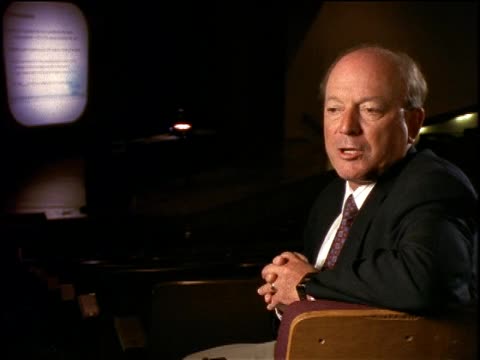
- Michael J. Drake, Director of the University of Arizona Lunar and Planetary Laboratory, and Principal Investigator of OSIRIS-Rex in the New Frontiers Program, is interviewed about the current state of affairs in lunar studies and the impact of Apollo. Drake says that computers, high-pressure technology, and inexpensive missions like the Lunar Prospector were having major impacts on the field of lunar studies at the time of the interview, and says that it is a wonderful time for the field, which he characterizes as being populated by young people. Drake also explains the origins of the moon and Earth, from the creation of the planetary bodies by impact and the creation of life on Earth. The idea of Giant Impact Theory was made popular at the Kona Conference by William Hartmann, and Drake talks about attempts to poke holes in the theory and the energy as the theory gained ground at the conference. Drake also talks about similar bursts of knowledge and interest during the Apollo program, which he says had a profound impact on new technologies, Cold War politics, and sciences. Drake says that ideally there would be future missions to the moon, since we have only scratched the surface of what can be learned. Video cuts out at 00:52:22, Drake continues talking about the primitive lunar knowledge of the 1940s and the new understanding of the solar system after the Apollo program.
- Created Date
- 1998
- Asset type
- Raw Footage
- Genres
- Interview
- Topics
- History
- Technology
- Science
- Subjects
- American History; Gemini; apollo; moon; Space; astronaut
- Media type
- Moving Image
- Duration
- 00:22:17
- Credits
-
-
Interviewee: Drake, Michael J., 1946-2011
Producing Organization: WGBH Educational Foundation
- AAPB Contributor Holdings
-
WGBH
Identifier: cpb-aacip-046cdfdd7f3 (Filename)
Format: Digital Betacam
Generation: Original
Duration: 0:22:17
-
Identifier: cpb-aacip-94d5f158668 (unknown)
Format: video/mp4
Generation: Proxy
Duration: 00:22:17
If you have a copy of this asset and would like us to add it to our catalog, please contact us.
- Citations
- Chicago: “NOVA; To the Moon; Interview with Michael J. Drake, Director of the University of Arizona Lunar and Planetary Laboratory and Principal Investigator of OSIRIS-Rex Program, part 1 of 2 ,” 1998, WGBH, American Archive of Public Broadcasting (GBH and the Library of Congress), Boston, MA and Washington, DC, accessed April 1, 2026, http://americanarchive.org/catalog/cpb-aacip-15-3f4kk95d30.
- MLA: “NOVA; To the Moon; Interview with Michael J. Drake, Director of the University of Arizona Lunar and Planetary Laboratory and Principal Investigator of OSIRIS-Rex Program, part 1 of 2 .” 1998. WGBH, American Archive of Public Broadcasting (GBH and the Library of Congress), Boston, MA and Washington, DC. Web. April 1, 2026. <http://americanarchive.org/catalog/cpb-aacip-15-3f4kk95d30>.
- APA: NOVA; To the Moon; Interview with Michael J. Drake, Director of the University of Arizona Lunar and Planetary Laboratory and Principal Investigator of OSIRIS-Rex Program, part 1 of 2 . Boston, MA: WGBH, American Archive of Public Broadcasting (GBH and the Library of Congress), Boston, MA and Washington, DC. Retrieved from http://americanarchive.org/catalog/cpb-aacip-15-3f4kk95d30