Greater Boston; Tom Reilly, Mfa Restructuring, Chuck Kraemer
- Transcript
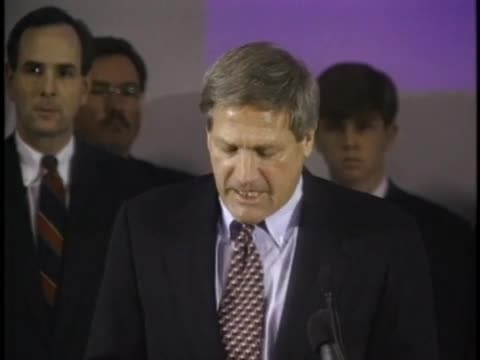
Good evening, Attorney General Tom Reilly has a full plate these days. We'll talk to him about the Fleet Bank Boston merger, what to do about paying lawyers their share of the tobacco settlement, gun legislation, and more. And then later, Museum of Fine Arts Director Malcolm Rogers just announced a major reorganization at the museum to the horror of some and to the delight of others. And then Chuck Kramer is at large tonight writing out the heat wave. First, Attorney General Tom Reilly is in the thick of some highly charged issues. He'll join us in a minute after this scene -setter from Greater Boston's John Carroll. It's lawyers, guns, and money for Attorney General Tom Reilly these days. Yesterday, he joined the endless parade at the Federal Reserve hearing on the Fleet Bank Boston merger. He urged that the branches being sold off by the banks all go to one large competitor. In my opinion, the way to do that is to bring in that all the assets that are going to be invested -go to one buyer, a regional and one for the entire region. One buyer comes in to pick up
this package and ensures competition. The gun industry will also get a run for its money after the state -supreme judicial court ruled last week that the Attorney General can impose safety measures on firearms manufacturers, regulations that were imposed by Reilly's predecessors, Scott Harshbarger. Reilly also faces fallout from another deal Harshbarger cut, this one with the attorneys who represented Massachusetts in its suit against the tobacco industry. Controversy arose last week over a potential $2 billion windfall for the lawyers, but anti -dobacco advocates say the cigarette companies are using front groups to ignite the debate. If you look at the so -called, you know, citizens groups or other groups that are drawing attention to this, it's actually front groups for corporations like Philip Morris. It's groups like Citizens for a Sound Economy, which has been retained and funded by Philip Morris throughout the 1990s to advance the tobacco industry's agenda. Harshbarger also accuses the tobacco industry of engineering the legal fee for all. They are
marvelous marketers. I mean, take it this way. This has got to be the only industry that pay is paying the largest civil judgment in the history of the civil litigation and is blaming the attorneys for the attorneys general for this fee. That doesn't lower the state's form Massachusetts, though. The state could lose up to a quarter of the $8 billion tobacco settlement if attorneys decide to seek more than an arbitration panel grants them. I would, as attorney general, I'm sure attorney general Reilly will defend the Commonwealth on the basis that whatever the arbitration panel sets as the fee is the only fee amount to which the attorneys for the Commonwealth and Massachusetts aren't titled. And that's what tobacco will pay. It will not come out of the settlement amount. It looks more and more like the courts will have the final say on that. And attorney general, Tim Reilly, joins us. Welcome. Great to be here. Just in order of some of the things we touched on, the Fleet Bank, Boston merger. Your office doesn't
really get a vote on this. You were testifying like everybody else. Is that a little bit frustrating? It's really a federal issue, isn't it? Well, no. Actually, the investigation is being done by the Department of Justice and my office. We're doing it jointly, obviously federal law controls. But we do have state laws, antitrust laws, consumer protection laws that do apply. So we have a voice in what's going to happen. This is an important issue to this state, particularly the need to protect competition. Yeah, that, on your point, if everything, all the accounts that they have to divest, go to one large corporation, like you suggest. And then they parcel it out to some of the community banks, maybe as Senator Wilkerson and some of the others want. Will that cost some of the little banks more, though, if they have to then go in and buy from a big corporation? Well, I'm not sure that that will happen. What's really happening here is you have two dominant banks, and it's unprecedented in this country. And with both of them merging, there will be no competition, unless that competition is replaced. So I think that if it goes to one buyer, that buyer will not need all the branches. And there will be a divesting of some of the
branches. And that can occur on the buyer's terms rather than the cherry picking and the conflict of interest that is inevitable. So really, I think this is the best way to preserve competition and make sure that the consumer is protected. Was yesterday's hearing so much lip service, though, there was 160 people who testified. A lot of important people came to complain about some of the merger aspects, but it seems like it's a done deal. I'm not sure about that. I thought it was good. I thought it was a good opportunity for people. And these are very important concerns that they have. The necessity of lending and improving banking services in inner cities and urban areas throughout the state. So they are important issues. It was an opportunity for the Federal Reserve to hear, you know, the degree of concern that people that live in these neighborhoods have. And for the banks to hear it as well. So I think this is a continuing dialogue. I bet you'd see some improvement in terms of some of the offers that are out there. We love breeding of the DOE. I think you'll see some of that. It was a very
emotional time. It was very forceful. And there were some very good points that were made. I think people were listening. And certainly the Fed was listening. And I would believe the banks were listening, too. They want this merger to go through. And they wanted to go through in an orderly process. And to do that, I think there will be some bending. On to the gun legislation issue. Your predecessor Scott Harshberger basically got through the gun safety issue. The SJC upheld it. But it could end up back in court. The gun manufacturers are resisting it. What's the likelihood? They're resisting it. But I think the court was very decisive. It was a very important decision at the attorney general, the regulatory part of the attorney general and the consumer protection as the power to promulgate these regulations. And now when it goes back, it's going back to the superior court, just iron out some of the details. And it really comes down to common sense safety measures. Why would they be a vote? Why would they be a vote? Oh, yes. I can tell you. It's district change. But you have to still put the gun lock on. The gun lock on. But how many times that we dealt with children,
young people coming in contact and possession of guns that didn't have safety devices and accidental discharges. That's what this is aimed at eliminating to make sure. Over 200 children die every year in this country, and these deaths can be prevented with better quality weapons in the common sense safety devices. I can't imagine. And I have a hard time understanding why the industry would contest this. Any kind of legislation, really, they'd contest. On to the issue that no one really understands the tobacco settlement. First, that huge settlement out of Florida today, the class action suit, they could end up with a multi -billion dollar settlement going to several hundred people. Why is it in Massachusetts that we can't have class action? Is it because we join the overall state settlement? No, the overall state settlement does not prevent the types of individual class actions that we saw. The paper had something about that today that there's some state regulations about class actions. Well, it may be more difficult, but certainly there's nothing
in the national settlement that prevents these. And I thought that was an important decision by the jury in terms of, finally, the facts are coming out. And that was, I was disappointed in anything in terms of the settlement, is that the facts never got litigated. The fact that tobacco companies have wide and deceived the American public about the deadly nature of their products. And the fact that they targeted children, those facts need to come out to them. People understand how dangerous this is. But the settlement, it seems to me, is a little cold, given the fact that now class action suits can go forward. Wasn't that supposed to be part of the tobacco deal settlement that had class action? It was never... Wasn't it on the party paper? This was really to a settlement with the states that were involved to recover monies that were spent in health care costs. And that's what that settlement was all about, did not prevent the types of actions that you're seeing in force. So, very encouraging to see a jury come back. Tobacco companies don't lose often in court, but they're beginning to lose. The tide is beginning to turn against them. Yeah, it's remarkable, really.
Now, as for this arbitration over the fees, we agreed, as one of the states that settled to pay the lawyers 25 % of the settlement fees, but now that has gone to arbitration. If the lawyers don't accept whatever the arbitration panel comes up with, what will the state do? Well, I hope it doesn't come to that. I hope that they will accept what the arbitration panel comes up with. And that's a fair and reasonable payment for their service. And you have to bear in mind that they did do a good job here. They took a risk. And it was 25 % of nothing. And Attorney General Harshbacher entered into an agreement that was good for the commonwealth. He was acting on the best interests of the commonwealth, but things have changed since then. There's an enormous amount of money that's the arbitration panel will award to these lawyers. And I hope that this will certainly be an end to it. If it is not, if they press on and try to recover additional money, they know the money. But isn't it additional or is it what we agreed to in the first place? No, I think it is additional. They were part of this. They recommended this settlement. The settlement provided this enormous sum
of money to pay for attorney's fees. They should be satisfied. And I would think that they will be satisfied with the award from the arbitration panel. It will be hundreds of millions of dollars. It will be an enormous amount of money. The money that is coming to the state needs to be spent on public health. And they know it better than most. When is that arbitration panel likely to come in? Well, the speculation is right now that early next week that the arbitration panel, at least their spokesperson has said that early next week or reports are, but sometimes soon they will announce that award. It will be an enormous amount of money. And hopefully that will end it. I would be surprised and somewhat disappointed if there is any further claim to the state money. So those monies need to be spent on public health. And they know that. Okay. And to another favorite topic of yours, Casino Gambling. The Wampanoag Indians say they couldn't get the deals that they wanted from Fall River and the Bedford. Now they say, we are going to move on. We are going to try Tontan. This is for
high stakes being go. What will your office do? I don't believe there can be any expansion of gambling in this state. Casino particularly without the approval of the legislature. And the legislature has declined so far. And Wampanoag is saying that's not true. Well, they can do whatever they want, even off the reservation. Well, certainly we will oppose and strongly oppose any opportunity for them to circumvent state law. We do not believe that federal law preempts a state law on this and that any expansion is going to require the approval of the legislature. And there's serious questions, law enforcement questions and issues that arise in this case. So what is your primary opposition to? A primary opposition is on law enforcement grounds that there would be enormous expense that would be involved. There are law enforcement consequences, increased crime, increased regulation, and infrastructure is going to cost the state millions of dollars. I also, the cost benefit analysis here is where the benefits that are overweight, the enormous cost and economic
cost, development, small business, all those are negative consequences in my opinion have to be factored in. I weigh in against the expansion of gambling and casino gambling in this state. Okay. Attorney General Kamarali could have gone all night, but that's it. Well, they really think so. Just touched a few of them. We'll come back. All right. Thanks so much for being with us. Thank you. And coming up next, MFA director Malcolm Rogers makes some big changes at the museum. Museum of Fine Arts director Malcolm Rogers is used to being at the center of controversy. Ever since he took over about five years ago, he's been accused of commercializing the museum. He's also been credited with record attendance, high membership, and bringing in blockbuster shows. In some respects, things couldn't be better at the museum of Fine Arts. High profile shows like Monet and the current John Singer sergeant exhibit have brought crowds
blocking to the museum. Thank you. It's a very exciting time in the museum's history, as you can see in recent years, attendance at the museum is almost doubled. We now have, what is it, 103 ,000 memberships of the museum. We've opened a new museum in Japan, and personally I feel the building and the gardens and our exhibitions have never been looked better or been more exciting. But sell -out shows and an improved bottom line aren't enough for director Malcolm Rogers. We truly should be at the heart of the lives of the people of this community, giving out the wonderful message about what art can do for you, how it transforms people's lives. That's our role, and I'm here as director to take the difficult decisions that make us able to lead that new life in the future. Difficult decisions like the recently announced dramatic restructuring at the MFA. The changes will affect the way the museum is run and the way it will look. We're not a business. We're a great art educational institution, but we have to be business like
we have the same pressures on us as any business would have. While the move might not sound like much to those outside the art world, inside it's got people buzzing. The criticism is over the dismissal of 18 staffers, including two curators. And what some say is an unorthodox approach to the way the art will now be shown. Among the crucial changes I would number the merging of paintings departments with decorative arts departments. So American painting has joined American decorative arts, European painting has joined European decorative arts. I have a great passion that in the galleries you should see works of art in different media talking to one another. So despite the recent successes of the shows and the resulting healthy bottom line, Rodgers may look more like a villain than a victor within the art world. Some people might describe as a villain, I truly believe I have the interests of the museum at heart and above all the role that this museum plays in the community in Boston. We have to make the organization stronger, ready to face the future. And with we now
is Patricia Hills, a professor of art history at Boston University who is concerned that Rodgers management style is too corporate and too bottom line. And Paul Master Karnak, the director of the Decorative of the Museum in Sculpture Park, who thinks Rodgers is going in the right direction. Patricia, starting with you, we were all reading the New York Times and all the fall out from the changes today. What is it that most concerns the art world about their restructuring? Well, I think that there are two issues. One is the draconian firing of the 18 people, and particularly Jonathan Fairbank, Securator of American Decorative Arts, and Ann Pule, the Curator of European Decorative Arts. And the whole idea of calling them in on a Friday morning and that they have to be out of the building by five and hand in their keys and their badges and no access to
their computer. And that's that is really not the way that I believe it should have been done. But that's the way a lot of firings take place. That's the way American firings take place. That may be true, but it has not been true in museums and which people, you know, to vote their lives to it, their professionals, they have a long term engagement with the museum. They're creative people. I mean, I'm a teacher at Boston University. I teach future college teachers and museum professionals, and what's the message? The message is so that you can't vote. That's true, but these people aren't canyard and they don't have any right to a permanent job. But I'm curious about the restructuring in terms of what Rogers calls the geographical layout. That seems to be also part of the controversy. Does that bother you? That bothers me somewhat because the geographical layout on the one hand, he is merging all the European departments together and the Americans together. But it doesn't make any sense to
bring in the arts of Asia and the arts of Africa that have different traditions and scholarship, different anthropological approaches. That doesn't make any sense at all. In fact, some people have said to me, oh, well, it's now ought to be called the department of the other. You know? It seems, strikes me as great and very insensitive to do that sort of thing. Then you still have contemporary art, which of course is European and American. And I don't see what makes sense at all is separating out photography from other works on paper. I mean, today, people who are in the cutting edge of photography, they work with photographic images, but they do montage, they do all sorts of things. So he's separating that? And he's separating that out and that doesn't make sense. And I think that, what does it tell Clifford Ackley, who has, you know, built up with discerning connoisseurship and great taste and also imagination
of a really great collection of photography. Oh. You're on the record of saying you think he's very different perspective than Pat does. I can't comment about the personnel changes at the Museum of Fine Arts, but I think that the board and Malcolm Rogers is really embracing an incredible challenge that so many different museums are facing. And they're doing it in a very dynamic and I think creative kind of way. There is no doubt that the Museum of Fine Arts must expand. The collections are growing. They do not have enough space to show the exhibitions, the collections that they need to. The very easy thing to do is build another wing and put all the new stuff in it and let that be that. I think they've taken a much more dynamic conceptual approach to let us use this opportunity of thinking about expansion in a global way, re -examining how the Museum presents itself to the public, the dynamic of how we understand today world art and what kind of sequencing are we presenting it to the public? Are the juxtapositions and the connections that we're
making among different cultures today presented in their most provocative kind of way to interest people in learning more about those cultures? I think all those kinds of issues around the table and what the Museum of Fine Arts has engaged on and very importantly, engage the services of Sir Norman Foster to work with him on a master plan. I think a very capable, indeed, a genius doing this kind of thing is done so effectively in other kinds of contexts. It's really an exciting opportunity for us to re -understand the incredible collections of the Museum of Fine Arts. So I think there's great potential here and it has been explored in other institutions and I think it's really exciting for both of us. Well, I think Paul Struck on something that I think is really critical here. You two are experts in the art world. Most people are museum goers, they're very casual observers of the arts, but if they see things that are in a different context that have maybe a different kind of a layout, if it's geographical or historical, it might bring a greater depth of perception. You're talking about two different issues
and I agree with Paul. I mean, you enter that new wing in the Museum. First thing you see is the gift shop, the restaurant. You know, then there are escalators that take you off to temporary exhibitions. You walk to the right to find yourself in Asia, you walk to the left, you find yourself in the right direction. Well, changing occasion. The presentation of the artwork, how the visitor comes in, how they orient themselves, how they have choices either to go to an older kind of art or a newer sort of more cutting edge art. Those are all decisions and I certainly think that Norman Foster, I mean, he's experienced in this, is going to do a good job. You know, but the fact is, is that it's very unclear what the organization is. We don't see an organizational chart that shows how everything is going to work. And I think that when Malcolm Rogers talks about a ten -year plan, that's good. We're all in favor of that. Why do you have to, in one day, fire a bunch of
people? There are other ways of accommodating if the people don't play football with that. But isn't that more of an emotional, I don't mean to dismissive of that, but that's more of the emotional issue as opposed to the entire restructuring of the museum. No, no, no, it's a professional issue. It has to do with the kinds of people who are coming into the field, you know. I think what I want to get at is, is maybe Malcolm Rogers himself, the lightning rod here, he's got such a big personality. He's been at the center of a number of controversy versus the Herb -Ritz photography. Any director is always going to be ultimately responsible and has to take the heat for whatever it goes on at his or her institution. So I think that's inevitable. I don't think a decision of this magnitude, this is like, you know, turning around the Queen Mary, you know, in mid -Ocean and trying to get it to turn on a diamond away. It's a total rethinking of what the Museum of Fine Arts, how it presents itself to the public. And I think it's also trying to take a much more visitor -oriented kind of approach rather than an internal. This is how we organize ourselves as art historians, as scholars, and critics, and whatever. And I think
attaining the right balance between that orientation to the public as well as holding as Pat very appropriately points out the professional integrity of the Museum is going to be the real challenge throughout this entire process. How long will it take to make this change, do you know? It's a lot of... It's got to be many years. It's going to take a while, but also there has to be a way of calming down the professional staff because, you know, professional staff, they come in, they get to know collections. It's long -term planning, even trying to meet patrons and fundraise. That takes a long time. And you don't want a situation where you're suddenly cut out. I think it was handled so badly. So everybody always says that about fire rings, but anyway, we'll see them give a chance. We'll see what you and I understand. And there's some very exciting futures involved in here for Boston and the Museum of Fire. Okay, Paul, Mr. Karnak and Patricia Hills, thanks so much for being with us. Thank you. And when we return, Chuck Kramer survives the heat wave and it might look familiar to you.
Chuck Kramer has a theory about hot weather. If it's hot enough to need an air conditioner, it's too hot to hassle putting one in. This week's heat wave gave Chuck an opportunity to expand that theory to other cooling methods. As Dave follows night, a great rhythm pulses
through every living creature. I definitely lived that and that's it for greater Boston.
Tomorrow night, it's beat the press. The endless Hillary watch and some confessions from columnists. All that and more. Tomorrow at 7 on Emily Rooney. Good night.
- Series
- Greater Boston
- Producing Organization
- WGBH Educational Foundation
- Contributing Organization
- WGBH (Boston, Massachusetts)
- AAPB ID
- cpb-aacip-15-257d8gsj
If you have more information about this item than what is given here, or if you have concerns about this record, we want to know! Contact us, indicating the AAPB ID (cpb-aacip-15-257d8gsj).
- Description
- Description
- Thomas Reilly, Patricia Hills, Paul Master-Karnick, Chuck Kraemer
- Media type
- Moving Image
- Duration
- 00:31:01;11
- Credits
-
-
Producing Organization:
WGBH Educational Foundation
- AAPB Contributor Holdings
-
WGBH
Identifier: cpb-aacip-7848664000a (Filename)
Format: Betacam
Generation: Master
If you have a copy of this asset and would like us to add it to our catalog, please contact us.
- Citations
- Chicago: “Greater Boston; Tom Reilly, Mfa Restructuring, Chuck Kraemer,” WGBH, American Archive of Public Broadcasting (GBH and the Library of Congress), Boston, MA and Washington, DC, accessed October 4, 2026, http://americanarchive.org/catalog/cpb-aacip-15-257d8gsj.
- MLA: “Greater Boston; Tom Reilly, Mfa Restructuring, Chuck Kraemer.” WGBH, American Archive of Public Broadcasting (GBH and the Library of Congress), Boston, MA and Washington, DC. Web. October 4, 2026. <http://americanarchive.org/catalog/cpb-aacip-15-257d8gsj>.
- APA: Greater Boston; Tom Reilly, Mfa Restructuring, Chuck Kraemer. Boston, MA: WGBH, American Archive of Public Broadcasting (GBH and the Library of Congress), Boston, MA and Washington, DC. Retrieved from http://americanarchive.org/catalog/cpb-aacip-15-257d8gsj