North Carolina Now; North Carolina Now Episode from 07/21/1997
- Transcript
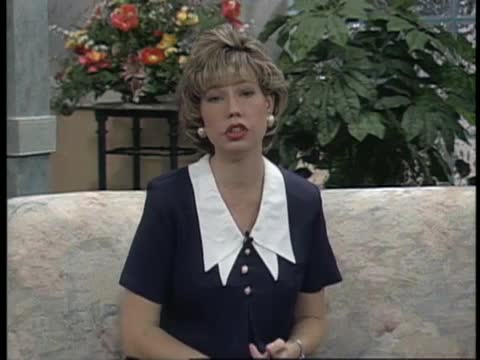
Ier It's Monday July 24th. Tonight lessons learned from Brandon in North Carolina now. Hello I'm married I'm a tri Thanks for joining us as we kick off a new week here at North Carolina now. Residents of Alabama are still mopping up from the deluge of rain dumped on them by
Hurricane Danny over the weekend. Well there are no immediate threats of hurricanes to North Carolina's coast. Residents here are ever watchful for the next big storm. That anxiety do in large part to hurricanes Fran and Bertha tonight will focus on some of the lessons learned from last year's hurricane season. Also tonight how to pick appropriate day care for your children. But up first tonight the latest on efforts to unionize some farm workers here in our state. North Carolina is a long known as a strong right to work state with the lowest rate of unionization in the entire nation. But our state's long history of discouraging unions means little to the latest Union trying to make the Tarheel State its new home. A union called the farm labor organizing committee has moved into the mouth all of the area where it hopes to organize many of the more than 36000 migrant workers who come here each year to harvest fruits and vegetables. But assured of victory reports not everyone in eastern North Carolina is welcoming the Union with
open arms. A familiar sight in the fields of eastern North Carolina these days is the groups of migrant farm workers harvesting cucumbers as fast as they can bend over and snap them off the vines on these hot muggy days. The workers can pick up thousands of cucumbers only to find several thousand more writing for them down another row. In fact about the only thing growing faster here than the cucumber is the repeated calls for union where marrow seraglio works for a nationally recognized union called the farm labor organizing committee based out of Toledo Ohio. The union constantly searches for migrant workers who need union representation. Since May the union has actively recruited members in the Mt. Olive area so Soraya who was once a migrant farm worker himself is now trying to enlist other farm workers to join the union. We came in to make and you know here no matter what.
No matter what happens among those workers the union hopes to organize is 32 year old Mark antonio. He comes to North Carolina from Mexico and is currently working illegally on a Wayne County farm. Marcantonio supports the Union because the movie is going by natives. It's a good idea because it's a way to help my coworkers not only get support but one can also ask for some things they can offer us what a human being needs. They can give us a more humane life. Marcantonio is like many migrant workers who come to North Carolina in search of work. These farm workers spend several weeks in the Tarheel State picking Hugh Cumbers before moving on to the next harvest. They often work up to 10 to 12 hours a day in the fields. The state requires cucumber growers to pay the workers at least minimum wage. But for the pickers who are here illegally they are often paid much less. As for their living conditions you often find dozens of migrant workers sharing small
trailers or neglected houses. The workers are probably the lowest paid worker in America with conditions and working and living conditions that are. Probably the worst of all working Americans were talking about working people for about a marvel Laskas the stories of migrant workers. Even those who were working here illegally are nothing new. As president of the farm labor organizing committee this has a long history of organizing migrant farm workers in the Midwest in turn unions in states like Michigan and Ohio. The union has won pay increases and raise the standard of living for the migrant tomato and cucumber pickers. Now may have set their sights not only on the cucumber fields of North Carolina but on the company that purchases most of the harvest. The Mount Olive pickle company we called on the food processor the contracted acreage in a particular state and call on them to address the situation because we're talking about a very vertically integrated industry.
The farm labor organizing committee has captured the attention of national labor leaders due to its unusual union strategy instead of negotiating with the individual farmers who employ the workers. The union goes directly to the top. We all know and we lease by land we grow no cucumbers we do not employ a migrant farm workers to harvest cucumbers. Will Brian is the president of the Mount all a pickle company. He says the company contracts with area farmers to buy cucumbers harvested by the migrant farm workers. However he says Mount Olive Pickles has no control over the working or living conditions of these workers. We feel lied to the company and our poors are better off without the presence of a union. We want our employees to be able to sit down together and resolve any issues that might be outstanding without the intervention of a third party who may not know much about the fickle business and may not know may not know much about our community. So it is very difficult for us to tell another importer that we think that they should have a library and there was some point when you're talking about a
vertically integrated industry that it's a bite of the day. In a month as the new guy that drives a getaway car in a bank robbery where the guy that says why didn't pull the trigger so I'm not responsible. I mean you talking about a chain of command. You're talking about an entire system. These growers are contracted before the crop is even planted and the pickles in effect are sold to the company before they're even planted. So you're talking about an agent for the company that does this field work off on their behalf. But this isn't the first time that the farm labor organizing committee has targeted a big company instead of the smaller independent growers since its formation in 1967. The union has successfully negotiated contracts with big food giants like Campbell Soup Heinz and pickles. Today those top two companies work with the union and the individual growers to solve work related problems. But Loftus says these collective bargaining agreements didn't happen overnight. There's a large range of time and
energy that's invested in getting these agreements done. The longest one we've ever had. Knew it was a Campbell Soup Company. It took us eight years of strikes and seven years of boycotting the company to bring that about to a shorter 11 months with the Heinz USA company. So far there have been no formal meetings between the union and pickle company officials. For now union leaders like Saurabh are visiting the labor camps where the workers live. Each night he talks with groups of cucumber pickers and asked them to sign their support to the union. His message is simple. As a company as I want to have the money and here's their money and their company paid better money poor There were others they can pay better money for their workers. Union officials hope to have the union structure set up in eastern North Carolina by the end of the year. Then they say they plan to start putting more pressure on the Mount Olive pickle company and they won't rule out using boycotts or strikes against the company
if that's what it takes to get the attention of company officials. Nothing is gained absolutely nothing is ever gain by ignoring a cry in the wilderness by someone calling on them to dialogue about concerns. It's a mistake to shut them out. It's a mistake to. Try to pretend that they don't exist or that problems don't exist. It's another situation like many other business issues that has to be dealt with and unresolved it could have some impact on our growers. It could long term have a significant impact I think on the agricultural community in North Carolina. Another group affected by the union's poignance are the individual farmers who employ the migrant workers. Should I try to talk with several growers in the Mt. Olive area. And while none would agree to a recorded interview several told her off camera they worry that if the migrant workers are unionized they won't be able to afford to pay them and will have to stop
growing queue cumbers. However union officials say that in the past 10 years they've represented the workers in the Midwest few farmers there have had to cut back on their cucumber production. Well still ahead finding safe and licensed day care for your little ones. But first Chana victory is in for Michel Louis and she joins us now with a summary of today's statewide headlines. Good evening Shanon. Thanks Merida Good evening everyone. The testimony of the Durham based Liggett Group CEO tops our news this evening despite repeated objections from the tobacco industry. Minute limbo is the latest witness in the $5000000 Miami lawsuit against major tobacco companies testified today that smoking causes deadly diseases and is addictive. The suit has been filed on behalf of 60000 flight attendants who say secondhand smoke on airliners cost health problems. It was the first company to settle lawsuits with state seeking Medicaid reimbursements. High speed rail road travel may be on its way to North Carolina. The U.S. Senate
Appropriations Committee approved a four million dollars to help make it possible. The money will be part of a high speed rail corridor to Washington. It would also help Governor Hunt to reach his goal of cutting the time for rail trip between Raleigh and Charlotte to two hours. The four million dollars represents more than half of the seven and a half million dollars proposed for rail improvements nationwide. Controversy surrounds the wild flowers planted along many of North Carolina's roads and highways. That. What kind of Transportation has received thousands of letters praising the flowers. But some botanist say people are being misled because the flowers aren't from this state. The head of the wallflower program says North Carolina native blooms are too expensive and aren't as pretty or easy to find as non natives. And now for a look at tomorrow's weather there will be a slight cool day on across the state. High temperatures will range from the low 80s in the mountains to the low 90s at the coast. It will be partly cloudy to cloudy with a 40 to 50 percent chance of rain statewide in business news first union Corp. is announcing it will acquire Signet
Banking Corporation of Richmond Virginia. Charlotte based First Union will buy Signet for more than three million dollars a stock. The deal would make First Union the largest bank in Virginia. It's currently the sixth largest bank in the country with branches in 12 states. This part just continues the trend of North Carolina based banks buying up Virginia's banks less than a month ago Winston-Salem based walkover announced plans to purchase central fidelity. Now for a look at what happened on Wall Street today with with with. The recent death of a 4 month old baby in an unregulated daycare in Raleigh has brought
attention on the number of unlicensed illegal daycare facilities operating here in North Carolina State officials estimate that about 25 percent of children spend the day in unregulated care situations. Joining me now to discuss the matter and give advice on how we can determine if our children are in a licensed facility is Stephanie Fawn Hall the director of the division of child development within the Department of Human Resources Welcome to North Carolina now. Talk about the difference between what isn't an unlicensed facility and what is an illegal facility. It's a good question. Every program that's not licensed is not bad for children and or Nor is it illegal if for instance a grandmother may have been taking care of just her own grandchild. It doesn't have to be. It doesn't have to be licensed and it is certainly a legal arrangement. Half day programs sometimes churches operate a mother's morning out or even just a morning program. Those don't have to be licensed and there certainly are fine programs for young children to be in. So all parents need to be to be clear that just
because it doesn't have a license doesn't mean that it's operating illegally. So when does a facility need a license. Well a facility that is serving children for more than 4 hours a day. That's one of your first cues. And then if they have more than five children most often a program that has more than five children operating more than four hours a day has to be licensed or some other special exemptions for instance some churches don't don't have to display their license. But by and large that's going to pretty much cover the area that has to be licensed and regular care where you give the money and while you're working would be a clear indication that that sort of program need to be licensed. How does a person parent who is searching for daycare know if that facility is licensed. Well parents need to just ask. Right up front say Are you a licensed or or registered childcare program and most programs should be able to answer the question if the. They can also another Q which is which is always a hint
for parents is you want to be sure you can pay your provider with a check that if your employer for instance has a pretax account that allows you to helps you pay for childcare that those dollars don't have to be paid just in cash. Some times providers who are looking for money under the table are folks who are operating illegally and it really is a disadvantage to parents not to be able to claim those tax credits. What benefit is having that license does that make for a better facility. We know nothing guarantees it. Bad things happen in really great programs and accidents happen with young children but it does help a parent feel a little bit more protective. Having a criminal background record check is a requirement in the state of North Carolina so nobody who has a criminal record that that would in make it difficult for them to do the right thing with young children is allowed to take care of children whether it's in a home or in a center. And that's a that's a real important safeguard for parents. So that does make a difference. This
particular instance where you talk about this this individual did have a criminal background and would not have been allowed to take European children and so that was a safeguard that got missed in this instance. Does the license set up any sort of criteria as far as training that the caregiver must have CPR or anything like that. Yes it does. And CPR training or first aid training are requirements for most child care providers and. And that would make it more likely that your child would be safer in that environment and right now we're really excited right now in the general assembly. They're considering Senate bill nine twenty nine which will increase the training requirements for providers so we think that the more trained people are to take care of really young children then the better job they're going to do even with in licensed facilities some are better than others what advice would you have to a parent who's looking for a day care situation. What. Some of the things they need to look for. You know I one of my cues to parents is that they need to go there and hang out. And I don't I'm not being glib you need to go
sometime during the morning and simply sit and watch. And if it for any reason a provider to send her home isn't comfortable with you being there then you should just check it off the list. You want to have an open door policy. You want to be able to know the other children your child is going to be with during the day and and get a sense of how the teachers relate to those children. You can learn an awful lot from sitting and watching. Getting to know the children getting to listen to the teachers tone. How often do children have to be disciplined in some way. You know what's the noise level like. Just the relationships between children and so for parents that's the first cue. Go see a program. Don't don't rely on anybody else's recommendation. Don't count that for sure because they have a license that they are there absolutely the right place for your child. And then there's some other resources that are available we have in our office records on every single licensed facility in the state. And if you can if you're in Raleigh you can come and look
at those. They're open from basically business hours from 8:00 to 5:00 every day and you can come and pull the record and look through all of our inspections. If people don't live in the Raleigh area can they just give you a call and say what about this place and you look at up. Yes we will and we'll send them the information that's important. And it includes things like the health inspection you know. Has the place been kept up. And it also includes very specific information about the kinds of interactions that happen with the children. We do in the state have two licenses for child care centers. One is in a license and the other one is a double license. Most folks would think that they would be the very best but double A is better. And it has a higher criteria in several areas so if you're looking for a program that is a little bit higher quality you want to look for a double-A center and then nationally I'm sorry we're out of time. We could talk about this Ali. But I want to thank you very much for the advice and I know it's a topic that many parents struggle with and hopefully you've given him some inspiration to make a little
bit easier thanks for it. Thank you. Well none of us will forget where we were last September when Hurricane Fran came tearing through the state. Tomorrow night on USA TV the program IQ well aired two episodes back to back focusing on Hurricane Fran. The show examines how forecasters track the storm and what they've learned about the impact of hurricanes the thieving producer Jim Bramwell and reporter Maria Berg bring you a preview noon on Thursday. Fran is maintaining her strength and track regional offices in Wilmington have been giving updates for coastal residents to use to prepare and to get out of the way. Forecasters are still watching the track of the storm to see what it might do after landfall. Charleston area now they've got it making landfall around the Myrtle Beach area and then moving up between Raleigh and Greensboro. So you and I have to consider what happens if this thing actually moves a bit farther to the north or when it
moved over there when the main update we've done is across the northern tier. We've upgraded a high wind watch to a high wind warning. So we will go with hurricane force winds all the way up toward San. Will you go totally off the pitch here for younger riders at Carolina beach. Some remarkable video is captured by a volunteer firefighters as they patrol the streets during Fran's approach. Watch out water the water and watch the storm surge it is water the storm pushes ashore on top of the normal tide levels. It often does more damage than the wind on Carolina beach. The surge is already causing ocean overwatch along the beach trying on Wrightsville Beach even though landfall is hours away. The island is under siege. Members of the
police department and town government keep watch on the worsening conditions. Eventually the entire island will be covered with water. Most of the coastal residents got out of France away but returned to find thousands of homes damaged or destroyed in the first program. Geologists explain what happened to the barrier islands during the hurricane. Lack of Dune protection allowed the ocean to over wash the islands in many places in a short time. Tons of sand were moved across the island. This photograph taken the day after Fran clearly shows such a wash over on top. So that's the where the floor Dune Ridge was was totally mobilized all that sand washed underneath this house and came across in
the backside of this house. And ponded in the street behind the house as well as in the yard across the street which looks like it's accumulated on the order of oh three to four feet of sand from the overwash itself. Wash overs are looked upon by development and people who own the lot of them. Not such a good thing but from an ecological standpoint and from an island standpoint this is the way nature intended this island to work and function over water as a means of adding volume and elevation to the to the backside of an island overwash is one way which these marshes are re nourished and all the shrubs along with most of the least from the north from the new bridge north have literally built on the edges of old overwash fans that are probably a century old so this this process has been going on repeatedly for many many years and without over washing the backside it would not were never really elevate in the second half
hour we see how storms like Fran real disaster in one sense are also an opportunity. Scientists are now studying the aftermath to learn more about how our dynamic coastal environments work. From that knowledge can come better building codes and better regulations. It's an evolving process one that can be accelerated when a big storm hits. This is the foundation of the remains of a foundation of a house that's fairly typical of the houses on the beach constructed between the 1960s and up through the 1980s six years old shell pilings about eight feet buried in the ground. Original ground elevation was just above this concrete column. And what happened in the hurricane is that this corner of the house the pilings were completely exposed and there was nothing left holding the bill in this corner of the house up. And that happened the rest of the foundation was overloaded and the building collapsed in the directions that the wind will blow. So Hurricane Fran may accelerate the process of improving our coastal regulations
since it's been many years since North Carolina was hit by such a destructive storm. It will involve the scientific studies providing information to the regulators and the public which must help decide how to apply what we have learned. And it will be the public that determines how well the process works. It comes down to the question of what drives the CRC and the radical decisions is it going to be politics and economics or is a going to be saying science. Are we going to be able to put the science and the engineering the work. What we learn from this storm to work in a sensible way and that's totally dependent on the public in the political and economic pressures. So you can catch back to back episodes of IQ. Tomorrow night here on you would see TV from 10:00 to 11:00 p.m. That's our program for tonight please make plans to join us tomorrow as the new president of the University of North Carolina Molycorp it broad will be our guest.
Also tomorrow we'll explore the trend of young college athletes choosing to skip a college degree to go pro until the bar have a great evening everyone. Good night.
- Series
- North Carolina Now
- Contributing Organization
- UNC-TV (Research Triangle Park, North Carolina)
- AAPB ID
- cpb-aacip/129-623bkcf6
If you have more information about this item than what is given here, or if you have concerns about this record, we want to know! Contact us, indicating the AAPB ID (cpb-aacip/129-623bkcf6).
- Description
- Series Description
- North Carolina Now is a news magazine featuring segments about North Carolina current events and communities.
- Description
- Stephani Funjul - Director, Division of Child Development; Mt. Olive Union efforts (Vickery); IQ - Hurricanes (Bramlett)
- Created Date
- 1997-07-21
- Asset type
- Episode
- Topics
- News
- Local Communities
- Media type
- Moving Image
- Duration
- 00:26:25
- Credits
-
- AAPB Contributor Holdings
-
UNC-TV
Identifier: NC0704/2 (unknown)
Format: Betacam: SP
Generation: Master
Duration: 00:25:50;00
If you have a copy of this asset and would like us to add it to our catalog, please contact us.
- Citations
- Chicago: “North Carolina Now; North Carolina Now Episode from 07/21/1997,” 1997-07-21, UNC-TV, American Archive of Public Broadcasting (GBH and the Library of Congress), Boston, MA and Washington, DC, accessed May 16, 2026, http://americanarchive.org/catalog/cpb-aacip-129-623bkcf6.
- MLA: “North Carolina Now; North Carolina Now Episode from 07/21/1997.” 1997-07-21. UNC-TV, American Archive of Public Broadcasting (GBH and the Library of Congress), Boston, MA and Washington, DC. Web. May 16, 2026. <http://americanarchive.org/catalog/cpb-aacip-129-623bkcf6>.
- APA: North Carolina Now; North Carolina Now Episode from 07/21/1997. Boston, MA: UNC-TV, American Archive of Public Broadcasting (GBH and the Library of Congress), Boston, MA and Washington, DC. Retrieved from http://americanarchive.org/catalog/cpb-aacip-129-623bkcf6