North Carolina Now; North Carolina Now Episode from 09/23/1996
- Transcript
It's Monday September 23rd. Tonight reuniting adopted children with their birth parents in North Carolina now. Right. Good evening I'm Marina McRae glad you could join us for this Monday edition of North Carolina now a
special welcome to the viewers in the Lumberton area who officially became members of our U.N. CTV family today completing our 11 stations state wide network. We'll tell you more about our Lumberton station coming online later in the program. Tonight we're going to take you to vote for it to explore the proud fishing heritage of our coastal region. We'll give you a sneak peek of our special series coming up this week on Billy Graham. And we'll speak with a mental health expert on the difficulties of children growing up in today's society. But first we start with the growing debate surrounding the access or lack of it to adoption records. More than 600 children are adopted each year in North Carolina under current state law. Records of the identities and backgrounds of the birth parents are permanently sealed. However more and more adult adoptees as well as birth parents all across the country are seeking out their biological families and in most states they have begun to allow varying degrees of access to adoption records. As Bob Garner reports there's an effort underway to change North Carolina's law as well.
Jackie Parker of Sanford has a husband and child of her own now when she was an infant she was adopted and grew up in a happy stable home. But 10 years ago she decided to search for her birth mother. By the time she discovered her biological parents identity the mother had died of cancer. Ironically Jackie discovered that her mother had also been searching for her for several years without success. My mother died wanting to be reunited with me. But my mother was denied the right to see me. And I had contacted on the same day I had put in with a lot of the registries and things that were that I knew about but it wasn't until 1994 that they began to happen for me. And it was too light. Parker is just one of a sizable number of adoptees and birth mothers who belong to various support groups around the state and who share the aim of changing North Carolina's
laws regarding the confidentiality of adoption records. Under present state law such records are sealed. But the group wants North Carolina to join the 40 other states that allow access to confidential adoption records when the adoptee reaches adulthood. And if both the adoptee and the birth parent give their consent. Last year they were unsuccessful in getting the law changed but they say they'll keep trying for several reasons. First they say some adopted children just need to be able to put their personality in context Francey Portnoy of Greensboro as both an adoptee and a post adoption therapist. So often adoptive families the adoptee is different just because of the genetic component. You know they're different they either look different they have different feelings you might have a very laid back family in a very active child. And if a child doesn't have a reference point from where they got different they become you begin to see that differences deficiencies.
Edward Ken's lawyer of Chapel Hill has spoken out against changing the present law. He and his wife raised two adopted children. I think the reasons that are given for opening up the records and finding the name and perhaps meeting the. The biological mother a relatively trivial relatively selfish I want to know more about where I came from where my roots are what my heritage is what might explain some of my disposition and temper it at someone else's expense. Yes I was opposed to the original version of the bill because a birth mother or adoptee could have been contacted possibly against their wishes to see if they were interested in a reunion. A later version would have required both parties to take the initiative to register to have information released but Kesler is still opposed arguing that opening up the past affects others as well.
There are the opinions of the parents and perhaps grandparents and the aunts and uncles and brothers and sisters. Concerning the issue and that goes for both sides. Cancer also feels that the consent of adoptive parents should be required before records are open and says that changing the law would represent a breach of the original contract which promises confidentiality to the birth parents but adoptees like Ray Lewis or Bradley are apt to respond that everyone's rights are being considered but theirs. When an infant is adopted as was the birth parents will sign a relinquishment form and the adoptive parent will sign a Forms adopting the child. The child doesn't sign anything. I mean as a child I didn't waive any rights I wasn't aware of any rights. Ed Kessler takes a different view. I was not involved in the choice of my parents. And my lineage and my heritage I
think it is wise for people when they become mature adults to go from where they are rather than looking back to and trying to to find themselves in terms of where they came from. Jackie Parker says the potential problems in allowing access to adoption records are no worse than other difficulties people face every day. Anyone in the adoption triad knows that sometimes there's positive things in reunions and negative but we're all families. We're our families and we have the same sets of conflicts and our adoptive families. Adoptees and birth mothers alike say that adoptive families shouldn't feel threatened by their desire for more information. Lim Giddens is an adoptee who lives in Chapel Hill and studies have shown that when relationships between birth families do occur it tends to enhance the adoptive family relationships versus just destructive mechanism.
Julie Bailey of Siler City a birth mother and an adoptive parent says she can't understand why adopted children are treated so differently than children from families affected by divorce and remarriage. Children of divorce have two pair sets of parents they have two mothers they have two fathers they have. 4 6 8 sets of grandparents. What is the harm in extending that same opportunity to a birth mother if she wants to some way remain in that child's life. Even some opponents of the proposed bill agree that there should be a better mechanism for updated vital medical information to be passed on from the birth mother to the adoptive family. Once an adoption has been finalized and Jackie Parker's case she says she should have been notified that her mother had developed breast cancer because of the implications for her own health. And she says she should have received other details of her birth parents health history adoption laws were created to protect the child. I'm no longer a child. I have
all the same rights that every other adult has in this country. But I don't have the right to my medical history because someone is afraid that they're going to upset someone. Some opponents argue that only 5 percent of adoptees ever seek to locate their birth families. And many say the present law is sufficient for the exchange of important medical information. But despite the opposition activists say they'll continue to push for adoption reform in North Carolina and that they'll be back with their proposed legislation in the next session of the General Assembly. The revised bill to establish a registry of adult adoptees and birth parents who are interested in establishing contact with one another was given a favorable Committee report but then was postponed indefinitely. We want to emphasize that the proposed change in the law would apply only to adoptees who had reached the age of 21. If you would like more information on this topic you can call 9 1 9 9 6 7 5 0 1 0. Still ahead on
North Carolina now preserving the legacy of the man who made their livelihoods from the sea. But first let's turn to Mitchell Lewis of the North Carolina now news desk for a summary of today's statewide headlines. Hello Mitch. Hi there Merida. Good evening everyone. Topping our news the race for secretary of state has tightened up. The latest poll results show a scant one point separating the two candidates. According to the latest Mason-Dixon poll Democrat Elaine Marshall leads Republican Richard Petty thirty six to 35 nearly a third of voters are still undecided. The poll was taken before Perry was involved in a highway driving incident earlier this month. Another set of polling results show North Carolinians continue to express strong opposition to tobacco regulation. According to the latest Mason-Dixon telephone poll voters oppose allowing the federal government to regulate tobacco as a as a drug by roughly a 3 to 1 margin. But on the other hand 95 percent believe smoking is harmful. Eighty percent believe it causes cancer and 66 percent believe secondhand smoke is harmful to nonsmokers. Nearly two
thirds of those polled indicated the president's policies on tobacco will have no real effect on how they vote in November. Former Lieutenant Governor Jimmy Greene pled guilty today to one count of tax evasion in a Wilmington courtroom Green admitted understating his 1992 taxes while he had not been charged with tax evasion. Green's attorney said he hoped his admission would put an end to a broader investigation of fraud in the tobacco industry. Green faces a maximum sentence of up to three years in prison. It appears President Clinton is responding to calls for more disaster aid. Today the president asked Congress for an additional 290 million dollars on top of the 1.5 billion dollar package already requested. Clinton wants half that total to go to North Carolina. Senator Jesse Helms has sent President Clinton isn't doing enough to help the victims of Hurricane Fran both Helms and Governor Jim Hunt said last week they're hoping to receive two billion dollars in hurricane aid from the federal government. And now for a look at tomorrow's weather seasonable temperatures will continue for Tuesday as most of the state will
experience temps somewhere in the range of 80 degrees partly to mostly sunny skies a forecast for the entire state. And in business news a Pitt County marketing company thinks it may have the solution to hog waste odor and waste water contaminants. Newman environmental solutions is testing a system called the vacuum micro bubble air raid or the invention which is made in Iowa. Pumps oxygen into the lagoons waste water speeding up the production of bacteria that eat organic waste. The system will be monitored and the water tested over the next few weeks for effectiveness. And now for a look at what happened on Wall Street today. We
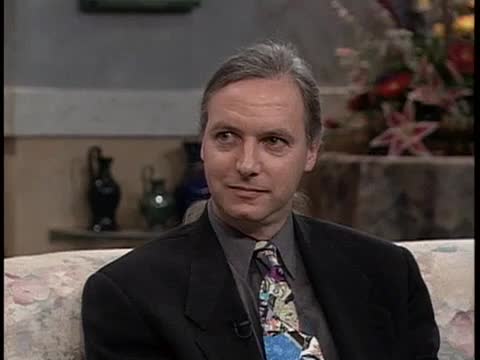
see here so often that being a kid today is much more difficult than it was when we were kids. Well there is a five year study currently being conducted by Duke University Medical Center which is aimed at identifying the problems associated with growing up today and to determine if there is appropriate help available. This study funded by the National Institute of Mental Health will examine the prevalence of mental health problems among nine for 16 year olds and the availability and use of mental health services. The study is called Caring for children in the community. The principal investigator on the project is Dr. Adrian Ingold a child psychiatrist at Duke University and he joins us this evening Dr.
wrangled Thanks for coming to the program. Rita thanks for inviting me. I had touched upon the overview of what this study is about in the introduction but this is your research so maybe you could give our viewers a better understanding of what it is we're talking about here. What we're interested in is the question. How much do we need in the way of mental health help for children and what do I mean by mental health help. I think we all know that some children get very depressed. Some can be very anxious and worried and others have behavior problems. Problems with alcohol and with drugs. And what we're interested in is in North Carolina in local areas. How many kids are there out there who have these sorts of problems. How do these problems develop over time. To what extent can we predict earlier on who will have problems in the future and and who won't. And to what degree do people actually
manage to receive any help for the problems that they have. Now I know in this study that you were focusing on for particularly rural counties in North Carolina. And that is I don't know them off the top of my head we're talking about Vance Granville Franklin and Warren Katz. Why did you pick those four counties for your study. Well for a number of reasons. First of all we're particularly interested in rural mental health. And the reason for that is that. A number of studies that are interested in children's receiving services and the degree to which they get what they need have looked at urban children now in an urban community. The chances are you live quite close. There are a number of particular issues and difficulties in providing mental health services in a way that people can actually manage to receive them in rural areas which have not really been very clearly addressed. And so we're interested in that in that question and we're particularly interested in focusing on rural areas. The second
reason is that there are very different patterns of poverty in in these in this four county area. And we're interested in the way in which poverty relates to ultimately having the sorts of behavioral and emotional problems that we're concerned about. Thirdly in this state those four counties have as near as you can get to a 50/50 split between whites and the African-American population. And we're particularly interested in the question of whether the sorts of services that are out there at the moment are providing equally good opportunities for cash to African-American people and to and to the white population. Doctor what are we talking about as far as mental health services are you talking about access to a psychiatrist or psychologist taking a broader view of service. We are taking a broader view if one wants to look at
just not even psychiatrists attending a specialty mental health center with either a psychologist or a psychiatric social worker or a psychiatrist was available then what we know both in North Carolina and elsewhere is that the vast majority of children with identifiable mental health problems will not be seen in such a setting and in some other work that we've been doing actually in the western part of the state. It's become very clear that the greatest number of children with mental health problems who receive any service a toll actually receive it directly in the schools and particularly from school counselors. The way we are starting to run out of time and I just quickly want to touch on I think it's very important to identify what you're talking about as far as a mental health problem. Lot of people think of mental illness severe but it is far as the children are concerned we're also
talking about behavioral problems some other things. We're talking about a wide range of problems at this age. Very few children will have schizophrenia. Some will have serious depressive disorders which one tends to think about as some of the major mental illnesses. But we see a lot of children with anxiety problems. A number of children with maybe mild or depressive problems people with attention deficit disorder and hyperactivity and individuals with behavior problems of of one sort or another and an assortment of difficulties in families in being able to get on with one another. So we're taking a very broad view of what we mean by mental health problems. Doctor I want to thank you for your time. Thank you for being here this evening. Well thank you it's been a pleasure. North Carolina's maritime heritage is an important part of our state's culture and history especially for the many coastal communities. So my producer Maria Lundberg takes us to Beaufort where this rich tradition is
interpreted and preserved the songs of menhaden Chante min were a familiar sound in the old days of fishing along the North Carolina coast. Lives and livelihoods were closely connected to the water in those days and this strong bond with the sea continues today in the coastal town of Beaufort. If you base it vote for it it quickly becomes obvious that fishing and boating are an important part of this area's past and present so important in fact that there's a museum here which is devoted to preserving our state's maritime heritage. The North Carolina Maritime Museum stands as a beacon on the waterfront drawing in visitors to learn about our coastal history and resources. Our purpose is to preserve the state's maritime culture that is its coastal
culture. The same is inland you would go to a museum to find the material culture of of the state. It's furniture or it's weapons or automobiles things tell about the past here. The emphasis is on things belonging to the sea or having to do with the coast. The museum contains an impressive collection of ship models including one which salutes the menhaden fishing industry. Saltwater aquariums show diverse marine life in North Carolina as waters support one of the largest varieties of plant and animal species along the Atlantic coast. Nearby is one portion of a huge collection of 5000 sea shells from around the world. This exhibit teaches about life saving methods for passengers shipwrecked off our coast. One method was to use a harness called the breeches boy. Another was this 1890s life car which carried several people to safety historic
Lighthouses are represented here with this powerful Lin's which was in service from 1890 to through the 1960s. Traditional North Carolina work boats are on display including the flat bottomed skiff and the spirit soul which was commonly used in North Carolina from the late 1800s through the mid 1960s. One very interesting artifact in the museum is this gangway board which came from the original USS North Carolina built in 1820. This user friendly museum reaches out to more than 200000 visitors a year. Numerous volunteers give their time to help the museum in its mission of educating the public pension engineering to give the Indians a different color example. There's always next to the border. We want them to write the pictures. I mean we saw with the Indians we don't need a pension. Education has a high priority at the Maritime Museum.
We do in excess of 300 public programs a year listed schedule programs part of why we do that is is because the the subject here is so involved. We have so much to talk about not only from to cover the history the maritime history of the state but also to deal with the environmental issues that have become so important the fragile nature of of the coast. This is something relatively new in historical terms. And we have a real responsibility to share these things with the public. We are publicly funded and that is part of our mission educational programs for all ages range from workshops to summer science classes and coastal ecology field trips across the street from the museum is its water craft center where visitors can observe boat building and restoration in progress. The center has a collection of about 30 North Carolina boats including one which dates back to the Civil War.
Coastal people have real emotional attachment to old boats. Unfortunately we don't have the resources to take everything that's offered to us but. We try to take the important ones and the ones that are significant or transitional from one area to another and we can do restoration work over there and build replicas and indeed pass on those traditions of what knocking on a boat building was about. The watercraft center offers many classes to the public and uses the expertise of sailors passing through like musician Patrick Burke from England who is working on a box loom. Many tourists come to Beaufort to enjoy the relaxing natural beauty of the area but those who visit this museum can also learn about the importance of the state's maritime past and how that heritage affects the present and our future. It makes you sensitive to the way resources are being used today.
Coastal resources are especially fragile and it makes you want to preserve those things for the good of our future and our children's future and we hope by being able to put this in perspective in historical terms that we will make the general visitor visitors more sensitive to how we use our coastal resources. The North Carolina Maritime Museum offers year round classes and field trips for all ages and fact the programs are so popular that many people schedule their vacations around them. The museum is located at 315 Front Street on the Beaufort waterfront. Ours are from 9 to 5 Monday through Friday from 10 to 5 on Saturday and Sunday from 1 to 5 Admission is free. For more information about the museum and its programs you can call 9 1 9 7 2 8 7 3 1 7. Well as I mentioned at the beginning of the program we have some new viewers this evening this afternoon in a ceremony
attended by members of the University of North Carolina's Board of Governors and trustees as well as members of the General Assembly. The switch was officially flipped to bringing w you and you. Channel 31. Lumberton online with the addition of our Lumberton station KUNC TV network is now 11 stations strong and covers the entire state. The new Lumberton facility serves eight hundred forty five thousand viewers in 11 counties in the southeastern part of North Carolina. The U.N. you know is the result of a two and a half year effort with a 4.6 million dollar price tag. The project was funded by an appropriation from the General Assembly. University of North Carolina bond funds and F federal grant from the Commerce Department. Well something our Lumberton viewers have to look forward to in addition to the viewers across our state. Starting tomorrow we will air in-depth three part profile of the Reverend Billy Graham. Reverend Graham will tell us in his own words about his life
his ministry and his future. I have no plans to retire. The Lord may have plans and the theos plans he'll retire and he'll retire me through illness will some of the reason. But I have no plans because God told me to preach and I intend to preach as long as I have strength to do so. These profiles are of course in anticipation of Billy Graham's Charlotte Crusades which will be held at Ericsson Stadium this coming Thursday through Sunday. In addition to the profiles of Billy Graham You'll also meet his son Franklin and learn about the plans for Franklin to eventually take over his father's ministry. We'll also show you the enormous amount of work that goes into putting together such a mammoth event like a Billy Graham Crusade. Well that wraps up tonight's edition of North Carolina now. Thanks for being a part of it. Please join us tomorrow night. Good night everyone. Thank
you.
- Series
- North Carolina Now
- Contributing Organization
- UNC-TV (Research Triangle Park, North Carolina)
- AAPB ID
- cpb-aacip/129-05fbgcc6
If you have more information about this item than what is given here, or if you have concerns about this record, we want to know! Contact us, indicating the AAPB ID (cpb-aacip/129-05fbgcc6).
- Description
- Series Description
- North Carolina Now is a news magazine featuring segments about North Carolina current events and communities.
- Description
- Adrian Angold - Assistant Professor of Psychiatry, Duke Medical Center; Adoption (Garner); maritime Museum (Lundberg); Lumberton Transmitter; Billy Graham
- Created Date
- 1996-09-23
- Asset type
- Episode
- Topics
- News
- Local Communities
- Media type
- Moving Image
- Duration
- 00:27:26
- Credits
-
- AAPB Contributor Holdings
-
UNC-TV
Identifier: NC0599/1 (unknown)
Format: Betacam: SP
Generation: Master
Duration: 00:26:47;00
If you have a copy of this asset and would like us to add it to our catalog, please contact us.
- Citations
- Chicago: “North Carolina Now; North Carolina Now Episode from 09/23/1996,” 1996-09-23, UNC-TV, American Archive of Public Broadcasting (GBH and the Library of Congress), Boston, MA and Washington, DC, accessed June 11, 2026, http://americanarchive.org/catalog/cpb-aacip-129-05fbgcc6.
- MLA: “North Carolina Now; North Carolina Now Episode from 09/23/1996.” 1996-09-23. UNC-TV, American Archive of Public Broadcasting (GBH and the Library of Congress), Boston, MA and Washington, DC. Web. June 11, 2026. <http://americanarchive.org/catalog/cpb-aacip-129-05fbgcc6>.
- APA: North Carolina Now; North Carolina Now Episode from 09/23/1996. Boston, MA: UNC-TV, American Archive of Public Broadcasting (GBH and the Library of Congress), Boston, MA and Washington, DC. Retrieved from http://americanarchive.org/catalog/cpb-aacip-129-05fbgcc6