James Sipery Interview
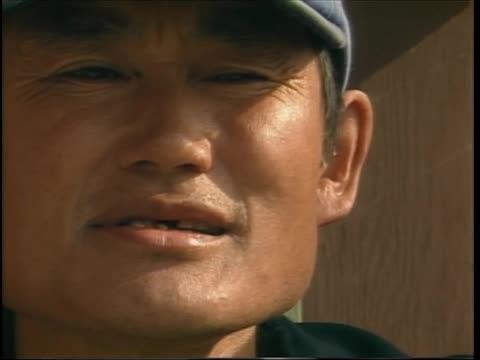
- Transcript
And as I was the supervisor for the project that we are doing now, and as we were going up, I had hired young men to do the work, and all of them would come over and ask me what's this and what's that, and those were the tolls that were made by our sisters to work on the wood, and they didn't know what they were. And as we went to the completion of the first house, I took the voice into the building, I mean that was the sad house, and I was talking to them, and as I was talking to them, I explained to them how we were living at those early our times, because they asked me what kind of furniture
that you had in the house, and I told them that as you look at it, that's the way it was, and you would sleep, and the frost would be on the ceiling, and there was no storm in the building to hate it, even the cold winter months during the winter, and those people were just struggling to live after land and the sea. And as I was talking to them, I noticed that they were really listening to me, and I think if they experienced how our ancestors were struggling to live and make us here, if those people weren't struggling to make me live, I would not have been living, I guess, and the way their way of life I am to respect
because I have experienced it, and I think once we get to cause it completed, I think our young people will start to listen to our elders again, like in the old days, if they have seen how the way of life was, and I think our young people nowadays will start listening to the elders, all their parents, and start listening, because nowadays you try to tell a 17-year-old boy or a girl, and see what say, I am 17 or 18, I am on my own, you don't tell me that, because in those earlier days, they used to really talk to the,
I mean, instruct the people, even though they are married, when they say that the couple or a man isn't doing what he is supposed to be doing, they go and tell him, tell her or him off what he is doing is wrong and what he is doing is right, because they observe it, they make on the spot correction in their way of life. The elders would make on this, they'd see you doing something that wasn't right, and they'd just tell you right then. Right now my mother is still telling me, yeah, like she is still, when I was young, you know, when she thinks that I am not doing the right things, she comes over and tells me, yeah. And I can't, you know, in those days we never used to talk back, I try and hold my tongue, I
still, why do you think to talk that hell, why do you think kids talk back now, I don't know, I guess, because as of now, the children are very hard to get along with, and they're not, now in days, the children, they really change the life, I think it's because of the changes that we are facing, even we face them, sometimes we cannot go about them, because it's not our way of life. It's maybe what they call, white man's way of life, and to my understanding I have ran into the white people and I was chatting with them and pretty soon I asked this person, if he's willing to forget his
way of life, and he is at hell or no, that I will not forget my way of life, that's my culture, and I will never forget it, and he turned around to me and say, will you forget your way of life, or your culture, and I told him the same thing that I would never forget that I am an Eskimo, and I will always be an Eskimo no matter what changes that we are facing, and I think if we try and make things visible for our children to see, I think they will start changing their life, because they are Eskimos, and if we are Eskimos like all days, we still be listening to our elders and parents, and always willing to help out.
When you talk about being Eskimo, do you think, can you say what you think that means, is it wearing certain clothes, is it doing certain things, or is it more inner it seeing me? It's within, could you talk about that, because it seems that the changes, you know, it's like we can't do anything to stop it, as much as maybe anybody would like to, the planes come in, you know, the TVs come in, and it's like you couldn't, like you could say, well, I'm going to take this TV out, throw it in the dump, but you know, you can't, it's right, so it seems being Eskimo isn't just not, you know, living in a sawed house, and dancing, and eating certain foods, and wearing certain clothes, it's values within, so you talk a little bit about that, it's, I don't know how to explain, yeah. Well, they, well, like I said, they have, I'm happy to be an Eskimo, and I want to keep
that culture alive. If those years coming to me are coming to me, and if I, if I'm given life to live on, and I would like to see that culture still lives on either of all that way are facing so many changes. The Eskimo itself lives within me, even though I'm wearing 1985 clothing, and inside me will always be an Eskimo, and I will never forget the sufferings that I have encountered as I was a boy, and thinking of those things,
I have never talked back to my elders, even though they are not talking to me when they speak to a group, I receive it as that elder was talking to me or giving me instructions on how to live, live a life, because no matter how old we are, the learning never stops, and there's much to learn, and if we are to learn, we are to learn it from our elders or the older people, and I think it's our job as a younger people to learn how and keep our culture alive, learn it, and keep it alive. That's what it means to be Eskimo, to listen to the elders,
and learn. And in those earlier times, if we could go back to the earlier times, that we'd be living like them, and we would have no worries of money or other things that are very new to us. I think we don't do better off if we were living in those old days, and the worries that we have, the worries that we have in the villages is the alcohol and drug abuse that would be completely forgotten if we were living
in those earlier days. The only thing that would be is the activities that we had that is hunting and fishing, and we have no other worries other than that. What was your boyhood like? Wow. In my boyhood, I was raised by my dad without a mother, and my mother died long before I start to realize what was going on, and living without a mother is very difficult living, and from the experiences that I have suffered,
if my father hadn't worked so hard to support me to live in those earlier times, I wouldn't have been here, and that is why I tremendously respect the elders and the old people because I have never forgotten the sufferings that I had in my earlier times without a mother, the life is difficult. Most of the times I would play outside and go into the house because I am not equipped with a good source without a hole like this other young people that have both father and mother,
and I would go into the house and I would have nothing to eat when my father wasn't home, or if he's facing or hunting, I would have nothing to eat for the parent of time, and for our young people I strongly hope and wish that they respect their elders and fully respect their parents knowing that if their parents, if their father and mother have not suffered so hard to raise them, or struggle to raise them, they wouldn't have been underland or living, and I really strongly support and hope and wish that our young people listen to their parents and give them the full respect no matter how old they are because they are the ones that
make them people, and I strongly hope you children, as can my children, even no matter what grace we are, we must respect our older people and most of all respect our elders and respect who we are, our our culture. James, you were saying, you think it would be better if things were the way they were, there wouldn't be so many worries, maybe so many temptations or problems, given that we can't go back, you know, maybe you'd like to go back, but we can't go back,
so what, you know, it's like I'm trying to imagine young people hearing that saying, well, we can't go back, so what do we do, you know, what would be the hope that, you know, trying to think of what's the hope if we can't go back, how do we still, how do young people still, what do they do, you know, it's like you can't go back to the way things were, but maybe it is these values within, how do they live them now, can you say anything about that? Well, like in earlier times, I mentioned that if we could go back and live it the way we could live, that we would have no worries. And I think it's because we cannot go back of the things that we have now. I think it's very important for us to keep our culture alive,
and if we can get together in local villages, maybe do the same thing which we are doing, construct a little side of the old time village for young people to see. And I think that would be tremendously help to us to bring some part of our cultural back into our life, for our children, our generation to come to see. Once, once we put something that we can see like which we are doing now here in the village, it's going to be a tremendous, tremendous piece for our young people to see. And we would be very happy for other people if they come, we would be very happy to solve them, that we have things that can remind us
on the old days. And I think it's our number one job to keep our culture alive and explain it fully to our young people, maybe let them see it like we are doing. And I think that the cultural should also be kept in the programs in the high schools that we are having now, when I have noticed that when Mr. Jack Clark came and as the programs were, as they were working on the programs, I had happened to be the member of the community school committee and when Mr. Jack Clark mentioned that we must try and
keep our cultural alive. And after he came to be our principal, we had Eskimo dance starting the school after the school hours. And we also had some part of the Eskimo activities that they had after the school, like making a kayak, we have a kayak at the school, we have some part of the Eskimo tools at the school display. And I was when I started saying those things, I said to myself, a white man came from nowhere and brought these things up to us, make them visible to us. And I said to myself, we are the Eskimos and we are supposed to be the people that are bringing things for our children or the community
to see, instead of having a white person come from middle of nowhere and suggest to us that we should keep those visible. And I was very surprised Mr. Jack Clark bring that to us and I really praise him for that. Do I go? Do I? Yeah, maybe I'll just get a little bit of close-ups of your kids that they can come out and I'll get close-ups so I can, when I'm in the middle of the school.
- Raw Footage
- James Sipery Interview
- Producing Organization
- KYUK
- Contributing Organization
- KYUK (Bethel, Alaska)
- AAPB ID
- cpb-aacip-127-76f1vtfh
If you have more information about this item than what is given here, or if you have concerns about this record, we want to know! Contact us, indicating the AAPB ID (cpb-aacip-127-76f1vtfh).
- Description
- Raw Footage Description
- Field recording continuing an interview with James Siprey and his wife recorded at Toksook Bay in the summer of 1985 by then producer Gretchen McManus.
- Raw Footage Description
- Toksook Bay; Tape 12; 8/4/85; Interview #2
- Created Date
- 1985-08-04
- Asset type
- Raw Footage
- Media type
- Moving Image
- Duration
- 00:20:22.223
- Credits
-
-
Copyright Holder:
KYUK-TV, Bethel Broadcasting, Inc., 640 Radio Street, Pouch 468, Bethel,
AK 99559 ; (907) 543-3131 ; www.kyuk.org.
Producing Organization: KYUK
- AAPB Contributor Holdings
-
KYUK
Identifier: cpb-aacip-bc3b105b68c (Filename)
Format: U-matic
Generation: Original
Duration: 00:20:00
If you have a copy of this asset and would like us to add it to our catalog, please contact us.
- Citations
- Chicago: “James Sipery Interview,” 1985-08-04, KYUK, American Archive of Public Broadcasting (GBH and the Library of Congress), Boston, MA and Washington, DC, accessed April 4, 2026, http://americanarchive.org/catalog/cpb-aacip-127-76f1vtfh.
- MLA: “James Sipery Interview.” 1985-08-04. KYUK, American Archive of Public Broadcasting (GBH and the Library of Congress), Boston, MA and Washington, DC. Web. April 4, 2026. <http://americanarchive.org/catalog/cpb-aacip-127-76f1vtfh>.
- APA: James Sipery Interview. Boston, MA: KYUK, American Archive of Public Broadcasting (GBH and the Library of Congress), Boston, MA and Washington, DC. Retrieved from http://americanarchive.org/catalog/cpb-aacip-127-76f1vtfh