Brave New World; The World is not black and white; 1
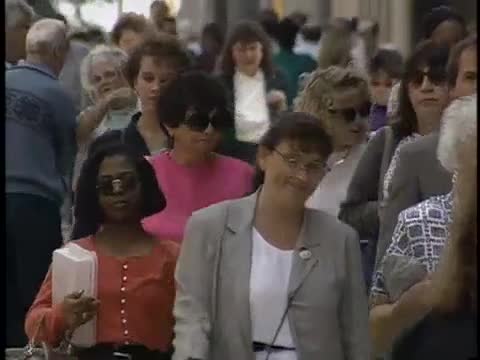
- Transcript
Oh. Hello. I'm Dr. Gerald Thomas. Join me in a half hour for a discussion about diversity in Wisconsin. But first meet the people who personified those issues in this presentation of Brave New World. We have to incorporate these new turns, these new ideas, these words. That's an unknown. We don't know what that will mean. And it's a little frightening If it means that your place in the world will change. [music] [music] [music] Identity- a group of characteristics that distinguishes one group from another.
How we appear to others identifies us. It gives us an identity. Social, political, by race or ethnicity. It won't seem so simple, one with either white, black or other, separate distinct and unequal. America is very different from any other places and when you talk about race and the reason why it's so emotional here is that there is a belief almost a religion that that racial groups are distinct populations. And any group that is not white is somehow while distinct, is also inferior. In a way, the melting pot theory became the mixing bowl reality. African-Americans and other racial and ethnic groups have intermixed in our country making our society interracial creating a group of new people and new issues. This is seen as frightening to some but it does
force us to look at our growing diversity. It's inevitable but what I think people should not do is fear this change because part of American history has has always involved the incorporation of new people into society. So in essence we're incorporating new people they just happen to look different from the majority. And that in and of itself is neither bad nor good. We can make it something much better though. This program is about the new people about race and ethnicity as they affect us personally and socially. About such issues as identity, adoption and marriage. It is also about entering what has become a brave new world. I think we need to recognize that identity is complicated. It's a long process and it's a never ending establishment of who you are, your place, your history, your community and your experiences.
My name is Maggie. I'm a senior in sociology from Toledo Ohio. And I'm biracial half black and half Jewish and um I've been living in Madison for four years. I work at the campus womens' center. And I'm getting ready to graduate and move on to L.A. And when I came here I had to assert who I was independently related to and that kind of thing. So I came here and I sort of stopped defining myself as my dad is black and my mom is Jewish and more started to define myself as a biracial person. And that's who I am. Get used to that phrase multi racial people around the country are we refusing to check only one box on application form. So we don't even know how many multi racial Americans there are but their numbers are increasing.
This group is part of a movement to claim their dual heritage but it is not without difficulty. [second speaker] In the society though as you suggested race is defined as one or something else. You can't be mixed race, you can't you can't be a multiplicity of races you have to be black you have to be white you have to be asian or whatever. Michael Thorton is a professor of African-American and Asian American Studies at the UW. He is half Japanese and half African-American and has written about the conflict of being from two worlds. I thought I had to be black. But that was insufficient and incomplete for who I really was. I was much more that. I was part black also something else. That does not denigrate any part of my heritage but it says I'm much more than simply one thing which our society tries to make us believe we are.
When I came to college my freshman year there was a party on our floor in the dorms and everyone was sort of mingling and chatting in the halls and there was this guy we were talking. And he said. Well we were talking about our histories and our backgrounds and I think he said Oh my God, you know you're mulatto. Ugh God. Well it's very important to have identity in America particularly when we talk about racial or ethnic identity because most of us are evaluated by our race or or our ethnicity and I think that particularly creates a problem for mixed racial people because they have several racial identities. My personal theory on that is that I represent to people unification of two very polarized groups. Whites who are one of the most privileged in the country and Blacks one of the least privileged. I think that's really hard for people to take on the unity of two groups of people see as very very different and very separate. I identifies biracial. And that's really important to me because I know I have very rich histories on both sides of my
family and I consider all of that to be a part of who I am now and part of who I will be in 50 years and who my children will be. From coming from Africa being slaves in Tennessee you know having a farm in southern Ohio to come in from Ukraine to New York in the Jewish enclaves in the Bronx you know to University of Pittsburgh where my parents met. All of that is as important in who I am and I don't I don't want to forget about any of it. Hunter's motivation to maintain her unique heritage include plans to attend UCLA for graduate studies in race and ethnicity. My thesis right now is on the ways that teachers interact with their black students differently according to lightness and darkness of the students skin color. When asked how she has managed to maintain confidence against the stereotype of the tragic figure, Hunter again credits her strong heritage. I never really felt tragic. I felt fine. And I sort of went through my
life befriending different kinds of people and had a lot of goals, have alot of dreams that I still have and I just continue to work towards that despite stereotypes that I should be struggling and unhappy and caught in the angst about my identity. [music] Oh, we can come out. Yeah. No nothing in Stoughton prepared me for any type of biracial life which we have. Just my own family life prepared me for accepting this type of situation mostly my mother. My father was more of a redneck country boy. What does a country boy. Dan Hutkins and wife Penny think about raising
biracial children. I don't think of it in any other way except a family and I don't think of any one as my children as black or white or anything just my children that's all. I guess I had inner feelings about whether I would be [child crying] you know that I would be able to help a child growing faced the the prejudice that the child might experience which I hadn't. I mean I think everyone does experience [child talking] some sort of problems and some sort of prejudices in their life. But racial prejudices is a major one [child talking] which we noticed and I did feel did wonder whether I would be able to I guess help a child or support a child through that. Interracial adoption is a complex and emotional issue as more and more white families are adopting children of color. Some families felt that all you needed was love. But that often deny the reality
of dealing with everything from hair to hate. These families once the child got out of the cute infant state and then there was a concern about well now what do we do? The child's skin may have darkened or their hair may have curled up a little more because that's what happens with children of color, they change as they grow older a little bit. UW Professor Deborah Johnson studies family relationships especially those of multi-racial children. Families were not made aware of what they were really getting into. They didn't understand that their own status would change as a consequence of now being an integrated family, being interracial family if you will. Those consequences are too great according to groups who are preferred to transracial adoption as cultural genocide. It's not so much genocide as much as the psychological impact all of this can have on the child.
Clips is the director of the Institute for Child and Family Development and African-American Social Service and Adoption agency in Milwaukee. She is familiar with the problems of transracial adoptions. We I'll never forget one of the females talking about her the natural son of the family that adopted her bringing a friend into the house and the friend asking him and using an un-mentionable term what is that so and so doing in your house? I received a letter from Roz Clips feel that many African-American families have been systematically excluded from adoption because they don't meet what are considered white middle class qualifications. These adoption issues become even more complicated for biracial [child crying] kids. I think it still makes a difference because society still recognizes them has being African-American. A lot of states in the
south that say if you have just an ounce of minority blood in you're a minority. So no matter we don't look at the fact that this child has a half white heritage we look at it as a society the minority heritage of the individual [second speaker] like [child] the [?corner]. I agree with you that it's idealistic but I think you have to have something idealistic you have to have a framework from which you know accept what's right and wrong which you work from. And that's what that is that's the framework from which we work is that you know we are human beings and we respect each other. And there's there's no reason why there can't be separate cultures and share with share with each other that the background of that culture. Sharing different cultures is the start of a cultural commitment that is essential for the parents. They also have to be aware that they can't say this is just a human being growing up in my family
that what they really need to do is teach the child to be aware of and to cope with race and that we know from some new research that white families can't effectively do that. But they have to be aware enough and conscious enough to focus on that as an issue in their child's life. Also are you willing to educate yourself about the African-American culture? Are you willing to go to an African-American church? You know experience that, experience things yourself and you have to be willing to do all of that. The challenge is also for parents to talk to their children about the realities of racism not an easy task. Well I suppose without scaring him I'd like to prepare him somewhat for the way people do view different or different races and different cultures. But I guess I don't feel right now that if he hasn't experienced something that we want to I want to scare him. But in our neighborhood where we
live we do have a mixed culture and it's a real positive place to grow up. These aren't our adopted kids they're our kids. I can't imagine anyone feeling any differently about their kids than we do about ours [child] whether or not they're biologically ours. And I can't imagine feeling any deeper feelings for a biological child than I do for these two. Children learn who they are from their parents. Ultimately what matters is the relationship these children have with their parents, loving, secure and realistic in today's color conscious world. [music] [music] As Americans we have to sort of realize and begin to accept the fact that we are already a multiracial, multicultural
society. Once we recognize that then we are able to put into place those mechanisms that will allow us to appreciate one another, to operate in a classroom together where no child and no family feels diminished or left out. Outside O'Keefe middle school there's a mural depicting harmony among our people and while that harmony may be reflected in the classroom. A group of eight graders says it's not being reflected in what they're taught. Not all classrooms make kids feel included. That's why a group of students at the O'Keefe Middle School in Madison made news when they walked out of their classes in March 1993. Some of the students came together here to explain why. They mostly didn't teach about our races like only one race. And if they did it's like only a little bit in which they didn't give us no time to learn.
We had to walk out because we really didn't think he was going to make make a difference up in our school so we had to be sure he was going to do that. He, is the principal, Tom Vanderbest who met with the students earlier that day and the walk out with the first part of a wake-up call that kids were feeling left out. When the kids didn't see some of the specific things I think that that's what I meant by a wake-up call because if the kids aren't getting it we're as adults we feel it's fine but but if they're not getting it then we're not delivering what we're hoping to. It is good to learn about Other people's and your surroundings what it is also good to know where you come from and learn about It's important learn about every nationality in the I didn't it would be boring if you just learned about one. So we want to learn about others so we know that they might do something different and we might do something this way. Start a fiction writing [:?] [child]
Some of our students in our class thought it was stupid and it wasn't proving a point and they just didn't understand what it was about. [second speaker] What it was about was students demanding inclusion in every facet of school life from history lessons to class activities. A movement one student sees as emerging across the US. It could happen anywhere well if the kids care enough about what they're learning about you go to great lengths to learn. [second speaker] What they learn is about identity and history, success and progress. The purpose behind a high school program called AHANA. means it's an acronym for African-American Hispanic Asian Native American and it's a conference that we have here in the state of Wisconsin that's been going for 14 years now. Joe Thomas, Minority Services Coordinator at West High School in Madison. It's not a conference where we say, we're separate from students of non-color but we have to get ourselves together. You know and understand what
our needs are and understand what direction we're going in. If we don't understand that we don't know who we are, what about we're about, we really can't share that with other people. [second speaker] You know and I'm speaking from [crowd noise] No No Right Why don't they work though? They aren't really minority students though see here's where the problem begins. [second speaker] Doctor Russ Kanya of Milwaukee is an organizer of the AHANA conference. [second speaker] One out of four people in the world are Chinese. About only I believe 14 out of 100 people are white and that's shrinking and pretty soon the people who speak Spanish in America will outnumber the people are African American. A lot of times we when look at history we don't look at the contributions of all these people, historically and currently in our economy. So we need something like this. It has a powerful effect on these students here. [second speaker] And then is that a skin racist with the whole Native American and when you look at his face and stuff. Who
these kids are are our new generation looking through multicultural eyes at a mostly white and European world. You going to learn it. Europeans we had to learn that. We had to forst it upon us. He told that this is the right way the only way. Don't act outside of who you are. If you can't be yourself and you know you not defined you do not know yourself. Yeah and I think you have to know that sometimes we can allow who we are who we see ourselves by racism. We frankly discuss racism in other cultures and how you shape your own identity and what you can or can't do but a lot of it's empowering a lot of our workshops help kids discuss and also interact with people who are successful. So they are are in a sense doing something about their their own identity. This helping me to find out really you know to be a leader as a with
a multicultural society that we have now and it's helped me to be a leader and show a little the more equality of both sides you know and not to just say OK I belong to this group I belong to that group. But to stand up and be a leader as just a human being you know whether you're white or black and whatever. This is a children's story about The Little Black Sambo and it says in the front cover that it has become a childhood classic and authorized American edition with the original drawings by the author has sold hundreds and thousands of copies. So they're selling copies with the black people looking like really black charcoal zero type and it's like are really negative. [second speaker] What the kids are making is connections between school, society and themselves. And my school basically like all Caucasian school. I could just you know go back and try to help them understand me now that I can help myself understand myself more and try to help them understand where I'm coming from. As kind of a chance to meet new
people from different minorities, cultures, backgrounds and get a chance to know them and how they feel. I won't feel so different than I do. AHANA provides a much needed mechanism that builds bridges of understanding along with strong and secure identities. Can't try to be how everyone wants you to be, you just got to be you and be happy with that because not everyone is always going to accept you for what you are but you have to accept you for what you are. Let's look at some of these needs we have up here and see if we can think of any solutions. One thing from this conference I like the students to take away that they are powerful and that they are going to be needed today, tomorrow to solve the problems that we face in our society. And I want students to be ready to take the place out here. And I want them to be strong, to have the knowledge because knowledge is power.
The knowledge students gain about themselves and each other, not only strengthens their identities but fortifies them for the future and helps them to be brave in a diverse new world. [music] Well we've been married for about a little over 12 years and I guess I would say that we just got a basic typical marriage you know we have ups and downs, good times bad. We fuss and fight and we have fun. We're just normal people. [music] Normal people except for one big difference. Linda Lockhart, Steve Cores and their two children are an interracial family, a fact that sometimes draws stares and comments. Stephen had somebody ask him once when Rachel was very little you know what type Whenever not whenever but often when I've been alone with her as a little one or the two of them, people will ask me strangers are they yours.
Of course I'm always happy [laughter] to get that question because then I can put on a big smile and say Yeah Say Yes [background noise] Steve and Linda are both writers who met while working at newspapers in St Louis. When I was 25 I was looking for work and one of the places that was hiring was a black newspaper. And I applied. I thought it would be an education. And it turned out to be far far more than that. I knew him as a professional journalist as a colleague and knew his experience that he had experiences a lot of white people never had from living and working in the black community for years. That did give him a different perspective and did open his eyes I think to what our society has done for a long time. [background noise] [background noise] Part of the fear about interracial marriages is reflected in the belief
that they're very common and there very popular. The facts according to Professor Michael Thornton is that less than 2 percent of all marriages are interracial. But they do carry extra difficulty. Well I think the most important problem that couples face in interracial marriages is that they not really aware of the problems that come along with them. Often they get caught up in being in love and time in some sense ignoring the color boundaries for themselves. But what often happens is that they often bring baggage with some to the relationship. I did question in my own mind you know what his motives were and asking me out I want if he just really want to know what it was like a black person. According to the 1990 census. White men were more involved in interracial marriages than any other group. Linda and Steve overcame their reservations and married. I think in both of our cases when both of us were married before to people of the same race and those marriages didn't work out. You know our families were just as happy to see us find somebody and be happy with as we were getting older we weren't kids anymore.
You know his mother's joke was that you know he finally got a good Lutheran girl. I'm lucky that way. The family and friends that I had at that time had no problem. And having never had one since then. Even though there is joy for them, the question often comes up in an interracial marriage what about the children. Our children, I think are as normal as any other children. They certainly are having a challenge of having to walk a line of race and trying to figure out who they are in a society that's so hung up on [second speaker] just overtakes all of us so fast no matter which side we're born on. It's not too many years before even a small child can sense how deep the divide is and how magical in some strange way this skin
business is. This skin business would not be the most important thing for people to ask. If daughter Rachel had her way, [child] nobody would like ask you about maybe where did you come from things like that because I mean you will all end up in the same place in the end so why does it make a difference right now. The difference right now is that the parents have to deliberately work to instill both identities in their children. Both of us know so-called black history, both of us know so-called white history and we merge those in our lives and they are one thing and so any thing the kids are asking us about we give it to them from that perspective. And so I think that's maybe their their biggest advantage and their greatest strength. So you know we go to June 13th, we go to Martin Luther King's celebration and then we go to Fourth of July. Is that American? is that white? You know what is it?
What it is is a blended culture. The making of what some now call the new people, the children of a multicultural society. There are more and more new people all the time certainly more children you know white women are definitely having more mixed race children and society is melting all the more and so I think as they grow up they are seeing more and more people like them they're not the only one in school, the only one in church, the only one in the family. Our society once strictly divided by race and culture has changed. And change can bring fear. But as in a marriage those fears can lessen with communication, appreciation and acceptance. It is a new equation for survival in our brave new world. I think what will pull us together is sort of having a stake in each other's self-determinism. That we all have to realize that we're
essentially in the same boat. Kind of floating along without the other, none of us will sort of make it that any strike at any person of color is diminishes the other group. And we have to be very cognizant of that. And now these comments taken from a discussion about identity and diversity in Wisconsin. What about your kids. My husband is Irish Catholic. And when the priest that married us as interviewed him to make sure he was OK . He was activist priest in the Chicano community in Chicago. He said one of the reasons he thought Chicanos and Irish fit so well together was you both know how to get drunk. At which point I explained I don't really drink but I think the benefit has
been for us is that as a couple, my husband Mark is able to let me be me in all of my work and he has been one of the most supportive people of my political work and my work has been political on the issues of race and ethnicity. And [second speaker] He hasn't tried to make you white? Absolutely not and we have a joke in our family he's the white at a [?black bow]. He's the handsome white boy. And amongst my Chicano and Latino and African American, Indian, Asian friends I often get compliments from my women friends of color say I want to marry a man like him. Because he supports my politics and my activity and because when we have we have two children. Our first daughter's biological Olivia. She looks just like her papa fair, blue-eyed, blonde hair. Our second daughter is adopted as of this year. She's Chicano German and she's often confused as African American. So I hold one and they know she's mine. He holds Olivia and they think that's his. We looked at we stand
together and people go oh my. But I think it's worked out OK. Olivia says I'm white on the outside and brown on the inside. While we're talking about children. Mary, what's it been like for you being a product of a biracial family union? What's it like to be biracial in America? Well I think I have two issues that I that I usually face and one is of course being a biracial person. Many people you know I had one person ask me once what is it. What do you feel like you feel like you're black or white and you know that I'll never forget that question and I identified myself as a black woman but I think that and I'm accepted that way by society. That may be one reason that I have chosen to identify myself as a black woman. But even a bigger issue I think is I was adopted by a white family at six months of age and many people you know have questioned you know what was it
like, do you think that you really received the kind of education as far as your identity growing up in that environment especially in white white environment like La Crosse and so you know I've had to confront many issues not only myself but my family. I think you are very very fortunate to have a set of parents who are able to give you what you needed at that time in our history in the country. I don't think that's been the case historically. I think now we're seeing more white families take it on as a job. They learn the culture. Some of them not all of them. And I think that's what's pivotal is if whether or not they can learn some of those things and be active in some of those things because I've seen cases where it hasn't worked. Where there is a hatred of your own folk. Why do you talk like that? Why is your hand on your hip? Where do you get that attitude? What know how dare you. And they're talking to their own folk. And that is because their parents had them in these small white environments where and they were cute and fine
until it came to dating and that's when it really really hit me. These kids were doing OK and then it came to high school and nobody wanted to date them when it came to [? Riceland] Wisconsin. Dating issues, Mary. Yeah its uh, that was an issue actually when I was adopted it's funny my mom tells me about it now when I was initially adopted a lot of people LaCrosse said Well are you guys sure you want to do this. You're going to have problems she's not going to be accepted she'll be an outcast nobody will like her. When I was a senior I was elected homecoming queen my mom couldn't run fast enough that Tribune to put that in. I think she wanted on the front page but so I got along well with people but I didn't date a lot and I think that was it was difficult for me when I would go out with my girlfriends who were all blonde-haired blue-eyed and boys would come up and say who's was your friend she's cute. Nobody ever came up to me it was difficult and in fact I did encounter one boy who asked me to the prom and came back later and said well I'm sorry we can't even talk my dad found out you were black my brother told him and it was difficult and I had nobody to relate to and so I think the dating issue is hard. Just how did you deal with that incident? I
didn't, I mean I didn't tell anybody. I was too embarrassed I think to tell my my family just because I was just I was embarrassed. They've always told me oh you know you're beautiful be happy about who you are be strong and proud. So it was hard for me and I pretty much kept it to myself. The girlfriends that I did tell said I'm sorry. You know it was like that's it they couldn't relate and it was hard it was one of the hardest things I've ever faced. So Larry you've adopted a black child? We came to adopt our daughter who's black. Not particularly looking for a black child but here was a child who needed a family. We didn't go out searching for somebody and she kind of fell into our family and became part of our family. And our relationship is with her. You know I really relate to what you were saying. And when people say well how dare you I all I can say is well she's my daughter. I didn't steal her from anybody.
And she's in our family and our job I think is to help her to be comfortable in both you know in both cultures. I'm an adoptive peer myself. Also I feel it's important to for people to know that because not only has a profession [?who I] dealt with the area of African-American adoptions but has an individual having gone through the system. I've had my own personal experiences which makes it more important for me to be able to understand what tends to happen. But some of the horror stories I've heard are young individuals African-Americans who have been adopted by minority families and having problems with extended family not accepting them because their minority. Friends of other siblings natural siblings. Calling them names and
especially African-American males who no longer are those cuddly little babies that they were when they first adopted him. Now are teens and are virtually seen by this society as a threat to them, to the white culture having to deal with those issues issue of racism and just in general a lot of issues negative problems that African-Americans are confronted with every day. And I'd like to add something too, to that which is I think that the family has to recognize that this is a person of color and then and then take some steps to accommodate that. Absolutely. You know you can't take a person of color and then put them into a white family and into a white society if they don't have contact with any other minority people. I've done workshops in the Madison area for a few years now with white families who are adopting transracially and also with white with mixed race couples who are having biological children.
And I would say absolutely that love is not enough but it's not enough just to adopt a child and say I love this child you have to be able to love the adult in the child. And the way to love the adult in the child is to be able to relate to adult members of that child's minority community. And I and sometimes parents have a hard time doing that. And sometimes it's very difficult to actually have a relationship with an adult who is looks different, has a different culture perhaps has a different lifestyle. And sometimes people people can love their own children their little children who they say like the couple in the video. You know these are my children. But can you love an adult or can you have a close relationship with an adult who is who is an African-American person. And also it's being willing to put yourself in uncomfortable situations because those relationships aren't going to necessarily be free of tension and free of stress. You have to be able to put yourself in a situation where you're going to experience what it means to be of different races in this
country because that's going to prepare you to deal with your child as your child grows up. You all represent the future. Is white America ready for the brave new world? No I don't think so. No. Ready or not not your [?income]. Ready or not here we go. Well in a way I think we are already indirectly because I mean as be seen in the video before the younger generation are starting to melt much faster than we are willing to accept it. And as among a new group of Asians coming into this country you know in addition to between the black and white Hispanic and that we're heading into the Asian group where Hmong gets married with other groups and I think that the children goes through and they did become a faster learner and they pick things up quickly and that also goes with marriage. They you know they become more open to us.
So you have something to say about that. I guess when I answered No what I meant was in terms of the political backlash that people of color are facing in the country we may be as humans integrating through marriage and extended family and the like. But in terms of what's going on in the nation I can't I'm not that optimistic. My job is to be optimistic dealing with multicultural affairs as a professional. I know the feeling. Yes. Stiff upper lip when you take a look at what's going on in California for me is when you look at what's happening in California it's an indicator of what could happen to the nation because it's one of the most diverse states in the in the country. And the Proposition 187 which was clearly anti-Mexican and now the bill that they're introducing that is going to to try to rescind, it so carefully crafted to rescind affirmative action. So when I when you asked is the country ready there are we may be at a human level moving in a direction that the politics have yet to catch up with. And for me all life is
political and that makes me nervous. And I think we have people of color have to watch those indicators. Thank you Joseph. The original question you posed about is white America ready for this. I think is a little bit unfair maybe [ Okay second speaker] because I think it's more certain sections of white America may not be ready. But I grew up in Chicago and I married a white woman and we were discussing it yesterday and we never it never occurred to us that we were a biracial couple. And it didn't really occur to us until we came here to Madison.[laughter] But from everybody viewpoint here it should be the opposite right around since this is a [right second speaker] diverse community. And I never traveled outside of Chicago before and when I met my wife we started visiting other parts of the country. And I always expected to encounter not our togetherness but just me. I expected to encounter
some racism because I never experienced it before and I was all ready for it. And surprisingly I didn't. So I mean I think that's good. I mean I think I think that most of white America is you know it's not a very big issue. But so you might feel that white America is ready are much of the market [second speaker] Much about it much of it is and there's these little pockets like in Janesville this summer and I described on the phone and I think I might have told Blaine. I had an occasion here in Madison where I felt like some racism. I looked Native American and I just heard some people behind my back going [?] that kind of thing. But I never experienced it before. OK Julian. Is white America ready for this? And I think because this is a racist country founded on racism and we've inherited all sorts of racist institutions white America is not ready and has been not
trained to be ready or educated to be ready. [second speaker] And that was a question I was going to ask you you took the words right out of my mouth. Okay You feel that the school systems are properly preparing kids to live in a interracial, bicultural multicultural world? Are they adequately doing the job of education? No unfortunately they're not. I mean I think you can go into almost any so-called integrated school in America and see a segregated school within. You see you know black students doing one thing and white students doing another thing and Asian students doing another thing. And there's very little social integration that goes on in the schools also because teachers haven't been prepared for this new world. How would you have them prepared, how would you have the teachers prepare? Well what I happened to do so I think it's important to do it, is race relations training for teachers. And I'm disturbed that first of all 90 percent of the teachers in America are white people and they're teaching a
population that they don't know. They don't know the history of the culture and they come into it like every other white American with all sorts of stereotypes into this profession. They're no different than doctors or lawyers or any other professional group but they're very important because they're teaching you know our children for eight hours a day and determining whose knowledge gets taught and how it gets taught. And they don't have the tools to teach these children to be able to accept diversity. I mean I think the issue about celebrating our diversity it's very important that we acknowledge that we are the most we are probably one of the most diverse countries in the world in every way racially, religiously, ethnically. But what we deny, what we don't talk about is the reasons why we're separated by those differences. [?] In discussions like this you often hear most frequently, hear issues discuss black white.
As an Asian, do you often get tired of hearing your cut in such a fashion that is only black and white? Well do you want an honest answer? This is the moment. As a new refugee coming into this country, I when we referring to that question I feel like just a drop in the sand. That's how I feel because everything is being overlooked. Black and White the argument you know and so it's kind of like the big population gets it but then the little ones don't get attention. But then if we look at together we are whether what color we are, we are human. And so it's frustrated. But then you also understand that well you know politically or socially if you don't belong to a certain group then you can't converse a conversation and
then you cannot go back and start to accept it and then just know that you have to work harder to get to that stage. So it has its own perspective. But yeah you do feel frustrated. And then for those of you who have married interracially and or who have adopted kids of another culture, how do you respond to the statement by others that you're just trying to prove something? Just trying to prove something. Basically I have to say that that's not a question I generally respond to. I think that we can all choose to respond or not respond to what comes at us. And I've taught my children the same thing. You don't have to answer everybody's question. You don't have to walk around being this experiment you know and teaching everybody what does it mean to be biracial. What does it mean to be a person of color. You can choose to not answer those questions and that's one that most of the time I choose to not answer. I've sort of taught myself to choose
to ignore certain things and look at the big battle. You know the big battles says why is it that where we live there are so few people of color living there. And that's why I talk to my children about Why is it that you know this side of town you see lots of people of color and you see lots of people children of color who don't have the things that you have. That's racism. It's not somebody calling you a name in school because you can deal with that individual. It's that other racism that's really scary and can really hurt them. That they don't know about it. They can't even fight it. Because if you start to take it for granted it's like the air you breathe. You live here, they live there and you just you know this is the way it is and we just accept that. That's what I'm training them to not accept. In the video. It was stated that there is a new group of people who do not want to identified themselves as other. They don't want to check white perhaps because they're not white. And they don't want to check black perhaps because they're not black. Hispanic they're not Hispanic.
What about this new group? Are they people who are just trying to escape the stigma of being a minority in this country or the stigma of being the quote tragic mulatto? And I have some feedback on it definitely. I think it's a very true and real movement. I think that motivation biracial people are attempting to assert an identity that they have come to grips with and that is an acceptance of both you know both sides of their family. I think that there was a time where there may have been a desire to escape. And so one would identify with black. And one identify with white in where I grew up in New Orleans you could you could be as fair skinned as one could possibly be and you had to make a choice As she did I identified as being a black person. But that's because the choice was either this or that. But I think now there
is a new movement. The only thing that concerns me about it and I don't want to be misunderstood is that there's new movement of new people or multi-racial people, also to some degree perpetuates the notion of race. Because here here is now a new group. Before we had these black, white or Hispanic and to now say well we don't want to identify with either one, we want to identify with both races just to continue the usage of that continuum to develop a new group continues to perpetuate the notion of race which I think is nothing more than a social construct developed to divide and conquer people and keep social economic power to one group. Hmmm. So that's the only concern I have about what is a very positive movement on the individual level and think on you know within their group. I'd like to point out that as a nation I think we need to keep in mind that we try to pride
ourselves as land of the free and home of the brave. But in fact we are just. edging our way into integration as a nation. In every major social movement in this country, whether it be labor, women, people of color, differently abled has only been brought about through federal legislation. So it's not that we were good in the in the beginning we've always been good. It's when we were good and we're getting better. I agree with you I think this move of claiming both sides of your roots is part of that movement of our country moving towards integration. But I also agree with Julie that because we're in this we're just edging our way into integration as a nation. We have yet to train ourselves, equip ourselves to deal with this complexity because we have been bamboozled into thinking black white brown yellow red, whatever. And it's going to take us I think as a nation a very long time. I don't say it won't happen, but I think it's going to take a long time with us fumbling with language as well as relationships and
power until we work this stuff out because we are not at Nirvana as I like to talk about as a nation. We are not there. We are right here and it's only about 30 years old. This movement to really integrate this nation and we're still backsliding now with this last election. So I think you're right. We're moving. But I think we're going to still fumble with the language and the behaviors because it's new territory for us. Speaking [another speaker] Joe,Go I just like to point out that the children, these these biracial children of these multiracial children are going to be very powerful I mean I'm of the generation that grew up with Sesame Street and that's probably why I didn't feel a lot of racism. And I didn't my wife and I didn't feel that we are a biracial couple because we just don't think that way. And I think if if we continue to have this sort of influence on the kids that by the time they get older hopefully this won't be an issue anymore.
Mary, when you see an interracial couple walking down the street what goes through your mind? Well it I guess it doesn't it doesn't affect me, it doesn't bother me. You know it it to see that I think to each his own. What about when you see others staring at him, at the couple by people staring at the couple or black people staring at the couple? Well I get I I I deal with that so much I think it's for me it's just a matter of really being comfortable with myself. I have a lot of people who you know make comments to me you know. Would you date somebody white and I've had a lot of people. In fact it was so funny last month one of my friends said yeah I got to go to to my friend's house for mom's way and she's cooking you know white people can't cook. When I hear stuff like that it's hard for me because I have to to realize OK I'm not going to get defensive just as when I hear a white person say something racist to me they may not know I am black and say something racist I think you really have to keep it in perspective and you hope and pray that they get educated a little bit some day and don't say those racist things. I think it's just a matter of me feeling comfortable with myself.
What do you want America America is watching you this evening to know about the brave new world? Or what to expect from from the brave new world? What should they do to prepare for the brave new world? I think that the [?attention] are a very important word and that was integration and I think that we've gone beyond integration and now at the point can I have my piece of the pie. OK Larry I'm sorry. The thing that struck me about the video was that so many of the people really didn't know what they were getting into when they started. And that they're getting involved on a personal level with someone of a different race is really what motivated them to start changing. And and I don't know that you can legislate that but I think that's where the that's where the vanguard is. Joseph, what you want folks to know? I would just like to warn that we should all be very involved and interested in this issue because.
I even though I'm optimistic because of my experience, I worry that because of many other factors in our world today, that things will become violent. And if this one issue isn't taken care of the violence is going to come a lot sooner mostly because at one time when oppressed minorities would would lie down. Now I don't think anybody's going to lie down [laughter]. Julie shoot your best shot. I'm just thinking about what you were saying Tess, about this this new legislation being really 30 years new. And I think the thing we need to remember is that that didn't just happen, that it happened after decades and decades of struggle and organizing and people forming coalitions. And I think that in any change that we're going to get, we need to do that and realize that we have common interests. The people have to organize around. And it's difficult to do that because we don't have equal.
we're not starting from equal positions. But I think we have to look at organizing and educating is a part of organizing so. [?Dwayn] something that Mary said I think is important is that she was able to temper the comment that was made to those there were stereotypical or or racist and I think that that's something that we need to continue to do because as we move forward there's going to continue to be friction. And if we know the heart of the person is right then that comment we should be able to set aside. And for the person who is of the majority culture. You have to take the chance and sometimes make the stereotypical comment and learn from that. Mary your parting comments. To piggyback a there is a poster I saw on the bus recently and one side says funny you don't sound black and the other side said funny you don't sound stupid. You know that's a statement in itself and I think that it's important for people to be aware and have an open mind and you know really be sensitive of other people's feelings you know and of their
background and I think that you know it's very important. Tess, wrap it up for us. I'd like to paraphrase Cornell West Cornell West says in race matters that we need to look at people from a moral agenda not a race agenda. So throw away race, ethnicity and look for coalitions based on a moral standard. You can have people of color who perpetuate garbage, as well as majority culture. We must judge each other on a moral agenda. Are we moving forward on social justice or are we not? Will we form coalitions or will we not. I want to thank all of you for joining us this evening. Appreciate your comments. I've enjoyed myself I hope you have. Thank you very much. If you would like to receive a copy of the Brave New World resource guide to books,
films, videos, organzations and other information on the subject of cultural diversity in Wisconsin. Please write to. Wisconsin Public Television Community Outreach 821 University Avenue Madison Wisconsin 5 3 7 0 6.
- Series
- Brave New World
- Episode
- The World is not black and white
- Episode
- 1
- Contributing Organization
- PBS Wisconsin (Madison, Wisconsin)
- AAPB ID
- cpb-aacip/29-87brvbdc
If you have more information about this item than what is given here, or if you have concerns about this record, we want to know! Contact us, indicating the AAPB ID (cpb-aacip/29-87brvbdc).
- Description
- Description
- No description available
- Topics
- Social Issues
- Rights
- Content provided from the media collection of Wisconsin Public Broadcasting, a service of the Board of Regents of the University of Wisconsin System and the Wisconsin Educational Communications Board. All rights reserved by the particular owner of content provided. For more information, please contact 1-800-422-9707
- Media type
- Moving Image
- Duration
- 00:58:33
- Credits
-
- AAPB Contributor Holdings
-
Wisconsin Public Television (WHA-TV)
Identifier: WPT1.92.T1 MP (Wisconsin Public Television)
Format: Betacam: SP
Generation: Master
Duration: 00:57:46
If you have a copy of this asset and would like us to add it to our catalog, please contact us.
- Citations
- Chicago: “Brave New World; The World is not black and white; 1,” PBS Wisconsin, American Archive of Public Broadcasting (GBH and the Library of Congress), Boston, MA and Washington, DC, accessed April 3, 2026, http://americanarchive.org/catalog/cpb-aacip-29-87brvbdc.
- MLA: “Brave New World; The World is not black and white; 1.” PBS Wisconsin, American Archive of Public Broadcasting (GBH and the Library of Congress), Boston, MA and Washington, DC. Web. April 3, 2026. <http://americanarchive.org/catalog/cpb-aacip-29-87brvbdc>.
- APA: Brave New World; The World is not black and white; 1. Boston, MA: PBS Wisconsin, American Archive of Public Broadcasting (GBH and the Library of Congress), Boston, MA and Washington, DC. Retrieved from http://americanarchive.org/catalog/cpb-aacip-29-87brvbdc