Harvard Book Store; WGBH Forum Network; Share This! Change the World with Social Networking
- Transcript
I met Deanna at our very at our second conference in 2005. We've been we've been working together for a long time and she is actually has a title she is our Y ambassador of technology. I'm just so thrilled I want to she told me that she had this book she got the book deal and she's met writing a book I was just so excited because every time I've seen her speak or write on the subject she's like the best evangelist for the cause right and there's so many people think that technology is frivolous technology is for privileged people or young people with too much time on their hands or navel gazers or any of the opposite. Deana fiercely believes and has made me more than ever fiercely believe that technology can change the world. And she does it. She's so fun while she's telling in writing. You have to see her necklace you have to really have to see her necklace it's a sequined goal. It's her Turkish Delight but she'll tell you about that if you press her I'm sure. Anyway she's been before it was fashionable before Facebook had even caught fire before Twitter was a glimmer in
anybody's eye. She's been an evangelist for the social democratic ramifications of technology and why it's not only our opportunity to take advantage of them but our responsibility to take advantage of them because we know that our opponents our political opponents certainly are doing it and if we don't take advantage of them we don't take control of these tools. The people have always controlled all the traditional media will take control of them too and we see that happening now I'm sure she's going to talk about you know how to Google Google for us and I'm sure you know in the questions. Yeah. Anyway she's also a good friend of mine so I just want to say that it's a great great honor to be helping to bring her here to Boston and I hope that you enjoy or half as much as I do. So let's go. If you also just an idea of kind of where I come to the table with you know politics and technology I've been an activist since I was an early teenager and I come out of a kind of old school organizing stuff and very very very left
politics and I've been a nerd my whole life. My parents when I was eight in 1982 they decided that everybody else was getting Atari's at the time and they wanted something a little more educational and so they brought home instead a personal computer for me and my brother and we were kind of like thanks mom and dad. And the interesting thing is because we don't really have a lot of money growing up and so we couldn't buy games for it and so my brother and I instead learned how to program. And so they had little idea of what they were actually embarking upon when when they did this but. And he was so moving onto or the topic of the day I'm going to start off by telling you a little story. Oh but before I do that I also want to say please if you can buy things at the store I used to come to Boston all through my teens I grew up in rural upstate New York and this this place and others like it but really like this is a mecca for me and I'm so honored to be here. That they would have me here
to speak and so anything that I can also help do to support a Harvard bookstore. It really it would mean a lot to everyone involved and so thank you also to Harvard bookstore for having me. That really means a lot. And to my mom too she's really going to need a copy of that video for her anyway. So I'm going to tell you guys a little story. This is something that happened last year it was a Saturday afternoon. Last spring in April it was Easter and Passover weekend and you know when authors get bored actually one of the authors who is pert of this moment is in the room was Jacqueline. You know they do things like big Google them still you know and they go to Amazon and they check their sales arraying you know and kind of you know just you know see what's going on. And if you don't know Amazon Dot com the sales rank thing and how your book is selling is sort of the key to the whole Amazon system effects on how you appear in search results and you know all kinds of different things. And a lot of authors start to figure out
that they no longer had a Sales Rank and then from there they figured out that their book had received the sort of mysterious adult flag and they didn't know why. And so they started posting things on Twitter and on Facebook. While I can't find my book I mean I can go to the page and it's there but when I search for it it's not there might be my book is kind of gone this is really strange and someone on Twitter started using what's called a hash tag to collect all of the tweets in one place who knows what a hash tag is in the room. Couple of people. Oh great. Awesome. So a hash tag is just you put a little pound sign when you're typing a tweet and you. It's a way of adding a keyword to that tweet. And so that it becomes part of a larger larger conversation and that people can follow the entire thread of a conversation across Twitter and the hashtag that was chosen at this point was Amazon fail because you know Amazon doing its thing and fail being a really Internet snarky way of saying this totally blows. So.
Within a few hours of people starting to post the stuff they started to figure out that there is a theme to the different kinds of books that were being effectively banned by Amazon and lo and behold they were feminist sex positive books. Ahem. And they were LGBT and there were even books of sexual health books for folks with disabilities that were also had mysteriously gone missing and gotten this adult flag. While you know very hetero normative books like and products like Playboy calendars and even like you know rabid anti-gay screeds totally left alone. So you know you do what you do and you light your torches and you get your pitchforks and you start storming on up to Amazon's castle and this is crazy what's going on and you know people are tweeting about it they're pushing the Facebook page people are blogging and you know it's Saturday night and you know these these different Web celebrities kind of gotten involved and they started using their influence to spread the word
further that this was crazy. By Sunday morning the L.A. Times is blogging about this Sunday afternoon and evening the New York Times starts writing about it and it just is turning into this giant massive thing and so Sunday night Amazon was forced to make some sort of response and it's a holiday it's a double holiday on top of it and they were forced to make a response they made a statement to Publishers Weekly which was the wrong idea. But that's that's a separate story but they said it's a glitch. We're looking into it. Right and I was you know for what it's worth I was totally on the conspiracy theory like Board of things like oh my god it's hackers and they figured out the system and we're all going down you know it was crazy. So you know now let's think about this situation if it were 10 years ago even 10 years ago in 1909 Amazon was already you know the world's most popular online retailer for books and if books had gone missing or had been banned 10 years ago how would we have dealt with
that as a group. What kinds of things would we have done in 1909. We would have emailed each other and asked people to forward that around we might have written a letter to the editor which which would have gotten published some point or maybe you know try to get involved with some sort of rights organization who would then kind of create a campaign to challenge Amazon on this and ensure what would have had to have happened is that a number of gatekeepers along the way would have had to decide that this was an important enough issue to take on or important enough story to tell. But instead 10 years later all of these voices from the Web kind of slipped into our cultural consciousness. And you know allowed us to demand something from a major corporation without any funding without any formal organization and without any sort of impetus or anyone telling them to do so they just did it on their own. And the sidebar the story the reason why this that they the Amazon says this
actually happened this is so silly. They said later that Amazon France was updating the catalog that week and that they were checking the wrong box off. And I was like really. I said you know what that totally sounds like to me it sounds like you know you know you totally I have a girlfriend you guys she just lives in France OK. And. I digress. So you know the biggest thing to understand about doing the work of change and doing organizing is that something very fundamental hasn't changed at all. And that's our stories matter. And before you get to any kind of organizing whether that's door knocking or lobbying or you know choosing constituent relationship management software or whatever that is change always starts with stories and storytelling has been one of the most powerful building blocks for social change of all time. Why is
storytelling so key to social change. There's something that's kind of keenly magical that happens when we tell our stories to one another and when we share stories with one another. And one of the things that I spend a lot of time and this book talking about is the importance of our individual stories. And even you know the kind of daily minutia that you hear about I mean the number one thing that I hear from people when they say that they don't want to get on Facebook or they don't want to be bothered with Twitter is that they don't want to know you know what somebody is having for breakfast but even those little tiny things can be really important to how social change actually happens I'm going to show you an example. So there's a tweet from a blogger named Renee who blogs at this wonderful blog called womanist musings. She's great and she tweeted one day a couple months ago she said I'm just getting in from spending the day outside with the family and husband is once again about to burn dinner though he calls it barbecue.
OK. Yes you can giggle about it's funny. So did that tweet change anyone's life and any radical way. Did that do anything to inspire some sort of massive shift in your brain. Right. OK. Stay with me guys the answer is no right because that if it's not no it's the you know that's not OK. OK. You know so no it doesn't and it's not meant to and but what happens is if you follow her you start to get a picture of her over time and the things that she cares about and the things that are important to her. And this is what a great technology writer named Clive Thompson turned ambient awareness were developing this passive awareness of one another so that each one of those crazy little updates is not important on its own but they become like a point in a pointless painting we're painting these very public portraits of our lives with our values our experiences and our stories
and it. Think about that that's a pretty radical change from you know the way things have operated the last few millennia. You know all public discourse previously was mediated in some way by some sort of gatekeeper with god knows what for an agenda. So here is this chance for all of us to say this is what it's like to be a person in my shoes. When we participate in each other's lives both actively and passively when we share our stories with one another. One of the most important things that happens as we build trust and from trust we build and Bethy and empathy is for sure one of the building blocks of social change you can't really inspired grand movement you know changing something without being and being able to empathize with other people. And there's this cool kind of science nerdy neurological part that I want to talk about for a second because I'm a giant nerd and I think this is really cool. But it's this is so well it turns out that our bringing is are actually wired for
empathy and we like to think of ourselves as you know these Darwinian creatures and it's a dog eat dog world out there. But as it turns out no there are subsets of neurons in our brains that fire when we see other people doing things to that effect are taking our brains what they're doing is trying to put ourselves in other people's shoes and experience what they are experiencing. So if we're hardwired to feel this way about one another we can use stories to activate that herd wiring. And the trust that we create on social networks is kind of what fuels this empathetic response. And there's this other cool study that came out that showed that when people are active on social networks the same chemicals that are related to trust and affection in our brain are released when we're participating and being active in social networks and that's completely awesome. And it's this kind of trust created empathy that will lead us away from isolation and apathy
that we've been experiencing as a culture for so long you know the last century was so focused on market demographics and silencing people and separating them. And these technologies are called social technologies for a reason because they're about connecting and sharing and engaging with one another. But. But your presence is required in this work. We need you here in the online space because change doesn't happen on its own. One of the biggest things I try to emphasize with everyone is that and all of the work that I do is to understand that technology will not solve our problems and I'm the first person to say that. But we can solve our problems and in part we can use technology to do that. The thing is if you choose to sit this one out this is what Jacqueline was alluding to because this is a big thing I've been harping on for many many years. There's a ripple effect that's caused by your void because you're not contributing to these larger public conversations they're happening
about how the world works and how problems should be solved. That conversation will go on without you. People will continue to have these discussions and will continue to shape public policy and larger cultural events without the benefit of your experience and your knowledge and that's kind of what's already been happening for most of us for the last few thousand years so I'm not interested so much in continuing that. I don't think you should be either. You know just a random example one of the things I talk about in the book is that so you all know that Wikipedia has look something up on the week just gone there and looked something up. Ok awesome. You guys are different real code with Hossam. Now who's actually edited something on the Wikipedia. Excellent that's actually a really good number but it's far fewer than people who have actually look something up the whole idea of the Wikipedia is that we're all contributing our version of our expertise. And that's really important because right now 80
percent of the Wikipedia is contributors are young childless guys and that's who's writing our history that Wikipedia's are to become our sorry I'm sorry the guy's like all like. It's not you're fine I'm sure you're great answer you're awesome. No but if you think I mean we could he has already become kind of artefact you go to place for knowledge because we know everybody in theory is contributing to it but if we're not all participating in that conversation that version of the story will go on that will go on record without our version of the events because to me creating a just society is a lot like DNA. I told you guys I was a nerd right. So you know with DNA how if you get a bunch of the same genes mixing around the gene pool together the species mutates poorly and dies off. That's like a bad thing. OK but if you get a variety of DNA in there mixing around the species strengthens itself as it evolves and it's no
different with idea generation. If you get a bunch of the same types of people making the rules for you know a few millennia you're going to eventually lead and up with a lack of meaningful advancement. Because I think that we can change traditional power dynamics using these tools and I think that you will and that you already are the problematic part is that's not kind of all shiny happy rainbows and butterflies. One of the biggest problems with with this work is that we're kind of living like fish and water on the Internet right now we don't know that we're wet. We don't know or that we're not willing to recognize that we're soaking in these kind of same social structures that we've been carrying around with us for hundreds and sometimes thousands of years. We're taking our understanding of the off line world with all of our prejudice and our bias and all those terrible things and we're projecting those hierarchy's onto this blank canvas that is the Internet. But we remain convinced that the Internet is this this pure meritocracy and that if we all just work hard enough we'll succeed. We
can't do that anymore. We need to interrupt this pattern now with conscious effort and action. So this is where storytelling comes back around again I'm going to share another story with you on how this actually works. So this is another story from last year also. Who remembers in the summer of 2009. HUL country club. Who'll and Philadelphia band she's already like yeah. And a group of African-American kids from swimming in its pool. Does anybody know get this. So then the president of the country club actually issued this statement saying We were afraid the kids were belonging to a summer camp that actually had paid for them to swim there and they still banned them. And the president said that we were afraid that the kids would change the complection of the pool. Yeah no joke he said that thinking that was a really good like it like that was his press statement. You know like that was an awesome reason. And so you know yeah you hear about
and like I see everyone's faces or is kind of like. And I was kind of all you know how we fell and so a friend of mine has this great stand up comedian named James way and he does a video podcast called this week in blackness which is one of the funniest and most insightful cast out there my humble opinion but anyway he opened up that week with kind of summing up how we all felt and he was like hey I'm reporting live from 152 You know like what's going on. So you know when I heard about it you know I got completely out Rege I was like oh my god this is terrible I did all the things are supposed to you know retreated it basically called the number and I you know signed the petition that I was supposed to sign and I did all of those things on the surface I did kind of all of the right things but the more interesting thing that happened was that in the days following that event there were a number of people that started sharing their stories and their memories of the first time that they remember being discriminated
against as children. And it was story after story after story from people that I didn't know that well and people who I felt like were really good friends and most of the stories I'd never heard before. I was pretty blown away by it and I found the whole experience be pretty emotional but what I realized was that I wouldn't have had that experience without social media thanks to how social stratification works in our world I wouldn't necessarily have found myself in a group of people of color. At that moment sharing those stories and even if I had my my whiteness in my presence would have changed the dynamic of the group and rightfully so. Social media allowed was the people to do the sharing for whatever their own reasons were whether it was for the arsis or out of outrage or because they felt like it was a teachable moment whatever their reasons were without being directed. Now everyone share their stories and they allowed me to be a voyeur into a situation that I otherwise wouldn't have had access to and they allowed me to benefit from it. So while it didn't change that kind of
action that I actually took in that case what it did do is give me. More fundamentally human and emotional. Understanding of systemic structural racism in America what I knew intellectually to be right and wrong went deeper into a more human place for me. And so since then when I have witnessed these kinds of events or I've participated in you know anti-racist activities I feel you know a deeper commitment to calling those things out and to doing the very very difficult work of using both my privilege in a way that's actually useful in the world and not just saying that I'm going to read tweet something and sign a petition but actually doing the hard work and we have that sense that it's much more than just the right thing to do. But that kind of change doesn't
happen in isolation and we need each other to produce these kinds of results because we start to explore social media we start to explore each other. And when we understand one another better we understand ourselves better. We have this huge opportunity to bring in all of these different voices who otherwise have gone on heard or been dismissed in the past from public discourse and to bring those convert those voices into the conversation and shape them. But change as I said it doesn't happen on its own. It requires you to show up and you to participate. And for you to tell your story. And. They they would post them in like three or four tweets and they would use another hash tag to attach them in a hash tag is just the keyword that collected them all in one place so that you could choose to search for that hash tag and see a bunch of stories but they were kind of just
often like two tweets or three tweets and it was enough that they were just powerful and sharp like. I remember one. The one I remember the most was a young woman who was talking about how she had played with the same little boy her whole life and when they were seven years old they were on a playground and he told her both. Both of them being 7 she said I really like playing with you and I like hanging out with you. I'm sorry he told her I like hanging out with you but I would like you better if you put on your white skin in the morning instead of your brown skin. They were seven you know and so you can tell that story and be very pithy and it doesn't have to be a little you know a whole piece and enough that it can hit you hard and make you think. Terrible things about people. But anyway. Yeah. So that's how that was the mechanics of it. This is actually you know it's going to be one of those it's a feature not a bug answers.
And that's actually kind of also an opportunity because you don't just have to rely on a couple of people who you know some you know can and some where has said this person is important and smart to talk about these things. So it does. First of all it does take a little bit of experimentation but I find that one of there's a couple of different ways and actually if I may plug my book there are helpful hints in the resource guide at the end of the book that can help you with this. But as far as like as far as Twitter goes one of the things is is I look at often who my friends are retreating and who they're passing along. So if my friends are reading them and they think oh that maybe that's a smart person that knows about you know racial justice stuff and that some and I'll go and look and see if there are somebody interesting I want to follow them. And then there's other directories and kind of lists and stuff that you can look at. There's. A directory called we follow. I think it's just we follow dot com but the euro is in the book.
And there's another one called Tweet progress which is another way where you can search for like if your organization does have a specific kind of social justice work you can kind of look for keywords and look for people who have listed themselves under the keywords like oh this is something that I care about or that I tweet about often. So that's one way Facebook makes it a little harder honestly. Like that's not as easy to have that kind of serendipitous experience of discovering cool and interesting people. So and in ways that we don't necessarily recognize as traditional activism because we came up you know even though I'm 35 I came up with a very traditional model of change in activism. You know based on my my my mentors and stuff so yes. And it is. And I think that that's part of the problem that we see right now when you know when people create surveys asking the young people what they're interested in they go. They're not interested in activism you know because they're
not asking actually the right questions. It's much more integrated as actually part of their lives than as just a specific thing that they do or being an activist. And the other interesting thing about young people too I'm actually from right from here there's a woman here is a researcher at Microsoft Research was talking earlier. So women named Dana Boyd and her website is just da and age or very fastening she writes about technology and teens specifically and she's done some really great papers and research about if you're if you're more interested in this topic. But the bottom line is that because this particular generation has grown up with the Internet like I grew up with computers and then the Internet came when I was into my life when I was about 18 so I'm you know what they call it a digital or an Internet immigrant you know and these are are in an internet natives. They don't know anything. But you know being able to look stuff up on the Internet. In any case
one of the interesting things especially is especially around privacy that people under 25 are more likely to be more concerned and have changed their privacy settings of their Facebook and their Twitter than people over 35 which is like crazy because they know it because they know they've already experienced in high school some of the consequences of posting stuff that they necessarily didn't want everyone to see later they already have some of these experiences that were you know having very anxious to bow is you know second nature to them. So there's there's a lot of interesting stuff about it but I completely agree with with that these this and it's very heartening to those of us who sometimes think like the young people you know really they're fine. I'm just you know I just turned 35 too so I'm in the new the new demographic checkbox too and so it's like I've gone up a level in a video game of life you know and so I'm like. He said maybe it's thirty six when I get to stop being a young person right
now anyway but it's a we're Yeah it's really interesting to watch. I have a very large family and most of them are on Facebook but I watch some of my younger family members sometimes post things and at first I go. And I'm like what you go for you are just saying that you go for you and you tell them. So anyway I don't know. You know it's interesting because so many people have an incredible amount of expertise that you don't necessarily get to experience on a daily basis with them with your neighbor who you're kind of chit chatting with casually but if you if you go to their Twitter as it turns out they're completely obsessed with you know the economic issues of the day and they turn themselves into a curator of these issues and they post all the links around those issues I mean that actually does happen and I think that that's also again a huge opportunity for us to you know if you start to
build. Following around people who may be hungry for that information and don't know where to look for it but since you're interested and you know where to find it you can become the curator and the go to person for that piece of information I mean. You know you know somebody describing an example somebody asked me about if there were standards around crowdsourcing a project which means you get lots of volunteers to participate on a project over the Internet. And where there are you know guidelines or standards and I was like you know geez I really don't know but you know what you should go to the Sunlight Foundation and look that up because they've they have established themselves and my mind as they go to people who would probably know about that. So that's the opportunity that we have. And you know especially with people who have values that aren't necessarily mainstream This is kind of what I'm talking about is that ability then to infuse those conversations and seeing people say no no that's garbage that's not true. This is the real information and this is what you need to read.
People trust you once they've built that relationship with you and that's oh yeah that formation. Well you know it's interesting that you know I mean sometimes it's hard it's a lonely echo filled room. There's of days when you post stuff you know like yeah I've had some moments where I was like oh I'm going to pose this really like heart wrenching thing that I wrote a political and awesome and I'm like clicking posed and publish and then it's like get. Nothing is nothing and that that happens but the interesting thing to know about that is just because no one commented or that they didn't hit the like button or whatever it was in that moment doesn't mean that they didn't see it or didn't care about it. The number of times that people have come up to me even happened today. Well funny story today before I was here I was down at JP licks which is the best place ever. I've just decided eating ice cream. Yes I'm from Brooklyn I have no licks you know.
So I was actually eating ice cream with someone who I was just who I've known for several years on Twitter but who I was just meeting in person for the first time as he called it in 3D. He was like oh it's so nice to see you in 3D but we have been friends. In any case why am I telling you that. What was I just talking about. Oh right. And so he said to me so we're sitting there chit chatting and he's like. By the way your post about Katrina over the weekend was really great it really meant a lot to me and it really resonated with me. He never like I never even knew that he saw he didn't hit the like button. He didn't comment it didn't he didn't reply to me on Twitter like none of those things happened but it meant something to him. And you know it happened to come up in conversation so you never really know what people are reading and seeing. I have guides actually. Yes there are a set of Twitter guides on my website there are four guys that go through how to sign up to how to
use it too. What's the point of this and oh my god I'm overloaded. So if you go to Deanna Zandt dot com slash Twitter guides that will take you through the whole process. No actually I hand post everything because it's common now that each one has like its own kind of language a little bit and like with Twitter sometimes you want to add a hash tag or something. And the other thing about auto linking is that what's what makes a really good headline for a blog title makes a terrible tweet or Facebook status update it just they often just don't translate so I do it by hand and I use a variety of tools I can. There's actually a list of there's a list of tools in the book and. Sorry I don't mean to keep doing that but there really is. So. The young people not on the twit is under 25 tend not to hang out on Twitter and are hanging out less and less on Facebook now that their parents are hanging out there. Facebook's fastest growing demographic last year was women over
55 including my mom my mom joined Facebook last year which was completely awesome and hilarious but that's another story. I think we'll see emergence of different tools over time. I was just telling someone else today that I think where we are right now is Facebook will soon become the AOL of tools you know like it will be the thing that introduces us now and it's free and it kind of is the thing that introduces you to the Internet. Back when I was you know when you were a mere child a well used to send a disc in the mail and it was the thing that like introduced people to the Internet. And so I think Facebook will be the thing that introduces people to social networking but eventually other tools will start to come in and replace it for people that have different needs and probably largely based on age. But right now there's it's not that they don't use it they just they use it a lot differently than people over 30 and they use it.
Perhaps less but Dana Boyd is actually the best person who I was mentioning before is the best person to read on that stuff. And she also appears in the book. Yeah definitely. I think it is those tools become kind of more opaque witness and part of the culture. The biggest hurdle for most people in using those services is is seeing the immediate value. Like my dad also even my dad and I text message all the time it does a huge texter which is kind of hilarious. He's been doing it for like five years and so when I first met sorry just random side story but when I first like first couple text messages I get from my dad as he would just be like what are you doing. And I would be like. How about you watching TV and there this is like my dad like a good working class German guy who's you know emotionally uncomfortable with
most things so this is a way for him to like be in touch with me without actually having to pick up the phone and go. Anyway I think as people start to see it like he saw the value immediately of text messaging with me. And I'll tell one other funny story about my dad. This is hilarious so the dad and I come from a family of phone people so that's that's part of it he's more comfortable with these things but when he switched over he switched their phones over to Verizon and I was on Verizon at the time. And so then he figured out he could call us for free me and my brother both for free. You know because it was free mobile. You know horizon to horizon. And he would. And the first time he called me it was like 3:00 o'clock in the afternoon on like a Tuesday and I see my dad calling me and I'm like who died. Like that's it there's been a car accident you know somebody that. And I got him like hello and I said Hey Pop what's going on. And he goes How are you fixed for Britta filters. And I live three and a half hours away from my dad and he goes I said what. And he
goes how you fix for beautiful and I said. What are you sober right now as I'm doing the math in my head I said Are you somewhere right now where British filters are on sale and he goes yeah they got the three pack down to Target for fourteen ninety five I thought Id pick them up for you and I was like oh my god the air a freephone calling it out like this is what this means. Again the value is the media. I think right now most people probably don't see that immediate value. Plus if you really if you're not that used to the technology the tools are still really clunky. They're still it's still even sometimes you know as much as time as my mom spends on Facebook which is inordinate at this point I think. But whatever anyway. Like she still sometimes has a hard time figuring out how to do certain things and being on a smaller like the mobile versions of those things are not great. But I think you're absolutely right that the mobility will will drive that. I mean it also depends on kind of what you what you're interested in doing and where you're kind of interested in taking yourself and each of those tools can be
used to kind of drive that so if you want to be sort of an ad because you journalist and you want to become an expert on a particular area topic you know interest of yours and those tools can be used then to kind of funnel that kind of career versus you know there's any number of ways that they can be used. I have a blog but I don't I don't write regularly on it. I but I do use it as a repository for stuff that I'm you know where I appear if I had a nice article or something like that. But more when I just have when I have something to say then I say it there I don't necessarily use my blog as as a thing and other people who who write and blog might can also contribute kind of how how they feel as well. One word that I kind of caught on when that you said was the word the branding word and self branding and personal branding. I don't believe in personal
branding. I you know my friend Tara says it really well in the book where there's there's actually a second section that's called a word about personal branding. And she says you know why should people be acting more like brands like we should just be out there acting like humans. As far is judging you know what to share and what not to share. You know a couple of guidelines are that you know when you're just getting started. A great guideposts is that if you're wondering whether you should post something or not you probably shouldn't. You know that if it's going to make you kind of feel squishy and uncomfortable at first then you know hold off on posting that and maybe think about it some more. Don't post it at all. The. Very political side of me and this is perhaps a privileged view to take but one of the things that I really really encourage people is to share their experiences and their
opinions and their values as much as they feel comfortable because those are the things that are going to shift our cultural consciousness because if your side of the story isn't being told in some way shape or form or you are expertise or you're the things that you curate even really well you know it could be music even it could be art it could be anything. You know we'll be missing your voice and our conversations will go on without that and I really really encourage people to as much as they feel they can and to share as much as themselves that they can. That said I have my own you know one thing that I don't post at all about is my dating life because God help you really don't want to know. But I mean it's something that makes me feel you know vulnerable I don't you know I feel like maybe I might not be responsible sometimes and I might say the wrong thing or it's not just my life it's somebody else's life you know so I definitely don't post anything about that but I'll post things about my mom and on the other hand I have you know
the editor of this book is this great resource on All Things Digital and publishing related. Her name is John oven Delling. And if you go to her Twitter there's nothing personal about her life except for the fact that she just moved to Australia and so she's talking about Australian things now and so you think oh well there is that but you don't know about her personal life you don't know about anything about her family you don't know anything at all. But she's being authentic she's being herself and she's sharing the things that are important to her as far as her professional life is concerned and that's totally OK to do so. Kind of you know look to other people too and see like these are the kinds of things that I enjoy and and that's the kind of you know model that I'm going to go for. And there's lots of there's lots of other examples in the book too. Well I actually just switched back to horizon from AT&T because AT&T service was so bad it was so awful and rise and had a phone that I won and you know and even though
there are and then two weeks later of course the whole Google Brize and announcement happened which who knows what that's about. People oh my God I've got to tell you guys about this is crazy. Yes. So dig this. Let's have a little lesson which will probably like the rest of the time so if there are any other burning questions come up to me after. So there is this thing that's really important and it's called net neutrality. And I know it sounds like the most boring thing ever because it's really hard to be like rallied around being neutral like let's all go be neutral you know neutrality is awesome We're Switzerland. So that's really it so the basic idea of it is that the way that the Internet works is that data that's passed around the Internet is passed around. Equally there's none that are fast know little bits that are faster know little bits that are slower.
But what big Internet companies want to do you like Bryce and Comcast AT&T they kind of want to create a page fast lane of the internet to have different content providers be able to pay to have their content delivered faster than others. This is a really really unbelievably bad idea that will break the internet and make it not be any more fun at all for anyone. Up until a few weeks ago people like Google and Amazon and on lots of different content providers were against this and came out very strongly against this there are members of this thing called the open Internet coalition and they're saying like we that's not competitive like that's not how innovation works that's not how you know this. This can't possibly happen. And then Google did a giant 180 and made its own agreement with Horizon necessarily agreement but they came up with what they thought would be a really set of awesome standards that the
FCC should adopt and it's like this big Google horizon thing that they want to see adopted that they'll basically they're promising they swear to leave the wired internet alone but to have wireless Internet service become this kind of pay for play pay for access to what's called managed networks which is it's really nerdy. Bottom line really really really bad idea. If you want more information on what you can do about this and what's happening with it there's a great Web site called Save the Internet dot com. And it's a whole coalition of people that free press got together and it's everybody from like you know super left groups to like Christian Coalition groups to like gun rights groups are all like on the same page about this because we all agree that you know like tiny like small organizations will not be able to pay those kind of crazy content fees to make sure that their content is delivered in this in an equal way.
So with that is the last question but save the internet doc if you're before everybody goes if you're on Twitter Facebook blah blah. I'm on Twitter as random DNA. You can follow me there and my facebook thing is just Facebook dot com slash DNA. Feel free to friend me and my website which has book information tour stuff and the occasional blog post is just Deanna Zandt dot com. OK.
- Collection
- Harvard Book Store
- Series
- WGBH Forum Network
- Contributing Organization
- WGBH (Boston, Massachusetts)
- AAPB ID
- cpb-aacip/15-t43hx1636g
If you have more information about this item than what is given here, or if you have concerns about this record, we want to know! Contact us, indicating the AAPB ID (cpb-aacip/15-t43hx1636g).
- Description
- Description
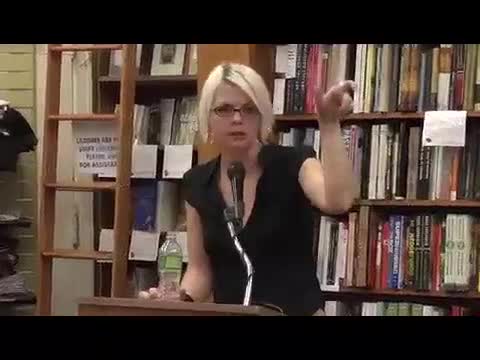
- Media technologist Deanna Zandt discusses the future and power of social networking and her new book, Share This! How You Will Change the World with Social Networking.As social media becomes increasingly present in our everyday lives, a major democratic cultural shift is underway. Through the power of relationships, sharing of experiences, and organizing online, previously marginalized voices are pouring into and shaping public conversations like never before.But serious change will not happen on its own. Despite the increasing presence of a diversity of voices and faces, the Internet isnt fulfilling its disruptive potential; more often than not, its simply replicating and amplifying inequality and segregation. The good news? The fundamental building block common to every social movement is the power of the narrative. Your story and your willingness to share others stories with your networks can mean the difference between progressive change and perpetuating the status quo. We need you here, building and mapping your relationships, sharing your experience and creating pipelines of empathy and trust that can change the world.
- Date
- 2010-09-01
- Topics
- Social Issues
- Technology
- Subjects
- Business & Economics; Culture & Identity
- Media type
- Moving Image
- Duration
- 00:45:29
- Credits
-
-
Distributor:
WGBH
Speaker2: Zandt, Deanna
- AAPB Contributor Holdings
-
WGBH
Identifier: d8e85a76b8dd3bf819b1e1dc2d448fbad5c22fba (ArtesiaDAM UOI_ID)
Format: video/quicktime
Duration: 00:00:00
If you have a copy of this asset and would like us to add it to our catalog, please contact us.
- Citations
- Chicago: “Harvard Book Store; WGBH Forum Network; Share This! Change the World with Social Networking,” 2010-09-01, WGBH, American Archive of Public Broadcasting (GBH and the Library of Congress), Boston, MA and Washington, DC, accessed April 21, 2026, http://americanarchive.org/catalog/cpb-aacip-15-t43hx1636g.
- MLA: “Harvard Book Store; WGBH Forum Network; Share This! Change the World with Social Networking.” 2010-09-01. WGBH, American Archive of Public Broadcasting (GBH and the Library of Congress), Boston, MA and Washington, DC. Web. April 21, 2026. <http://americanarchive.org/catalog/cpb-aacip-15-t43hx1636g>.
- APA: Harvard Book Store; WGBH Forum Network; Share This! Change the World with Social Networking. Boston, MA: WGBH, American Archive of Public Broadcasting (GBH and the Library of Congress), Boston, MA and Washington, DC. Retrieved from http://americanarchive.org/catalog/cpb-aacip-15-t43hx1636g