North Carolina Now; North Carolina Now Episode from 01/02/1998
- Transcript
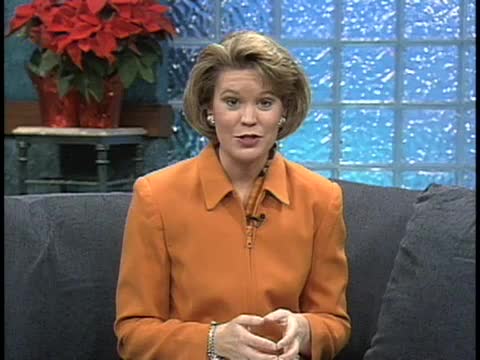
We're the. It's Friday January 2nd. Tonight speaking the language of the past for future generations in North Carolina. Nail. Good evening everyone and welcome to this Friday edition of North Carolina now. Tonight we look at what the lessons of the past can teach future generations of North Carolinians. Well in addition to a Burlington man whose exploration into his own past has given him an inside look at the history of African-Americans in North Carolina. Tonight's guest will
tell us about an innovative effort at the University of North Carolina at Charlotte to break the cycle of good teachers leaving Tarheel classrooms by giving some education message mangers they aren't teaching contracts before they even finished their degree program. We'll have the tells. But we begin tonight in Cherokee. It's easy to take for granted the language that we speak every day. But imagine if one day you were forbidden to speak your native tongue and forced to communicate in another language. Well that's just what happened to the Cherokee Indians a few generations ago as a result few people speak the Cherokee language today. Tonight producer Maria Lomberg shows us what the Cherokee community is doing to preserve their language. The mountains and valleys of the smoky mountains in western North Carolina have been home to the Cherokee
Indians for thousands of years. Today's members of the tribe have inherited a legacy rich in tradition history and storytelling. One of the most beautiful aspects of the Cherokee culture is the language itself. For generations the Cherokee children have grown up speaking the language at home with their families. But today that's often not the case anymore. In fact until recently the Cherokee language was in serious danger of being lost forever. But a program here at the Cherokee schools plans to change that. Yeah. This is a first grade class at Cherokee elementary school. Gloria Mills is one of four Cherokee language teachers in the school system. She instructs kindergarten first and second graders in speaking the language and language is what makes us who we are. And when we lose that we lose an important part of us. I
remember years ago when I started in education we had we would have children in our school who had who could speak the language. I'm not sure of the percentage but I would say probably five to 10 percent of the kids would come in. I would say it's less than 1 percent maybe less than one half of one percent. At this point of children who come in who actually can speak because the language is not being passed from one generation to the next as it used to be the community decided to do something before it was completely lost. Since the 1980s the Cherokee language has been available for high school students as an elective. But today all children in kindergarten through eighth grade are required to take Cherokee language classes as part of their regular curriculum. I believe that he is a real crucial thing for people to have. It sets it sets me standards about which you want to live by your morals and your values. This language then
helps to reinforce childrens identity in who they are and where they come from. If they have a clear idea of who they are a clear idea of where of where they come from then they have a basis a foundation if you will for carrying on their lives in a much stronger and much more positive light. Now this fourth grade class is just one of 17 classes Tom Bell teaches. He spends about one hour per week with each group focusing on spoken and written language. But other areas of instruction have been incorporated into the curriculum. For example Cherokee numbers are reinforced through math problems. Another thing they've done is incorporate the Cherokee culture into their lessons. We begin to look at our takes a look at No.
The Cherokee traditions the Cherokee history the Cherokee tree was being exemplified in there was very little by not having our own culture in those books and in that curriculum we were in essence Demain and that kosher and we were subsumed in the message that their coach was not important. So we began an effort to integrate the Cherokee cultures throughout the whole curriculum. It was in some part to give kids more pride in who they were. But at the same time to revive that language that we knew was so him important and so far the program seems to be working wonderfully not just for the younger children but for older students as well. For example these middle school students take pride in singing this song from the Trail of Tears in Cherokee. The NCS
the eat the meat. Joyce Canon principal of Cherokee elementary school agrees that this approach will help ensure the preservation of the Cherokee language for future generations. Their goal now is for jerky language to become the language of our here. And I will say you know what our community will see is to get our kids to realize their rich heritage is a hero to bring back the pride that they are. Sure he. And to revive the language to where they can speak it with each other. Going down the hall in the bowel game wherever they might be and realize how fortunate they are to be a teacher for the teachers.
Their reward comes in knowing that they are helping to preserve an essential part of their culture. Very proud to be able to do this. I especially like when I hear my students use it that they're not being forced. I don't want to say force been are not being made to say that when they use it automatically without Thank you much. And they say in the lunch line she or I hear them say whoa watch when I tell them sheep which is like saying You're welcome. And when they automatically talk Cherokee without thinking about it and I think that's what we're really aiming for here is a hope that it will it will preserve the culture that it will preserve the integrity and the characteristics in all of those things that go along that they go into the make up of a culture teaching the language will ensure that this uniqueness will continue to exist and will continue to go on. School officials hope to have a high school commencement addresses given interrogated by the
year 2000 and it may not be on one day in the future to walk into a Cherokee school and hear all the classes being taught in the Cherokee language. Well coming up how a Burlington man is learning the lessons of history from his past. But first let's check in with Michel Louis for an update on all the news making statewide headlines. Hi Mitt. Hello Shannon. Good evening everyone. Topping our news Monday marks the beginning of the 1998 campaign season that's when candidates where state and federal offices can begin the filing process. Some changes in 1980 elections law include the requirement that candidates running for state office identify the occupations of anyone donating more than $100 to a campaign. Plus new rules increase the penalties for missing a filing deadline for campaign disclosure reports. And for the first time ever judicial candidates will be able to discuss their views on the issues. In the past judicial candidates were not allowed to discuss their views for fear it would interfere with a judge's ability to be impartial when presiding over cases.
Agricultural Commissioner Jim Graham is assuring consumers that no cases of avian influenza have been detected in North Carolina poultry. Graham's assurances come in light of the recent outbreak of the virus in Hong Kong. The commissioner sends blood samples are routinely taken and tested from poultry flocks and eggs from every commercial egg producer are tested for the virus. Commerce commissioner Graham also says the North Carolina Department of Agriculture and Consumer Services has one of the best surveillance programs in the country focusing on animal health. North Carolinian signing up for HMO coverage now have added protections when it comes to emergency room visits. A new state law that took effect on the 1st of the year requires insurers to cover the cost of emergency room treatment if it is found that the decision to seek emergency room care was reasonable in the past a managed care insurance companies could reject payment for hospital emergency room visits that turned out not to be emergencies. However the new rule only applies to new policies and not to people under existing HMO
coverage. Another new piece of legislation taking effect today provides more than 3 million dollars to fund legal assistance to the victims of crime. Under the spending plan 26 court houses with jurisdiction over 64 counties will hire personnel to help guide victims and witnesses through the judicial process. Wayne County district attorney colon Willoughby supports the measure and says an order for the criminal justice process to be a community effort than victims need to know how the process works. And now for a look at tomorrow's Weekend weather spring like temperatures a forecast statewide with highs reaching the mid 60s on the coast and mid 50s to the west. Look for partly to mostly sunny conditions throughout Saturday in business news the chairman of the Federal Communications Commission is predicting a higher court will overturn a decision this week to allow the regional Bell companies including Bell South to enter the long distance telephone market. On Wednesday a U.S. district judge in Texas struck down portions of the 1996 Telecommunications Act designed to keep the regional Bell companies out of the
long distance business. However FCC chairman William canard says this decision will be appealed in 1906 congress barred the regional Bells from entering the 80 billion dollar long distance business until the companies could prove they no longer held a monopoly on local telephone services. And now for a look at what happened on Wall Street today. A man is in for a moment that you were a college student majoring in education. In your junior
year before you complete your degree requirements and before you even student teach your handle about a guaranteed teaching contract from one of the area schools. Sound too good to be true. Well this is reality for some students of the Teaching Fellows program at the University of North Carolina at Charlotte. And here to tell us more is Dr. Michael Greene a faculty sponsor for the program. Sounds too good to be true I know that's probably what everyone in the state is thinking tonight. Tell us a little bit about how this program works. It it works by way of the intensive training that our teaching fellows get Beginning in their freshman year going all the way through soft more junior year. These Teaching Fellows have to go through weekly seminars in addition to all their classes that they take for teacher education. They've got to perform school service hours in addition to all the hours they do in their methods courses. They've got to perform community service they do extra work with technology training from the very beginning of their life at
college. They are in coal katydid in the life of classrooms. They're very very well-prepared even before they start student teaching. These are the kinds of new teachers everybody wants. This particular program is known as the commerce school Alliance How did you first come up with the idea to start and grading these education majors into school classrooms starting essentially in their freshman year. It's a real good real good question Shannon. I have some background experience with the comer school development program that originated at Yale University about three decades ago. It's a new program that they're beginning in Charlotte Mecklenburg. They begin at about five six years ago new schools are coming online with it. I've worked with a couple of those schools knew that they could really use some more help from students. I knew the program was a good program and thought that it would provide the kind of over arching framework for an entire program for my students to work in that would provide some mutual benefits for the
schools and for my teaching fellows. So our first semester we got together and decided we'd like to think long term rather than freshman sophomore junior senior year. What do we want to get out of this. How can we accomplishment accomplish it. Can we put together a thematic rich program of experiences for teachers our student teachers and for the schools it worked out. The payoff has been wonderful. Essentially what you're doing is you're really partnering a lot of these student teachers with a real life teacher starting out their freshman year and then they are in the classroom for the next four years in some capacity. What kind of experiences then are these teaching fellows getting that perhaps other Teaching Fellows throughout the state other education majors do not get through a normal your normal education process at a university. It's a real real good question I think a real important one. I can't speak to the other Teaching Fellows at other institutions because I'm not familiar with the program but I
can comparison or teaching fellows to a regular education majors regular education majors begin their their course work in methods courses in their junior year in each methods course assigns them to a different school a different classroom where they go out and perform a few activities and come back to report to the professor. While before these teaching fellows even get to that point they have spent two years of intensive work in a particular school getting to know the school the school staff working with a mentor teacher in her classroom getting to know her students helping the teacher and working with the teacher to deliver instruction and evaluate instruction. They've been inside the classroom. Then when they come to their methods courses they take the method's clinic calls they have to do and incorporate it into the ongoing classroom work they've already ready been doing. It's not a matter of running out to get a piece of work done get it typed up and good to the professor.
It's how do I incorporate this assignment with in the context of these children learning the teacher teaching and having to evaluate all that in that environment. So by that very very rich by the end of my junior year I am handed a contract I am guaranteed work. But yet I have not even finished my degree requirements how can the school that is handing me this contract be assured that I'm going to be a quality teacher. There is a condition on the contract. The condition is that you must finish the program. You must meet state certification standards. If you don't do those then the contract is no and void. How can they be assured. I think the record we established over the three years the annual Comber Alliance meetings that these teaching fellows as undergraduate students play and performed and put on with the faculty in the staff and the principals at those schools with with the kind of technological educational innovations they've come up with and demonstrated in the schools
really shows them we are producers of good education in teaching not just students of it not just consumers but we actually are doing it. I think they were as surprised as anyone when they were handed these contracts. They didn't know they were coming. I think everybody's been a bit impressed by it. We don't have all the all the details worked out on how to actually get the jobs done but we're working on that. It's a marvelous thing. Sounds like a wonderful program and I wish I was an education major. I think very interested in it and I thank you so much for coming tonight to tell us more. Now Absolutely thank you very much. If you'd like more information on the U.N. see Charlotte Teaching Fellows program you can call 7 0 4 5 4 7 4 7 0 7. How much do you know about your family history. Well one way to explore the richness of past
generations is to trace their records. Tonight Bob Garner brings us the story of all Burlington man who has been on a six year journey of discovery into his past. Anyone who is a retired be around salesman and checks to work but at heart he's discovered he's a genealogist which is why today you'll sometimes find him visiting graveyards a distant relative once gave him a faded old photograph of a fifth cousin of his whom she said was famous and he stuck a picture away and forgot about it for more than 20 years. When he finally got it out six years ago he decided to try to fill in the puzzle of his genealogy back to that fifth cousin and even further back. He learned to use libraries dig through court houses and do research in archives. In the process he's discovered some fascinating things about his family and some things about himself. I never thought I could do something like that never never come cross me you know I've been in says India and then when I really got into it I said I one cannot do it. I thought
I would take a chance on what song I'm going to the cause you know I thought well you don't know what you can do to try you know. They have Villa central in Eddie's history. His great grandmother Amy was purchased as a slave together with her four children and they had Bill's old central market the buyer a Mr. Rogers from Alamance County near Graham. Amy's later husband John Peet Uncle Terry at Fayetteville was a free black man a harness maker and he followed a meeting. Mr. Rogers brought her at a time when it would have been say in the mass I'm a good ambassador so they transfer the bomb and transfer them to grill a lodge room on the plantation day and John P. aka tree. They need it. I hear they need to up the hornets maker because at that time I'm not a slave than have trades to live Egan and it's cases though John P. ABA tree where the good horn is making
so he came and went there on the plantation and he had other free black relatives in Fayetteville. Many were Park Whiting were known then as mulattos and he was able to trace them because as free persons they were included in the census match except that 1850 because they would own a sissy but I am going on 83 to Sensi but if I had a been a slave that they would have not been on that since they were the matter kept a record on them. In constant danger of being returned to slavery many of the free blacks decided to leave the Fayetteville area for the Free State of Ohio an opportunity a wagon train was formed and at least two of Betty's relatives were on it. Mary Sampson married Larry Lewis Sheridan in Ohio. He later joined anti slavery crusader John Brown in the ill fated raid on the federal arsenal at Harpers Ferry West Virginia. He was killed during the battle by troops under the command of a young U.S. Army captain named Robert E. Lee. But Mary Sampson was already carrying Sheridan's child.
It was a daughter who was to become the mother of the famous black poet Langston Hughes and Marie Sampson another of Eddie's long ago relatives also traveled to Ohio on that wagon train. She ended up marrying the son of a white slave holder who had helped finance the wagon journey to Ohio chestnut fought in the Civil War on the union side and after the war he returned to Fayetteville where his father gave him some property. He sent for his wife and a young son. The boy Charles Waddell chestnut was the man whose photograph Eddie was later given a brilliant student at the Howard School in Fayetteville. He became a teacher there at age 16 and later served as principal at school grew over the years it's known today as Fayetteville State University. Charles what the old chestnut eventually became a lawyer and he became the author of several books drawn from material in his own prolific journals. He struggled his whole life over whether he considered himself a white man or a black man. And there were times that against his better
judgment he allowed himself to pass as white. Just not once got an invitation from another author named Mark Twain Mark Twain had a birthday party and he he he embodied a hundred and fifty office to him by Thank PADI. And I have my cousin Cain invited to this party but I had an offer and my tray knew that he was a very famous model. So he summoned by our Him today the library at Fayetteville State University is named for Eddie's cousin Charles Waddell chestnut and he feels right at home there not just because of what his relative did but because of what he's learned to do. I got into it I have a really it's a pride that I could duties and a lot of people asked me today how do you do all of that you know where it's come naturally I let you know to come that's it to me you know I.
Do you think you know because you know because I really didn't think that I was just you my friend was so important to me. It was the maiden speech coming out of like them it's better to do to slay the cat you know I did this because that's when they see me. Young Smith Yeah we do understand one of Eddie Hunter's big dreams is to be able to afford to take a trip to Cleveland Ohio where he expects to find another rich vein of his family's history. Well that's it for tonight show thanks for entering your week with us. Please join us again Monday night when our guest probably wrongly Bailey from the University of North Carolina Greensboro. He'll be here to tell us about a new program to help immigrants to North Carolina connect with the vital services they need. Plus we've all heard the old adage that one person's garbage is another's treasure. Well Monday night we'll take a look at how one Tarheel city is using its garbage to produce something we can all wear Have a great evening everyone will see again next week.
- Series
- North Carolina Now
- Contributing Organization
- UNC-TV (Research Triangle Park, North Carolina)
- AAPB ID
- cpb-aacip/129-44bp01m5
If you have more information about this item than what is given here, or if you have concerns about this record, we want to know! Contact us, indicating the AAPB ID (cpb-aacip/129-44bp01m5).
- Description
- Series Description
- North Carolina Now is a news magazine featuring segments about North Carolina current events and communities.
- Description
- Dr. Michael Green, UNC-C; Cherokee Language (Lundberg); Black Family Historian (Garner)
- Created Date
- 1998-01-02
- Asset type
- Episode
- Topics
- News
- Local Communities
- Media type
- Moving Image
- Duration
- 00:26:12
- Credits
-
- AAPB Contributor Holdings
-
UNC-TV
Identifier: NC0743/1 (unknown)
Format: Betacam: SP
Generation: Master
Duration: 00:25:46;00
If you have a copy of this asset and would like us to add it to our catalog, please contact us.
- Citations
- Chicago: “North Carolina Now; North Carolina Now Episode from 01/02/1998,” 1998-01-02, UNC-TV, American Archive of Public Broadcasting (GBH and the Library of Congress), Boston, MA and Washington, DC, accessed August 2, 2026, http://americanarchive.org/catalog/cpb-aacip-129-44bp01m5.
- MLA: “North Carolina Now; North Carolina Now Episode from 01/02/1998.” 1998-01-02. UNC-TV, American Archive of Public Broadcasting (GBH and the Library of Congress), Boston, MA and Washington, DC. Web. August 2, 2026. <http://americanarchive.org/catalog/cpb-aacip-129-44bp01m5>.
- APA: North Carolina Now; North Carolina Now Episode from 01/02/1998. Boston, MA: UNC-TV, American Archive of Public Broadcasting (GBH and the Library of Congress), Boston, MA and Washington, DC. Retrieved from http://americanarchive.org/catalog/cpb-aacip-129-44bp01m5